Key takeaways:

Between 2018 and 2021, adult literacy rates across African nations exhibited significant disparities. Seychelles and South Africa led with literacy rates of 96% and 95%, respectively, indicating a high proportion of literate adults. Conversely, Chad had the lowest literacy rate during this period.
These statistics underscore the uneven progress in educational attainment across Africa, highlighting the need for targeted interventions to improve literacy in lower-performing nations.
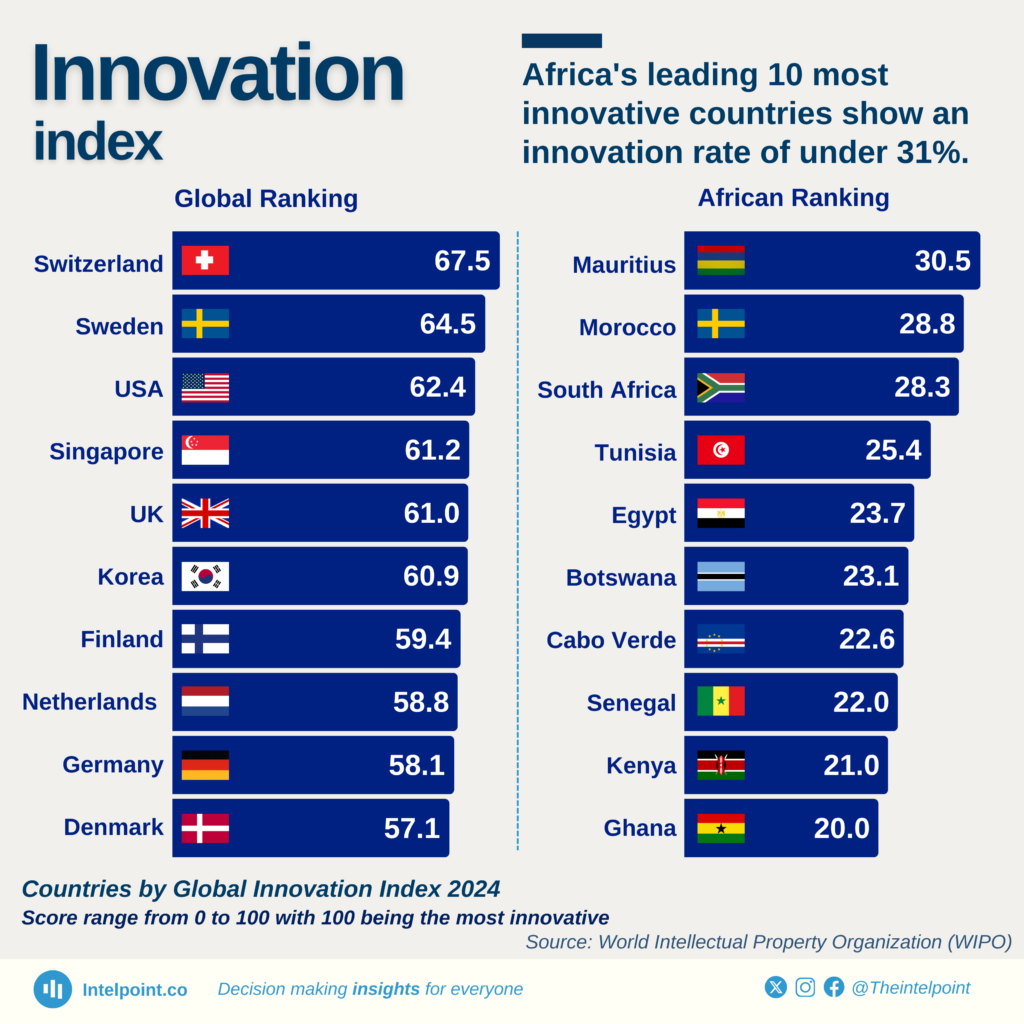
The Global Innovation Index 2024 reveals a striking contrast in innovation performance between countries globally and across Africa. Switzerland leads the global rankings with an impressive score of 67.5, followed by Sweden (64.5) and the USA (62.4), highlighting their sustained investments in research, development, and technological advancement.
In Africa, Mauritius takes the top spot with a score of 30.5, followed closely by Morocco (28.8) and South Africa (28.3). However, even Africa's most innovative nations achieve less than half the score of global leaders, indicating a significant innovation gap.
Nigeria ranks 15th in the African ranking and 113th globally, out of 133 countries, with a score of 17.1.
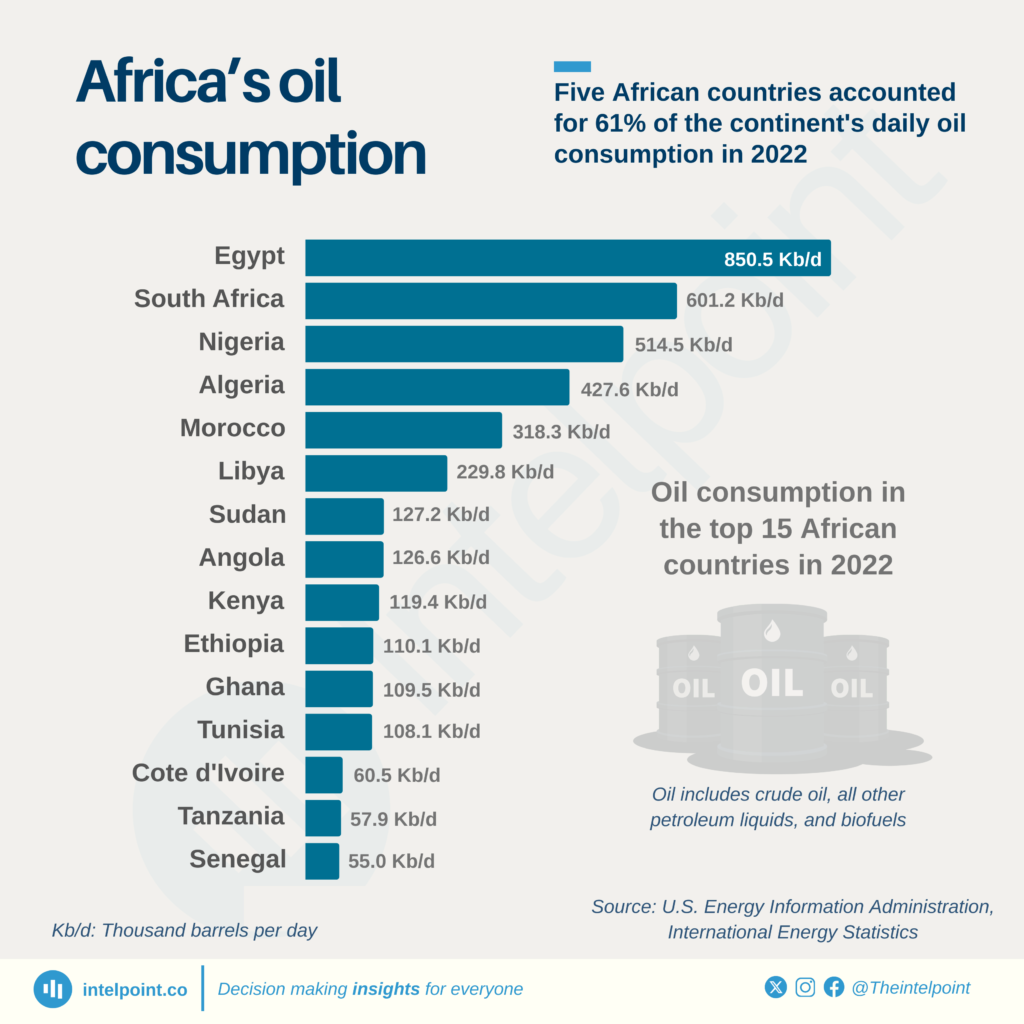
In 2022, Egypt, South Africa, Nigeria, Algeria, and Morocco collectively consumed an average of 2.712 million barrels of oil per day (Mb/d), 61% of the continent's daily oil consumption (4.478 Mb/d). African countries consumed 4.7% of the global usage (99.8 Mb/d).
Egypt used the most (850.5 thousand barrels per day (Kb/d)), followed by South Africa (601.2 Kb/d) and Nigeria (514.5 Kb/d).

The 2024 Global Peace Index reveals a decline in peacefulness in 97 countries, the highest since the index began.
Nigeria is among the nations affected by regional conflicts and rising violence. With a peace index score of 2.91, Nigeria is facing increasing challenges.
A deteriorating peace score impacts foreign investment and economic stability. Global economic losses due to violence reached $19.1 trillion in 2023.

The University of Ibadan remained Nigeria's only university for twelve years before the University of Nigeria, Nsukka, was established in 1960. Eleven universities followed between 1962 and 1975, increasing the number to 13 federal government-owned universities.
The first state university was established in Rivers State in 1979, marking the beginning of the displacement of the federal government's ownership monopoly. Six state and nine federal universities were added in the 1980s, with four federal universities added in 1988, the year of the first Academic Staff Union of Universities (ASUU) strike.
While state-owned universities have grown steadily, slightly outpacing those owned by the federal government, private universities have displaced both, increasing from three institutions in 1999 to 33 in 2007, 60 in 2015, and 149 in 2024. There are now more private universities than federal and state universities combined.

In 2023, a staggering ₦721 billion was paid as bribes to public officials in Nigeria, highlighting systemic corruption. Judges and magistrates received the highest average bribe of ₦31,000, reflecting the critical nature of their roles in decision-making processes. Immigration officers followed with an average of ₦17,800, while members of the armed forces received ₦16,600.

In 2023, bribery was increasingly being rejected in Nigeria, with 70% of Nigerians refusing to pay a bribe when asked to. Of these, 42% cited moral beliefs as the primary reason, while 21% opted for alternative methods to achieve their objectives, reflecting a growing resistance to corruption.

On a regional level, sub-Saharan Africa has the lowest average at 33, among 49 countries, while the Western Europe and European Union region outperforms all regions with an average of 65.
The Corruption Perception Index measures the perceived levels of corruption across countries and territories.

Inflation levels across Africa's largest economies range from low and stable in Morocco to high and concerning in Nigeria. Egypt and Nigeria have seen inflation rise to record levels, driven partly by currency devaluations in both countries.
Nigeria has not only fallen from its top spot as the continent's largest economy, but it now holds the spot for the highest inflation rate amongst the top ten economies by GDP.

While its inflation rate has decreased from 292% in April 2024 to 195% in October 2024, Argentina still has one of the highest inflation rates in the world.
This triple-digit inflation rate mirrors Argentina's hyperinflation crisis of the 1980s and 1990s when the country's inflation rose as high as 20,000%.
The Milei-led leadership has instituted reforms since taking office in December 2023, but there have been protests from the public over the resulting hardship.

Rwanda is performing relatively well in terms of governance and rule of law, leading sub-Saharan Africa for the third consecutive year with a score of 0.63 in the 2024 Rule of Law Index. Namibia (0.61) and Mauritius (0.60) closely follow, showcasing relatively stronger legal frameworks.
At the lower end, Nigeria, Congo, and Gabon score 0.40, highlighting persistent governance challenges.
Globally, Denmark tops the list of 142 countries, with a score of 0.90, while Venezuela ranks last at 0.26, emphasising the gap between SSA's highest performers and global leaders. This mix of progress and struggles illustrates the varied state of governance across the region.
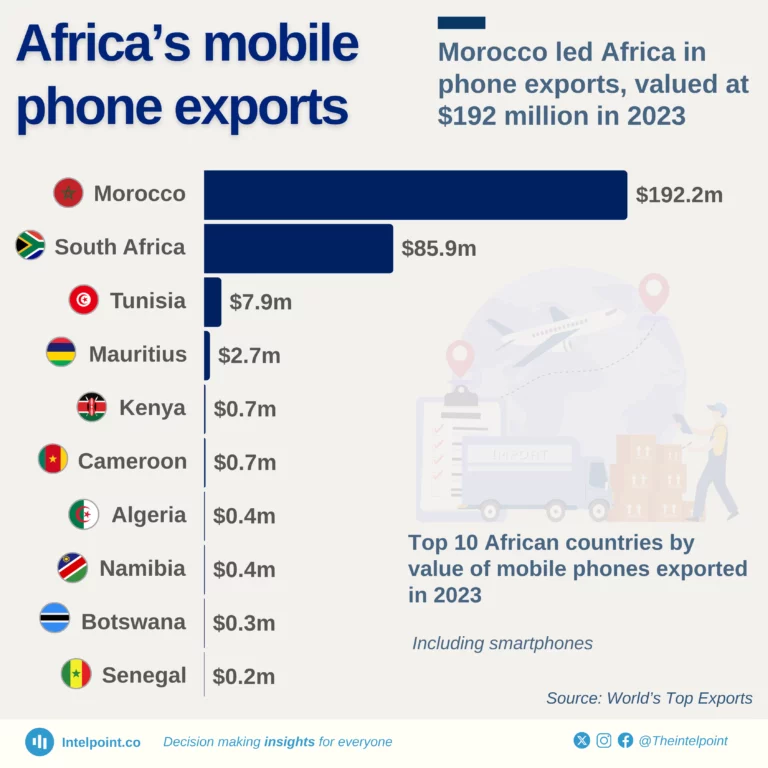
In 2023, Morocco led Africa’s phone export market with $192.2 million, making up 0.07% of the global total, followed by South Africa at $85.9 million, with a global share of 0.03%.
Though Tunisia, Mauritius, and Kenya contributed smaller shares, Tunisia’s remarkable 5,456% growth stands out, positioning it for greater involvement in the global market.
However, Mauritius and Kenya faced declines of -38% and -52%.
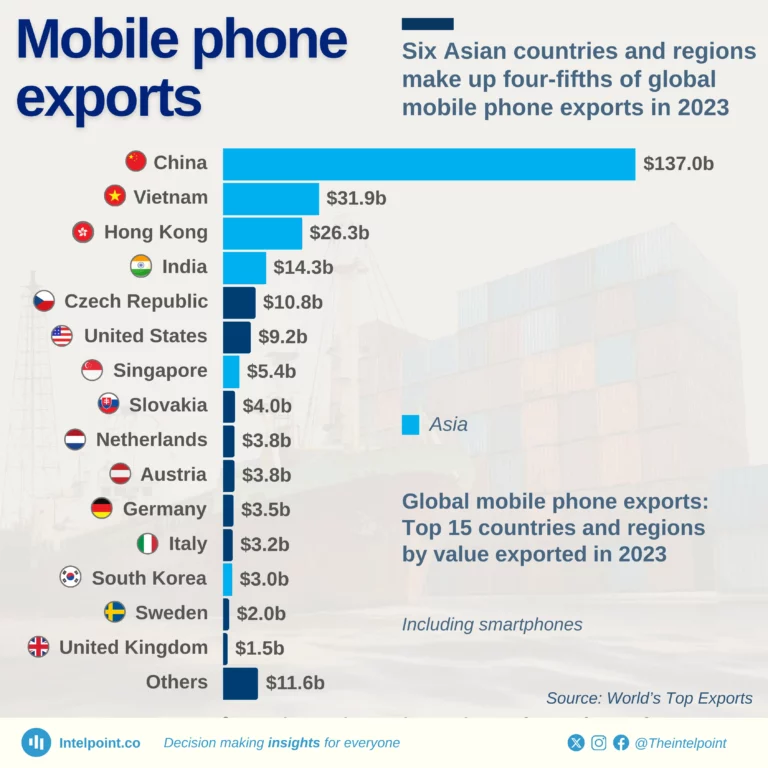
In 2023, the global mobile phone export market totalled $271.42 billion, with China dominating by accounting for $137 billion (50.5%) of total exports.
Vietnam, Hong Kong, and India complete the top four, accounting for 11.8%, 9.7%, and 5.3% of the total, respectively.
Six Asian countries and regions make up four-fifths of global mobile phone export value in 2023, showcasing the region's dominance in the industry.
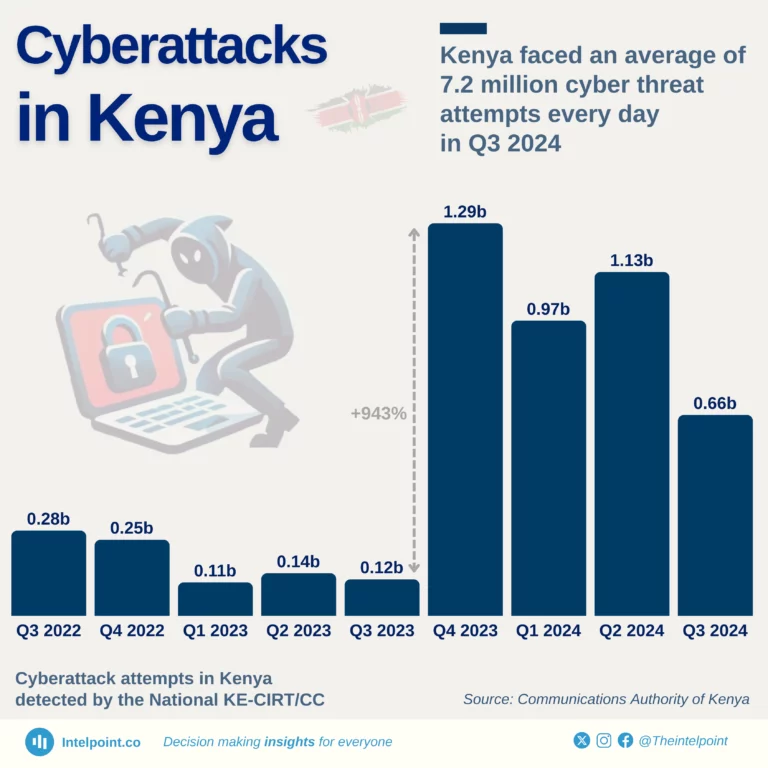
With rising global cyber threats, Kenya, one of Africa's Tier 1 cybersecurity countries (ITU classification), has recorded 2.76 billion cyber threats in the first nine months of 2024.
After a dramatic spike in Q4 2023 (+943%), cyber threats have dropped by 49% in Q3 2024 but remained significantly higher than five quarters ago. Threats rose again in Q2 (+17%) and then dropped in Q3 (-42%).
This surge in attacks led to a recent major breach, where a government agency’s data was sold on the dark web, highlighting the urgent need for stronger security measures.
What actions can Kenya and other countries take to improve their cybersecurity?
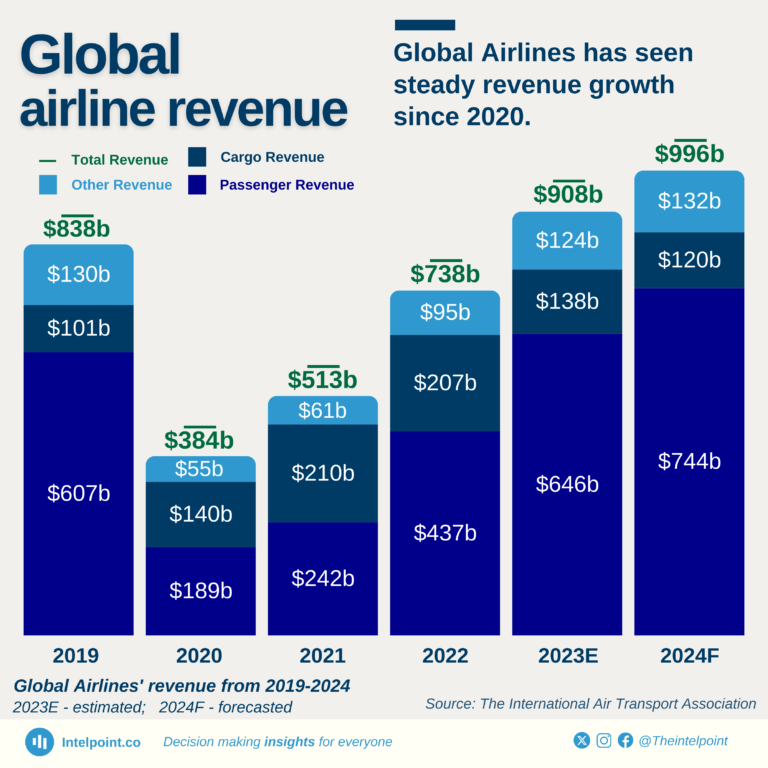
The International Civil Aviation Day is celebrated every year on December 7. Global Airlines experienced over 100% revenue growth from 2020 to 2023, with passenger revenue, the primary driver of this growth.
Cargo revenue has also contributed significantly to the overall increase. This shows the industry is recovering strongly from the pandemic. Notably, cargo revenue has experienced consistent growth since 2019; even during the COVID-19 pandemic, cargo revenue grew from $101b in 2019 to $140b in 2020.
The airline industry's future looks bright, with continued growth expected in the coming years as forecasted in 2024.