Adult literacy rates of African countries

Between 2018 and 2021, adult literacy rates across African nations exhibited significant disparities. Seychelles and South Africa led with literacy rates of 96% and 95%, respectively, indicating a high proportion of literate adults. Conversely, Chad had the lowest literacy rate during this period.

These statistics underscore the uneven progress in educational attainment across Africa, highlighting the need for targeted interventions to improve literacy in lower-performing nations.
Source:

CIA.gov - The World Factbook

Period:

2018, 2019, 2021
HTML code to embed chart
Want a bespoke report?
Reach out
Tags
Related Insights

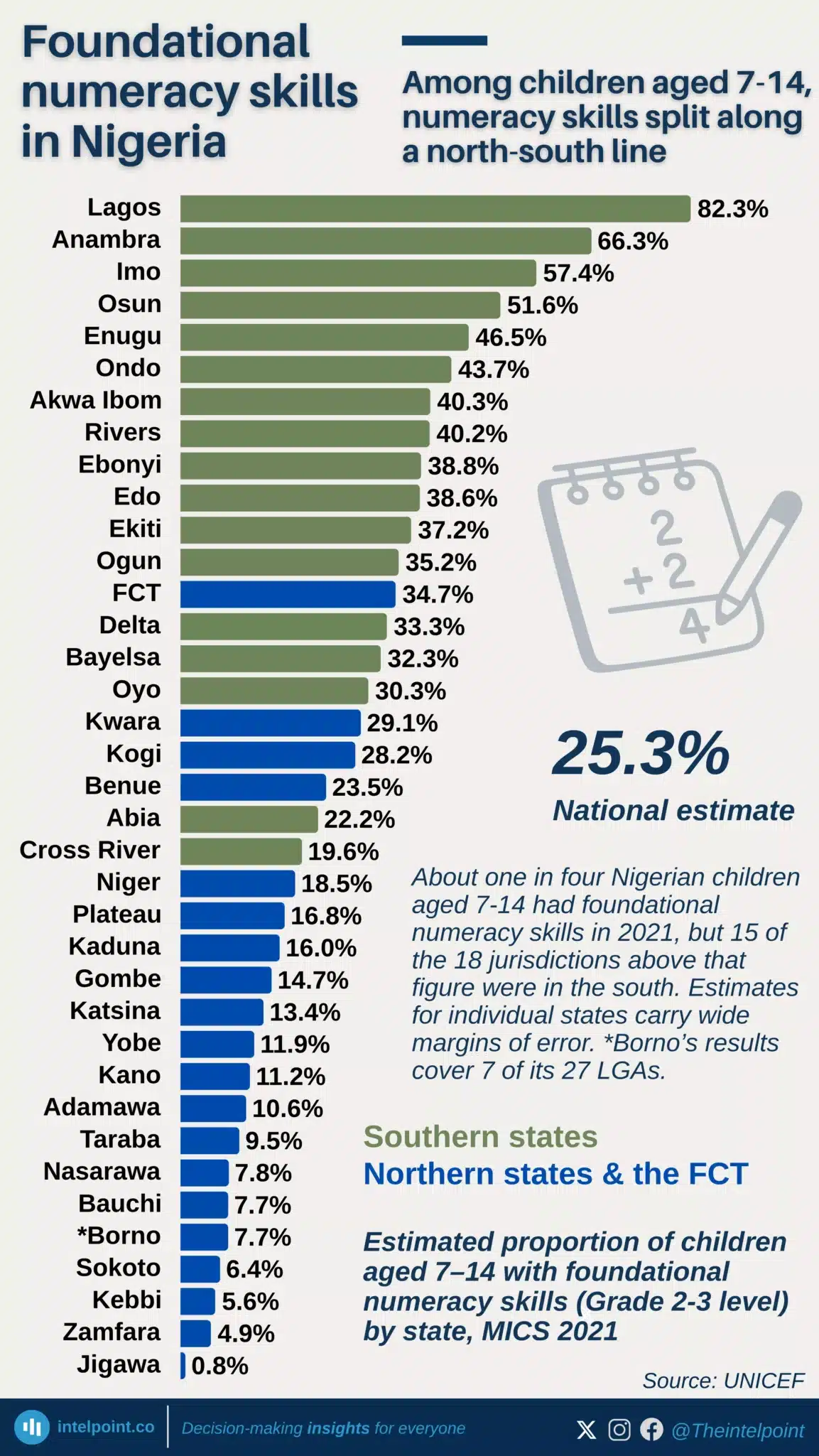
Foundational numeracy skills in Nigeria: among children aged 7-14, numeracy skills split along a north-south line
  • Lagos recorded an 82.3% numeracy rate, compared with 0.8% in Jigawa.
  • Nigeria’s foundational numeracy rate was 25.3% in 2021.
  • Fifteen of the 18 jurisdictions above the national average were in the South.
  • In 11 northern states, fewer than 12% of children had foundational numeracy skills.
  • Taraba’s numeracy estimate was 9.5%, with a 95% confidence interval of 6.0%–14.7%.

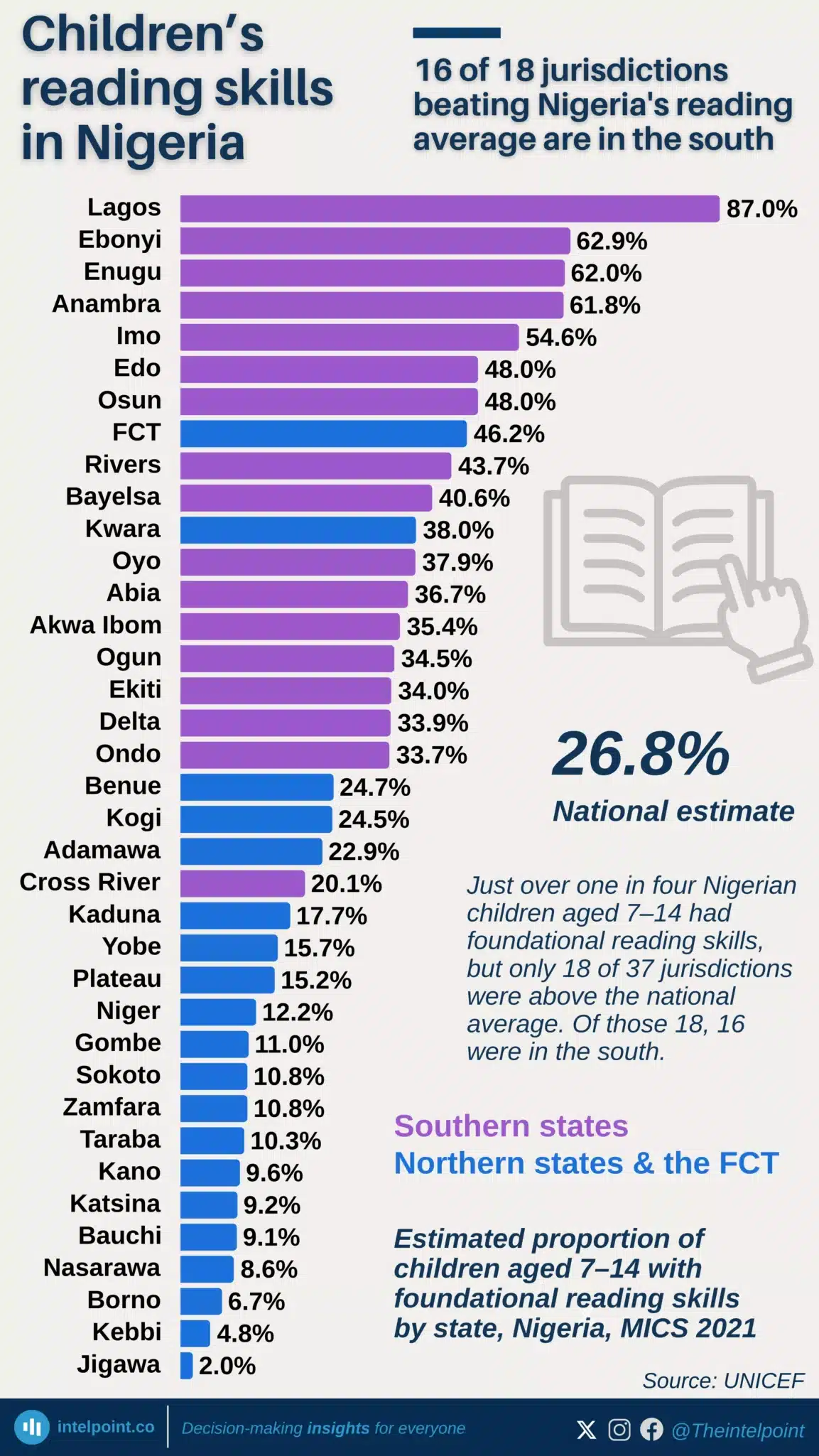
Children’s reading skills in Nigeria: 16 of 18 jurisdictions beating Nigeria's reading average are in the south
  • Lagos recorded an 87% reading proficiency rate, against 2% in Jigawa.
  • The gap between Lagos and Jigawa was 85 percentage points.
  • Nigeria’s national reading proficiency rate was 26.8%.
  • Eighteen of 37 areas exceeded the national average.
  • Kwara and the FCT were the only areas outside the three southern zones above the national average.

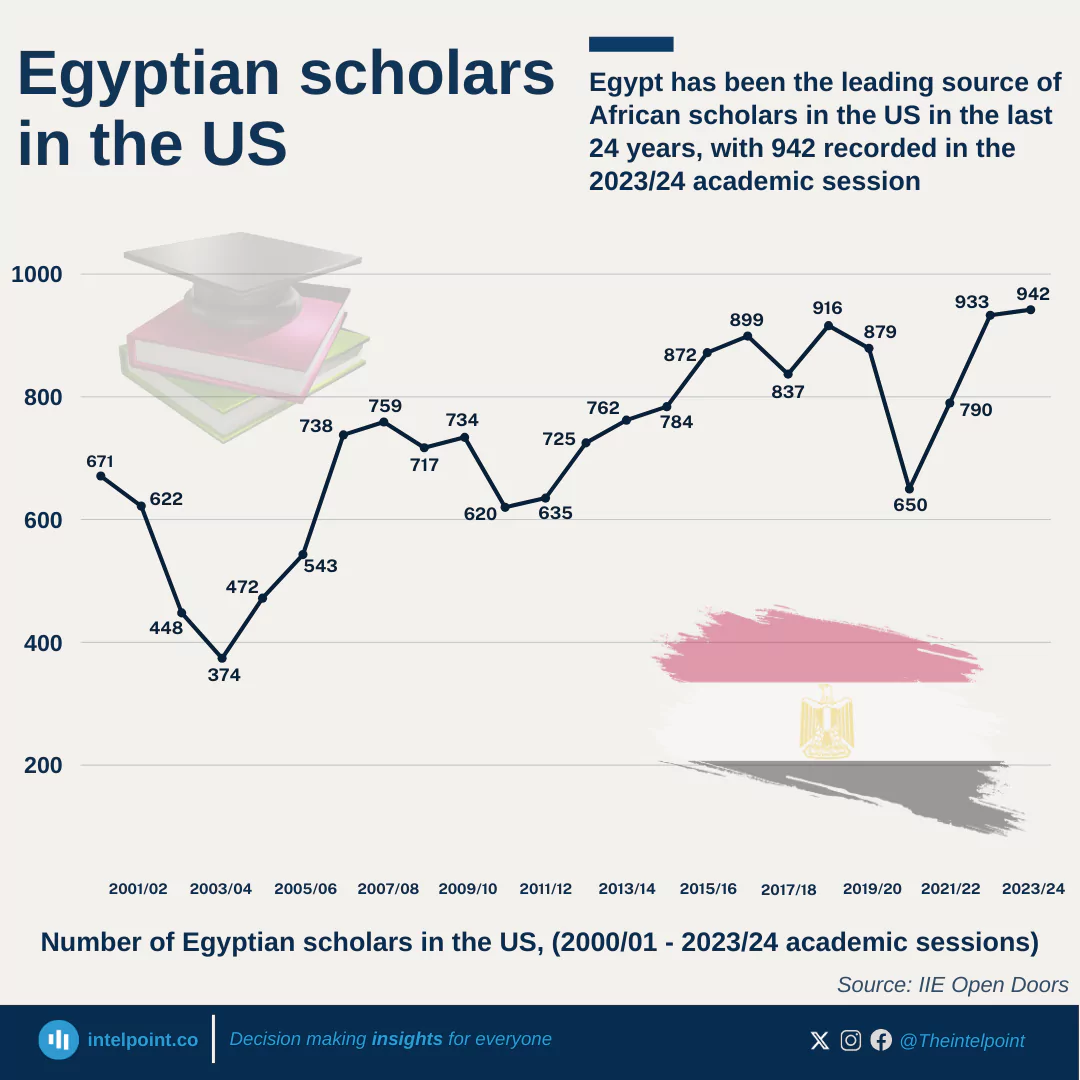
Egypt has been the leading source of African scholars in the US in the last 24 years, with 942 recorded in the 2023/24 academic session
  • Egypt has been the lead source of African scholars in the US in the last 24 years.
  • Of the African scholars in the US as of the 2023/24 academic session, 20% were Egyptians.
  • The country remains a pivotal actor in building transcontinental academic bridges and contributing to global knowledge exchange.
  • Egypt’s visibility in the US scholarly ecosystem reinforces its role as a regional academic hub.

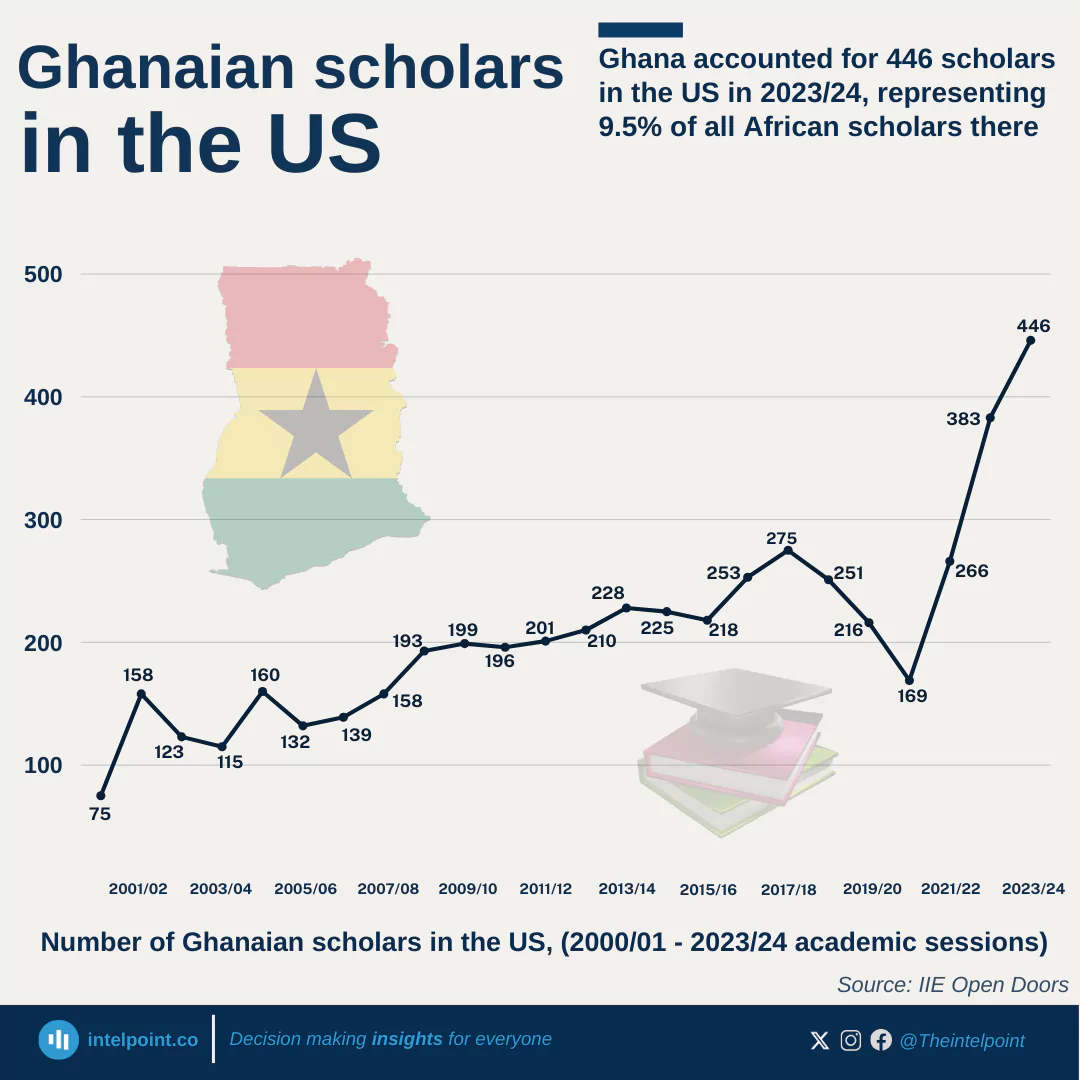
Ghana accounted for 446 scholars in the US in 2023/24, representing 9.5% of all African scholars there
  • 446 Ghanaian scholars are in the US as of the 2023/24 academic session, making up 9.5% of the total number of African scholars in the US.
  • In the 2000/01 academic session, Ghana was the 7th leading source of African scholars with only 75 Ghanaian scholars in the US.
  • Nearly 1 in African scholars in the US is a Ghanaian.
  • Ghana scholarly population in the US have grown by 497%.

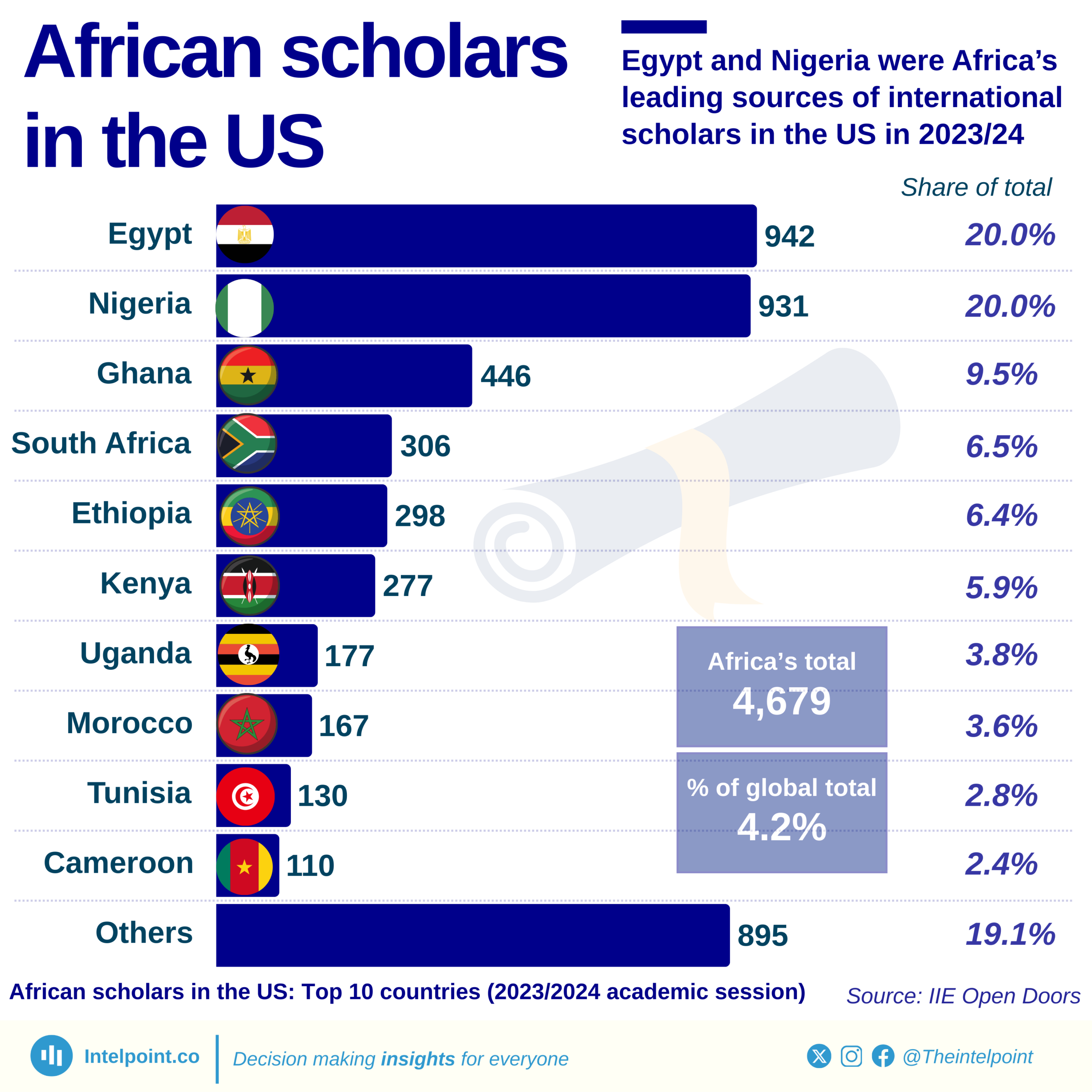
Egypt and Nigeria were Africa’s leading sources of international scholars in the US in 2023/24
  • Egypt remained the lead African country with the highest number of international scholars in the US, with 942 recorded in the 2023/2024 academic session.
  • As of the 2023/2024 academic session, 4,679 international scholars in the United States of America are from Africa.
  • A total of 931 international scholars in the US as of the same session are from Nigeria.
  • Africa produced 4.2% of the international scholars in the US for the session under review.

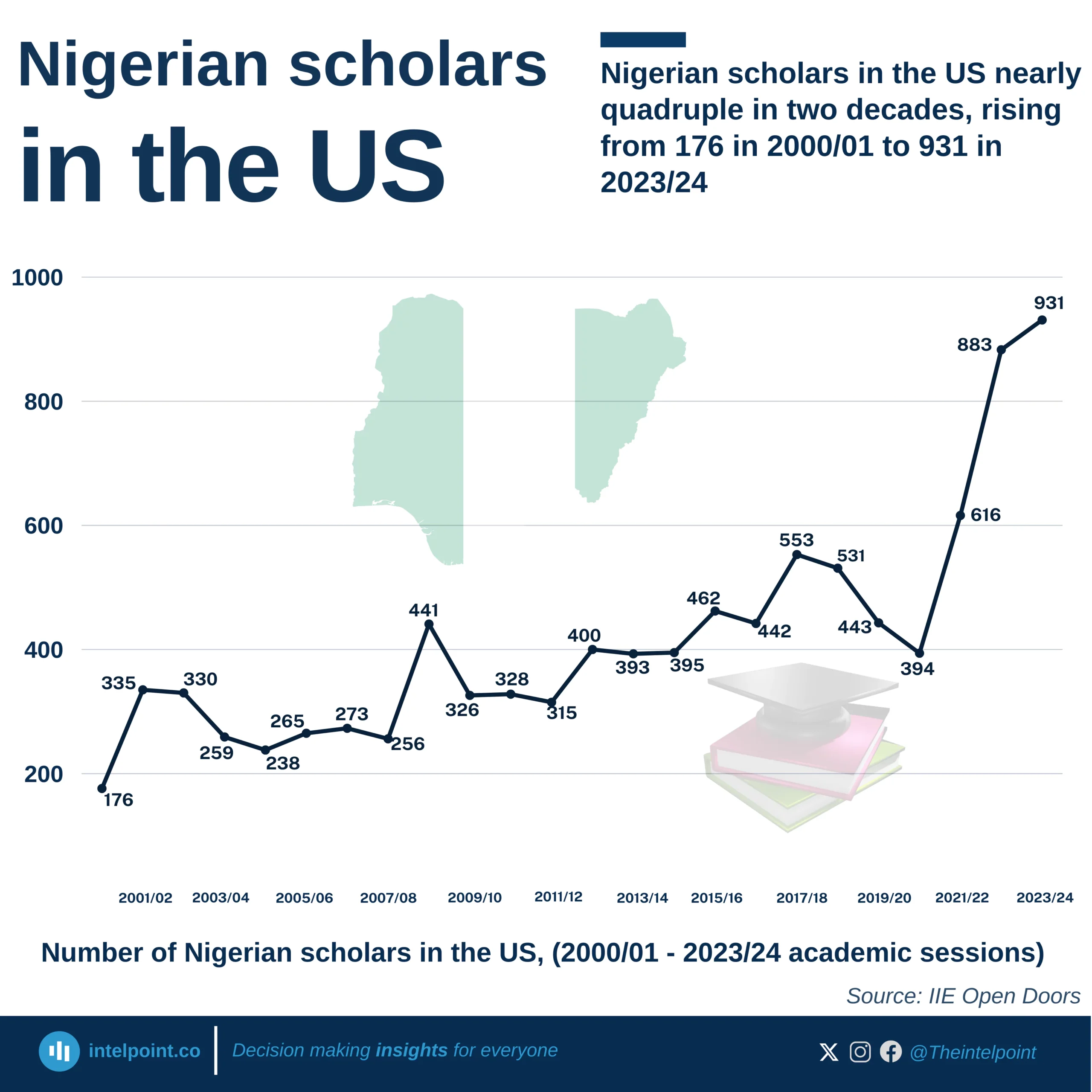
Nigerian scholars in the US nearly quadruple in two decades, rising from 176 in 2000/01 to 931 in 2023/24
  • Nigeria has been the second leading source of African scholars in the US since 2008/09 to 2023/24, after overtaking South Africa.
  • By the 2023/24 academic session, the number of Nigerian scholars in the US reached 931.
  • Given past trends, it’s not unrealistic to predict that Nigeria could surpass Egypt in the near future, just as it did South Africa.
  • Approximately 20% of the African scholars in the US are Nigerians.

POPULAR TOPICS
SIGN UP TO OUR NEWSLETTER
Get periodic updates about the African startup space, access to our reports, among others.
Subscribe Here
Subscription Form

A product of Techpoint Africa. All rights reserved