
The 2024 Global Peace Index reveals a decline in peacefulness in 97 countries, the highest since the index began.
Nigeria is among the nations affected by regional conflicts and rising violence. With a peace index score of 2.91, Nigeria is facing increasing challenges.
A deteriorating peace score impacts foreign investment and economic stability. Global economic losses due to violence reached $19.1 trillion in 2023.

Between 2018 and 2021, adult literacy rates across African nations exhibited significant disparities. Seychelles and South Africa led with literacy rates of 96% and 95%, respectively, indicating a high proportion of literate adults. Conversely, Chad had the lowest literacy rate during this period.
These statistics underscore the uneven progress in educational attainment across Africa, highlighting the need for targeted interventions to improve literacy in lower-performing nations.

Nigeria was the seventh most populous nation in the world in 2020, with 206.1 million people. Projected to reach a population of 401.3 million by 2050, Nigeria will rank third after India (1st) and China (2nd). According to Institut national d'études démographiques' projections, Nigeria, Ethiopia, DR Congo, Egypt, Tanzania, and Kenya will be among the world’s top 20 most populous countries by 2050.
The 2024 Global Peace Index reveals a decline in peacefulness in 97 countries, the highest since the index began.
Nigeria is among the nations affected by regional conflicts and rising violence. With a peace index score of 2.91, Nigeria is facing increasing challenges.
A deteriorating peace score impacts foreign investment and economic stability. Global economic losses due to violence reached $19.1 trillion in 2023.
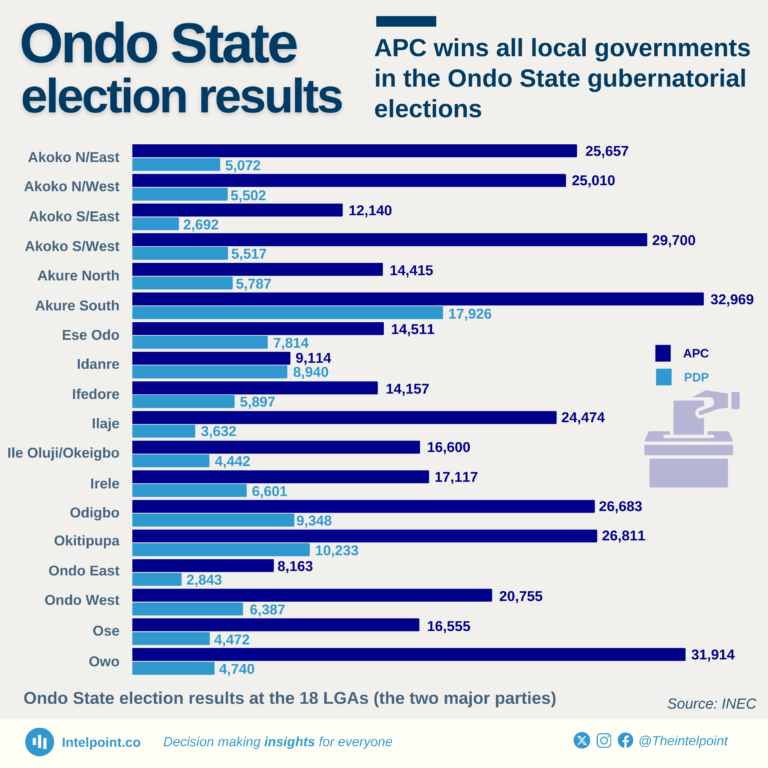
In Ondo State, residents across all 18 local government areas came out to perform their civic duties in the recent gubernatorial election. With over two million registered voters, only 508,963 voted during the election; 11,886 were invalid, leaving 497,077 as valid votes.
The APC secured victory in every LGA, earning a total of 366,781 votes. Meanwhile, the PDP, the closest competitor, garnered 117,845 votes. Together, the APC and PDP had a total valid vote count of 484,626.
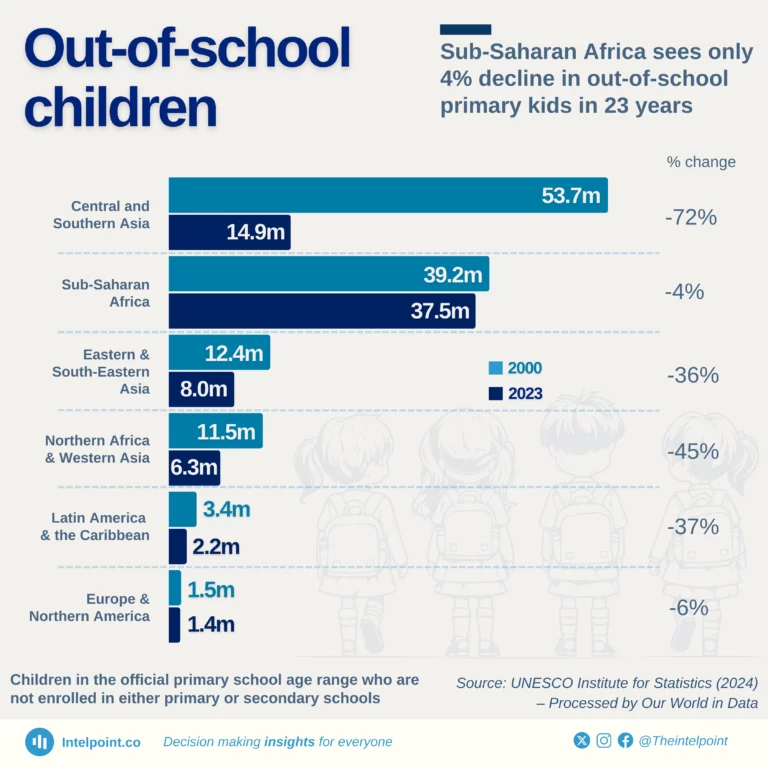
Millions of children missing basic education can affect future workforce skill levels and poverty cycles, especially in sub-Saharan Africa, which has the highest number of out-of-school children.
Between 2000 and 2023, Central and Southern Asia achieved a 72% reduction in out-of-school primary-age children, the largest global improvement.
Meanwhile, sub-Saharan Africa only managed a 4.4% decrease. This highlights the critical need for educational investment in regions still lagging behind.
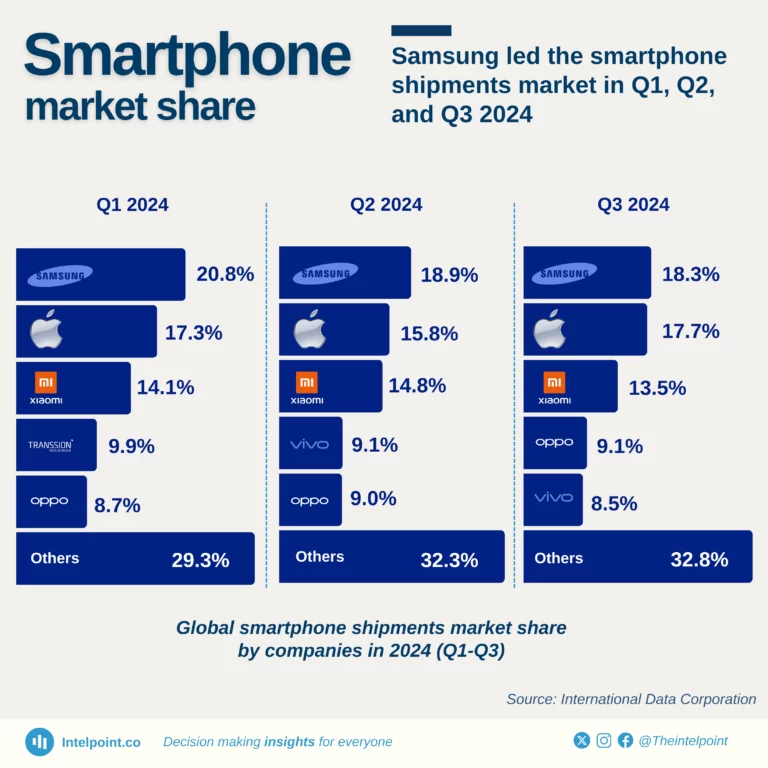
Samsung consistently led the global smartphone shipments market through the first three quarters of 2024, maintaining the highest market share in each quarter.
Apple and Xiaomi followed closely, while other brands, including Oppo, Vivo, and Transsion, were among the top brands. The top three smartphone brands (Samsung, Apple, and Xiaomi) dominate the market, collectively capturing nearly half of the global share in the first three quarters of 2024.
Today, World Diabetes Day, we’re reminded of the urgent need to address the growing impact of diabetes across the globe. This day is a call to action to support preventive measures, raise awareness, and improve healthcare access for those affected by this chronic condition.
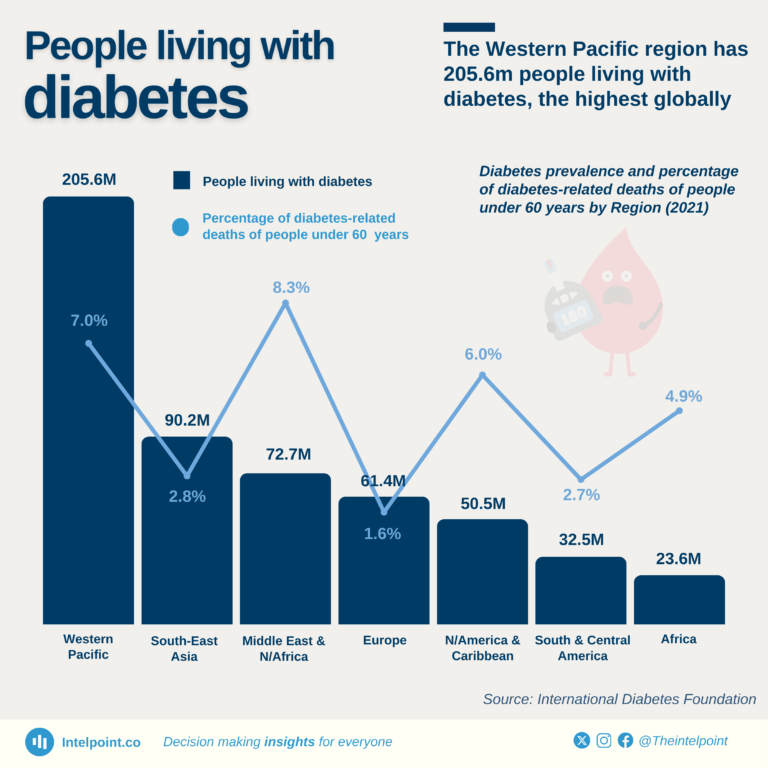
In the Western Pacific region alone, 205.6 million people are living with diabetes, and it also has one of the highest percentage of diabetes-related deaths (7.0%) in people under 60.
By comparison, Europe, while also heavily impacted, reports a lower death rate among this age group. Though Africa has the lowest number of people living with diabetes, it has a high percentage of diabetes-related deaths in people under 60.

From 1961 to 2022, Nigeria contributed about 7.3% to the global groundnut production, making it a key player in the sector. Alongside China and India, which also dominated production, these three countries accounted for 61% of the world’s groundnut supply.
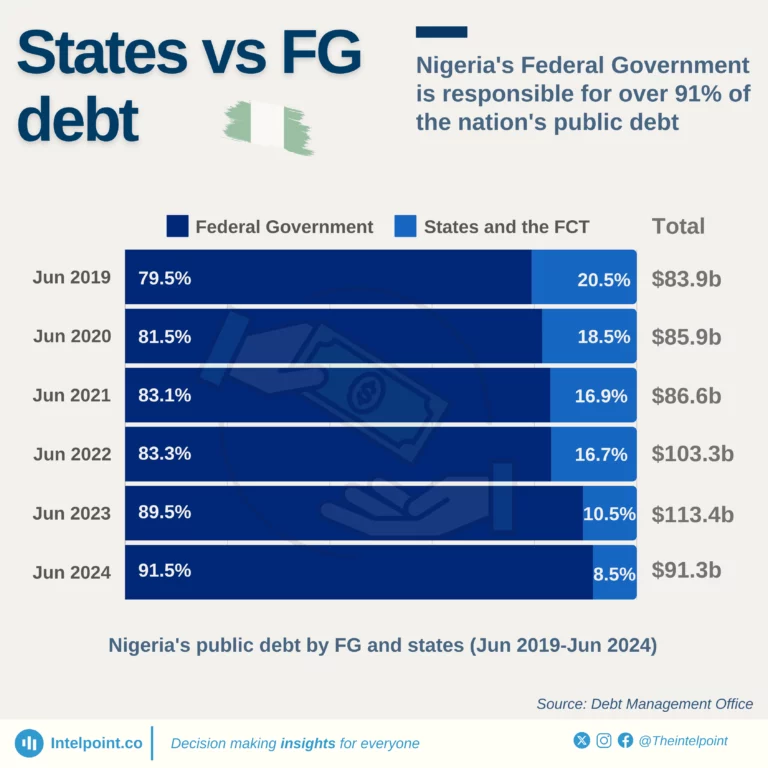
States' share of Nigeria's public debt has dropped from 20.5% in 2019 to 8.5% in 2024, while the federal government’s debt has risen to over 91% of the total, in dollar terms.
The FG's debt grew from $66.7 billion to $83.6 billion in this period, while the states' debt dropped from $17.2 billion in 2019 to $7.8 billion, marking a shift in borrowing dynamics at federal and state levels.
Notably, states and FCT debt decreased in dollar terms but increased in naira terms, while FG debt rose in both dollar and naira terms over the same period.
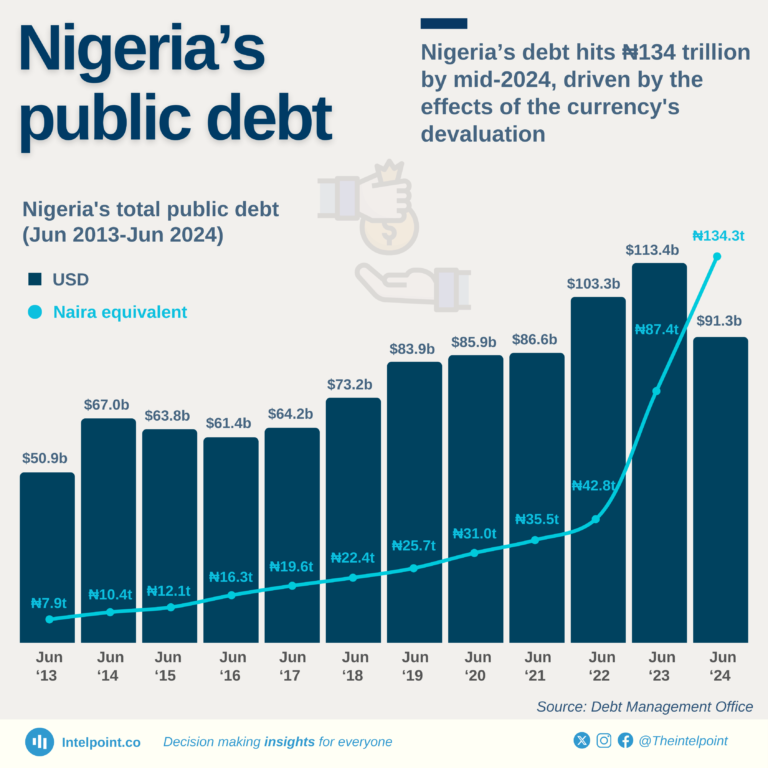
Nigeria’s public debt decreased in dollar terms between June 2023 and June 2024. However, when converted to naira, it jumped to ₦134.3 trillion, largely due to currency devaluation. This sharp increase in debt could lead to tighter budgets, potentially affecting public services and everyday costs for Nigerians.
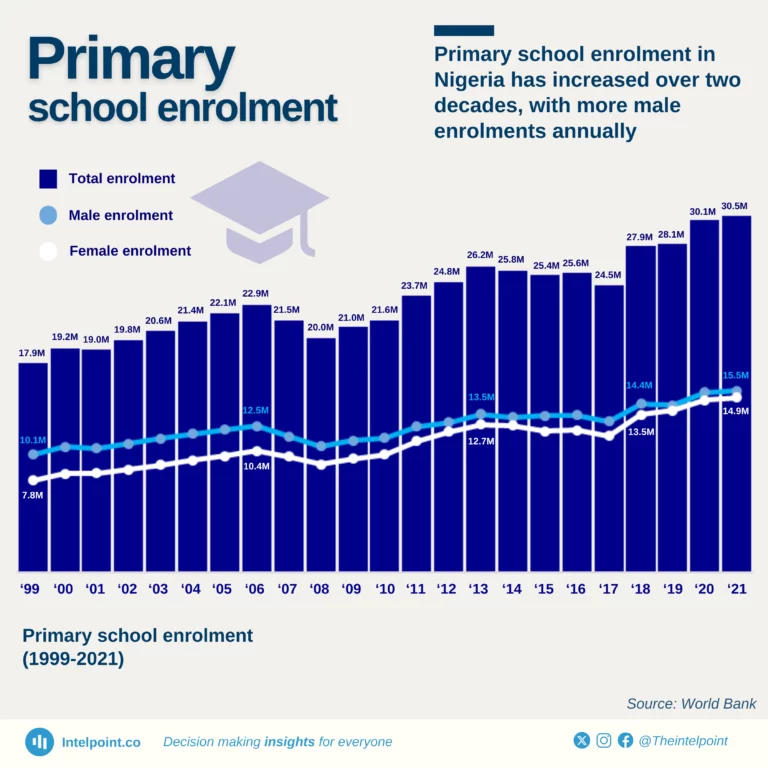
Nigeria's primary school enrolment has increased significantly, reaching 30.5 million enrolments in 2021. This highlights the country's efforts to expand access to education, with consistent annual growth in enrolments over the past two decades.
Notably, male enrolments have consistently surpassed female enrolments annually, but the gaps keep decreasing, signaling continued efforts towards gender parity in education.
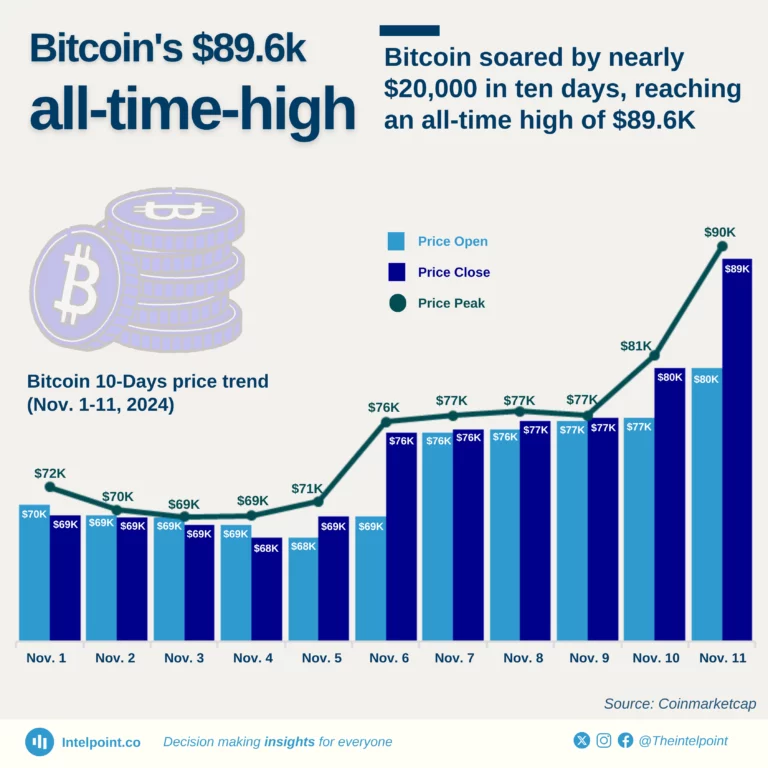
Bitcoin has experienced a remarkable surge, with an increase close to $20,000 in just ten days to reach an all-time high (ATH) of $89.6K on November 11, 2024. This rapid rise depicts the potential of cryptocurrency markets, with Bitcoin leading the charge as the world's most recognised digital asset. The recent price movement shows a growing interest in Bitcoin as an investment asset.
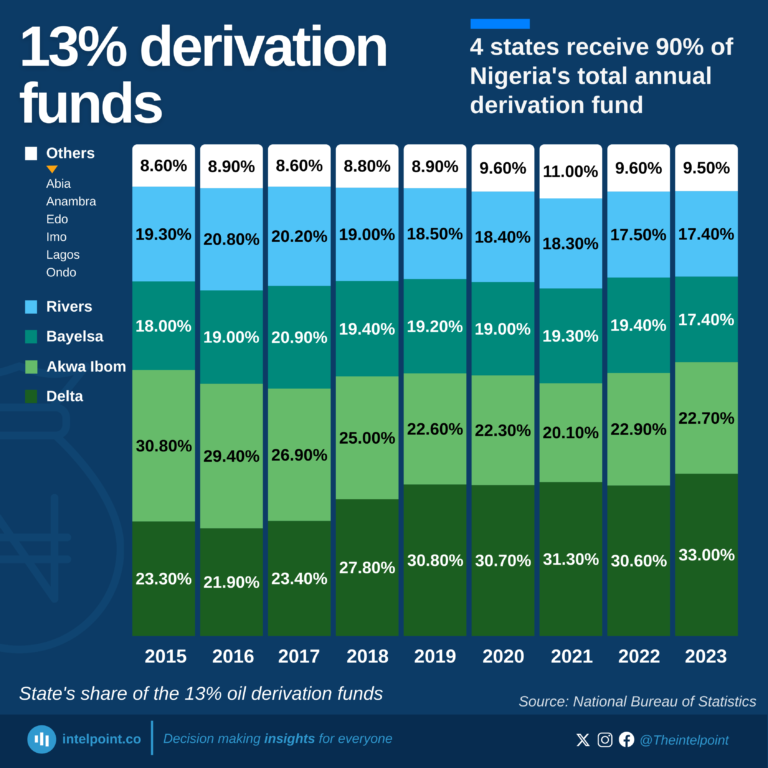
Nigeria’s 13% oil derivation fund is primarily allocated to four states — Delta, Akwa Ibom, Bayelsa, and Rivers — which collectively receive over 90% of the fund annually. This funding is crucial for developing these oil-producing states, with Delta State consistently receiving the largest share in recent years. Other states, including Abia, Anambra, Edo, Imo, Lagos, and Ondo, receive smaller portions.
The 13% derivation fund is part of Nigeria’s revenue-sharing formula aimed at compensating oil-producing states for oil extraction's environmental and infrastructural impacts.
Note: Small allocations to Soku and Gbetiokun are also included in "others".