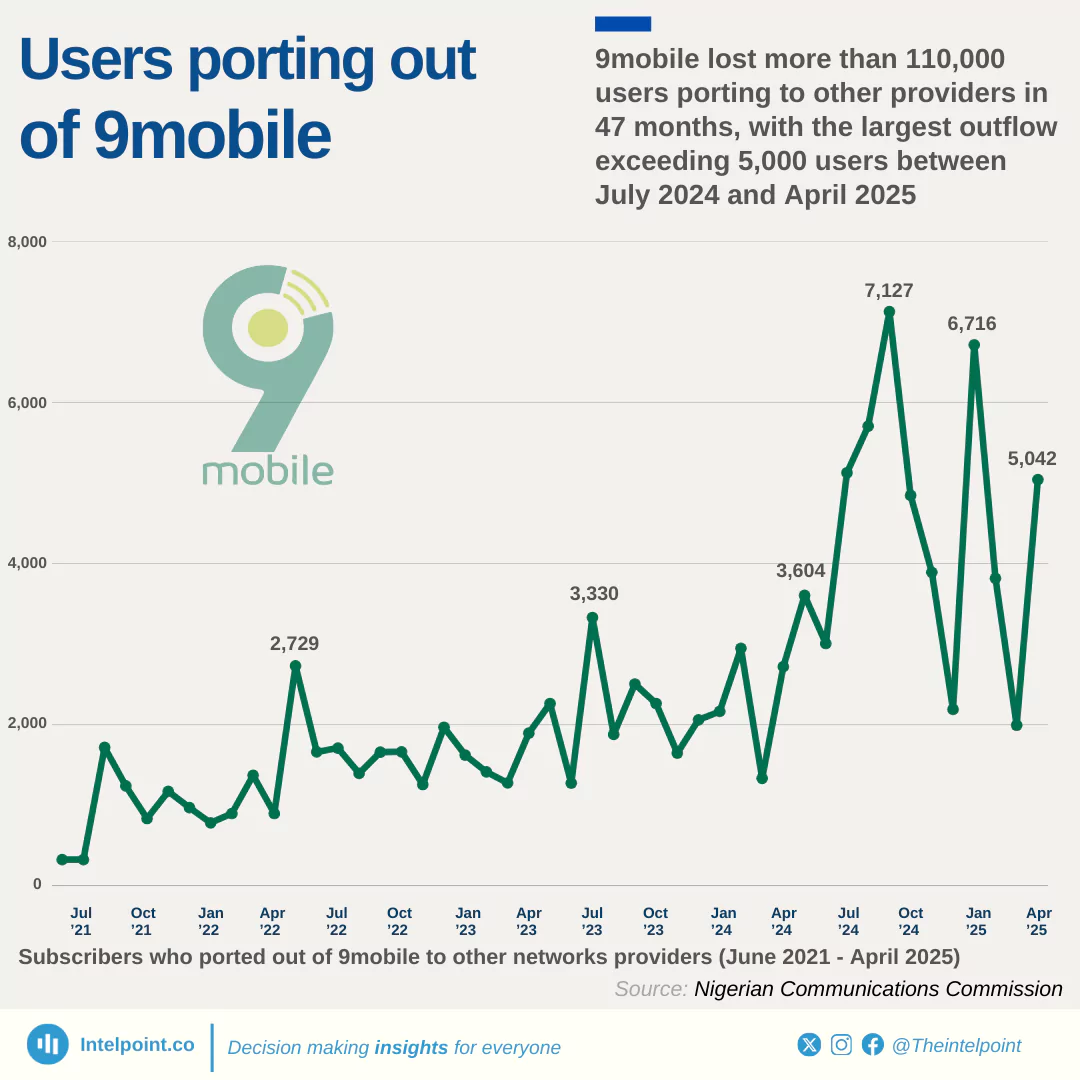
9mobile lost more than 110,000 users porting to other providers in 47 months, with the largest outflow exceeding 5,000 users between July 2024 and April 2025

Key Takeaways:

  • September 2024 saw the most outbound departures (7,127), followed by January 2025 (6,716 losses).
  • From June 2021 to April 2025, the network saw a steady and increasing loss of consumers to other suppliers.
  • The outflow has accelerated considerably since mid-2023, showing growing subscriber dissatisfaction or more appealing options.
  • The largest monthly outflows occurred between July 2024 and April 2025, when more than 5,000 subscribers left on a consistent monthly basis.
  • Early 2021 numbers were extremely low, with only 323 ports in June and July 2021.
  • The number of subscribers transferring out decreased dramatically between September 2024 and December 2024, before peaking again in January 2025.
  • Monthly port-outs rose from 323 in June 2021 to 7,127 in September 2024, an approximately 2,107% increase.

9mobile had a steady increase in the number of users departing the network between 2021 and April 2025. Starting with 323 outgoing ports in mid-2021, the numbers increased gradually until early 2023, when they began to surge significantly.

By the second half of 2024, this trend had accelerated. September 2024 saw the largest single-month outflow, with 7,127 members migrating to rival networks. This was followed closely by January 2025, with 6,716 customer exits. Throughout this time, monthly port-out figures routinely surpassed 5,000.

The volume and consistency of 9mobile's port-out rates most likely reflect service quality, customer experience, pricing, or network coverage.
Source:

Nigerian Communications Commission

Period:

June 2021 - April 2025
HTML code to embed chart
Want a bespoke report?
Reach out
Tags
Related Insights

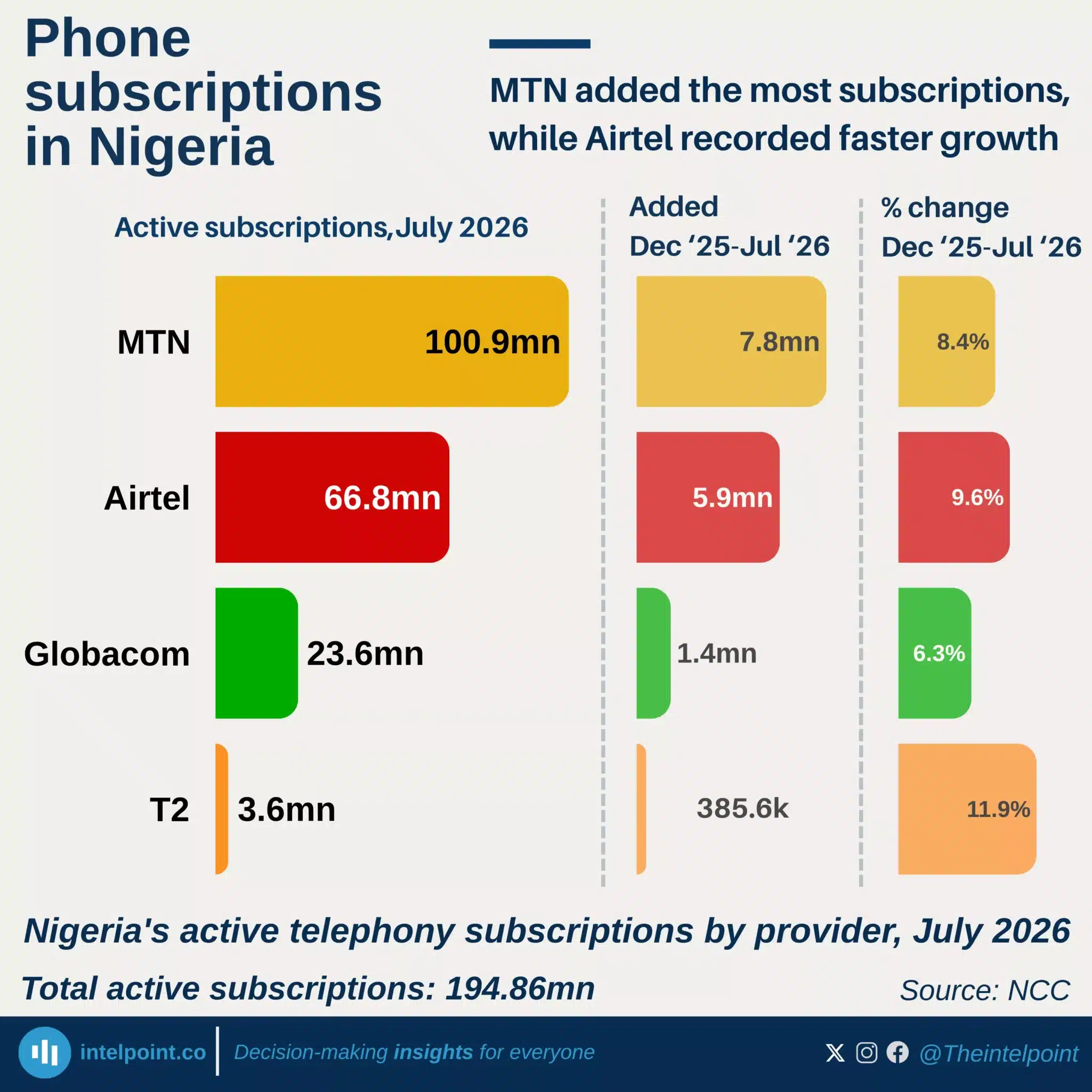
MTN added the most subscriptions, while Airtel recorded faster growth
  • MTN became Nigeria’s first operator to cross 100 million active subscriptions.
  • MTN added 7.8 million subscriptions between December 2025 and July 2026.
  • Airtel grew faster than MTN, despite adding fewer subscriptions overall.
  • T2 recorded the fastest growth at 11.9% over the period.
  • Nigeria’s active subscriptions rose by 15.5 million to 194.9 million.

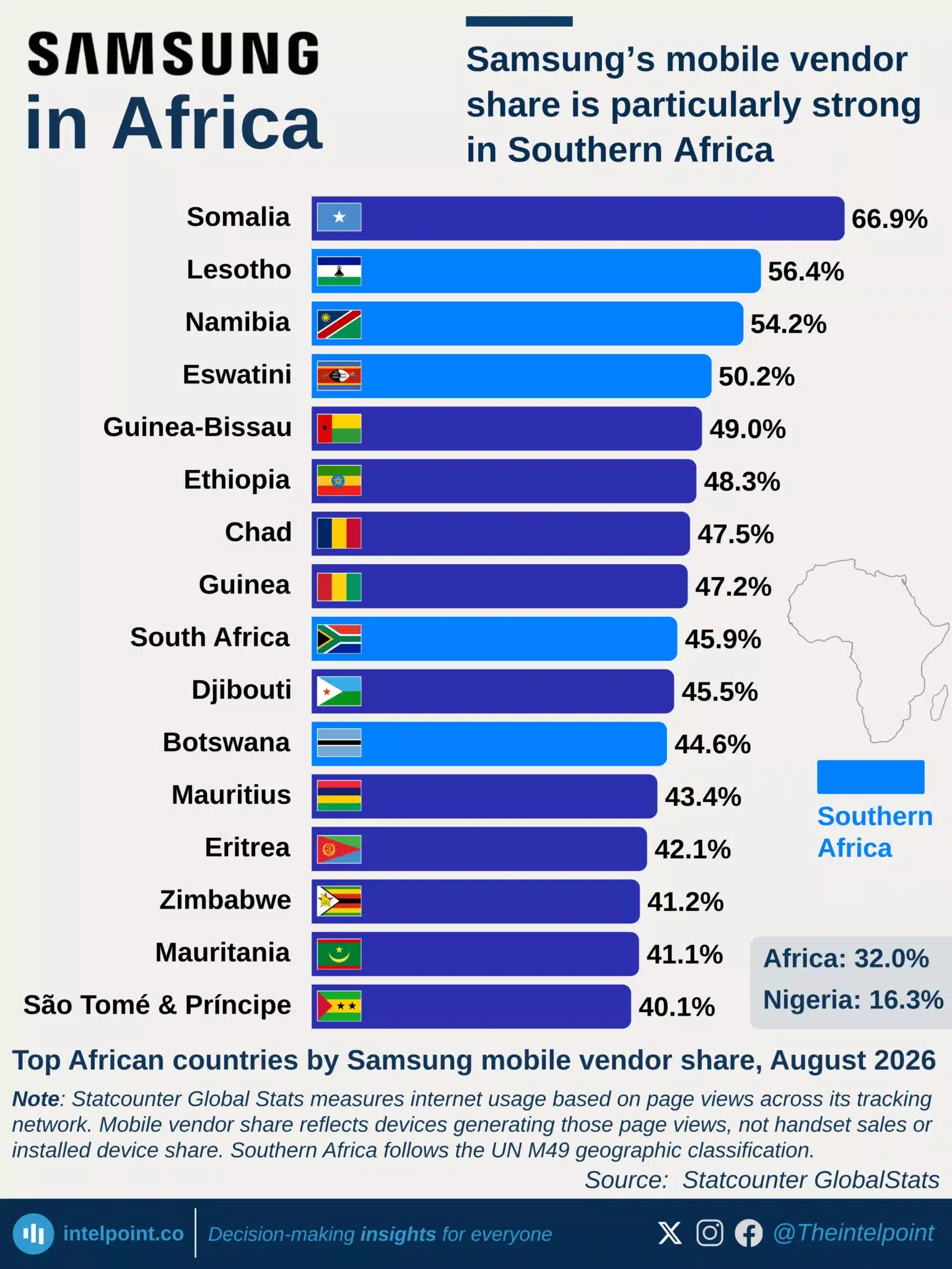
Samsung’s mobile vendor share is particularly strong in Southern Africa
  • Samsung exceeds 50% share in 4 African countries, led by Somalia at 66.9%.
  • Its share exceeds 40% in 16 countries, including Ethiopia, South Africa, Botswana and Zimbabwe.
  • Southern Africa shows particularly high Samsung usage, with all five UN M49 countries above 44%.
  • Samsung’s share is much lower in major markets, including Nigeria (16.3%), Egypt (22.9%) and Ghana (24.7%).
  • Samsung holds a 32.0% share across Africa, based on mobile web traffic rather than device sales.

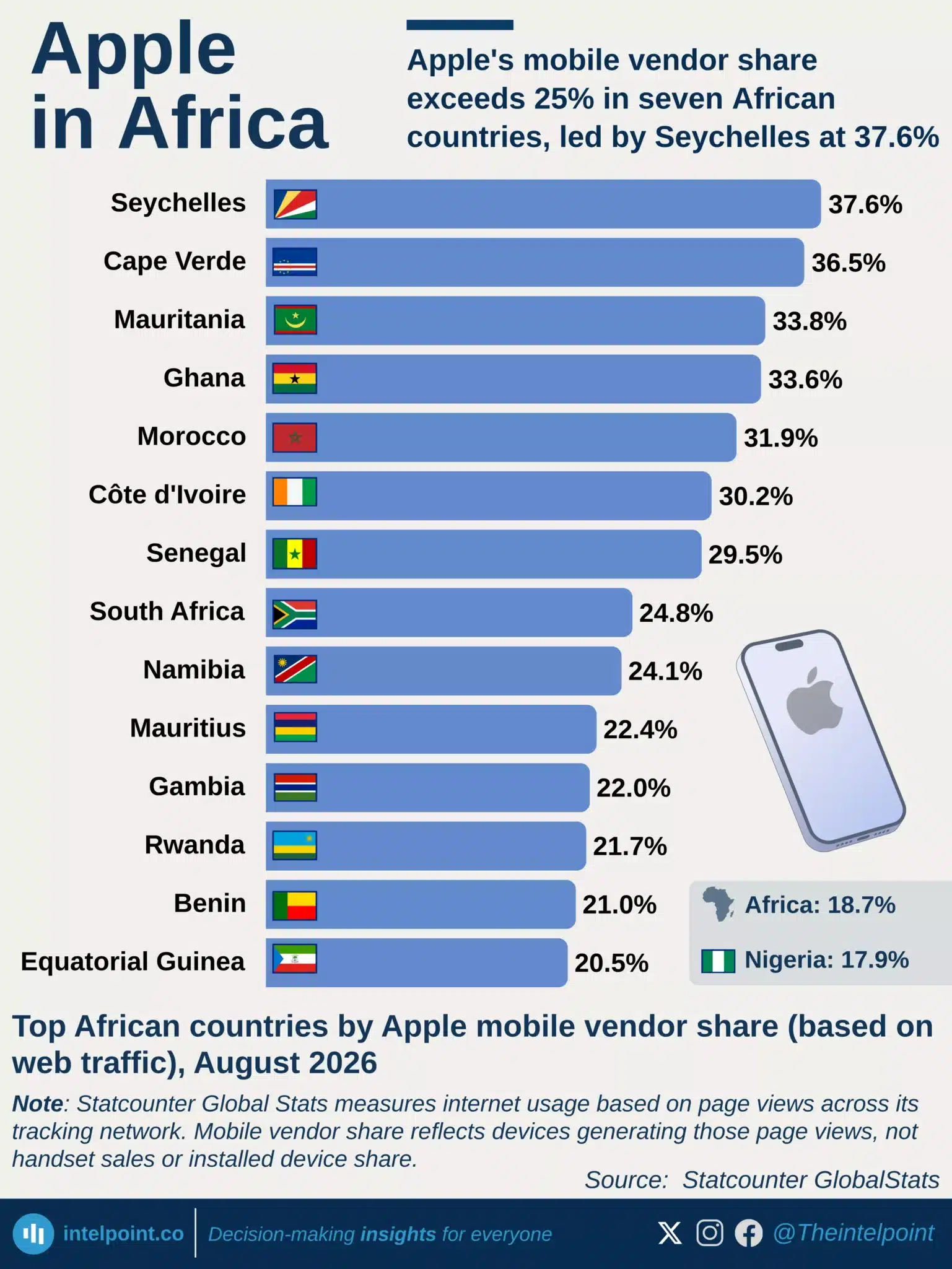
Apple's mobile vendor share exceeds 25% in seven African countries, led by Seychelles at 37.6%
  • Apple exceeds 25% share in 7 African countries, led by Seychelles at 37.6%.
  • Cape Verde and Mauritania follow, at 36.5% and 33.8%, respectively.
  • South Africa trails just below 25%, with a 24.8% share.
  • Nigeria’s 17.9% share is close to Africa’s 18.7% average, despite its market size.
  • These figures measure web traffic, not device sales or installed smartphone base.

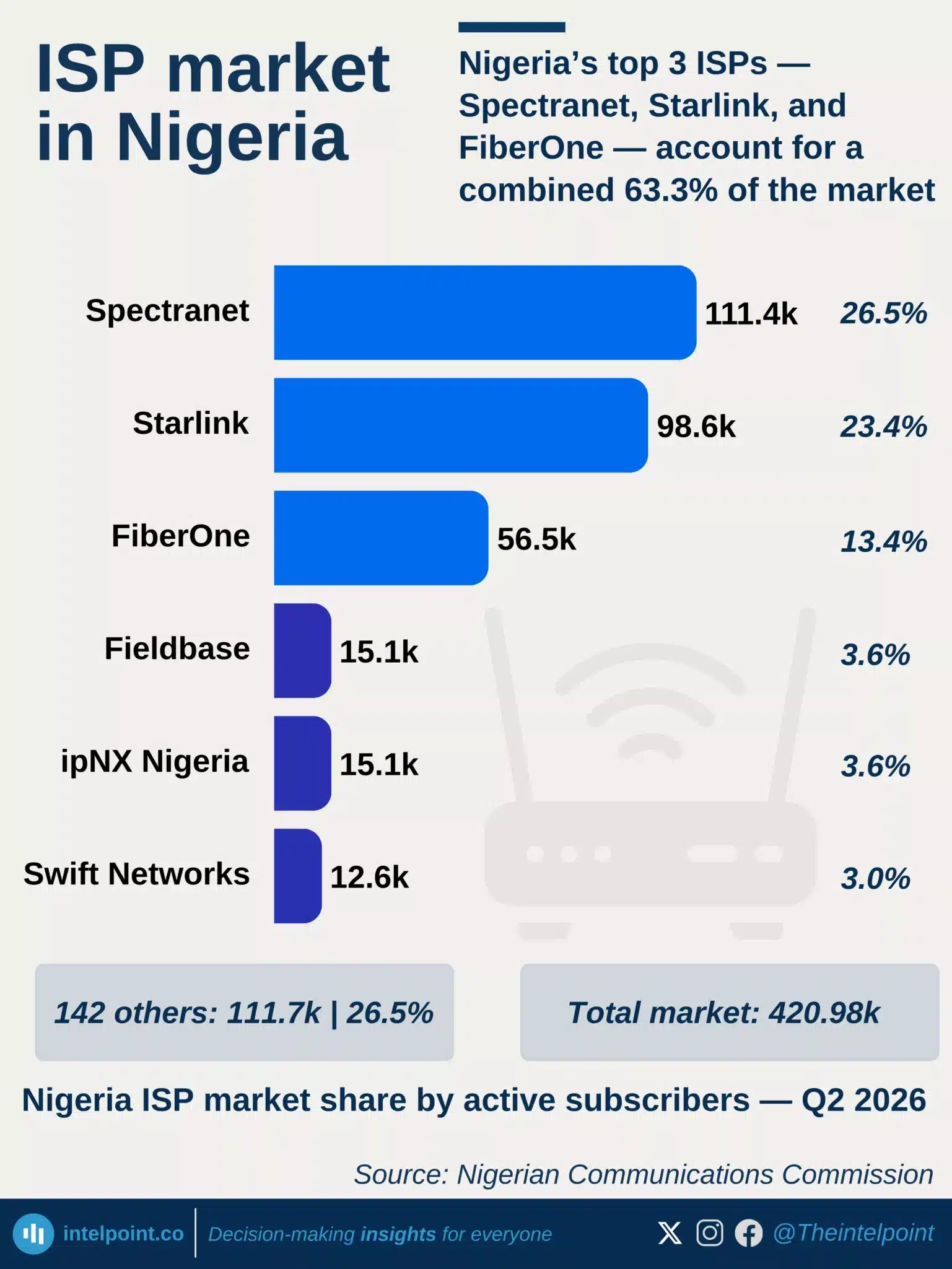
Nigeria’s top 3 ISPs — Spectranet, Starlink, and FiberOne — account for a combined 63.3% of the market
  • Spectranet leads with 111,384 subscribers, ahead of Starlink's 98,642.
  • Starlink added 6,651 subscribers since December 2025, narrowing the gap to 12,742.
  • Fieldbase Services overtook ipNX for 4th place by just 18 subscribers.
  • The top three ISPs account for over 63% of Nigeria's 420,989 active subscribers.

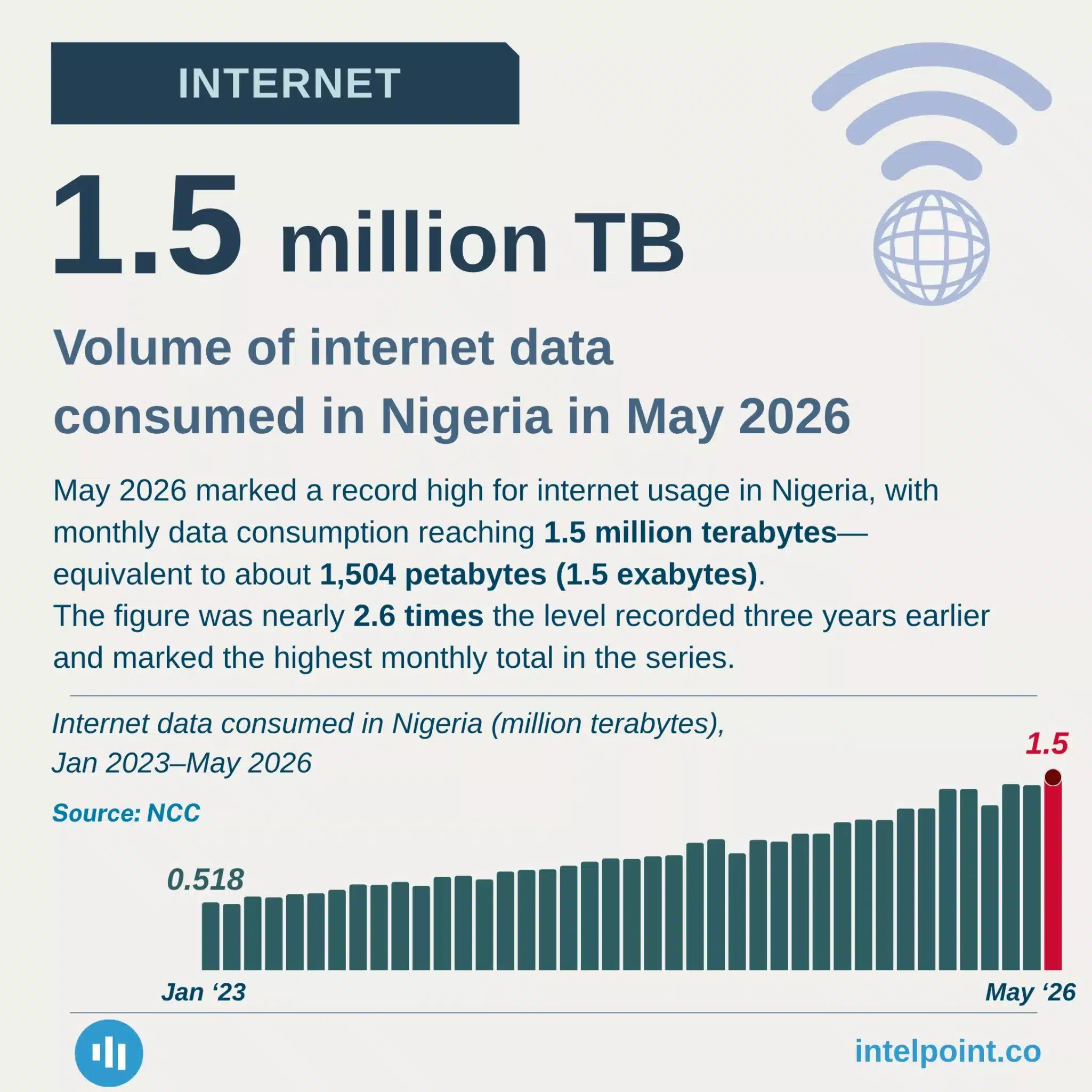
Volume of internet data consumed in Nigeria in May 2026
  • 1.5 million TB was consumed in May 2026, the highest monthly level on record.
  • 7 million TB was consumed in Jan–May 2026, up 42.1% from the same period in 2025.
  • Jan–May 2026 usage was 88.4% higher than in 2024 and 156.3% higher than in 2023.
  • May’s monthly usage was nearly 2.6× the level recorded three years earlier.
  • The surge points to rapidly growing demand for internet-based services, content and digital activity in Nigeria.

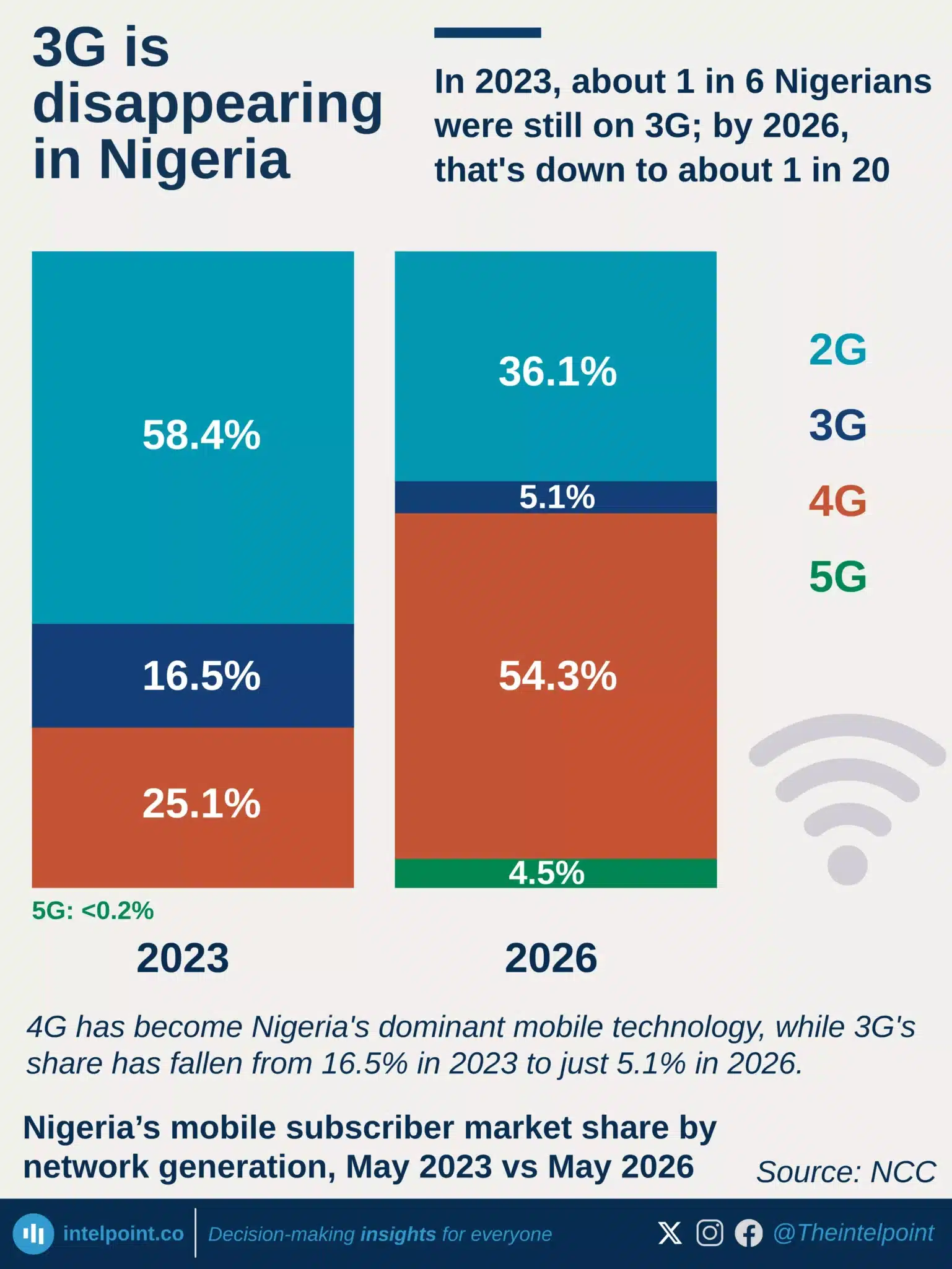
In 2023, about 1 in 6 Nigerians were still on 3G; by 2026, that's down to about 1 in 20
  • 3G's share of Nigeria's mobile market fell from 16.5% to 5.1% between May 2023 and May 2026.
  • 4G became the dominant network, with its market share rising from 25.1% to 54.3% over the same period.
  • 2G's share declined from 58.4% to 36.1% but still accounted for more than one-third of all mobile connections.
  • 5G expanded nearly 37-fold, growing from less than 0.1% to 4.5% of mobile subscriptions.

POPULAR TOPICS
SIGN UP TO OUR NEWSLETTER
Get periodic updates about the African startup space, access to our reports, among others.
Subscribe Here
Subscription Form

A product of Techpoint Africa. All rights reserved