The 2024 Global Peace Index reveals a decline in peacefulness in 97 countries, the highest since the index began.
Nigeria is among the nations affected by regional conflicts and rising violence. With a peace index score of 2.91, Nigeria is facing increasing challenges.
A deteriorating peace score impacts foreign investment and economic stability. Global economic losses due to violence reached $19.1 trillion in 2023.

Between 2018 and 2021, adult literacy rates across African nations exhibited significant disparities. Seychelles and South Africa led with literacy rates of 96% and 95%, respectively, indicating a high proportion of literate adults. Conversely, Chad had the lowest literacy rate during this period.
These statistics underscore the uneven progress in educational attainment across Africa, highlighting the need for targeted interventions to improve literacy in lower-performing nations.

Nigeria was the seventh most populous nation in the world in 2020, with 206.1 million people. Projected to reach a population of 401.3 million by 2050, Nigeria will rank third after India (1st) and China (2nd). According to Institut national d'études démographiques' projections, Nigeria, Ethiopia, DR Congo, Egypt, Tanzania, and Kenya will be among the world’s top 20 most populous countries by 2050.
The 2024 Global Peace Index reveals a decline in peacefulness in 97 countries, the highest since the index began.
Nigeria is among the nations affected by regional conflicts and rising violence. With a peace index score of 2.91, Nigeria is facing increasing challenges.
A deteriorating peace score impacts foreign investment and economic stability. Global economic losses due to violence reached $19.1 trillion in 2023.

South Africa leads the continent's market, with 41 data centres. It has more data centres than Nigeria (15) and Kenya (16), its closest competitors.
Africa's data centre market is nascent, with less than 200 centres.

Since the 1950s, the top sources of international students in the US have changed, with Canada initially leading, followed by Iran in the 1970s, Taiwan and Japan in the 1980s and 90s, and China and India taking the lead from the 2000s onward.
China and India account for a combined 54% of the total international students in the US as of the 2023/2024 academic year.
By 2021, Nigeria entered the top ten, reaching 7th place by 2024.

Since the 2007/08 academic year, Nigeria has consistently held the top spot for the number of African international students in the US. Before this, Kenya and Egypt also led in certain periods.
This trend highlights the evolving landscape of African students pursuing education in the US over the decades.

Nigeria remains the leading African country of origin for students in the US, with over 20,000 enrolled this year.
Ghana, however, recorded the continent's fastest growth rate at 45%. This increase of over 2,900 students brought Ghana’s total to nearly 9,400, making it the second-largest source of African students in the US.
Nigeria also saw a 13.5% rise, adding more than 2,380 students year-over-year.
Overall, the number of students from African countries in the US grew by nearly 12% in the 2023/24 academic year.

From the early 1960s through the 1990s, Ethiopia's cattle population growth placed it at the forefront of African livestock rearers, holding the top position with millions of cattle.
This leadership continued into the 2000s, reflecting Ethiopia's robust cattle industry on the continent. Sudan managed to take the top position a few times, mostly around the 2000s.
However, Ethiopia quickly reclaimed the top spot. Nigeria's cattle population grew from about 6.03 million in 1961 to 20.9 million in 2022, claiming 6th position in Africa as of 2022.
Africa accounted for one-fourth of the global cattle population as of 2022.

Until 1976, Ghana was the world’s largest cocoa producer, with an average annual output of 410,000 tonnes. However, Ghana lost this lead when production fell to 277,000 tonnes in 1997, allowing Côte d'Ivoire and Brazil to overtake.
Since 1977, Côte d'Ivoire has led global cocoa production, increasing its output by 634%.
Nigeria’s cocoa production peaked at 485,000 tonnes in 2006, consistently ranking among the top ten producers.
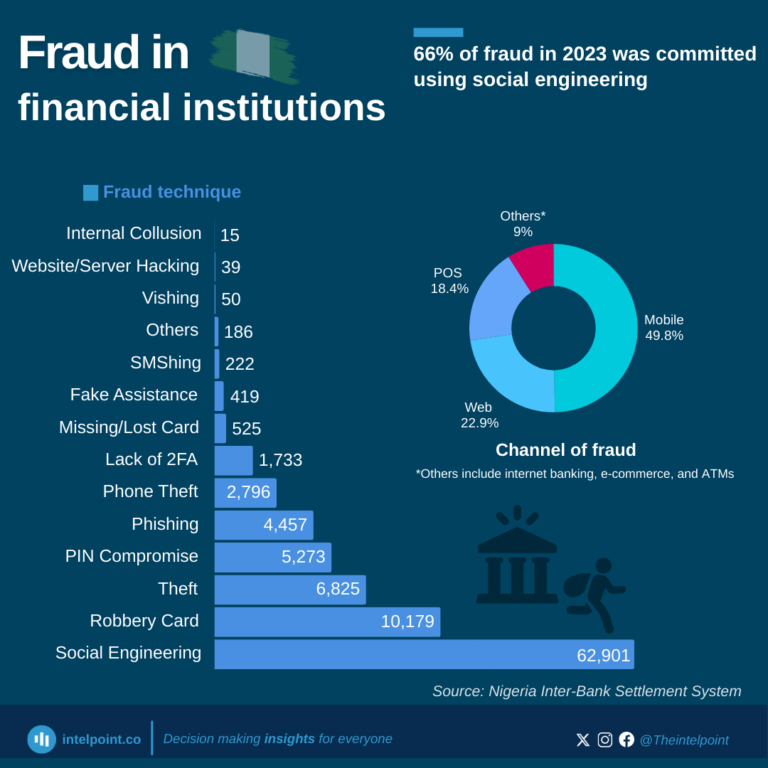
In 2023, 66% of fraud cases were committed using social engineering, the most common technique. Mobile channels accounted for 50% of fraud, followed by web channels (23%) and POS channels (18%).
Technique: How the fraud is committed.
Channel: Where the fraud is committed.
Techniques refer to the methods fraudsters use to deceive victims, and Channels refer to the platforms through which the fraud is carried it.
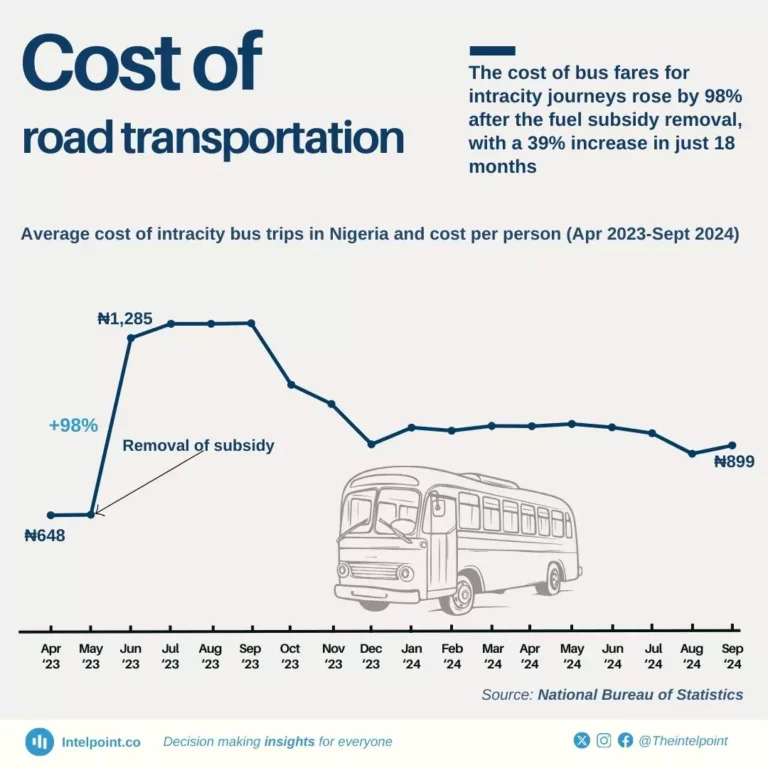
After the fuel subsidy was removed, the cost of bus fares for intracity journeys rose by 98% between May 2023 and June 2023. In just 18 months, fares increased by 39% significantly affecting commuters.
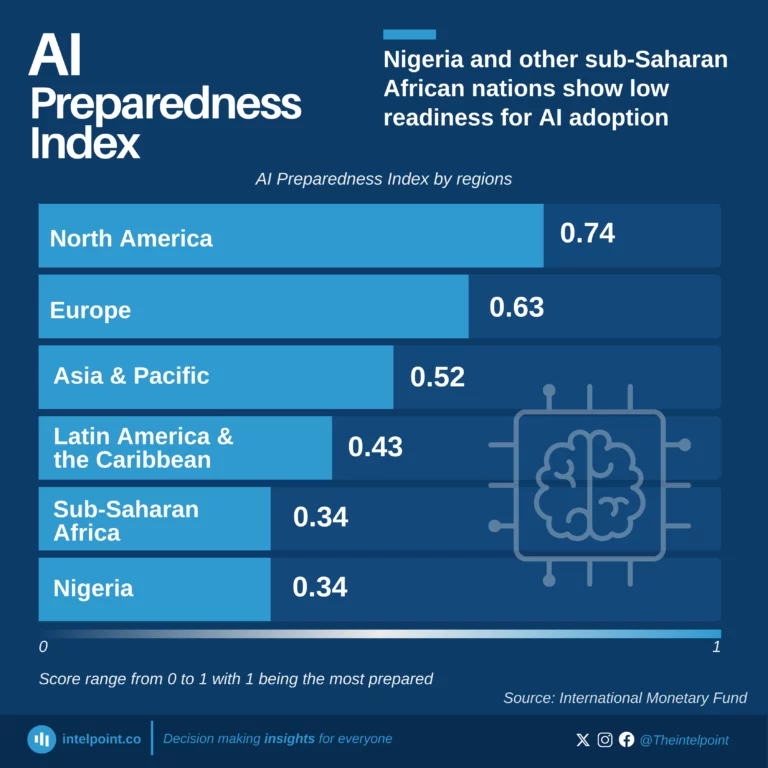
Nigeria and other sub-Saharan African nations still lag in AI readiness, scoring 0.34 on the AI Preparedness Index. This shows the need for more investment, better infrastructure, and a willingness to embrace the AI revolution. For those who want to understand how global digital progress intersects with academic work, consider exploring services like dissertation ghostwriter – especially in regions where access to expert academic support may be limited.
The AI Preparedness Index measures the level of AI readiness across 173 countries and 13 regions. It evaluates factors such as digital infrastructure, workforce skills, innovation, economic policies, and ethical regulations.
Note: Scores range from 0 to 1, with 1 being the most prepared.
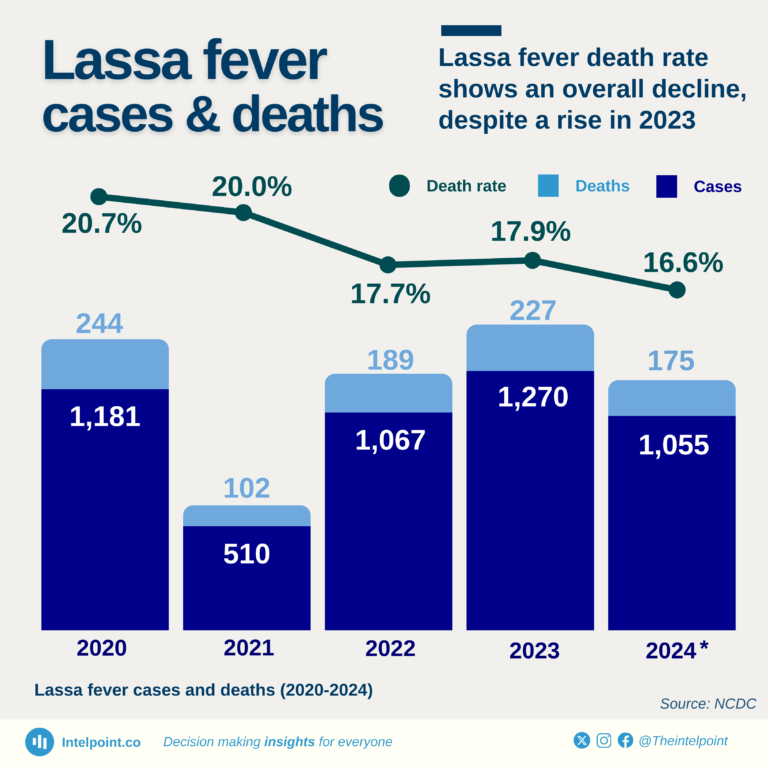
Lassa fever cases and deaths have shown significant variations over the years, but the death rate decreased in the first ten months of 2024 despite rising in 2023. This downward trend reflects improvements in early detection, medical interventions, and public health measures.
For many communities across Nigeria, Lassa fever remains a serious health concern, especially in rural areas with limited access to healthcare facilities. As efforts to combat the disease intensify, public awareness campaigns, proper hygiene, and access to treatment have played a vital role in reducing fatalities and giving hope to affected families.
Note: Data for 2024 only include the first ten months of the year
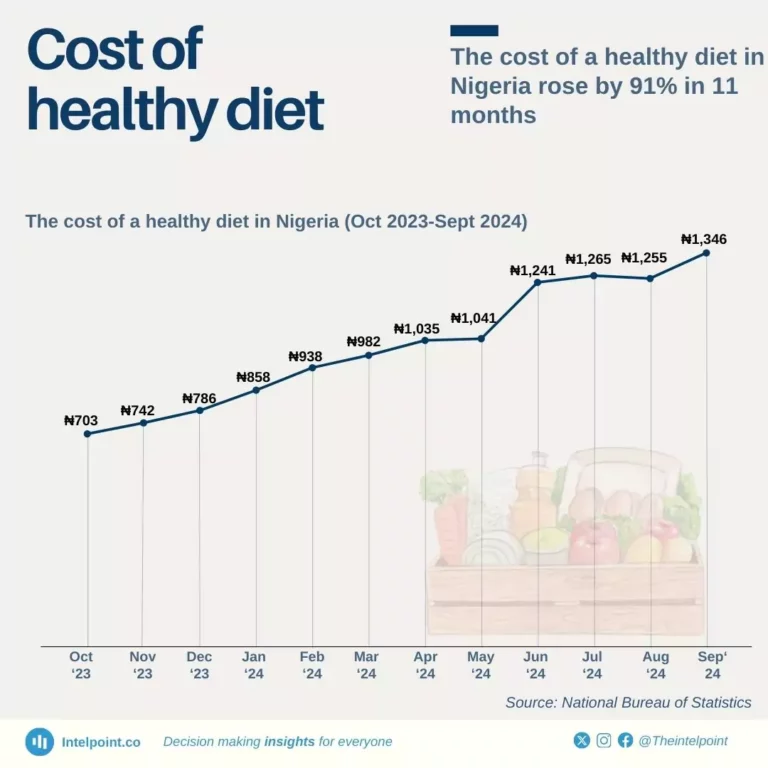
The Cost of a Healthy Diet (CoHD) represents the most affordable combination of locally available foods that meet global dietary standards for a balanced diet, excluding transportation and meal preparation costs.
In Nigeria, the CoHD surged by 91%, rising from ₦703 in October 2023 to ₦1,346 in September 2024. This sharp increase underscores Nigerians' escalating financial challenges in maintaining a nutritious diet.