Bite-sized Insights about
 
Providing you with data-based insights about things happening around you.
Popular Insights
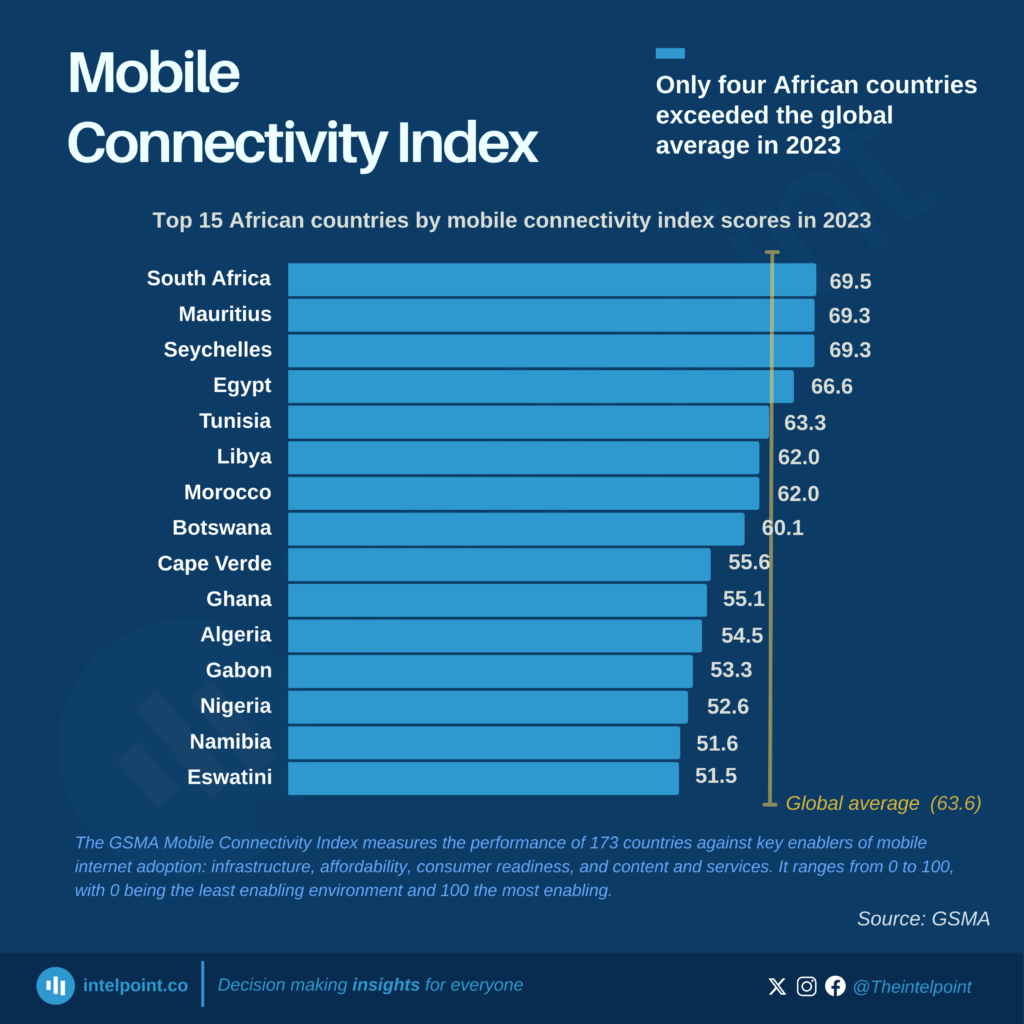
  • A country with strong infrastructure, affordable services, and high digital literacy, enabling everyone to use fast and reliable mobile internet will have a perfect score (100) on the GSMA's Mobile Connectivity Index 2023. South Africa leads in Africa with 69.53.
    Globally, Singapore is first, with a score of 93.7, setting the benchmark for mobile internet adoption. Only four African countries — South Africa, Mauritius, Seychelles, and Egypt — surpassed the global average score.
    Tunisia, Ghana, and Nigeria scored below the global average.
    The Mobile Connectivity Index analysed measured 173 countries' mobile internet adoption from 2014-2023, normalising indicators to a 0-100 scale for consistency. The factors assessed include infrastructure, affordability, digital literacy, and policy frameworks.


    See more
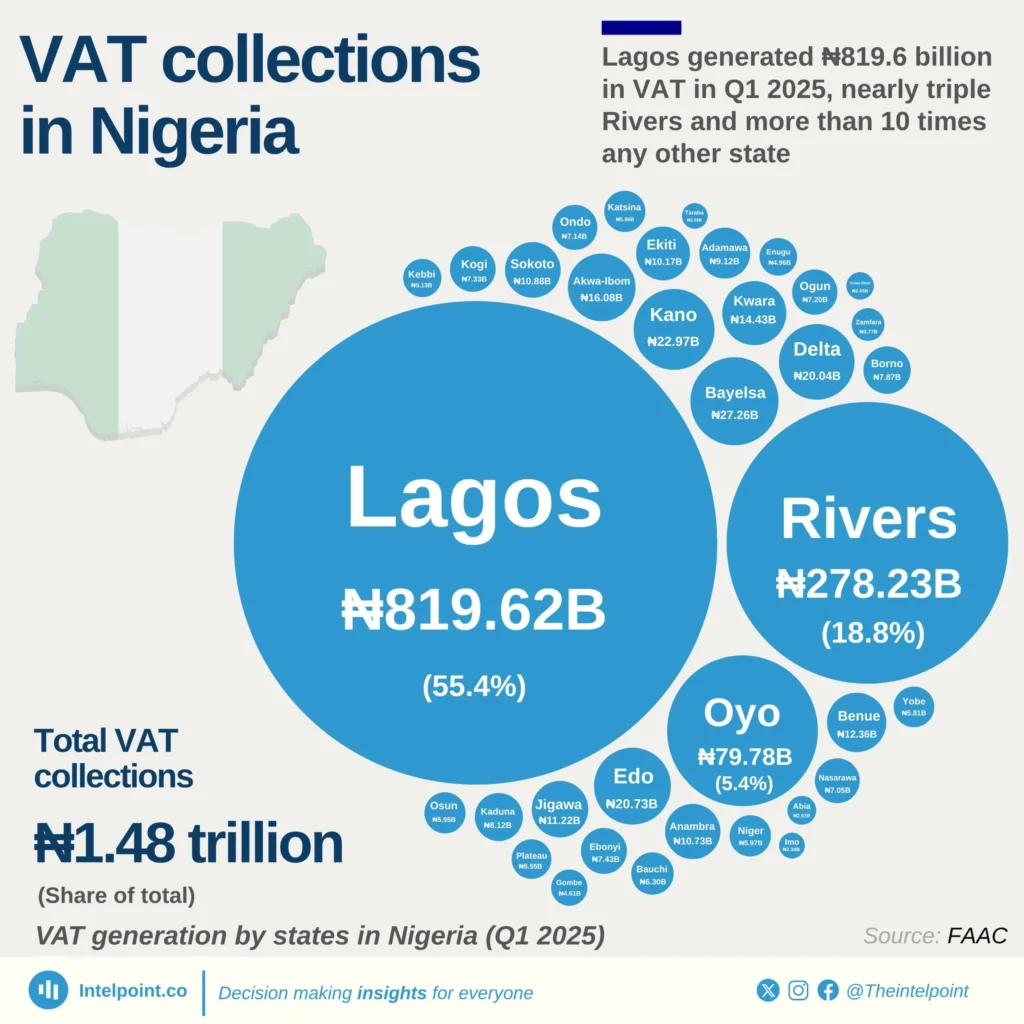
    • Lagos led the nation with ₦819.62B VAT, over 45% of the total generated by all 36 states combined.
    • Rivers followed distantly with ₦278.23B, around 34% of Lagos’s VAT haul.
    • Only five states (Lagos, Rivers, Oyo, Bayelsa, Kano) generated over ₦21B in Q1 2025.
    • 22 states generated below ₦10B, with 13 of them earning less than ₦6B in VAT.
    • Northern states like Katsina (₦5.96B), Yobe (₦5.81B), and Kebbi (₦5.13B) trail significantly in VAT contributions.
    • Abia, Cross River, Imo, and Taraba sit at the bottom, each with under ₦3B in VAT returns.
    See more
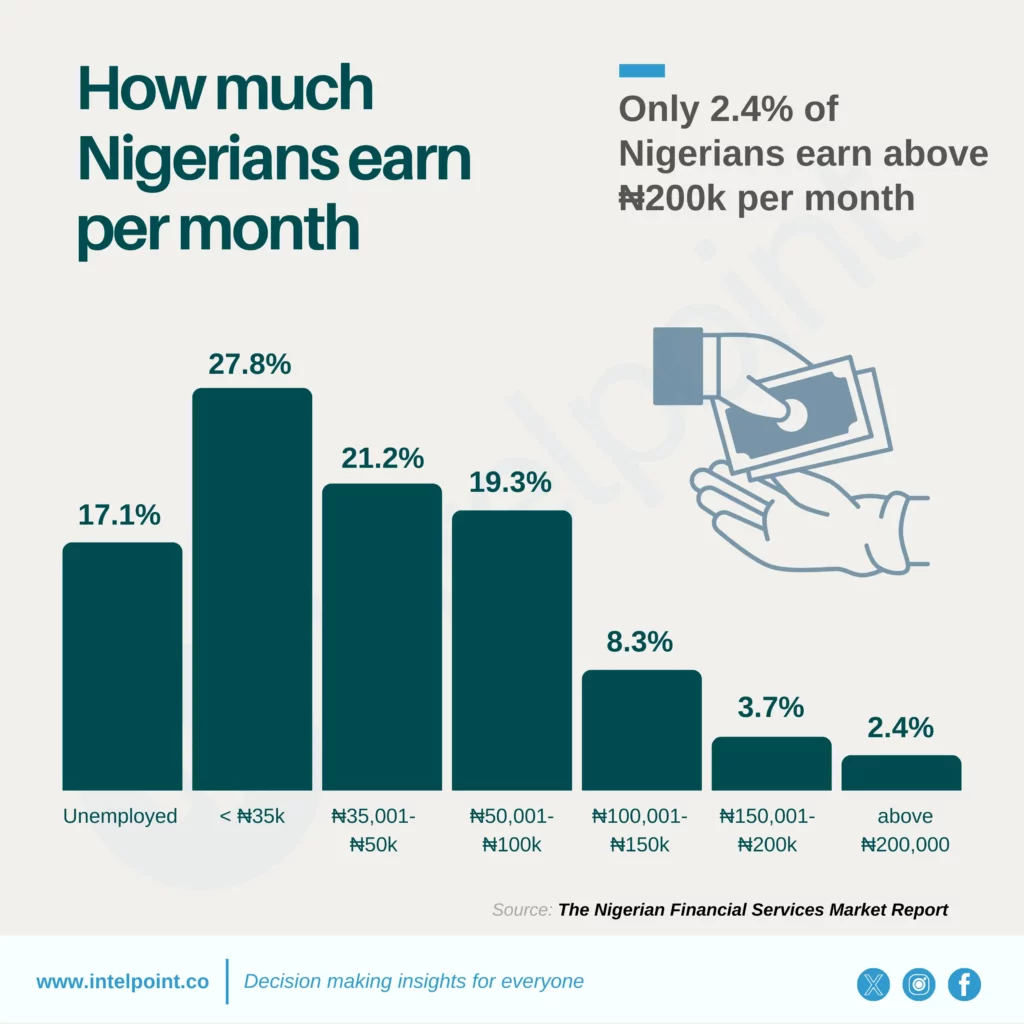
  • Only 10% of Nigerians earn above ₦100,000, according to the Nigerian Financial Services Market Report. This aligns with most reports about Nigeria, and it's in sharp contrast to the narratives online.
    See more
    A Trend of Adult literacy rates of African countries

    Between 2018 and 2021, adult literacy rates across African nations exhibited significant disparities. Seychelles and South Africa led with literacy rates of 96% and 95%, respectively, indicating a high proportion of literate adults. Conversely, Chad had the lowest literacy rate during this period.

    These statistics underscore the uneven progress in educational attainment across Africa, highlighting the need for targeted interventions to improve literacy in lower-performing nations.
    See more
  • The FAAC's revenue distribution from 2017 to August 2023 highlights the dominance of Delta, Akwa Ibom, Rivers, and Bayelsa states in allocations. Despite Lagos' economic prominence, it ranked fifth. Here is the distribution of revenue among states between 2017 and August 2023.

    See more
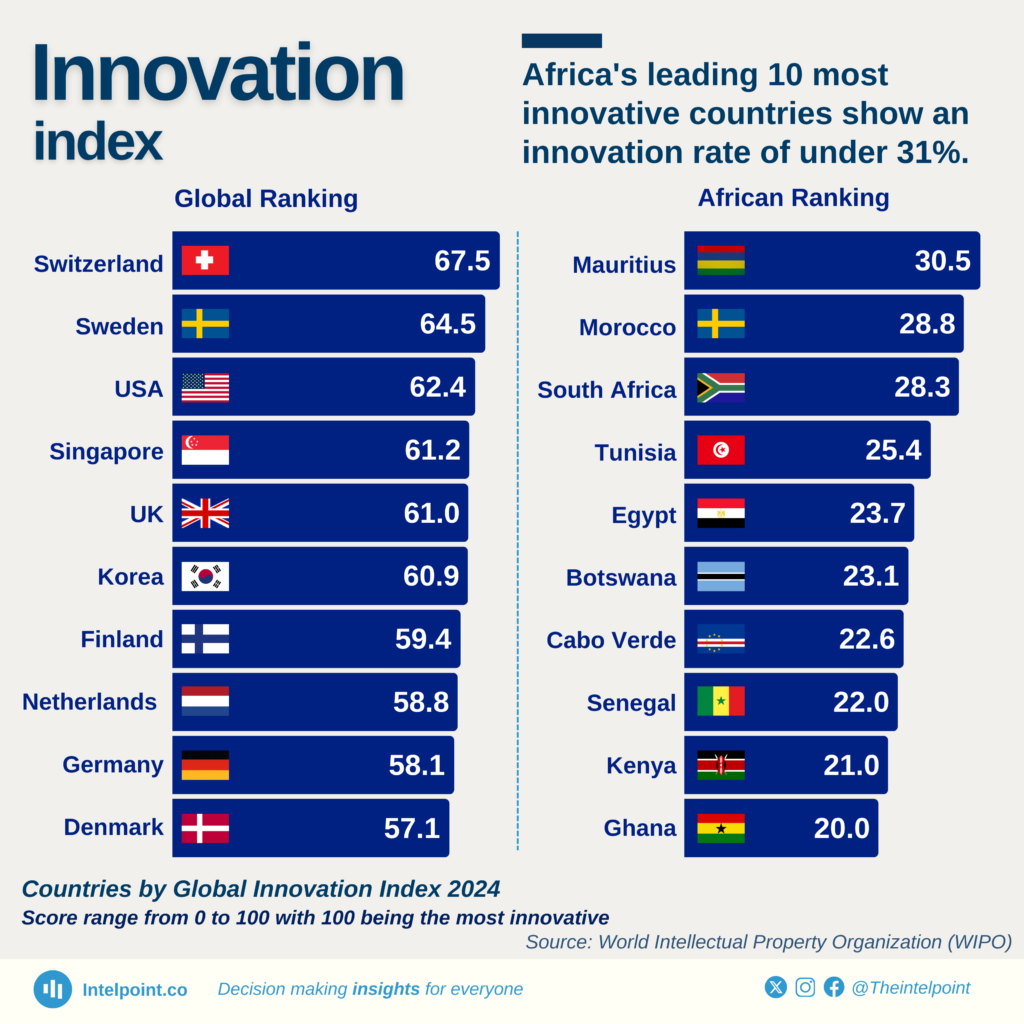
    Countries by Global Innovation Index 2024

    The Global Innovation Index 2024 reveals a striking contrast in innovation performance between countries globally and across Africa. Switzerland leads the global rankings with an impressive score of 67.5, followed by Sweden (64.5) and the USA (62.4), highlighting their sustained investments in research, development, and technological advancement.

    In Africa, Mauritius takes the top spot with a score of 30.5, followed closely by Morocco (28.8) and South Africa (28.3). However, even Africa's most innovative nations achieve less than half the score of global leaders, indicating a significant innovation gap.

    Nigeria ranks 15th in the African ranking and 113th globally, out of 133 countries, with a score of 17.1.

    See more

  • Per Africa Wealth Report 2024, South Africa maintained its position as the country with the most millionaires in Africa in 2023.

    The country has 2.4x the number of millionaires as Egypt and 4.6x the figure of Nigeria.

    See more
  • The 2024 Global Peace Index reveals a decline in peacefulness in 97 countries, the highest since the index began.

    Nigeria is among the nations affected by regional conflicts and rising violence. With a peace index score of 2.91, Nigeria is facing increasing challenges.

    A deteriorating peace score impacts foreign investment and economic stability. Global economic losses due to violence reached $19.1 trillion in 2023.
    See more
  • Only 10% of Nigerians earn above ₦100,000, according to the Nigerian Financial Services Market Report. This aligns with most reports about Nigeria, and it's in sharp contrast to the narratives online.
    See more

Other Insights

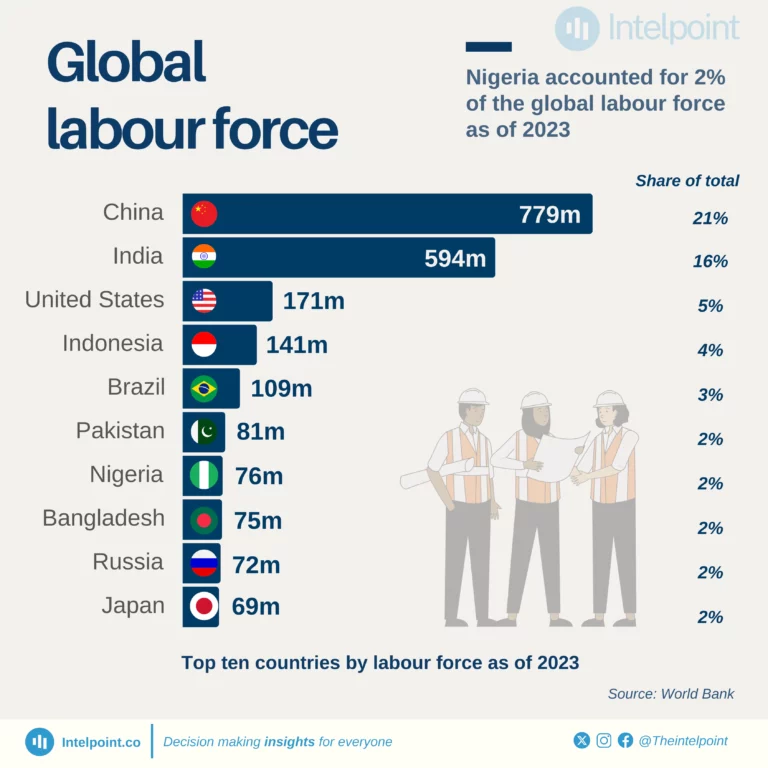
As of 2023, the global labour force has expanded to an estimated 3.63 billion, driven by population booms in key regions.

China and India lead with a combined 1.37 billion people 15+ active in the workforce.

Nigeria ranks 7th with 76 million, following the US, Indonesia, Brazil, and Pakistan.
See more

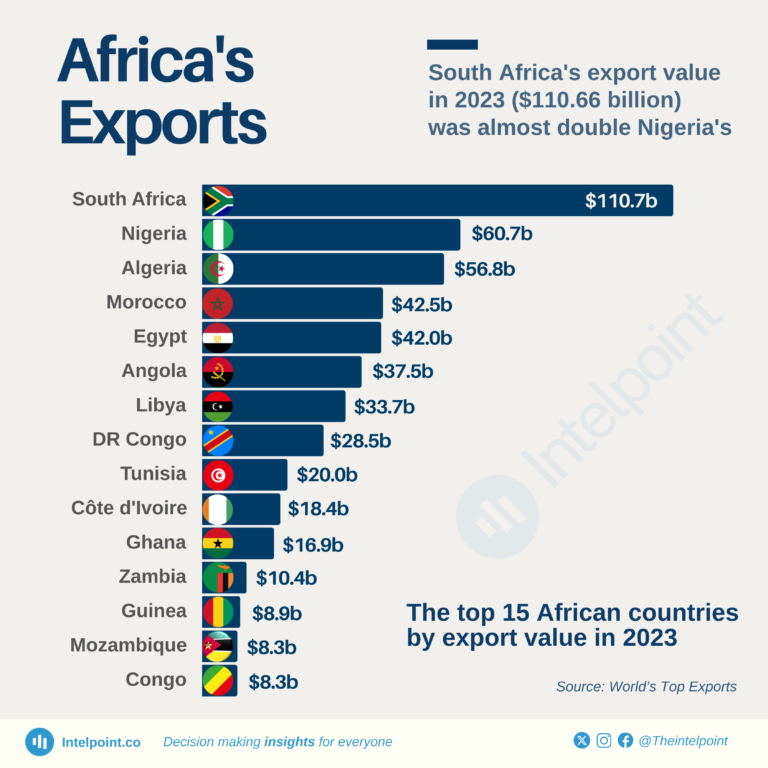
In 2023, South Africa led Africa's exports with a value of $110.7 billion, nearly double Nigeria's $60.7 billion. Key exports include gems, vehicles, and mineral fuels.

The top 15 African exporters contribute 84% to the continent's trade, with South Africa, Nigeria, Algeria, Morocco, and Egypt leading with a combined 52%.

See more

The cumulative number of asylum applications to the UK has exceeded one million, with Iran, Afghanistan, Iraq, Pakistan, and Albania being major contributors.

African countries such as Eritrea, Somalia, Zimbabwe, the DR Congo, and Nigeria have also been in the top ten.

These are the top ten nationalities in the past 23 years.
See more
     

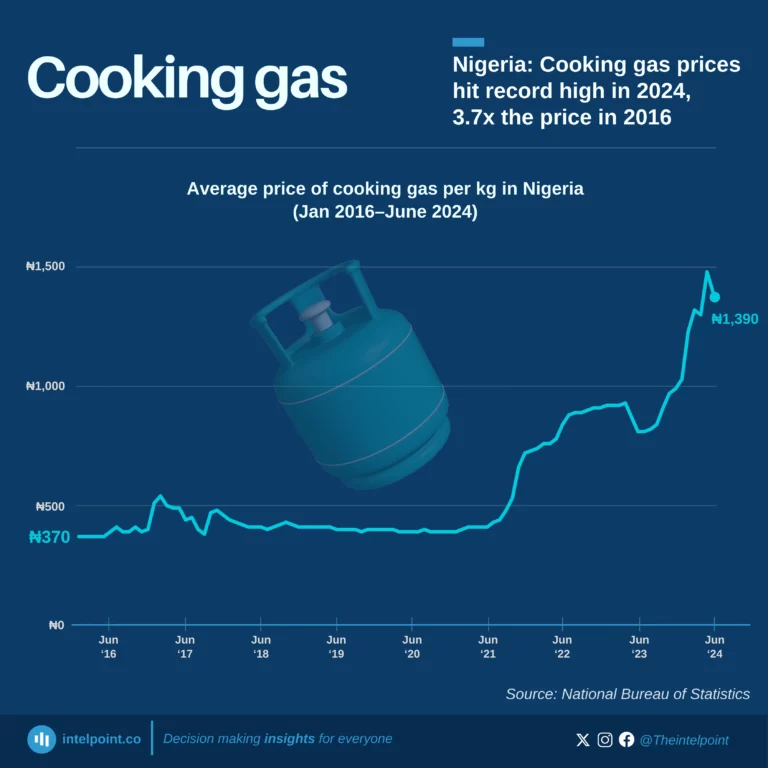
The average price of cooking gas in Nigeria has increased significantly, from ₦370 per kg in early 2016 to ₦1,390 per kg in June 2024.

After prices peaked at nearly ₦1,500 in May 2024, they fell by 6.1% in June.

The contributing factors to the increase include global energy fluctuations, naira depreciation, supply chain disruptions, and changes in domestic policies.

Here are the average prices of cooking gas in Nigeria since 2016.
See more

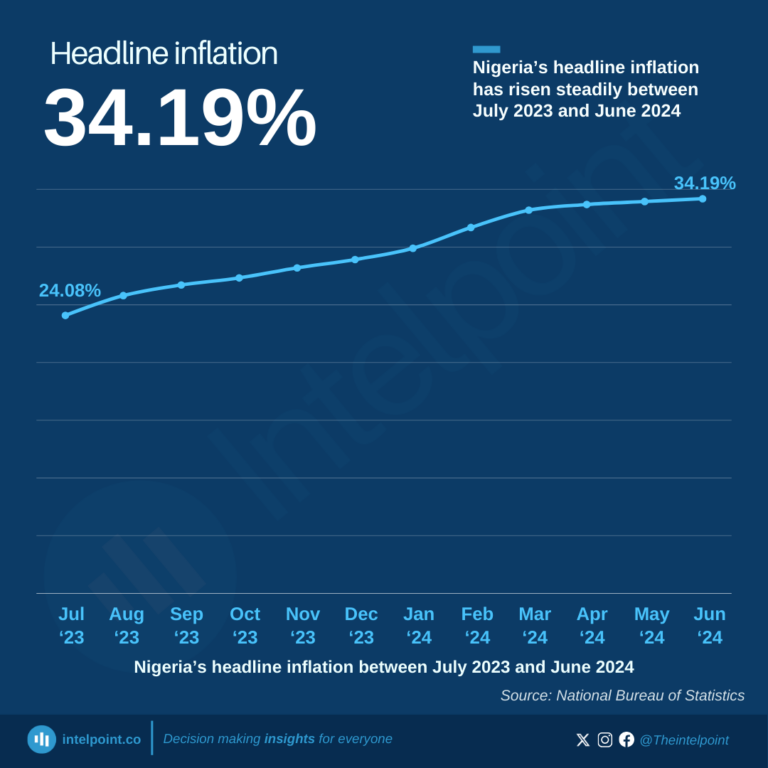
Prices of food items like tomatoes, yams, Irish potatoes, and brown beans have witnessed more than a 250% increase over the past 12 months in Nigeria. The country's headline inflation rate went from 24.08% in July 2023 to 34.19% in June 2024.

See more

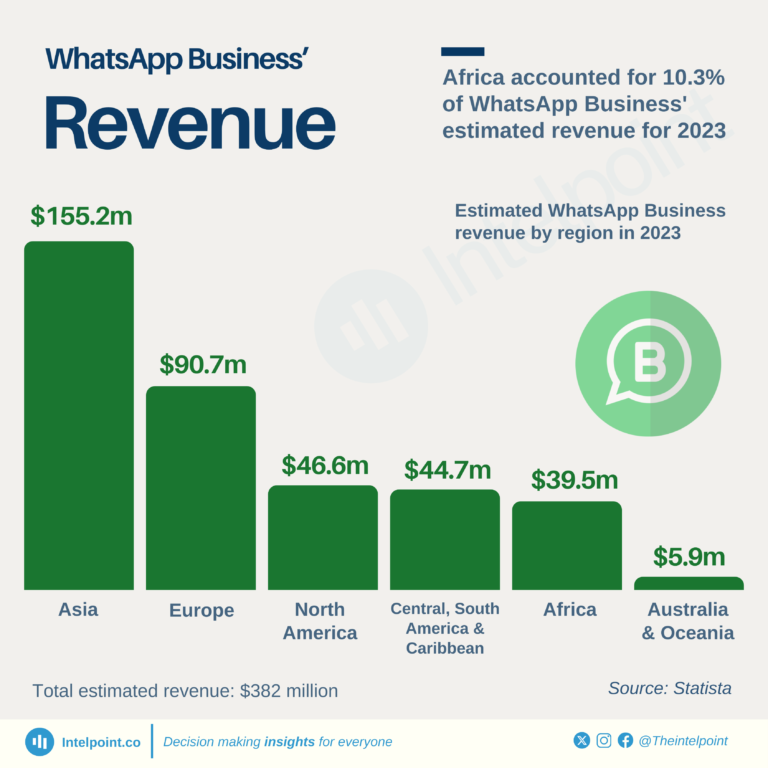
WhatsApp Business generated an estimated $39.5 million from Africa in 2023, representing 10.3% of its global revenue.

Estimates from Statista show that Asia was the leading contributor to WhatsApp Business' revenue, with $155.2 million.

Here is a breakdown of WhatsApp Business' revenue by region in 2023.
See more
     

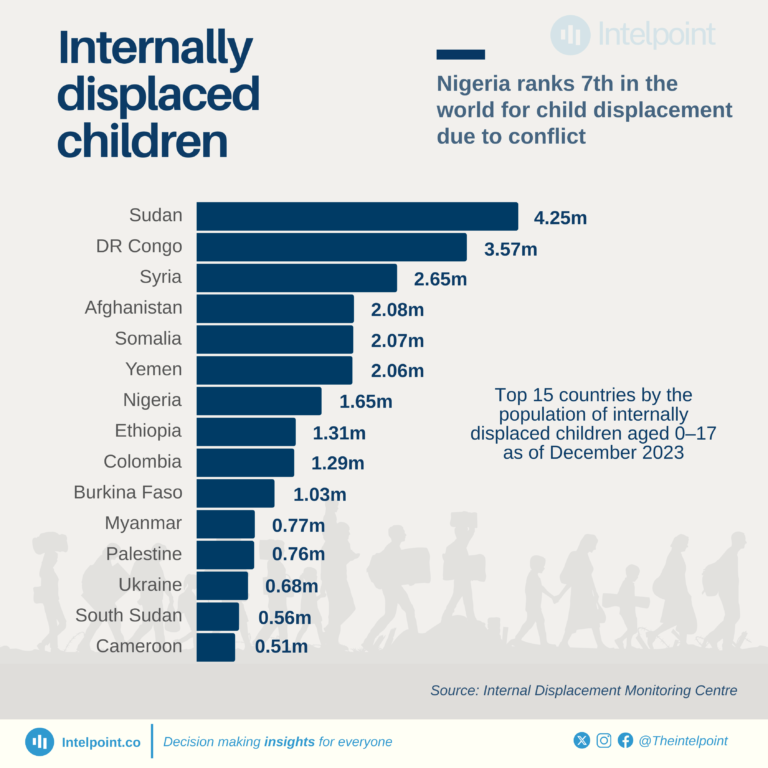
As of December 2023, 28.6 million internally displaced people affected by conflict were under the age of 18, accounting for 38% of the global IDP population.

Conflict-ravaged Sudan has the most internally displaced children globally, with 4.25 million under the age of 18.

DR Congo and Syria follow with 3.57 million and 2.65 million displaced children, respectively. Nigeria's 1.65 million displaced children make it the 7th highest globally for child displacement due to conflict.

See more

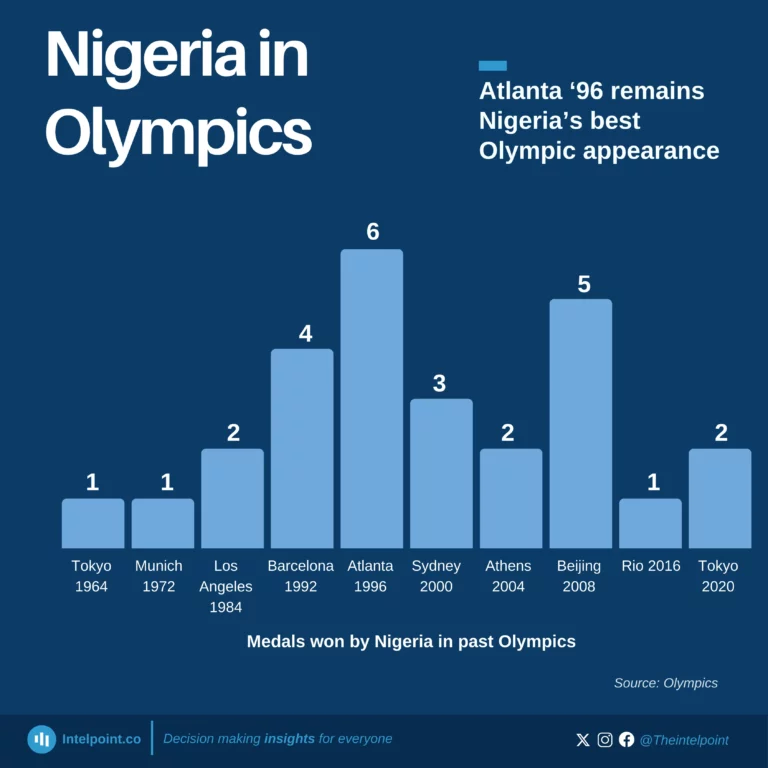
Nigeria's first Olympics appearance was at Helsinki 1952 but it wasn't until its fourth appearance at Tokyo 1964 that it won its first medal — a bronze. The country’s best medals haul (6) was at Atlanta 1996, where it won 2 gold, 1 silver, and 3 bronze.

See more
Between 2005 and 2022, Cote d'Ivoire's natural rubber production grew at an average of 12% yearly, maintaining its continental dominance. With an estimated population of nearly 29 million, the West African country produced 1.286 million tonnes in 2022, 73% of the continent's output, and placed fourth globally.
 
Meanwhile, Nigeria's production has grown 158% since 1961, peaking at 155 thousand tonnes in 1991.
Ghana's production has grown steadily, peaking at 117 thousand tonnes in 2022. Liberia and Cameroon complete the top five in Africa as of 2022.
See more

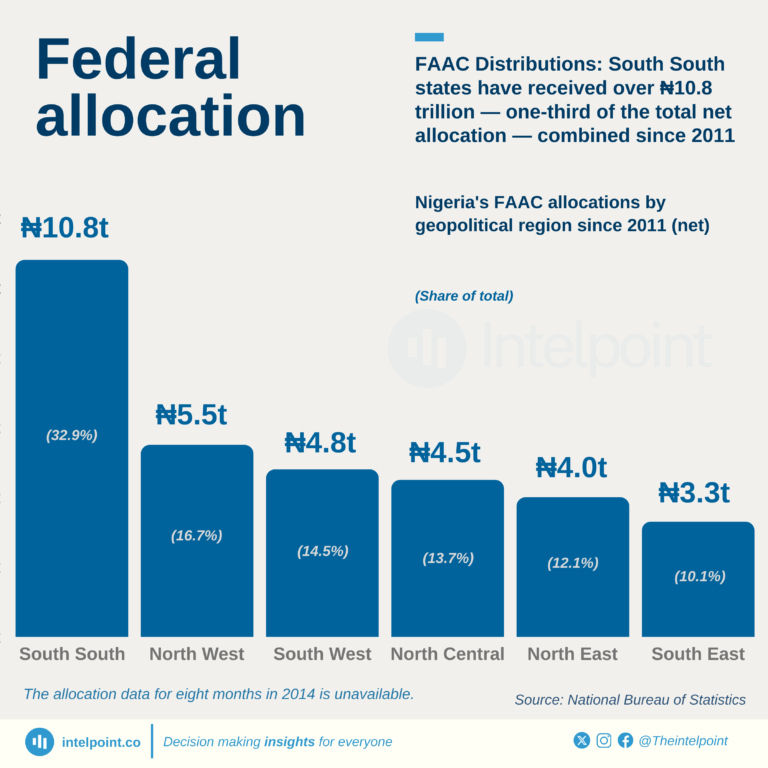
Since 2011, over ₦32.8 trillion has gone to Nigeria’s state governors from the Federation Account Allocation Committee (FAAC). States from the South East have received ₦3.3 trillion combined, the least nationwide.


This fund allocation is to ensure that all levels of government have the necessary funds to meet their financial obligations and to provide public services.

See more

Data from Nigeria's National Bureau of Statistics shows that the Federal Allocation Account Committee (FAAC) disbursed at least ₦32.8 trillion net to the 36 states and the FCT since 2011.


Five of Nigeria's oil-producing states — Delta, Akwa Ibom, Rivers, Bayelsa, and Lagos — have received 33.7% of the country's net federal allocation since 2011, with Delta State receiving the most. Kano, Katsina, Borno, Kaduna, and Ondo complete the top ten.

See more
Top ten natural rubber-producing countries (1990-2022)
Côte d'Ivoire emerged as the world's fourth-largest producer of natural rubber in 2022. Cote d'Ivoire, Nigeria, and Liberia are the only African countries in the top ten between 1990 and 2022.
Nigeria was among the top ten until 2010, but as of 2022, Côte d'Ivoire was the only African country in the top ten producers. 
Asian countries have historically led the world's natural rubber production, with the top seven countries — Thailand, Indonesia, Malaysia, India, Vietnam, China, and Philippines — producing 87% of the global output between 1990 and 2022.
See more
1 97 98 99 100 101 124
Key takeaways:
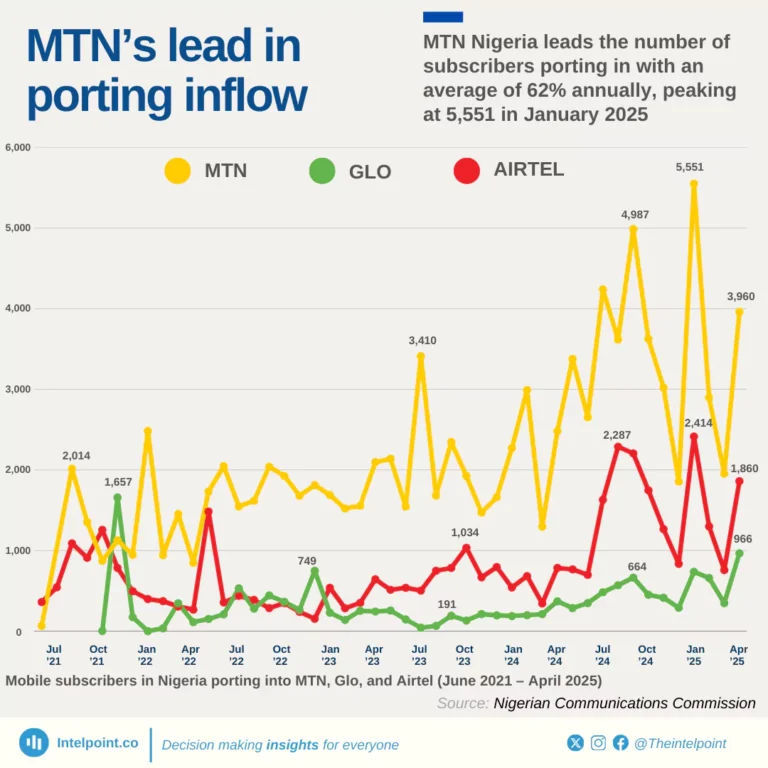
  • MTN continuously received the most ported-in subscribers, particularly from 2023 to 2025.
  • MTN ported-in subscribers increased from 616 in June 2021 to 5,551 in January 2025.
  • Airtel subscribers from other networks expanded from 360 to 2,414 port-ins (567%) throughout the same period.
  • Airtel experienced significant growth in August-September 2024 and January 2025, with over 2,000 port-ins monthly.
  • Globacom's performance remained low, with fewer than 1,000 port-ins throughout the period.
  • The high number of subscribers switching to MTN indicates a stronger customer preference for MTN, most likely owing to perceived quality or promotional incentives.
Read more
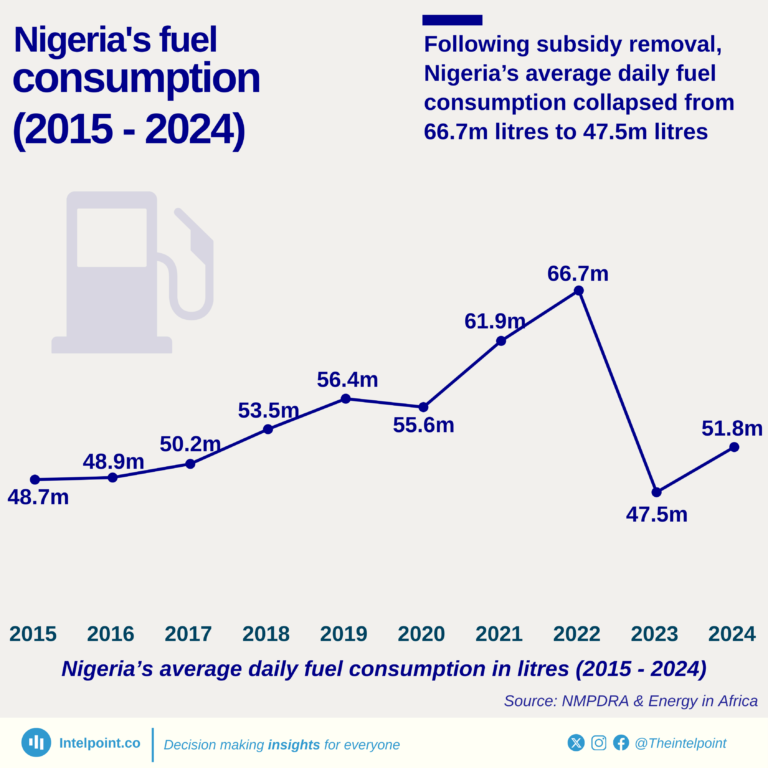
Nigeria’s average daily fuel consumption in litres (2015 - 2024)
  • Nigeria’s daily fuel consumption peaked at 66.7 million litres in 2022.
  • Fuel consumption fell to 47.5 million litres in 2023 after the subsidy removal.
  • Consumption rebounded slightly to 51.8 million litres in 2024, but remains far below 2022 levels.
  • Between 2015 and 2022, consumption grew from 48.7m to 66.7m litres daily.
  • 2021 saw a notable increase to 61.9m litres, likely due to economic recovery post-COVID.
  • The lowest recorded consumption in the 10-year period was 47.5m litres in 2023.
  • The post-subsidy dip marks the largest single-year decline in consumption within the observed period.
Read more
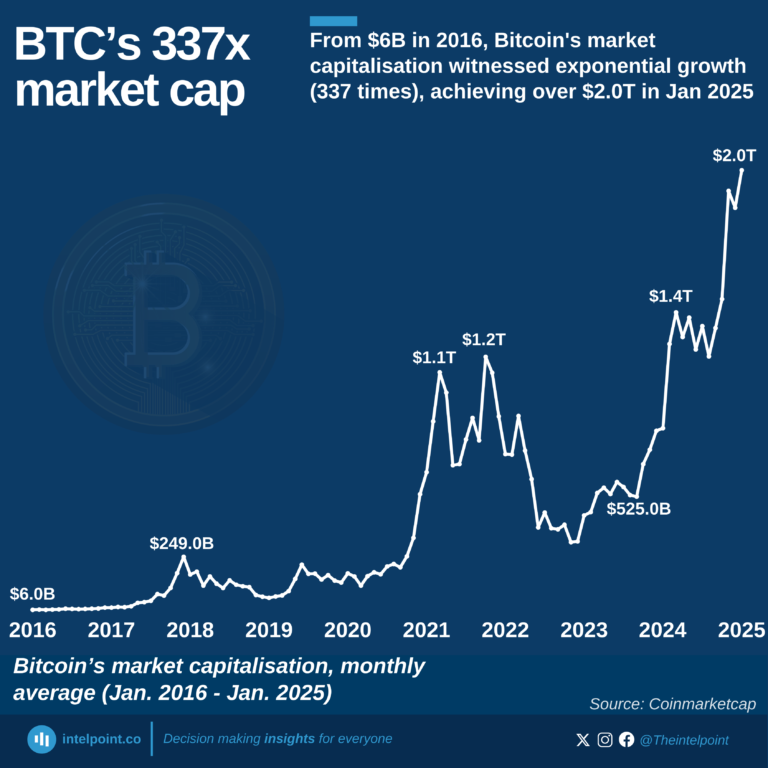
Bitcoin’s market capitalisation, monthly average (Jan. 2016 - Jan. 2025)
  • Bitcoin’s market cap grew from $6B in 2016 to $2T in 2025 — a 337x increase.
  • In 2021, Bitcoin’s market value peaked at $1.1T before reaching $1.2T in 2022.
  • Bitcoin experienced a sharp drop to around $525B in 2023.
  • Its recovery was strong in 2024, with the market cap rising again to $1.4T.
  • Despite periodic dips, the long-term chart shows a consistent upward growth trend.
Read more
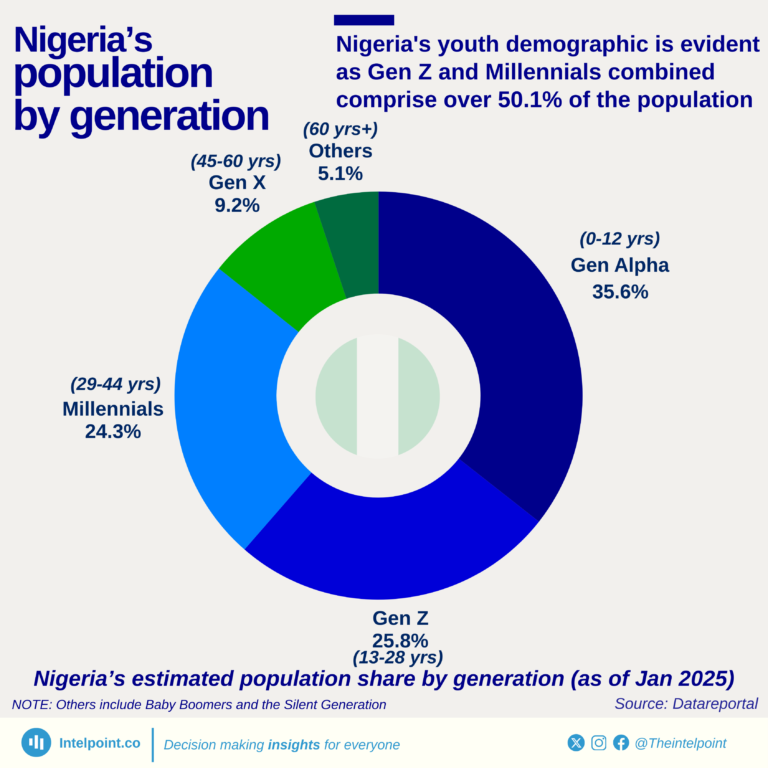
Nigeria’s estimated population share by generation (as of Jan 2025)
  • Gen Z and Millennials combined make up just over half of Nigeria’s population at 50.1%.
  • Gen Alpha alone represents 35.6% of the total population — the single largest generational cohort.
  • Gen Z, born between the late 1990s and early 2010s, accounts for 25.8% of Nigerians.
  • Millennials make up 24.3%, maintaining a strong influence across work, culture, and consumer trends.
  • Gen X, typically born between 1965 and 1980, represents only 9.2% of the population.
  • Older generations (Baby Boomers and Silent Generation) account for just 5.1% of the total population.
  • Nigeria’s entire population under the age of 44 (Gen Alpha, Gen Z, and Millennials) represents approximately 85.7% of the total population.
Read more
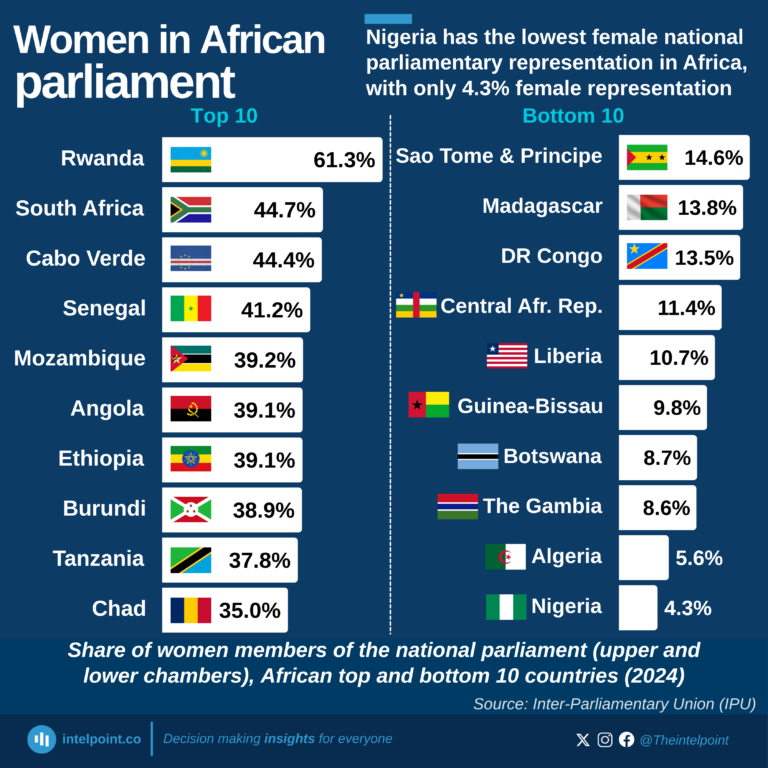
Share of women members of the national parliament (upper and lower chambers), African top and bottom 10 countries (2024)
  • Rwanda leads Africa in female parliamentary representation with 61.3% women in its national legislature.
  • Nigeria has the lowest representation of women in parliament across the continent at just 4.3%.
  • South Africa and Cabo Verde also boast high female parliamentary shares, with 44.7% and 44.4% respectively.
  • Four of the top 10 countries have more than 40% women in their national assemblies.
  • Only five countries in the bottom 10 have over 10% female representation.
  • The gap between the top and bottom countries is massive: a nearly 57-percentage-point difference between Rwanda and Nigeria.
Read more
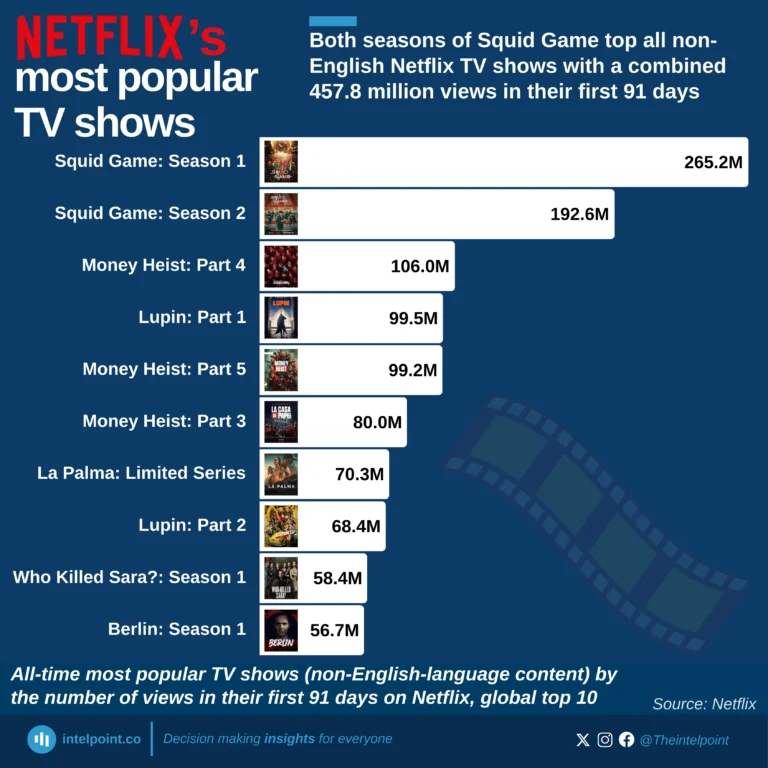
All-time most popular TV shows (non-English-language content) by the number of views in their first 91 days on Netflix, global top 10
  • Squid Game (Seasons 1 and 2) dominates with 457.8 million combined views, securing the top two spots globally.
  • Money Heist appears three times on the top 10 list—Parts 3, 4, and 5—with 285.2 million combined views.
  • France’s Lupin makes a strong showing, with Part 1 and Part 2 totalling 167.9 million views.
  • The top 10 list spans shows from Korea, Spain, France, Mexico, and Colombia, indicating Netflix’s successful global strategy.
  • Latin American thrillers like Who Killed Sara? and La Palma feature prominently, proving demand for drama-rich storytelling.
  • All shows on the list surpassed 50 million views each in just 91 days, showing rapid global consumption patterns.
Read more
1 97 98 99 100 101 247

Can’t find what you’re looking for? Please fill the form below
Contact Form Demo
SIGN UP TO OUR NEWSLETTER
Get periodic updates about the African startup space, access to our reports, among others.
Subscribe Here
Subscription Form

A product of Techpoint Africa. All rights reserved