Key Takeaways:

The 2024 Global Peace Index reveals a decline in peacefulness in 97 countries, the highest since the index began.
Nigeria is among the nations affected by regional conflicts and rising violence. With a peace index score of 2.91, Nigeria is facing increasing challenges.
A deteriorating peace score impacts foreign investment and economic stability. Global economic losses due to violence reached $19.1 trillion in 2023.

Between 2018 and 2021, adult literacy rates across African nations exhibited significant disparities. Seychelles and South Africa led with literacy rates of 96% and 95%, respectively, indicating a high proportion of literate adults. Conversely, Chad had the lowest literacy rate during this period.
These statistics underscore the uneven progress in educational attainment across Africa, highlighting the need for targeted interventions to improve literacy in lower-performing nations.

Nigeria was the seventh most populous nation in the world in 2020, with 206.1 million people. Projected to reach a population of 401.3 million by 2050, Nigeria will rank third after India (1st) and China (2nd). According to Institut national d'études démographiques' projections, Nigeria, Ethiopia, DR Congo, Egypt, Tanzania, and Kenya will be among the world’s top 20 most populous countries by 2050.
Key takeaways:
The 2024 Global Peace Index reveals a decline in peacefulness in 97 countries, the highest since the index began.
Nigeria is among the nations affected by regional conflicts and rising violence. With a peace index score of 2.91, Nigeria is facing increasing challenges.
A deteriorating peace score impacts foreign investment and economic stability. Global economic losses due to violence reached $19.1 trillion in 2023.

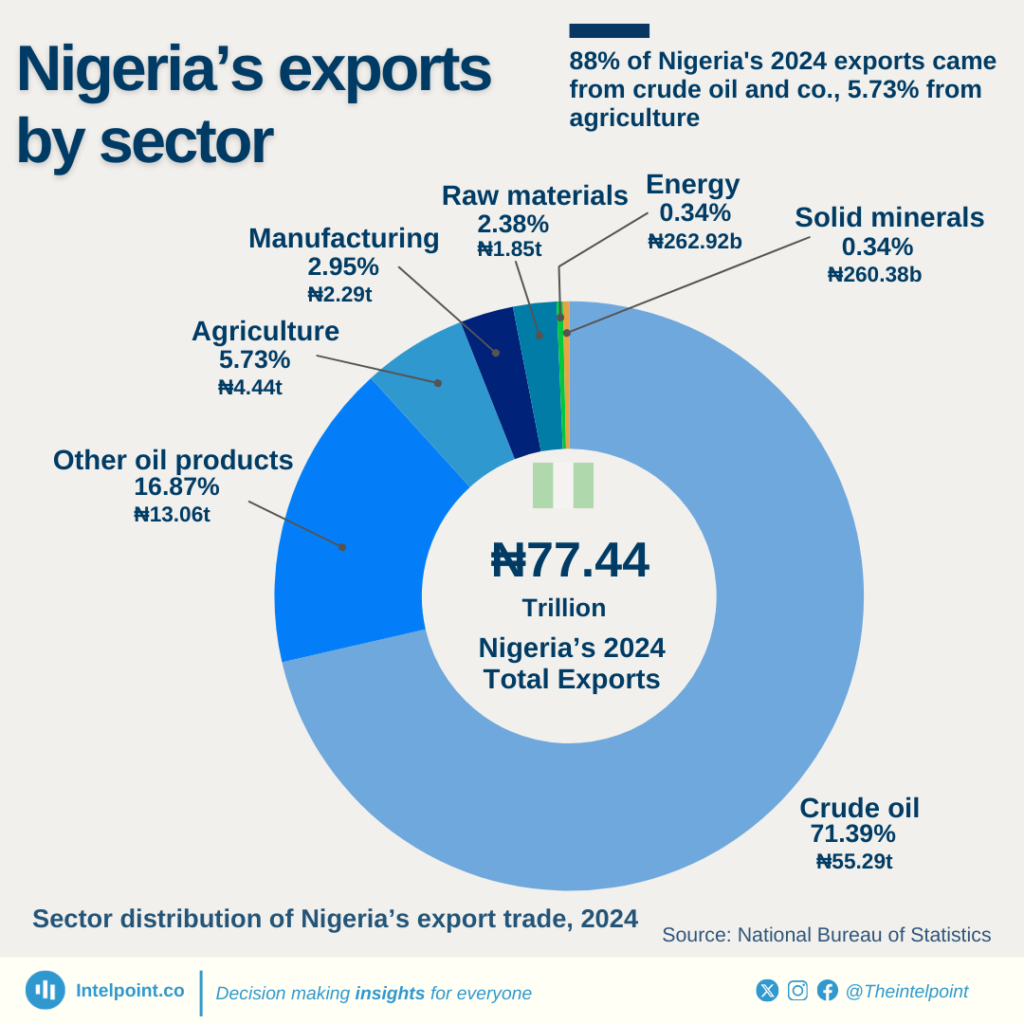
The Federation Account Allocation Committee (FAAC) has distributed a total of ₦593 billion as derivation funds to nine oil-producing states in Nigeria. These funds are part of the statutory allocation intended to support states with significant contributions to the country's oil revenue. Delta State emerged as the largest beneficiary, receiving ₦193 billion, which constitutes 32.5% of the total allocation.

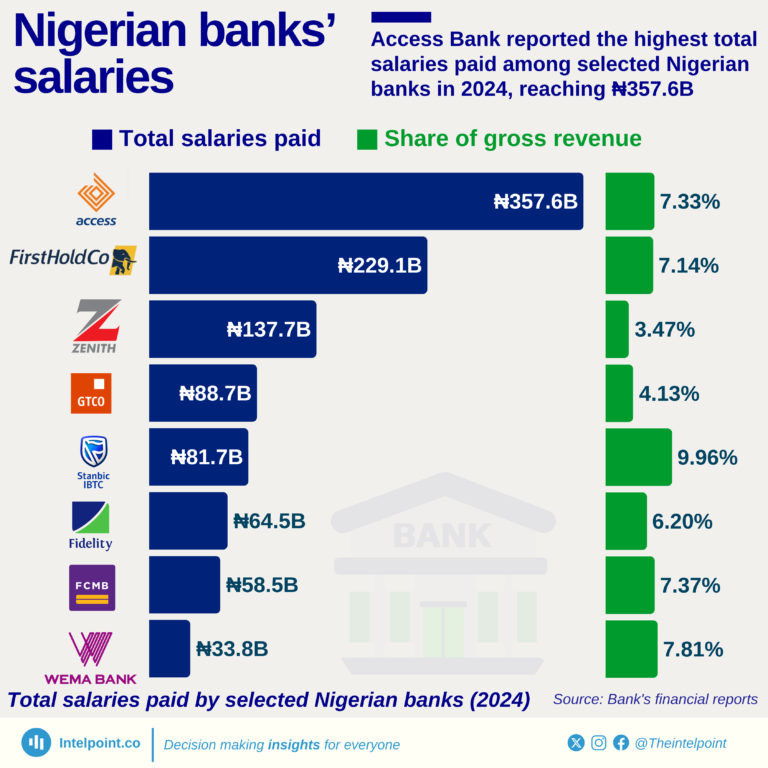
When Aigboje Aig-Imoukhuede and Herbert Wigwe acquired Access Bank in 2002, it ranked 65th in Nigeria. Today, it is the largest bank in Nigeria by asset size, with a vision to be Africa's most respected bank.
While its expansion across Africa has been aggressive, it has not been smooth sailing. Access Bank divested its holdings in Access Bank Côte d'Ivoire and Finbank Burundi, two of its earliest attempts at expansion. In Gambia, the Central Bank nationalised the bank in 2014. The nationalisation was short-lived as investors recapitalised the bank to meet the regulator's requirements for the takeover.
With rolling five-year corporate plans since 2003, Access is in its fifth strategic cycle. Access' strategy cycle (2023-2027) indicates a plan to continue its expansion drive, invest in its subsidiaries, and acquire growth banks in strategic markets before consolidating and optimising its operations to drive capital growth.

From hangouts with friends to family outings during the holiday season, quick-service restaurants (QSRs) have become an important part of Nigeria's social ecosystem. These businesses are landmarks in cities and important players in the growing food delivery business.
Chicken Republic is the largest QSR in Nigeria by outlet count, with nearly 200 outlets. It dwarfs its closest rival, Kilimanjaro, with over two times its 84 outlets. In third and fourth are Coldstone Creamery and Domino's Pizza, signalling a potential interest in QSRs that have narrowed menus among Nigerians.

Nigeria's cinema distribution is strikingly uneven, with Lagos emerging as the undisputed hub, housing 114 out of the country's 206 cinemas. This means more than half (54.8%) of Nigeria's cinemas are in Lagos alone. This dominance highlights the state's strong cultural, economic, and entertainment appeal, making it the go-to destination for film enthusiasts and industry players.
Beyond Lagos, Abuja follows distantly with 17 cinemas, constituting 8.2% of the total. States like Edo, Kano, Delta, and Anambra collectively hold significant numbers but remain far behind Lagos. Interestingly, only 18 states are home to cinemas.

AI startups are growing in the innovation race in 2024, with ten companies from Forbes' AI 50 list collectively securing $29.5b in funding. OpenAI dominates the landscape with an impressive $11.3b, surpassing all other startups. Following OpenAI is Anthropic, which raised $7.7 billion, signalling significant investor confidence in companies driving large-scale AI advancements. These two companies alone account for over half of the total funding of all Forbes AI 50 firms.
Databricks, a name synonymous with data infrastructure, comes in third with $4 billion in funding, emphasising the critical need for scalable data management systems in the age of AI. Meanwhile, Anduril, a defence technology innovator, secured $2.8 billion, showcasing how AI also shapes defence and national security sectors. Notably, the funding sharply drops after these four, with other companies raising less than $800m
Note: Forbes’ AI 50, in partnership with Sequoia and Meritech Capital, highlights the top private startups advancing AI with the most promising business applications.

Enugu and Kwara lead as the states with the most tourist centres in Nigeria, boasting 17 tourist sites each. States like Edo (16), Kogi (15), and Oyo (15) closely follow, showcasing Nigeria's rich and varied attractions across different regions.
Lagos, often called Nigeria's commercial capital, features prominently with 13 tourist centres.

In 2022, derailments accounted for 44% of all train accidents, increasing from 35% in 2021 to 38% in 2020. This shows the need to prioritise railway infrastructure maintenance. Locomotive failures also contributed to train accidents, making up 35% of cases in 2022. Although this is slightly lower than the 36% recorded in 2020, it still represents a significant proportion of rail incidents.

The world's top ten semiconductor vendors control nearly 50% of the market share. Intel has maintained its position as the market leader, though its share has declined significantly from 15.4% in 2013 to 9.1% in 2023, and Samsung Electronics, its closest rival, has experienced a similar downward trend.
Apple and Nvidia have emerged as formidable contenders in the semiconductor business, joining the ranks of leading players in less than five years.

Cinemas provide consumers with entertainment outside their homes, allowing them to watch the latest blockbusters with friends on a large screen. They also help movie producers get their films in front of thousands of people.
In Nigeria, independent cinemas form the largest group, with names recognisable mostly within the towns where they exist. However, cinema chains are growing. Filmhouse Cinemas has 12 locations in five states, while Genesis Cinemas operates in six states, albeit with fewer locations than Filmhouse Cinemas. Unlike the other top five, Kada Cinemas has no cinemas in Lagos.

Seven Nigerian commercial banks have international authorisation. Per the new capital requirements, these banks must raise their shareholders' funds to ₦500 billion by April 2026, up from ₦50 billion, to retain their licences.
All seven banks have footprints in the UK, where FCMB and Fidelity Bank operate, underutilising their licence. Ghana and Sierra Leone are the only countries where all the big five have a presence.
While UBA is present in more countries than any other bank, Access is catching up quickly and poised to overtake it. In the past two years, it has expanded into over five countries, with plans to grow its presence to nearly 30 countries by 2027.
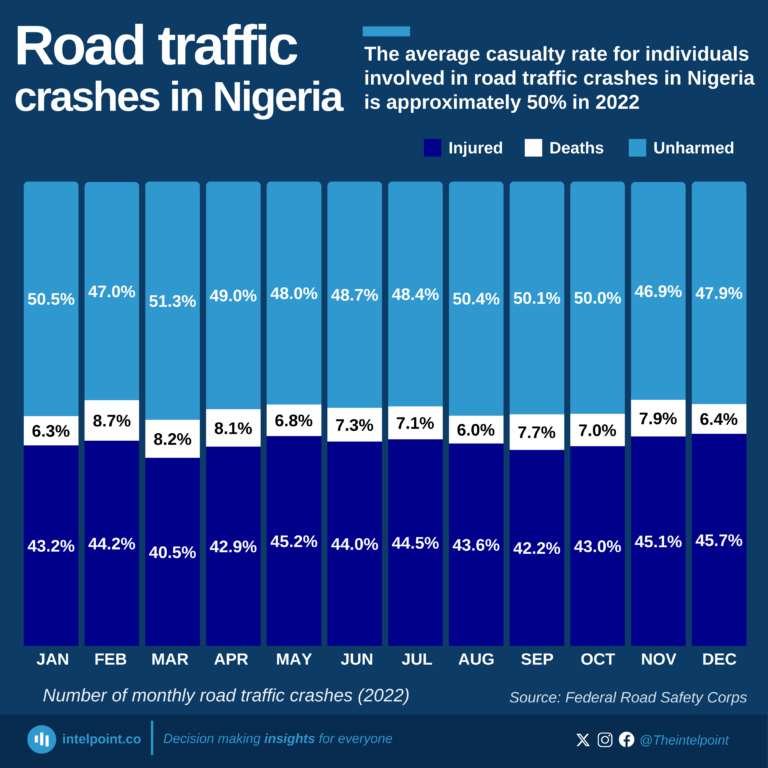
Road traffic crashes in Nigeria remain a significant concern, with an average casualty rate of approximately 50% throughout 2022. This means half of the people involved in crashes either sustained injuries or lost their lives. While the remaining half walked away unharmed, February and November had the highest casualty rates at 53%, though with just a slight increase from other months.
A closer look at the data reveals that injuries far outweigh fatalities across all months. This pattern shows the heavy burden on hospitals and emergency services, which often struggle to manage the influx of victims. December, a festive season marked by increased travel, saw a casualty rate of 52%, with deaths accounting for 6.4% and injuries rising to 45.7%. This reaffirms the need for extra caution during peak travel when road congestion and reckless driving are heightened.
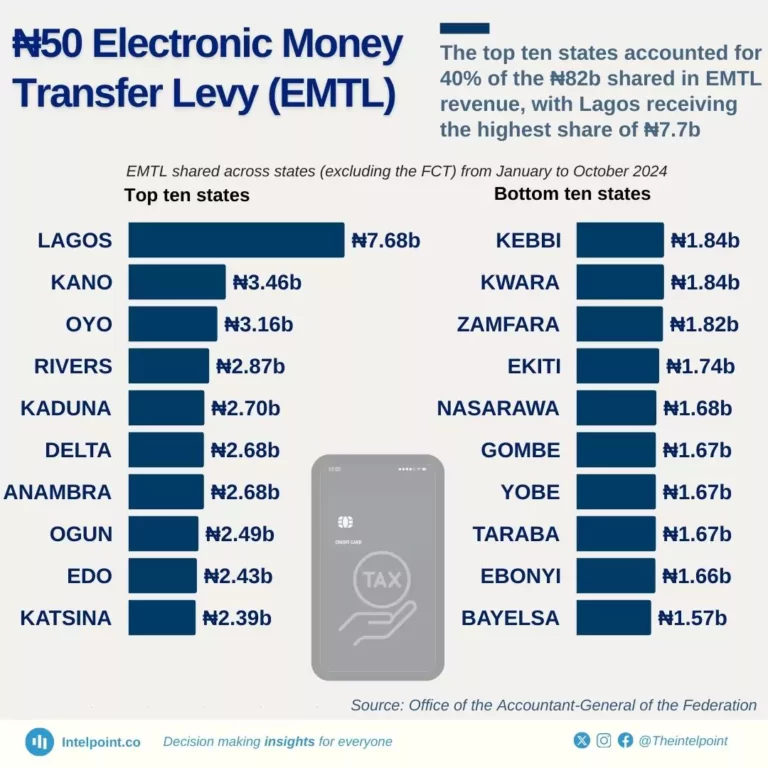
With the top ten states receiving 40% of the ₦82b shared in EMTL, Lagos led with ₦7.68b, followed by Kano with ₦3.46b. Oyo, Rivers, and Kaduna rounded out the top five, each securing over ₦2b. These states are driving the lion’s share of the revenue. In stark contrast, the bottom ten states, including Bayelsa and Ebonyi, saw much smaller allocations, with each receiving less than ₦2b.
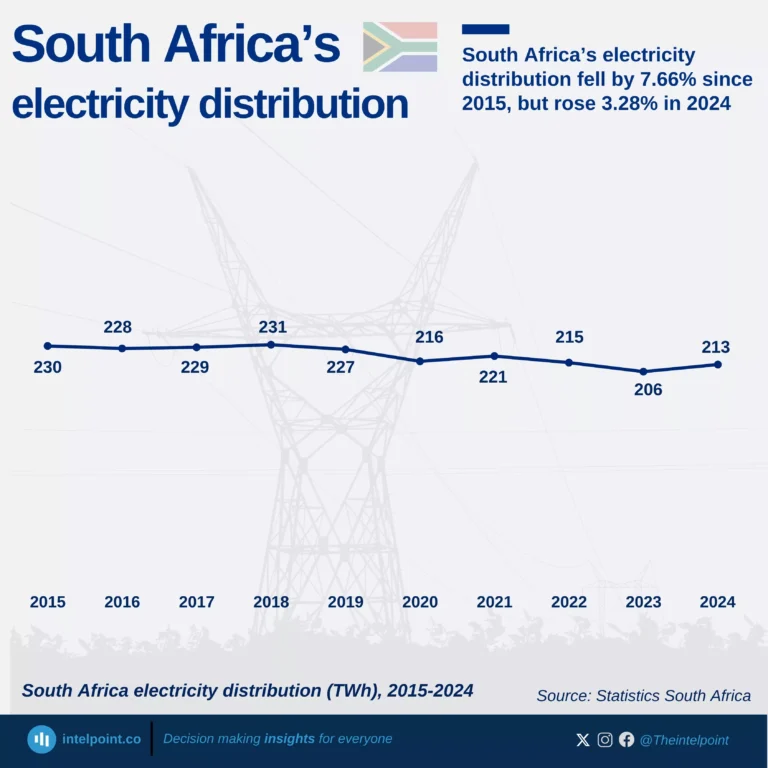
Electricity distribution in South Africa reached its peak in 2018, a record high of 231 TWh.
The lowest electricity distribution was recorded in 2023, dropping to 206 TWh.
Load shedding has become a persistent challenge, with 2023 experiencing the highest number of load shedding days — 332 days in total.