Chad and Nigeria had the lowest life expectancies in Africa as of 2023

The African countries with the highest life expectancies as of 2023 are: Algeria - 77 years, Tunisia - 77 years, Cape Verde - 77 years, Mauritius - 76 years.

The African countries with the lowest life expectancies: Central African Republic - 55 years, Lesotho - 55 years, Nigeria - 54 years, Chad - 54 years.
Source:

UNICEF

Period:

2023
HTML code to embed chart
Want a bespoke report?
Reach out
Tags
Related Insights

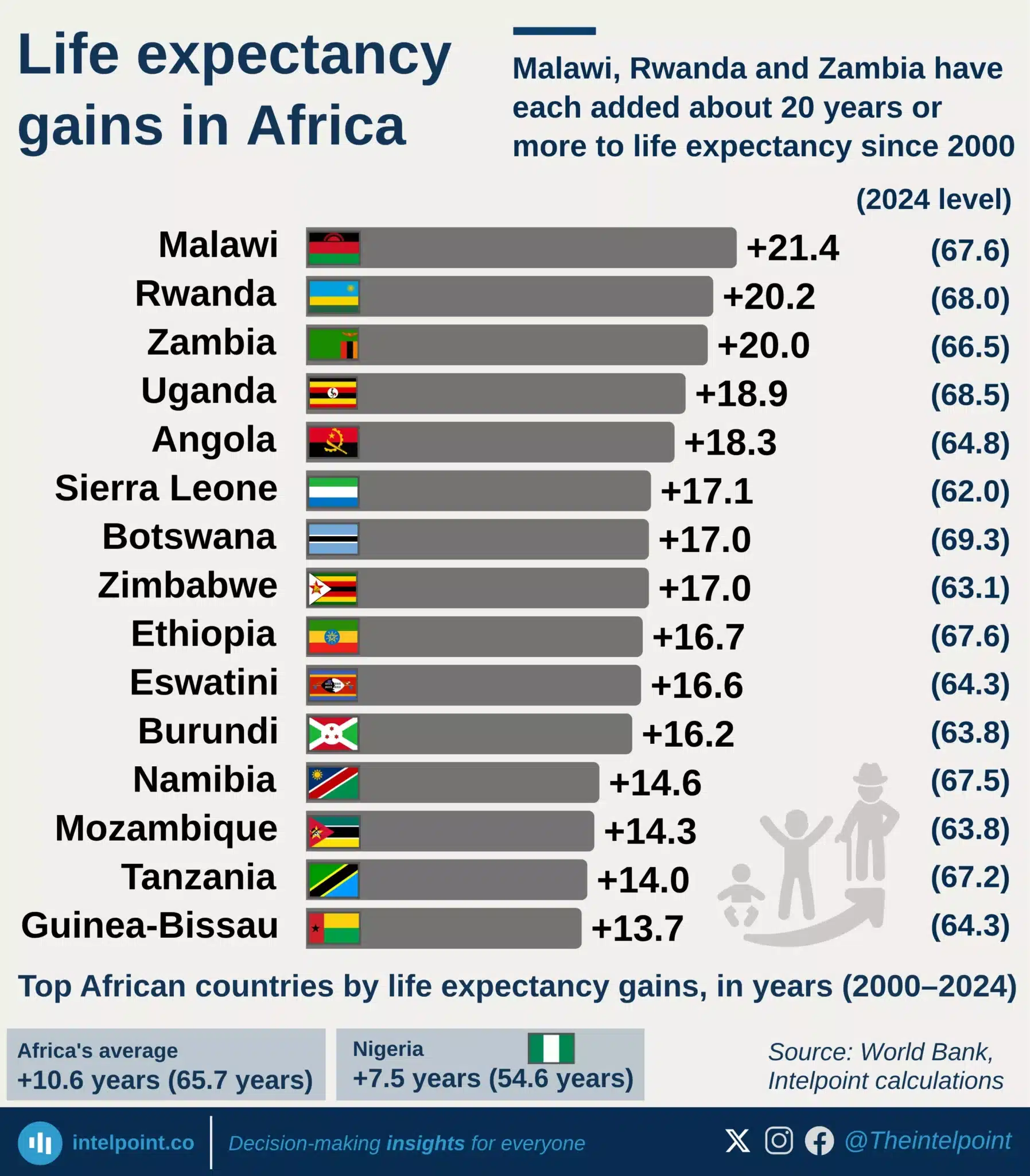
Malawi, Rwanda and Zambia have each added about 20 years or more to life expectancy since 2000
  • Malawi recorded Africa’s largest life expectancy gain, adding 21.4 years between 2000 and 2024.
  • Rwanda and Zambia also added about 20 years each.
  • Africa’s average life expectancy gain was 10.6 years, higher than the global gain of 5.8 years.
  • Nigeria added 7.5 years, rising to 54.6 years in 2024.
  • Despite improvement, Nigeria remained below both the African average of 65.7 years and the gains recorded by the top improvers.
  • Most of the biggest gains came from countries that started the period with very low life expectancy levels.

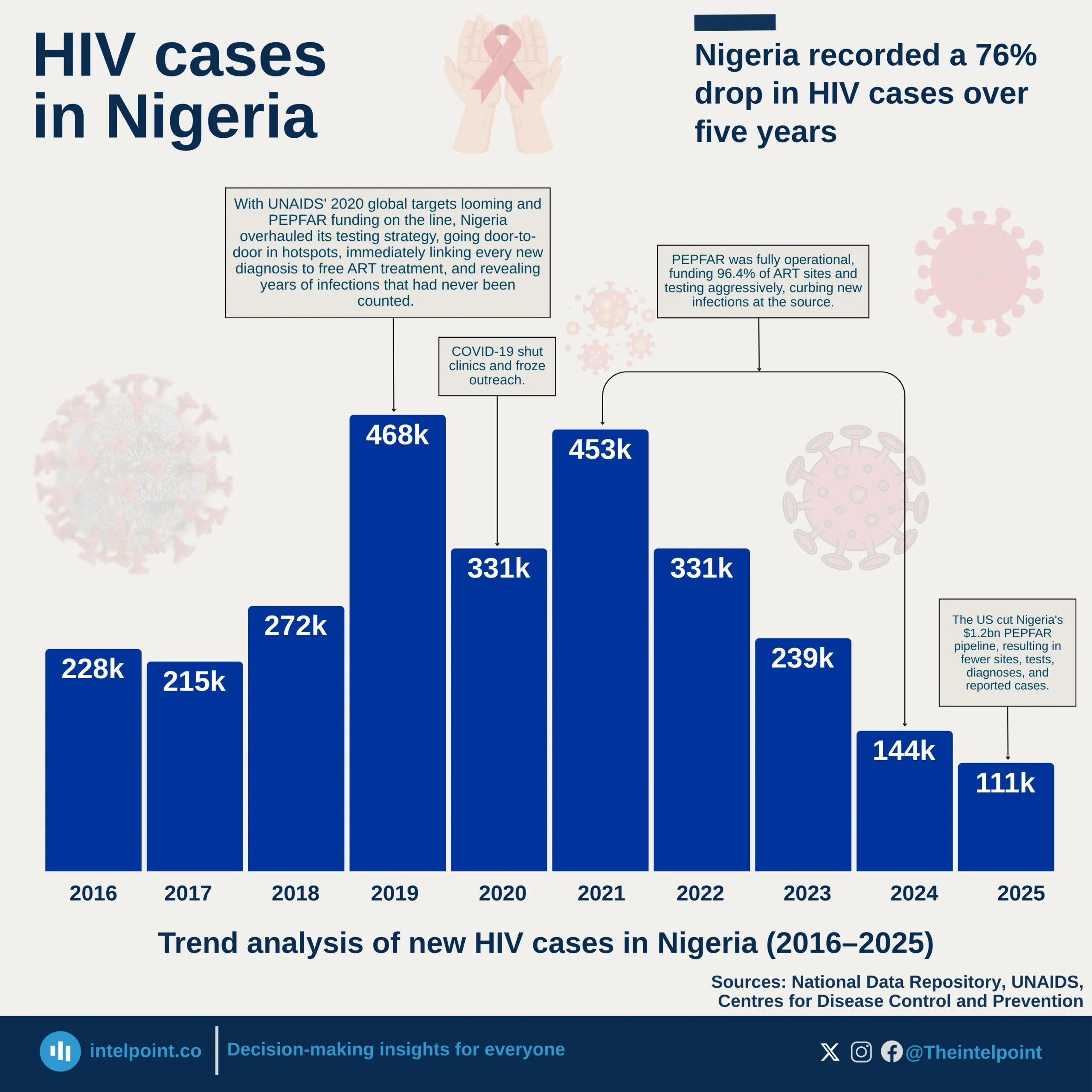
Nigeria recorded a 76% drop in HIV cases over five years
  • The 2019 number revealed the truth — years of underdiagnosis were corrected in a single year when PEPFAR restructured testing entirely.
  • The 76% decline from 2019 to 2024 is one of the most significant HIV reductions in Africa in a single decade.
  • One year of disruption in 2020 erased an entire year of progress, creating a backlog that took until 2022 to clear.
  • With PEPFAR's $1.2 billion pipeline cut, fewer Nigerians are being tested, meaning fewer cases appear on paper while the virus spreads undetected.

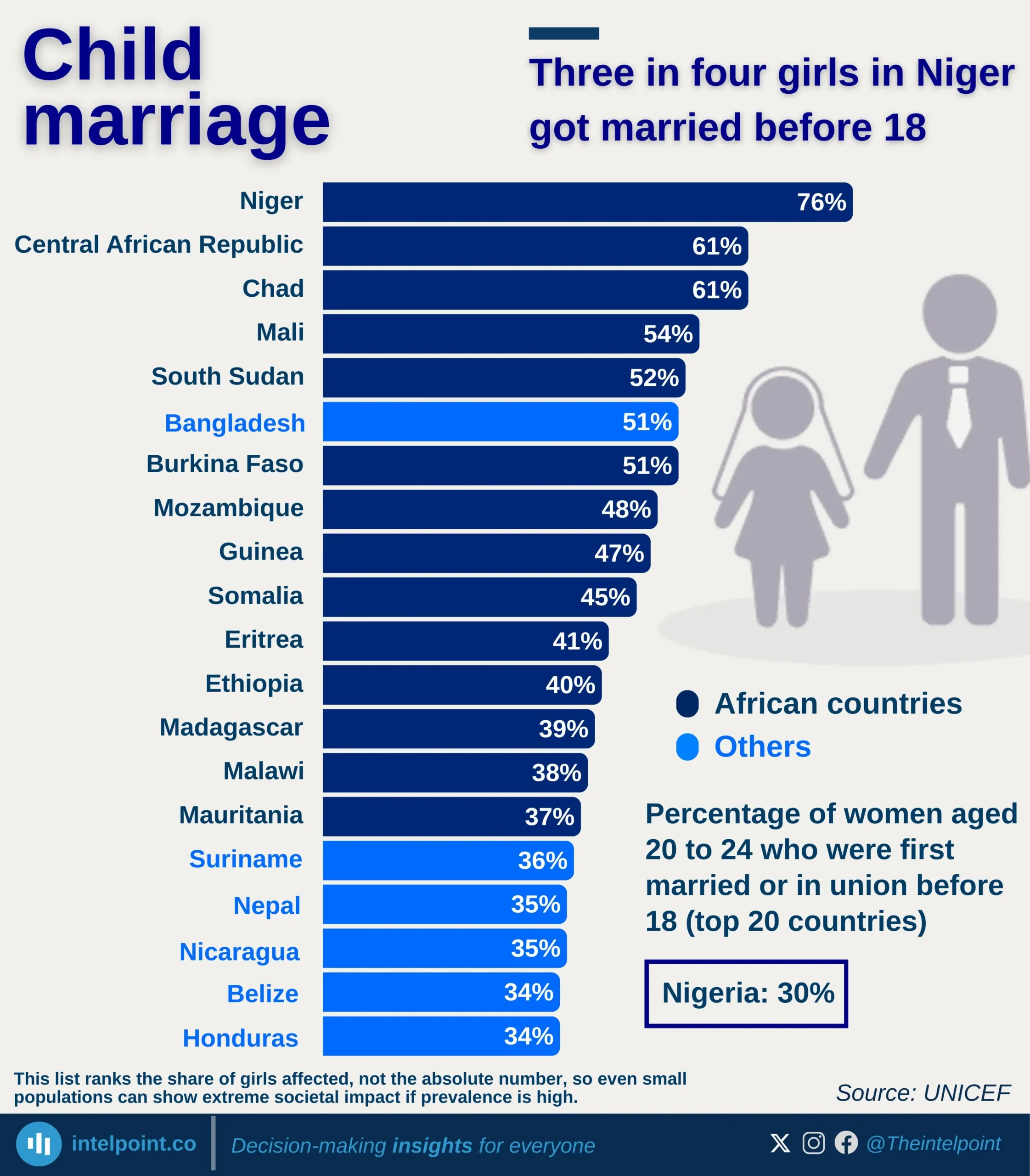
Three in four girls in Niger got married before 18
  • Niger (76%), the Central African Republic (61%), and Chad (61%) top the global list, meaning the majority of women in these countries marry as children.
  • Seven of the top ten countries by prevalence are African, showing that child marriage is most entrenched relative to population on the continent.
  • Countries in South Asia — Bangladesh (51%) and Nepal (35%) — and Latin America — Suriname (36%) and Belize (34%) — also feature, highlighting the global nature of the challenge.
  • While some countries have larger populations, this list ranks the share of girls affected, not the absolute number, meaning even smaller populations can show extreme societal impact if the prevalence is high.

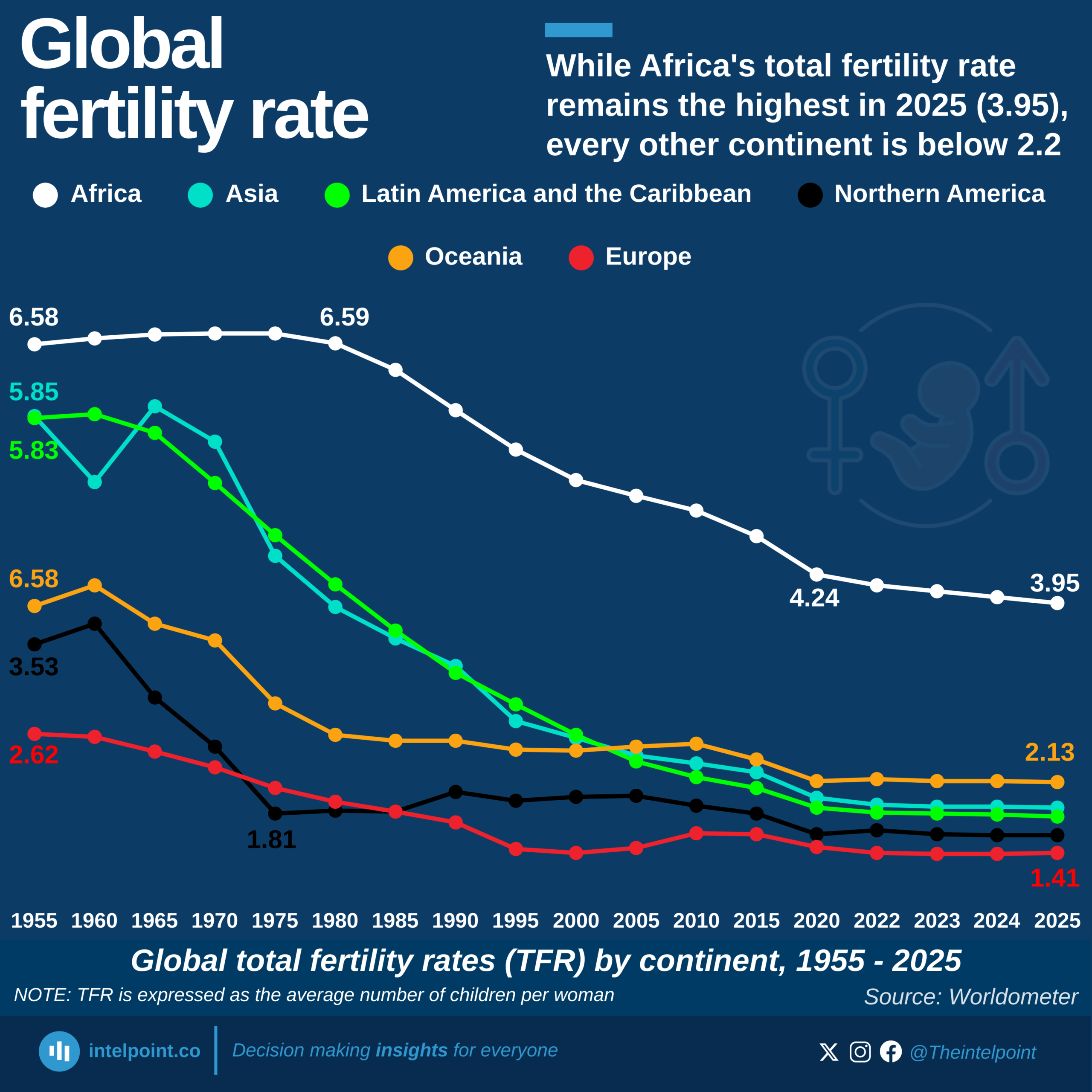
While Africa's total fertility rate remains the highest in 2025 (3.95), every other continent is below 2.2
  • Africa’s fertility rate in 2025 is estimated at 3.95, the highest in the world.
  • Europe’s fertility rate is the lowest in 2025 at just 1.41 children per woman.
  • Latin America and the Caribbean saw a steep drop from 5.83 in 1955 to 1.78 in 2025.
  • Asia’s fertility rate fell from 5.85 in 1955 to 1.87 in 2025.
  • Oceania’s fertility rate dropped from 6.58 in 1955 to 2.13 in 2025.
  • By 2025, all continents except Africa are at or below the replacement rate of 2.1.

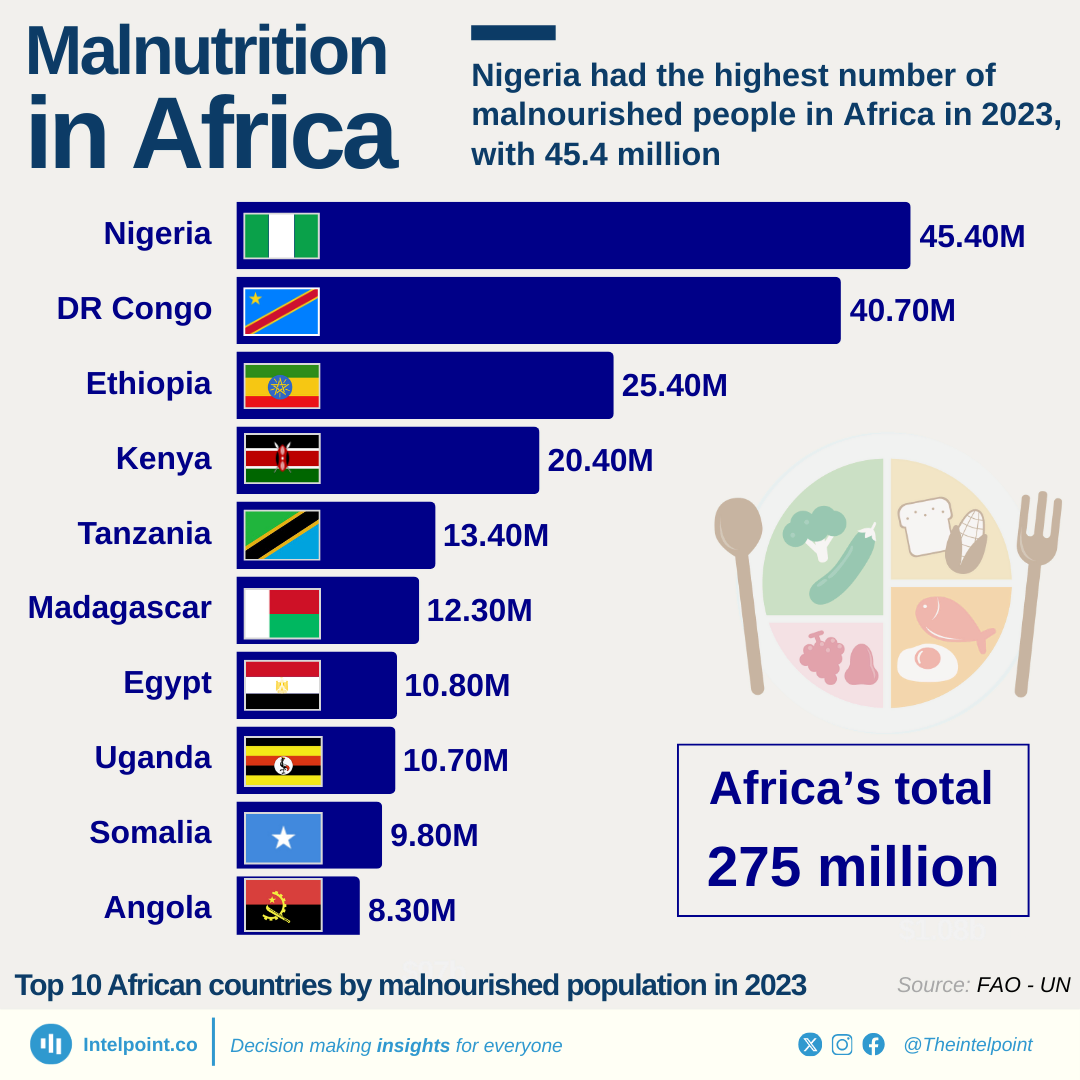
Nigeria had the highest number of malnourished people in Africa in 2023, with 45.4 million
  • In Africa, 275 million people were recorded to be malnourished in 2023.
  • Nigeria led the list of countries in Africa with the highest number of malnourished people (45.40 million), making 16.5% of the total.
  • Nigeria was followed by the Democratic Republic of Congo with 40.7 million, 14.8% of the total.
  • Nigeria, the Democratic Republic of Congo, Ethiopia and Kenya made up almost 50% of the total number of malnourished people in Africa.

793 Million people in India could not afford a healthy diet in 2022, representing 28% of the global total
  • India tops the list of the global number of people unable to afford a decent meal with a value of 792.80 million causing unaffordability to prevail in the country by 55.6%.
  • China emerged as the second country in this global list with 208.10 million people falling in this category and unaffordability prevalence of 14.6%.
  • Nigeria claimed 6.2% of the global total with 175.6M, making it the 3rd country with the highest number of healthy diet unaffordability.
  • High number of people that could not afford a healthy diet does not outrightly equal high percentage of healthy diet unaffordability.

POPULAR TOPICS
SIGN UP TO OUR NEWSLETTER
Get periodic updates about the African startup space, access to our reports, among others.
Subscribe Here
Subscription Form

A product of Techpoint Africa. All rights reserved