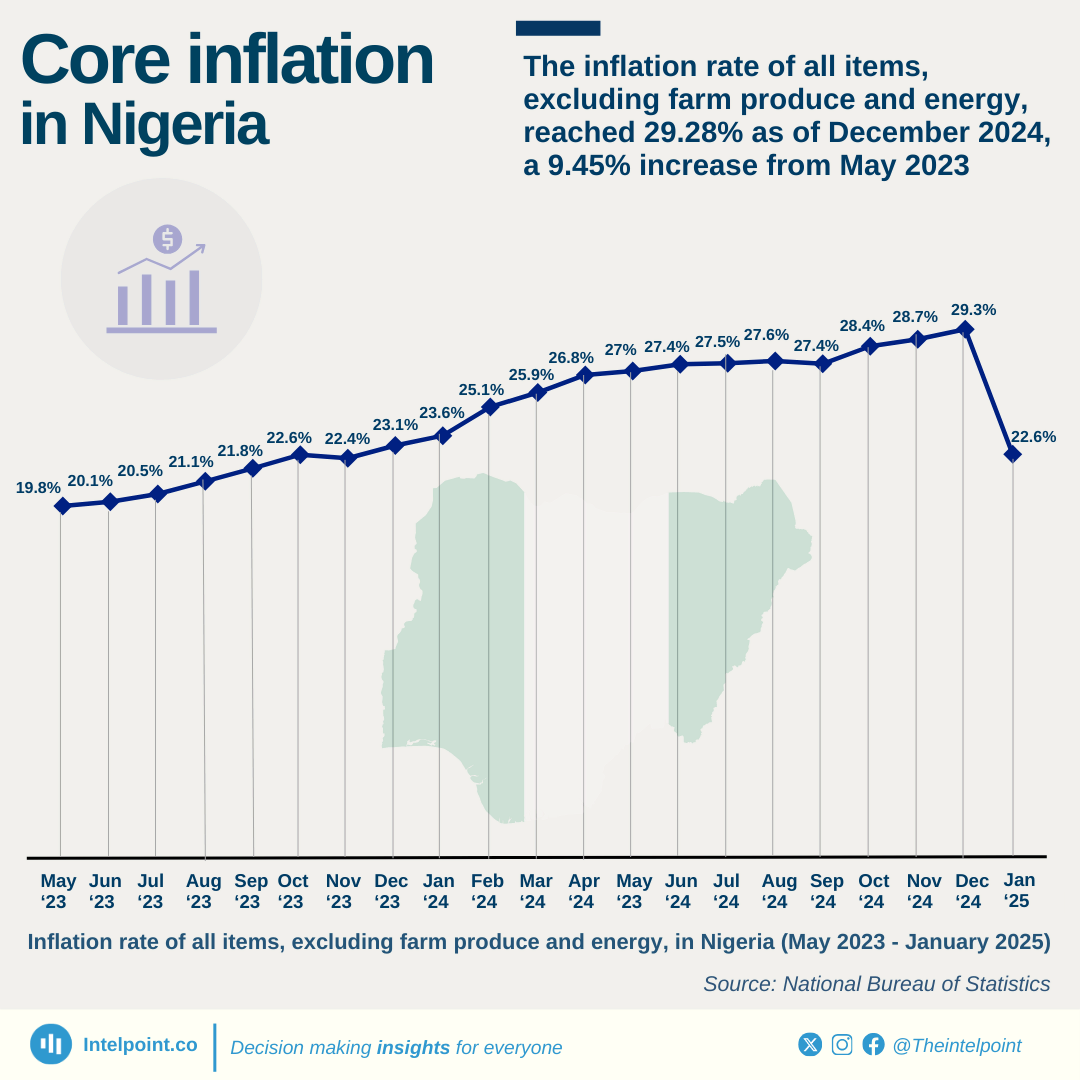
The inflation rate of all items, excluding farm produce and energy, reached 29.28% as of December 2024, a 9.45% increase from May 2023

Key takeaways:

  • February 2024 saw the largest month-on-month rise in inflation, climbing nearly 2% from 23.59% in January 2024.
  • Nigeria experienced brief periods of relief, with slight drops in core inflation during November 2023 and September 2024.
  • From May 2023 to December 2024, the inflation rate fluctuated within the 20% to 30% range.
  • December 2023 registered the highest inflation rate during the first eight months of the observed period.
  • The core inflation rate dropped to 22.59% in January 2025 from 29.28% in December 2024 due to the Consumer Price Index rebasing from 2009 to 2024.

The inflation rate in Nigeria, which excludes farm produce and energy prices, demonstrated a persistent upward trend from May 2023 to December 2024. Starting at 19.83% in May 2023, the rate climbed steadily to 29.28% by December 2024. The year-on-year comparison reveals significant acceleration, with December 2024's figure standing 6.21% points higher than December 2023.

Mid-2024 saw a period of relative stability, with inflation rates hovering around 27% from May through July. September 2024 provided a brief relief with a slight decrease of 0.15% from August's 27.58%. However, this relief proved temporary, as inflation resumed its upward path in the final quarter of 2024.

The core inflation rate dropped to 22.59% in January 2025 from 29.28% in December 2024. This is due to the National Bureau of Statistics rebasing the Consumer Price Index from 2009 to 2024 in January 2025.
Source:

National Bureau of Statistics

Period:

May 2023 - January 2025
HTML code to embed chart
Want a bespoke report?
Reach out
Tags
Related Insights

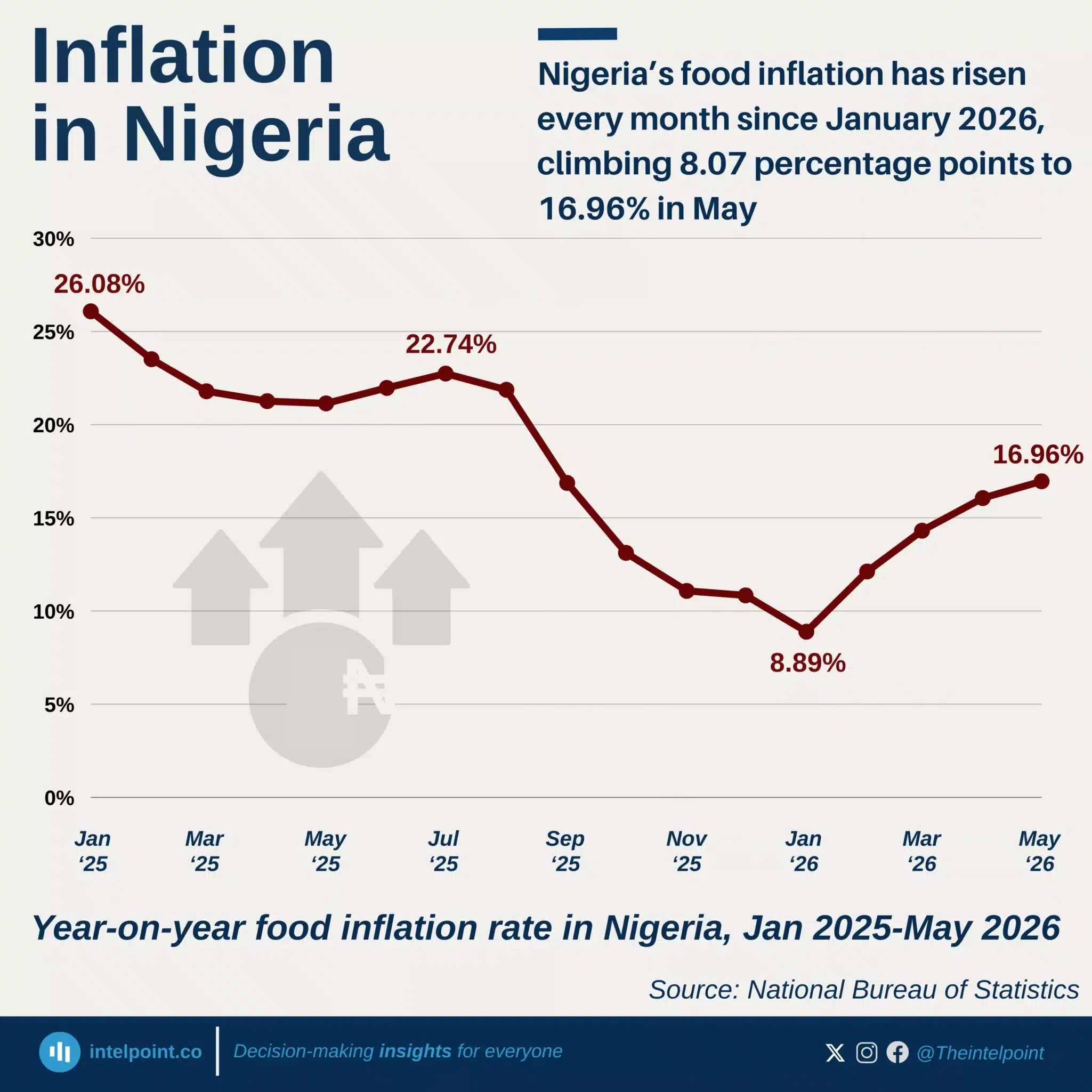
Nigeria’s food inflation has risen every month since January 2026, climbing 8.07 percentage points to 16.96% in May
  • Nigeria’s year-on-year food inflation rose for the fourth consecutive month, from 8.89% in January 2026 to 16.96% in May.
  • The rate increased by 8.07 percentage points within the first five months of 2026.
  • May’s 16.96% rate means food prices were, on average, 16.96% higher than they were in May 2025.
  • Food inflation rose from 12.12% in February to 14.31% in March and 16.06% in April before reaching 16.96% in May.
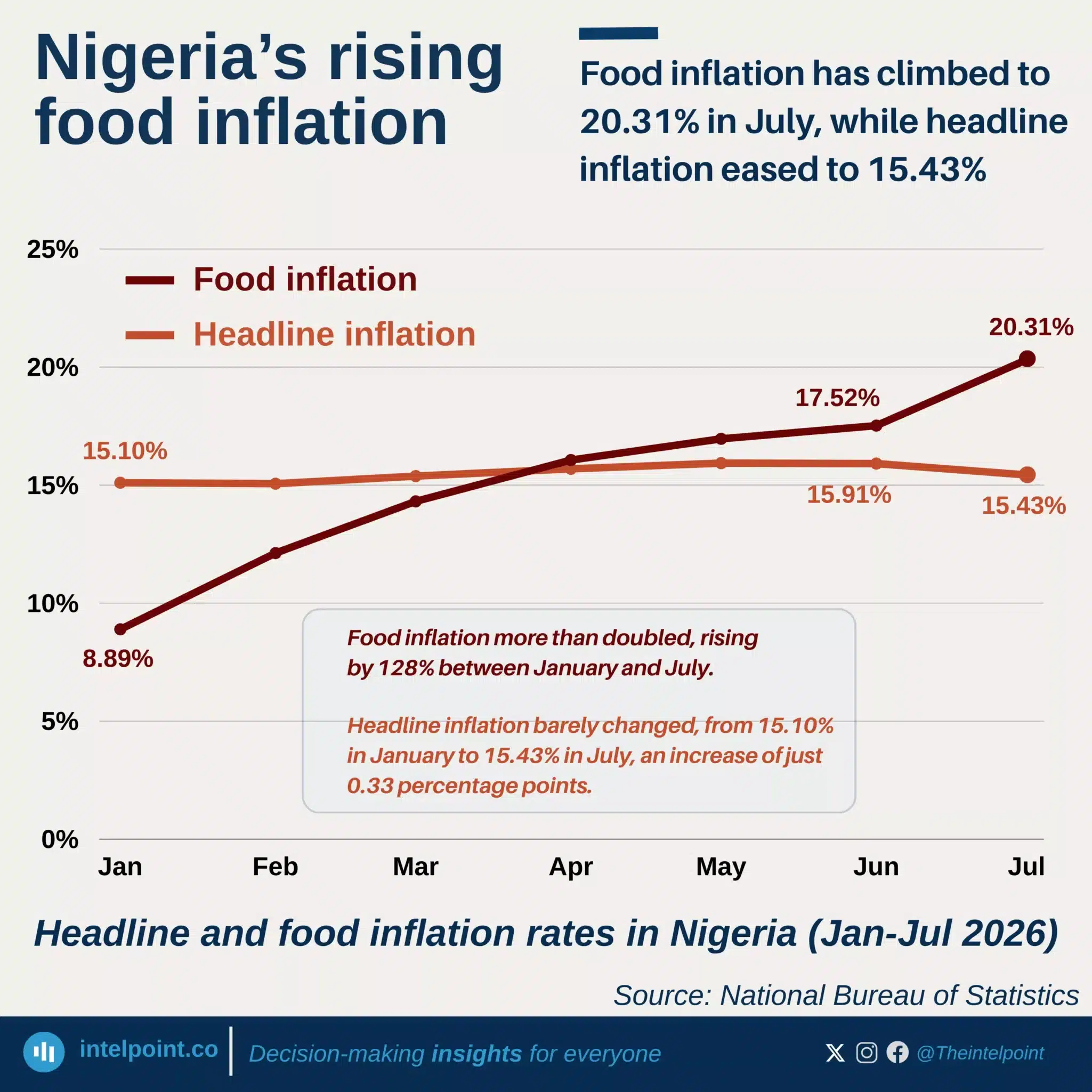
  • Food inflation exceeded Nigeria’s 15.93% headline inflation rate in May, showing that food was a major source of renewed pressure on household expenses.

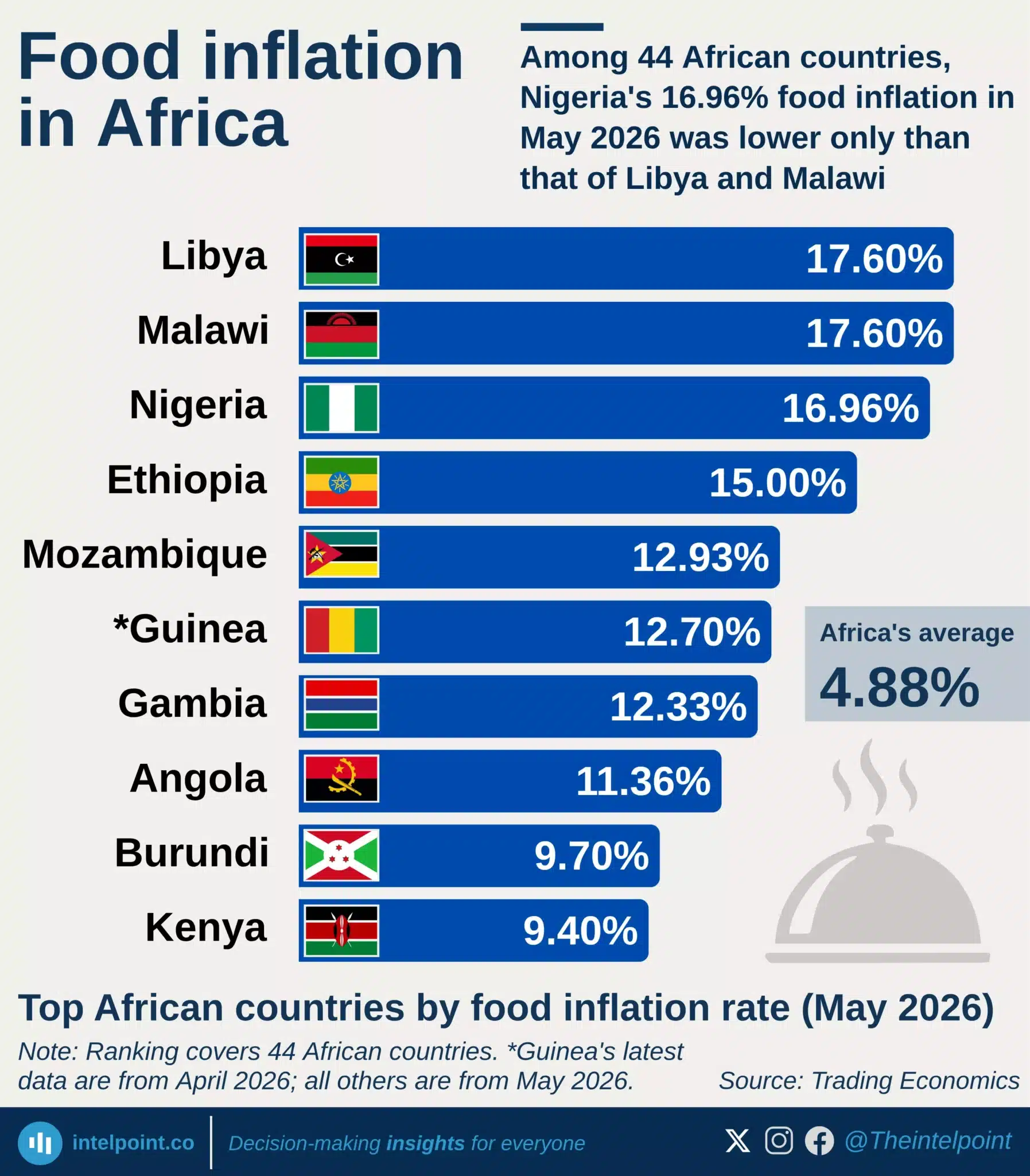
Among 44 African countries, Nigeria's 16.96% food inflation in May 2026 was lower only than that of Libya and Malawi
  • Nigeria recorded the third-highest food inflation rate among 44 African countries in May 2026.
  • At 16.96%, Nigeria’s rate was lower only than Libya and Malawi, both at 17.6%.
  • Nigeria’s food inflation was nearly 3.5 times the 4.88% average across the countries covered.
  • Eight of the ten countries with the highest food inflation recorded rates above 10%.

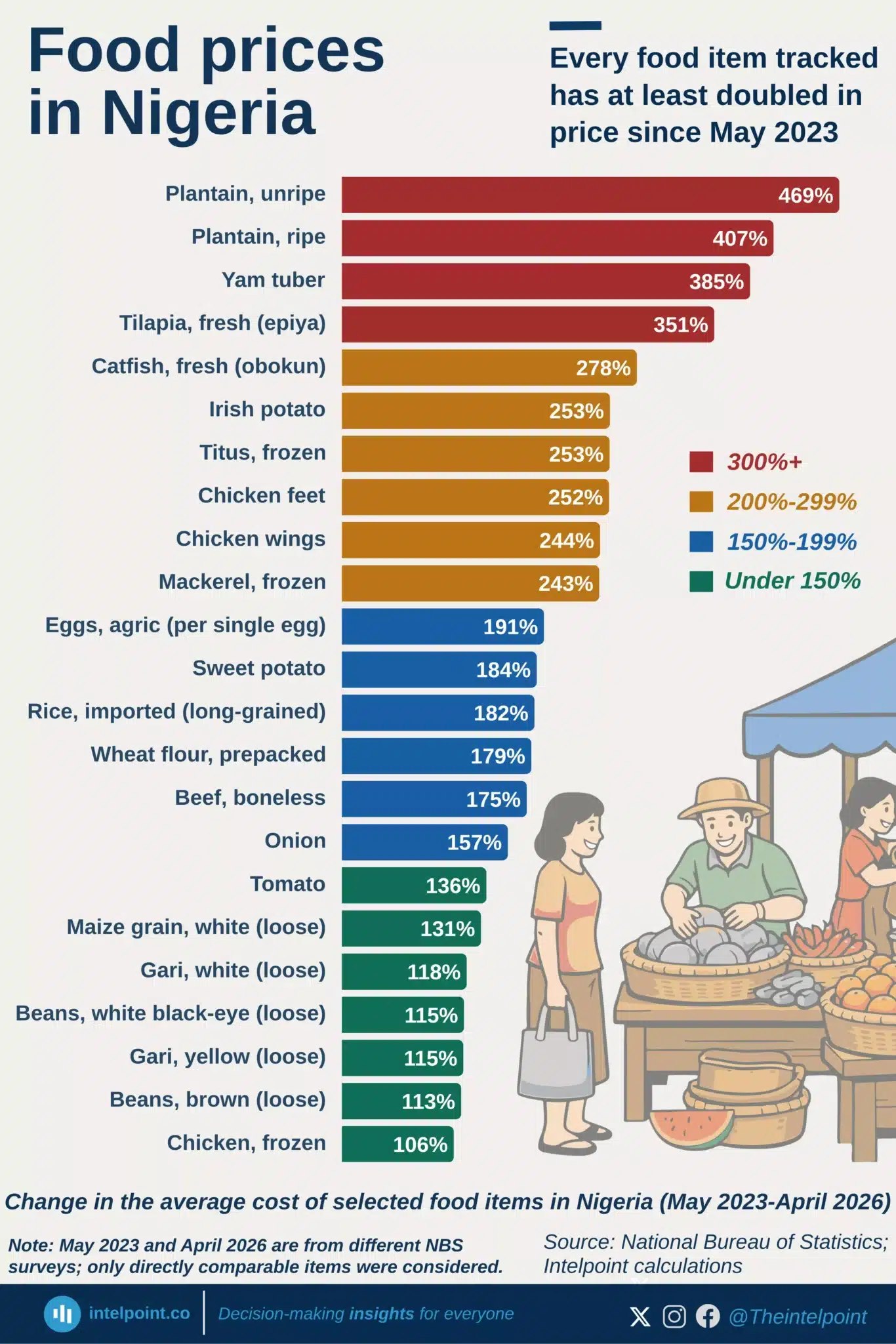
Every food item tracked has at least doubled in price since May 2023
  • Every comparable food item tracked is now at least twice as expensive as it was in May 2023.
  • Nearly half of the selected food items have more than tripled in price since the month before fuel subsidy removal.
  • Unripe plantain recorded the steepest increase, rising by 469% between May 2023 and April 2026.
  • Ripe plantain, yam tuber, and fresh tilapia also saw extreme increases of more than 300%.
  • Even the slowest-rising staples, including frozen chicken, beans, gari, and maize, still more than doubled in price.

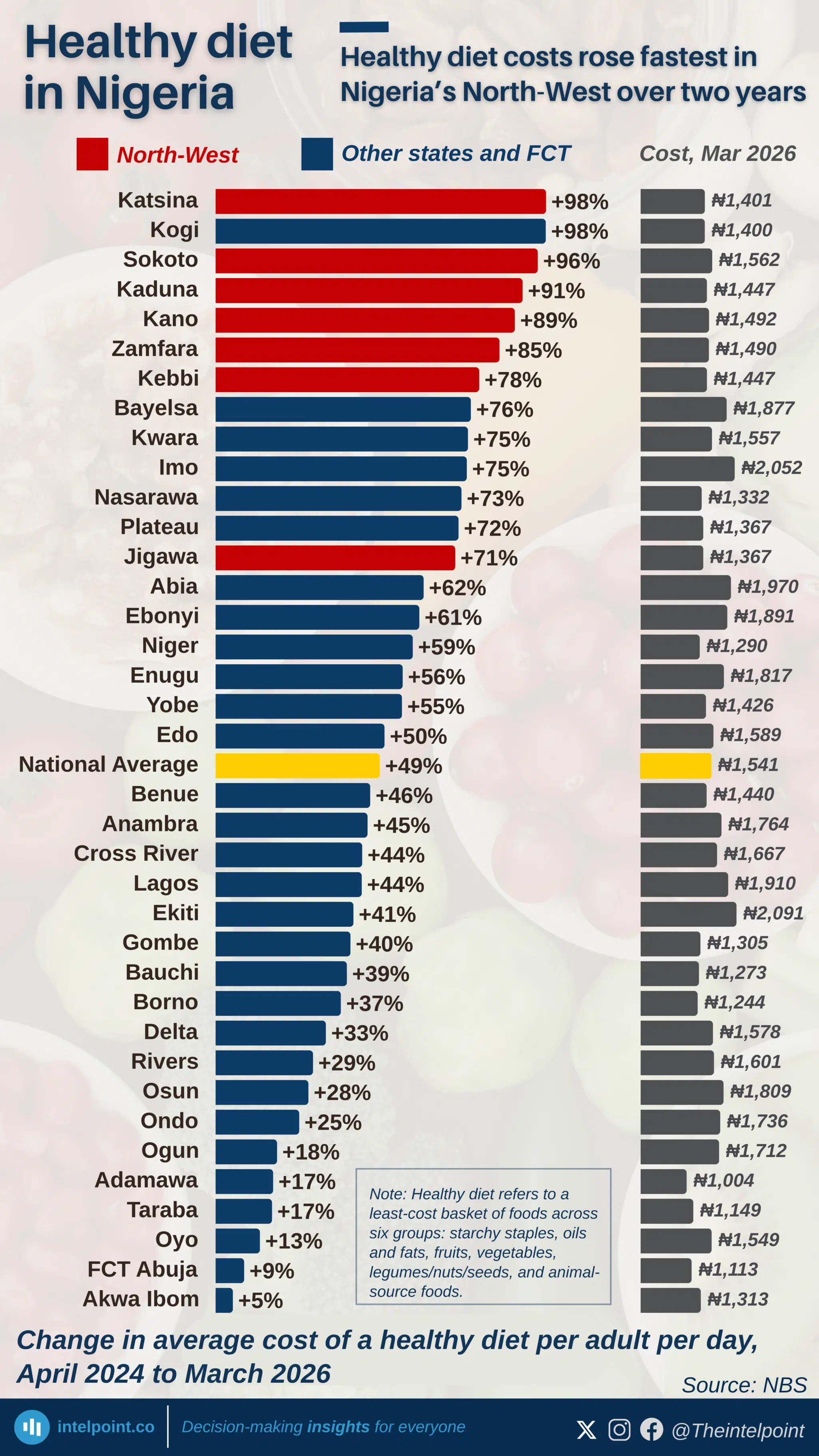
Healthy diet costs rose fastest in Nigeria’s North-West over two years
  • Healthy diet costs rose 49% nationally in two years.
  • North-West states recorded the fastest increases.
  • All seven North-West states rose above the national average.
  • Katsina and Kogi recorded the steepest increases, at 98%.
  • Akwa Ibom had the lowest increase, at 5%.

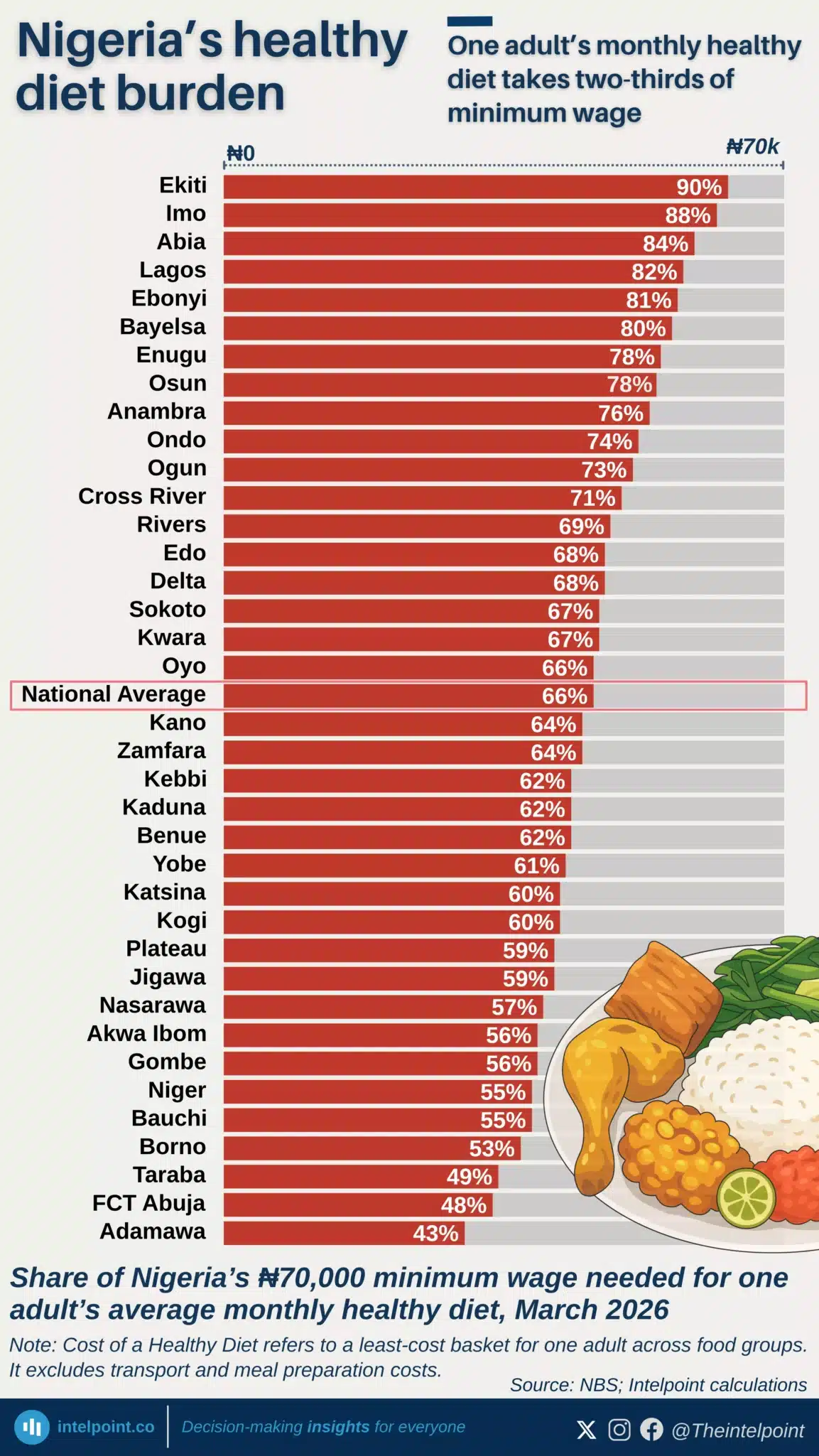
One adult’s monthly healthy diet takes two-thirds of minimum wage
  • One adult’s healthy diet takes 66% of Nigeria’s minimum wage.
  • The national average monthly cost is about ₦46,230 per adult.
  • Ekiti has the highest burden, at 90% of minimum wage.
  • Six states require over 80% of minimum wage for one adult’s healthy diet.
  • Adamawa has the lowest burden, at 43%.

The basket of food that cost ₦100k in January 2025 cost approximately ₦114k in August
  • Food prices rose roughly 13.9% from January to August 2025, according to the rebased Consumer Price Index (CPI) from the National Bureau of Statistics.
  • Month-on-month inflation for food fluctuated, with some months seeing sharper increases than others.
  • Using January as a baseline, the purchasing power of money for food declined steadily, meaning households need more naira to buy the same items.
  • Food carries a large weight in the CPI basket, making it a major driver of overall inflation and cost-of-living increases.

POPULAR TOPICS
SIGN UP TO OUR NEWSLETTER
Get periodic updates about the African startup space, access to our reports, among others.
Subscribe Here
Subscription Form

A product of Techpoint Africa. All rights reserved