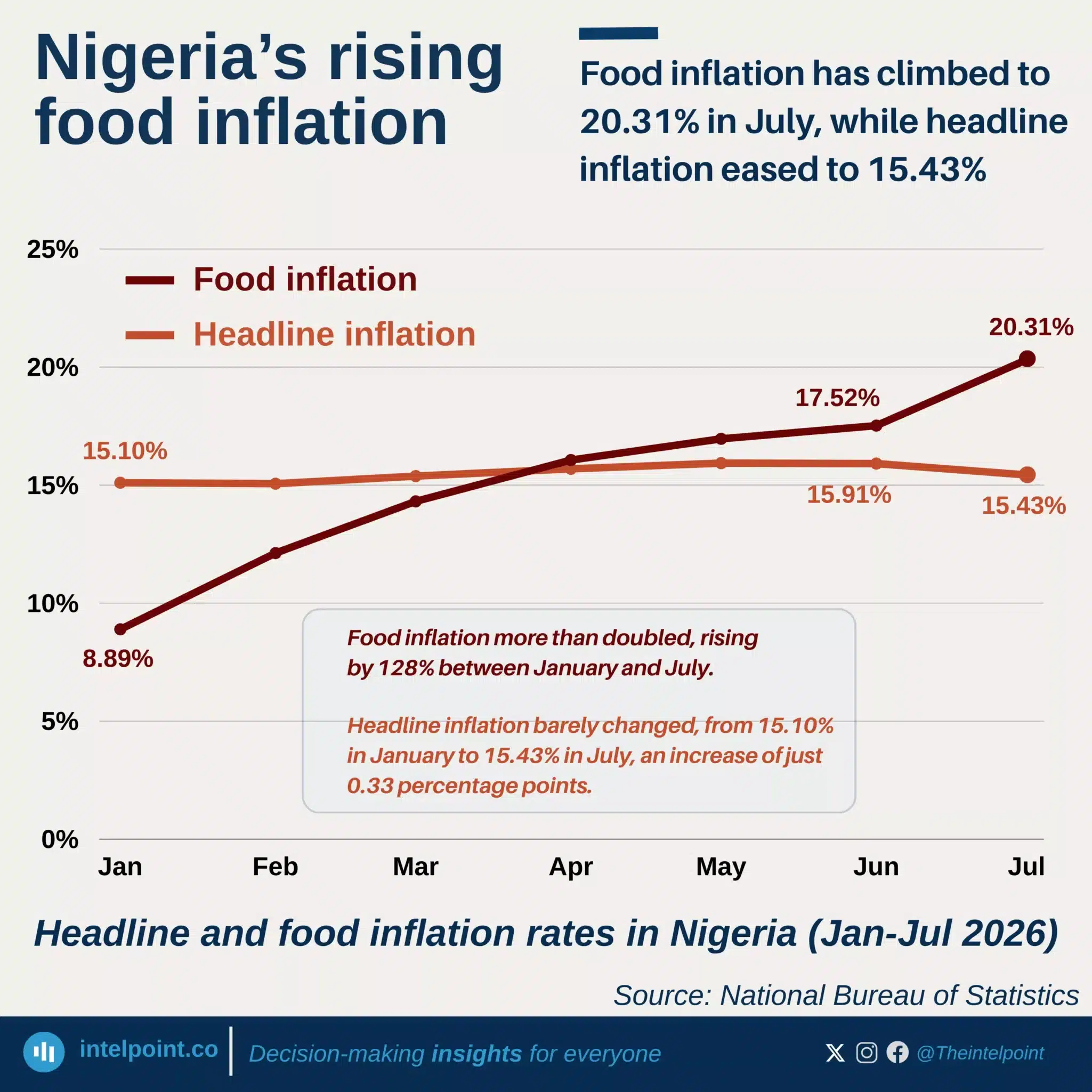
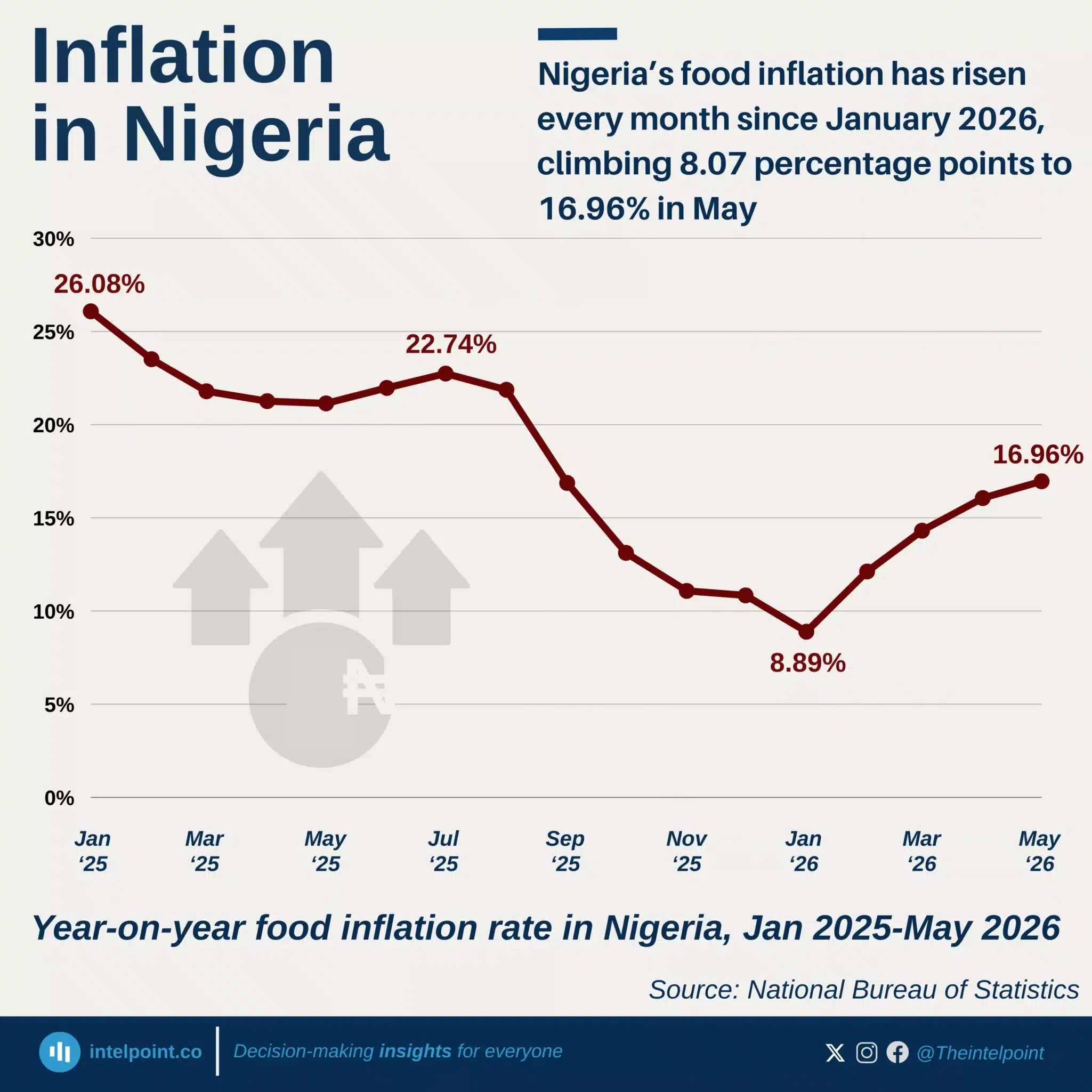
Food price pressure intensified in the first five months of 2026. After dropping to 8.89% in January, year-on-year food inflation increased to 12.12% in February, 14.31% in March, 16.06% in April and 16.96% in May.
The May rate means food prices were, on average, 16.96% higher than in May 2025. Food inflation also moved above Nigeria’s headline inflation rate of 15.93%, making food one of the strongest sources of renewed pressure on household expenses.
This series begins in January 2025, when the National Bureau of Statistics introduced the rebased Consumer Price Index, using 2024 as the new base year and 2023 household spending patterns for the updated weights.
Despite the recent increase, Nigeria’s food inflation remains below the 26.08% recorded in January 2025.
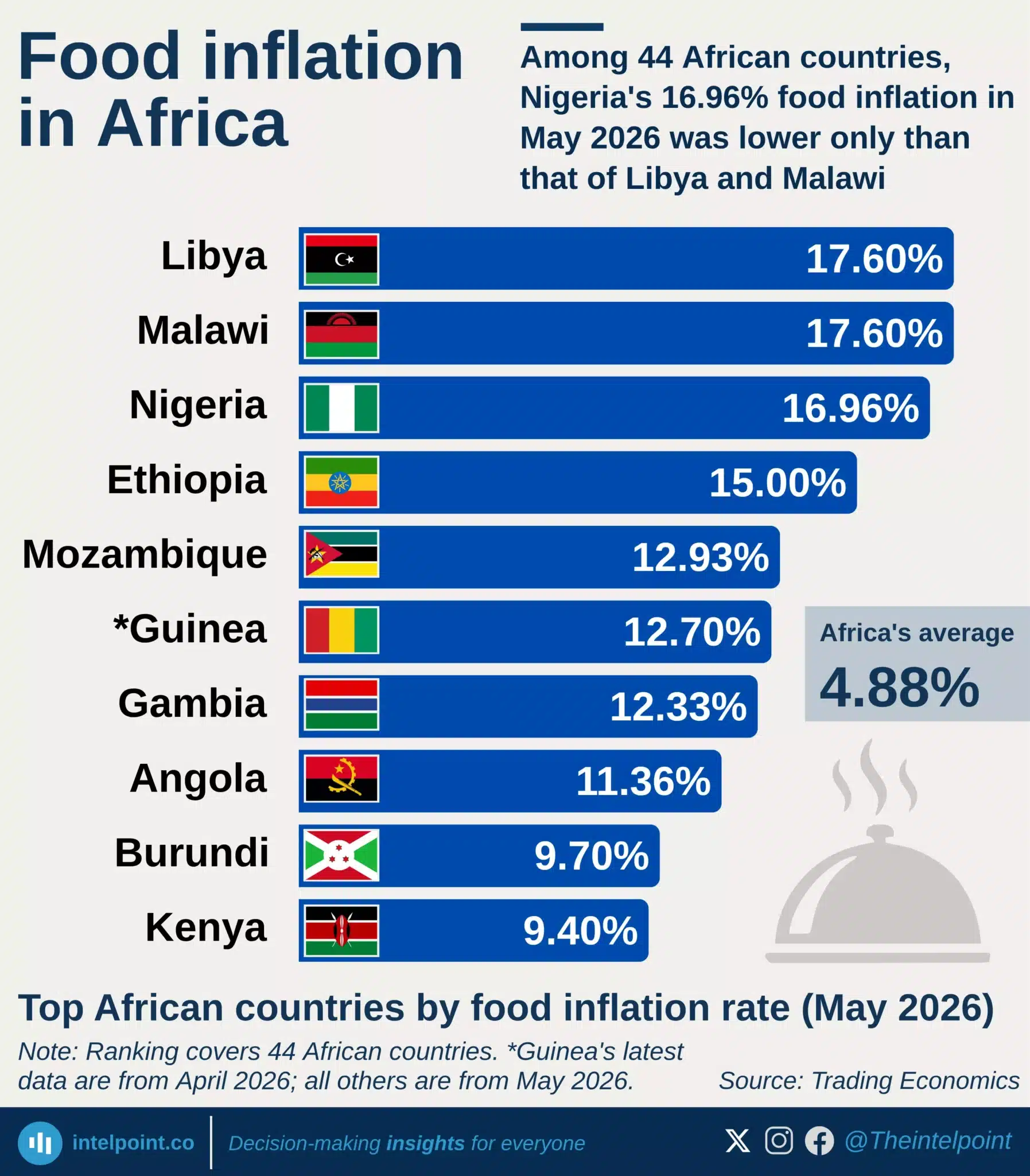
Across 45 African countries, Nigeria recorded the fourth-highest latest food inflation rate, behind South Sudan, Libya and Malawi.