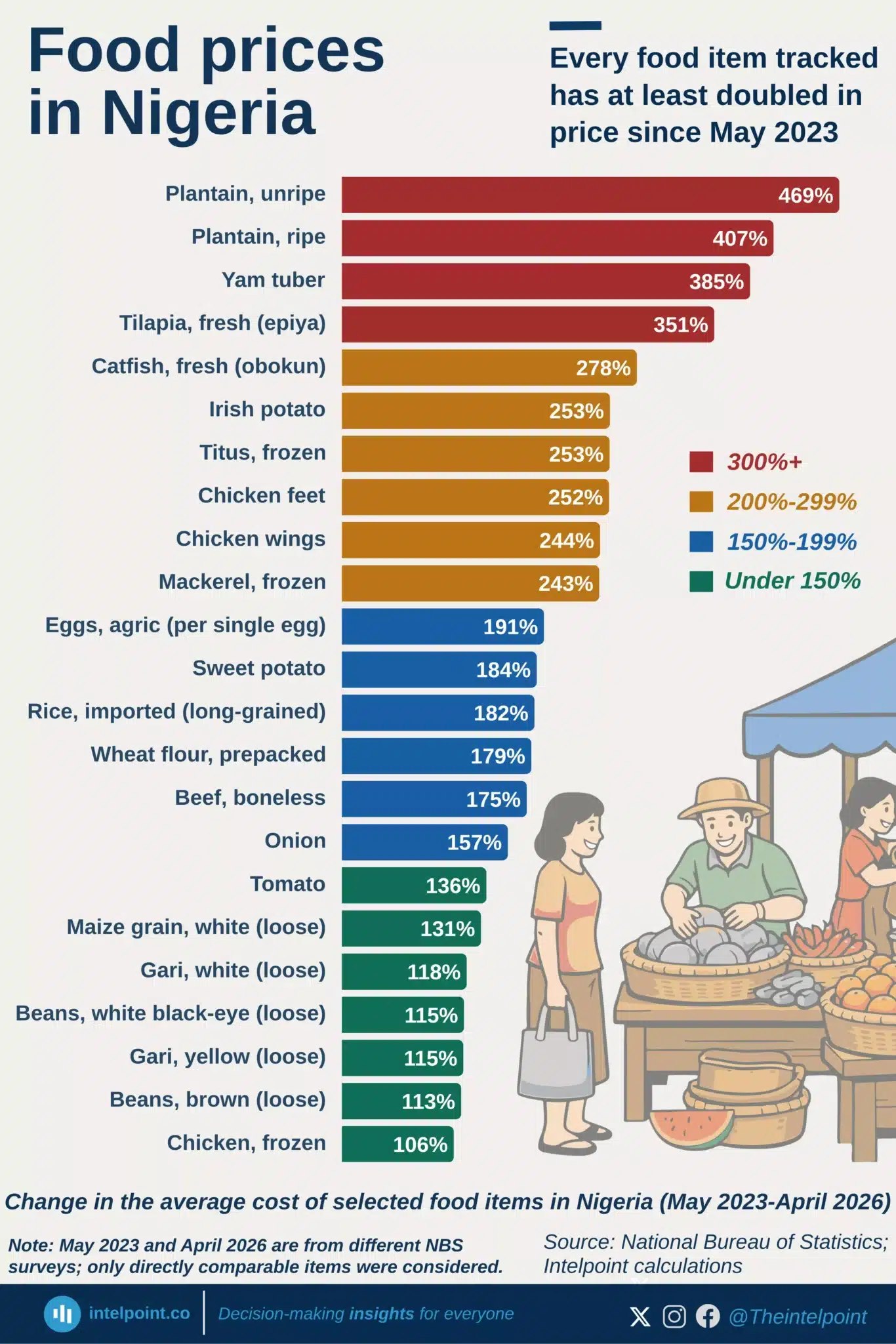
Every food item tracked has at least doubled in price since May 2023

  • Every comparable food item tracked is now at least twice as expensive as it was in May 2023.
  • Nearly half of the selected food items have more than tripled in price since the month before fuel subsidy removal.
  • Unripe plantain recorded the steepest increase, rising by 469% between May 2023 and April 2026.
  • Ripe plantain, yam tuber, and fresh tilapia also saw extreme increases of more than 300%.
  • Even the slowest-rising staples, including frozen chicken, beans, gari, and maize, still more than doubled in price.

Three years on from fuel subsidy removal, this is what happened to food in Nigeria.

Of the staples we could compare directly, not one got cheaper. Every item is at least double its May 2023 price — the last full month before the policy hit. Nearly half have tripled. Plantain has climbed almost six-fold; yam nearly five. And the items that held up best — gari, beans, maize — still doubled.

For households, feeding a family now costs at least twice what it did.
Source:

National Bureau of Statistics; Intelpoint calculations

Period:

May 2023-April 2026
HTML code to embed chart
Want a bespoke report?
Reach out
Tags
Related Insights

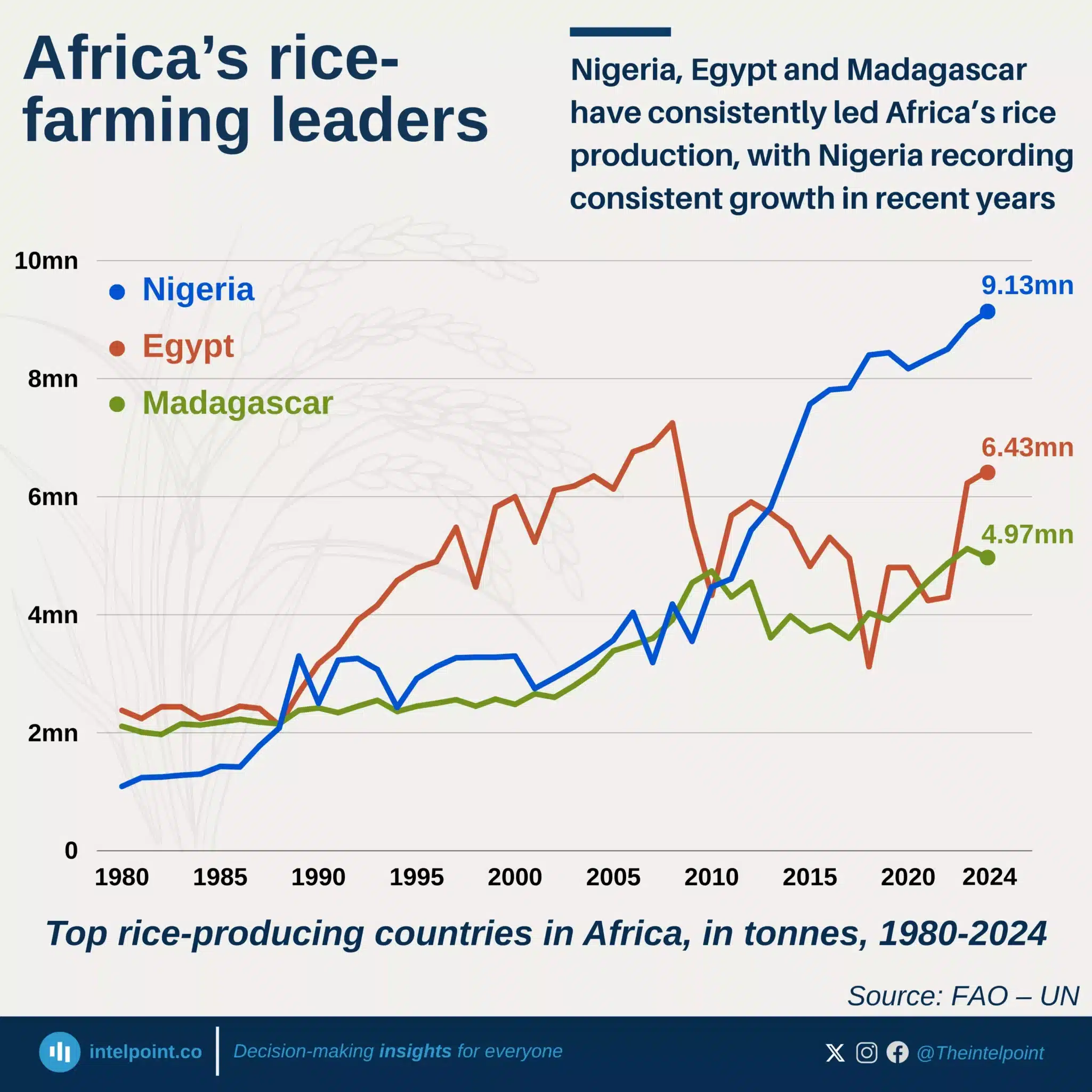
Nigeria, Egypt and Madagascar have consistently led Africa’s rice production, with Nigeria recording consistent growth in recent years
  • Nigeria's rice production hit 9.13 million tonnes in 2024, its highest level since 2021.
  • Egypt and Madagascar produced 6.43 and 4.97 million tonnes, respectively, in 2024.
  • Egypt and Madagascar combined produced 11.4 million tonnes, exceeding Nigeria's output.
  • Africa's rice production reached a record 44.8 million tonnes in 2024, up 421% since 1980.

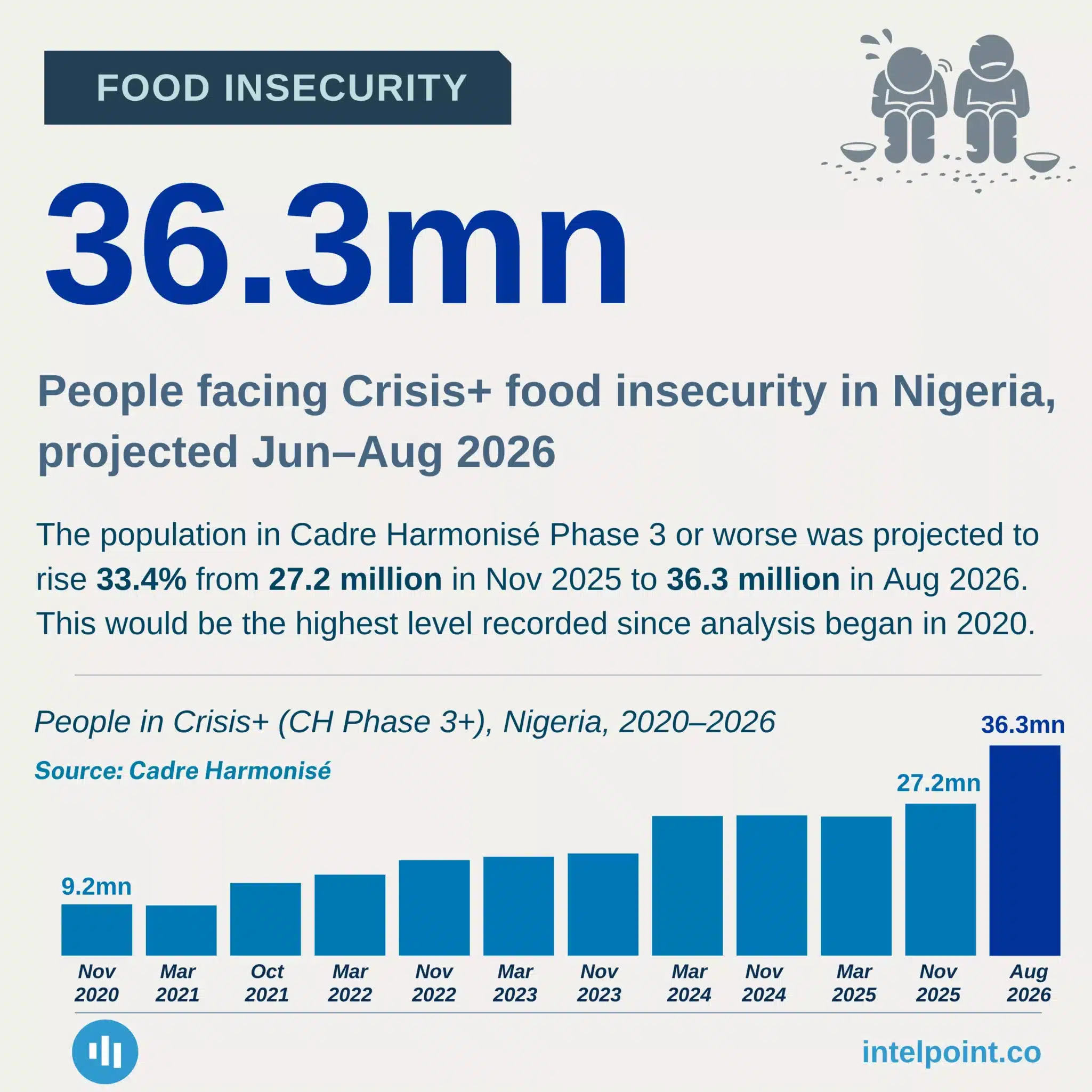
People facing Crisis+ food insecurity in Nigeria, projected Jun–Aug 2026
  • 36.3 million people face Crisis-level food insecurity in August 2026, up 33% from November 2025.
  • Nearly 8 in 10 households in the northeast have less than a week's food supply.
  • 58% of people in the northeast have insufficient food consumption.
  • Conflict, displacement and market disruption are deepening the crisis.

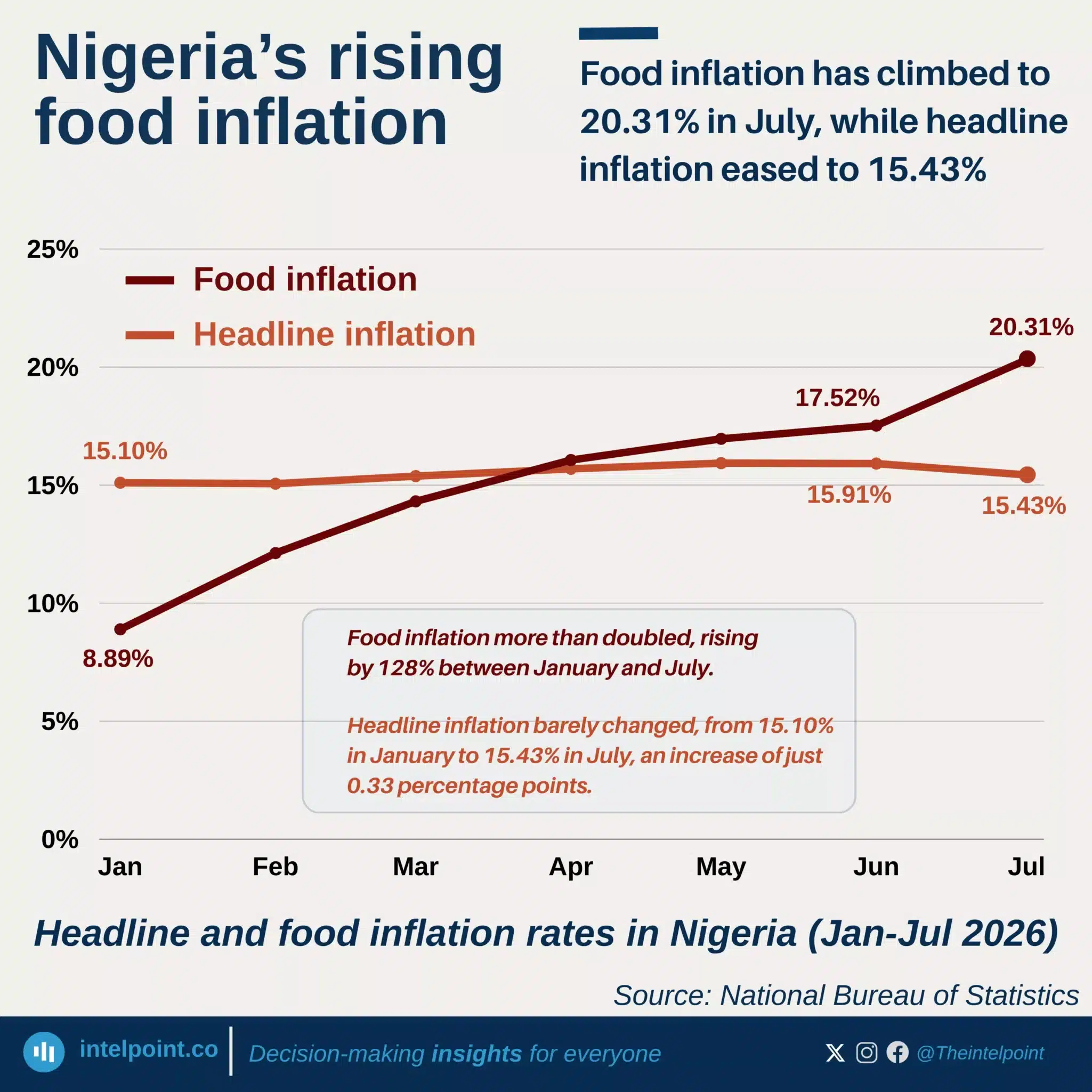
Food inflation has climbed to 20.31% in July, while headline inflation eased to 15.43%
  • Food inflation more than doubled, from 8.89% in January to 20.31% in July.
  • Food inflation overtook headline inflation, moving from 6.21 points below to 4.88 points above it.
  • Headline inflation barely changed, from 15.10% to 15.43%.
  • Food price pressures accelerated, with monthly inflation rising to 5.56% in July.

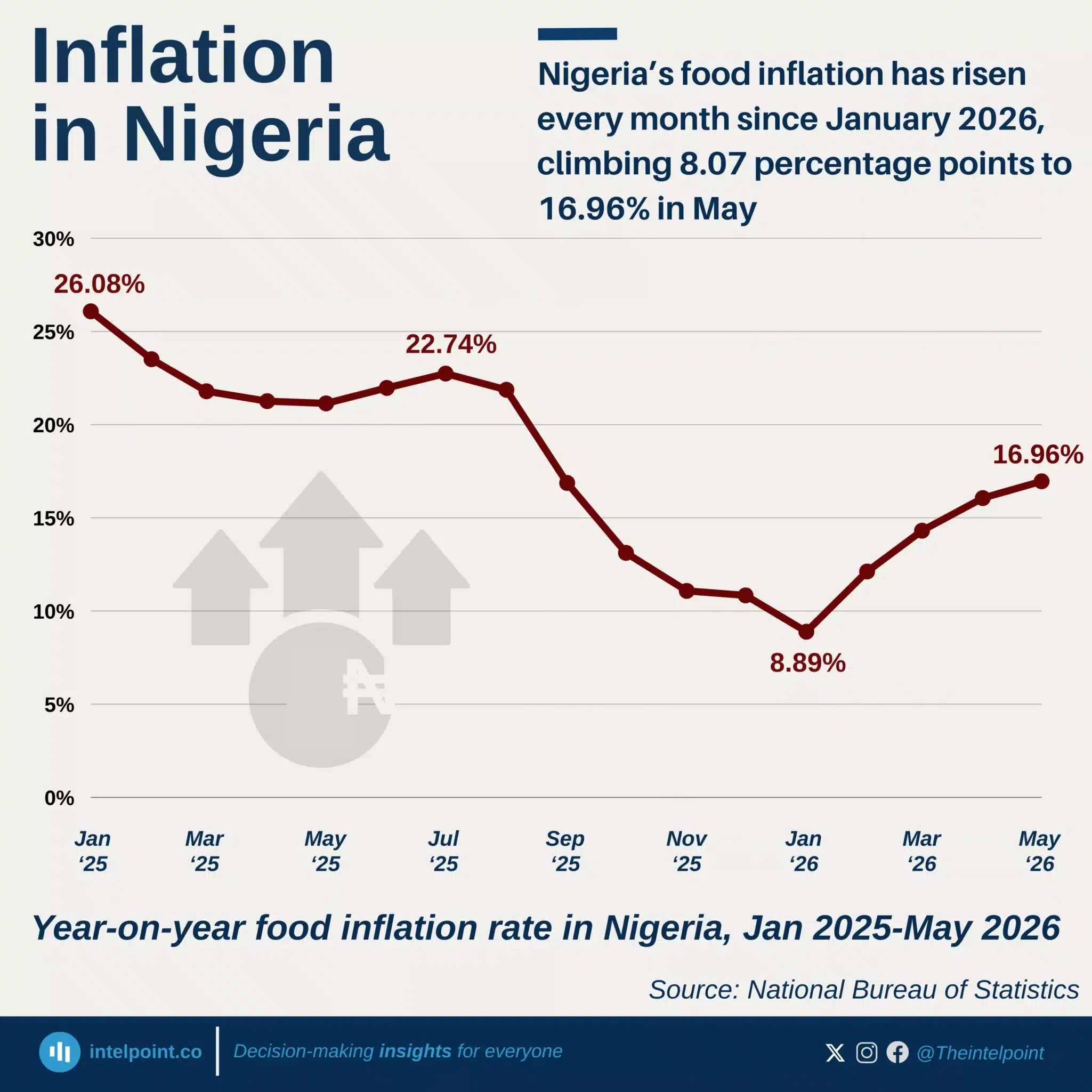
Nigeria’s food inflation has risen every month since January 2026, climbing 8.07 percentage points to 16.96% in May
  • Nigeria’s year-on-year food inflation rose for the fourth consecutive month, from 8.89% in January 2026 to 16.96% in May.
  • The rate increased by 8.07 percentage points within the first five months of 2026.
  • May’s 16.96% rate means food prices were, on average, 16.96% higher than they were in May 2025.
  • Food inflation rose from 12.12% in February to 14.31% in March and 16.06% in April before reaching 16.96% in May.
  • Food inflation exceeded Nigeria’s 15.93% headline inflation rate in May, showing that food was a major source of renewed pressure on household expenses.

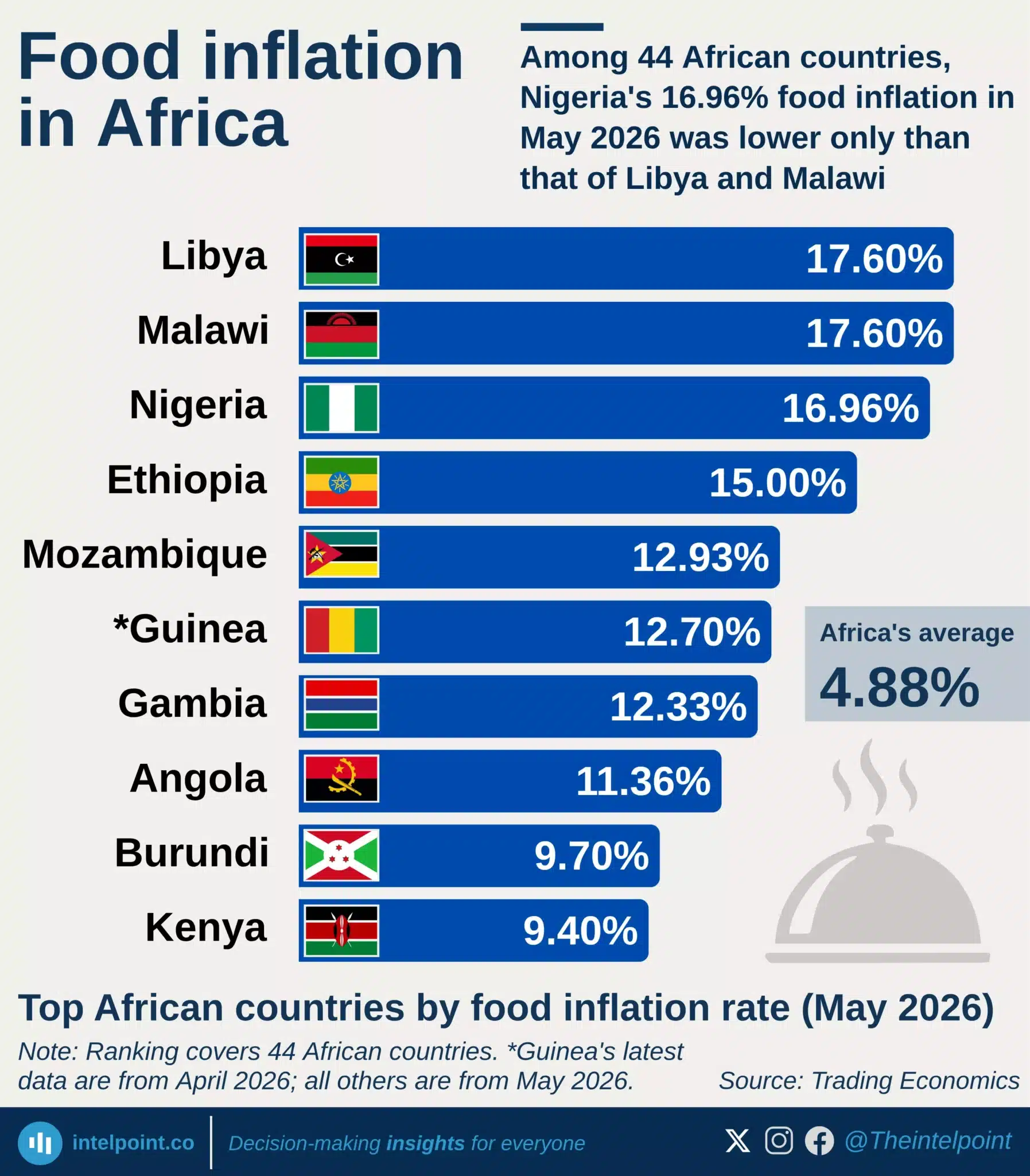
Among 44 African countries, Nigeria's 16.96% food inflation in May 2026 was lower only than that of Libya and Malawi
  • Nigeria recorded the third-highest food inflation rate among 44 African countries in May 2026.
  • At 16.96%, Nigeria’s rate was lower only than Libya and Malawi, both at 17.6%.
  • Nigeria’s food inflation was nearly 3.5 times the 4.88% average across the countries covered.
  • Eight of the ten countries with the highest food inflation recorded rates above 10%.

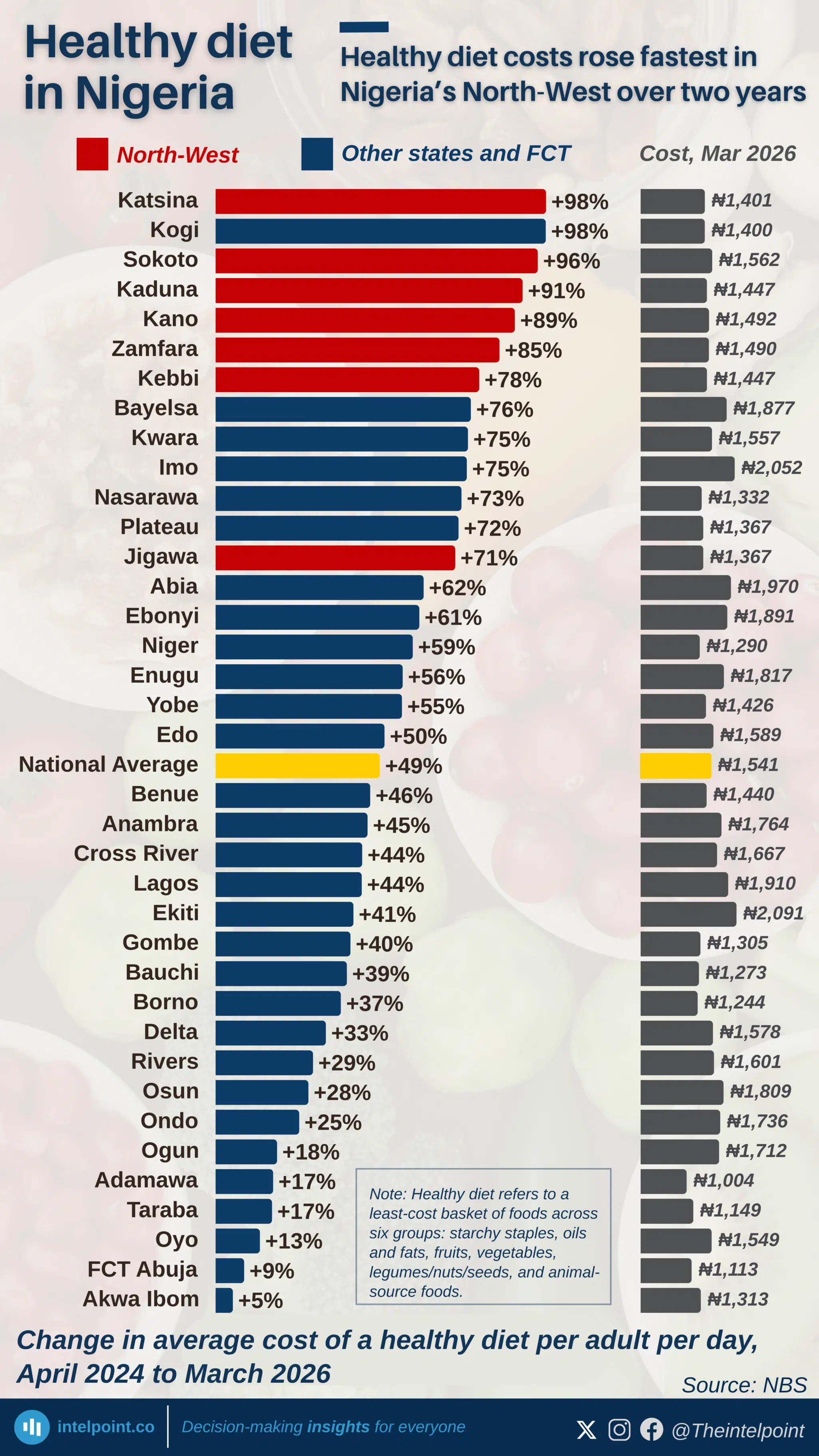
Healthy diet costs rose fastest in Nigeria’s North-West over two years
  • Healthy diet costs rose 49% nationally in two years.
  • North-West states recorded the fastest increases.
  • All seven North-West states rose above the national average.
  • Katsina and Kogi recorded the steepest increases, at 98%.
  • Akwa Ibom had the lowest increase, at 5%.

POPULAR TOPICS
SIGN UP TO OUR NEWSLETTER
Get periodic updates about the African startup space, access to our reports, among others.
Subscribe Here
Subscription Form

A product of Techpoint Africa. All rights reserved