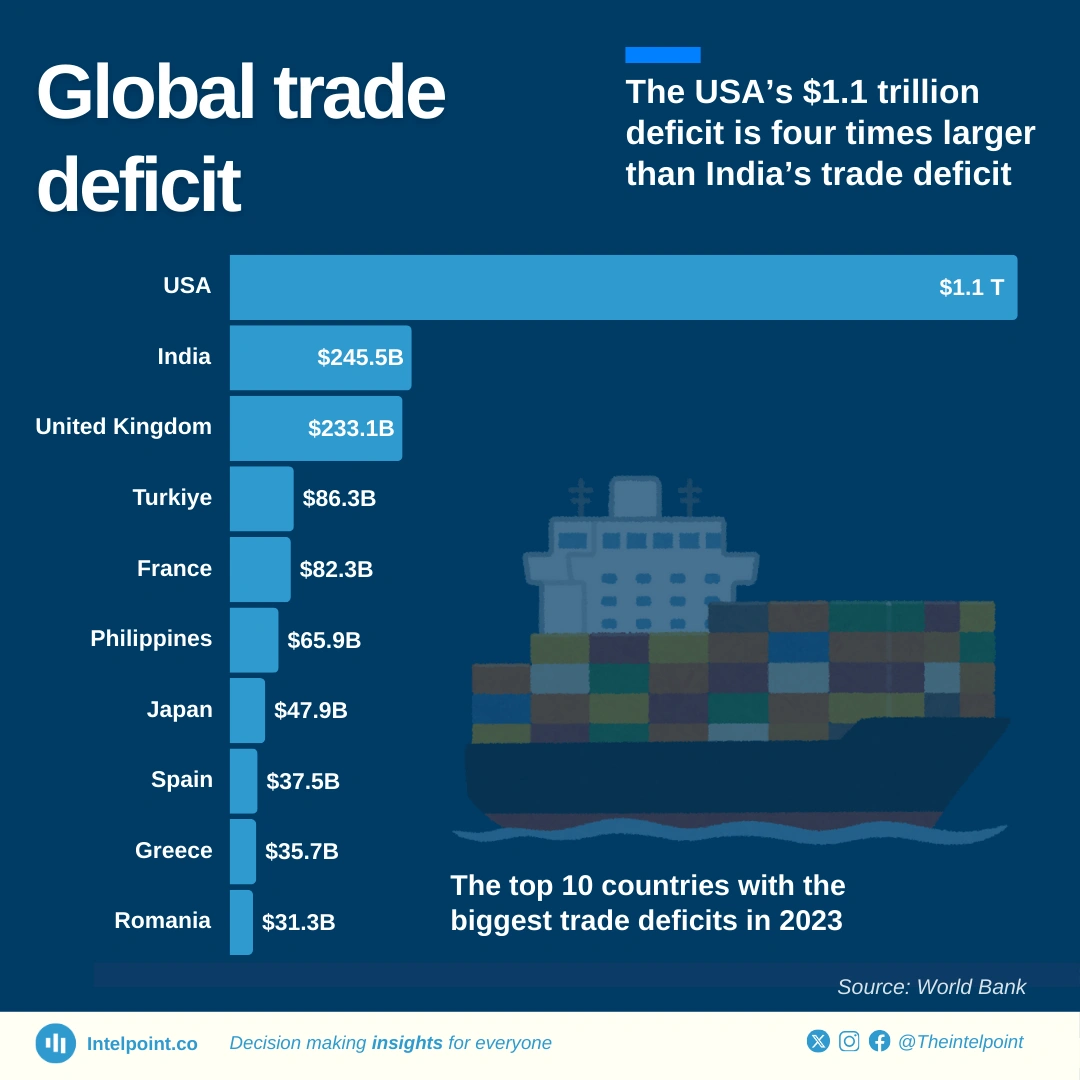
The USA’s $1.1 trillion deficit is four times larger than India’s trade deficit

Key takeaways

  • The United States leads with a massive $1.1 trillion in trade deficit, over four times larger than India's $245.5 billion deficit
  • India and the United Kingdom follow, each exceeding $230 billion in trade deficits, reflecting high import reliance
  • The USA’s trade imbalance alone surpasses the combined deficits of the other nine countries on this list
  • Six of the top ten countries with the largest deficits are European economies

Global trade deficits vary widely, with the United States standing out at $1.1 trillion, more than four times larger than India’s $245.5 billion deficit. The USA’s trade deficit alone exceeds the combined deficits of the remaining nine countries, underscoring its high import consumption. The UK follows closely behind India with a $233.1 billion deficit, highlighting a reliance on imports. Japan, Spain, Greece, and Romania maintain deficits below $50 billion in a list dominated by European economies.
Source:

World Bank

Period:

2023
HTML code to embed chart
Want a bespoke report?
Reach out
Tags
Related Insights

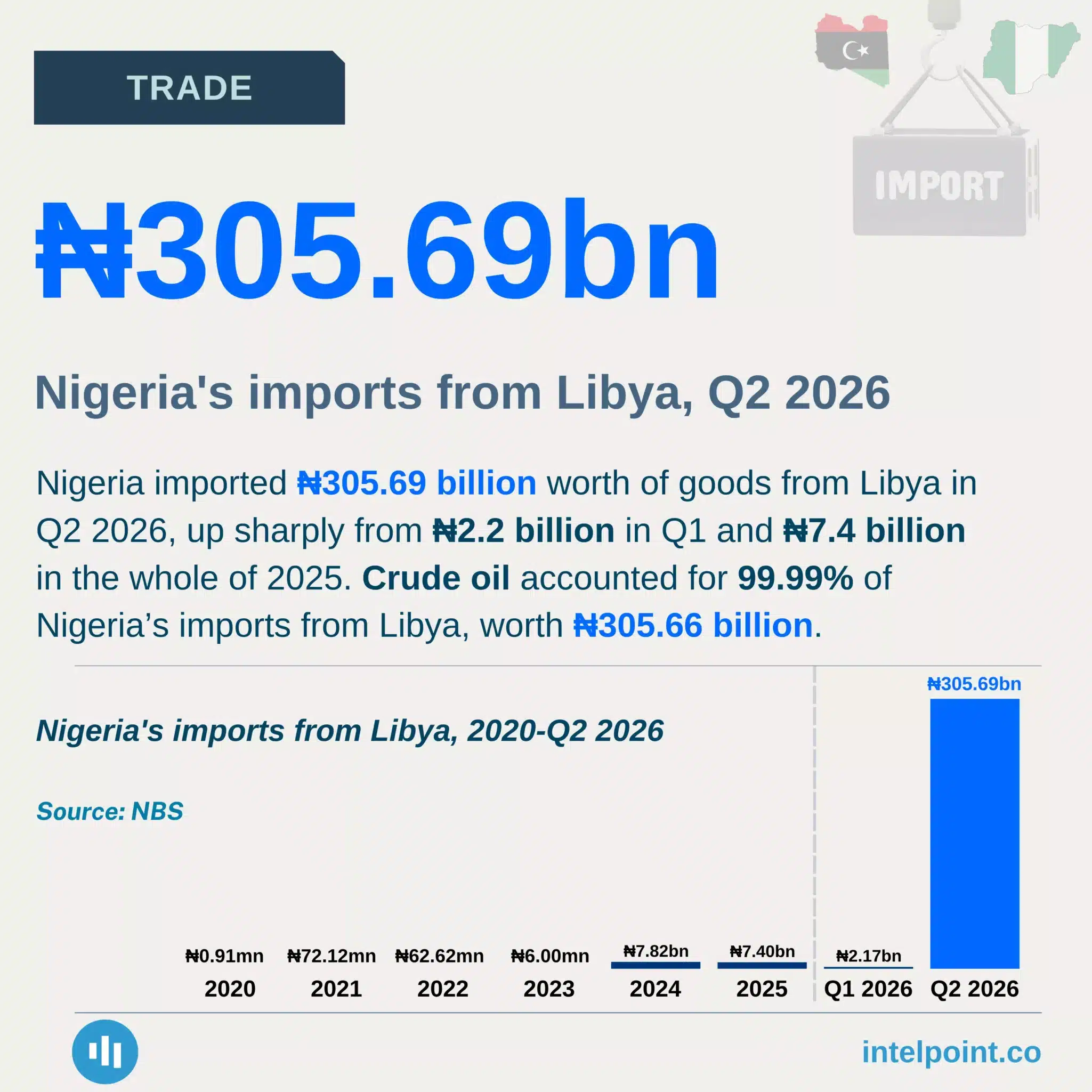
Nigeria bought ₦305.66 billion worth of crude oil from Libya in Q2 2026
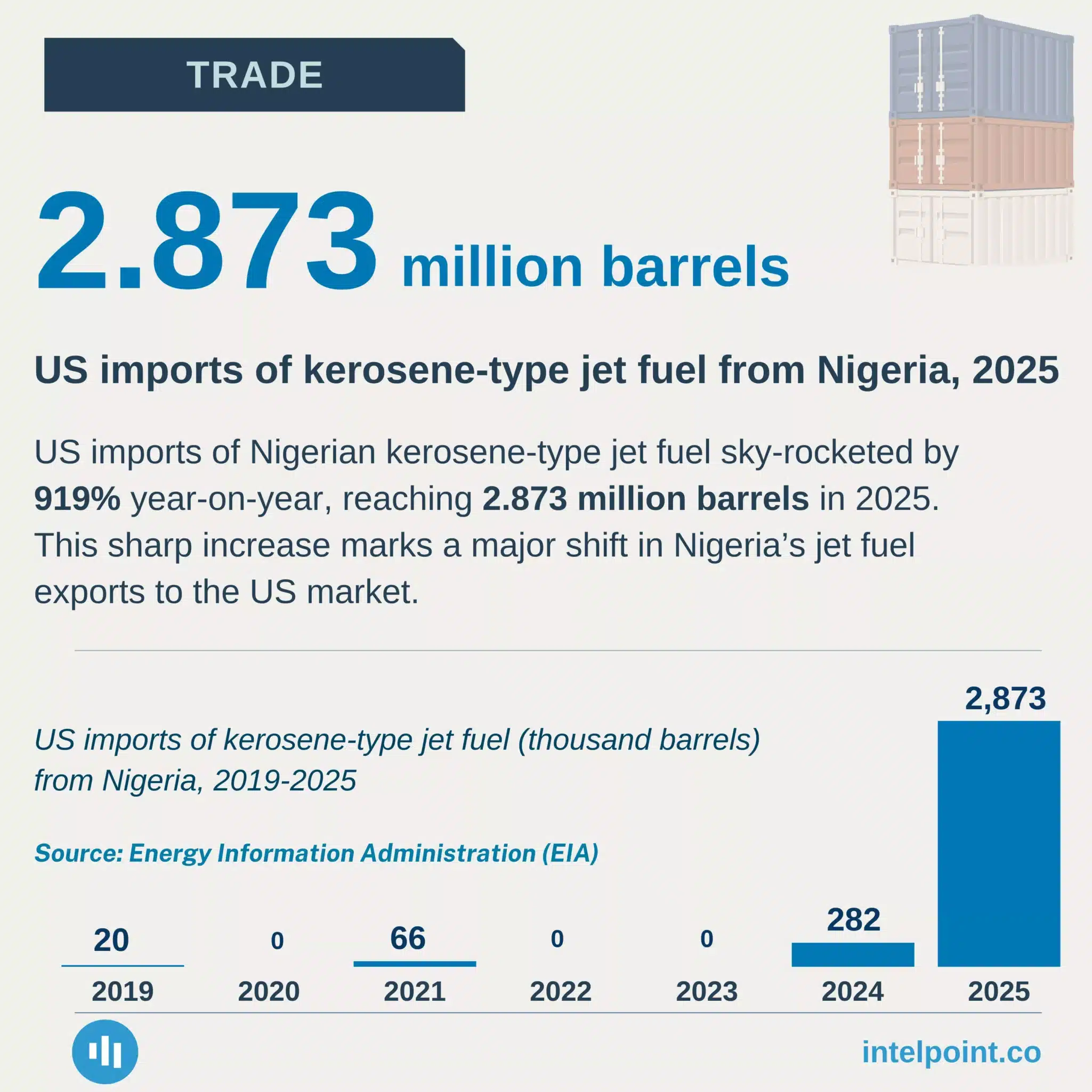
  • Nigeria imported ₦305.69bn from Libya in Q2 2026, up from ₦2.17bn in Q1.
  • Crude oil accounted for 99.99% of Q2 imports, worth ₦305.66bn.
  • Libya’s Q2 exports to Nigeria surged from ₦7.4bn in 2025 to ₦305.69bn.
  • Libya became Nigeria’s ninth-largest import source, accounting for 2.12% of total imports in Q2.
  • Nigeria’s imports from Libya were previously dominated by much smaller values, with crude oil driving the sharp 2026 increase.

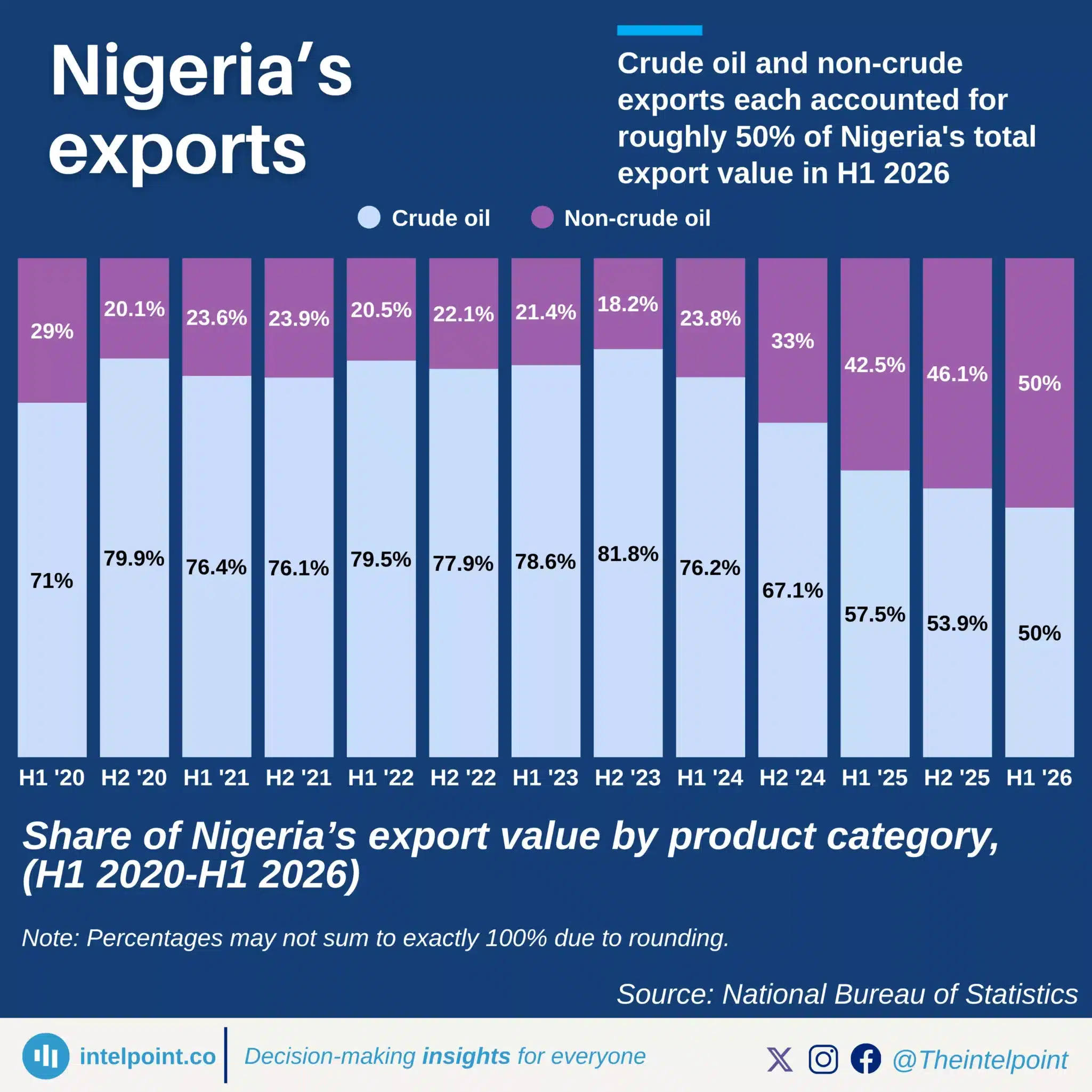
Crude oil and non-crude exports each accounted for roughly 50% of Nigeria's total export value in H1 2026
  • Nigeria’s crude and non-crude exports were nearly equal in H1 2026, at ₦24.1tn and ₦24tn, respectively.
  • Non-crude exports overtook crude in Q2 for the first time in at least six years, reaching ₦14.11tn.
  • Petroleum products and natural gas dominate non-crude exports, while non-oil exports accounted for just 13.8% of Q2 exports.
  • Nigeria’s export mix is shifting, but remains heavily dependent on hydrocarbons.

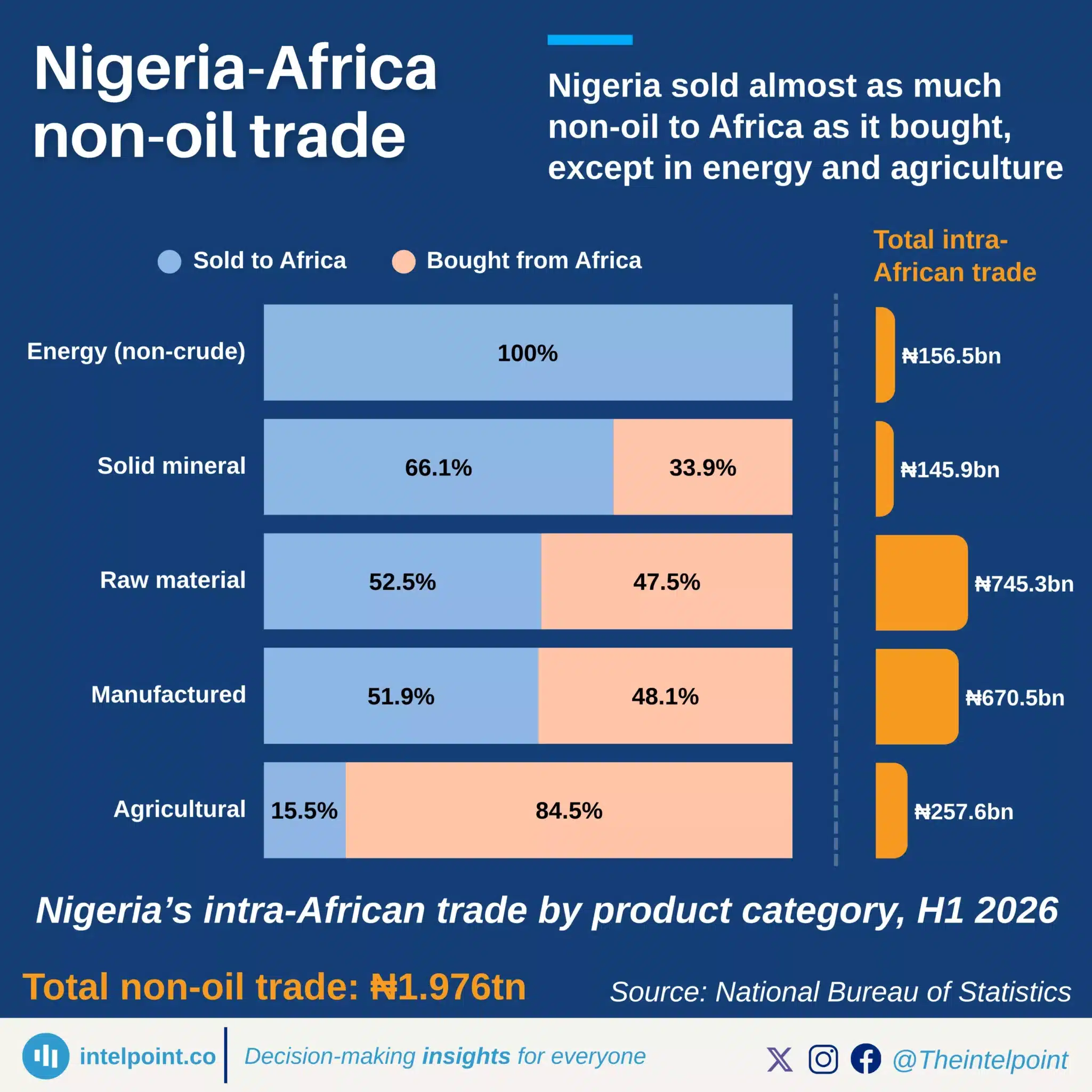
Nigeria sold almost as much non-oil to Africa as it bought, except in energy and agriculture
  • Nigeria’s non-oil trade with Africa was nearly balanced, with an ₦88bn surplus on almost ₦2tn of trade in H1 2026.
  • Energy trade was entirely export-led, with Nigeria selling ₦156.5bn and recording no imports.
  • Solid minerals also leaned towards exports, with sales making up 66.1% of category trade.
  • Agriculture ran a large deficit, as imports accounted for 84.5% of trade and exceeded exports by ₦178bn.
  • Nigeria’s agricultural trade deficit widened sharply, from ₦59bn in Q1 to ₦119bn in Q2.

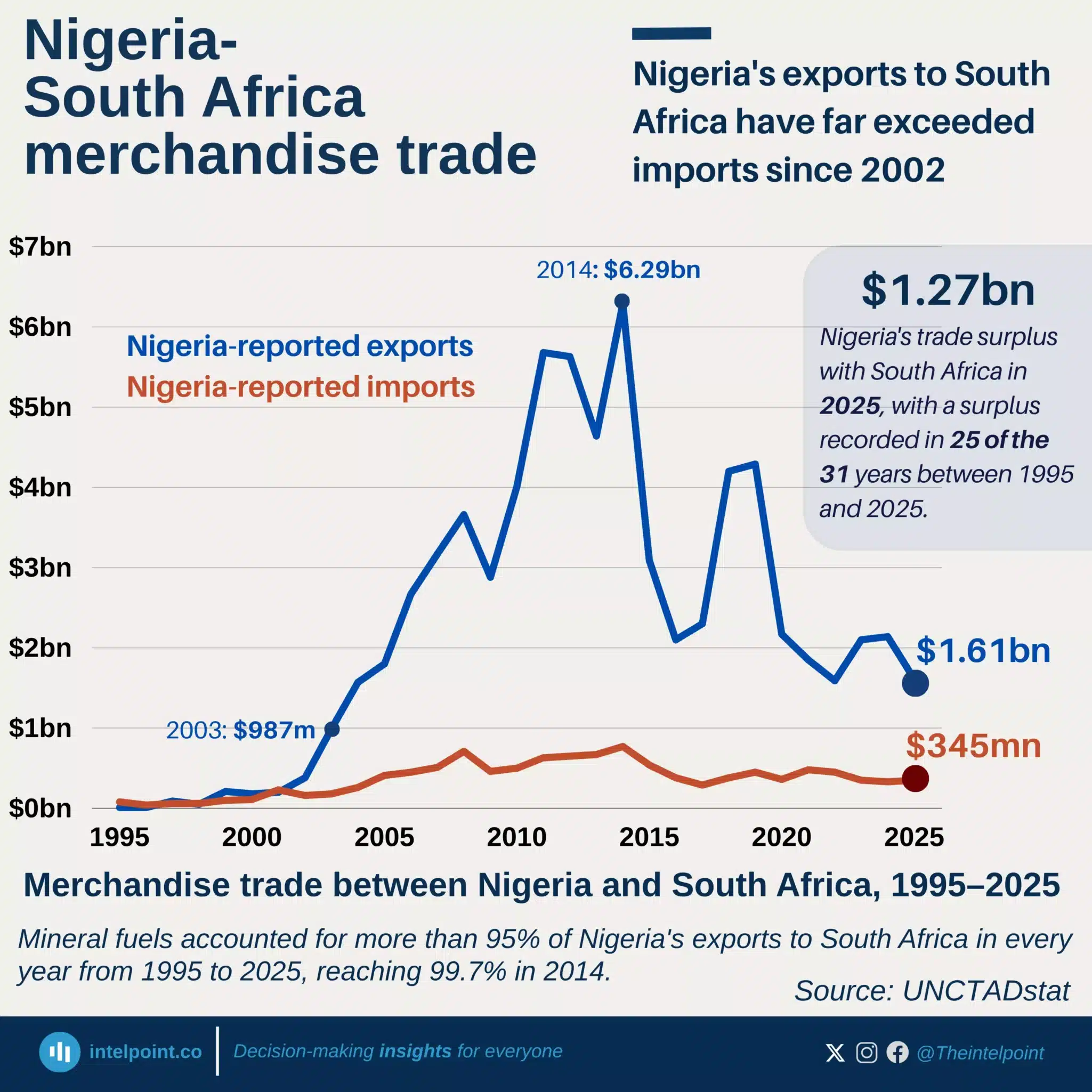
Nigeria's exports to South Africa have far exceeded imports since 2002
  • Nigeria has exported more to South Africa than it has imported every year since 2002.
  • Exports peaked at $6.29 billion in 2014, driven almost entirely by mineral fuels.
  • Imports from South Africa have remained below $1 billion annually.
  • Nigeria recorded a $1.27 billion trade surplus with South Africa in 2025.
  • Mineral fuels made up over 95% of Nigeria's exports throughout 1995-2025.

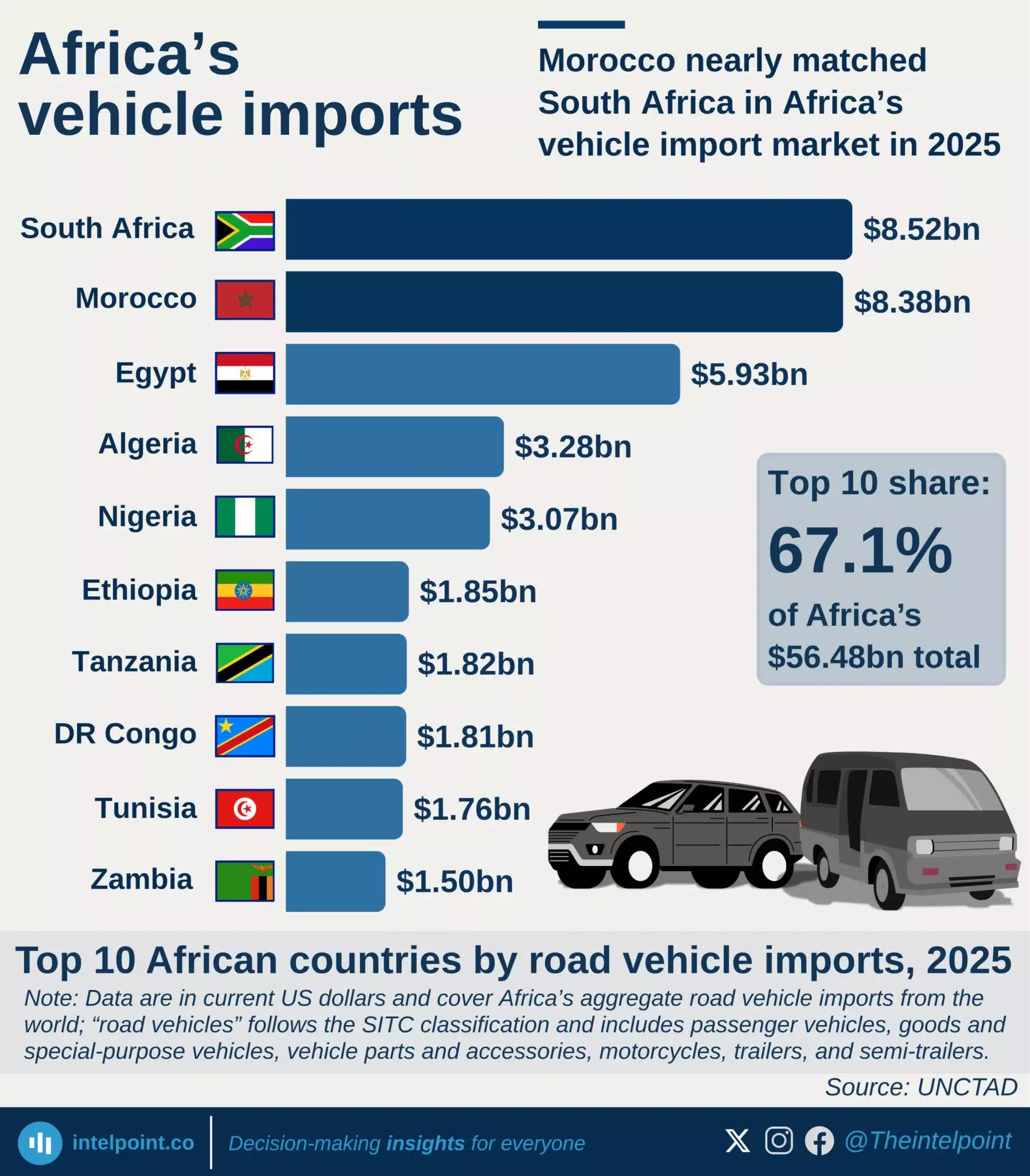
Morocco nearly matched South Africa in Africa’s vehicle import market in 2025
  • South Africa led with $8.52 billion, only $140 million ahead of Morocco.
  • Morocco’s imports have grown steadily, while South Africa’s 2025 figure was a recovery toward its 2012 peak.
  • Egypt ranked third, followed by Algeria and Nigeria.
  • The top 10 markets accounted for 67.1% of Africa’s $56.48 billion total.
  • Road vehicle imports include vehicles, parts, motorcycles, trailers, and semi-trailers.

Africa’s merchandise exports to China in 2025
  • Africa exported a record $86.2bn worth of goods to China in 2025.
  • China received about 12.5% of Africa’s total merchandise exports.
  • Annual exports remained below $10bn until 2004, before accelerating sharply.
  • Export values have remained relatively high since 2021 despite earlier downturns.
  • The trade relationship remains heavily commodity-led, with limited manufactured exports.

POPULAR TOPICS
SIGN UP TO OUR NEWSLETTER
Get periodic updates about the African startup space, access to our reports, among others.
Subscribe Here
Subscription Form

A product of Techpoint Africa. All rights reserved