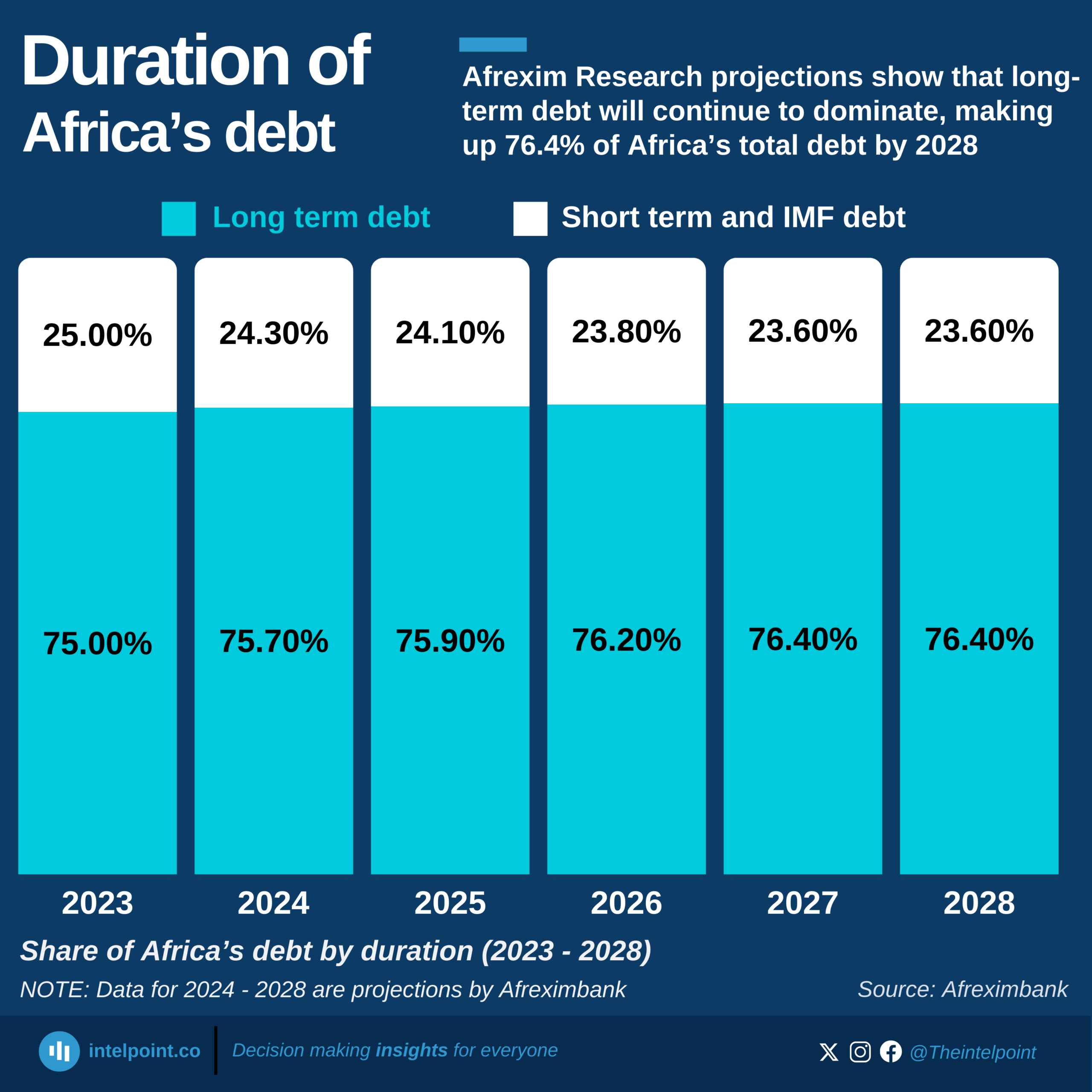
Afrexim Research projections show that long-term debt will continue to dominate, making up 76.4% of Africa’s total debt by 2028

Key takeaways:

  • By 2028, 76.4% of Africa’s debt will be long-term, up from 75% in 2023.
  • The share of long-term debt will consistently rise each year.
  • Short-term and IMF debts will shrink to 23.6% by 2028, indicating reduced reliance on short-term borrowing.
  • The trend towards long-term debt reduces the immediate financial strain on governments but requires careful management to avoid excessive interest accumulation.
  • Countries must ensure that extended debt periods are matched with productive investments to justify future repayments.
  • A higher share of long-term debt could expose African economies to potential interest rate hikes in the future.
  • While long-term borrowing offers temporary relief, debt sustainability remains a key issue that policymakers must address.

Africa's debt is shifting further toward long-term obligations, with projections indicating that by 2028, 76.4% of the continent’s total debt will be long-term. This slow but steady increase underscores a preference for extended repayment periods, reducing the burden of short-term debt repayments but potentially increasing overall costs due to prolonged interest payments.
In everyday terms, this is similar to how businesses or individuals prefer long-term loans over short-term ones to ease immediate financial pressure. While long-term financing offers breathing space, it requires strong fiscal discipline to ensure that repayments remain sustainable in the future.
Source:

Afreximbank

Period:

2024 - 2028
HTML code to embed chart
Want a bespoke report?
Reach out
Tags
Related Insights

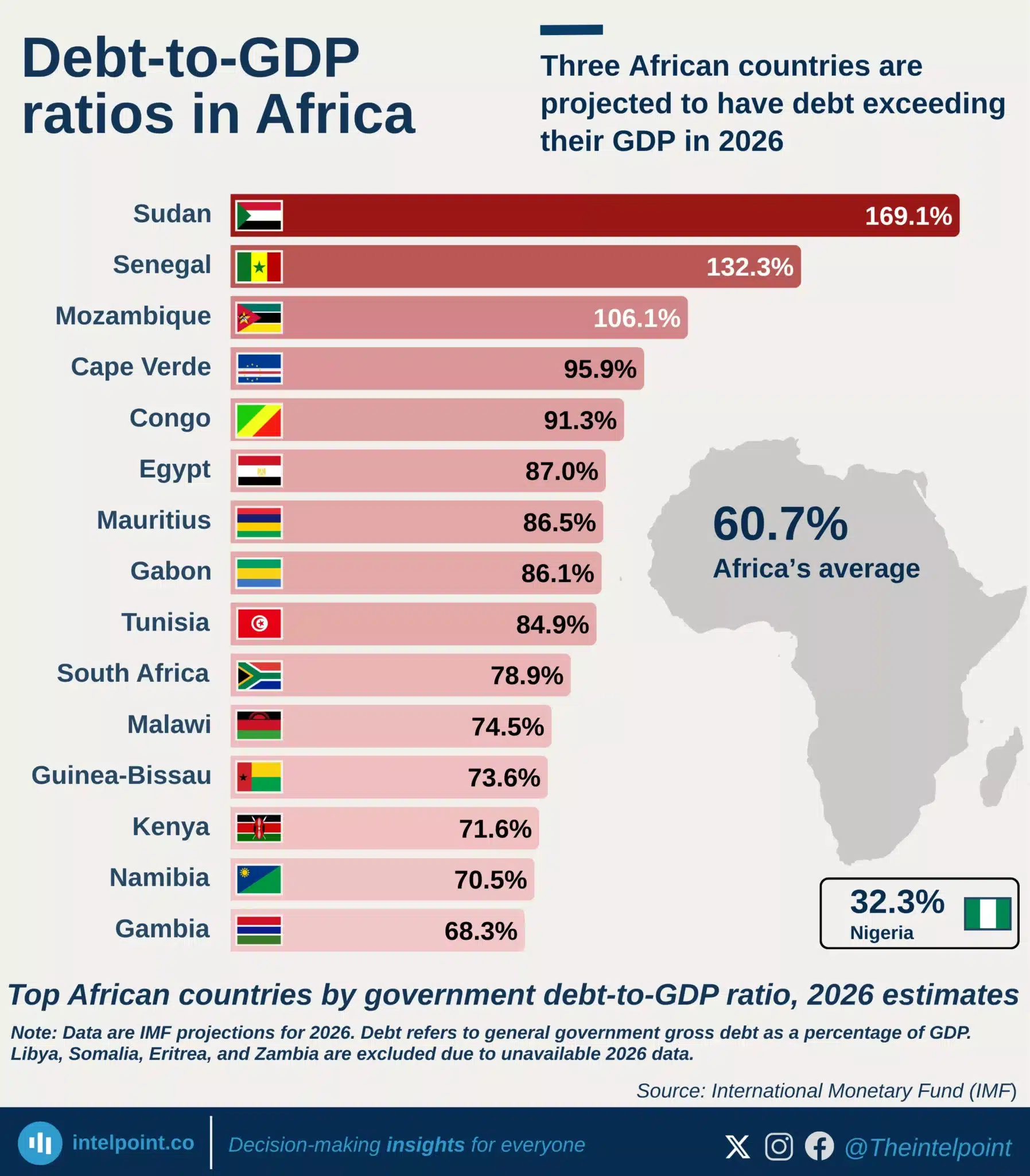
Three African countries are projected to have debt exceeding their GDP in 2026
  • Sudan is projected to have Africa’s highest debt-to-GDP ratio in 2026, at 169.1%.
  • Only three African countries are projected to owe more than the size of their economies in 2026.
  • Senegal and Mozambique join Sudan among countries with debt-to-GDP ratios above 100%.
  • Africa’s average government debt-to-GDP ratio is projected at 60.7% in 2026.
  • Nigeria’s projected debt-to-GDP ratio of 32.3% is far below the African average.

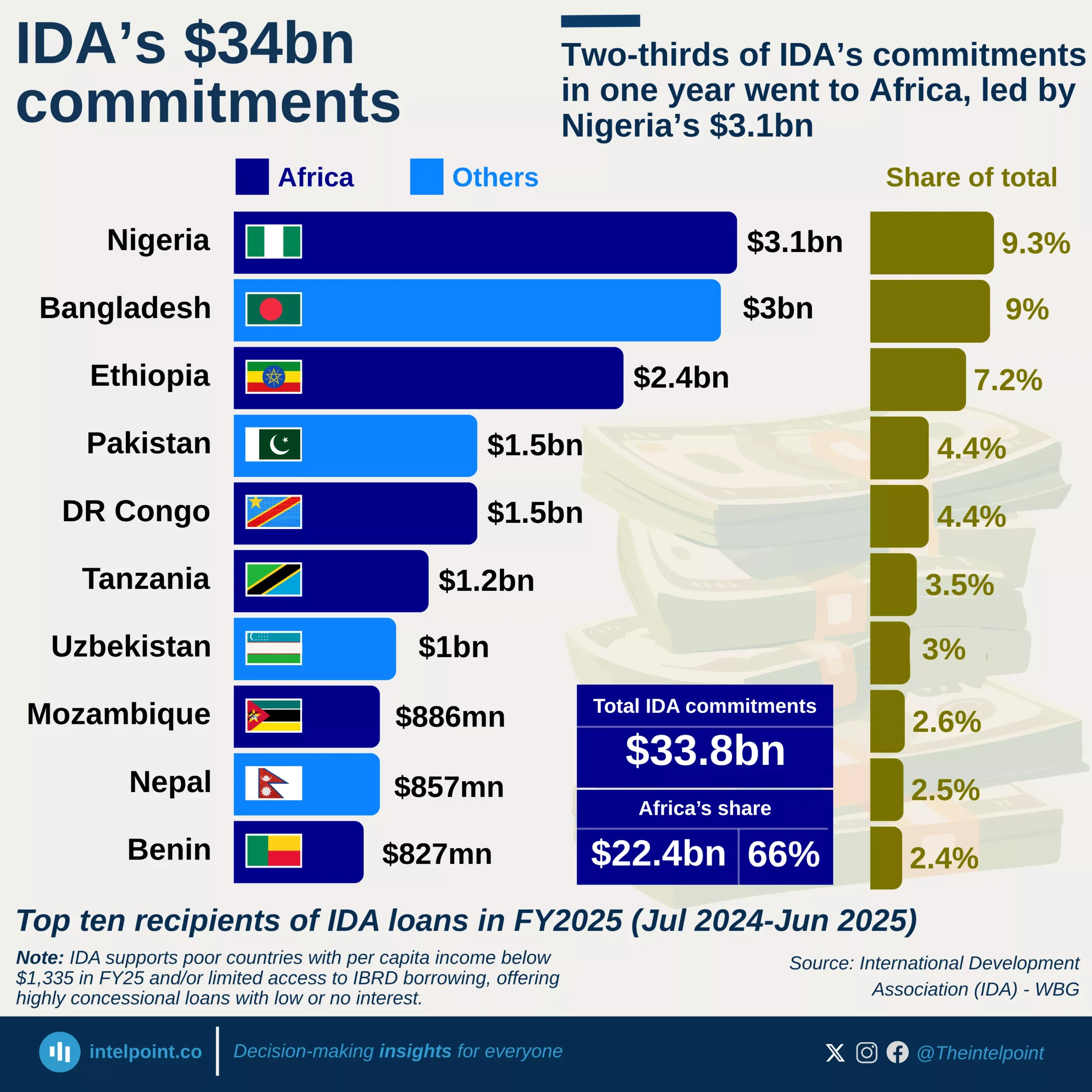
Two-thirds of IDA’s commitments in one year went to Africa, led by Nigeria’s $3.1bn
  • Africa received 66% of IDA’s FY2025 commitments.
  • Africa’s total IDA allocation was $22.4 billion out of $33.8 billion.
  • Nigeria was the largest borrower from the DA globally, with $3.1 billion in loans.
  • Bangladesh ranked second with $3 billion.
  • Six of the top ten borrowers were African countries.
  • Nigeria accounted for 9.3% of total FY2025 IDA commitments.

Oyo has reduced external debt by 36% and domestic debt by 22% under Makinde
  • Oyo reduced external and domestic debt by the end of 2025.
  • External debt fell faster than domestic debt.
  • External debt declined more consistently over the period.
  • Oyo’s local debt peaked around 2022–2023 before falling back.
  • The state appears to have prioritised reducing FX exposure.

Africa has been the world's biggest World Bank borrower since 2017, owing $152 billion as of 2024
  • Africa has been the world's biggest World Bank borrower since 2017, and the gap is widening.
  • Three crises drove it: an infrastructure gap, the 2014 commodity crash, and COVID-19.
  • The World Bank leaned in deliberately — 66% of all IDA funds went to Africa in 2025 alone.
  • It's not really "Africa's debt" — it's Nigeria's, Kenya's, Ethiopia's, Egypt's, Tanzania's, and Morocco's.
  • Every other region is slowing down, but Africa's curve is still climbing.

Under Sanwo-Olu, Lagos cut its external debt and more than doubled its domestic debt
  • Lagos cut external debt, but increased domestic debt.
  • The drop in external debt was meaningful, but the rise in domestic debt was much larger.
  • Stronger IGR gave Lagos more room to borrow and repay.
  • The state chose local funding over heavier dollar exposure.

Lagos's external debt has reduced by nearly three times more than the other six states combined
  • Lagos's debt reduction is larger than the other six combined.
  • Oyo posted the fastest reduction rate.
  • The biggest percentage cut did not equal the biggest dollar cut.
  • Debt reduction was concentrated, not broad-based.
  • Higher state revenues likely created room for repayments.
  • Lagos had the strongest fiscal capacity among the states shown.
  • Smaller debt stocks made percentage declines easier for some states.

POPULAR TOPICS
SIGN UP TO OUR NEWSLETTER
Get periodic updates about the African startup space, access to our reports, among others.
Subscribe Here
Subscription Form

A product of Techpoint Africa. All rights reserved