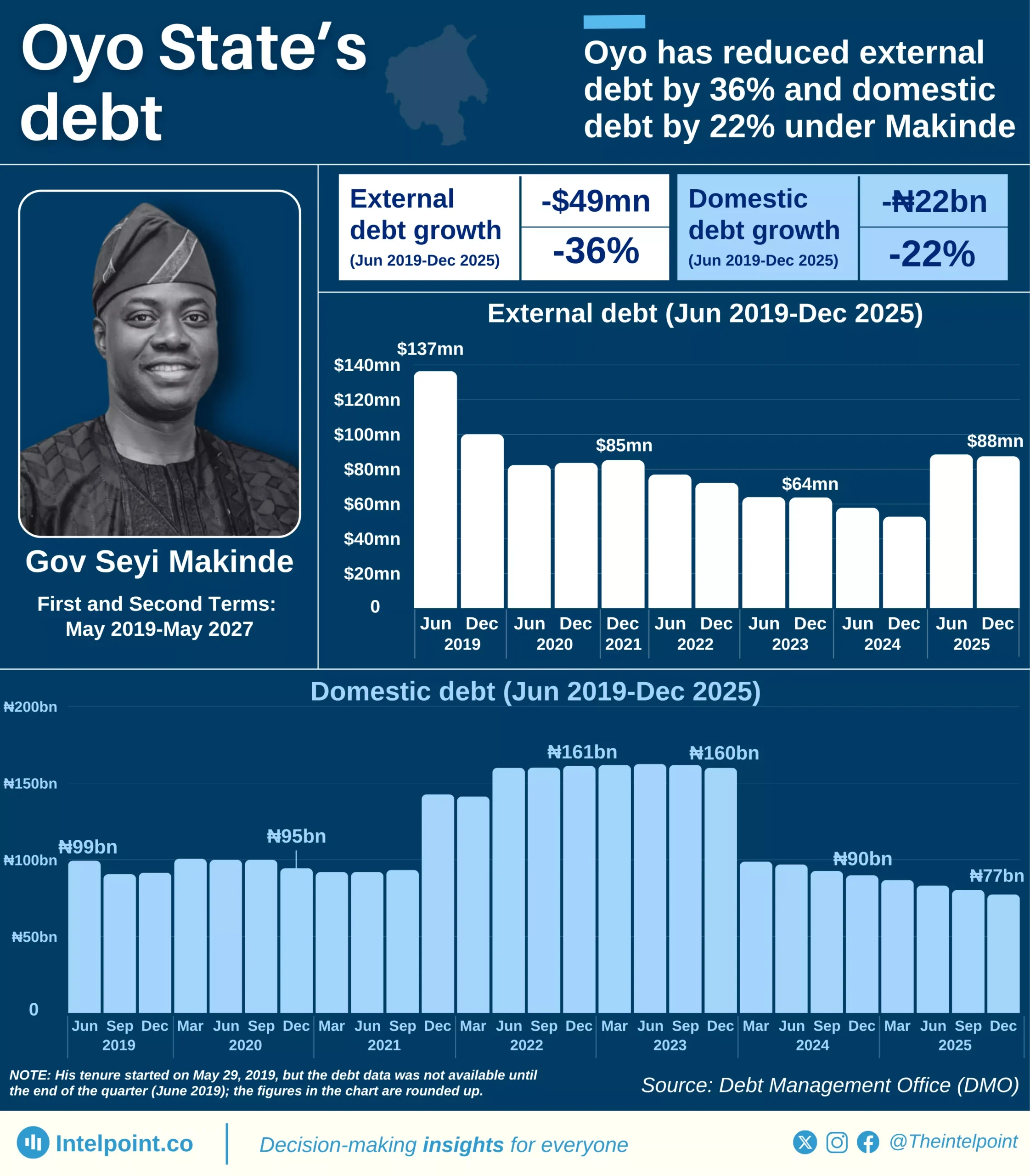
From June 2019 to December 2025, the state’s external debt fell from about $137 million to $88 million, a decline of roughly $49 million (36%). Over the same period, domestic debt fell from ₦99 billion to ₦77 billion, a ₦22 billion (22%) drop. But unlike external debt, domestic debt did not fall steadily; it climbed sharply to around ₦162 billion in 2022–2023 before turning down.
That pattern suggests deliberate debt management rather than passive drift. Oyo’s debt strategy says the state planned to finance new borrowing mainly through domestic instruments, including lower-cost local funding, while its medium-term framework earmarked about ₦23 billion, ₦42.8 billion, and ₦45 billion for public debt service in 2024, 2025, and 2026, respectively. The state appears to have worked on two things at once: reducing foreign-currency exposure and managing local liabilities after a mid-period buildup.