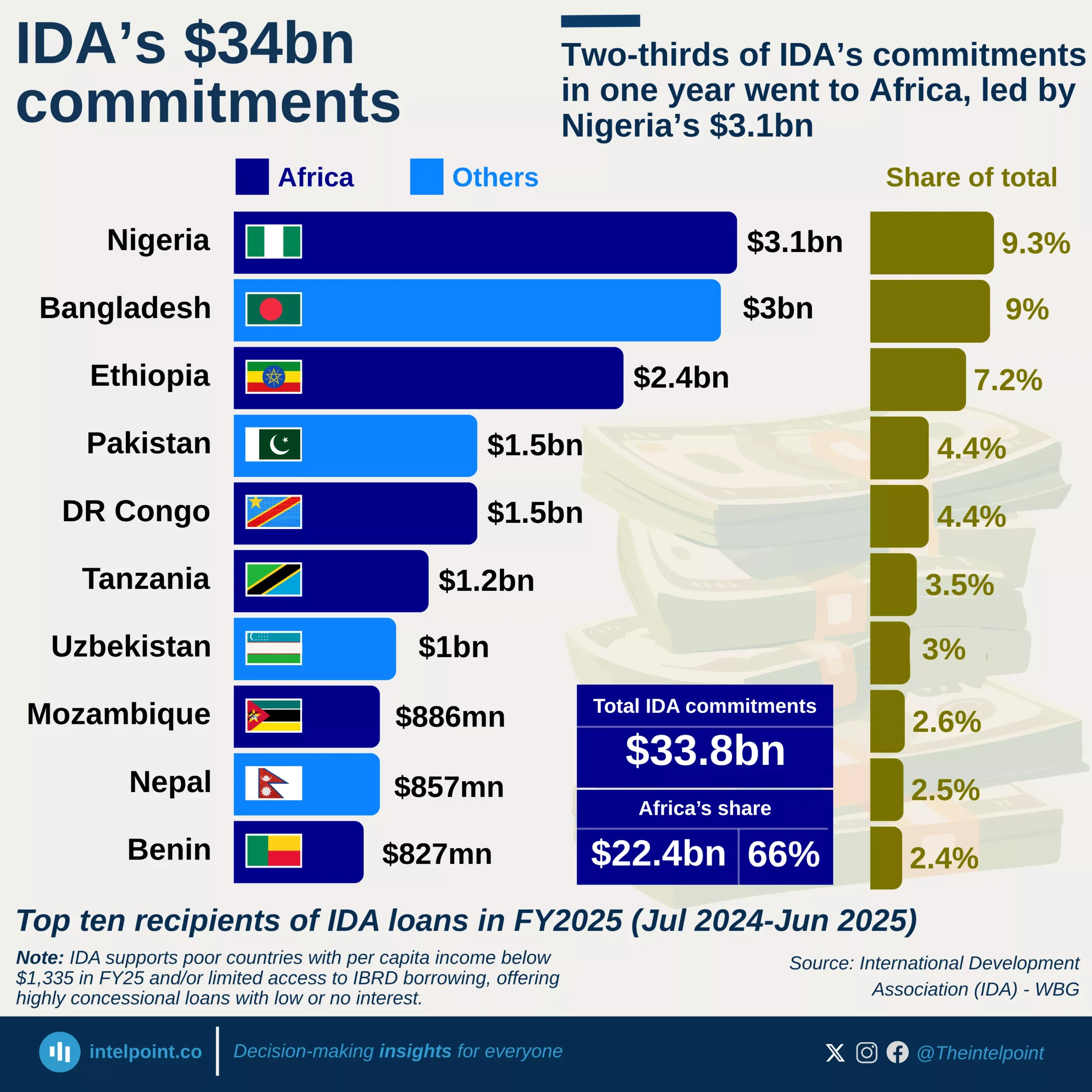
Africa dominated IDA borrowing in FY2025, which spanned July 2024 to June 2025. Of the $33.8 billion in total IDA commitments in the fiscal year ending June 30, 2025, Africa received $22.4 billion — 66% of the total. Nigeria alone accounted for $3.1 billion, the highest amount among all borrowers, ahead of Bangladesh ($3 billion) and Ethiopia ($2.4 billion).
IDA is not ordinary financing; it is the World Bank’s concessional window for poor countries, so the chart effectively shows where financing pressure, development needs, and reform-linked funding demand were most concentrated in FY2025.
Six of the top ten borrowers were African countries: Nigeria, Ethiopia, DR Congo, Tanzania, Mozambique, and Benin. Together, that group explains why Africa absorbed such a large share of IDA commitments in the fiscal year.
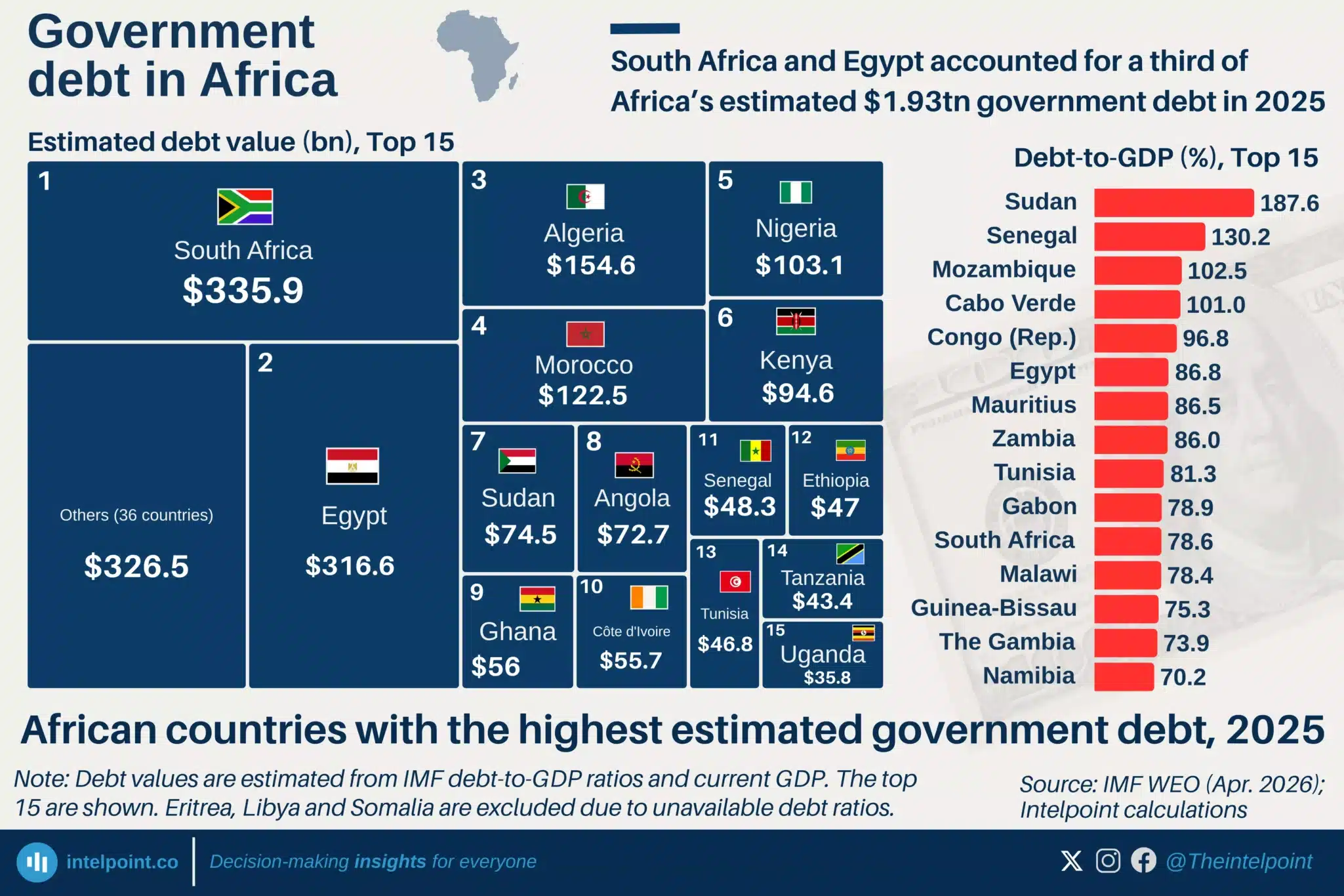
Many African economies entered FY2025 still dealing with a difficult mix of high debt-service pressure, weak fiscal space, climate vulnerability, infrastructure gaps, and social spending needs. IDA’s finance page shows that the institution committed $8.2 billion in grants in FY2025, underscoring how much of the support was directed to countries that needed highly concessional rather than market-priced capital.
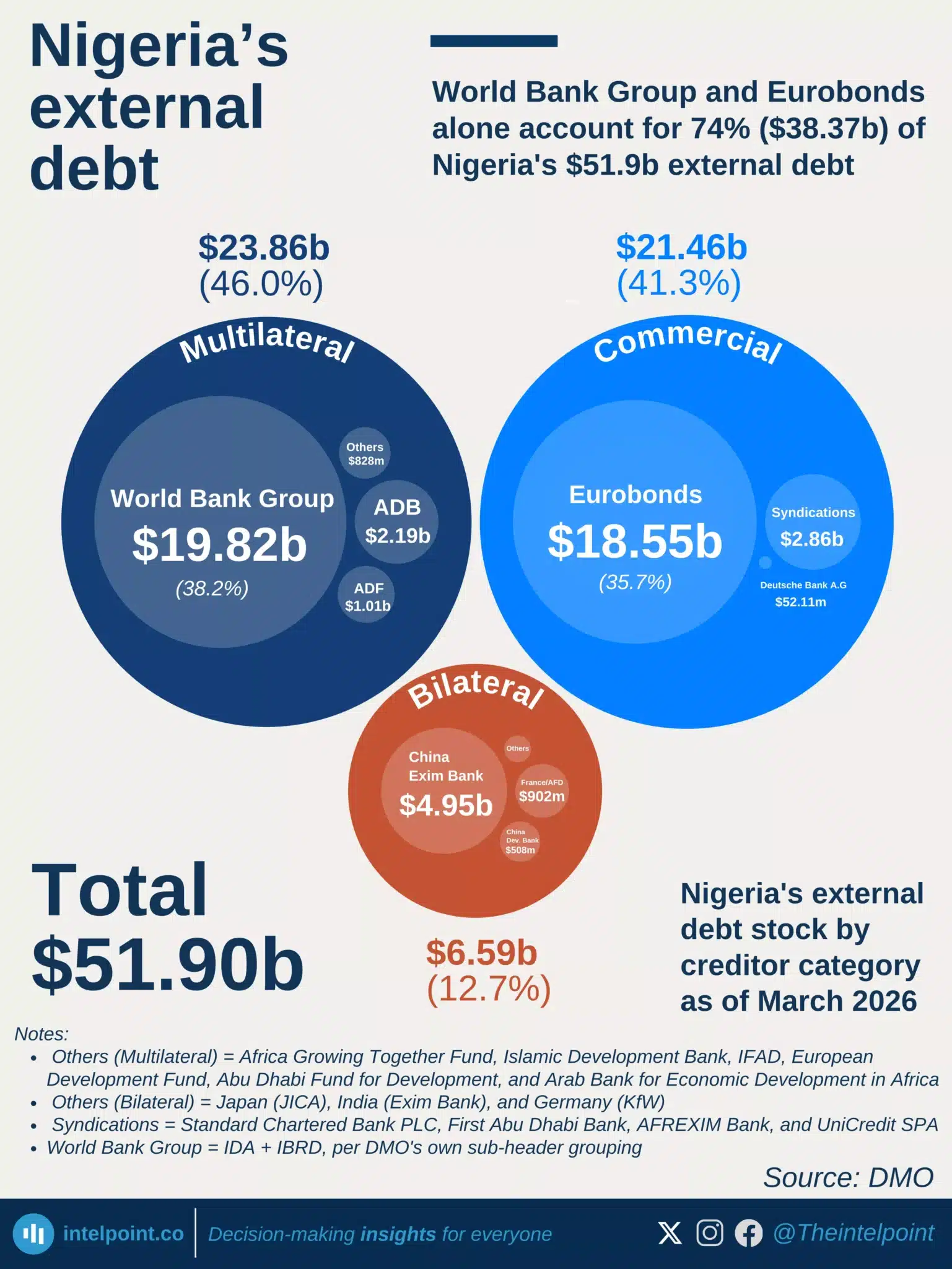
Nigeria’s position reflects both scale and timing. In September 2024, Reuters reported that the World Bank approved a $1.57 billion financing package for Nigeria, covering health, education, and sustainable power. In April 2025, another $1.08 billion was approved to support education quality, nutrition, and household resilience. When placed beside the chart, those approvals explain how Nigeria reached $3.1 billion in IDA borrowing in FY2025.