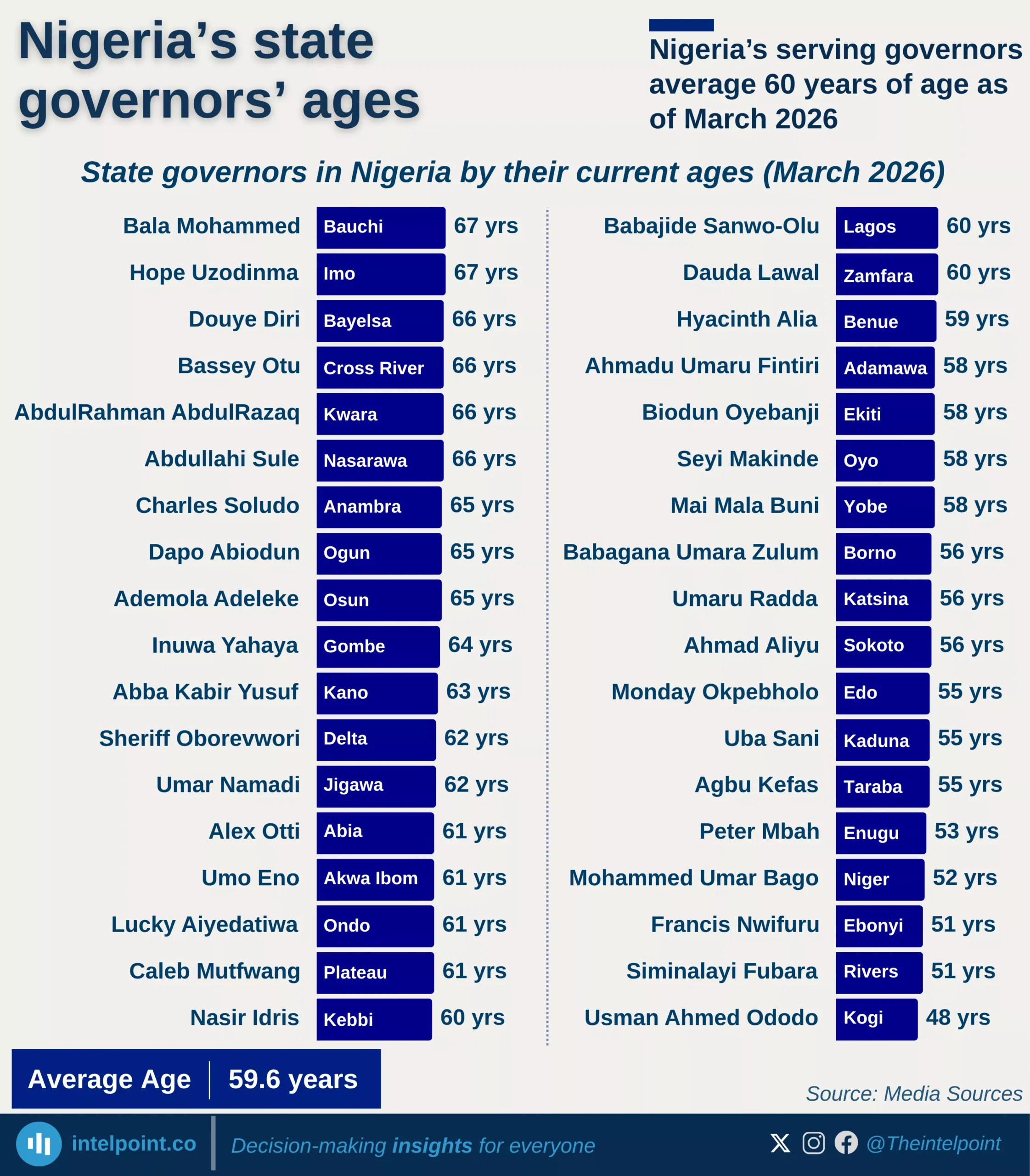
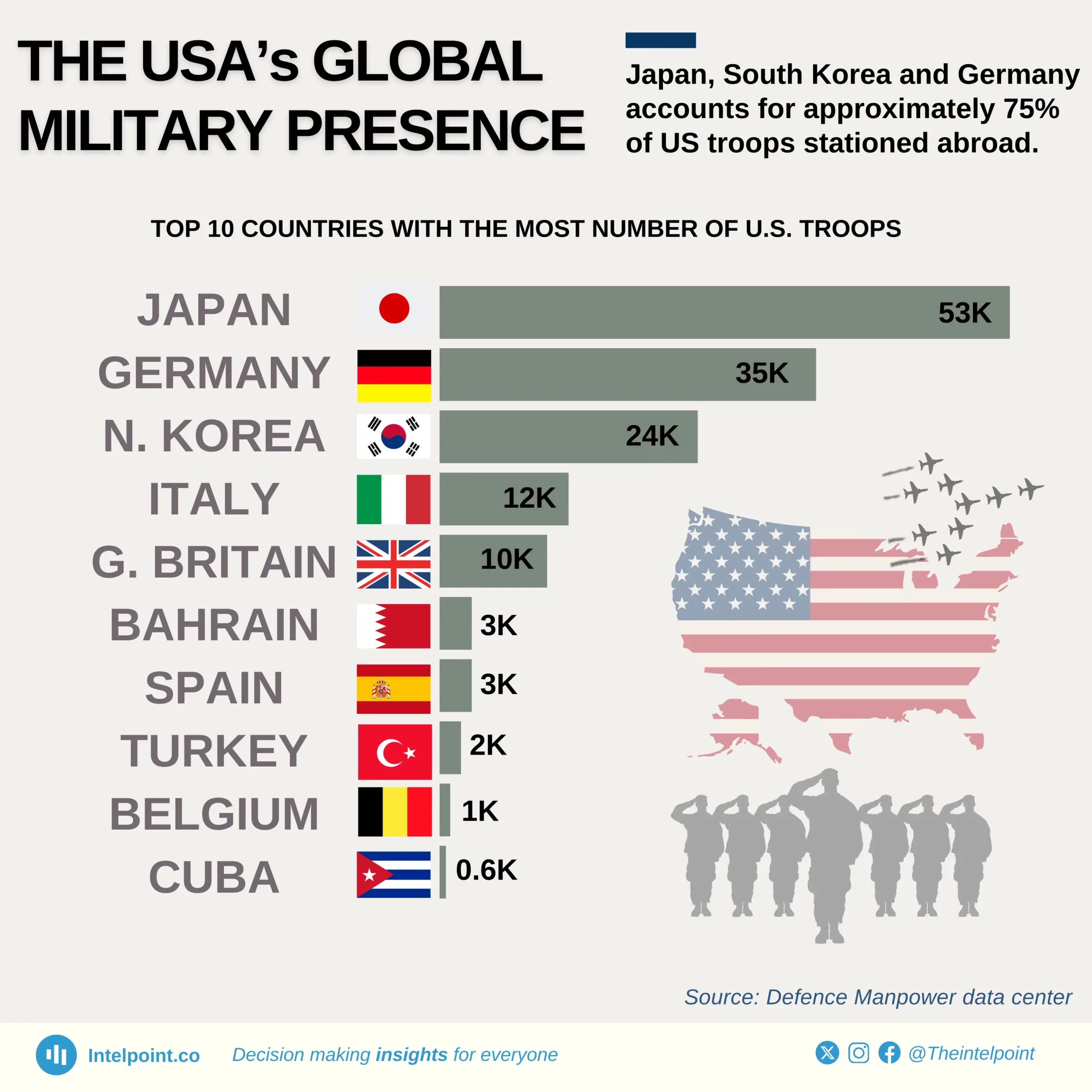
Nigeria’s youngest serving governor is Usman Ahmed Ododo of Kogi state at 48 years old.
The oldest serving governors are Bala Mohammed and Hope Uzodimma, both aged 67.
President Bola Ahmed Tinubu is 73 years old, making him older than every sitting governor.
Tinubu is 25 years older than the youngest governor and six years older than the oldest governors.
A number of governors are in their late 50s, including Seyi Makinde, Hyacinth Alia, and Ahmadu Umaru Fintiri.
The age distribution suggests that Nigeria’s state leadership is largely dominated by experienced, older political figures rather than younger politicians.
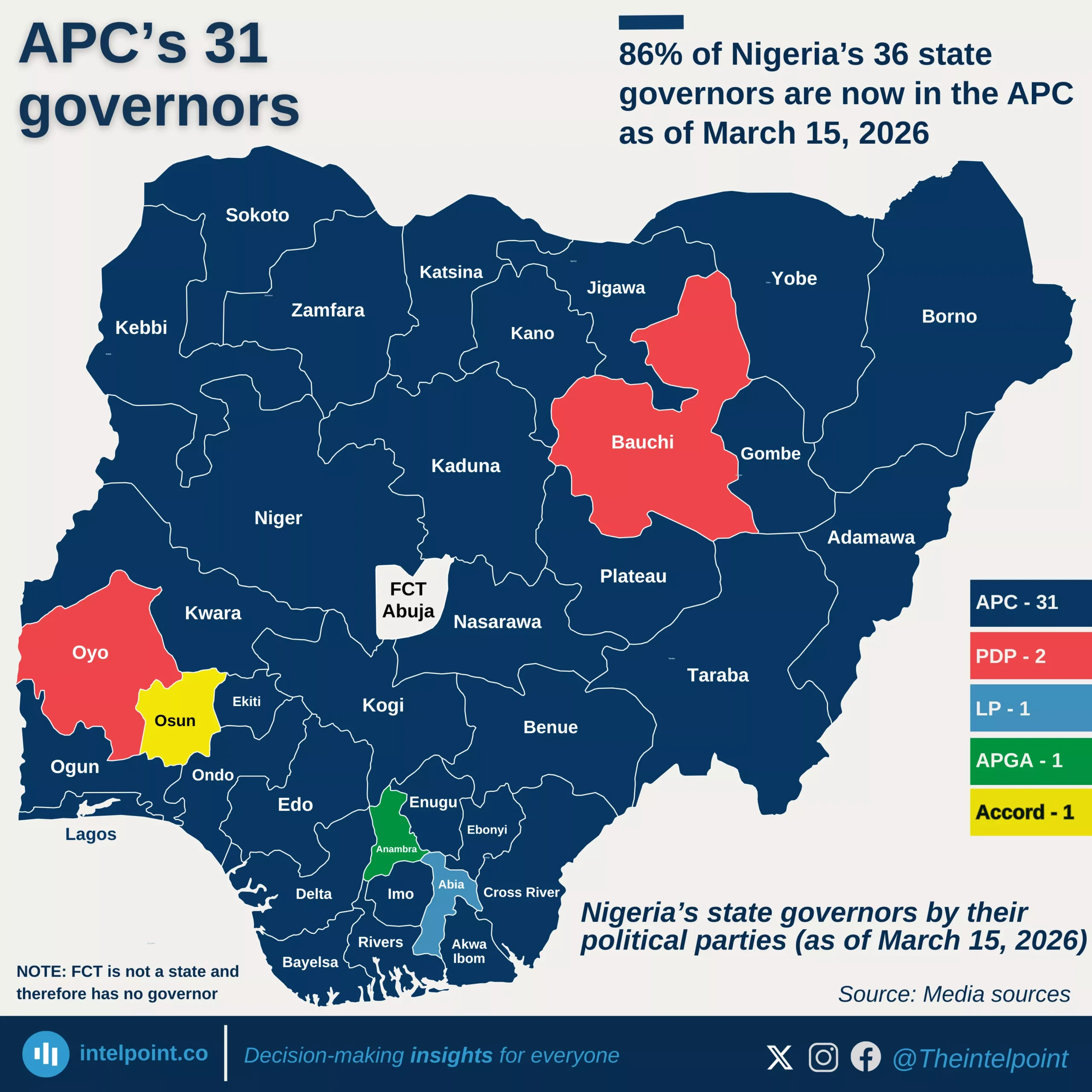
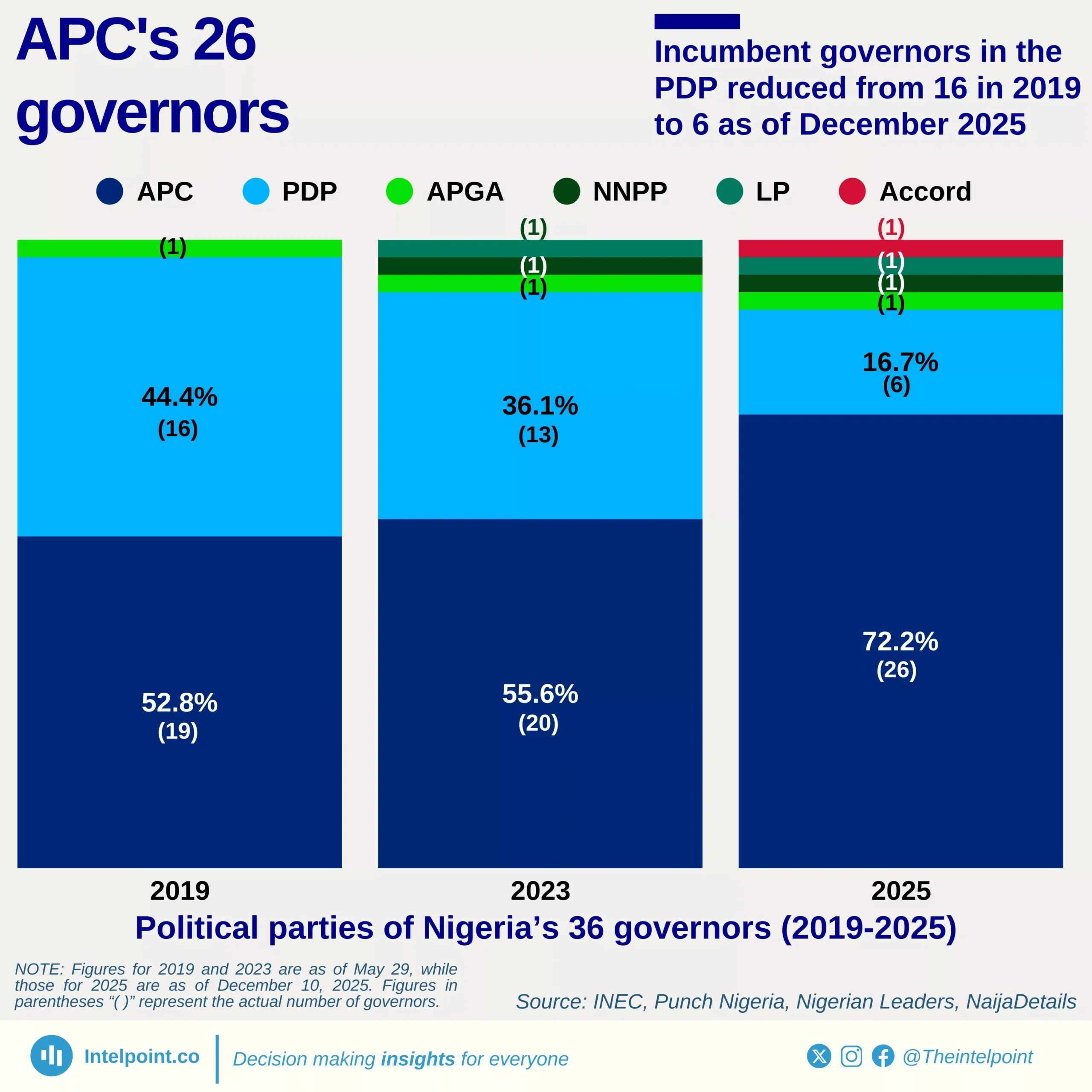
APC increased its number of sitting governors from 19 in 2019 to 26 in 2025.
PDP saw a significant decline, dropping from 16 governors in 2019 to 6 by 2025.
APC’s share of governors rose from 52.8% in 2019 to 72.2% in 2025.
As of May 2023, after the 2023 general elections, 13 sitting governors were still members of the PDP, but by 2025, five of these governors had defected to the APC, one had defected to
Accord, and one lost an election in 2024 to the APC.
Smaller parties (APGA, NNPP, LP, and Accord) appeared intermittently, each holding a single governorship.
By 2025, Nigeria’s governorship landscape was the most one-sided in recent years, heavily dominated by the APC.
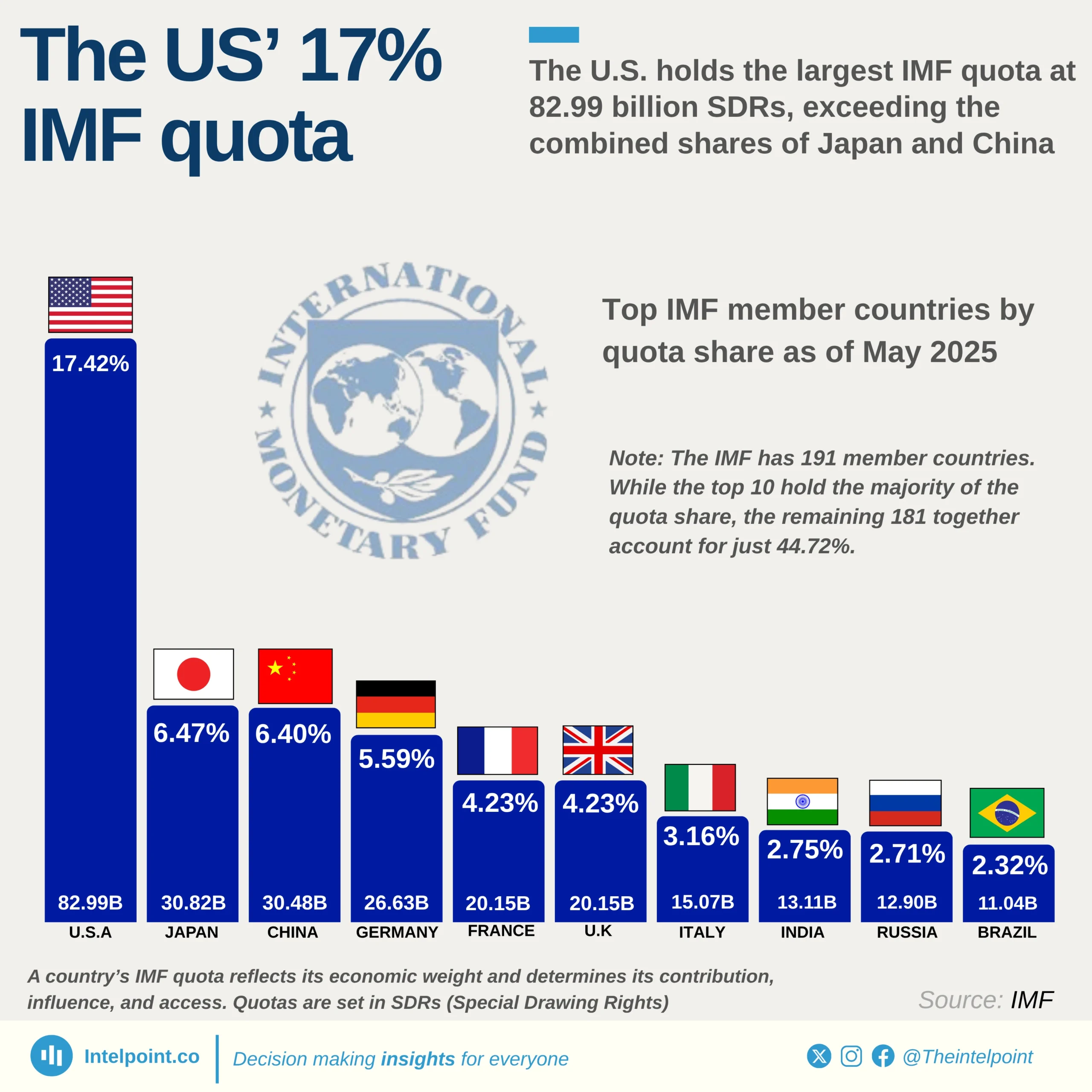
The United States holds the largest IMF quota by far, with 82,994.2 billion SDRs, accounting for 17.42%, more than double the quota of any other country.
Japan, China, and Germany follow as the next largest contributors, each holding between 5.5% and 6.5% of total quota shares.
European countries (Germany, France, the U.K., Italy) collectively maintain a strong presence, together accounting for nearly 17.21%, almost equal to the U.S. alone.
Emerging economies like India and Russia have relatively modest shares (2.75% and 2.71%, respectively) despite their growing roles in global economic affairs, indicating an imbalance between global influence and IMF voting power.
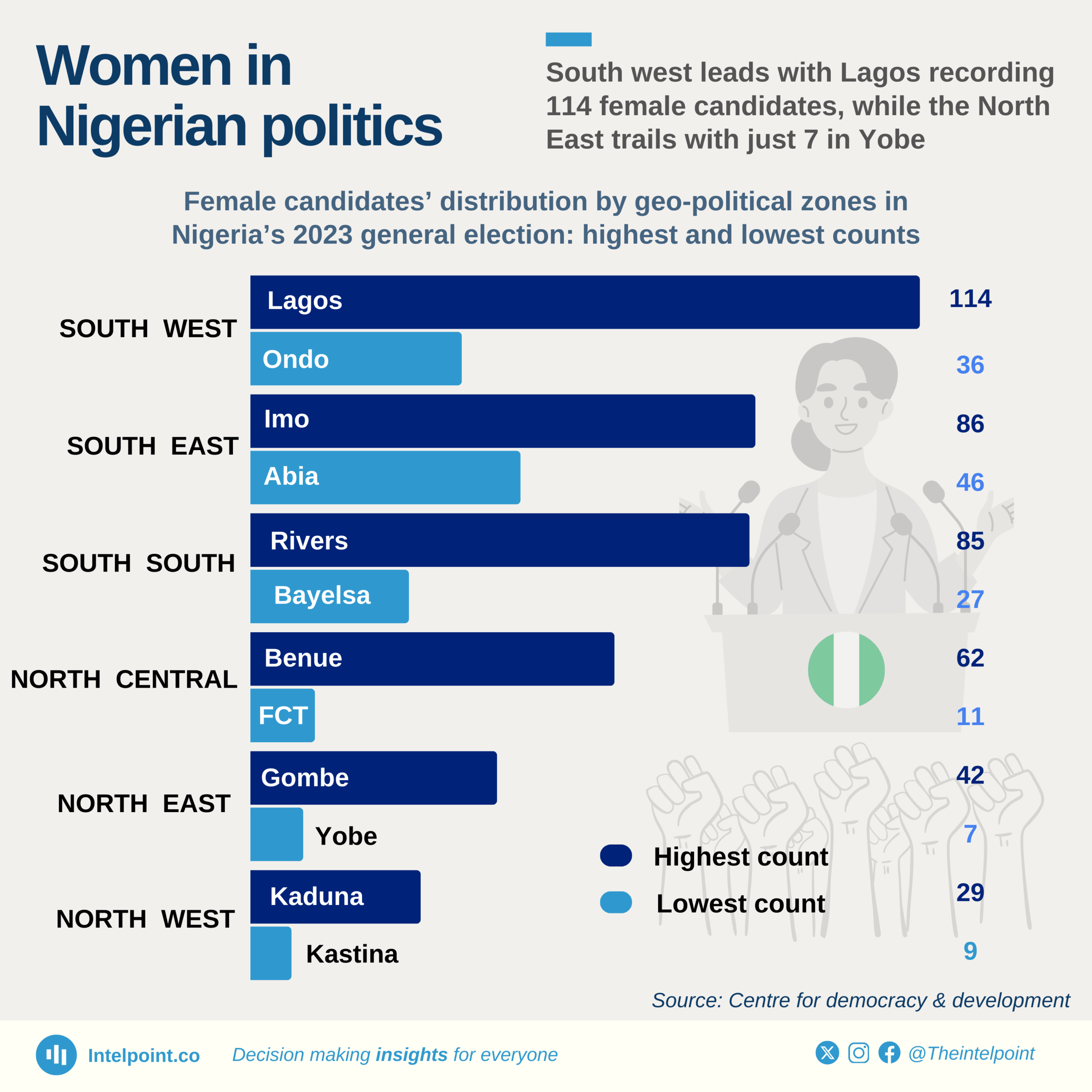
Lagos had the highest female representation in Nigeria’s 2023 elections, with 114 female candidates, more than any other state.
Yobe recorded the lowest, with just 7 female candidates, highlighting a wide disparity in representation across regions.
The South East and South South zones recorded some of the strongest numbers overall, with Imo (86) and Rivers (85) nearly matching Lagos.
The South West led overall in female candidate numbers, while the North East trailed, with its highest (Gombe – 42) still lower than other zones’ peaks.
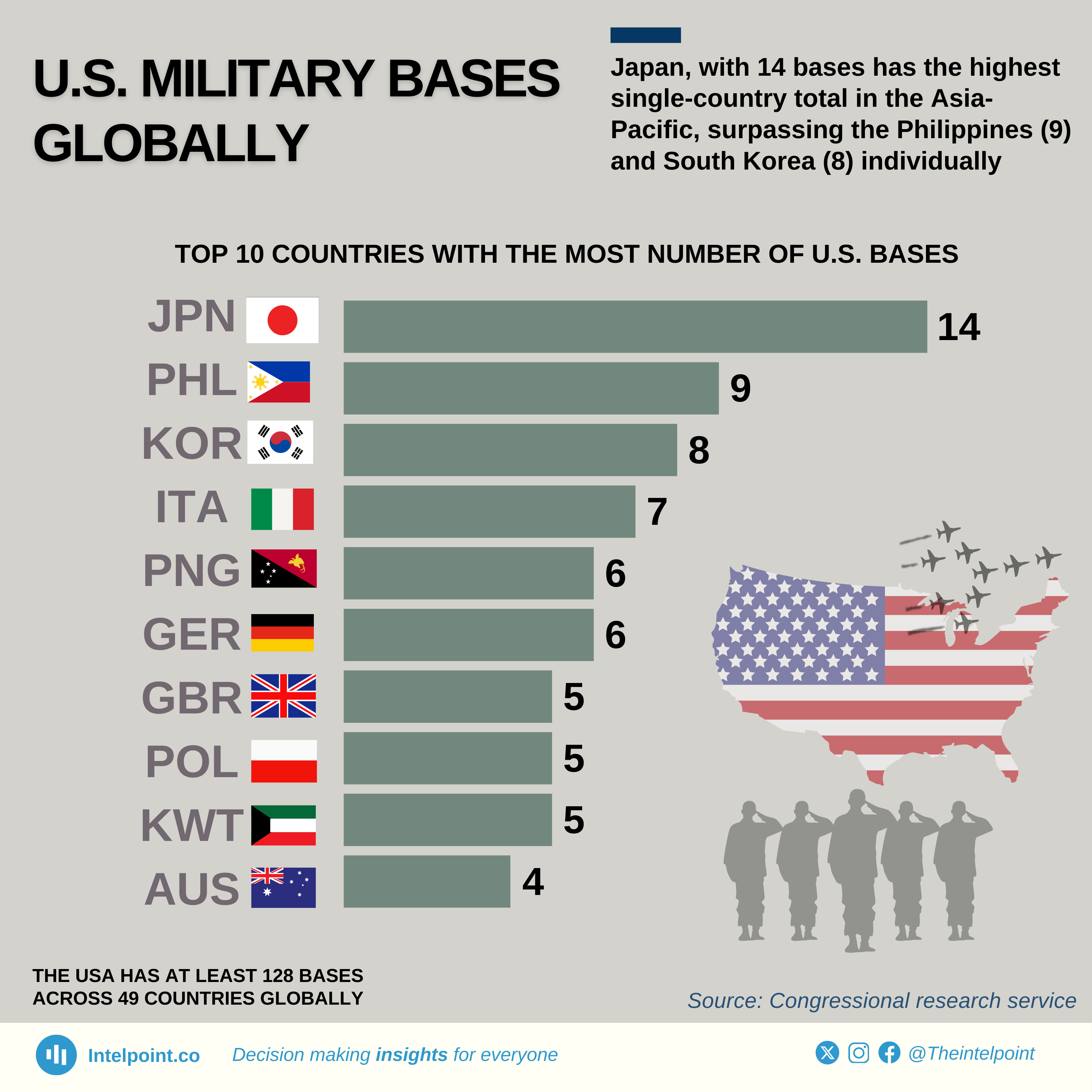
Japan leads with 14 bases. It hosts the most U.S. bases globally, exceeding individual counts in the Philippines (9) and South Korea (8).
Asia-Pacific Dominance: The region (Japan, Philippines, South Korea, Australia, and Papua New Guinea) accounts for 41 bases, nearly 1/3 of the global total.
The Asia-Pacific region hosts 41 U.S. bases, while Europe (Italy, Germany, Poland, UK) has 23. This indicates a growing strategic pivot towards the Pacific compared to traditional European deployments.
Kuwait (5 bases) stands out as the primary hub for U.S. military operations in the Middle East, highlighting its role as a key staging ground for regional security.
The top 10 host countries account for 69 of the 128 total bases (over 53%), meaning nearly half of U.S. overseas bases are spread across the remaining 39 countries.