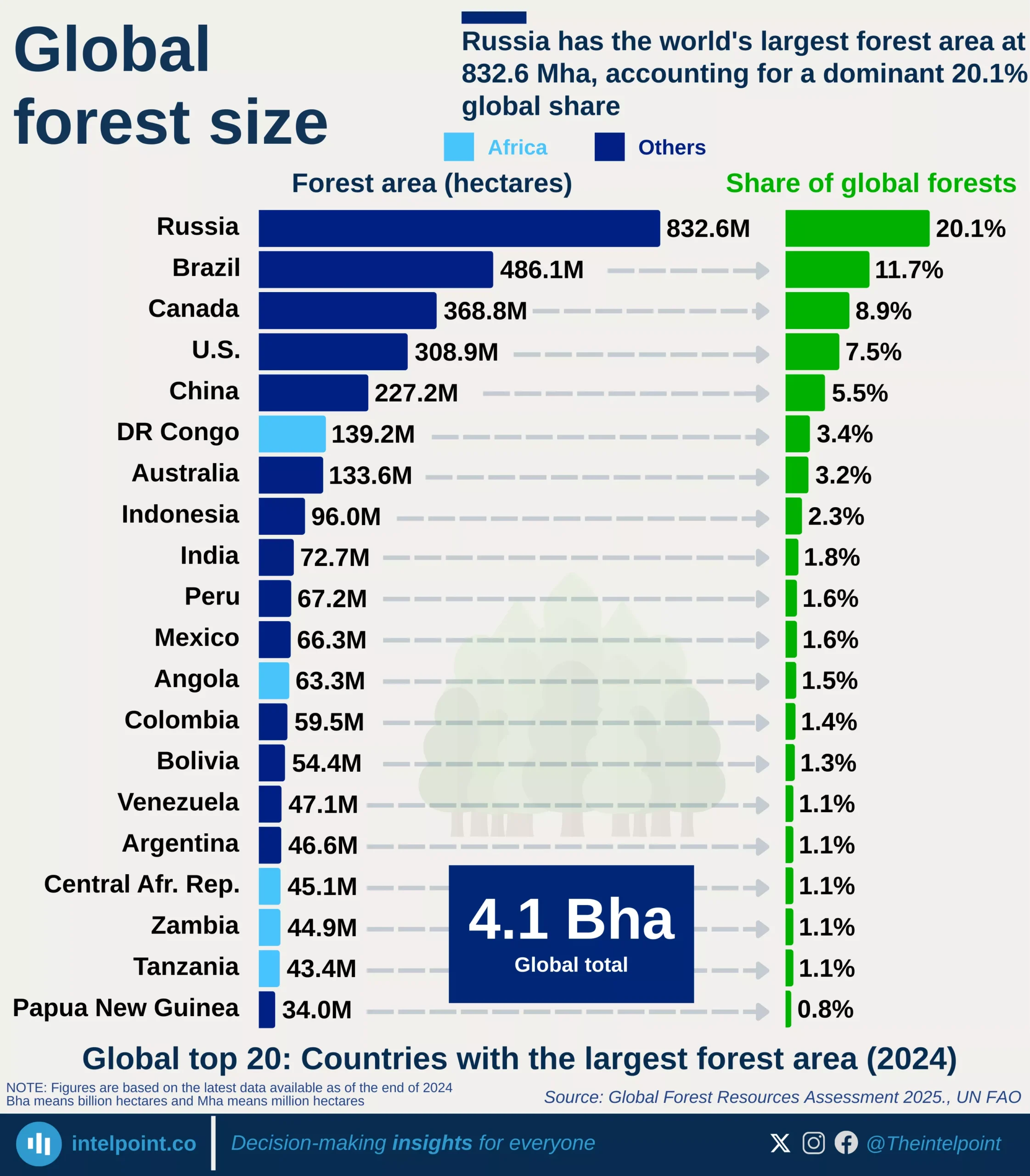
Global forest cover is 4.1 Bha, according to the latest FAO assessment.
At 832.6 Mha, 20.1% of the global total, Russia has the world’s largest forest area.
Brazil (486.1 Mha; 11.7%) and Canada (368.8 Mha; 8.9%) rank second and third, respectively.
The United States (7.5%) and China (5.5%) complete the global top five.
Africa’s top contributor is the Democratic Republic of Congo, with 139.2 Mha, 3.4% of the global total.
Other African countries in the top 20 include Angola, Zambia, Tanzania, and the Central African Republic, each accounting for approximately 1% of the global forest area.
Together, the top ten countries account for over 78% of the world’s total forest area, highlighting the global concentration of forest resources.
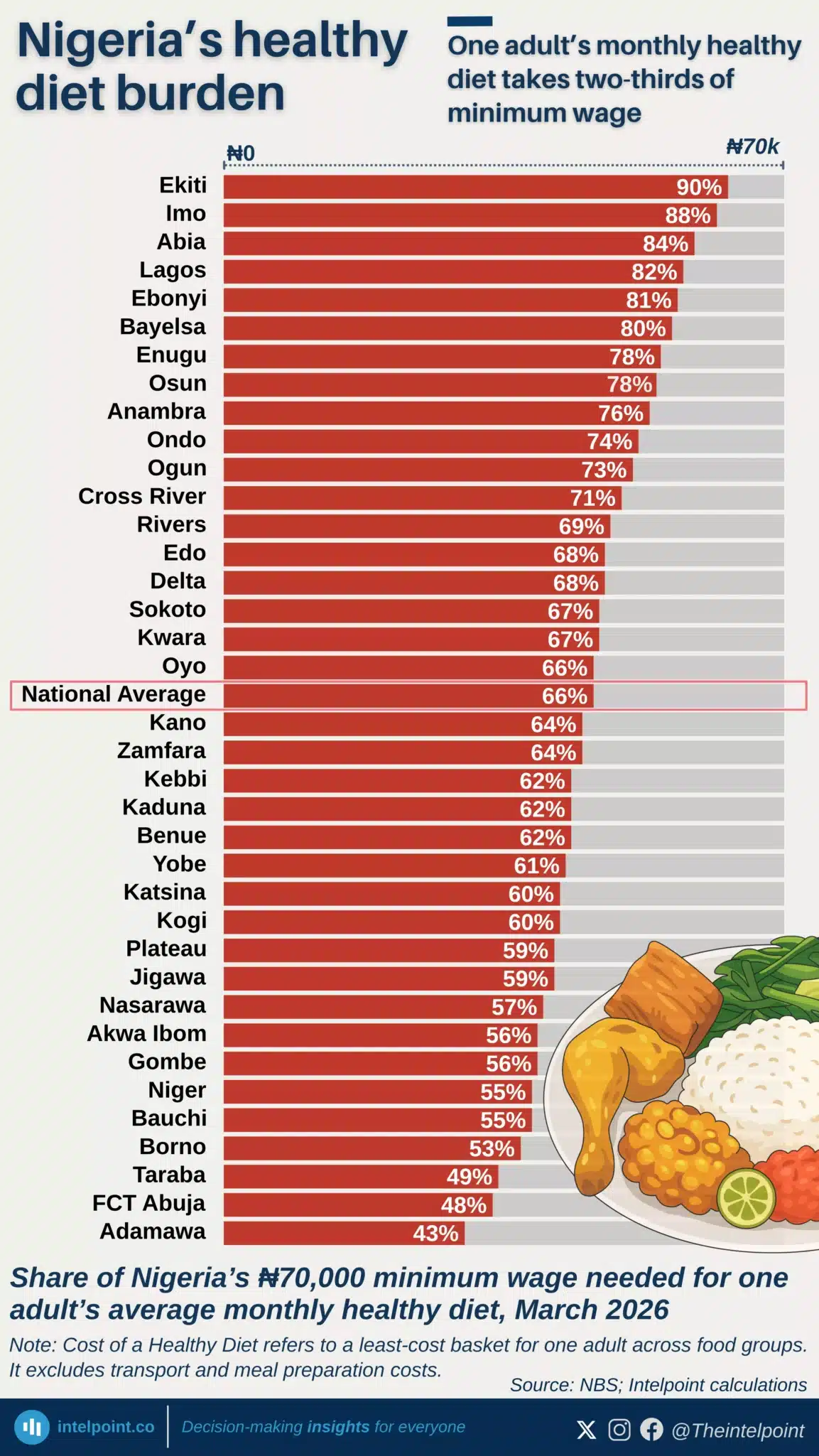
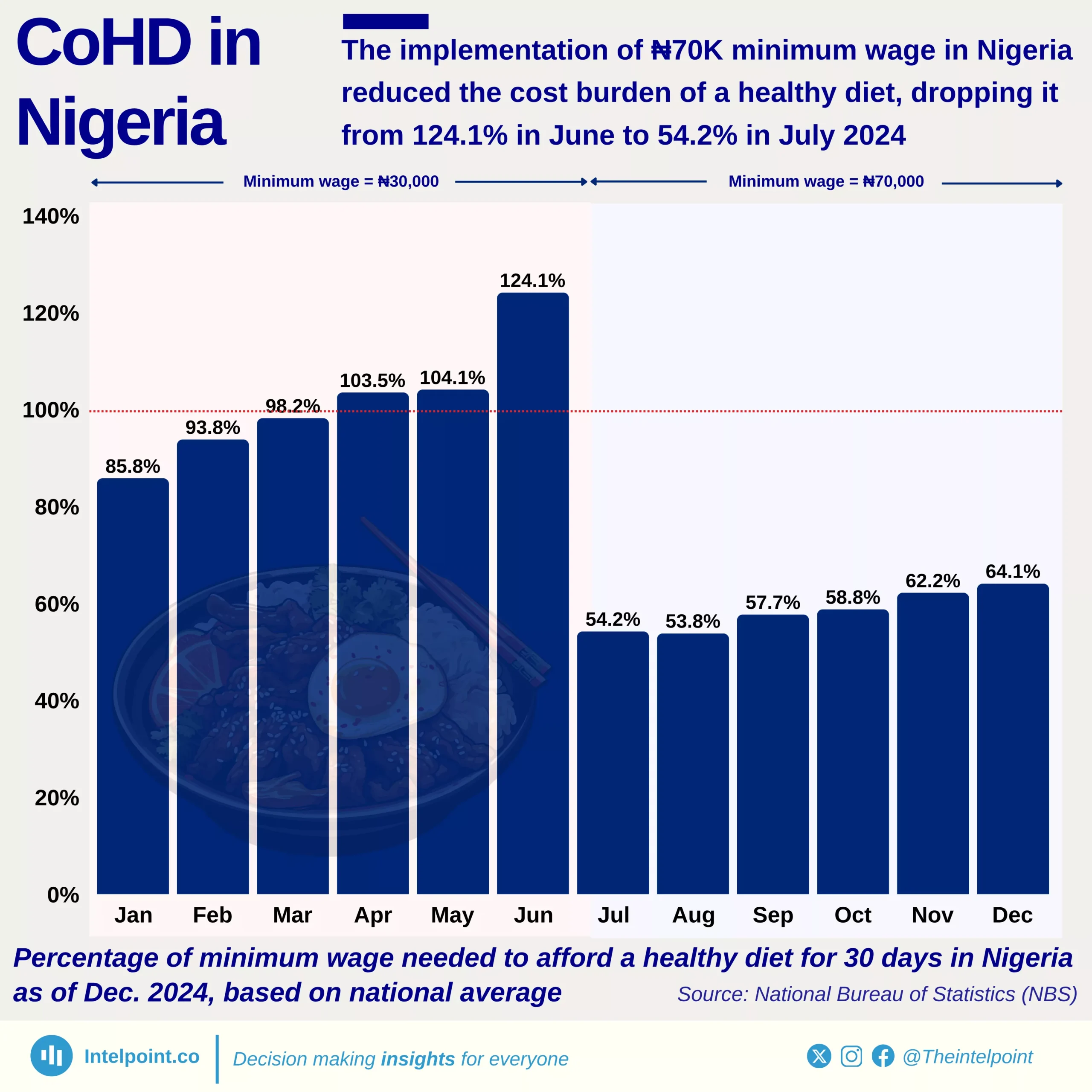
The share of minimum wage needed to afford a healthy diet fell from 124.1% in June to 54.2% in July 2024, when the minimum wage was increased from ₦30,000 to ₦70,000.
Before July, the cost of a healthy diet for a month exceeded 100% of [the] minimum wage, making it unaffordable for minimum-wage earners.
The sharpest burden was recorded in June 2024, when households needed their full salary plus 24% extra to eat healthily.
Between July and December, affordability worsened slightly from 54.2% to 64.1%, indicating that food prices continued to rise despite the wage boost.
The implementation of the ₦70,000 minimum wage in 2024 provided significant relief to Nigerian households struggling with the high cost of eating healthily.