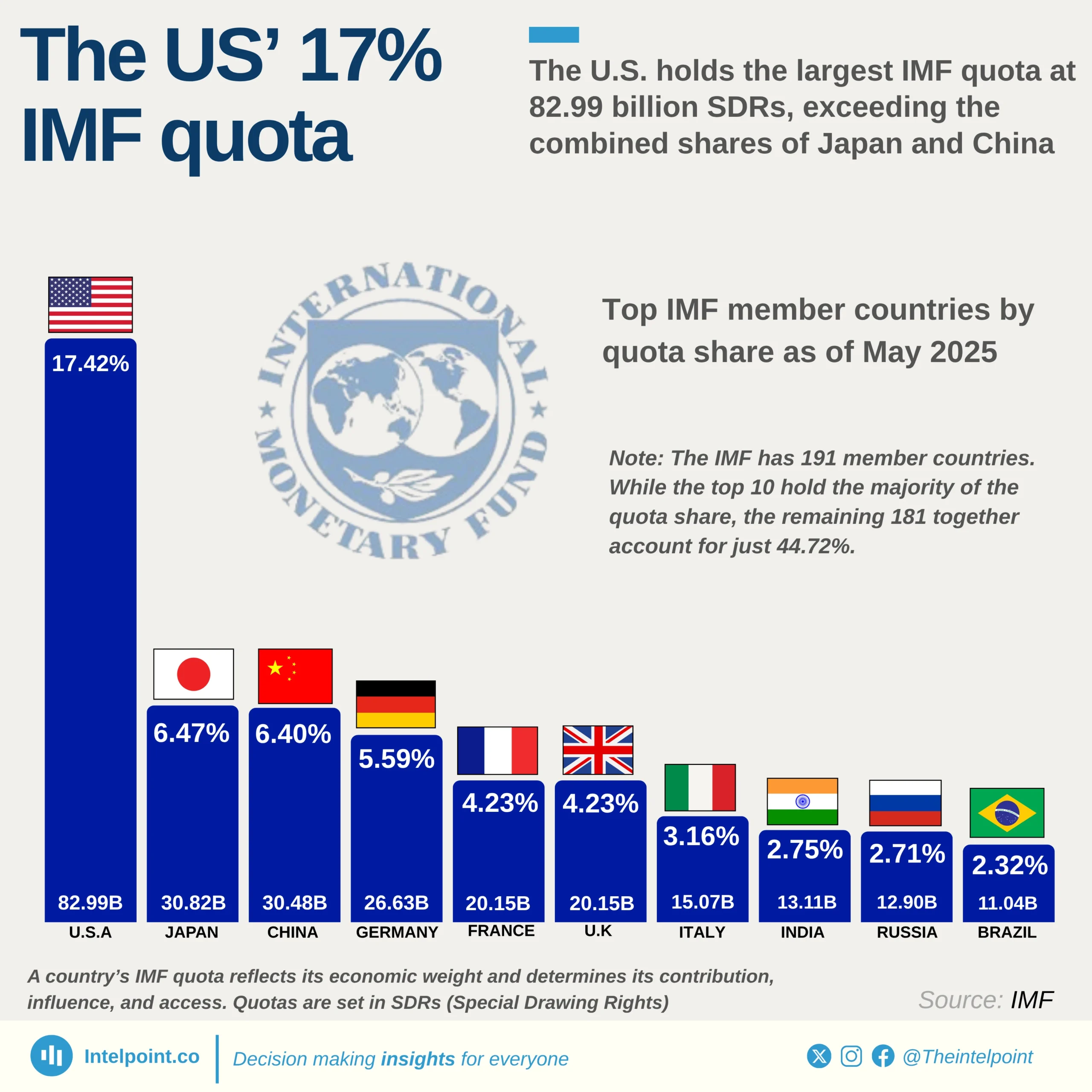
The United States holds the largest IMF quota by far, with 82,994.2 billion SDRs, accounting for 17.42%, more than double the quota of any other country.
Japan, China, and Germany follow as the next largest contributors, each holding between 5.5% and 6.5% of total quota shares.
European countries (Germany, France, the U.K., Italy) collectively maintain a strong presence, together accounting for nearly 17.21%, almost equal to the U.S. alone.
Emerging economies like India and Russia have relatively modest shares (2.75% and 2.71%, respectively) despite their growing roles in global economic affairs, indicating an imbalance between global influence and IMF voting power.
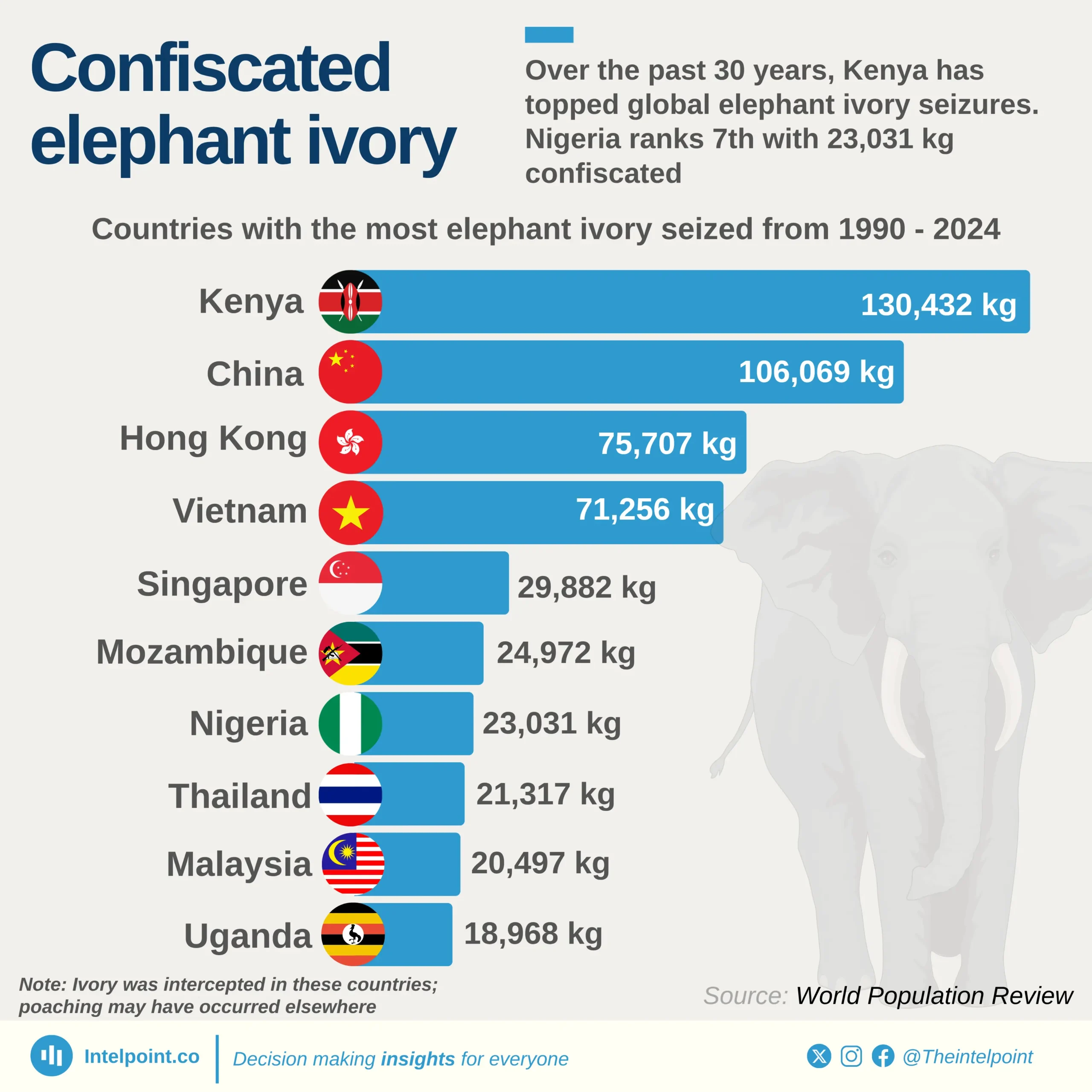
Kenya recorded the highest ivory seizure among the top 10 countries, with 130,432 kg confiscated over the 34-year period.
China and Hong Kong follow closely, with 106,069 kg and 75,707 kg seized, respectively, showing their long standing roles as critical players in the global ivory network.
Vietnam and Singapore, both located in Southeast Asia, had substantial seizure records; 71,256 kg and 29,882 kg, indicating persistent trafficking through the region.
Nigeria leads West Africa in ivory confiscations within the top 10, with 23,031 kg, signalling its importance as a key node in the transit chain.
All countries listed in the top 10 are either source, transit, or destination points in the global ivory supply chain, reflecting how widespread and interconnected the illegal trade remains.