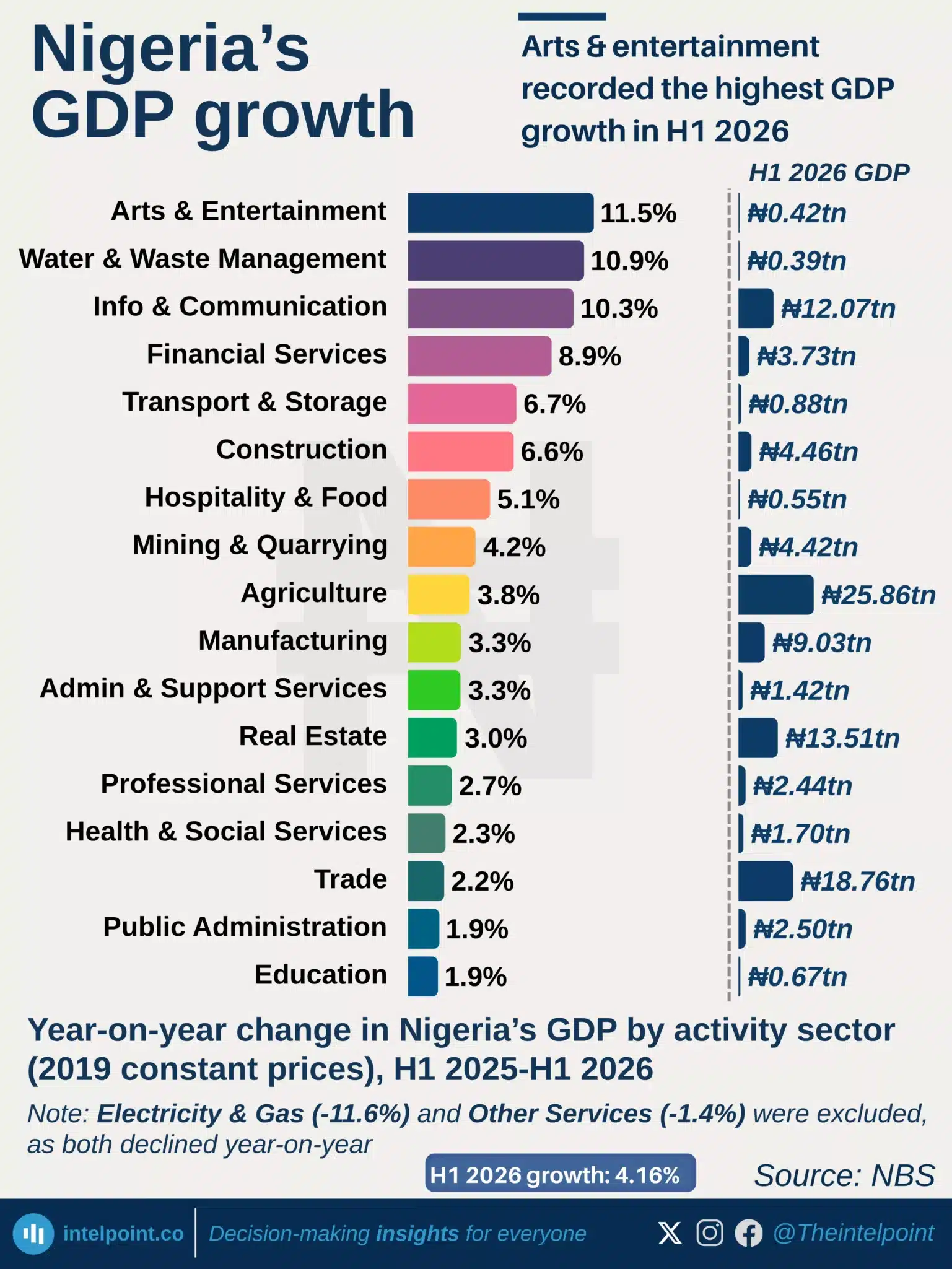
In Q2 2023, accommodation and food services' contribution to Nigeria's GDP decreased considerably
In Q2 2023, the hospitality sector, which includes accommodation and food services, on the other hand, experienced a slowdown and saw its GDP share decrease. Other sectors include the arts, entertainment, and recreation, as well as education.
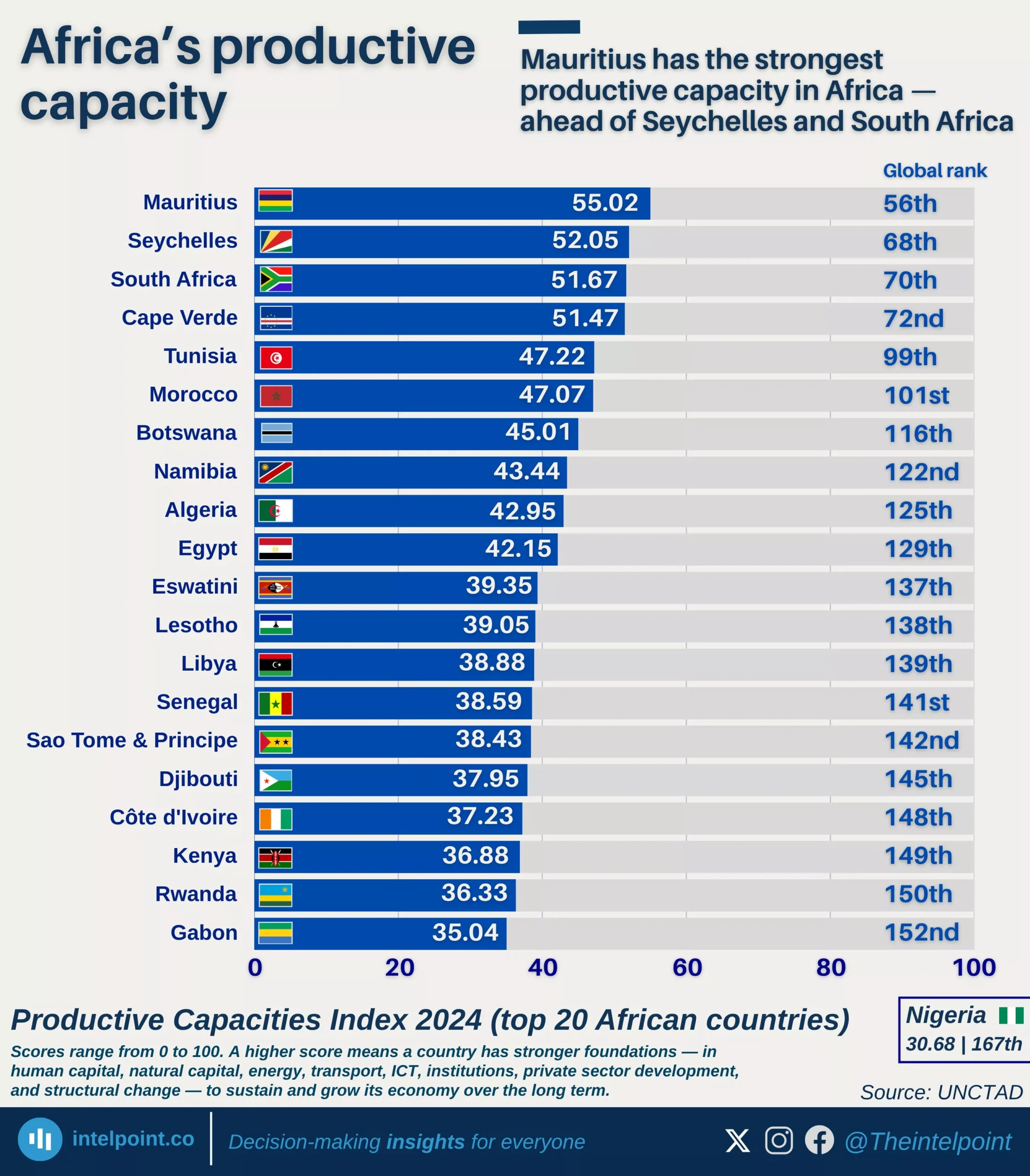
Mauritius leads Africa on the Productive Capacities Index with a score of 55.02, ranking 56th globally.
Seychelles, South Africa, and Cape Verde complete Africa’s top four, but none enters the global top 50.
Nigeria ranks much lower at 167th globally, with a score of 30.68, despite being one of Africa’s largest economies.
The ranking shows that economic size does not always translate into stronger productive foundations like human capital, ICT, energy, transport, and institutions.