Experts predict that by 2084, annual deaths might start to outnumber births
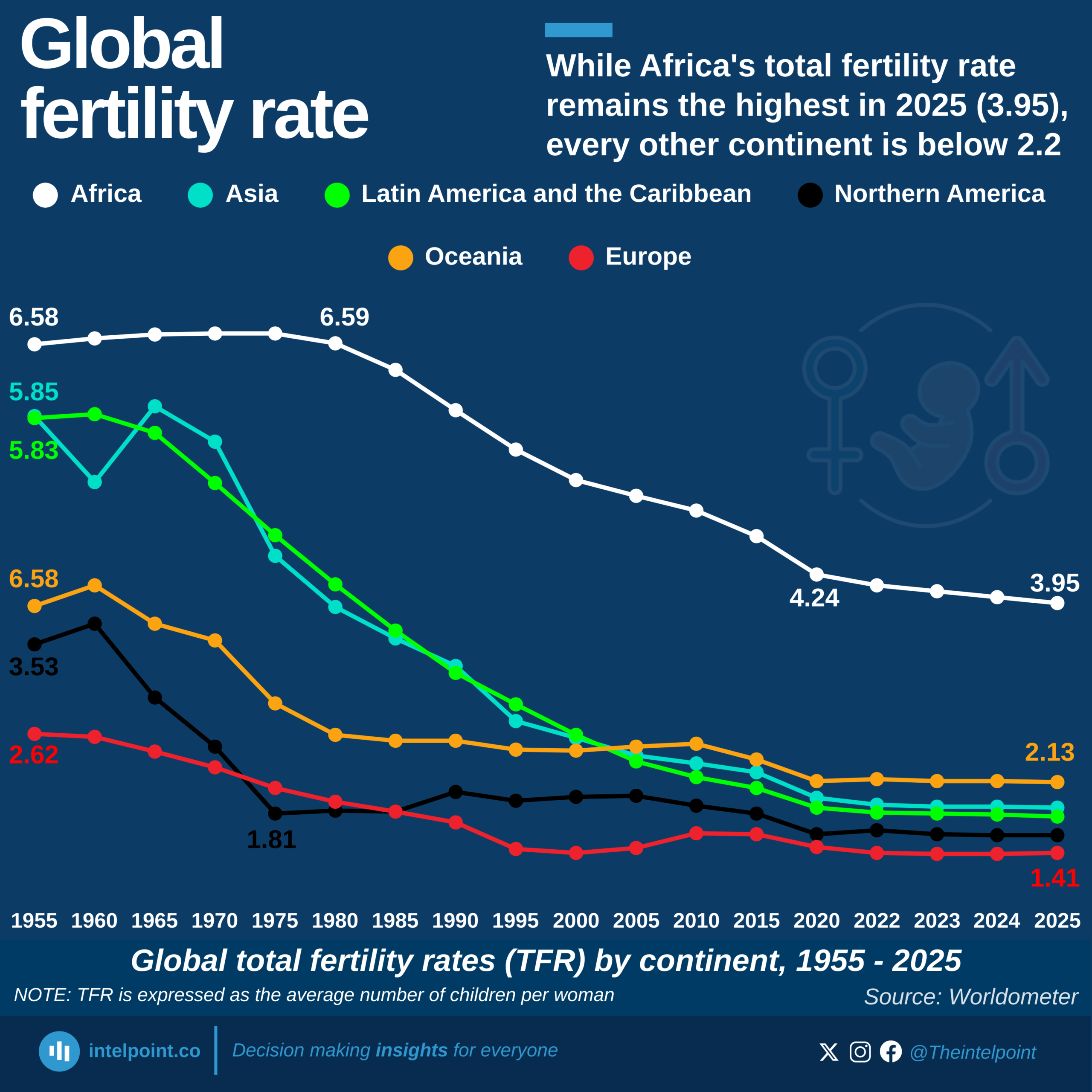
By 2084, global deaths are projected to surpass births, marking a potential shift towards a population decline. This trend reflects a steady rise in death rates alongside a decrease in birth rates, as shown in UN data.
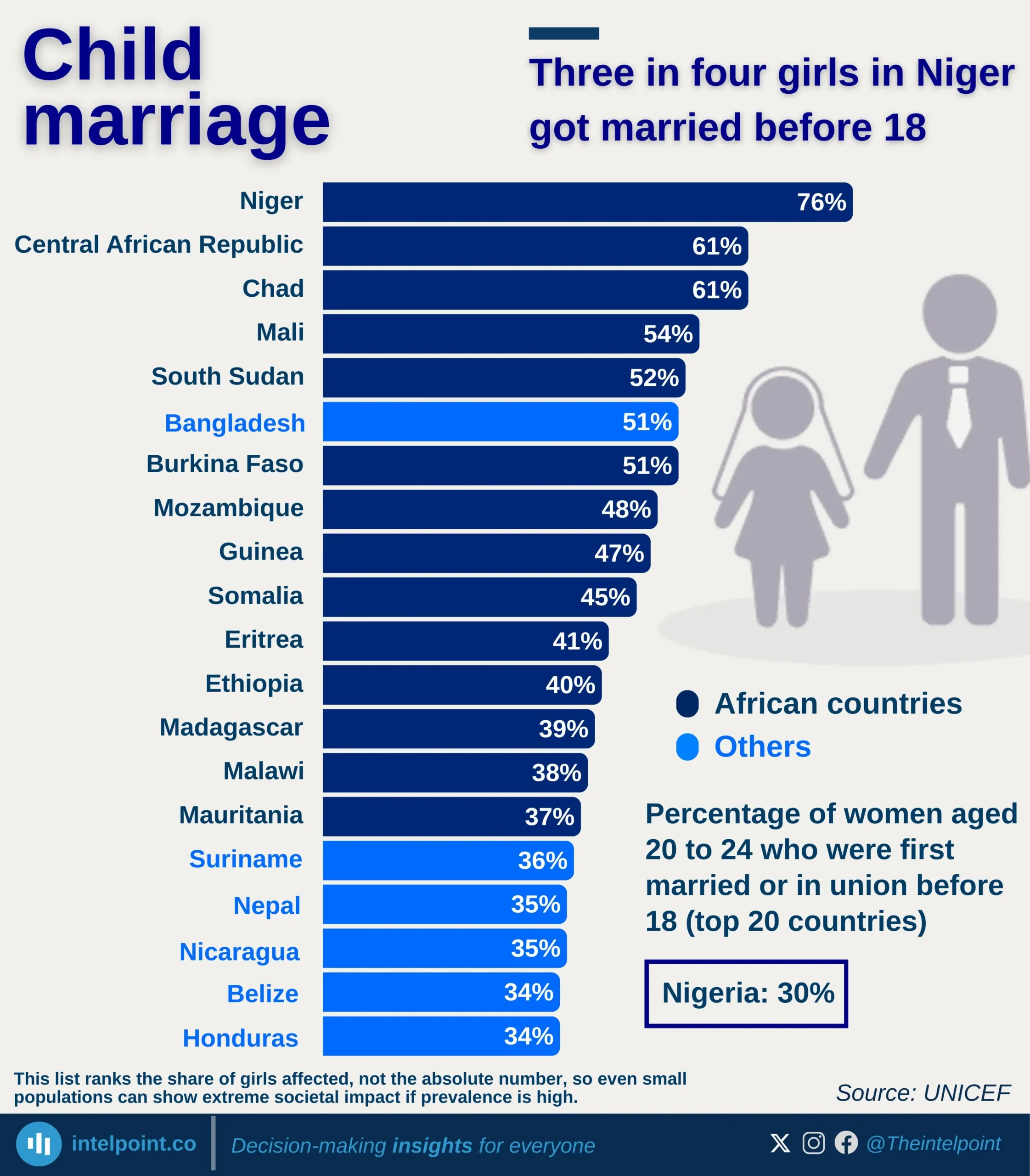
Niger (76%), the Central African Republic (61%), and Chad (61%) top the global list, meaning the majority of women in these countries marry as children.
Seven of the top ten countries by prevalence are African, showing that child marriage is most entrenched relative to population on the continent.
Countries in South Asia — Bangladesh (51%) and Nepal (35%) — and Latin America — Suriname (36%) and Belize (34%) — also feature, highlighting the global nature of the challenge.
While some countries have larger populations, this list ranks the share of girls affected, not the absolute number, meaning even smaller populations can show extreme societal impact if the prevalence is high.