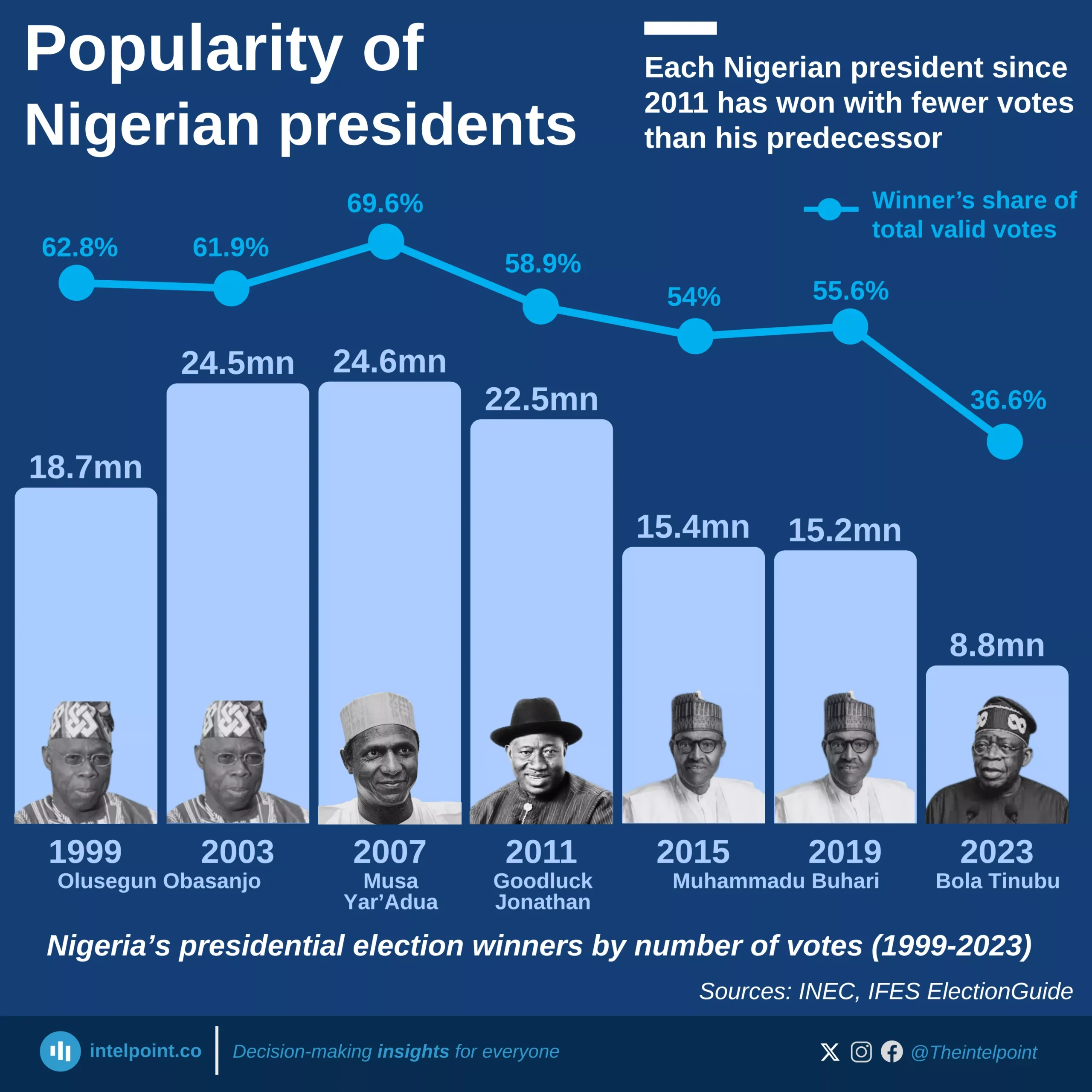
From Olusegun Obasanjo’s early victories in the Nigerian presidential elections to Bola Tinubu’s 2023 win, the share of votes secured by the winner of the election has declined. Tinubu’s 36.6% share of valid votes is the lowest since 1999, continuing a downward trend that has been building for over a decade.
The absolute number of votes has also dropped sharply. While earlier winners like Umaru Musa Yar'Adua and Goodluck Jonathan secured 22–24 million votes, recent winners like Muhammadu Buhari and Tinubu have seen that number fall to 15 million, then to under nine million.
This decline occurs despite a growing population and rising voter registration, suggesting that turnout, voter engagement, and vote distribution have shifted significantly.
Another layer to this story is the number of candidates. In 1999, there were just two candidates, making it easier for votes to consolidate. By 2019, that number had surged to 73 candidates; in 2023, there were 18 candidates on the ballot. This expansion has split votes among more contenders, meaning the “other candidates” now collectively command a larger share of the vote than in earlier elections. In 2023, for instance, over 63% of valid votes went to candidates who lost.