3 in every 10 workers in Nigeria earn less than ₦100,001 monthly

The Nigerian Workplace Report indicates that over 50% of Nigeria’s working population earns less than ₦200,001 monthly. It further highlights that individuals earning above ₦600k are among the top 10% earners.
Source:

The Nigerian Workplace Report 2024

Period:

2023-2024
HTML code to embed chart
Want a bespoke report?
Reach out
Tags
Related Insights

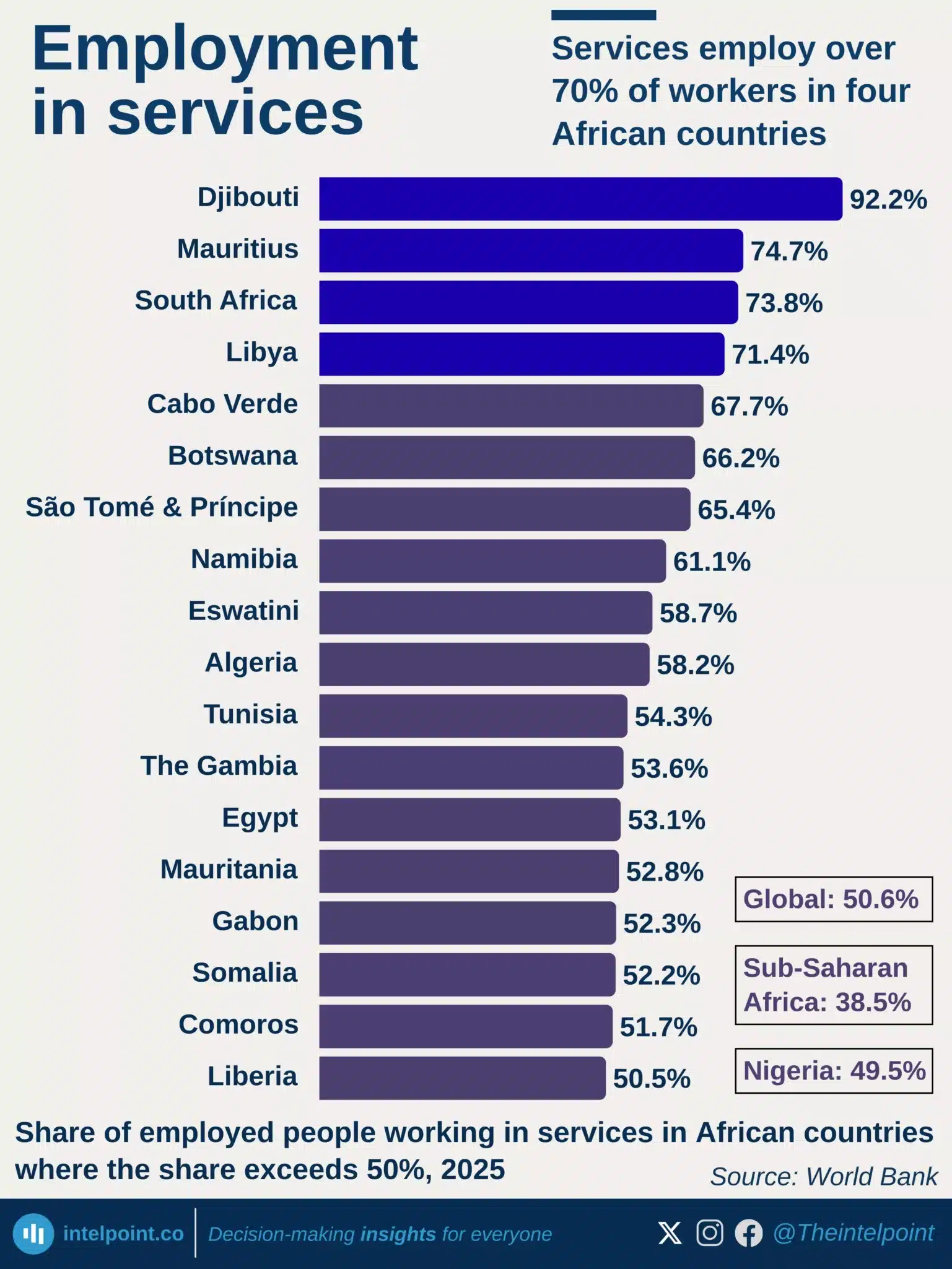
Services employ over 70% of workers in four African countries
  • Djibouti had 92.2% of its employed people working in services in 2025.
  • Services accounted for more than half of employment in 18 African countries.
  • Mauritius, South Africa and Libya each had services employment shares above 70%.
  • Nigeria’s services employment share was 49.5%, above sub-Saharan Africa’s 38.5%.
  • Nigeria was slightly below the global services employment share of 50.6%.

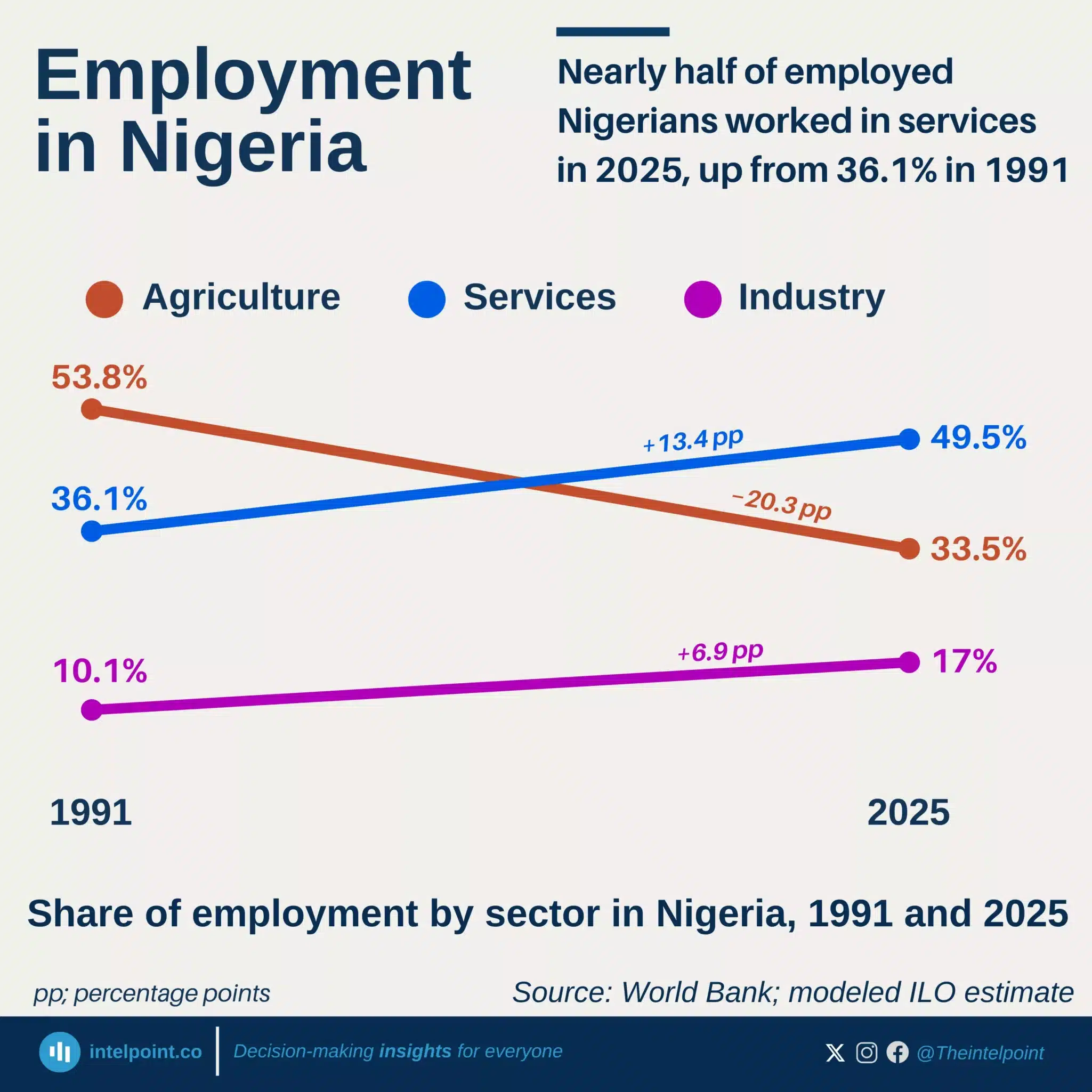
Nearly half of employed Nigerians worked in services in 2025, up from 36.1% in 1991
  • Agriculture’s share of employment in Nigeria fell from 53.8% in 1991 to 33.5% in 2025.
  • Services became the largest employment sector, accounting for 49.5% of employment in 2025.
  • Services recorded the largest increase, gaining 13.38 percentage points from 1991 to 2025.
  • Industry’s share rose from 10.1% to 17.0%, an increase of 6.93 percentage points.
  • Agriculture recorded the largest change, losing 20.31 percentage points.

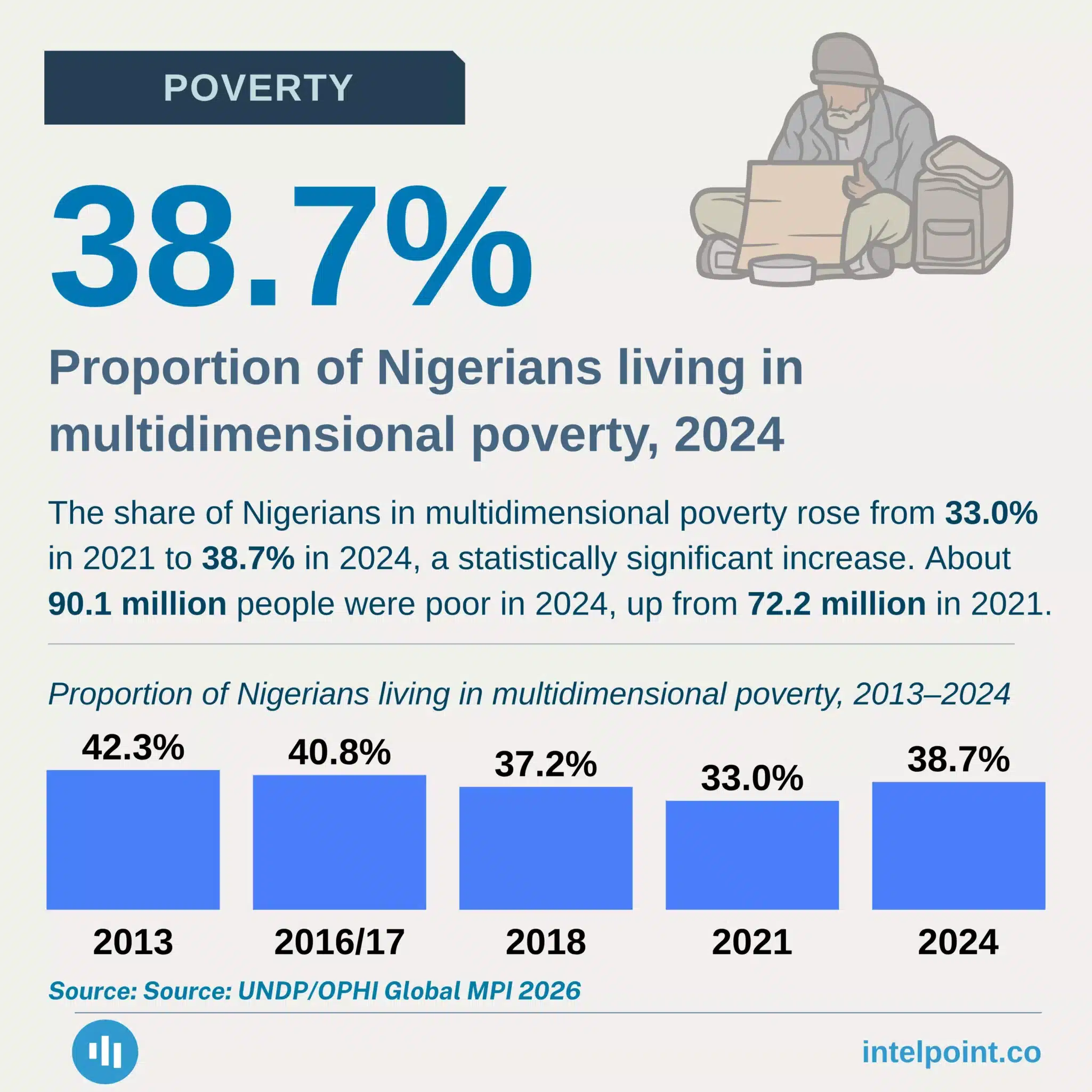
Proportion of Nigerians living in multidimensional poverty, 2024
  • Nigeria’s multidimensional poverty rate rose from 33.0% in 2021 to 38.7% in 2024, affecting 90.1 million people.
  • The 2024 comparative estimate puts nearly 4 in 10 Nigerians in multidimensional poverty.
  • The broader national estimate is higher at 48.7%, or approximately 113 million people.
  • Multidimensional poverty measures deprivation in health, education and living standards, rather than income alone.

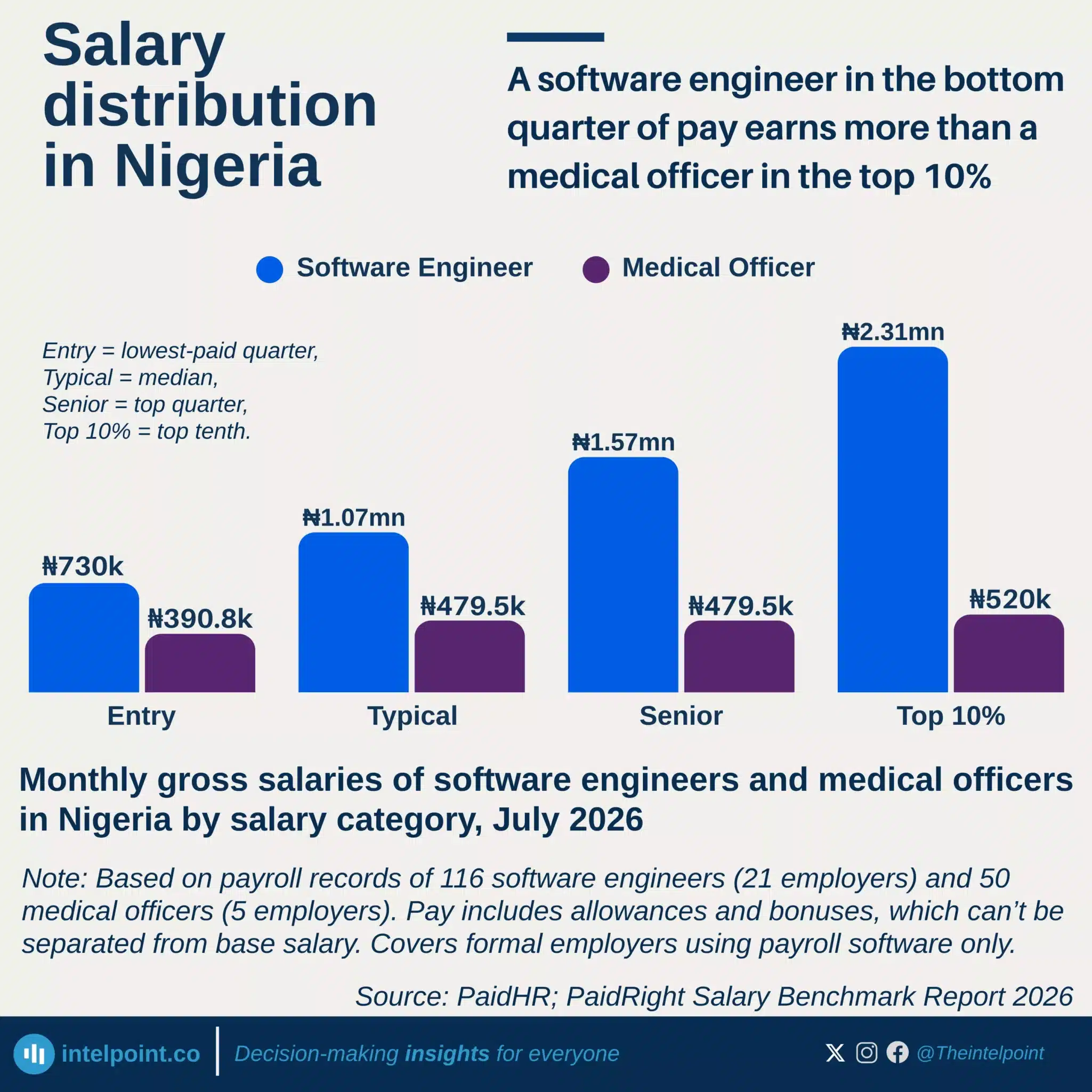
Salary distribution in Nigeria: a software engineer in the bottom quarter of pay earns more than a medical officer in the top 10%
  • Software engineers in the lowest-paid quarter (₦730k) out-earn top-10% medical officers (₦520k).
  • Software engineers earn 1.9× as much as medical officers at entry, 2.2× at the median and 4.4× at the top 10%.
  • Software engineer pay more than triples from entry to top 10%, while medical officer pay rises by about a third.
  • This data covers two roles only, with 50 medical officers across five employers, and all figures are monthly gross pay.

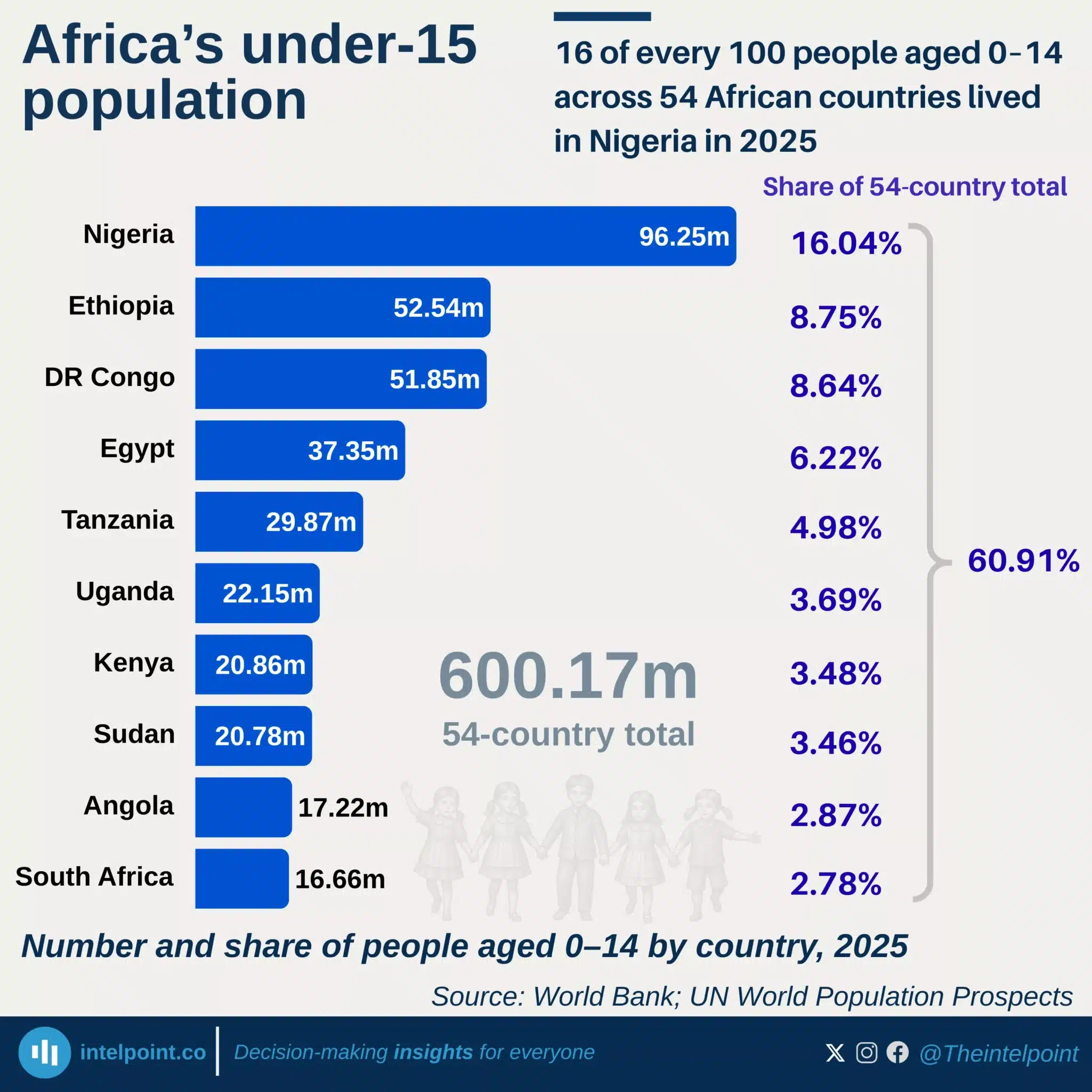
Africa’s under-15 population: 16 of every 100 people aged 0–14 across 54 African countries lived in Nigeria in 2025
  • Nigeria had 96.25 million children aged 0–14 in 2025, the largest child population in Africa.
  • 16% of Africa’s children lived in Nigeria, or roughly 1 in every 6.
  • Ethiopia and DR Congo followed with 52.54 million and 51.85 million children respectively.
  • Africa’s 10 largest child populations accounted for 60.9% of the continent’s 600.17 million children.

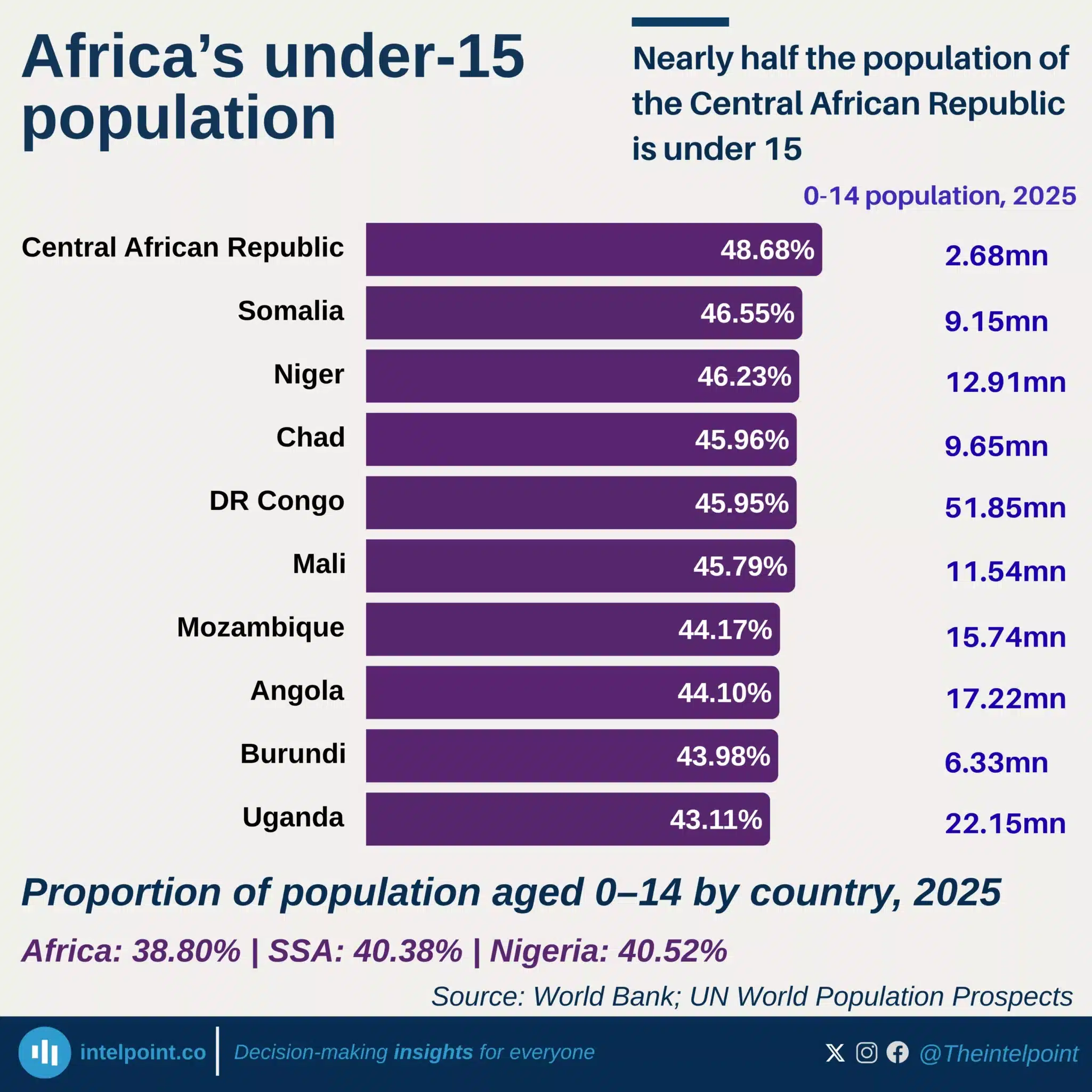
Africa’s under-15 population: nearly half the population of the Central African Republic is under 15
  • Central African Republic had Africa’s highest 0–14 population share at 48.7%.
  • Somalia, Niger, Chad and DR Congo followed, all with at least 45.9% of their populations aged 0–14.
  • DR Congo had Africa’s largest 0–14 population at 51.85 million, despite ranking fifth by share.
  • Children aged 0–14 made up 38.8% of Africa’s population, versus 40.5% in Nigeria.

POPULAR TOPICS
SIGN UP TO OUR NEWSLETTER
Get periodic updates about the African startup space, access to our reports, among others.
Subscribe Here
Subscription Form

A product of Techpoint Africa. All rights reserved