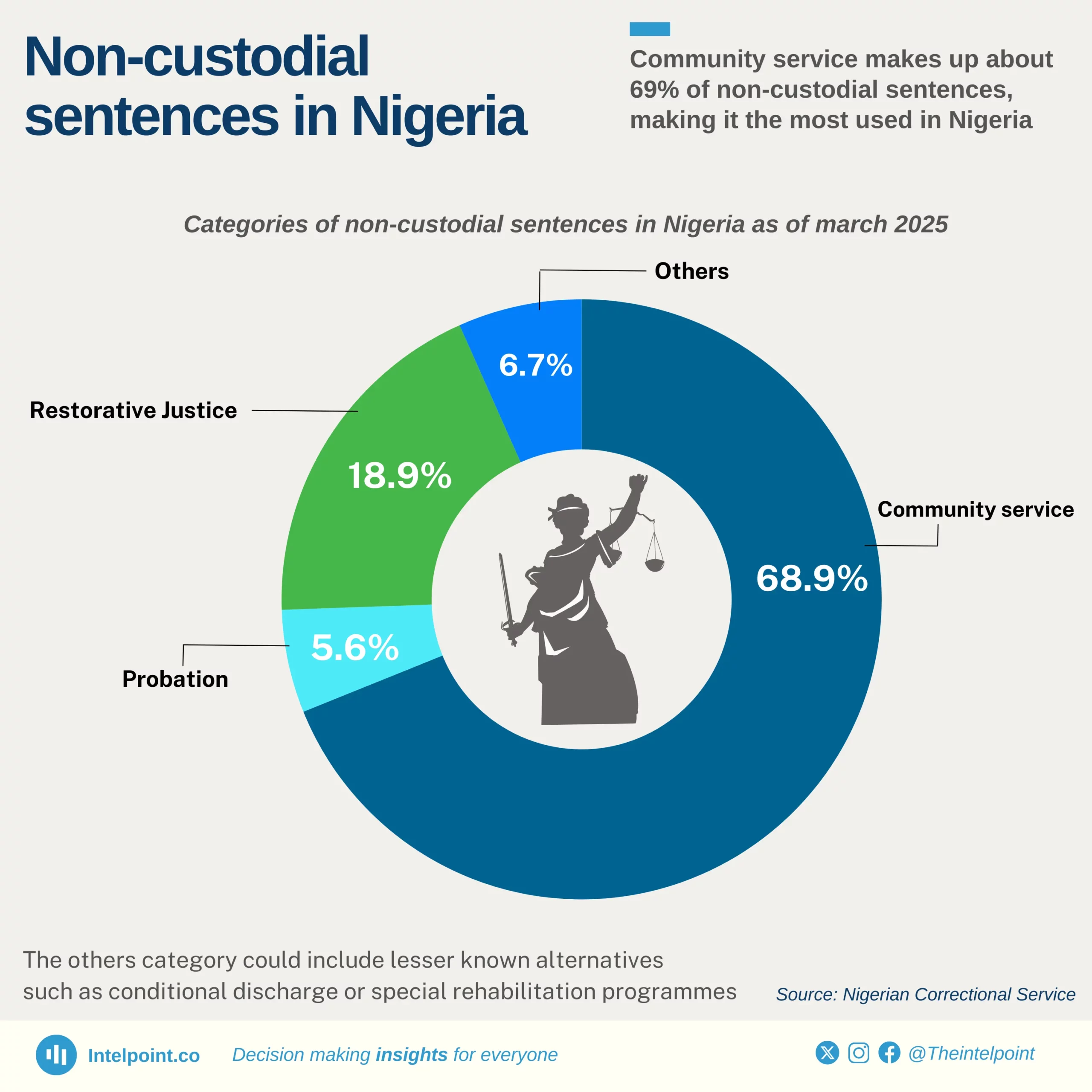
68.9% of non-custodial sentences fall under community service. This sentencing method is by far the most utilised, indicating a strong preference for rehabilitation through public work.
Restorative justice is gaining traction (18.9%), emphasising reconciliation between offenders and victims rather than punitive measures.
Probation is the least utilised; despite being a common alternative to detention in other systems, probation accounts for just 5.6% of non-custodial sentences in Nigeria.
6.7% of cases fall under "others," which could include lesser-known alternatives such as conditional discharge or special rehabilitation programmes.
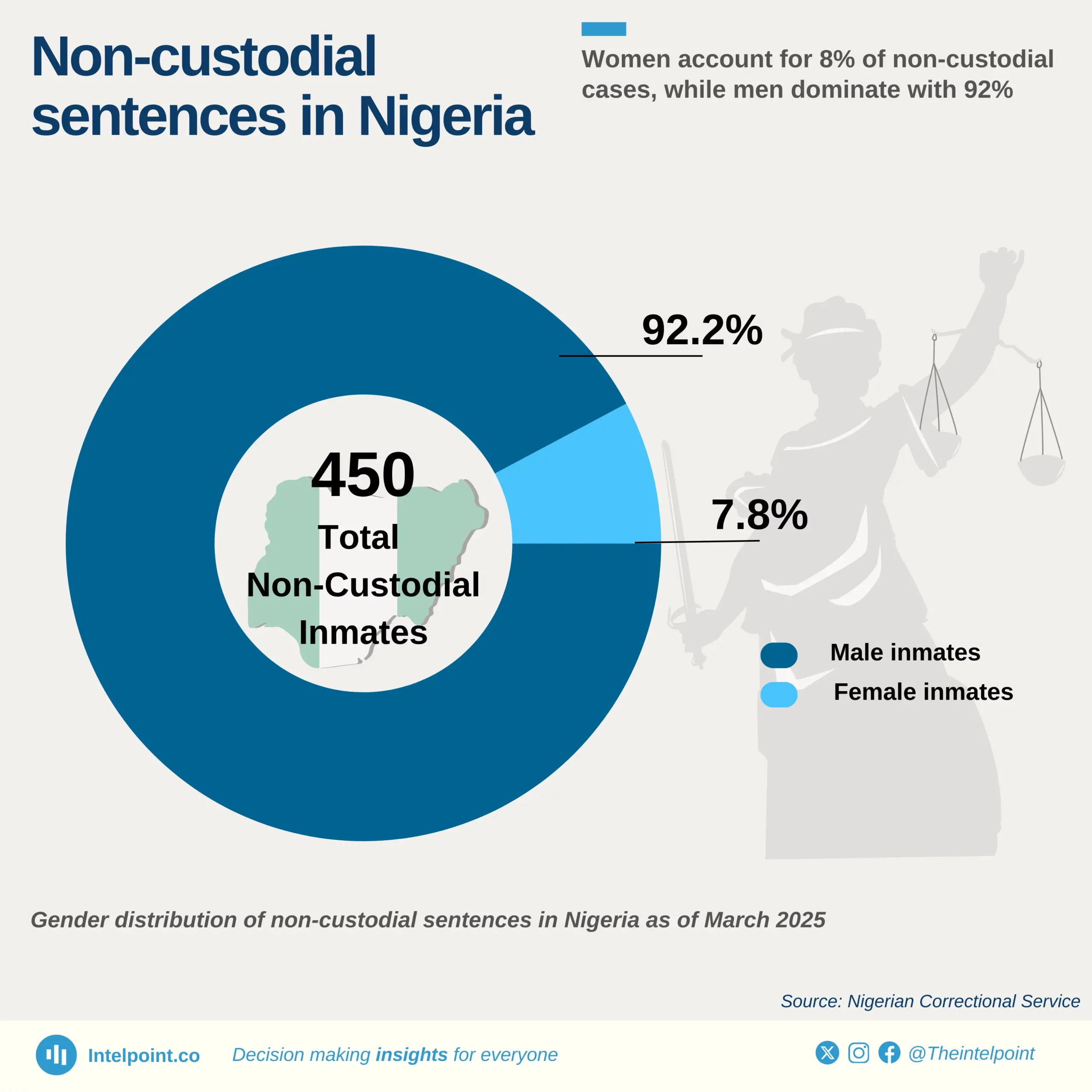
For every woman sentenced to a non-custodial measure, there are nearly 12 men (35:415), highlighting a strong gender disparity in non-custodial sentencing.
Men account for more than 9 out of every 10 non-custodial cases (92%), suggesting that crimes leading to these sentences are far more common among male offenders.
Women’s representation in non-custodial sentencing is much lower than their general crime conviction rates, indicating potential differences in crime type, judicial discretion, or rehabilitation approaches.
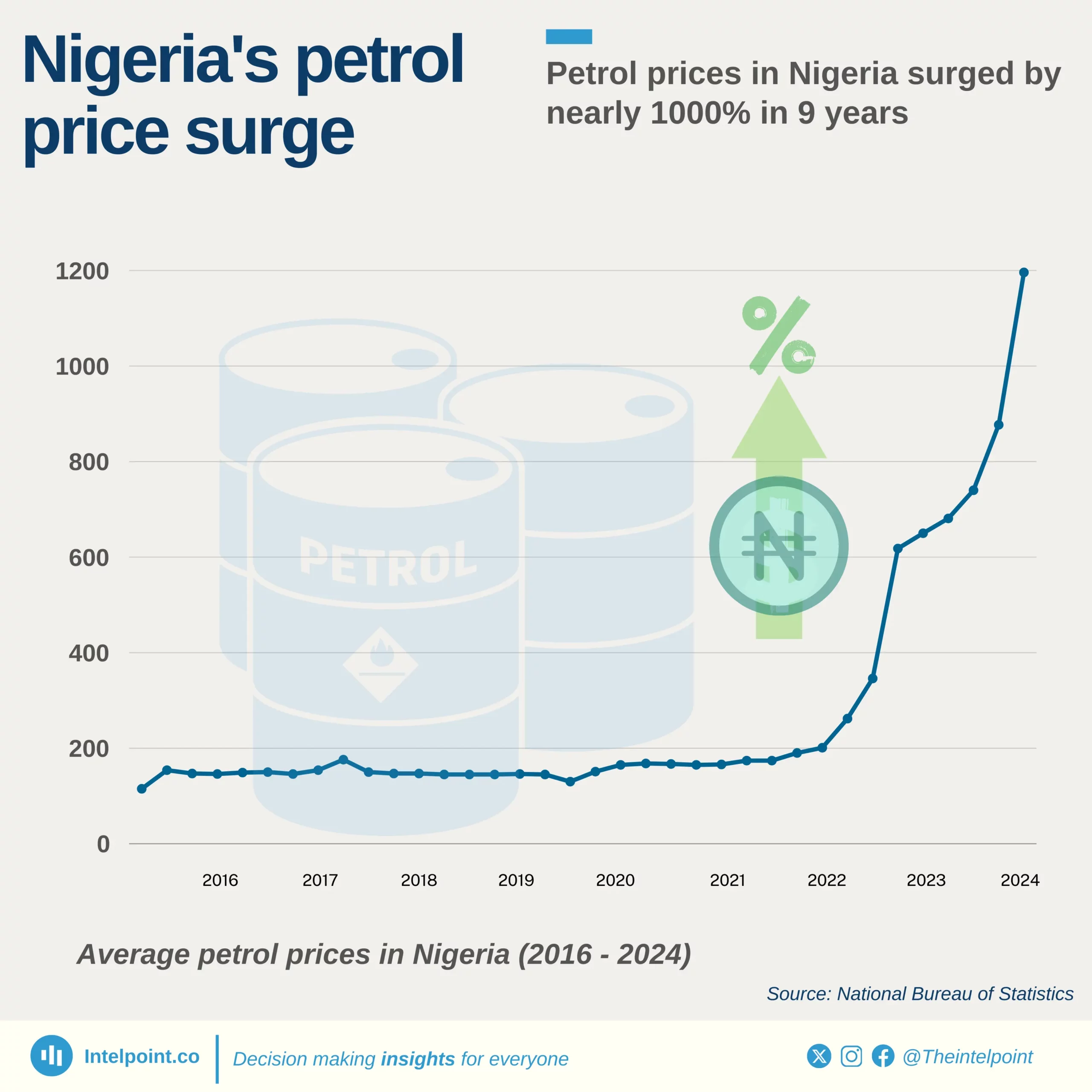
In February 2016, petrol was at its lowest price of₦99.80 per litre, marking the last time fuel prices remained below₦100.
By November 2024, petrol prices soared to an all-time high of₦1,214.17 per litre, reflecting the compounded effects of inflation, currency depreciation, and global oil price volatility.
Over the nine-year period, the average petrol price stood at₦272.65 per litre.
Between January 2016 and December 2024, petrol prices increased by ₦1,079.52, a staggering 984.96% rise, emphasising the long-term upward trajectory influenced by economic challenges, subsidy removals, and fluctuating exchange rates.
The most volatile period recorded a month-to-month price surge of over 129.23%.
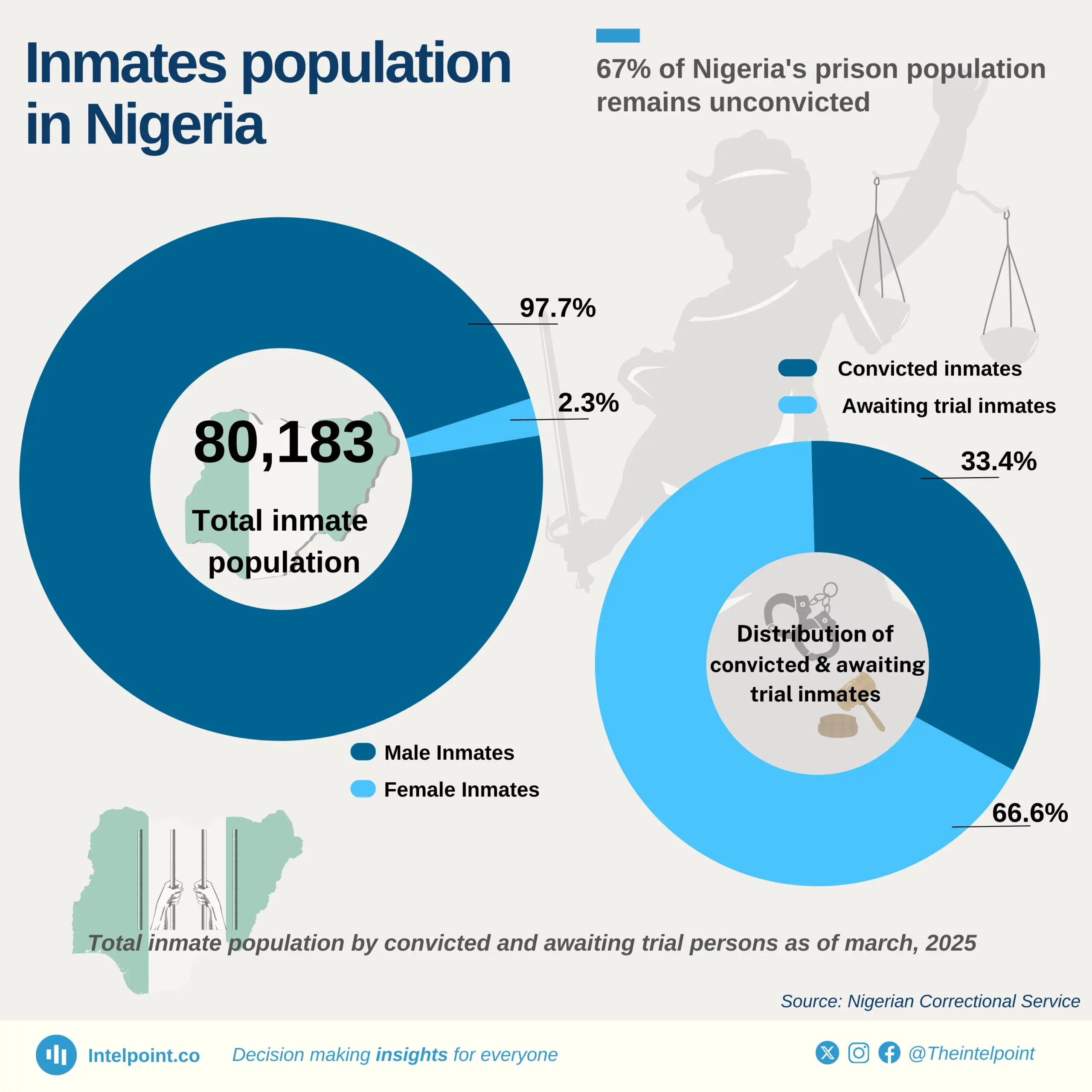
66.6% of inmates (53,408) are awaiting trial, meaning 2 out of every 3 prisoners have not been convicted. This highlights major delays in the justice system, leading to prolonged detention without sentencing.
Male inmates dominate the prison population at 97.7%, with similar trends in both convicted (98.3%) and awaiting trial (97.4%) categories, highlighting a significant gender disparity in detention rates.
Only 33.4% of inmates (26,775) have been convicted, while the majority remain in legal limbo. This suggests that slow judicial processes are contributing to prison overcrowding and potential human rights concerns.
75.4% of female inmates (1,399 out of 1,855) are awaiting trial, meaning only 1 in 4 female prisoners has been convicted
In 2023, a staggering ₦721 billion was paid as bribes to public officials in Nigeria, highlighting systemic corruption. Judges and magistrates received the highest average bribe of ₦31,000, reflecting the critical nature of their roles in decision-making processes. Immigration officers followed with an average of ₦17,800, while members of the armed forces received ₦16,600.
In 2023, bribery was increasingly being rejected in Nigeria, with 70% of Nigerians refusing to pay a bribe when asked to. Of these, 42% cited moral beliefs as the primary reason, while 21% opted for alternative methods to achieve their objectives, reflecting a growing resistance to corruption.
In 2023, 54% of bribes in Nigeria were directly solicited by public officials, while 23% involved subtle hints or indirect demands. Bribes were commonly exchanged in specific locations, with 36% occurring in the homes of public officials and 35% on the streets. These patterns highlight widespread and deeply entrenched corruption across different spheres of interaction.
The average number of bribes paid per person in Nigeria marginally reduced from 5.4 to 5.1. However, this decrease had no impact in the North East, where bribe-payers nearly doubled the amount paid in 2019, increasing from 4.5 to 8.4. In contrast, other regions recorded slight declines in bribes paid.
In almost 61 years since Nigeria's First Republic, there have been 16 Presidents and Heads of State either by seizure, democratic election, or handing over by an interim government.
The unsuccessful attempt to restore Nigeria to democracy between 1992 and 1993 gave rise to the aborted Third Republic.