Bite-sized Insights about
 
Providing you with data-based insights about things happening around you.
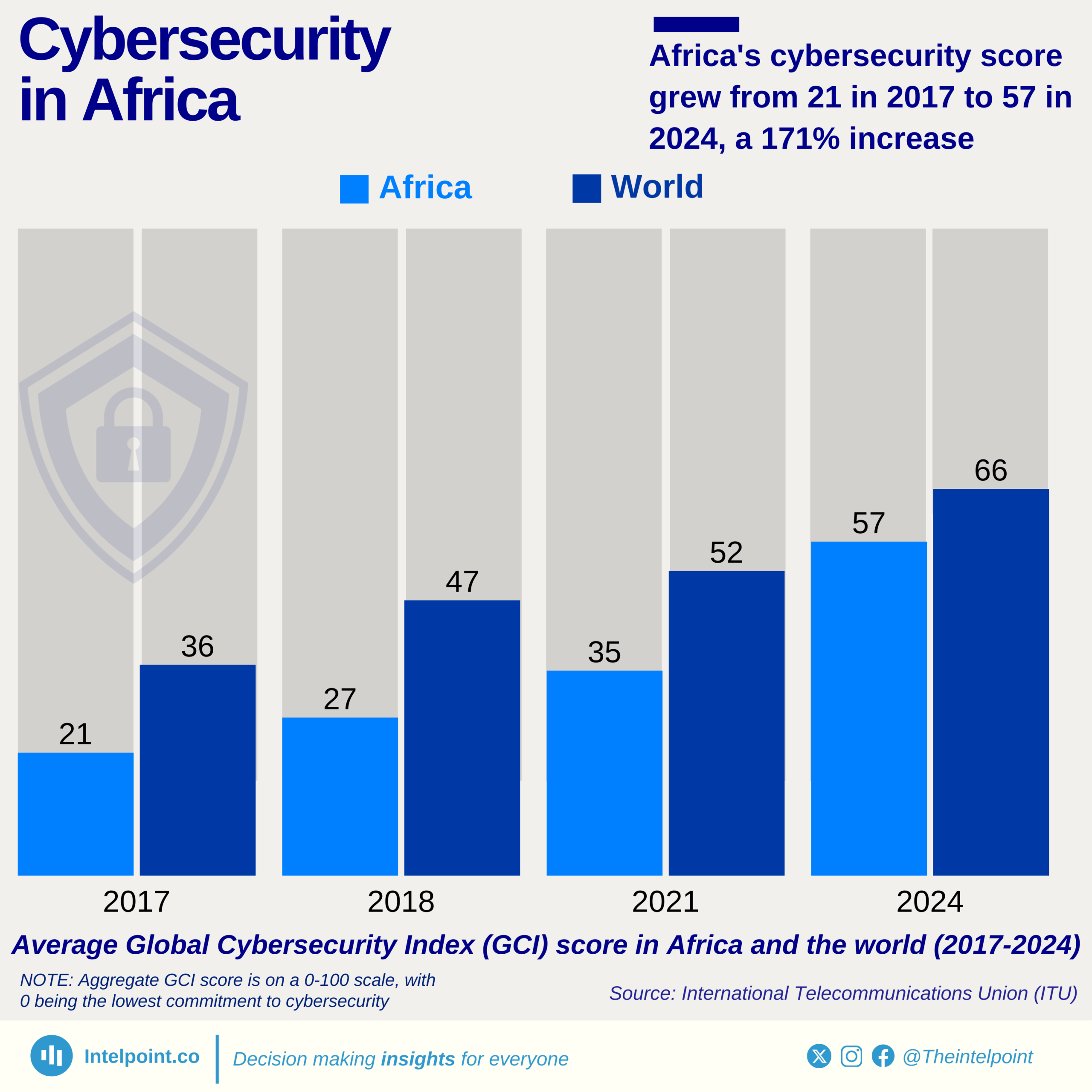
Africa's cybersecurity score grew from 21 in 2017 to 57 in 2024, a 171% increase
  • Africa’s cybersecurity score increased by 171% between 2017 and 2024.
  • The continent’s score rose from 21 in 2017 to 57 in 2024
  • Africa has reduced the gap with global averages, reducing the difference from 15 points in 2017 to 9 points in 2024.
  • The global cybersecurity score rose from 36 in 2017 to 66 in 2024.
  • Africa’s most notable leap was between 2021 (35) and 2024 (57), showing accelerated progress in recent years.

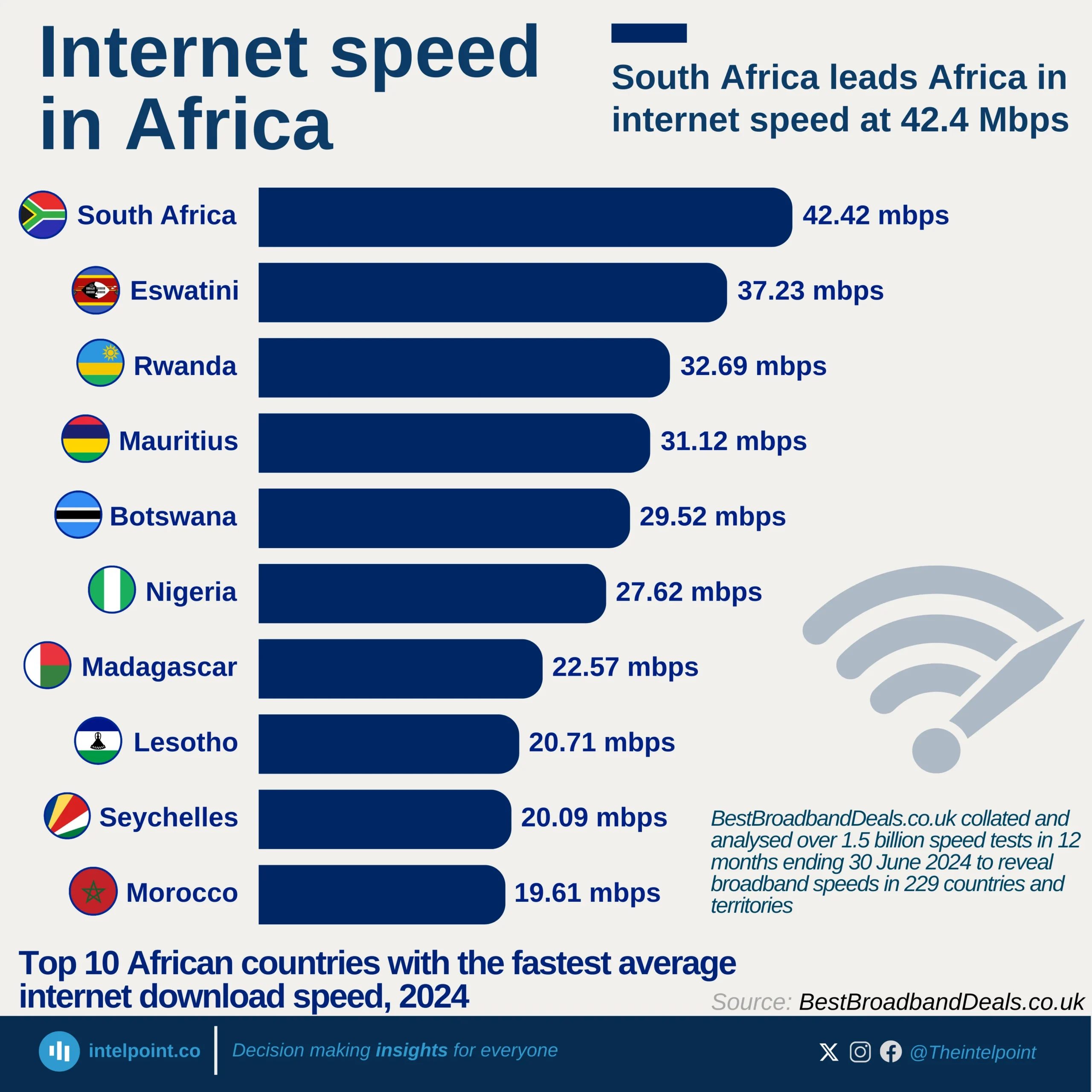
South Africa leads Africa in internet speed at 42.4 Mbps
  • South Africa sets the benchmark with the fastest average download speed (42.42 Mbps), more than double Morocco’s (19.61 Mbps).
  • Southern African countries dominate the top half of the ranking, with South Africa, Eswatini, Botswana, Lesotho, and Madagascar all featuring strongly.
  • Rwanda and Mauritius show East Africa’s progress, with average speeds above 30 Mbps, signalling solid digital infrastructure growth.
  • Wide disparities persist, with the gap between the highest (South Africa) and lowest (Morocco) averaging over 22 Mbps.
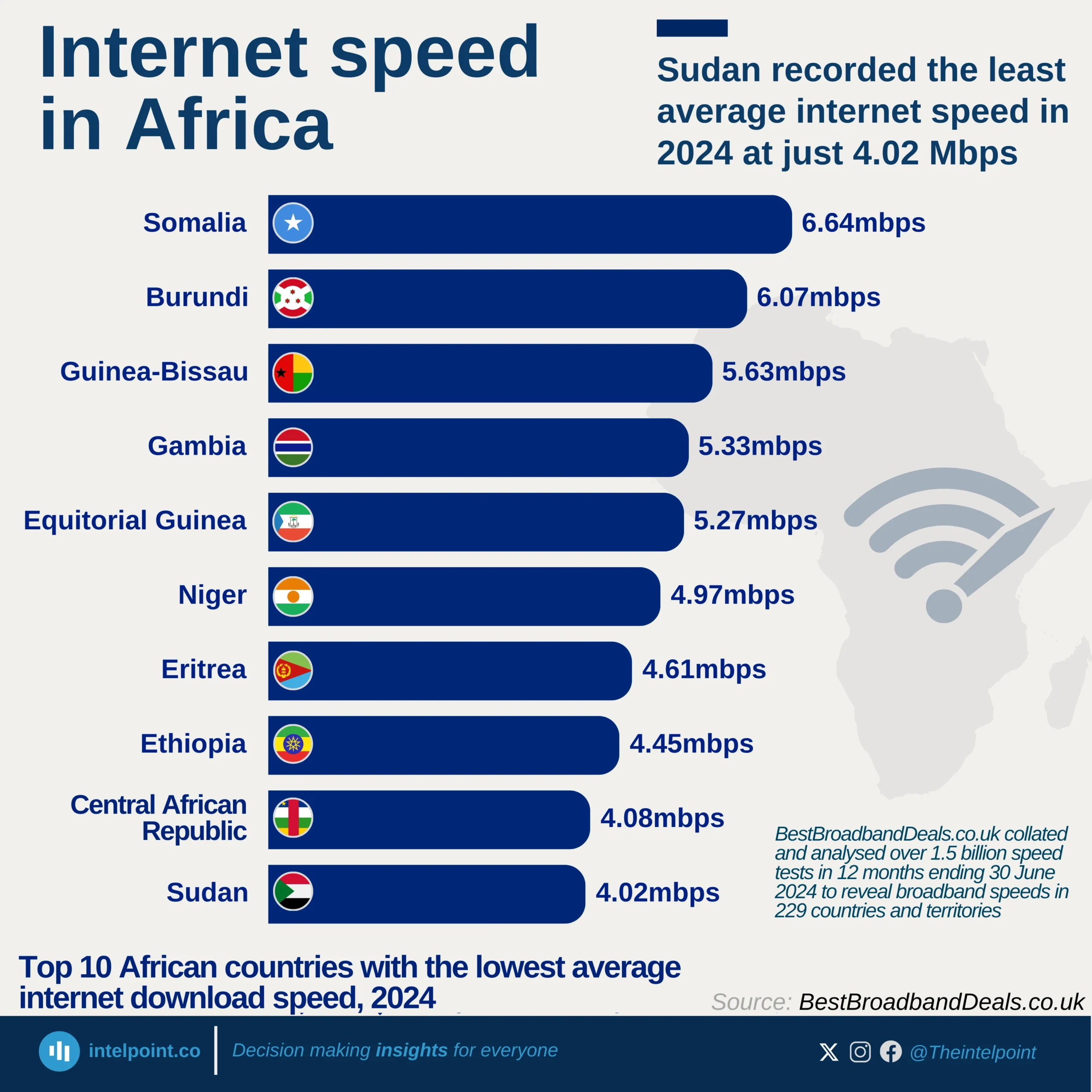
Sudan recorded the least average internet speed in 2024 at just 4.02 Mbps
  • Sudan sits at the bottom with an average speed of 4.02 mbps, far below the continental average.
  • The Central African Republic follows closely at 4.08 mbps, making Central Africa a weak spot for digital connectivity.
  • Somalia, despite topping the list, averaged only 6.64 mbps, showing even the “fastest among the slowest” remains well behind global standards.
  • The concentration of slow speeds in East and Central Africa points to persistent infrastructure and investment gaps.

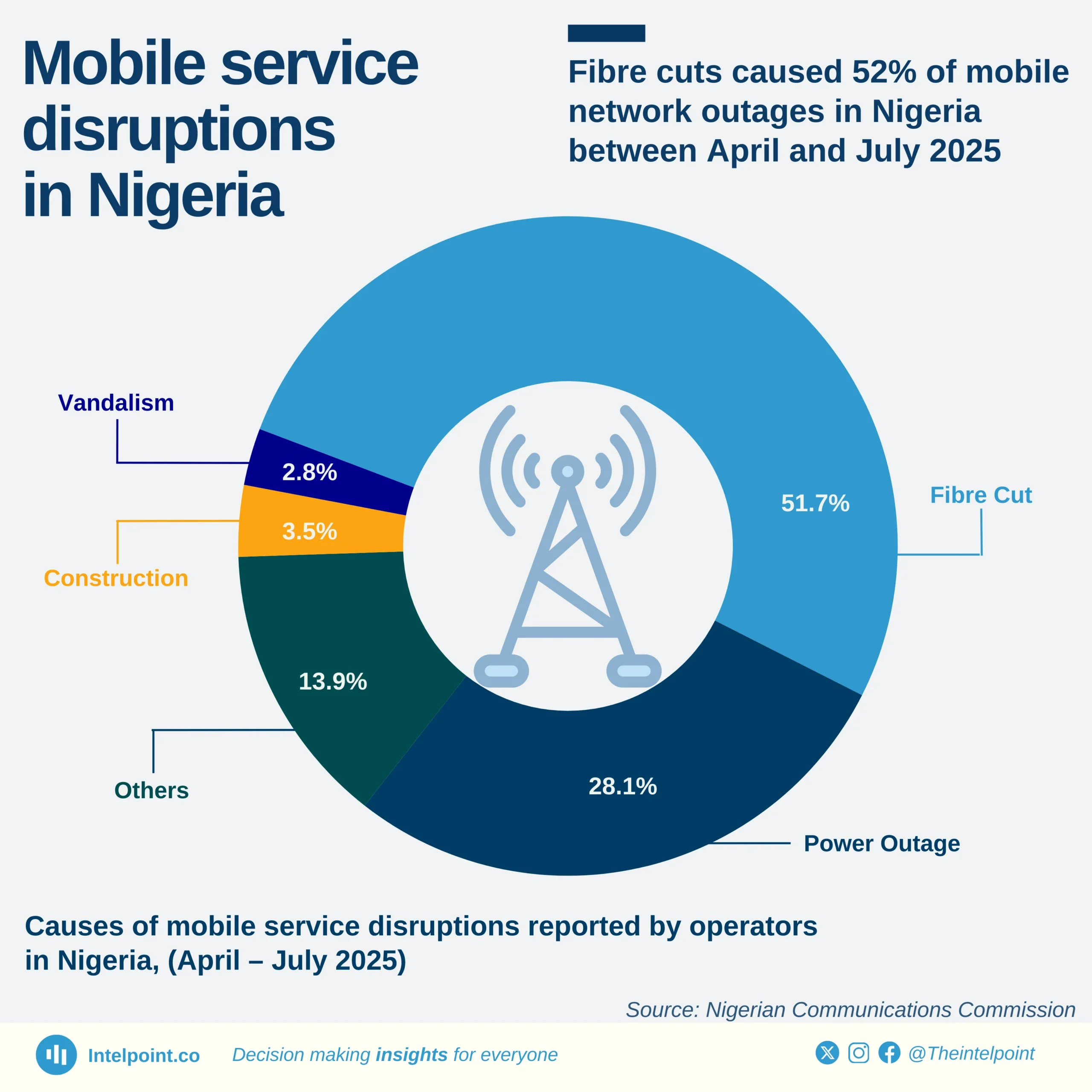
Fibre cuts caused 52% of mobile network outages in Nigeria between April and July 2025
  • Fibre cuts were responsible for 51.7% of mobile network disruptions between April and July 2025.
  • Power outages followed at 28.1%, making infrastructure issues the dominant cause overall.
  • Together, fibre cuts and power outages accounted for nearly 80% of service disruptions.
  • The “Others” category, which includes congestion, equipment theft, and natural disasters, accounted for 13.9% of disruptions.
  • Infrastructure and environmental factors remain the leading threats to mobile network reliability.

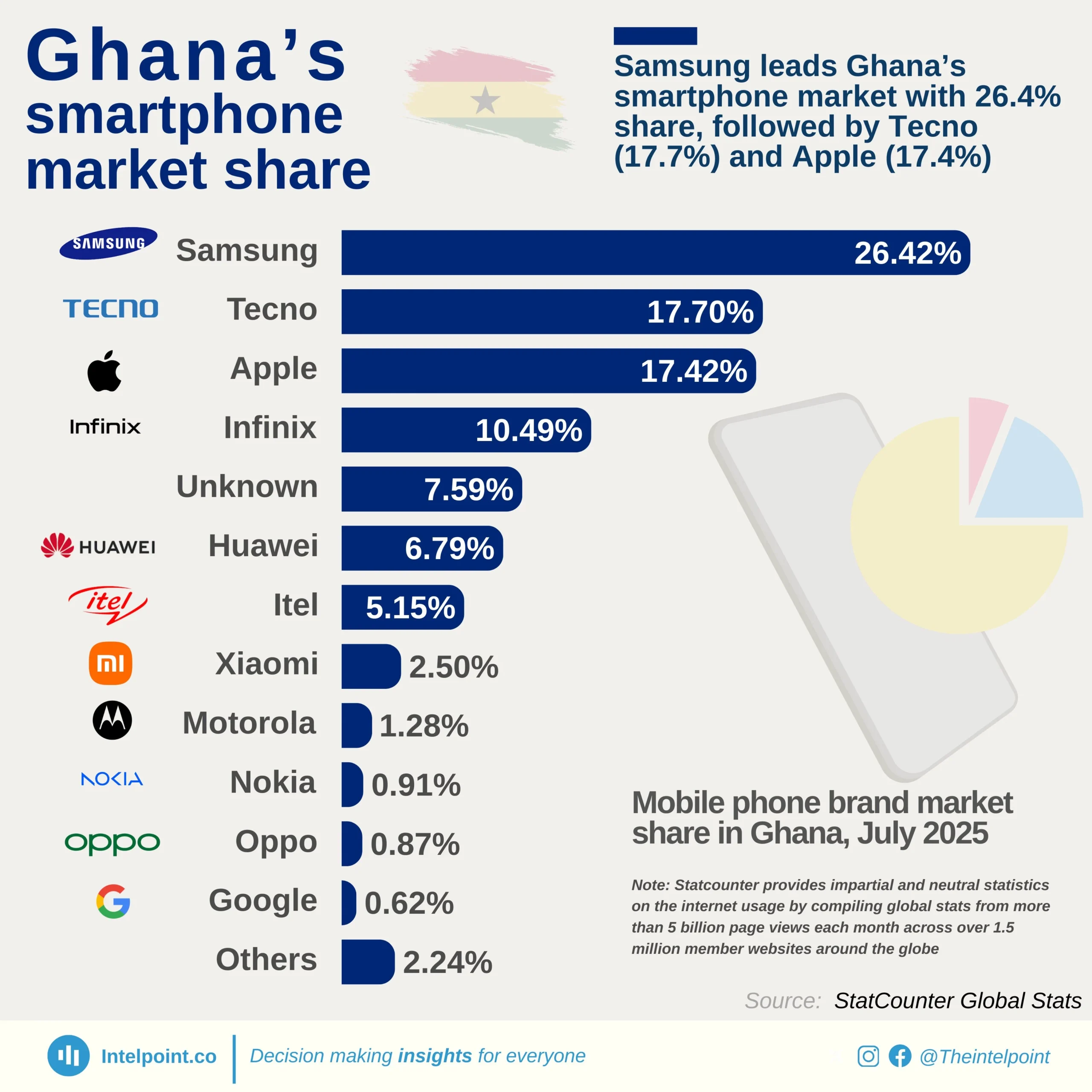
Samsung leads Ghana’s smartphone market with 26.4% share, followed by Tecno (17.7%) and Apple (17.4%)
  • Samsung dominates with 26.42% of Ghana’s smartphone market, making it the clear leader.
  • Tecno (17.7%) and Apple (17.4%) are in a tight race for second place, separated by just 0.3 percentage points.
  • Infinix (10.5%) and Itel (5.2%) highlight the strong presence of Transsion Holdings brands in Ghana.
  • Global giants like Huawei (6.8%) and Xiaomi (2.5%) lag behind, showing Ghana’s preference for budget-friendly African-focused brands.

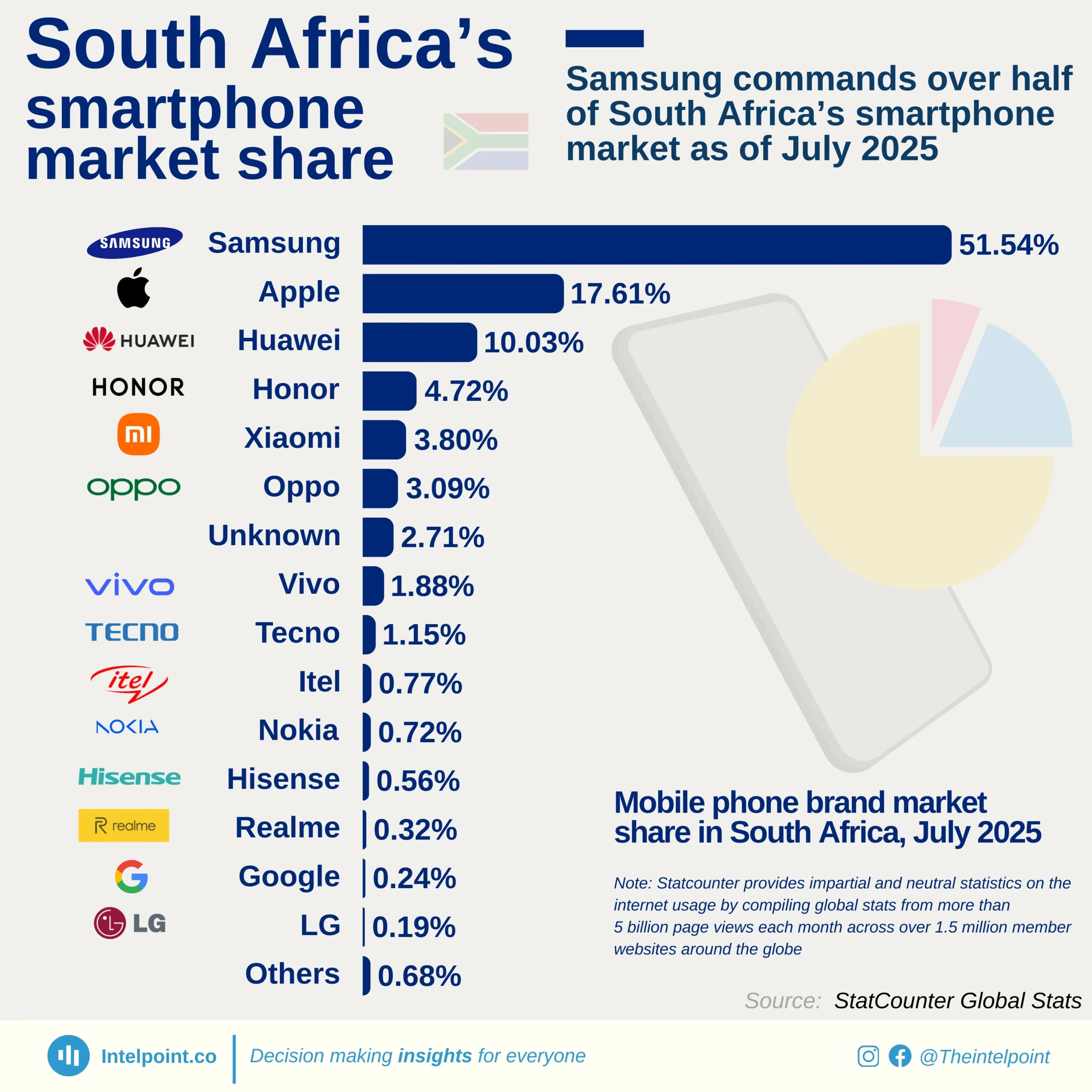
Samsung commands over half of South Africa’s smartphone market at 51.5% as of July 2025
  • Samsung controls more than half of the South African smartphone market, more than all other brands combined.
  • Apple holds 17.61%, less than half of Samsung’s share, but remains the clear premium alternative.
  • Despite global challenges, Huawei captures 10.03%, placing third in the market.
  • Honor, Xiaomi, and Oppo collectively hold approximately 11.6%, while smaller brands like Tecno, Itel, and Nokia struggle below 2% each.

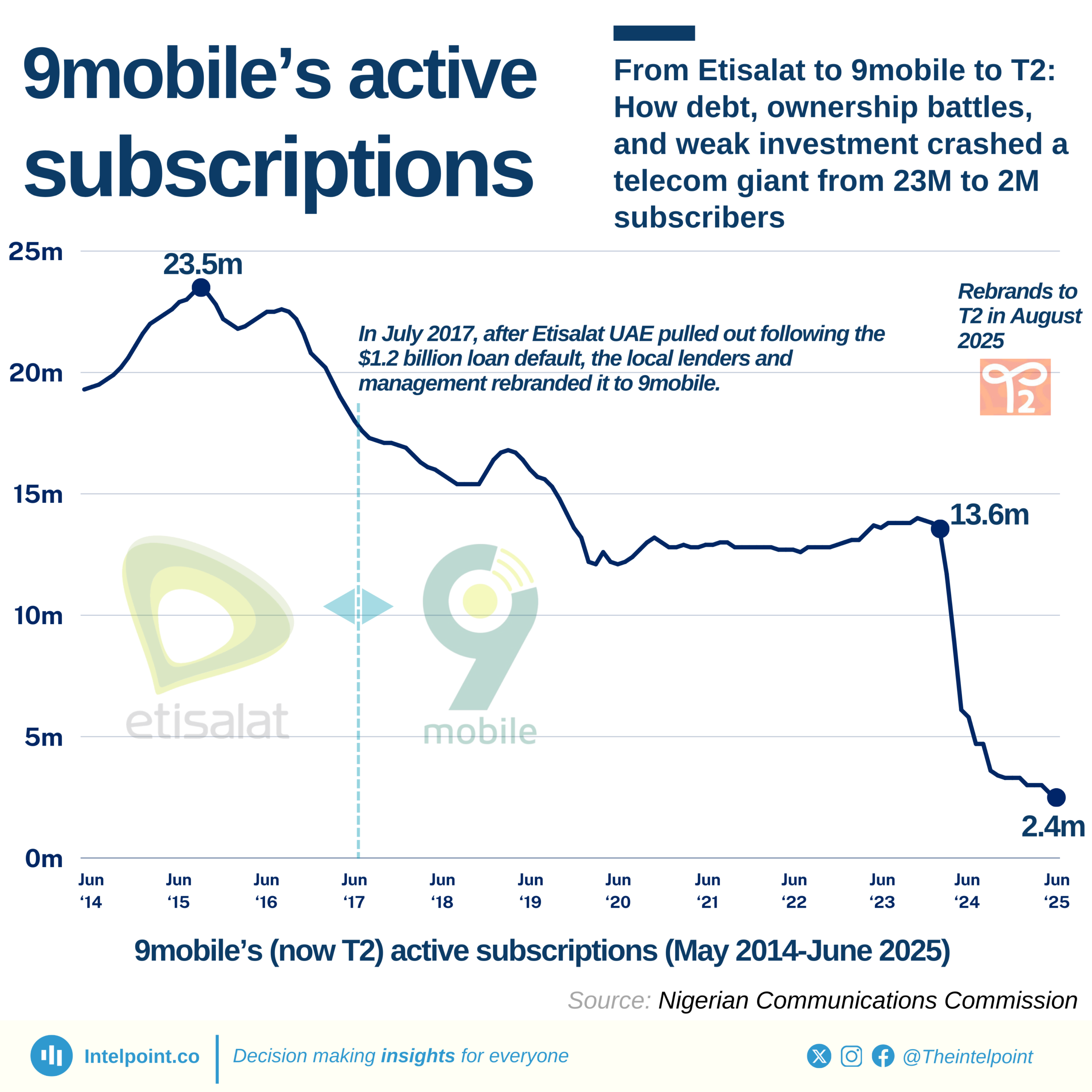
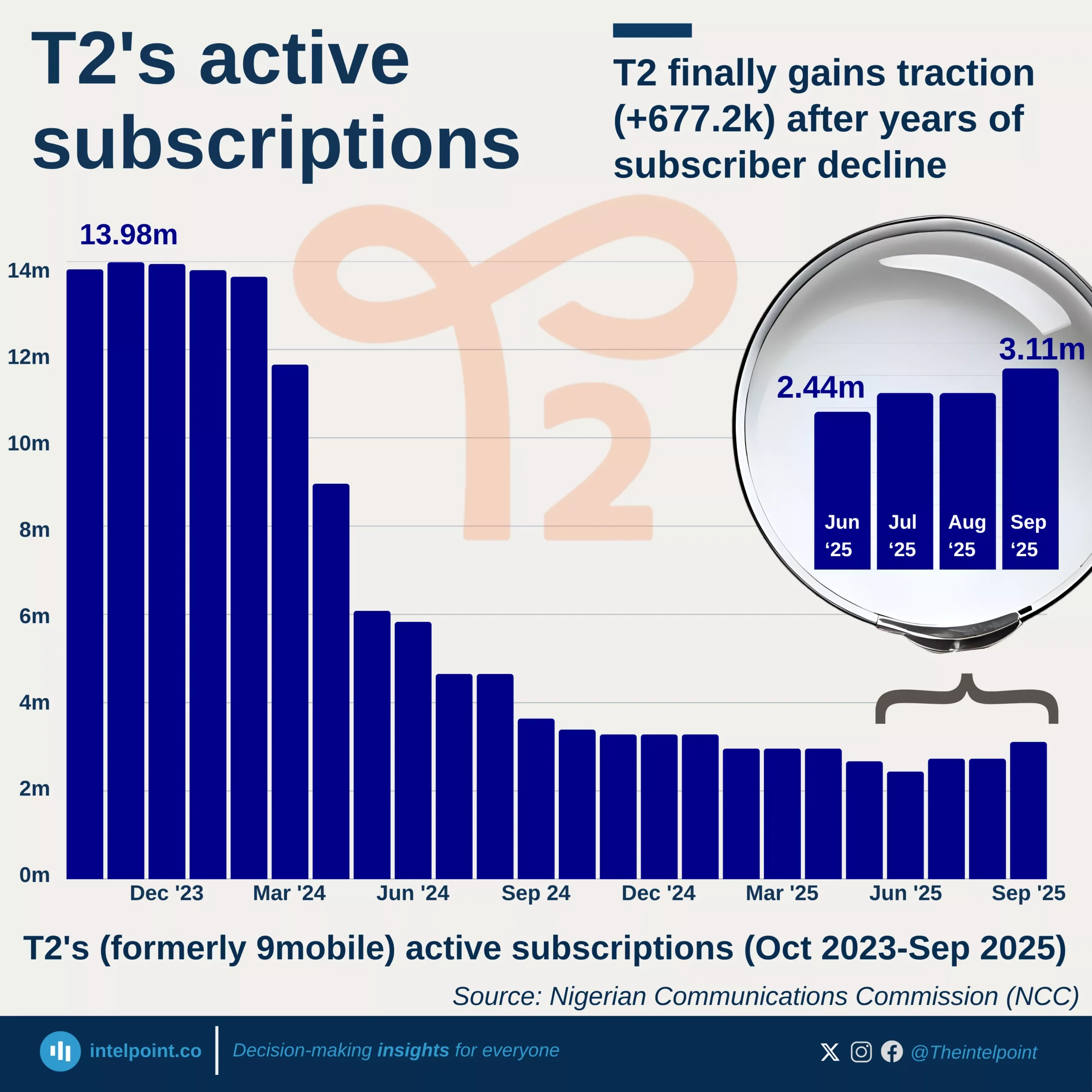
From Etisalat to 9mobile to T2: How debt, ownership battles, and weak investment crashed a telecom giant from 23M to 2M subscribers
  • Subscriptions peaked at 23.5 million in 2015 before a long decline.
  • The 2017 debt crisis and Etisalat UAE’s exit triggered sustained losses.
  • By mid-2025, active lines had plunged to 2.4 million, the steepest fall in the sector.
  • In August 2025, the firm rebranded as T2, unveiling a new plan to stabilise and grow again

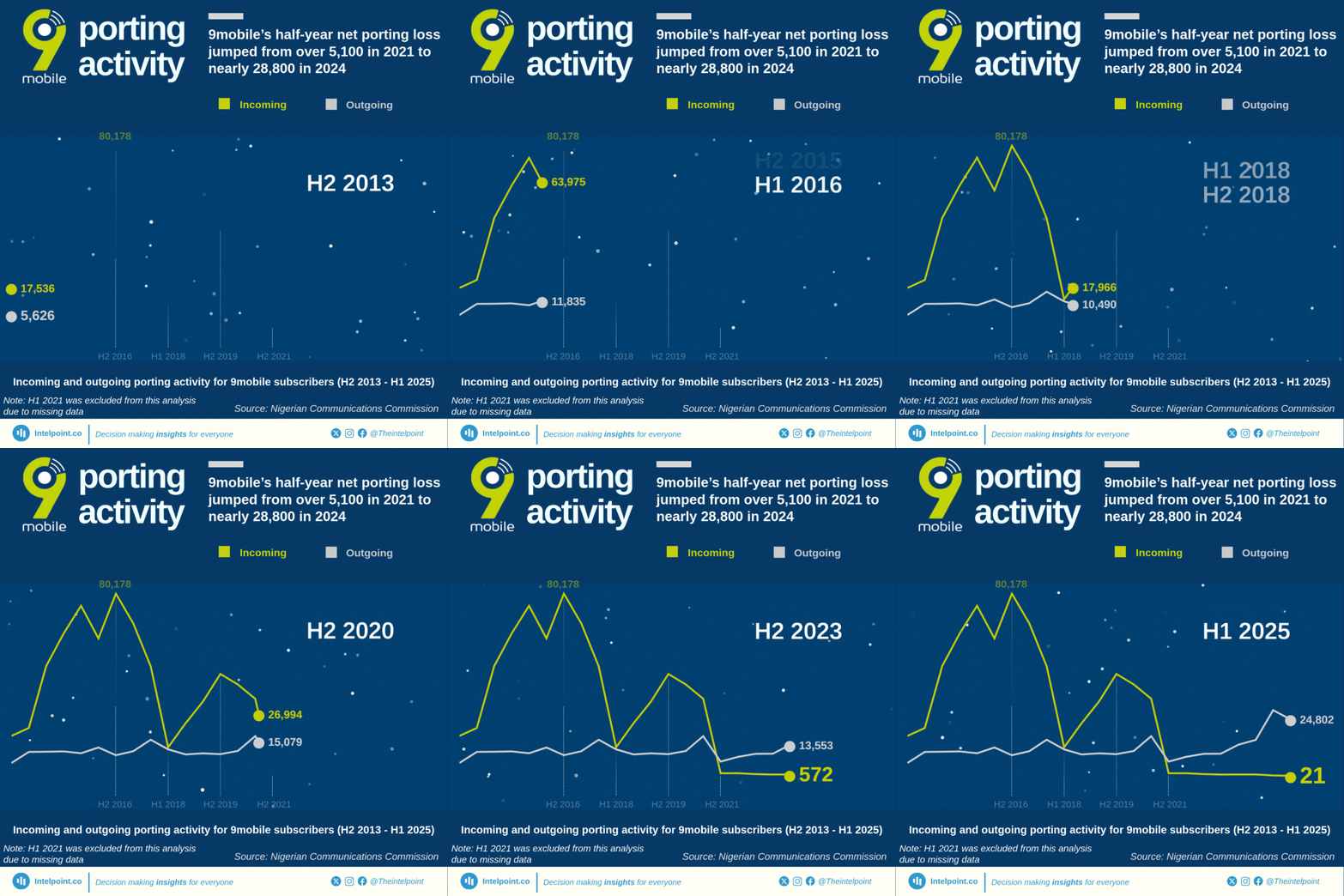
9mobile’s half-year net porting loss jumped from over 5,100 in 2021 to nearly 28,800 in 2024
  • From H2 2013 to H1 2020, 9mobile gained more subscribers from other networks than it lost.
  • From H2 2021 onward, more subscribers left 9mobile for other networks than joined.
  • Net half-year losses grew from about 5,143 in H2 2021 to 28,735 in H2 2024.
  • Outgoing ports peaked at 28,885 in H2 2024, the highest half-year total on record.

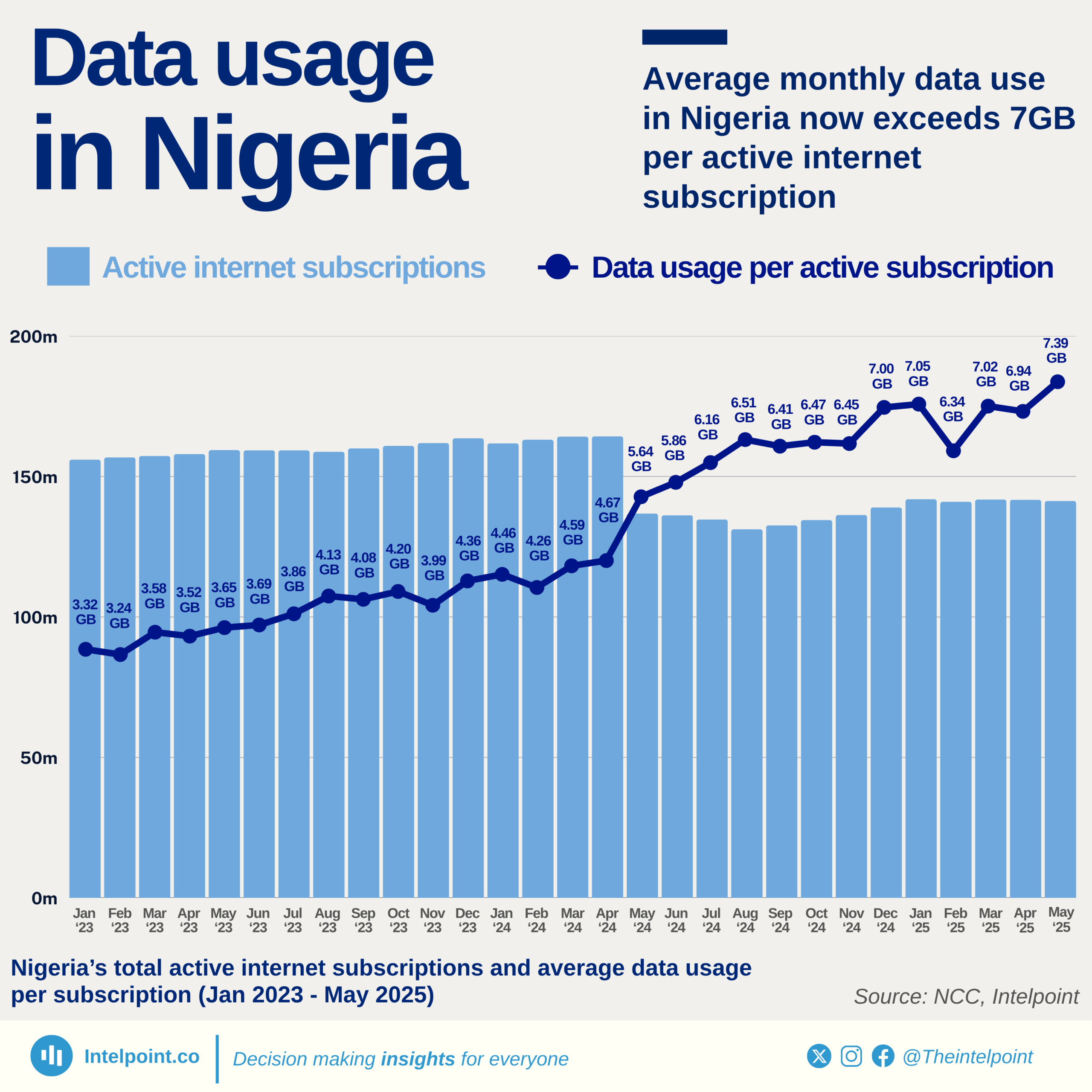
Average monthly data use in Nigeria now exceeds 7GB per active internet subscription
  • Per-user data usage more than doubled in 29 months.
  • The surge [was] driven by heavier usage, not more users.
  • February dips and year-end spikes show seasonal habits.
  • 2024 marked a lasting shift to higher monthly data use.
 

Starlink is becoming more affordable in Africa, with monthly plans in Zimbabwe, Ghana and Kenya costing less than half of traditional internet providers
  • Starlink is cheaper than traditional ISPs in five out of the twelve African countries analysed.
  • Zimbabwe has the widest price gap, with traditional ISPs costing over 21 times more than Starlink.
  • Nigeria currently offers the cheapest traditional ISP plan at $9.59, undercutting Starlink’s price by a wide margin.
  • In Ghana and Kenya, Starlink’s monthly subscription is less than half the cost of the leading ISPs.
  • Only slight differences exist between Starlink and traditional ISP prices in Zambia and Botswana, indicating near-parity.
  • Mozambique and Cape Verde have moderate Starlink price advantages, suggesting potential for market competition.

1 2 3 4 11

Can’t find what you’re looking for? Please fill the form below
Contact Form Demo
SIGN UP TO OUR NEWSLETTER
Get periodic updates about the African startup space, access to our reports, among others.
Subscribe Here
Subscription Form

A product of Techpoint Africa. All rights reserved