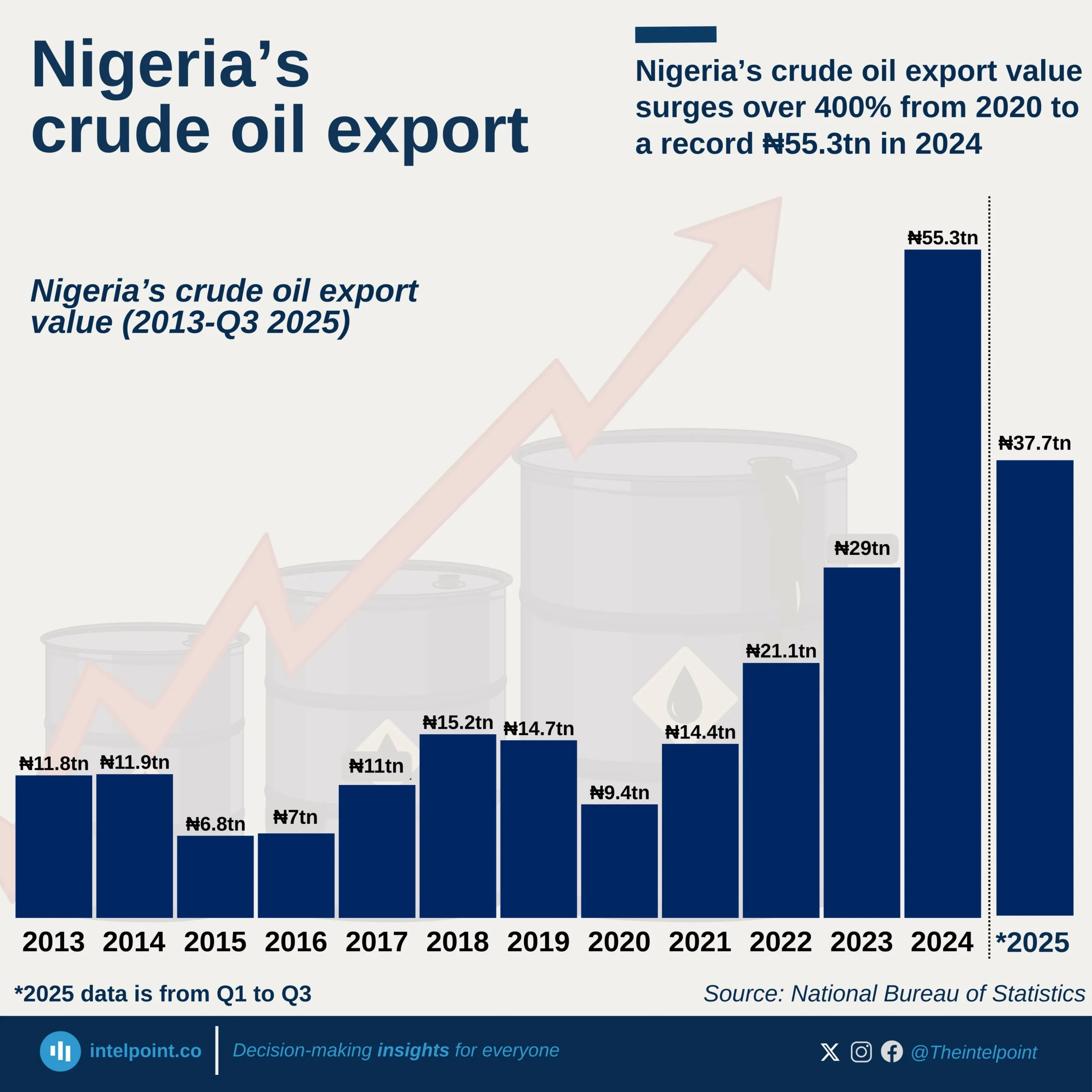
Export values have grown over 400%, rising from ₦11.8 trillion in 2013 to a peak of ₦55.3 trillion in 2024, a fivefold increase driven by rising oil prices and a weaker naira.
2015 and 2016 were the hardest years, with export values crashing as low as ₦6.8 trillion in 2015, reflecting the brutal impact of the global oil price collapse on Nigeria's most critical export.
The most explosive growth came from 2023 onwards, with values surging past ₦29 trillion in 2023 and peaking at ₦55.3 trillion in 2024, largely driven by the naira depreciation following Nigeria's 2023 foreign exchange reforms.
The first nine months of 2025 saw a slower pace than the previous year, with ₦37.7 trillion recorded between Q1 and Q3, lower than the ₦41.5 trillion recorded during the same period in 2024.
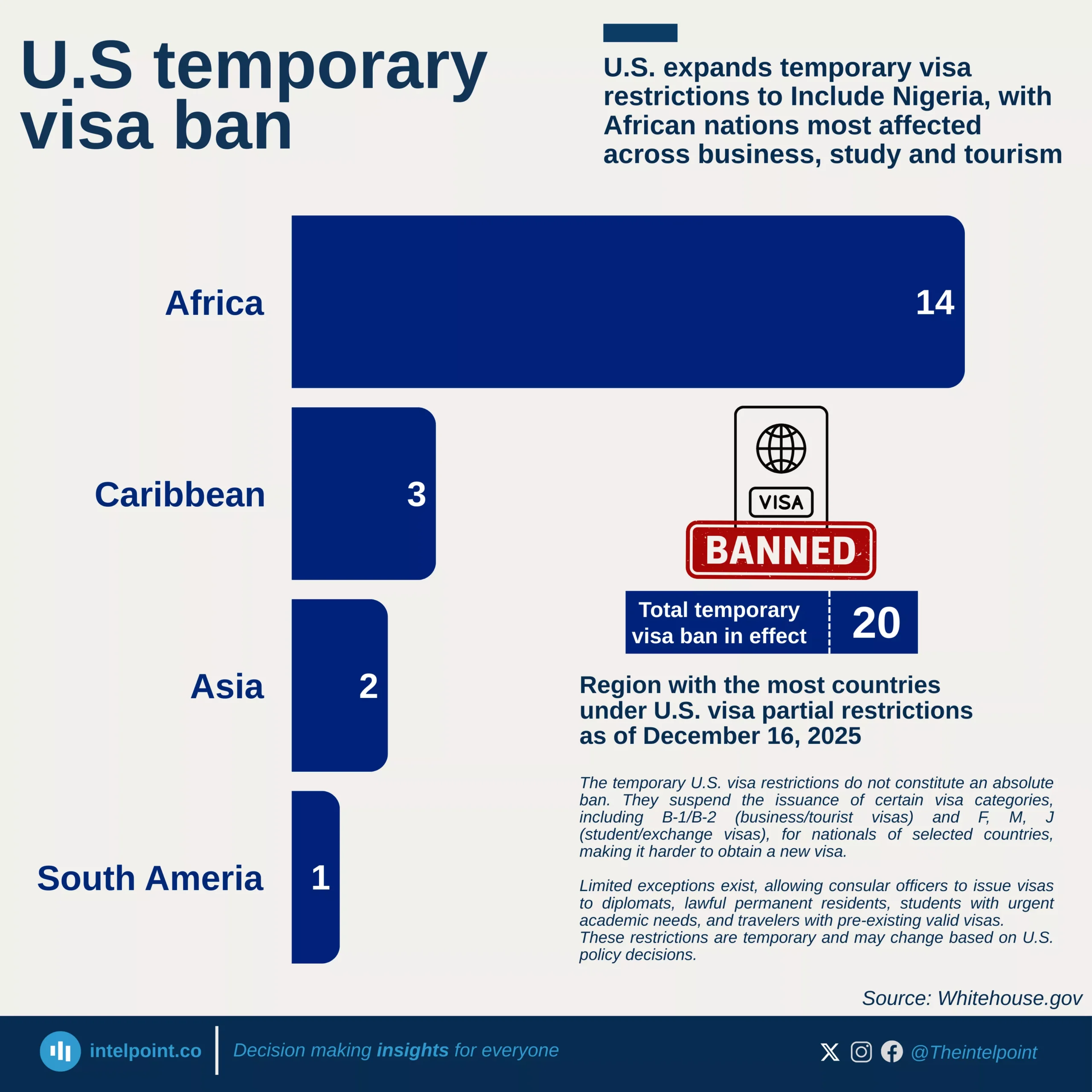
Africa is the hardest-hit region, with 14 countries under partial visa restrictions, including Nigeria, limiting travel for business, tourism, and study.
Temporary bans target B‑1/B‑2 visas for business and tourism, and may also affect F‑1 student, M‑1 vocational, and J exchange visitor visas, impacting students, trainees, and cultural exchange participants.
Other affected regions include the Caribbean, Asia, and South America, showing the temporary restrictions span multiple continents.
Exemptions exist for lawful permanent residents, diplomats, and travellers with valid pre-existing visas, so not all citizens from these countries are blocked from entering the US.