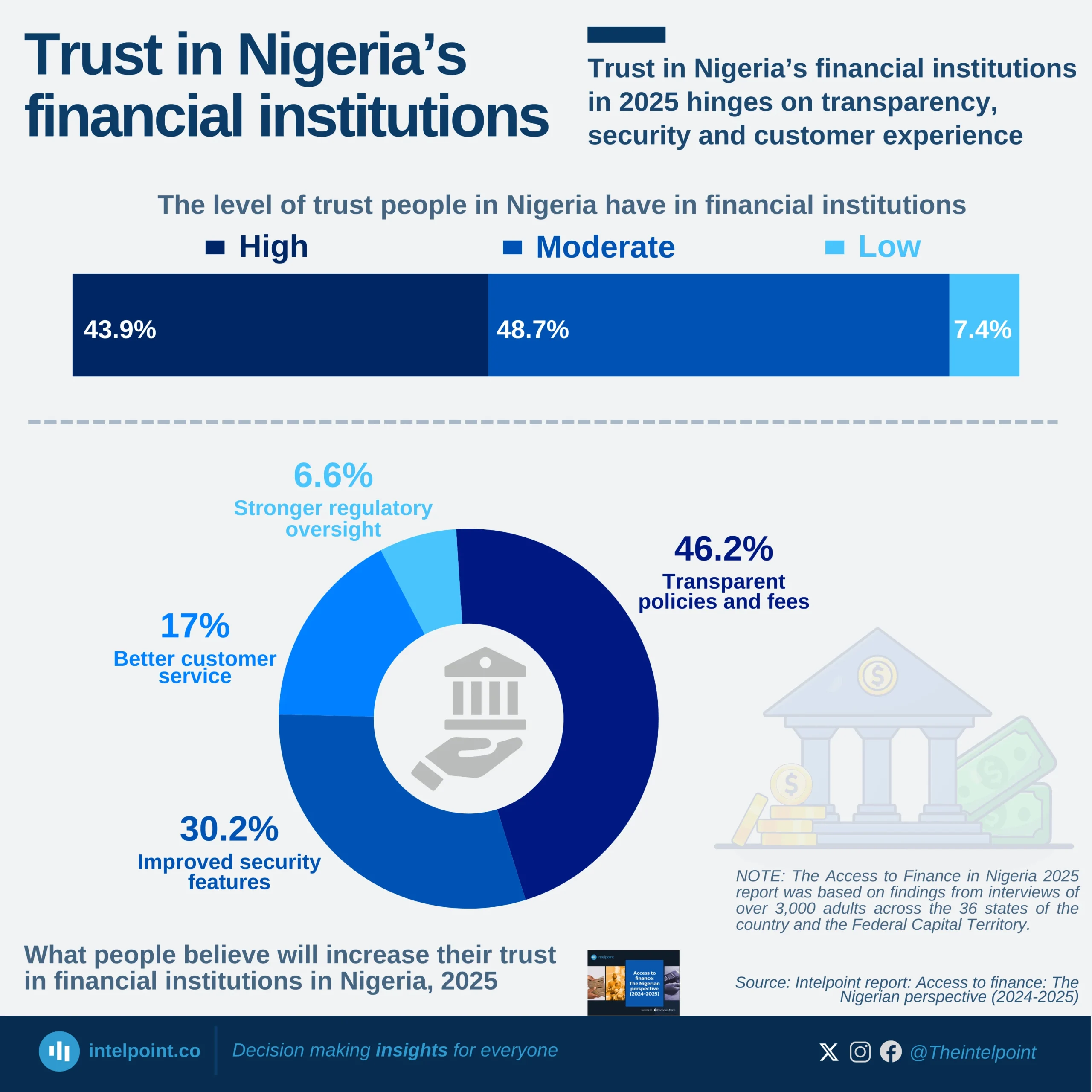
Majority trust will be moderate to high: 92.6% of Nigerians are expected to have either high (43.9%) or moderate (48.7%) trust in financial institutions by 2025.
Transparency is the biggest driver of trust as 46.2% of respondents believe transparent policies and fees will most improve their trust.
Security is a rising priority; 30.2% of Nigerians highlight improved security features as a key factor in strengthening confidence in financial institutions.
Customer service and regulation still matter as 17% emphasise better customer service and 6.6% stronger regulatory oversight, showing that while oversight has a role, people prioritise fairness, safety, and service.
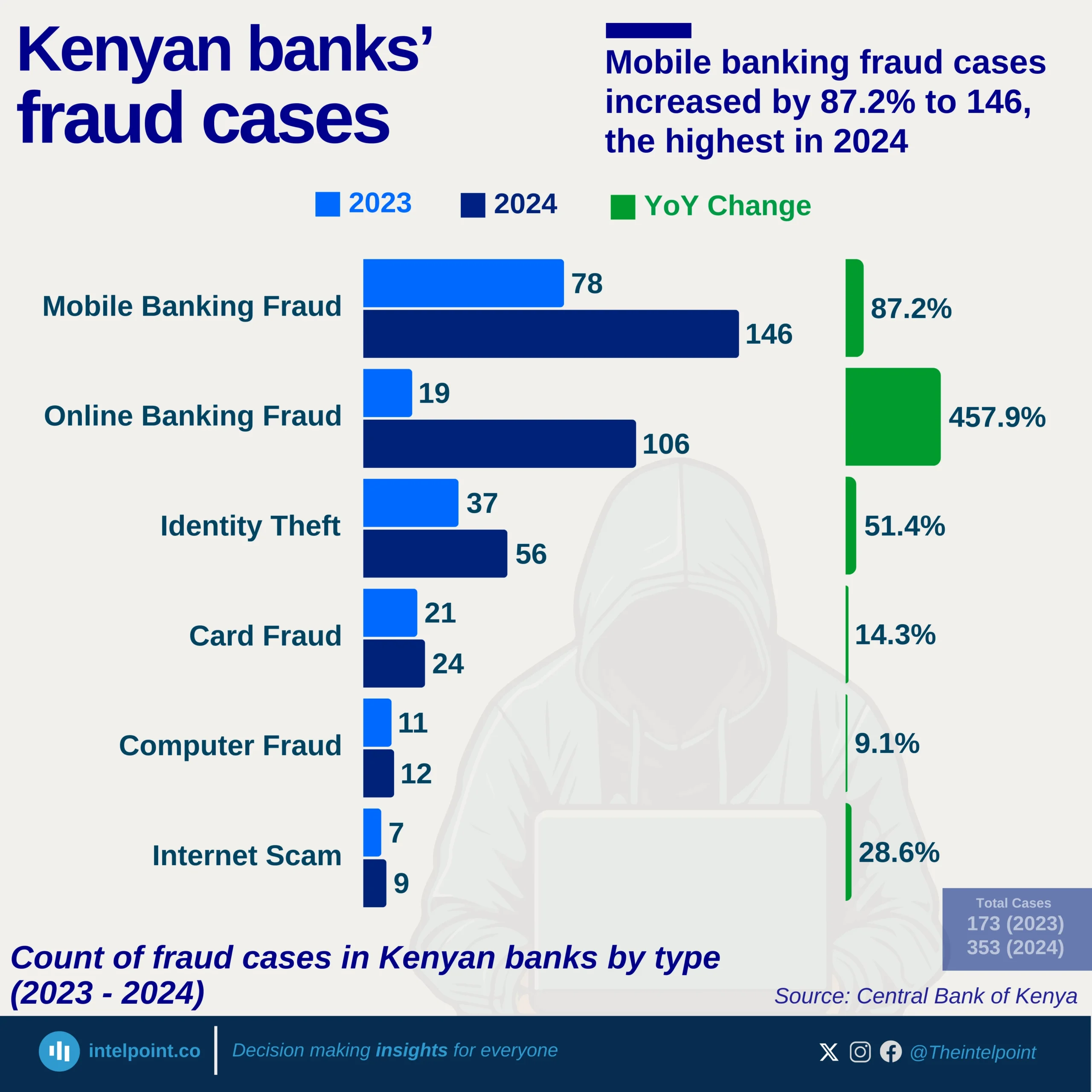
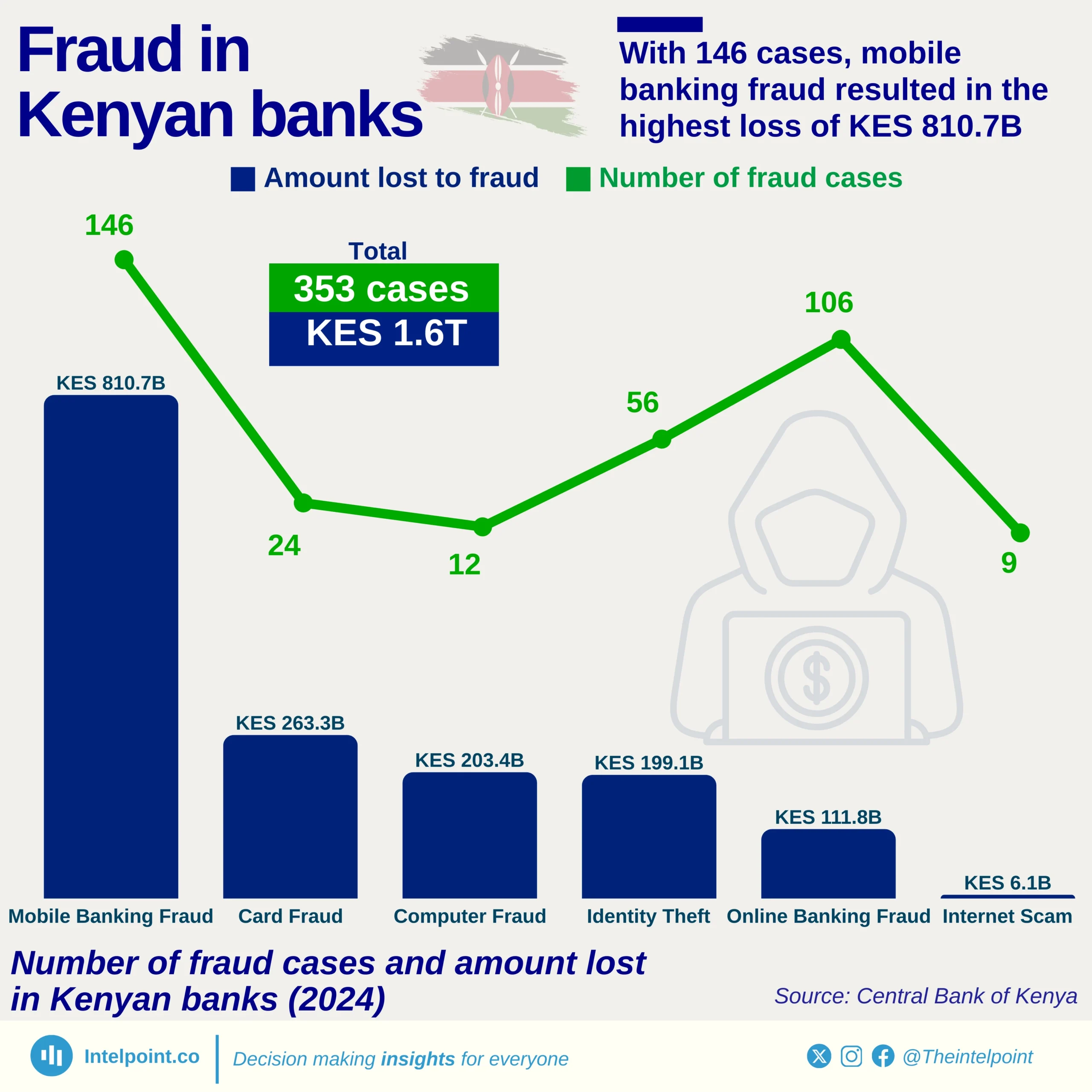
Kenya recorded 353 fraud cases in 2024, totalling KES 1.6T in losses.
Mobile banking fraud, with 146 cases, was the biggest threat, causing KES 810.7B in losses.
Card fraud had only 24 cases but resulted in KES 263.3B lost, showing its high risk. Computer fraud recorded 12 cases, leading to KES 203.4B in damages.
Identity theft saw 56 cases, costing banks and customers KES 199.1B.
Online banking fraud was the second most frequent (106 cases), but losses were relatively lower at KES 111.8B.
Internet scams had the fewest cases (9) but still caused KES 6.1B in losses.
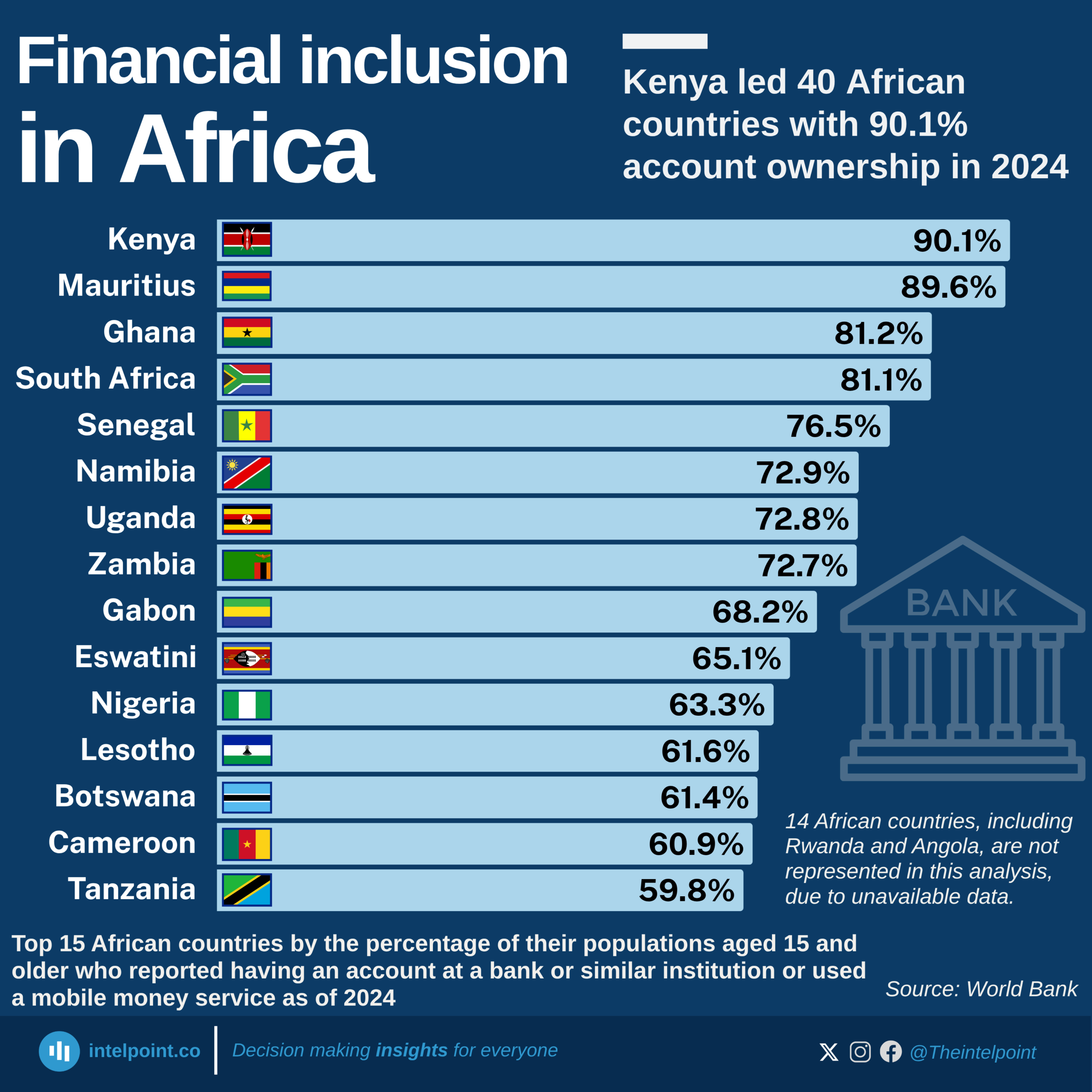
- Kenya led with 90.1 percent account ownership in 2024.
- Mauritius (89.6 percent) and Ghana (81.2 percent) also in top 3.
- Nigeria ranked 11th at 63.3 percent; Tanzania fell short at 59.8 percent.
- Only 14 African countries exceeded the 60 percent inclusion benchmark.
- Another 14 African countries have no recent data in the Global Findex
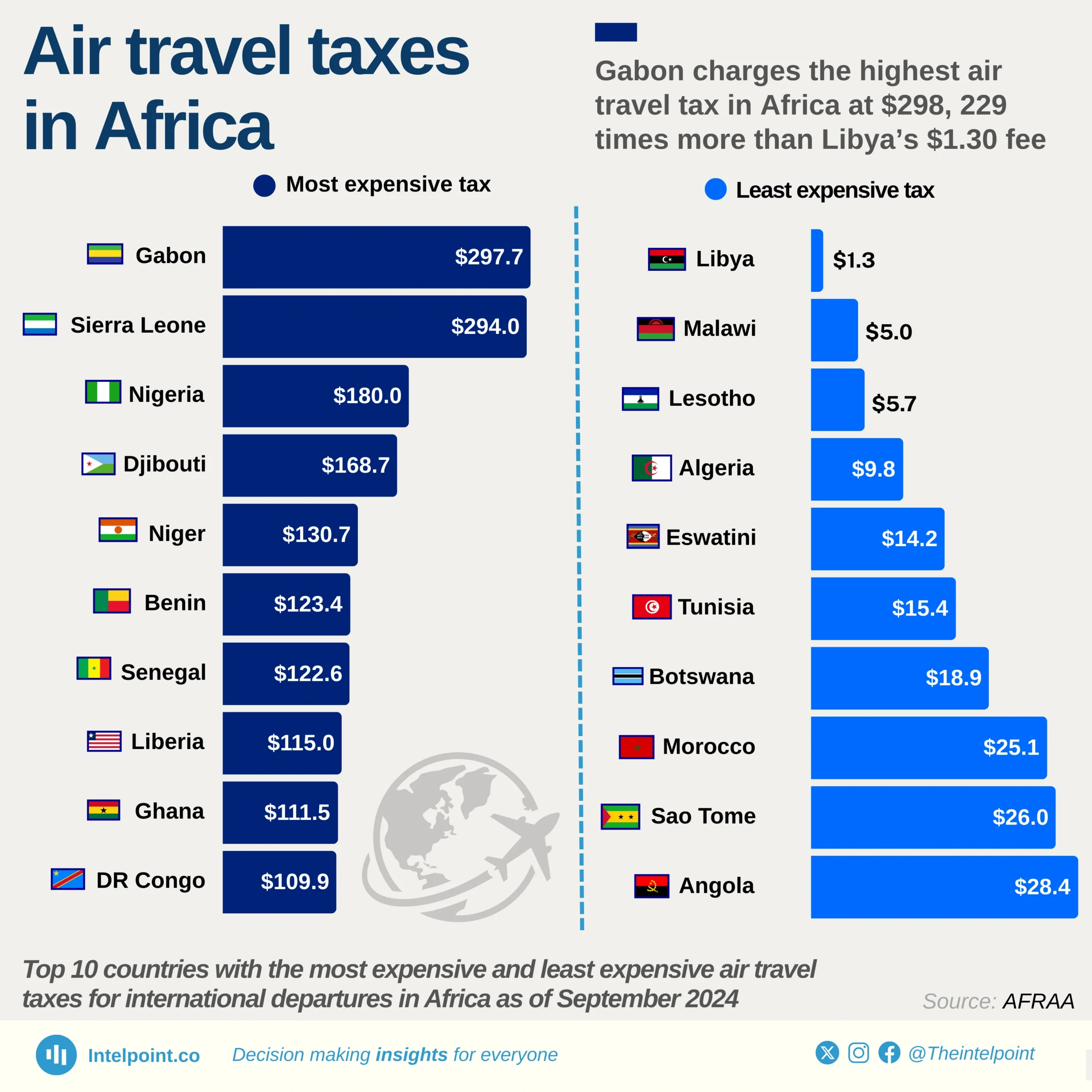
Gabon imposes Africa’s highest international air travel tax at $297.70, followed closely by Sierra Leone at $294 and Nigeria at $180.
Libya charges the lowest air travel tax among the listed African countries at just $1.30, with other low-cost countries including Malawi ($5.00), Lesotho ($5.70), and Algeria ($9.80).
All of the 10 most expensive countries charge over $100 in departure taxes, suggesting a trend of high levies among a subset of African nations.
The gap between the highest and lowest air travel taxes in Africa exceeds $296, revealing significant disparities in passenger costs across the continent.