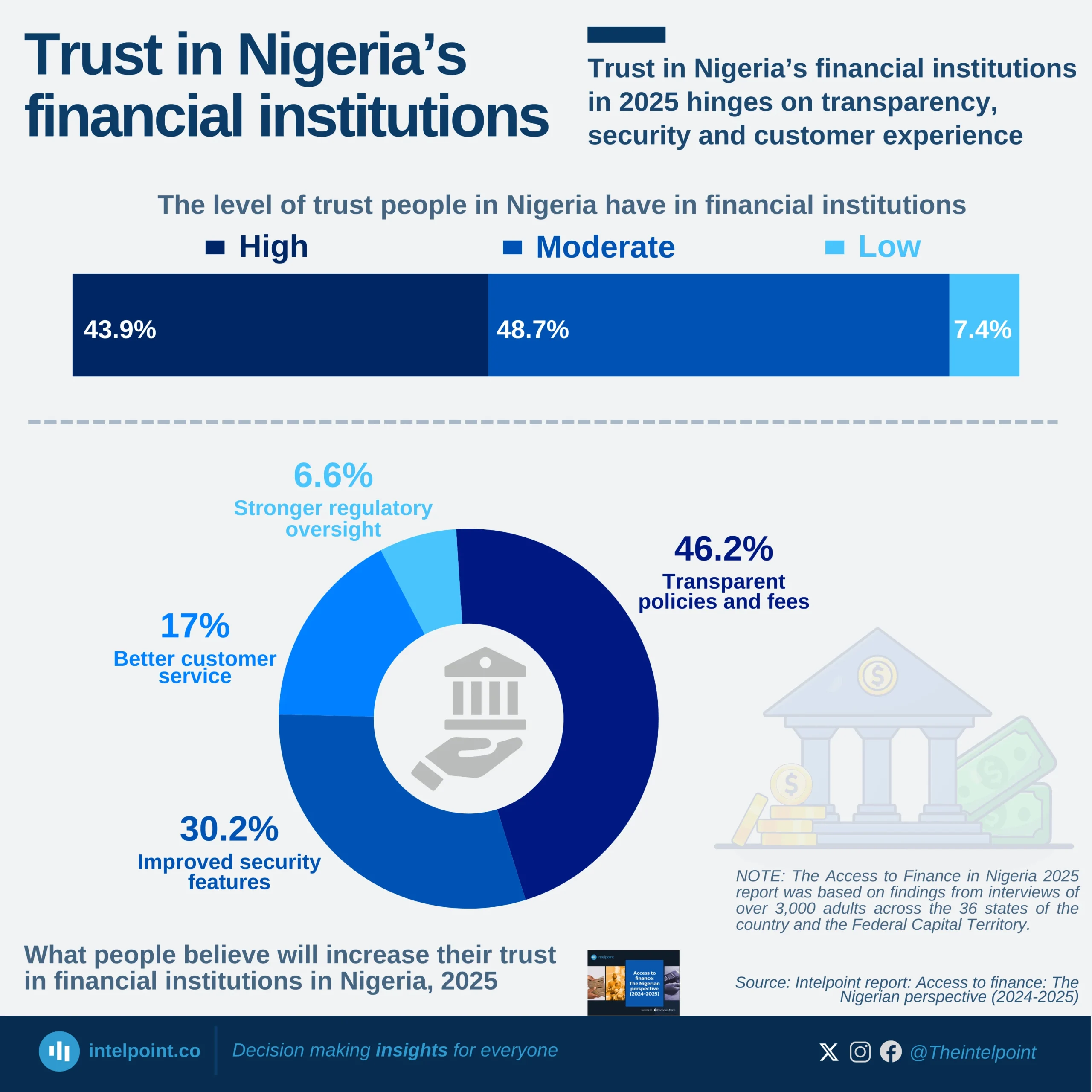
Trust in Nigeria’s financial institutions in 2025 hinges on transparency, security and customer experience

Key Takeaways

  • Majority trust will be moderate to high: 92.6% of Nigerians are expected to have either high (43.9%) or moderate (48.7%) trust in financial institutions by 2025.
  • Transparency is the biggest driver of trust as 46.2% of respondents believe transparent policies and fees will most improve their trust.
  • Security is a rising priority; 30.2% of Nigerians highlight improved security features as a key factor in strengthening confidence in financial institutions.
  • Customer service and regulation still matter as 17% emphasise better customer service and 6.6% stronger regulatory oversight, showing that while oversight has a role, people prioritise fairness, safety, and service.

In 2025, Nigeria’s financial landscape sees a broadly positive shift in public trust, with nearly all adults expected to show either high or moderate confidence in financial institutions. Transparency emerges as the strongest foundation for building trust, as almost half of Nigerians highlight clear policies and fair fees as the most important factor. At the same time, security is becoming a central concern, with nearly a third pointing to stronger safeguards as essential in a digital-first financial environment.

Customer service continues to carry weight, with one in six Nigerians underscoring the need for more responsive and reliable support. Meanwhile, only a small share emphasise stronger regulation, suggesting that Nigerians place more value on day-to-day clarity, fairness, and safety rather than oversight alone. This indicates that for banks and financial service providers in Nigeria, building lasting trust will require more than compliance. It will also demand transparency, robust security, and customer-centric service delivery as the true cornerstones of loyalty and confidence.
Source:

Intelpoint report: Access to finance: The Nigerian perspective (2024-2025)

Period:

2024 - 2025
HTML code to embed chart
Want a bespoke report?
Reach out
Tags
Related Insights

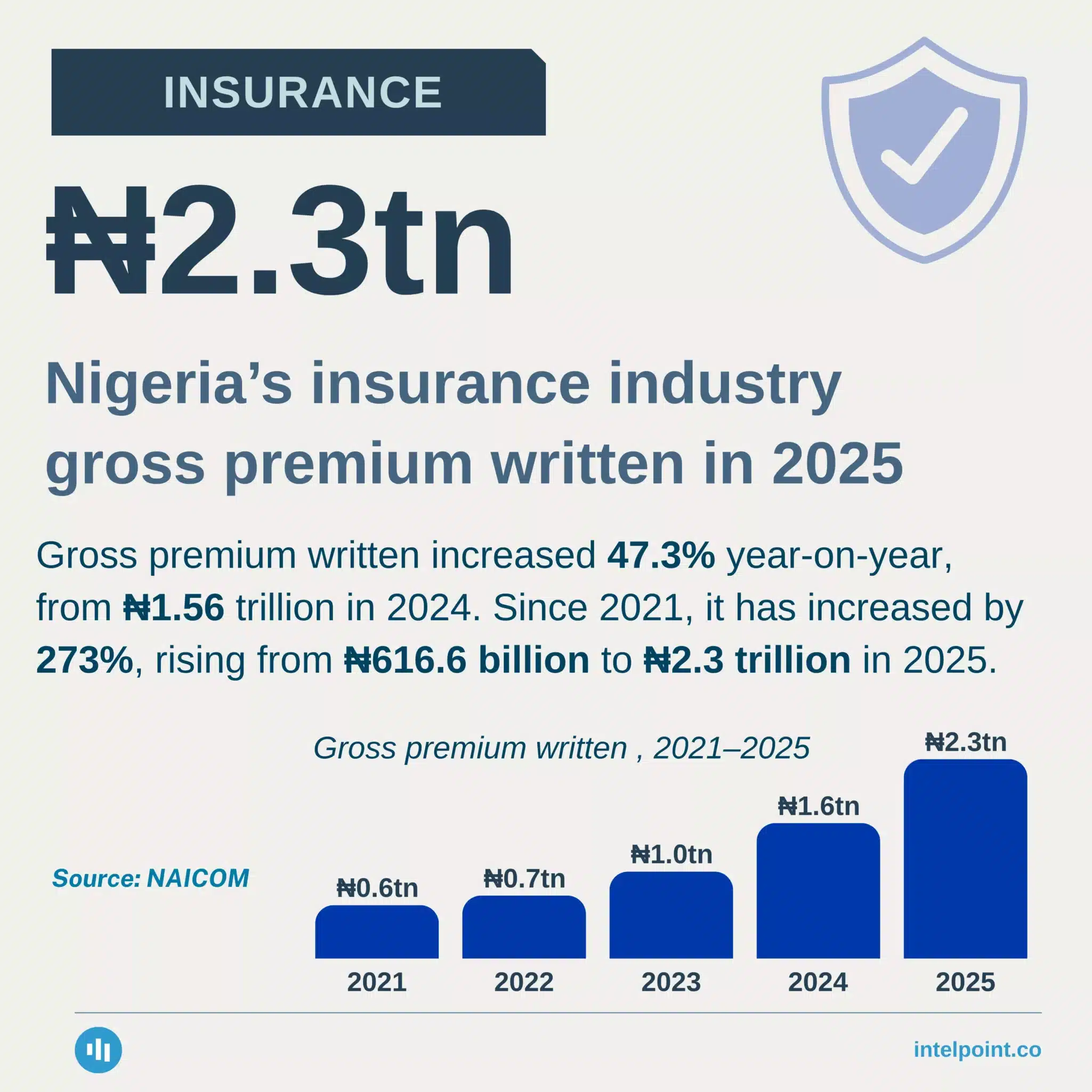
Nigeria’s insurance industry gross premium written in 2025
  • Nigeria's insurance industry generated ₦2.3 trillion in gross premium written in 2025.
  • Gross premium written increased 47.3% from ₦1.56 trillion in 2024.
  • Premiums have grown by 273% since 2021, from ₦616.6 billion.
  • Gross premium written has increased every year since 2021.
  • Premium growth does not necessarily mean higher insurance coverage or profitability.

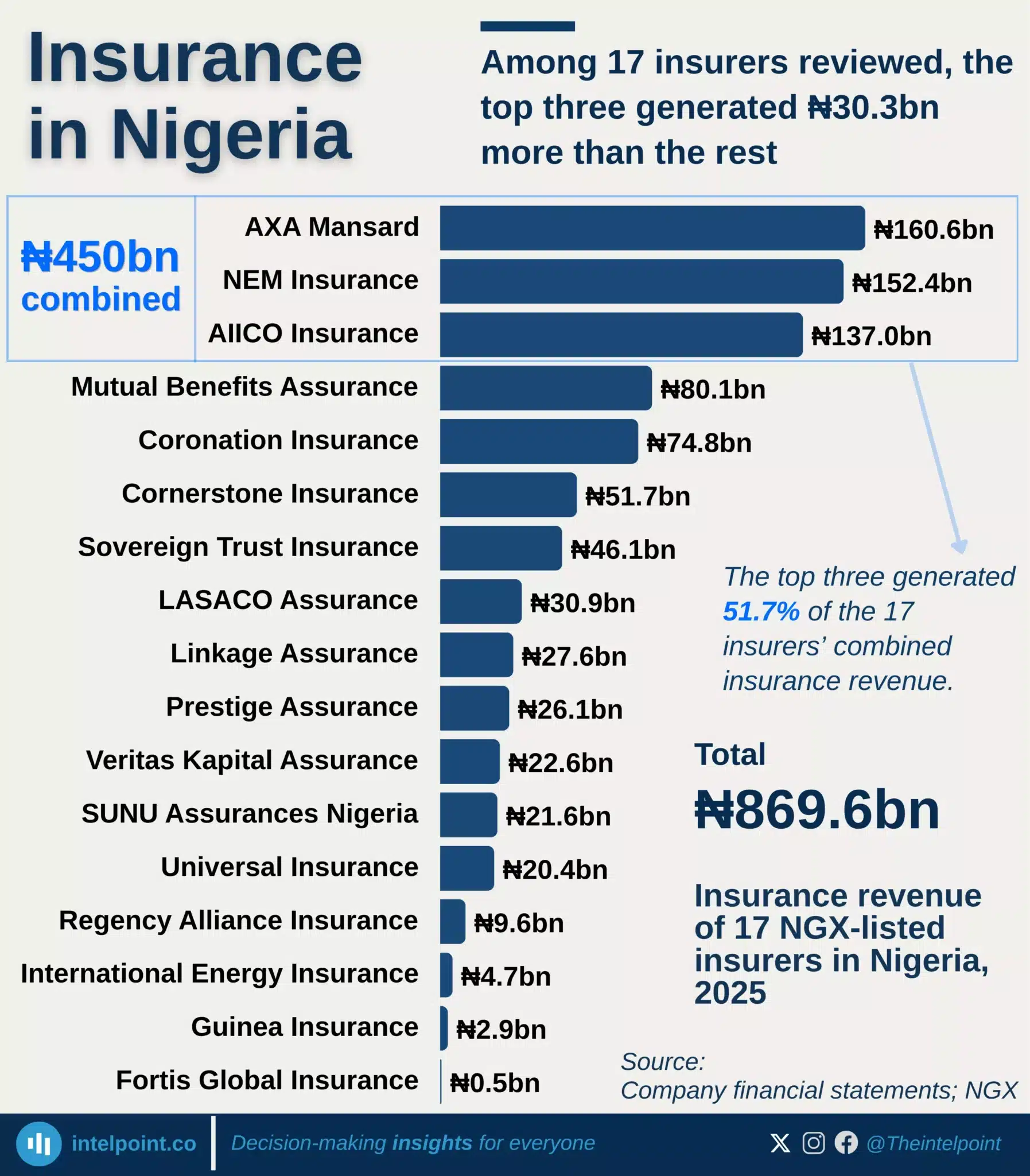
Among 17 insurers reviewed, the top three generated ₦30.3bn more than the rest
  • AXA Mansard, NEM Insurance and AIICO generated 51.7% of the combined revenue of 17 NGX-listed insurers.
  • The top three earned ₦449.9 billion, ₦30.3 billion more than the other 14 insurers combined.
  • The 17 insurers generated a combined ₦869.6 billion in insurance revenue in 2025.
  • AXA Mansard recorded the highest insurance revenue at ₦160.6 billion.
  • Revenue rose at 15 insurers, but only four reported higher profits.

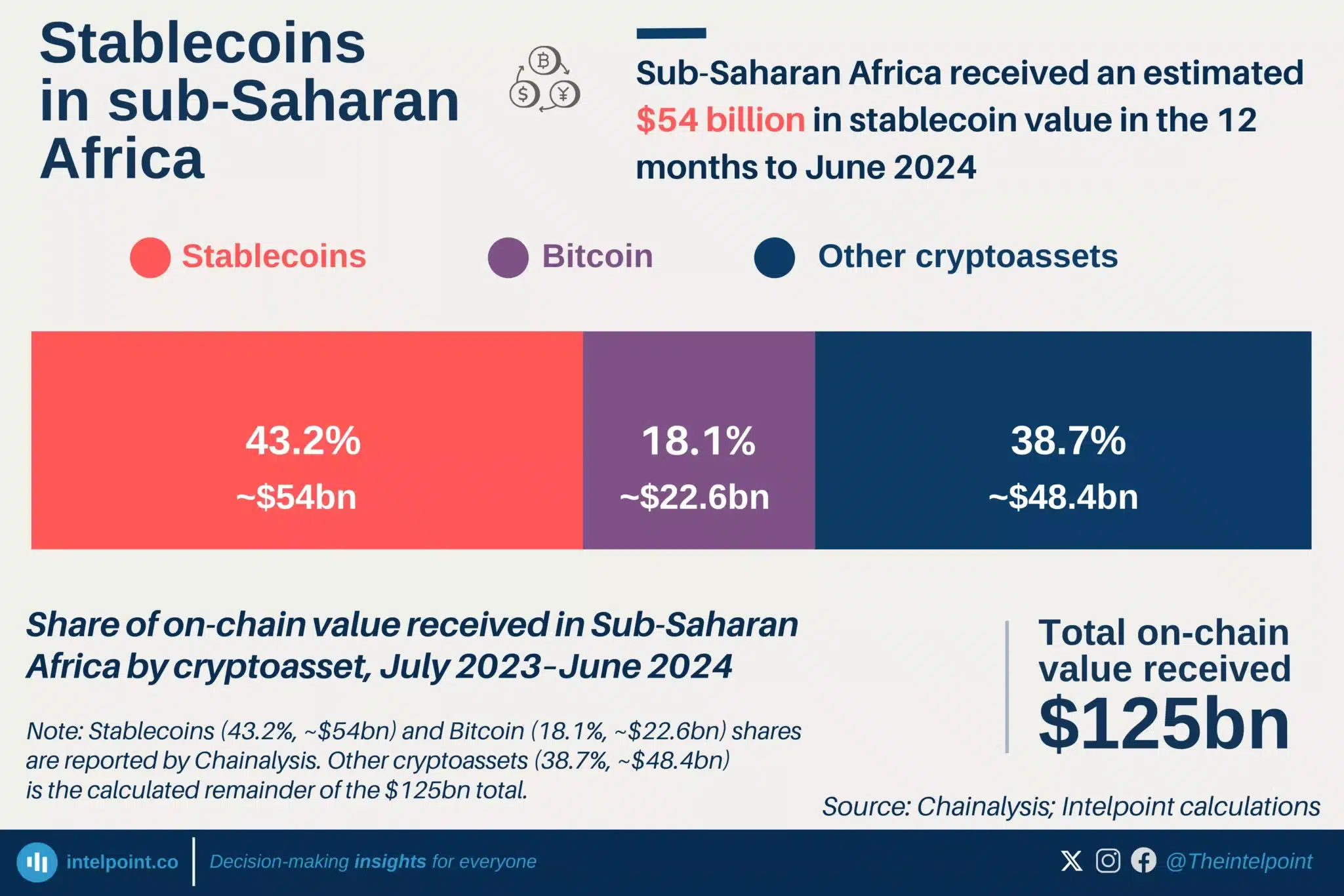
Sub-Saharan Africa received an estimated $54 billion in stablecoin value in the 12 months to June 2024
  • Total received: $125 billion in on-chain value.
  • Stablecoin value: $54 billion, representing 43.2%.
  • Bitcoin comparison: Stablecoins received more than twice Bitcoin’s value.
  • Key driver: Currency depreciation and limited dollar access.

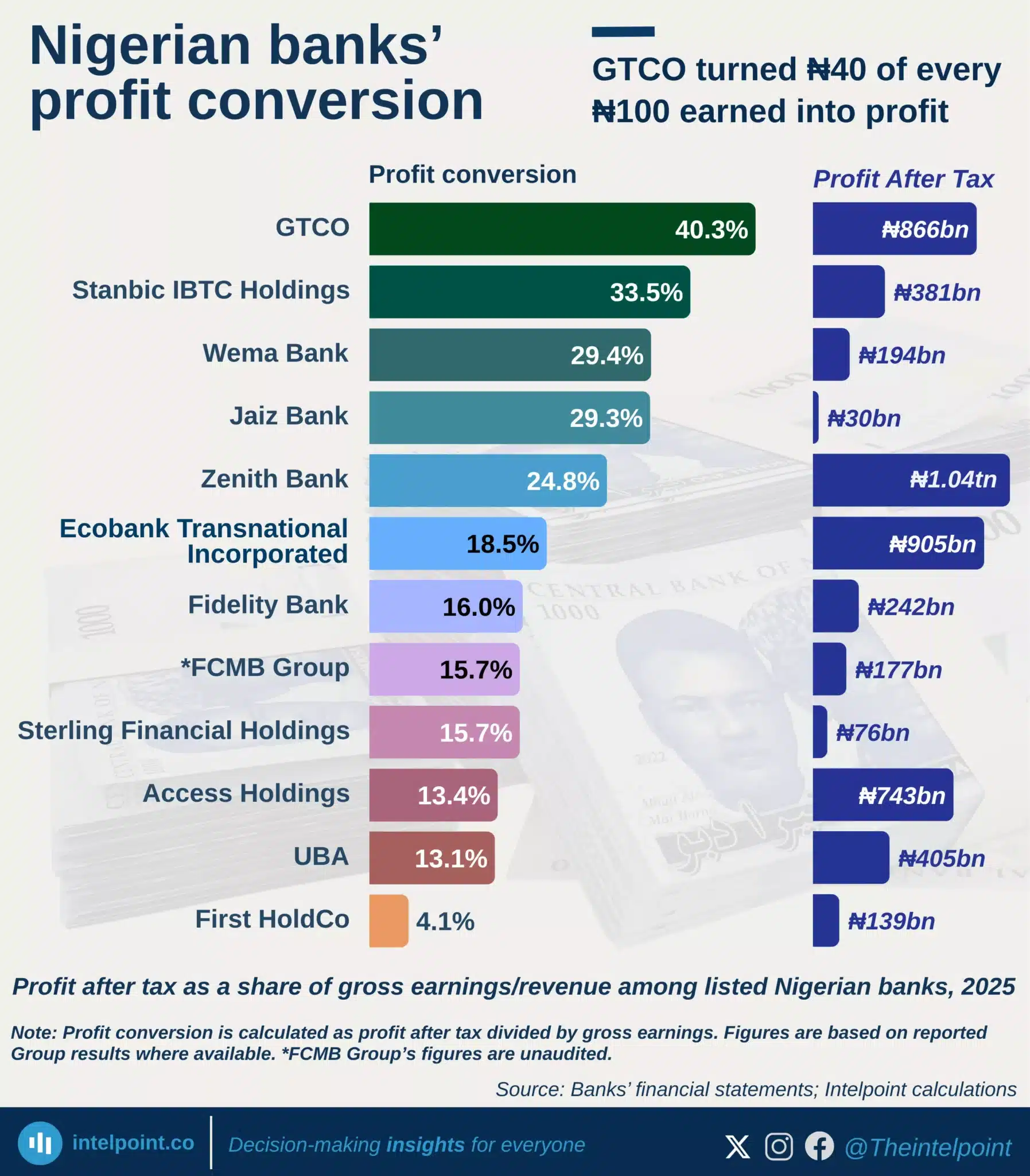
GTCO turned ₦40 of every ₦100 earned into profit
  • GTCO had the strongest profit conversion in 2025.
  • GTCO turned about ₦40 of every ₦100 earned into profit.
  • Stanbic IBTC followed with about ₦34 profit per ₦100 earned.
  • Zenith made the highest profit, but not the strongest conversion.
  • First HoldCo had the weakest profit conversion among the banks reviewed.
 

Kenyan banks’ non-performing loan ratios fell, with KCB’s ratio down 2.9 points
  • All eight selected Kenyan banks reduced their NPL ratios in 2025.
  • KCB recorded the largest improvement, with a 2.9% point drop.
  • KCB still had the highest NPL ratio in the group at 16.9%.
  • Co-operative Bank remained highly stressed at 15.7%, despite some improvement.
  • Equity Bank and Absa Bank Kenya both ended 2025 at 11.5%.
  • Standard Chartered Kenya had the lowest NPL ratio in the group at 5.5%.

Despite allocating more funds than in 2020, Nigeria's defence budget share falls back to 9% in 2026, matching the 2020 low
  • Nominal spending surged, but inflation and naira depreciation eroded real gains. From ₦921 billion in 2012 to ₦6.57 trillion in 2025, the absolute figure may seem dramatic, but Nigeria's security challenges intensified over the same period.
  • Defence commanded over 21% of the budget in 2013. From 2024 to 2026, that figure has fallen below 14%, with 2026 hitting a historic low of 9.3%.
  • Boko Haram, banditry, and separatist tensions peaked in 2020, resulting in a cut that saw defence's share fall to just 9.2%, the lowest on record at that point.
  • The jump to ₦6.57trn (13.2%) in 2025 marks the sharpest year-on-year absolute increase in the dataset. But 2026 reversed this again, with the rate dropping to 9.3%.

POPULAR TOPICS
SIGN UP TO OUR NEWSLETTER
Get periodic updates about the African startup space, access to our reports, among others.
Subscribe Here
Subscription Form

A product of Techpoint Africa. All rights reserved