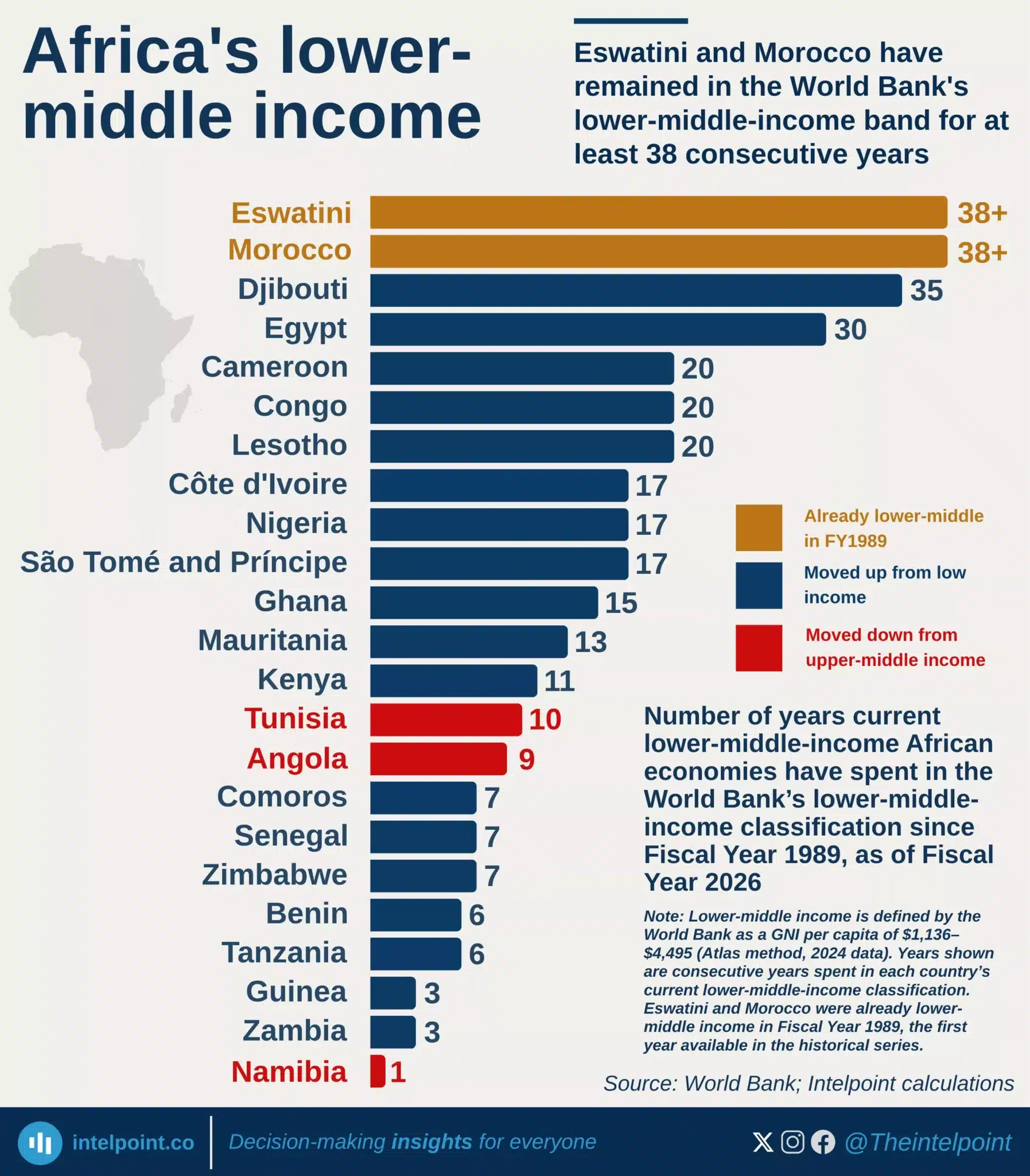
Eswatini and Morocco have remained in the World Bank's lower-middle-income band for at least 38 consecutive years

  • Nigeria has remained in the World Bank’s lower-middle-income category for 17 consecutive years.
  • Eswatini and Morocco have spent at least 38 consecutive years in the category, the longest among African countries.
  • Africa has 23 lower-middle-income economies in the World Bank’s Fiscal Year 2026 classification.
  • Tunisia, Angola, and Namibia entered the category after falling from upper-middle-income status.

Nigeria has spent 17 consecutive years in the World Bank's lower-middle-income band, making it one of the longest-standing economies in the category.

Eswatini and Morocco have remained there for at least 38 consecutive years, while Djibouti and Egypt have spent 35 and 30 years respectively.

Africa has 23 lower-middle-income economies in the World Bank's Fiscal Year 2026 classification. Most entered from low income, but Tunisia, Angola, and Namibia were downgraded from upper-middle income.
Source:

World Bank; Intelpoint calculations

Period:

1989-2026
HTML code to embed chart
Want a bespoke report?
Reach out
Tags
Related Insights

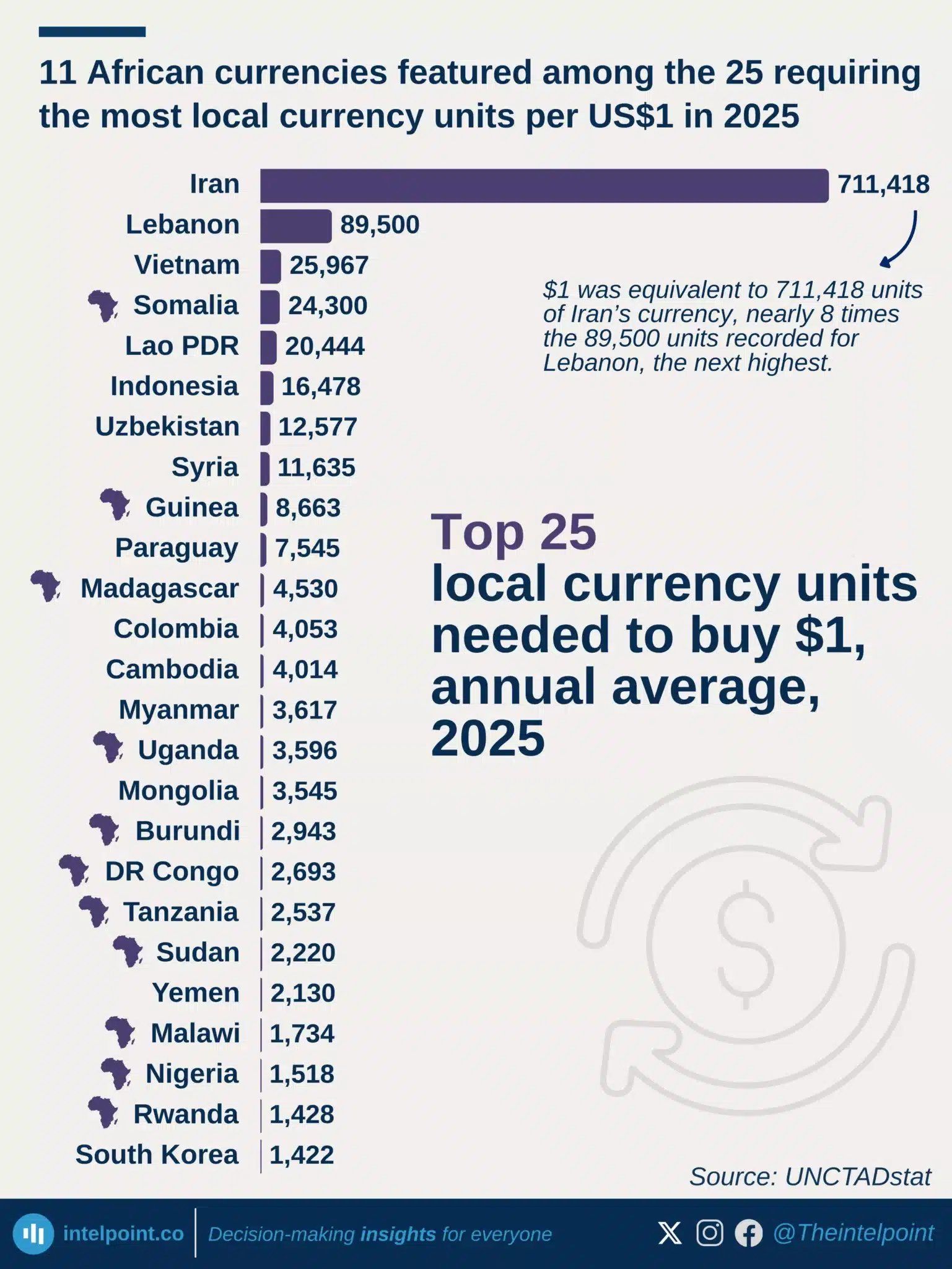
11 African currencies featured among the 25 requiring the most local currency units per US$1 in 2025
  • 11 African currencies featured among the 25 listed.
  • Somalia had the highest exchange rate among the African currencies highlighted, at 24,300 shillings per US$1.
  • Nigeria’s naira averaged ₦1,518 per US$1 in 2025.
  • 7 of the 11 African countries were in Eastern Africa, based on the UN M49 subregional classification.
  • Iran was the global outlier, averaging 711,418 rials per US$1, nearly eight times Lebanon’s 89,500.

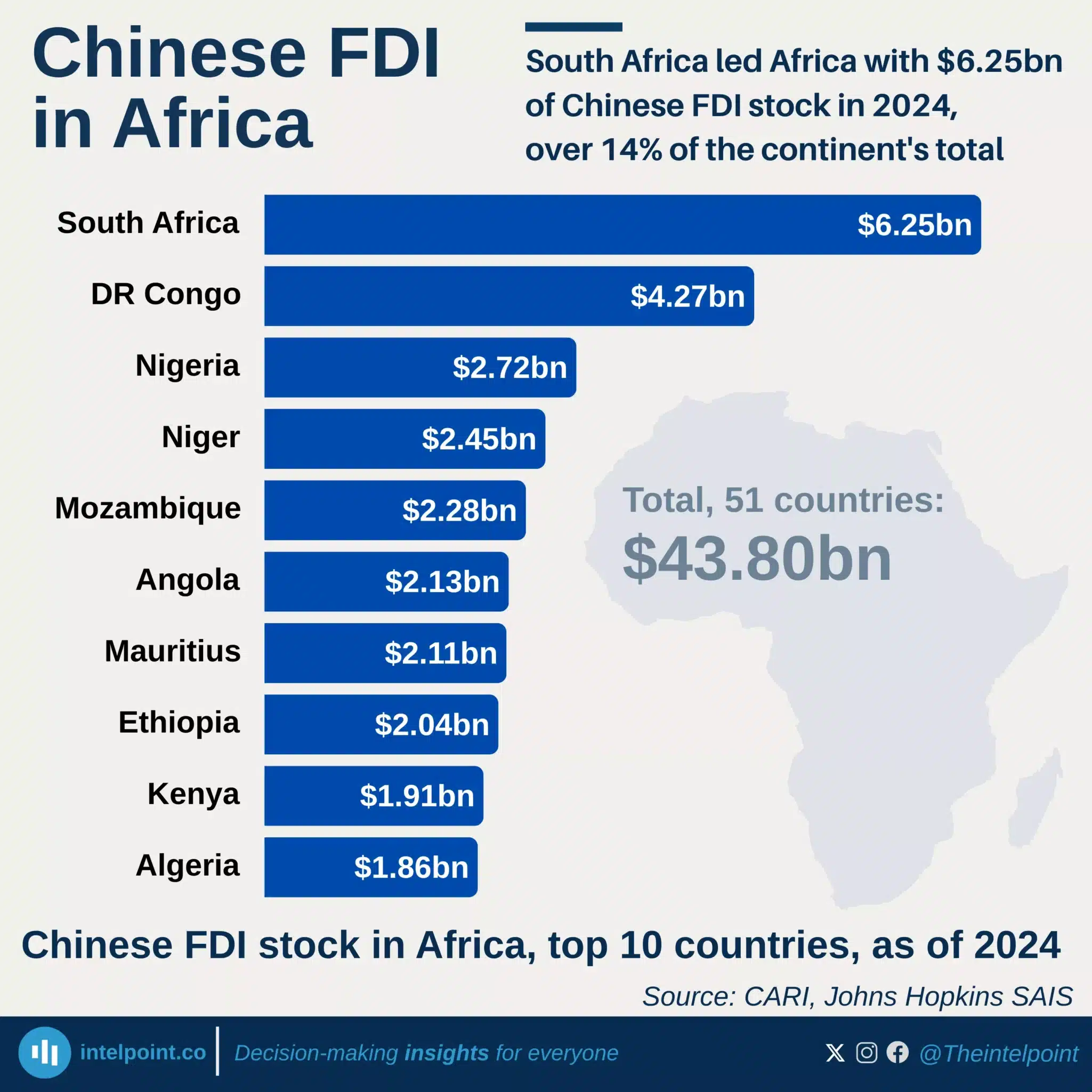
South Africa led Africa with $6.25bn of Chinese FDI stock in 2024, over 14% of the continent's total
  • South Africa held the largest Chinese FDI stock in Africa at $6.25 billion in 2024.
  • South Africa, DR Congo and Nigeria held 30% of Africa’s Chinese FDI stock.
  • The top 10 countries accounted for 64% of the continent’s total Chinese FDI stock.
  • Niger led the remaining top 10 countries with $2.45 billion, followed by Mozambique at $2.28 billion.

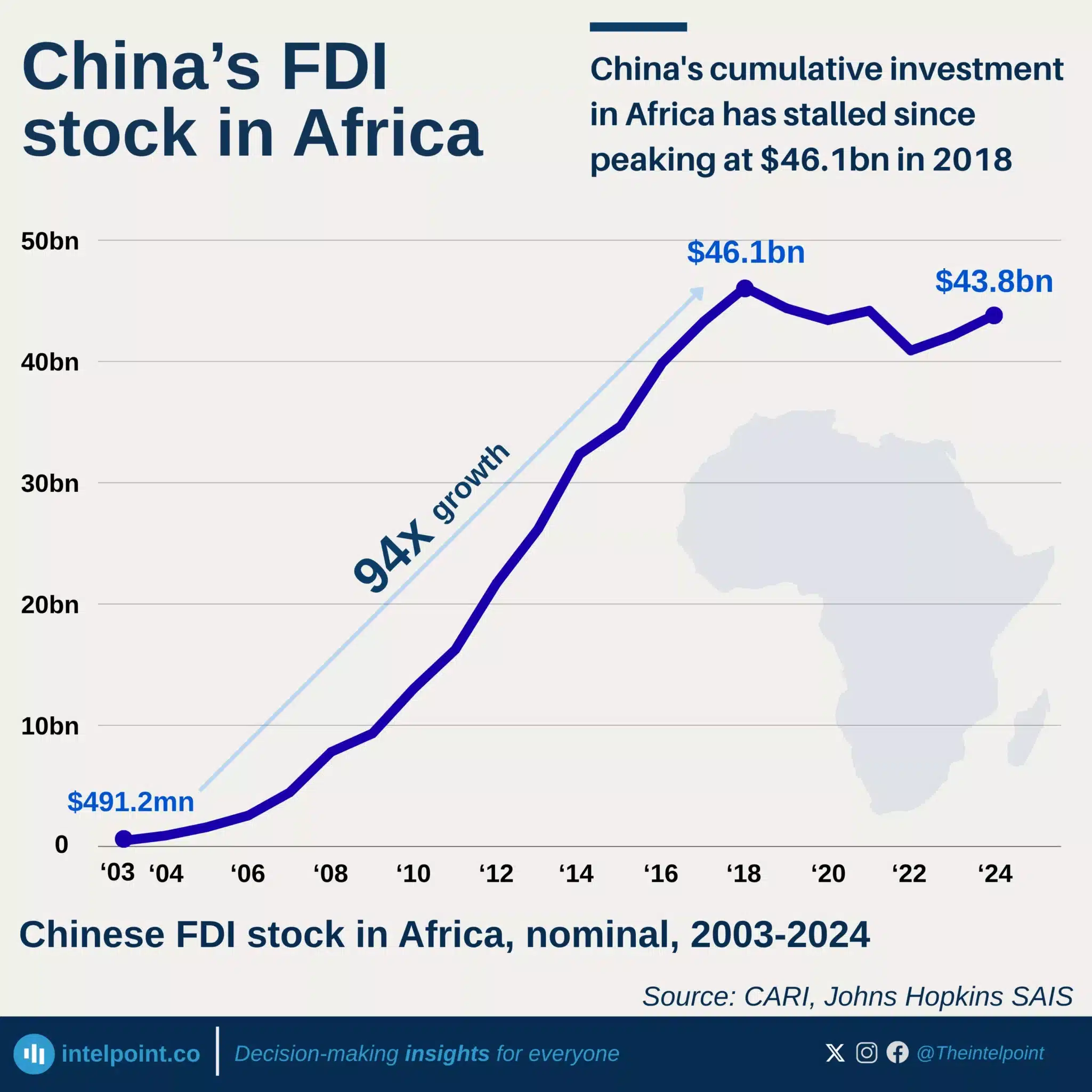
China's cumulative investment in Africa has stalled since peaking at $46.1bn in 2018
  • China's FDI stock in Africa rose 94-fold, from $491 million in 2003 to $46.1 billion in 2018.
  • By 2024, the stock had recovered to $43.8 billion, still 5% below its 2018 peak.
  • Africa accounted for just 1.4% of China's $3.14 trillion global FDI stock in 2024.
  • Nigeria's Chinese FDI stock fell from a 2017 peak of $2.86 billion to $2.72 billion in 2024.
  • African countries recorded a net $2.31 billion decline in Chinese FDI stock between 2018 and 2024.
  • Niger recorded the largest increase, from $758 million in 2018 to $2.45 billion in 2024.
  • Zambia recorded the largest decline, from $3.52 billion in 2018 to $1.70 billion in 2024.

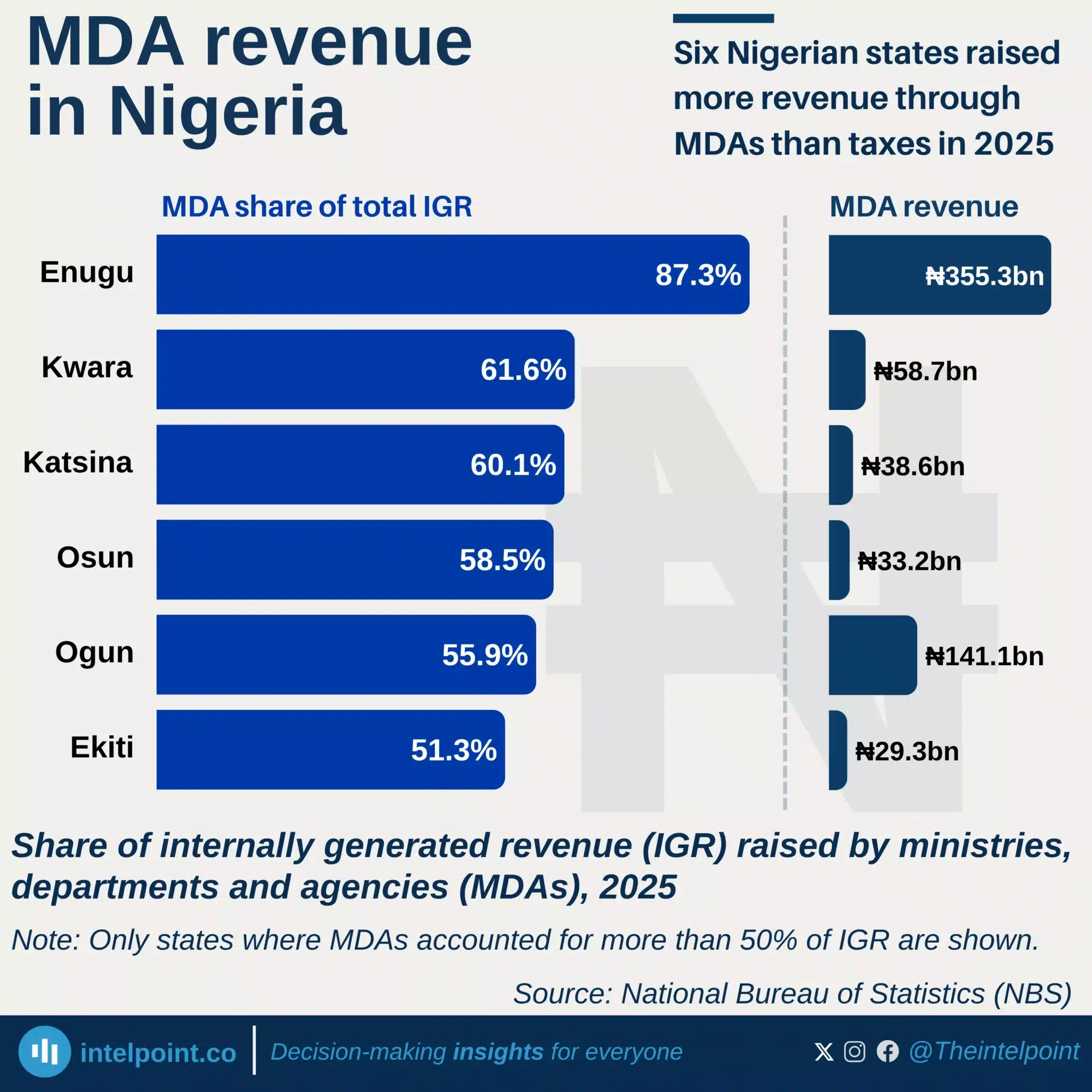
Six Nigerian states raised more revenue through MDAs than taxes in 2025
  • Six states generated about ₦656 billion through MDAs in 2025, nearly half of all MDA revenue.
  • The number of states where MDAs accounted for over half of IGR fell from seven in 2024 to six in 2025.
  • Enugu’s MDA share rose from 82.9% in 2024 to 87.3% in 2025, widening its lead.
  • Kwara, Katsina and Osun recorded MDA shares of 61.6%, 60.1% and 58.5%, respectively.

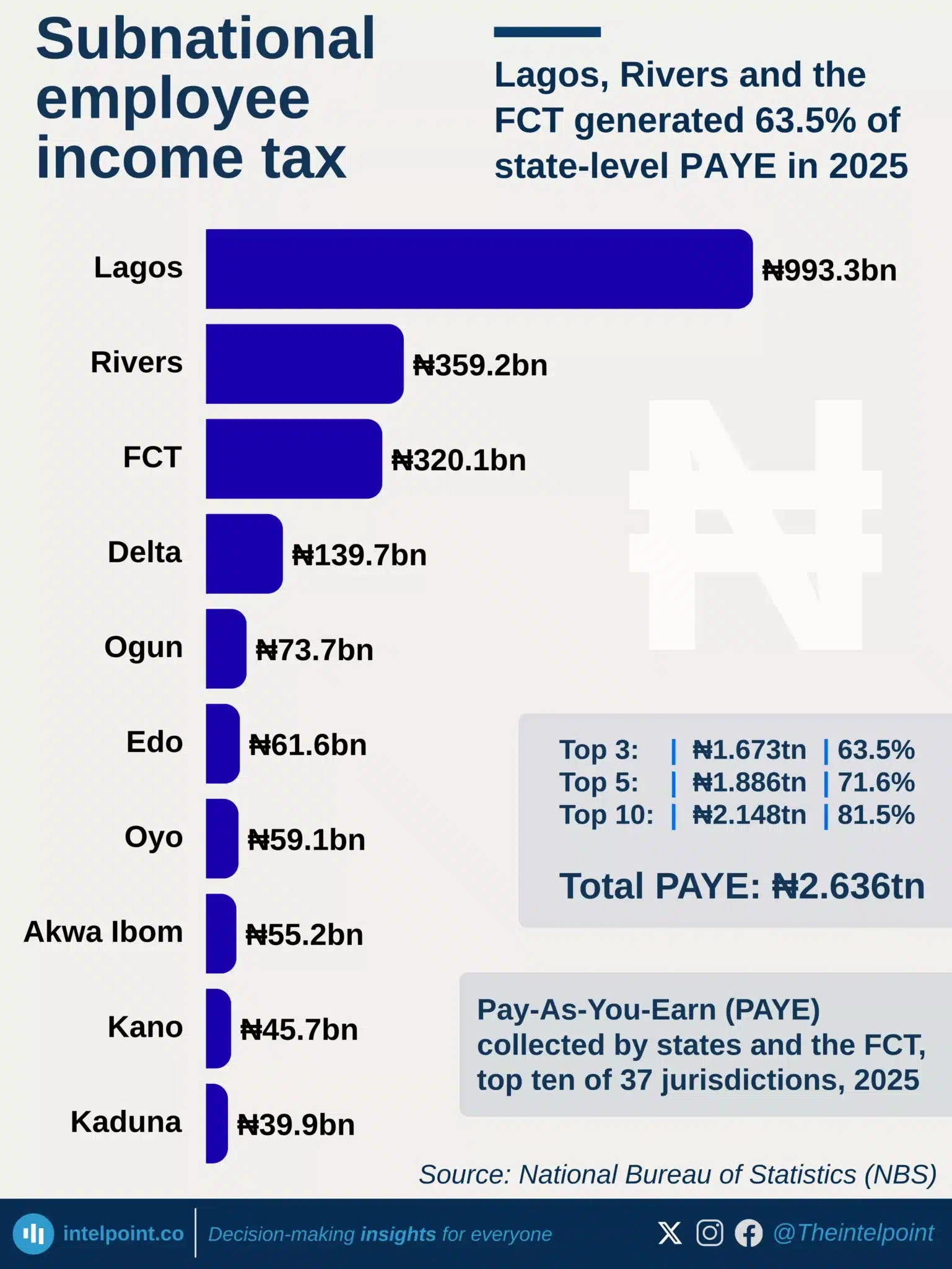
Lagos, Rivers and the FCT generated 63.5% of state-level PAYE in 2025
  • Lagos, Rivers and the FCT collected 63.5% of state-level PAYE in 2025.
  • Lagos collected ₦993.3 billion in PAYE, more than the next five jurisdictions combined.
  • The top 10 jurisdictions accounted for 81.5% of ₦2.636 trillion in total PAYE.
  • The bottom five jurisdictions collected ₦47.0 billion combined, less than 2% of the total.
  • Delta collected ₦139.7 billion, less than half of the FCT’s ₦320.1 billion.

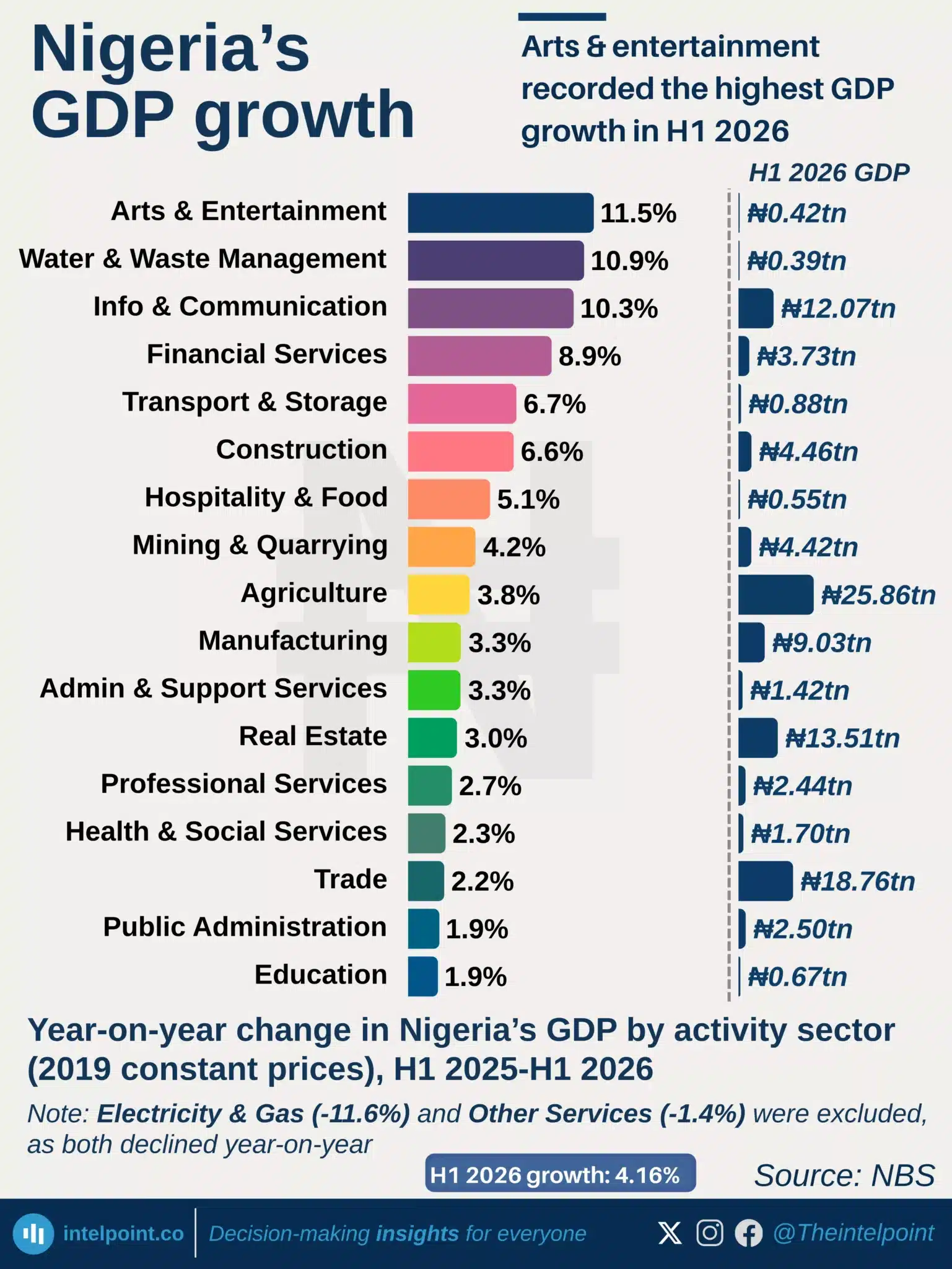
Arts & entertainment recorded the highest GDP growth in H1 2026
  • Nigeria’s economy grew 4.16% in H1 2026, but growth was uneven across sectors.
  • Arts and entertainment grew fastest at 11.5%, followed by water and waste management (10.9%) and information and communication (10.3%).
  • Agriculture, which accounts for about a quarter of GDP, grew 3.8%, below the headline rate.
  • Trade and real estate also lagged, growing 2.2% and 3.0%, respectively.
  • Electricity and gas was the biggest drag, contracting 11.6%, while Other Services fell 1.4%.

POPULAR TOPICS
SIGN UP TO OUR NEWSLETTER
Get periodic updates about the African startup space, access to our reports, among others.
Subscribe Here
Subscription Form

A product of Techpoint Africa. All rights reserved