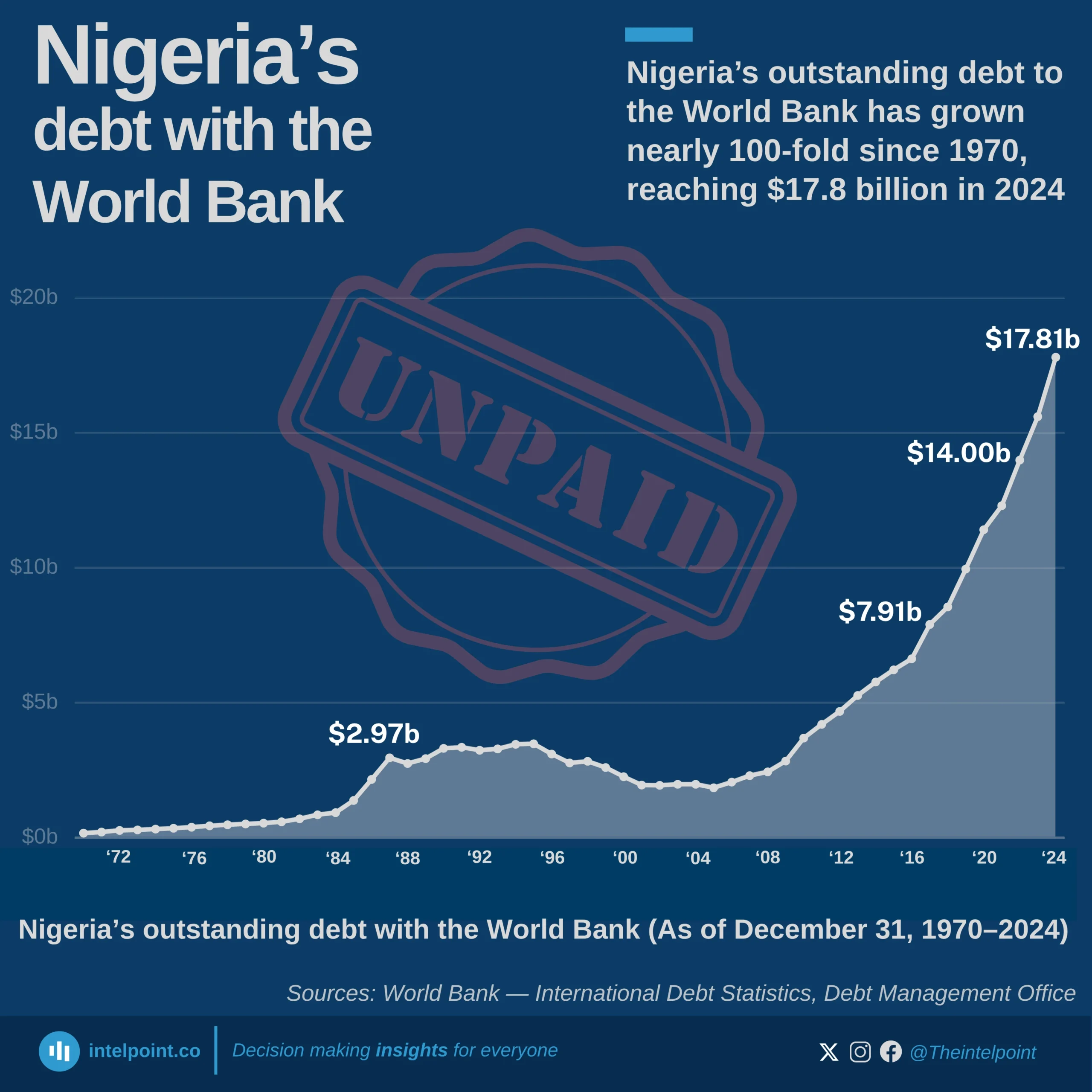
Nigeria’s outstanding debt to the World Bank has grown nearly 100-fold since 1970, reaching $17.8 billion in 2024

Key Takeaways

  • Nigeria’s outstanding debt to the World Bank rose from $180 million in 1970 to $17.81 billion in 2024, a nearly 100-fold increase in 54 years.
  • The balance remained below $5 billion until 2013, but more than tripled between 2013 and 2024, signalling accelerated reliance on multilateral credit.
  • From 2020 to 2024, the outstanding debt rose by $6.4 billion, the sharpest five-year surge on record.
  • The figures reflect a steady accumulation of obligations, driven by long-term borrowing and slower repayment relative to disbursement.

Nigeria’s outstanding debt to the World Bank stood at $180 million in 1970. Over the next three decades, it increased gradually, reaching around $3.49 billion by 1995. The balance dipped slightly in the early 2000s, settling below $2 billion by 2001, before beginning a new upward trend.

By 2010, the figure crossed $3.7 billion and continued climbing steadily. The sharpest buildup occurred in the last decade: from $5.28 billion in 2013 to $17.81 billion in 2024. That’s an increase of over $12.5 billion in just 11 years. This pattern reflects Nigeria’s expanding portfolio of World Bank loans and projects, as well as slower reductions in debt stock over time, leaving the country with significantly larger outstanding obligations at year-end.
Source:

World Bank - Investment debt statistics, Debt management office

Period:

1970 - 2024
HTML code to embed chart
Want a bespoke report?
Reach out
Tags
Related Insights

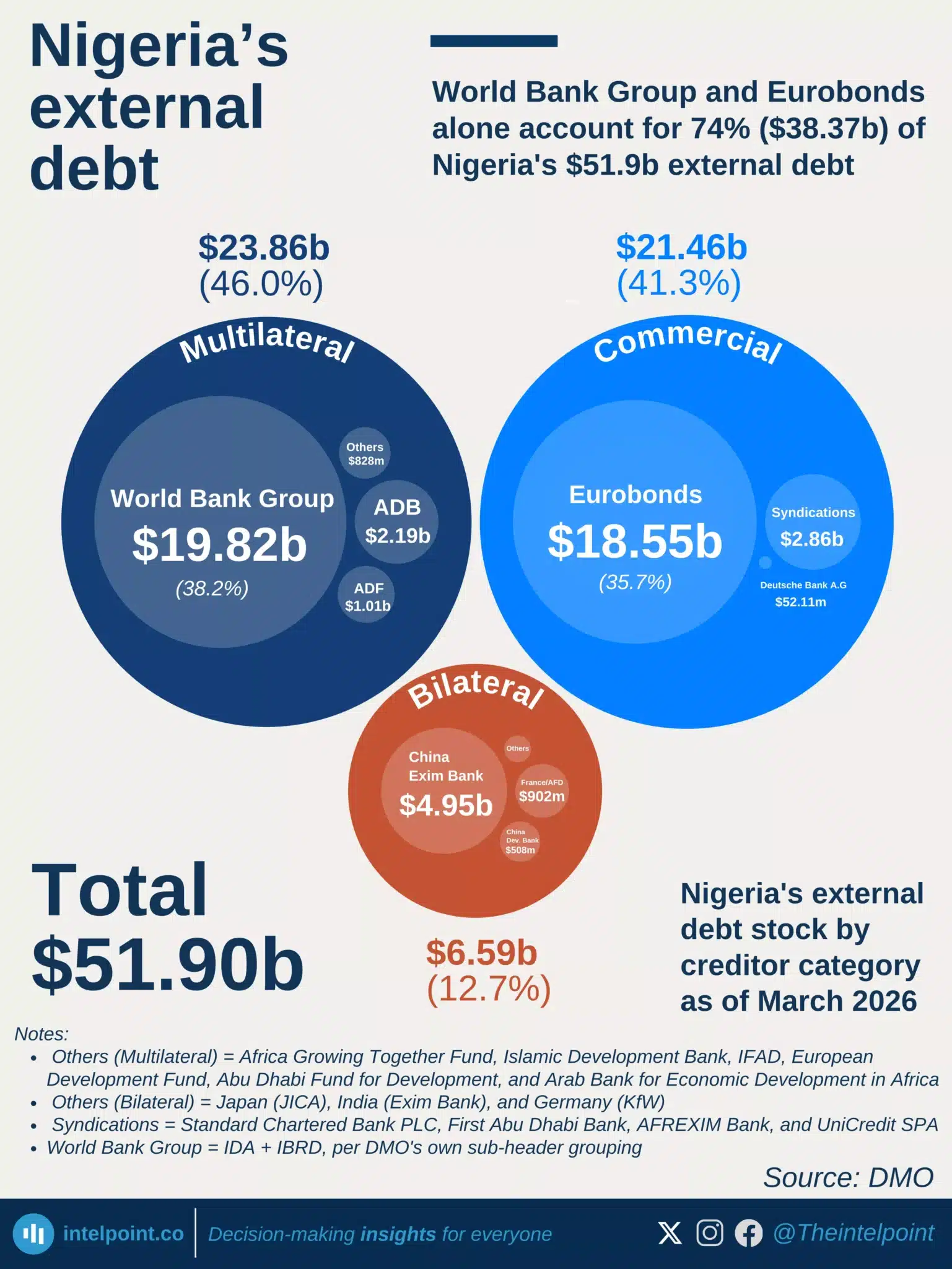
World Bank Group and Eurobonds alone account for 74% ($38.37b) of Nigeria's $51.9b external debt
  • Nigeria’s external debt stood at $51.90 billion as of March 2026.
  • External debt increased by just 0.09% from December 2025.
  • Multilateral creditors held the largest share at 46.0%.
  • Commercial creditors accounted for 41.3% of external debt.
  • Bilateral creditors accounted for 12.7% of external debt.
  • The World Bank Group accounted for 38.2% of total external debt.
  • Eurobond holders accounted for 35.7% of total external debt.
  • The World Bank Group and Eurobond holders together accounted for 73.9% of Nigeria’s external debt.
  • Bilateral debt fell by $130 million from December 2025 to March 2026.
  • Commercial external debt increased by about $1.1 billion over the same period.

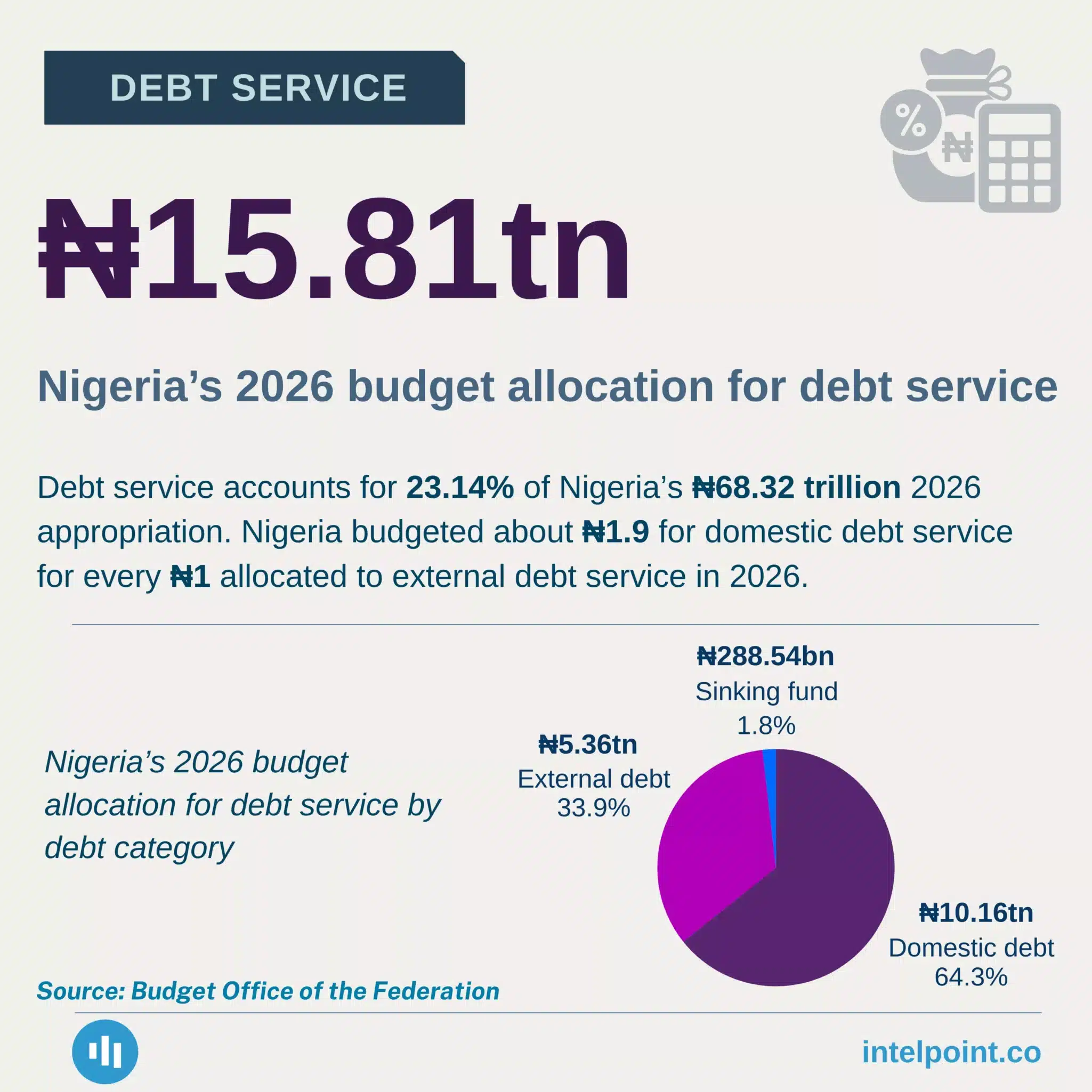
Debt service accounts for 23.14% of Nigeria’s ₦68.32 trillion 2026 appropriation
  • Debt service takes 23.14% of Nigeria’s 2026 budget.
  • Domestic debt service accounts for 64.3% of the debt-service allocation.
  • Domestic debt service is nearly twice the external debt-service allocation.
  • The sinking fund receives just 1.8% of the debt-service allocation.
  • Domestic debt service is more than 35 times the sinking-fund allocation.
  • Debt service totals ₦15.81 trillion in the 2026 budget.

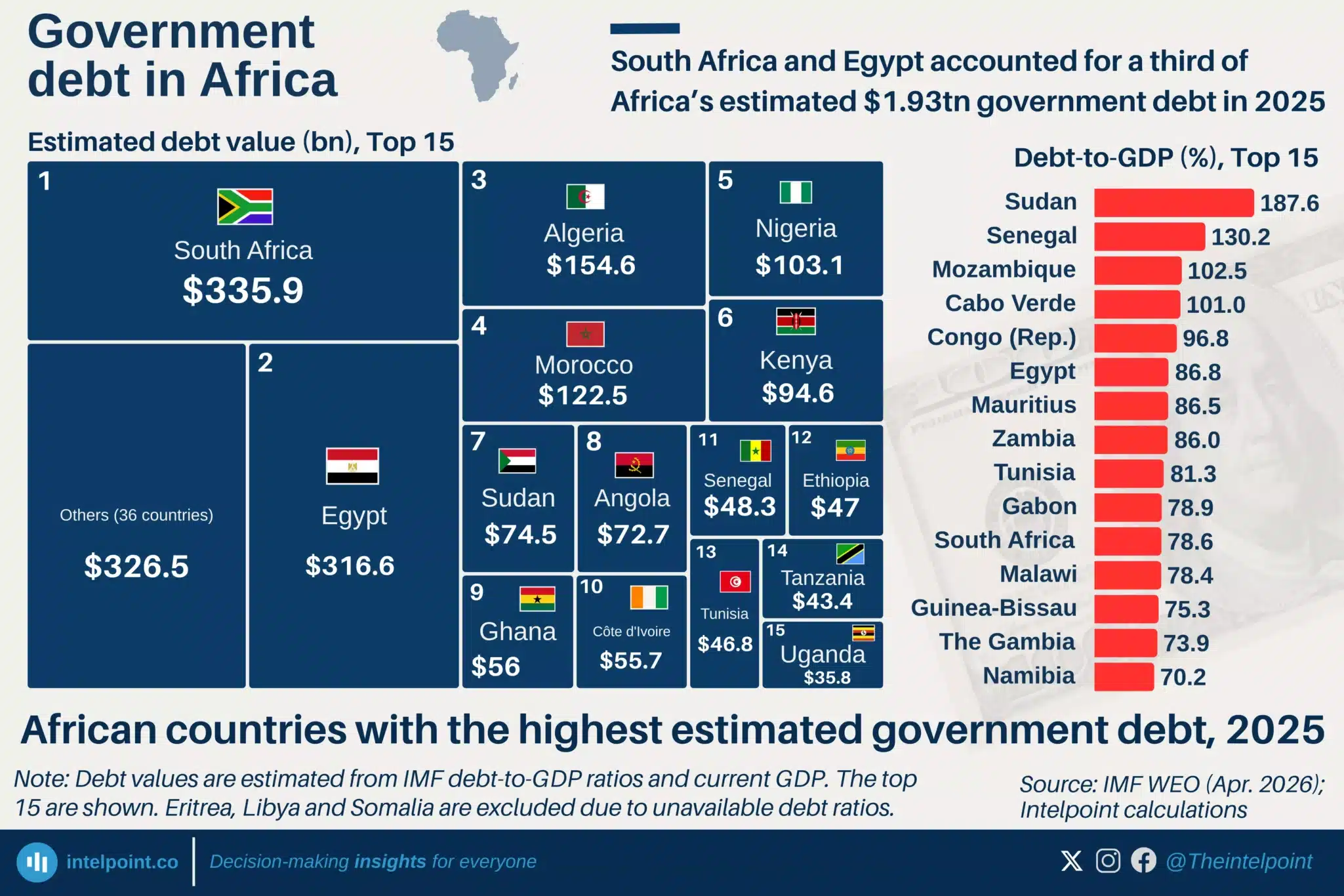
South Africa and Egypt accounted for a third of Africa’s estimated $1.93tn government debt in 2025
  • Government debt across 51 African countries was estimated at $1.93 trillion in 2025.
  • South Africa and Egypt had the largest estimated stocks and jointly accounted for 33.8% of the total.
  • Sudan had the highest debt-to-GDP ratio at 187.6%, followed by Senegal at 130.2%.
  • The estimates use IMF debt ratios and current-dollar GDP, not national authorities’ reported debt stocks.
  • Differences in government coverage, instruments and valuation mean the figures are comparable estimates, not fully harmonised official data.

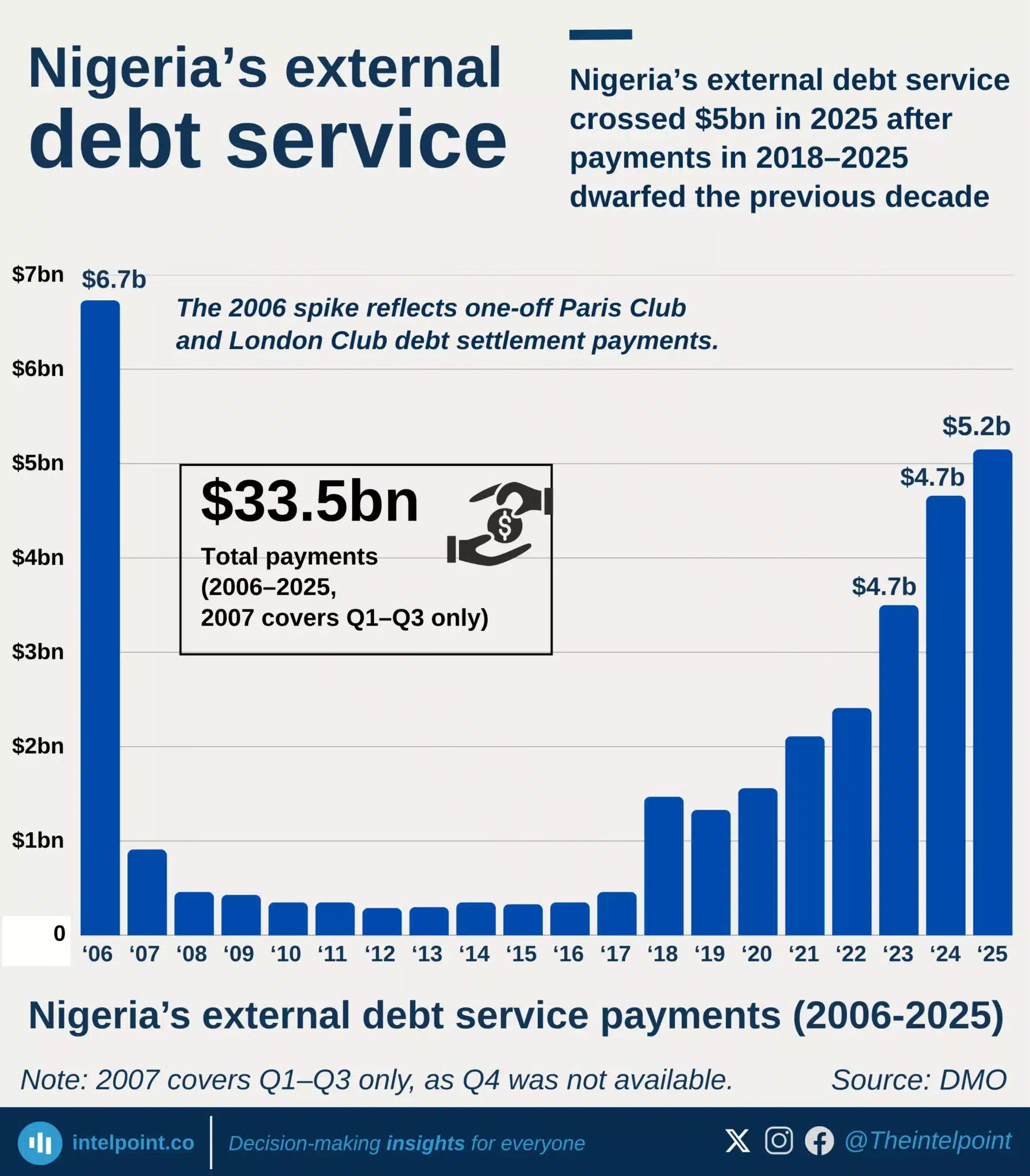
Nigeria’s external debt service crossed $5bn in 2025 after payments in 2018–2025 dwarfed the previous decade
  • Nigeria’s external debt service entered a heavier phase in 2018.
  • External debt service crossed $5bn in 2025.
  • Nigeria paid about $22.2bn from 2018 to 2025.
  • That was about 6x the $3.7bn paid from 2008 to 2017.
  • The 2006 spike reflects one-off debt settlement payments.

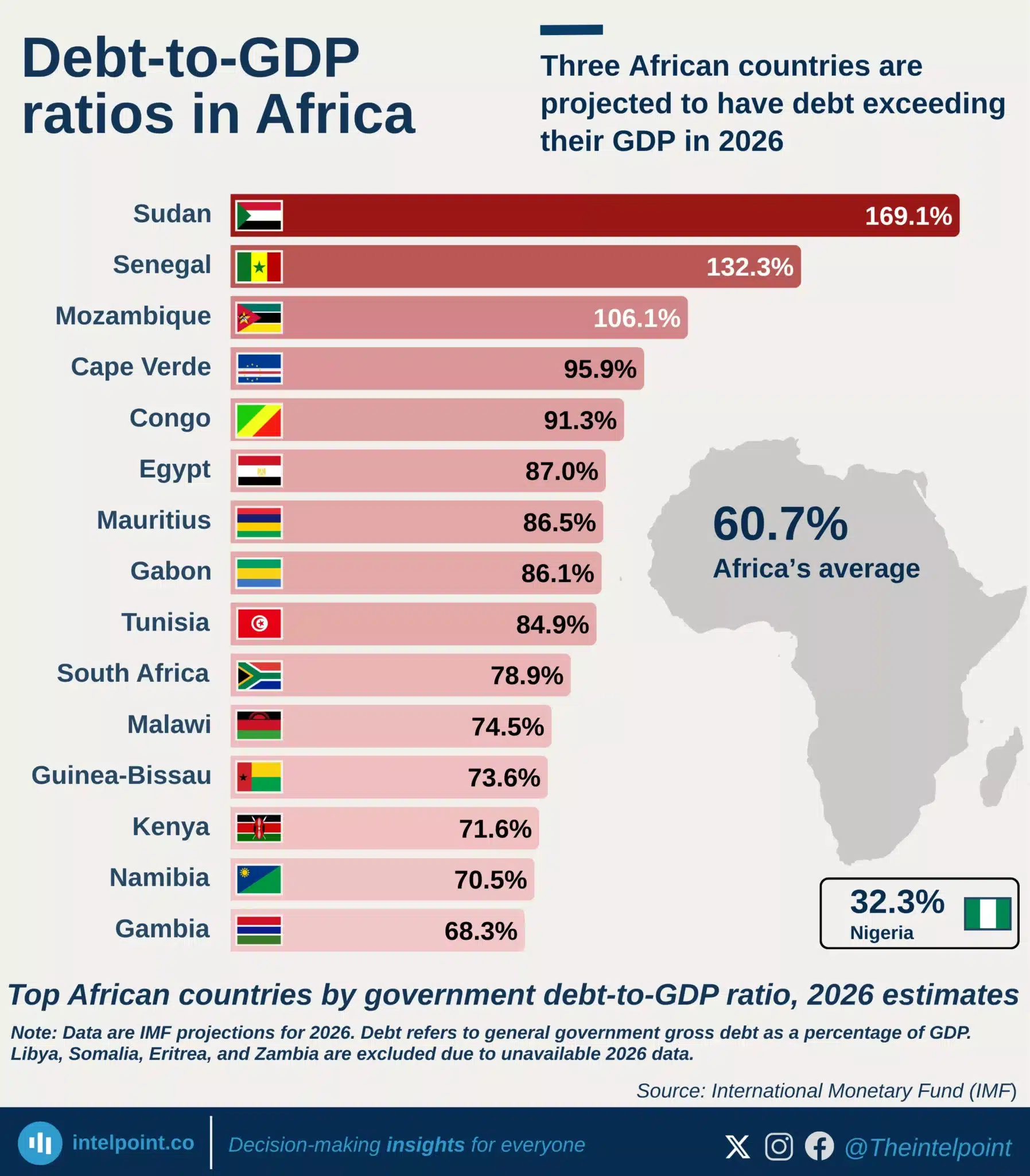
Three African countries are projected to have debt exceeding their GDP in 2026
  • Sudan is projected to have Africa’s highest debt-to-GDP ratio in 2026, at 169.1%.
  • Only three African countries are projected to owe more than the size of their economies in 2026.
  • Senegal and Mozambique join Sudan among countries with debt-to-GDP ratios above 100%.
  • Africa’s average government debt-to-GDP ratio is projected at 60.7% in 2026.
  • Nigeria’s projected debt-to-GDP ratio of 32.3% is far below the African average.

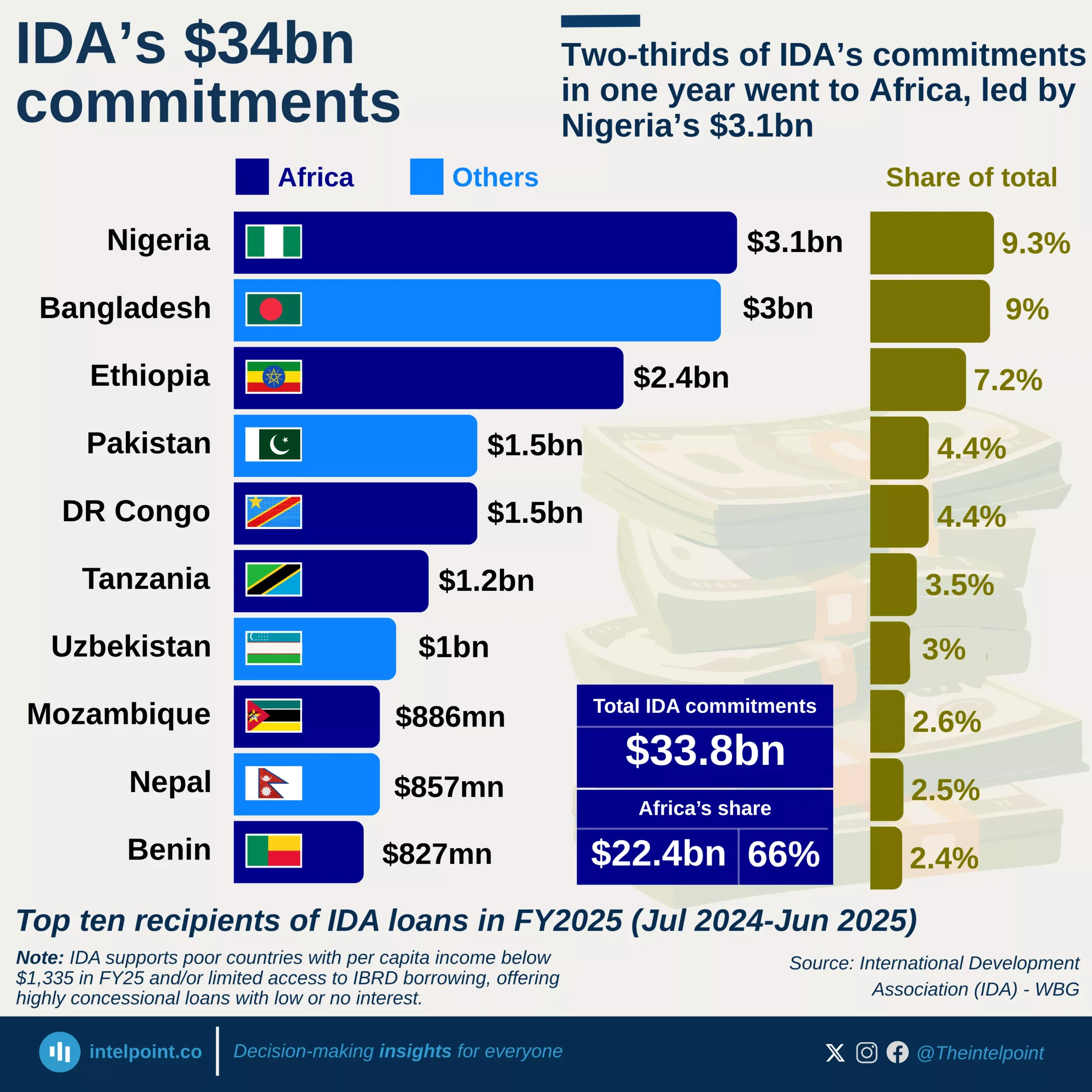
Two-thirds of IDA’s commitments in one year went to Africa, led by Nigeria’s $3.1bn
  • Africa received 66% of IDA’s FY2025 commitments.
  • Africa’s total IDA allocation was $22.4 billion out of $33.8 billion.
  • Nigeria was the largest borrower from the DA globally, with $3.1 billion in loans.
  • Bangladesh ranked second with $3 billion.
  • Six of the top ten borrowers were African countries.
  • Nigeria accounted for 9.3% of total FY2025 IDA commitments.

POPULAR TOPICS
SIGN UP TO OUR NEWSLETTER
Get periodic updates about the African startup space, access to our reports, among others.
Subscribe Here
Subscription Form

A product of Techpoint Africa. All rights reserved