Top funding rounds in Africa's tech space as of September 6, 2021

Jumia's $603 million Series C before the company's IPO remains the biggest funding round in the African tech space as of September 2021, followed by OPay's $400 million Series C.
Source:

Intelpoint

Period:

2021
HTML code to embed chart
Want a bespoke report?
Reach out
Tags
Related Insights

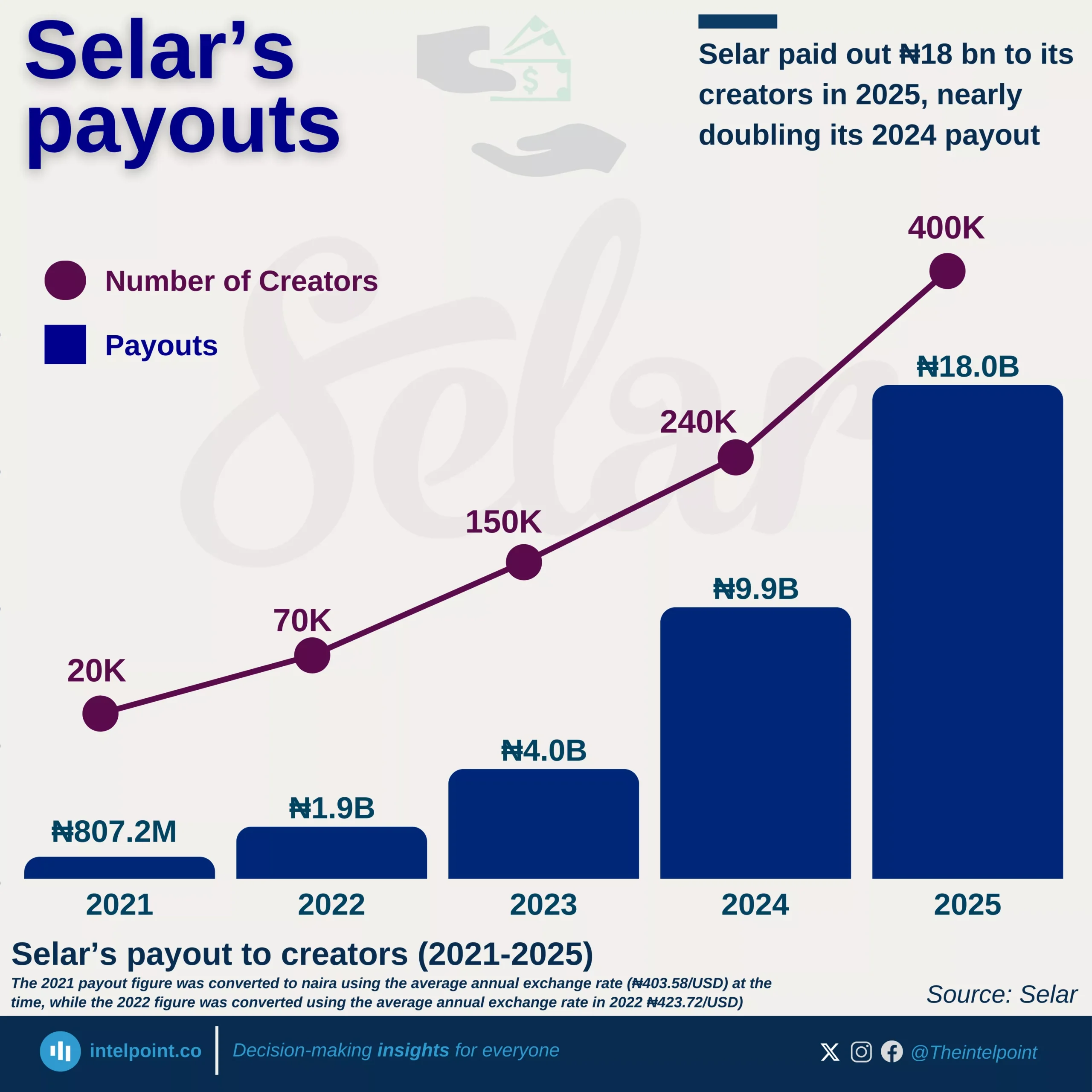
Selar paid out ₦18 bn to its creators in 2025, nearly doubling its 2024 payout
  • Selar’s payouts grew from ₦807.2 million in 2021 to ₦18 billion in 2025, marking over 22x growth in five years.
  • The number of creators increased from 20,000 to 400,000, indicating rapid adoption of Selar.
  • Creator and payout growth moved in parallel, indicating a balanced, expanding ecosystem.
  • Average earnings per creator are rising, suggesting improved monetisation opportunities.
  • Selar has become a major income channel for digital entrepreneurs in Nigeria and beyond.

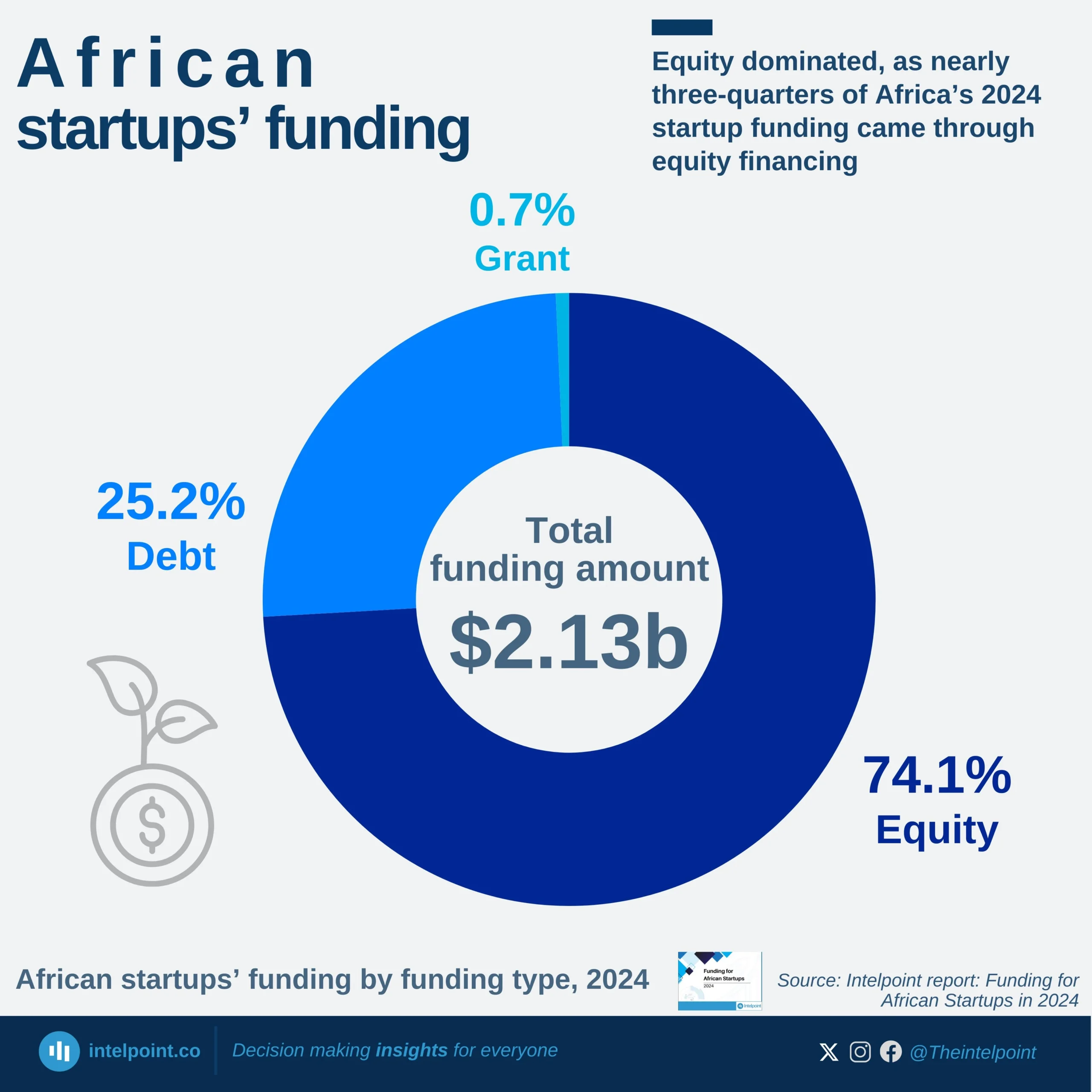
Equity dominated, as nearly three-quarters of Africa’s 2024 startup funding came through equity financing
  • Nearly three-quarters of all startup funding in Africa came from equity financing at 74.1%.
  • A significant 25.2% of funding was raised through debt, showing increasing reliance on loans and credit.
  • Only 0.7% of startup funding came from grants, reflecting limited non-dilutive capital support.
  • The high share of equity signals sustained investor belief in Africa’s startup ecosystem despite global headwinds.

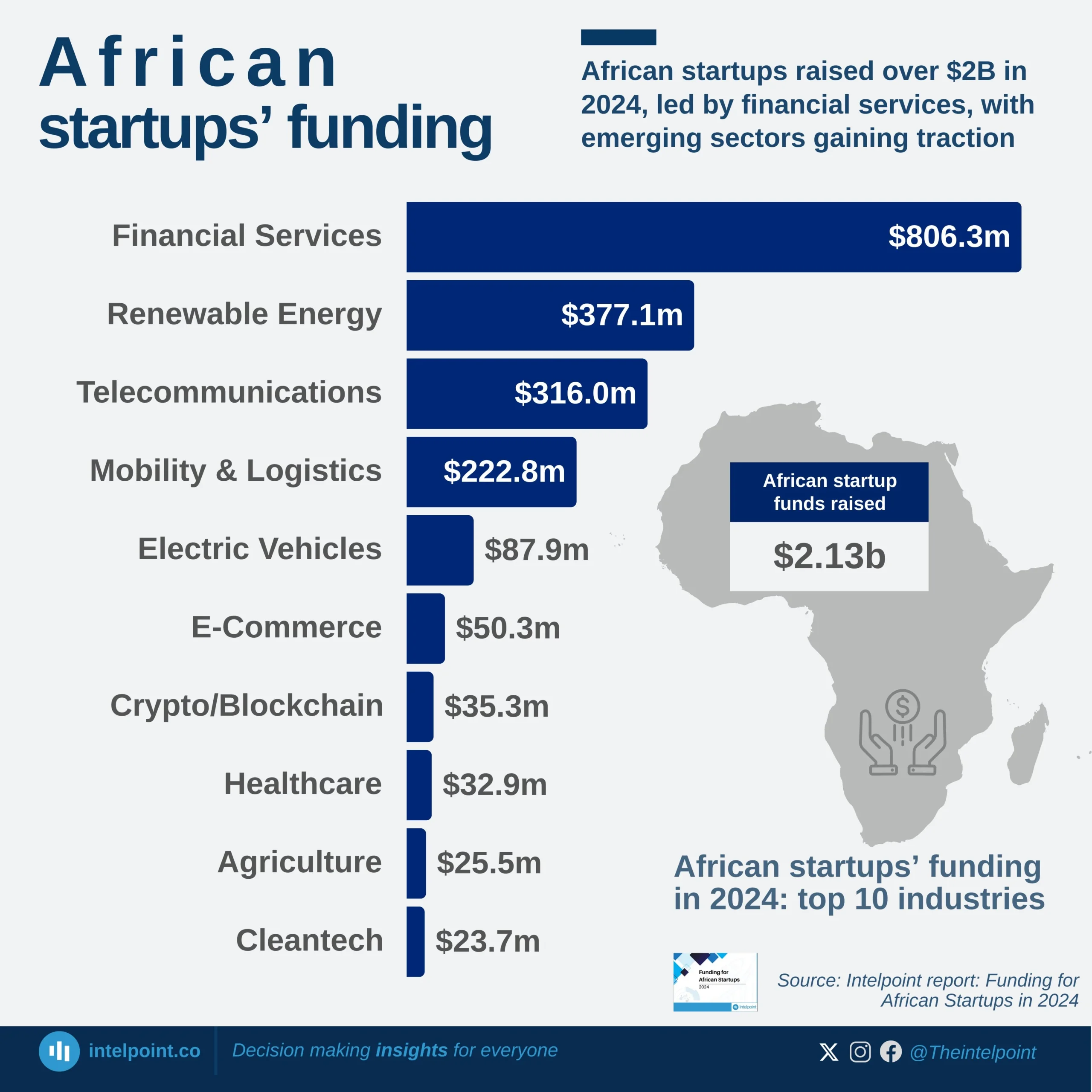
African startups raised over $2B in 2024, led by financial services, with emerging sectors gaining traction
  • The financial services sector attracted the largest share of funding at $806.3m, accounting for more than 40% of total startup investment.
  • Renewable energy secured $377.1m, showing strong investor appetite for sustainable solutions in Africa.
  • Telecommunications raised $316.0m, while mobility & logistics brought in $222.8m, highlighting infrastructure-driven growth.
  • Electric vehicles ($87.9m), e-commerce ($50.3m), and crypto/blockchain ($35.3m) attracted meaningful investments, signalling diversification beyond traditional sectors.

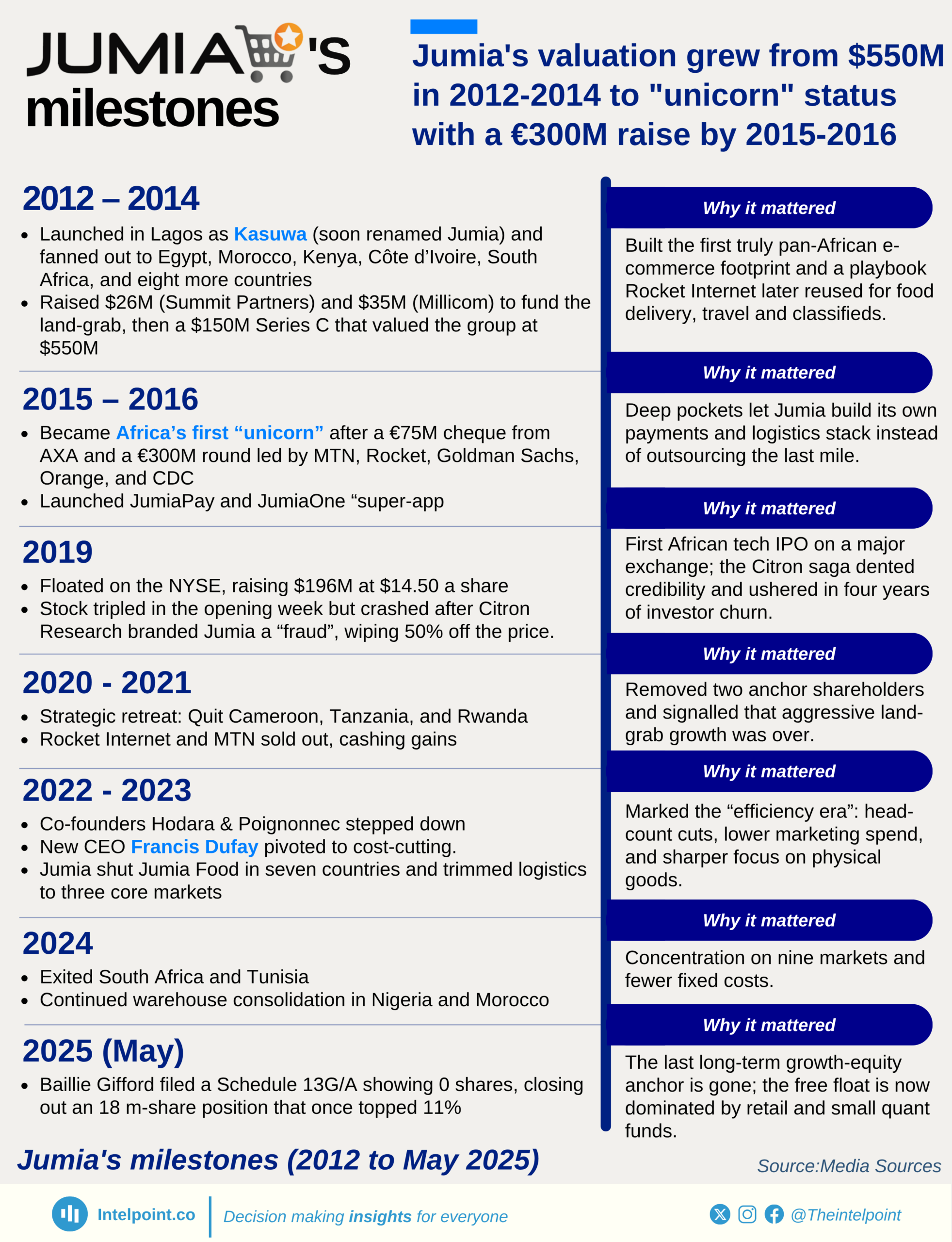
Jumia's valuation grew from $550M in 2012-2014 to "unicorn" status with a €300M raise by 2015-2016
  • Jumia hit unicorn status between 2015 and 2016 after a €300M raise led by key global investors.
  • Its 2019 IPO raised $196M, making it the first African tech company to list on the NYSE.
  • Post-IPO backlash led to a 50% drop in stock price after Citron’s fraud allegations.
  • Between 2020 and 2021, Jumia exited multiple African markets and saw major investors like MTN and Rocket Internet cash out.
  • Jumia exited South Africa and Tunisia in 2024, signalling sharper market focus.

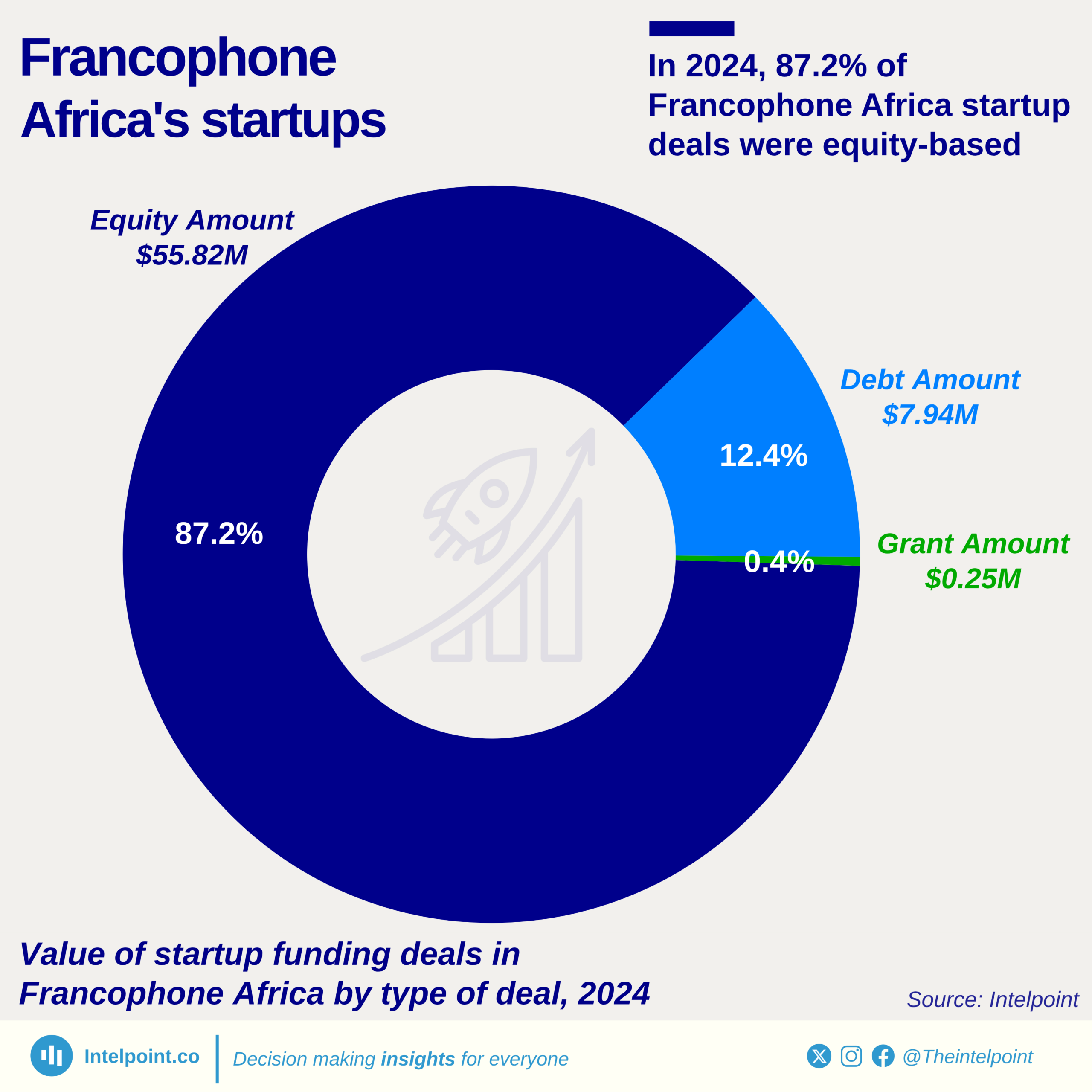
In 2024, 87.2% of Francophone Africa startup deals were equity-based
  • 87.2% of startup deal value in Francophone Africa in 2024 came from equity funding.
  • Debt financing made up only 12.4% of the total startup capital raised, showing its limited role.
  • Grants accounted for just 0.4%, reflecting minimal non-dilutive support for startups.
  • Startups are more likely to trade ownership than take on debt or apply for grants.
  • The funding landscape remains investor-driven, with equity seen as the path to scale.
  • The near absence of grant funding may hinder innovation for startups that need early runway but aren't ready to give up equity.

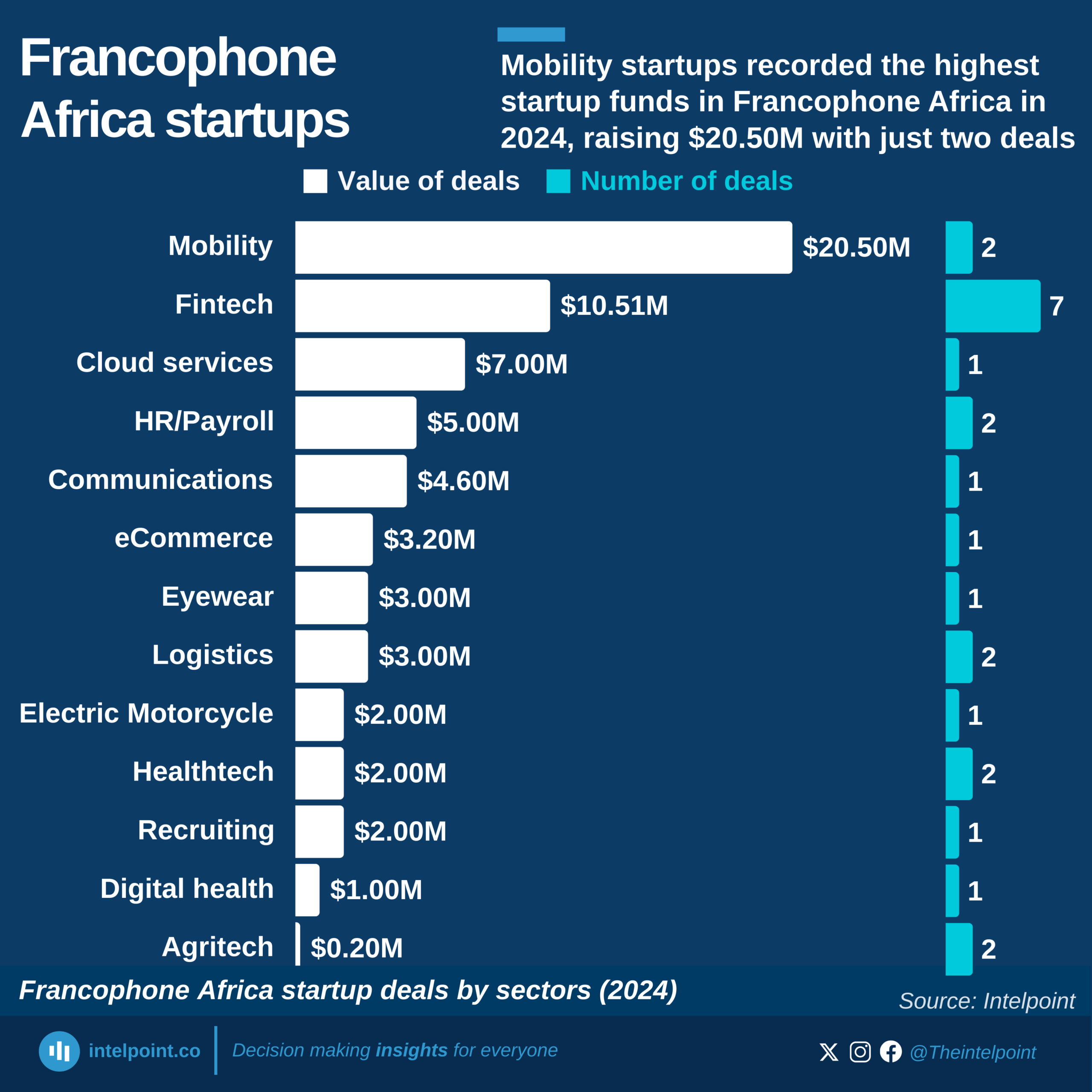
Mobility startups recorded the highest startup funds in Francophone Africa in 2024, raising $20.50M with just two deals
  • Mobility led 2024’s startup funding in Francophone Africa with two deals at a value of $20.5M.
  • Fintech had the highest number of deals at 7, but with a lower total value than Mobility.
  • Cloud Services, Communications, and eCommerce each attracted over $3M from just one deal.
  • Agritech recorded the lowest funding at only $0.2M, despite being a vital sector.
  • Logistics, Healthtech, and HR/Payroll sectors saw two deals each, but with moderate funding.
  • Electric Motorcycle and Eyewear startups each secured $2M–$3M in one-off deals, showing niche interest.
  • Digital Health drew limited attention in both deal count and funding, signalling untapped or underdeveloped potential.

POPULAR TOPICS
SIGN UP TO OUR NEWSLETTER
Get periodic updates about the African startup space, access to our reports, among others.
Subscribe Here
Subscription Form

A product of Techpoint Africa. All rights reserved