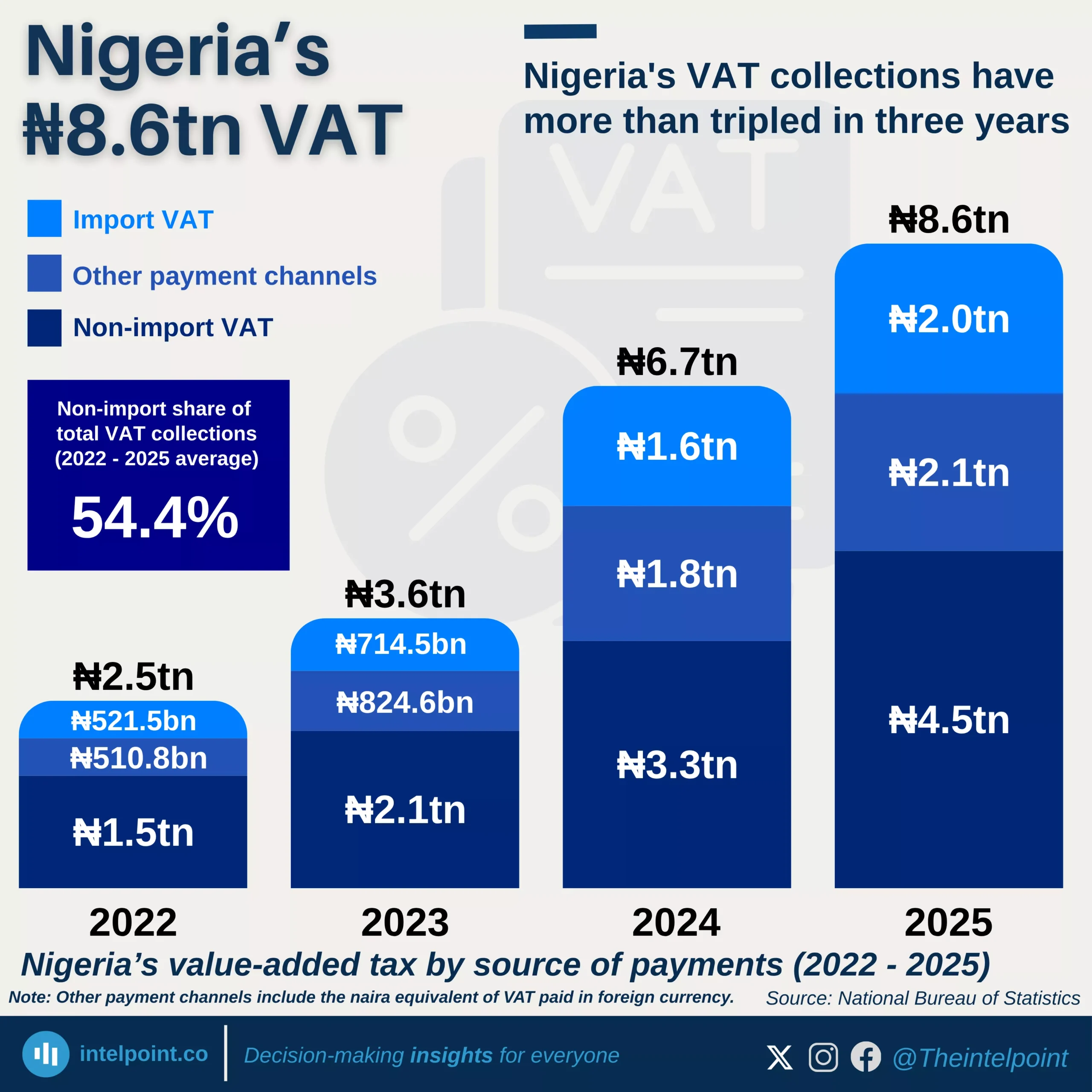
Nigeria collected ₦8.6 trillion in VAT in 2025, up from ₦2.5 trillion in 2022. Growth of that scale usually points to more economic activity, a wider tax base, and stronger enforcement by FIRS.
Non-import VAT has been the dominant contributor, averaging 54.4% of total collections annually and growing from ₦1.5 trillion to ₦4.5 trillion over the period. Import VAT has also grown significantly, rising from ₦521.5 billion to ₦2.0 trillion.
VAT is a consumption tax charged at 7.5% of the value of goods and services. So the numbers rise when spending rises. But spending can rise for two reasons: people are buying more, or the same goods now cost more.
If a bag of rice that cost ₦50,000 now costs ₦100,000, the VAT collected on it doubles from ₦3,750 to ₦7,500, even though the same quantity of rice changed hands. Nigeria's inflation rate went from 18.85% in 2022 to 24.5% in 2023, peaked at an average of 31.4% in 2024, before moderating to 15.15% by December 2025.
That does not diminish the revenue progress. It does add useful context for understanding what is driving it.