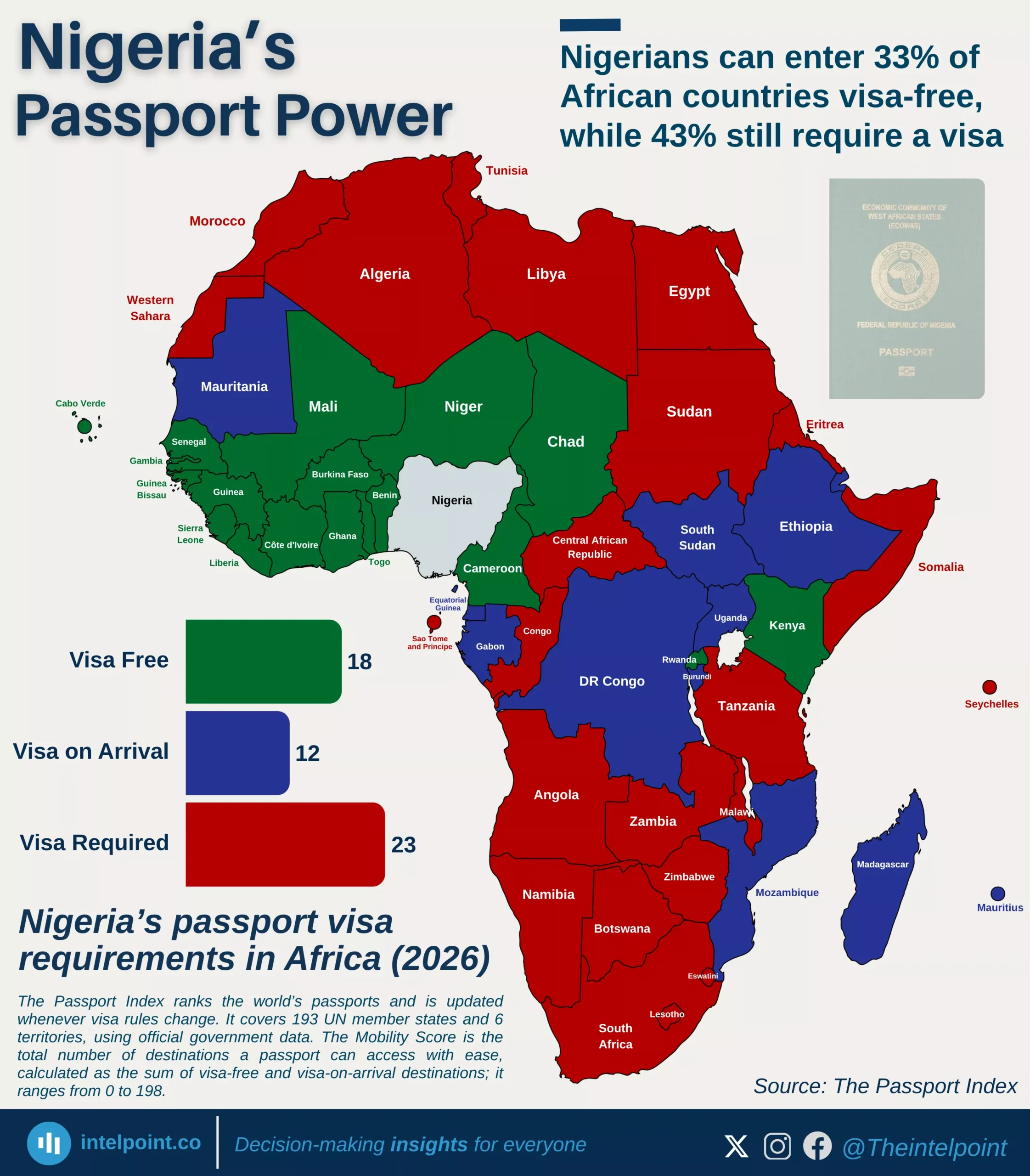
The map shows that Nigerians can travel visa-free to 18 African countries and get a visa on arrival in 12 more, yet still need a visa for 23 countries. That means many African destinations remain closed, rather than being open on easy terms. Access is not just limited; intra-African mobility is still far less seamless than the continent’s integration agenda suggests.
Nigeria’s easiest access is concentrated in West Africa, where ECOWAS has a long-established visa-free movement for up to 90 days among member states. That is why much of the green on the map clusters around Nigeria. Beyond that zone, the picture becomes patchier. The African Development Bank’s 2025 Africa Visa Openness Report still describes visa openness across the continent as uneven, even after a decade of reforms tied to the AU’s free movement goals and African Continental Free Trade Area (AfCFTA) ambitions.
A trader in Lagos may find it easy to move goods and people across nearby ECOWAS markets, but the same person hits more paperwork once the journey shifts toward North, Central, or parts of Southern Africa. That matters because travel friction slows deals, raises trip costs, and weakens regional business networks. It is one reason the AfDB keeps linking visa openness to trade, investment, and continental integration — movement is not just about tourism, it is part of how markets connect.