There are only 687 dentists in the Northern part of Nigeria in 2022

Key takeaways:

  • There are 3,112 dentists in Nigeria as of 2022, highlighting the limited availability of dental professionals in a population of over 200 million.
  • The Southwest geopolitical zone has the highest number of dentists, totaling 1,176 (37.8%), indicating a concentration of dental services in this region.
  • Collectively, the North (Northwest, North Central, and Northeast) has only 687 dentists, which is approximately 22% of the total, showcasing significant regional disparities in healthcare access.
  • The Southeast zone has the fewest dentists, with only 141 (4.5%), underlining a shortage of dental professionals in this region.
  • The concentration of dentists in zones like the Southwest likely reflects urbanization trends, leaving rural areas in other regions underserved.

Nigeria had 3,112 dentists in 2022, but the distribution across the country is heavily skewed. The South West accounted for the highest share, hosting 1,176 dentists (37.8%), while the Northern regions collectively had only 687 dentists — just 22% of the total. This significant imbalance highlights the disparities in access to dental care, with underserved populations in the North.

Additionally, 21.8% of the dentists' locations were unspecified, pointing to potential gaps in data reporting and planning.
Source:

Medical and Dental Council of Nigeria

Period:

2022
HTML code to embed chart
Want a bespoke report?
Reach out
Tags
Related Insights

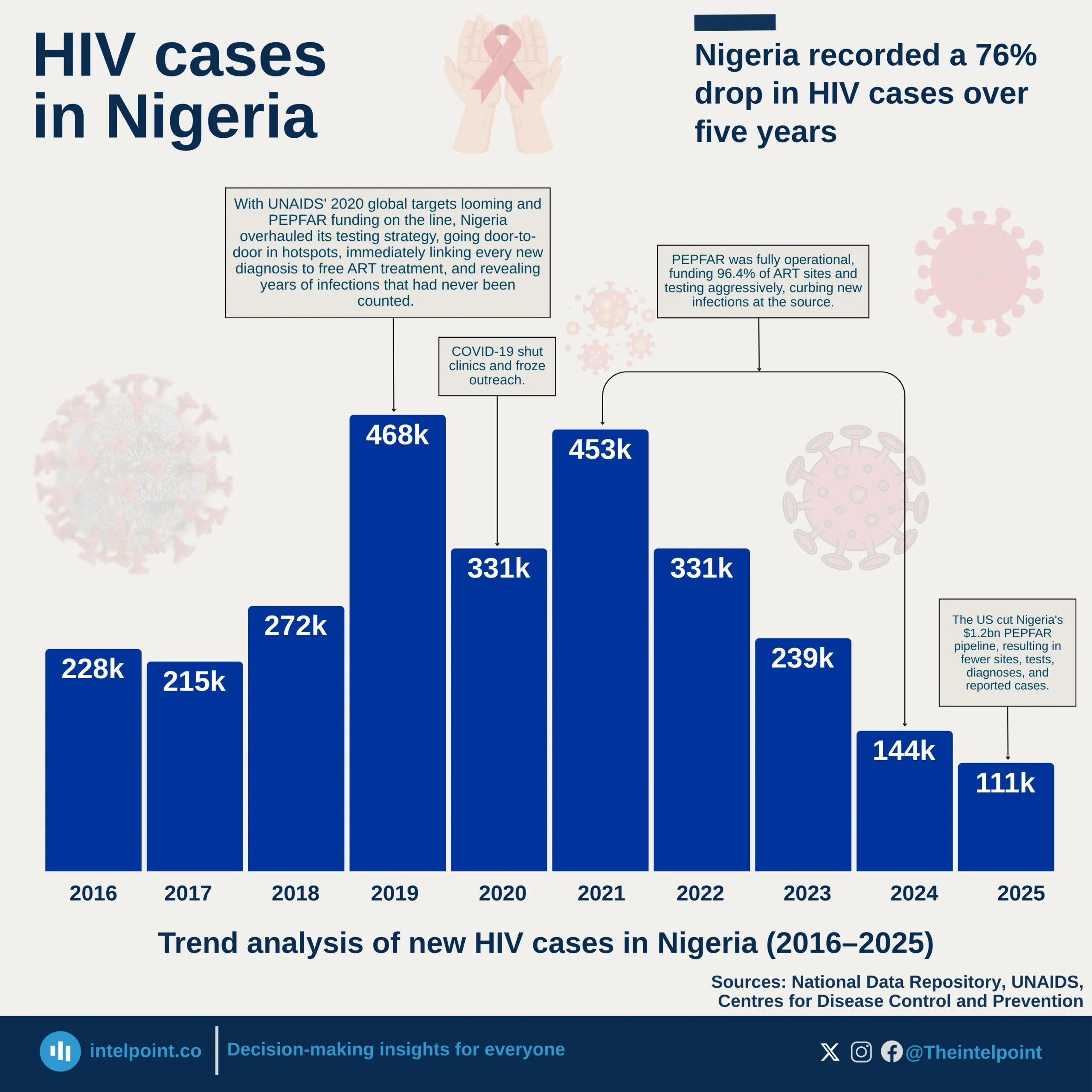
Nigeria recorded a 76% drop in HIV cases over five years
  • The 2019 number revealed the truth — years of underdiagnosis were corrected in a single year when PEPFAR restructured testing entirely.
  • The 76% decline from 2019 to 2024 is one of the most significant HIV reductions in Africa in a single decade.
  • One year of disruption in 2020 erased an entire year of progress, creating a backlog that took until 2022 to clear.
  • With PEPFAR's $1.2 billion pipeline cut, fewer Nigerians are being tested, meaning fewer cases appear on paper while the virus spreads undetected.

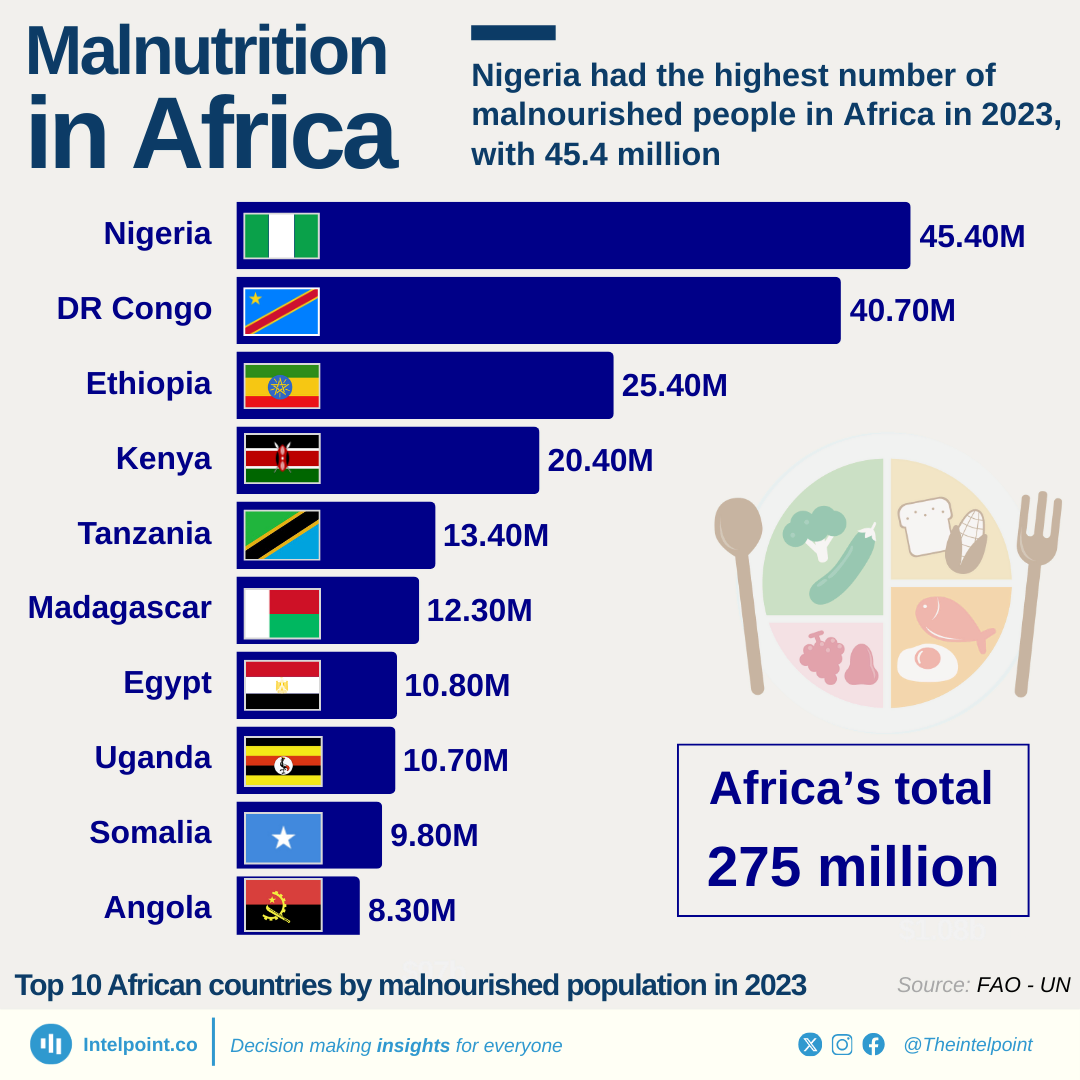
Nigeria had the highest number of malnourished people in Africa in 2023, with 45.4 million
  • In Africa, 275 million people were recorded to be malnourished in 2023.
  • Nigeria led the list of countries in Africa with the highest number of malnourished people (45.40 million), making 16.5% of the total.
  • Nigeria was followed by the Democratic Republic of Congo with 40.7 million, 14.8% of the total.
  • Nigeria, the Democratic Republic of Congo, Ethiopia and Kenya made up almost 50% of the total number of malnourished people in Africa.

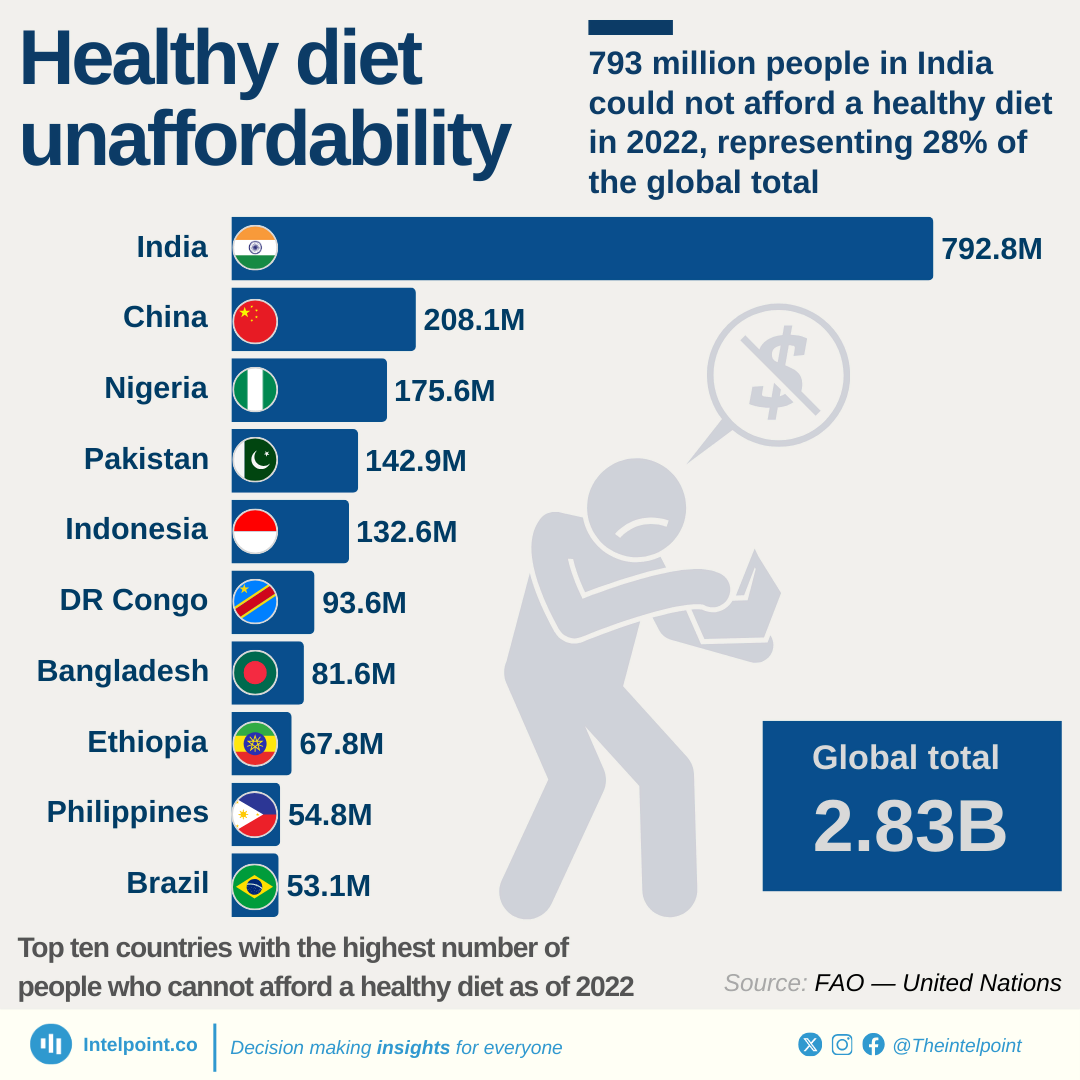
793 Million people in India could not afford a healthy diet in 2022, representing 28% of the global total
  • India tops the list of the global number of people unable to afford a decent meal with a value of 792.80 million causing unaffordability to prevail in the country by 55.6%.
  • China emerged as the second country in this global list with 208.10 million people falling in this category and unaffordability prevalence of 14.6%.
  • Nigeria claimed 6.2% of the global total with 175.6M, making it the 3rd country with the highest number of healthy diet unaffordability.
  • High number of people that could not afford a healthy diet does not outrightly equal high percentage of healthy diet unaffordability.

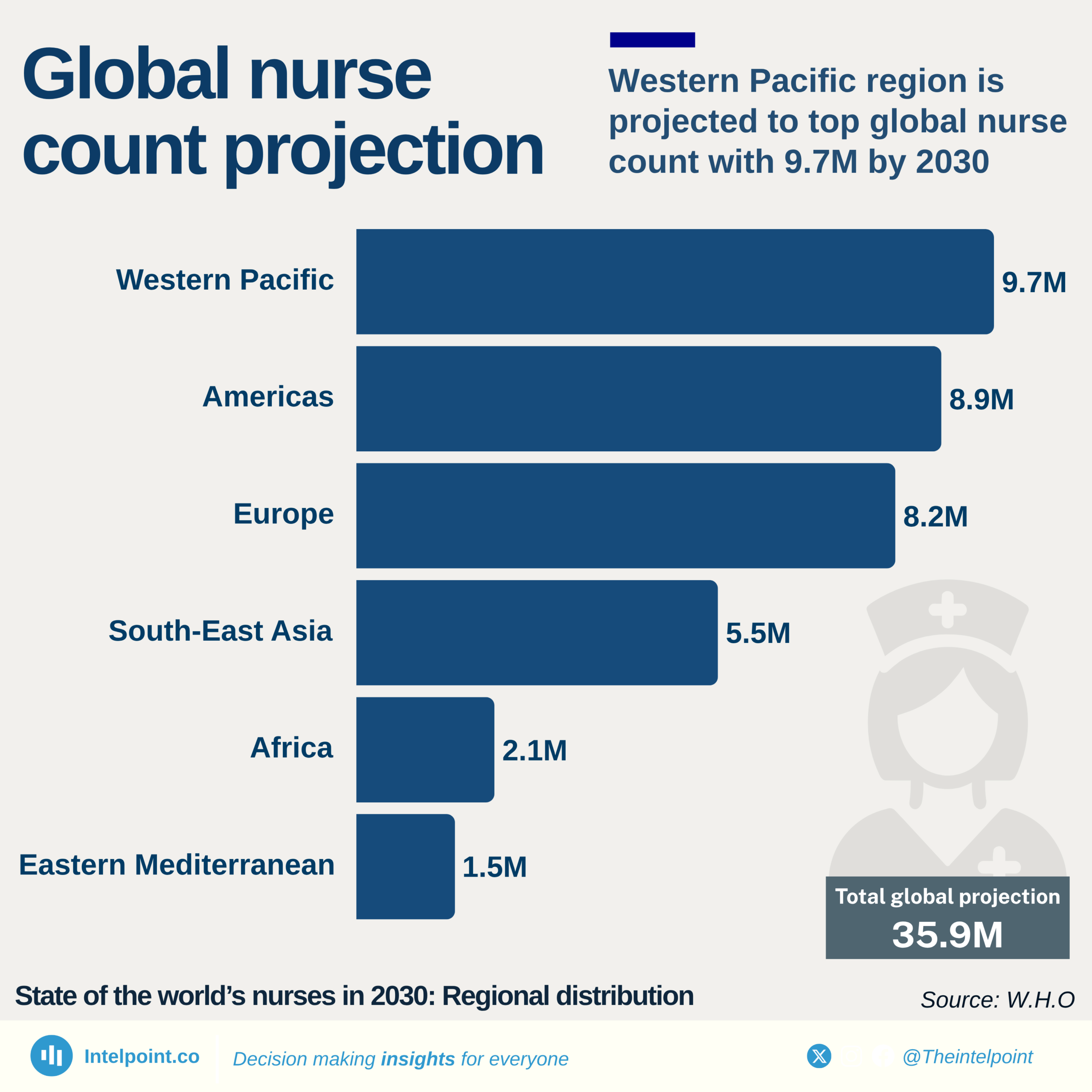
Western Pacific region is projected to top global nurse count with 9.7M by 2030
  • The Western Pacific Region is projected to lead globally in nursing personnel by 2030, with an estimated 9.7 million nurses — more than Africa and Southeast Asia combined.
  • The Americas (8.9M) and Europe (8.2M) are expected to follow, maintaining high nurse-to-population ratios.
  • Africa (2.1M) and the Eastern Mediterranean (1.5M) are projected to remain lowest, despite growing health needs.
  • South-East Asia (5.5M) shows steady growth but still lags behind the top three regions.
  • The global nursing workforce is projected to reach 35.9 million by 2030, up 73% from 2013 — but growth remains uneven.

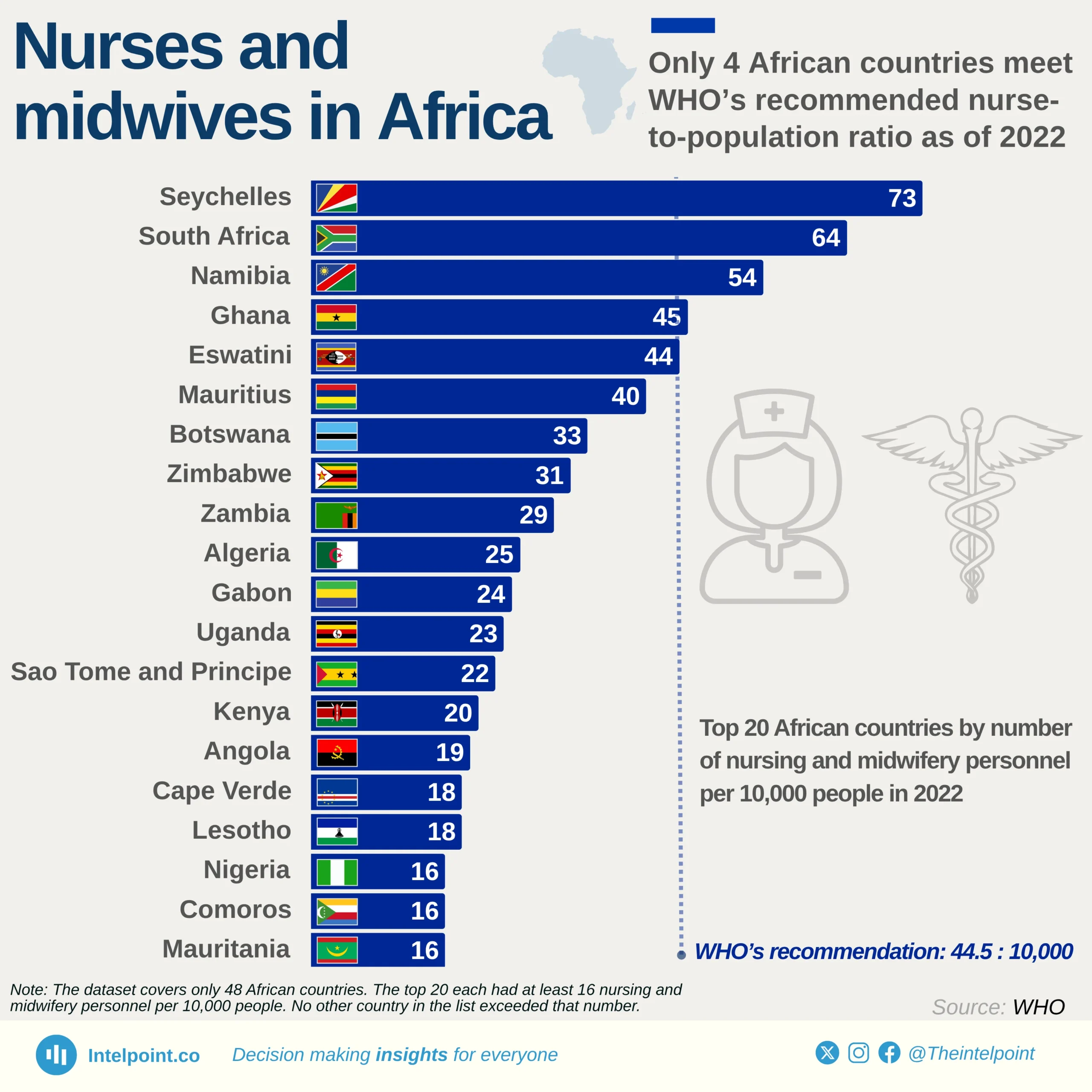
Only 4 African countries meet WHO’s recommended nurse-to-population ratio
  • Only four African countries, Seychelles, South Africa, Namibia, and Ghana, meet or exceed the WHO’s recommended minimum of 44.5 nursing and midwifery personnel per 10,000 people.
  • Seychelles leads the continent with 73 personnel per 10,000, followed by South Africa (64), Namibia (54), and Ghana (45).
  • The lowest number within the top 20 is 16, shared by Nigeria, Comoros, and Mauritania.
  • The dataset includes 47 African countries, and no country outside the top 20 has more than 16 nursing and midwifery personnel per 10,000 people.

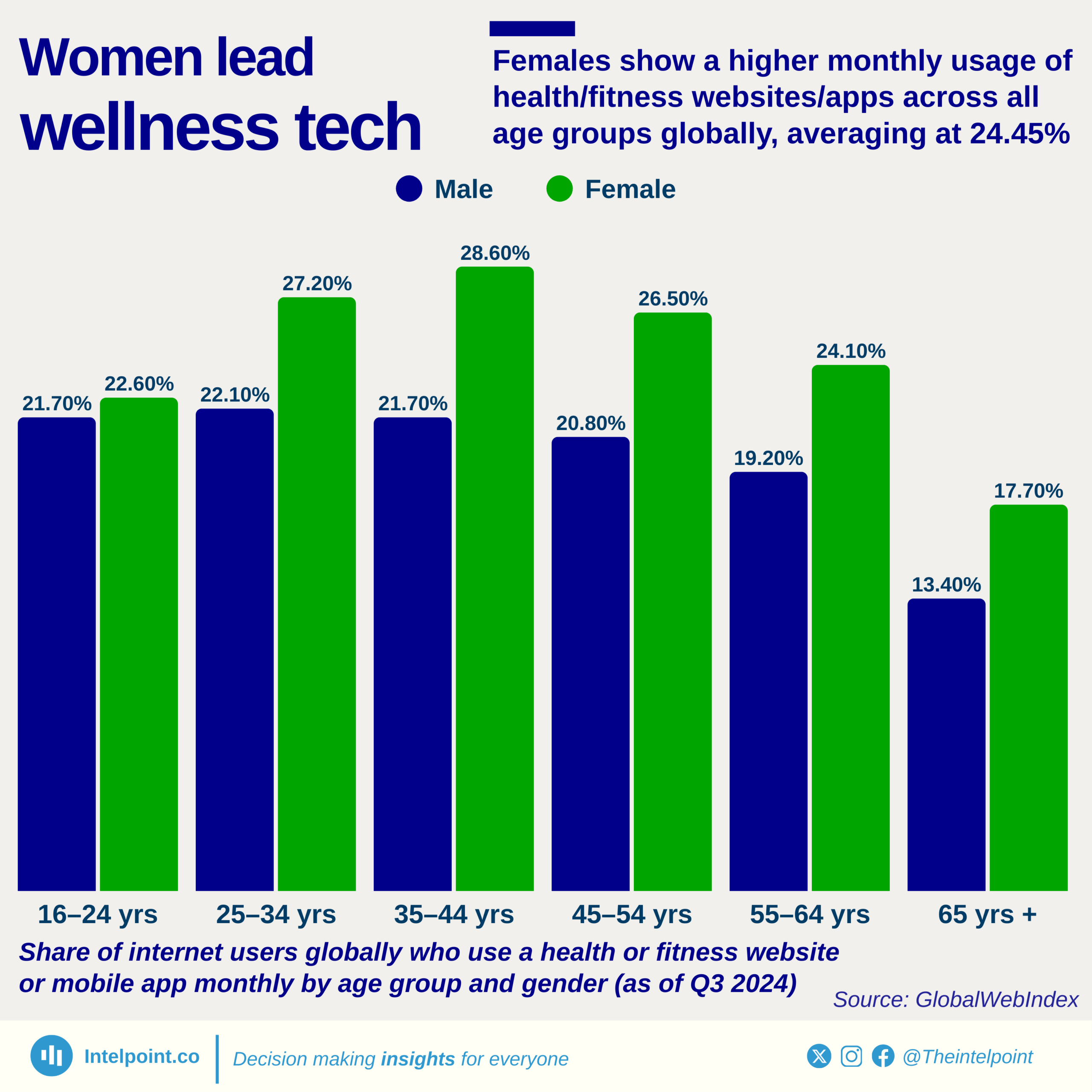
Females show a higher monthly usage of health/fitness websites/apps across all age groups globally, averaging at 24.45%
  • Females lead in monthly usage of health/fitness websites/apps globally across all age groups.
  • Average female usage is 24.45%, consistently higher than male usage in each age bracket.
  • Women aged 35–44 are the most engaged, with 28.6% using health or fitness platforms monthly.
  • Male usage peaks early, at 22.1% (ages 25–34), then steadily declines with age.
  • Engagement among women aged 45–64 remains strong, pointing to long-term wellness interest beyond just youth fitness trends.

POPULAR TOPICS
SIGN UP TO OUR NEWSLETTER
Get periodic updates about the African startup space, access to our reports, among others.
Subscribe Here
Subscription Form

A product of Techpoint Africa. All rights reserved