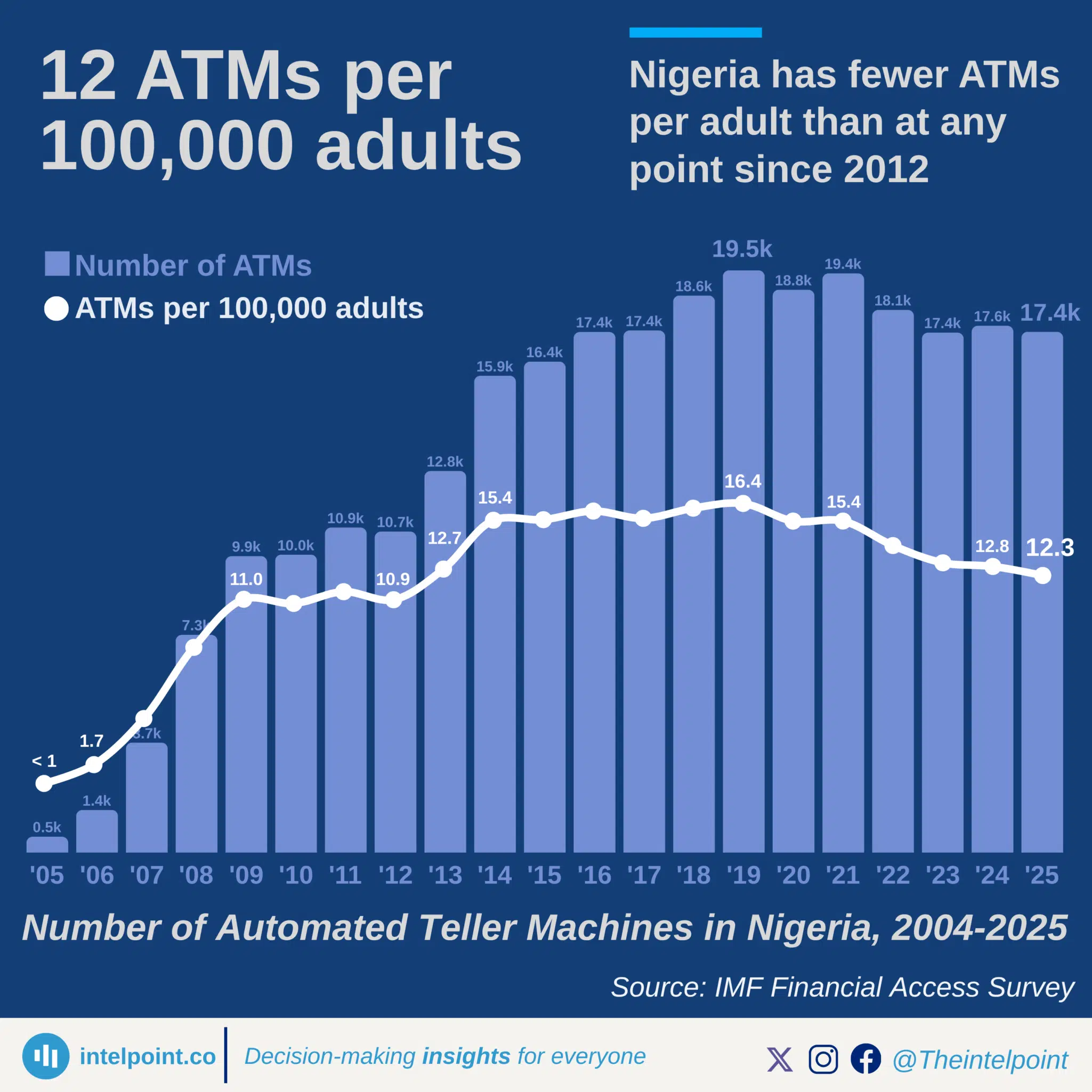
Nigeria has fewer ATMs per adult than at any point since 2012

Key Takeaways

  • ATMs are down 11% since 2019, but per 100,000 adults they’re down 25% (16.4 to 12.3).
  • The count has been flat since 2023 (17,377 to 17,404), yet density kept falling.
  • Density has fallen four years running and is the lowest since 2012.
  • 2025 reversed the small 2024 uptick (17,607 to 17,404).

Nigeria’s ATM network has fallen behind its population. The country had 19,459 ATMs in 2019, its peak, and 17,404 in 2025, a loss of 2,055 machines (−11%).

Over the same period, ATMs per 100,000 adults fell from 16.4 to 12.3, a 25% drop, because the adult population (implied at roughly 119 million in 2019 and 141 million in 2025, +19%) grew while the machine count shrank. Density has declined four years running and is now below its 2013 level (12.7), the lowest since 2012.

The count itself has barely moved since 2023 (17,377 to 17,404), so the recent slide in coverage comes almost entirely from population growth. The earlier build-out was fast: 9,907 ATMs in 2009 to 15,935 in 2014 (+61%), after which density held at roughly 15 to 16 until 2021. Restoring 2019’s density at today’s adult population would take about 23,100 ATMs, roughly 5,700 more than the country has.

Source:

IMF Financial Access Survey

Period:

2004-2025
HTML code to embed chart
Want a bespoke report?
Reach out
Tags
Related Insights

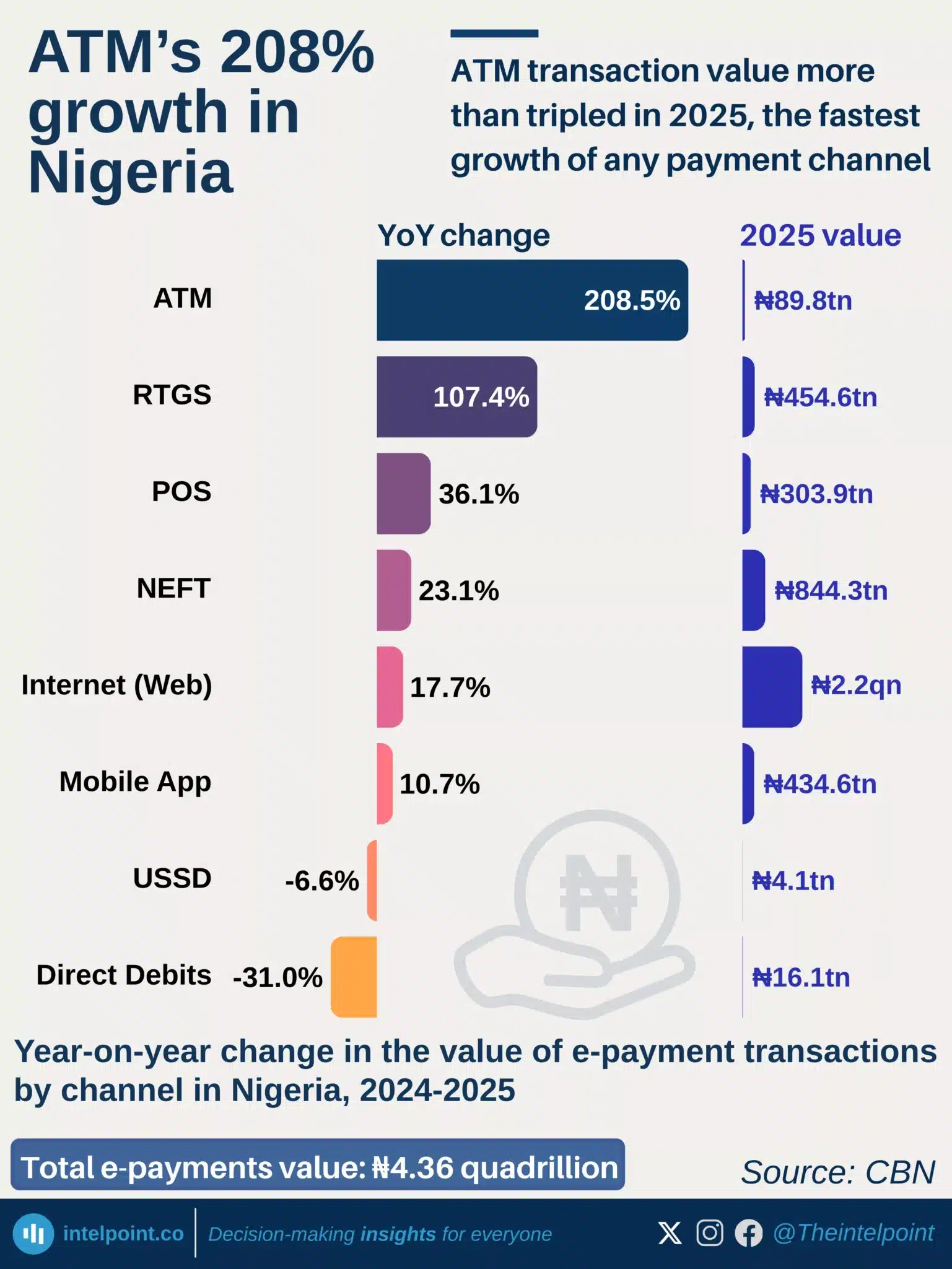
ATM transaction value more than tripled in 2025, the fastest growth of any payment channel
  • ATM transactions surged 208.5% to ₦89.8 trillion in 2025.
  • ATM was Nigeria’s fastest-growing payment channel by value.
  • Average ATM transaction size nearly doubled, rising 90%.
  • ATM usage grew despite higher withdrawal fees introduced by the CBN.
  • Internet/Web payments remained dominant at ₦2.21 quadrillion, despite slower growth.

Nigeria’s insurance industry gross premium written in 2025
  • Nigeria's insurance industry generated ₦2.3 trillion in gross premium written in 2025.
  • Gross premium written increased 47.3% from ₦1.56 trillion in 2024.
  • Premiums have grown by 273% since 2021, from ₦616.6 billion.
  • Gross premium written has increased every year since 2021.
  • Premium growth does not necessarily mean higher insurance coverage or profitability.

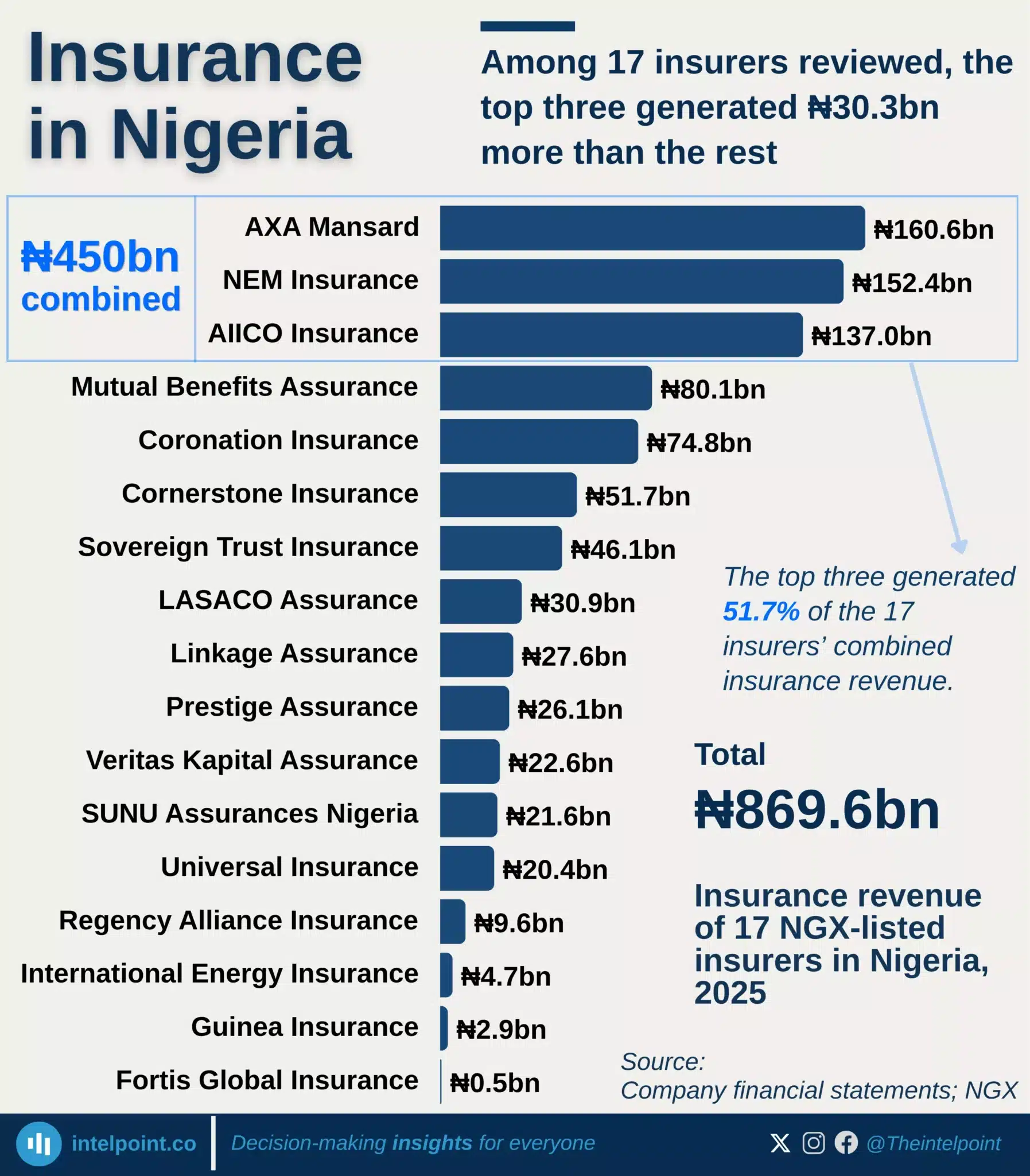
Among 17 insurers reviewed, the top three generated ₦30.3bn more than the rest
  • AXA Mansard, NEM Insurance and AIICO generated 51.7% of the combined revenue of 17 NGX-listed insurers.
  • The top three earned ₦449.9 billion, ₦30.3 billion more than the other 14 insurers combined.
  • The 17 insurers generated a combined ₦869.6 billion in insurance revenue in 2025.
  • AXA Mansard recorded the highest insurance revenue at ₦160.6 billion.
  • Revenue rose at 15 insurers, but only four reported higher profits.

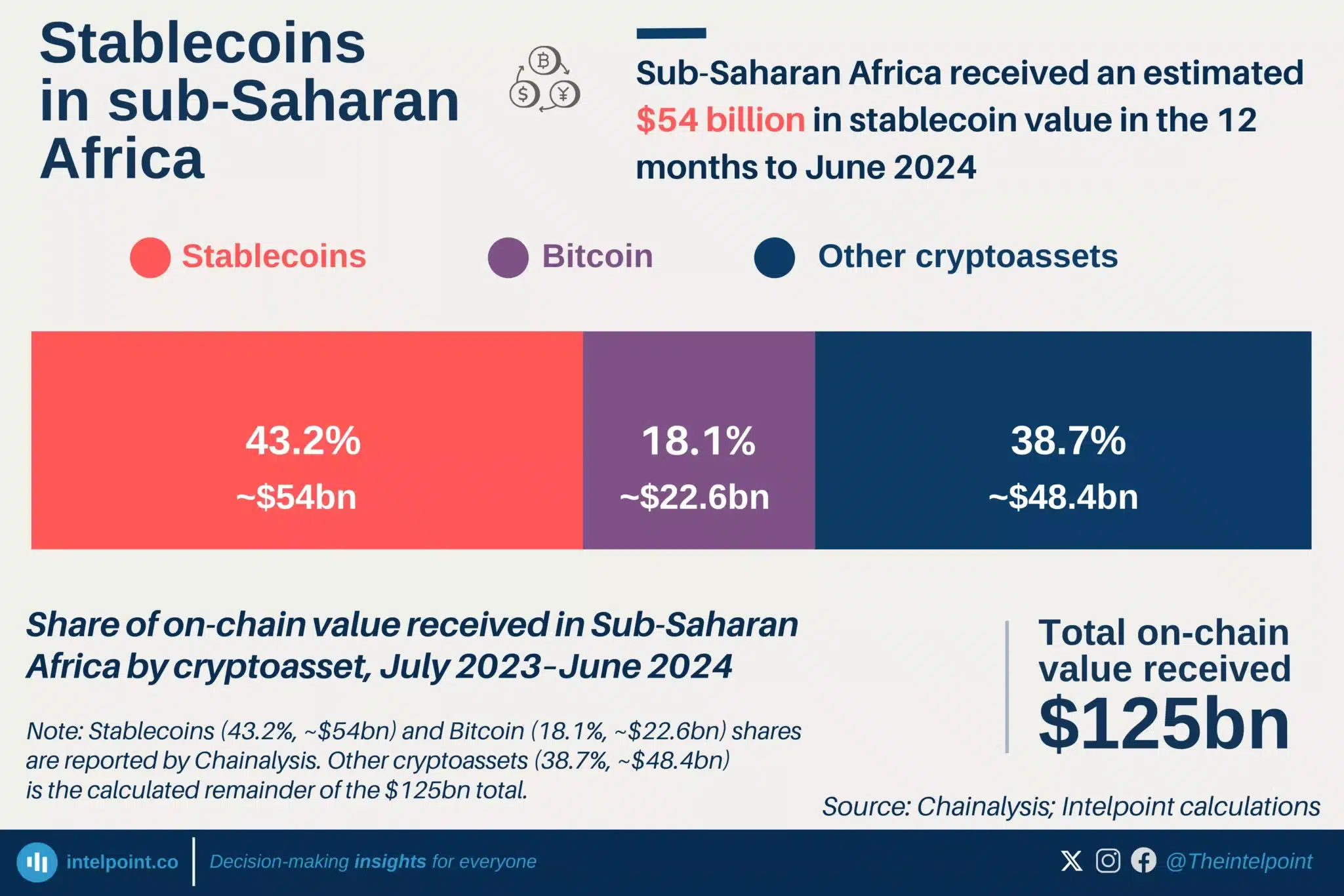
Sub-Saharan Africa received an estimated $54 billion in stablecoin value in the 12 months to June 2024
  • Total received: $125 billion in on-chain value.
  • Stablecoin value: $54 billion, representing 43.2%.
  • Bitcoin comparison: Stablecoins received more than twice Bitcoin’s value.
  • Key driver: Currency depreciation and limited dollar access.

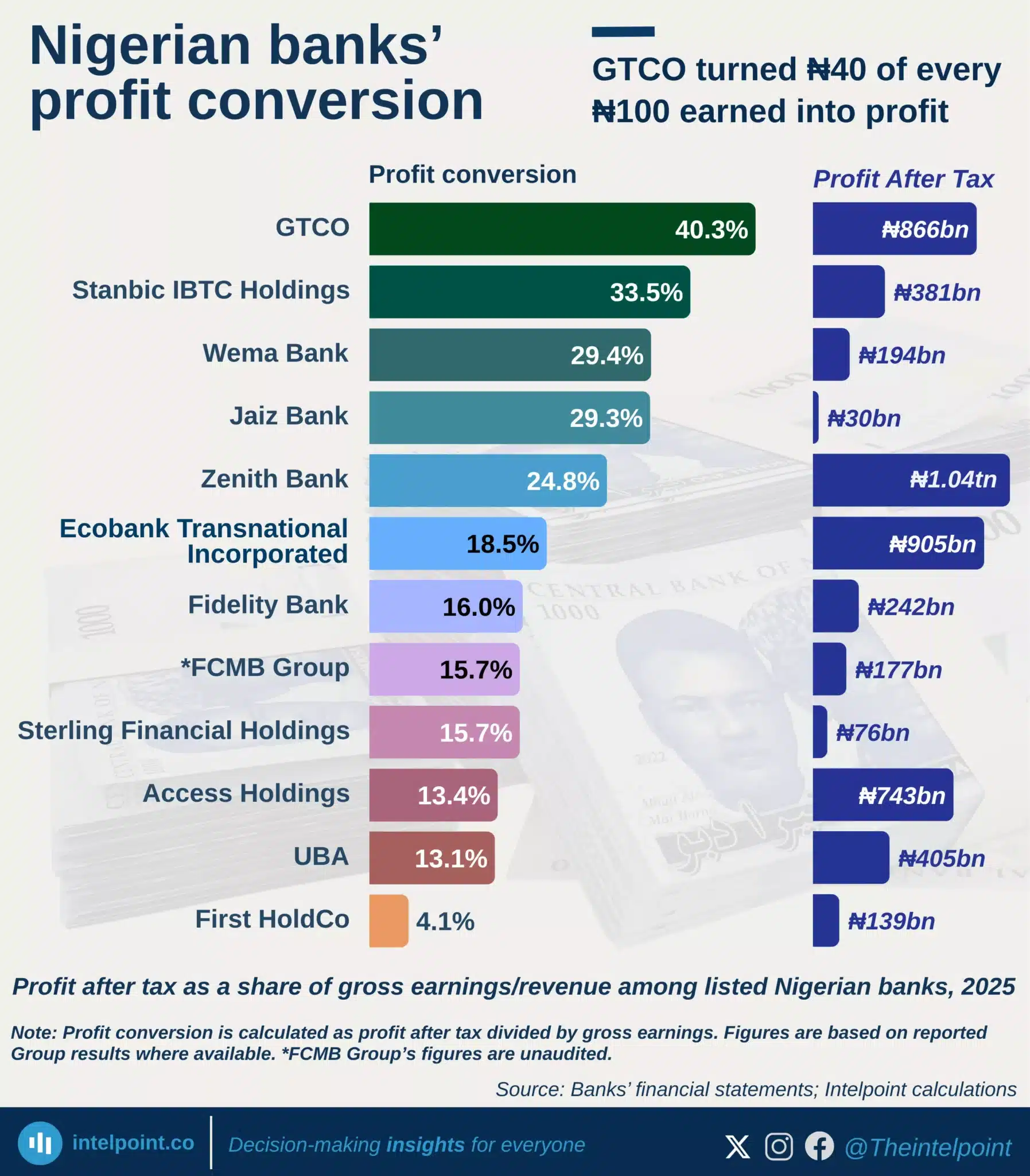
GTCO turned ₦40 of every ₦100 earned into profit
  • GTCO had the strongest profit conversion in 2025.
  • GTCO turned about ₦40 of every ₦100 earned into profit.
  • Stanbic IBTC followed with about ₦34 profit per ₦100 earned.
  • Zenith made the highest profit, but not the strongest conversion.
  • First HoldCo had the weakest profit conversion among the banks reviewed.
 

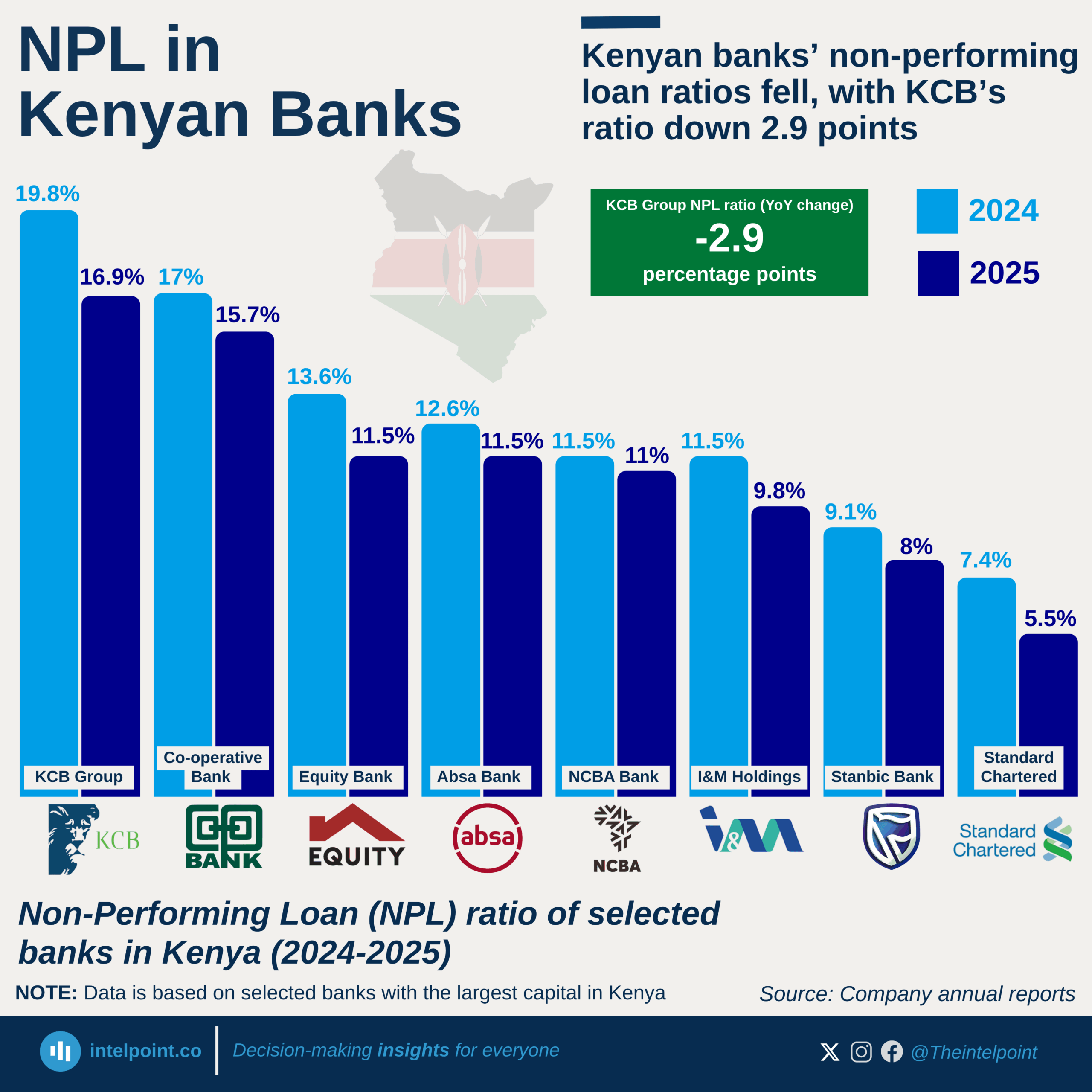
Kenyan banks’ non-performing loan ratios fell, with KCB’s ratio down 2.9 points
  • All eight selected Kenyan banks reduced their NPL ratios in 2025.
  • KCB recorded the largest improvement, with a 2.9% point drop.
  • KCB still had the highest NPL ratio in the group at 16.9%.
  • Co-operative Bank remained highly stressed at 15.7%, despite some improvement.
  • Equity Bank and Absa Bank Kenya both ended 2025 at 11.5%.
  • Standard Chartered Kenya had the lowest NPL ratio in the group at 5.5%.

POPULAR TOPICS
SIGN UP TO OUR NEWSLETTER
Get periodic updates about the African startup space, access to our reports, among others.
Subscribe Here
Subscription Form

A product of Techpoint Africa. All rights reserved