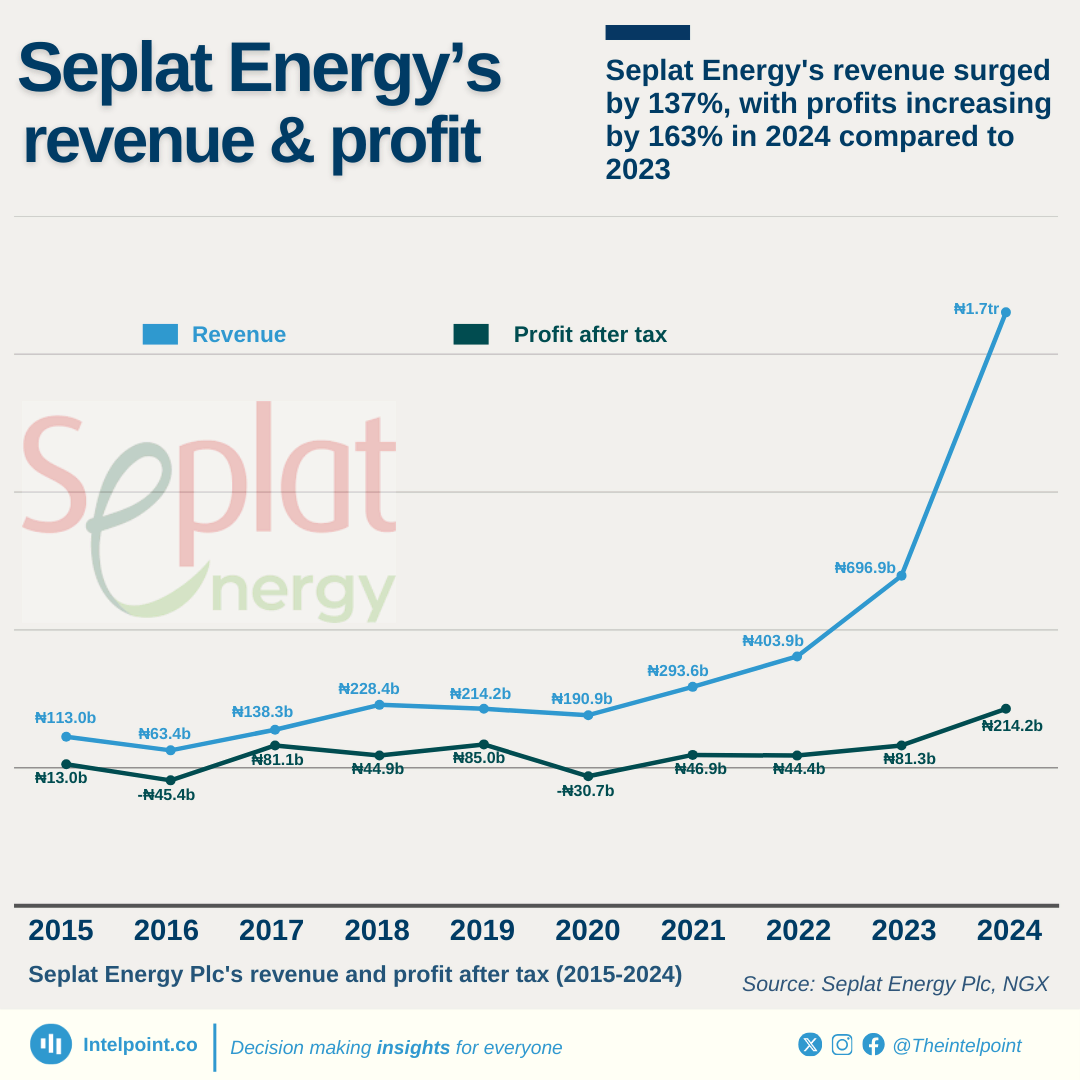
Seplat Energy's revenue surged by 137%, with profits increasing by 163% in 2024 compared to 2023

Key takeaways:

  • Seplat’s revenue steadily increased from ₦112.97 billion in 2015 to ₦1.65 trillion in 2024.
  • The difference between revenue and profit after tax in 2024 is notably broader than in previous years.
  • Profitability varied over the years, with losses recorded in 2016 and 2020 but consistent recoveries during other periods.
  • The year 2024 saw the company's peak revenue (₦1.65 trillion) and profit (₦214.25 billion).

Seplat Energy Plc has demonstrated impressive financial growth from 2015 to 2024. In 2015, the company reported ₦112.97 billion in revenue and a profit of ₦12.99 billion. However, the year 2016 proved to be tough, with Seplat facing a loss of ₦45.38 billion despite a revenue of ₦63.38 billion.

In 2017, Seplat raised its revenue to ₦138.28 billion and achieved a profit of ₦81.11 billion, which was six times the profit recorded in 2015. This positive trend persisted into 2018, with revenue climbing to ₦228.39 billion, although profit saw a minor decline to ₦44.87 billion—a 45% drop from 2017. In 2019, Seplat continued to perform well, generating revenue of ₦214.16 billion and profits of ₦85.02 billion.

During 2020, the COVID-19 pandemic era, revenue decreased to ₦190.92 billion, and the company incurred a loss of ₦30.71 billion. Despite these reductions, Seplat rebounded in 2021, securing ₦293.63 billion in revenue and ₦46.93 billion in profit.
Source:

Seplat Energy Plc, NGX

Period:

2015-2024
HTML code to embed chart
Want a bespoke report?
Reach out
Tags
Related Insights

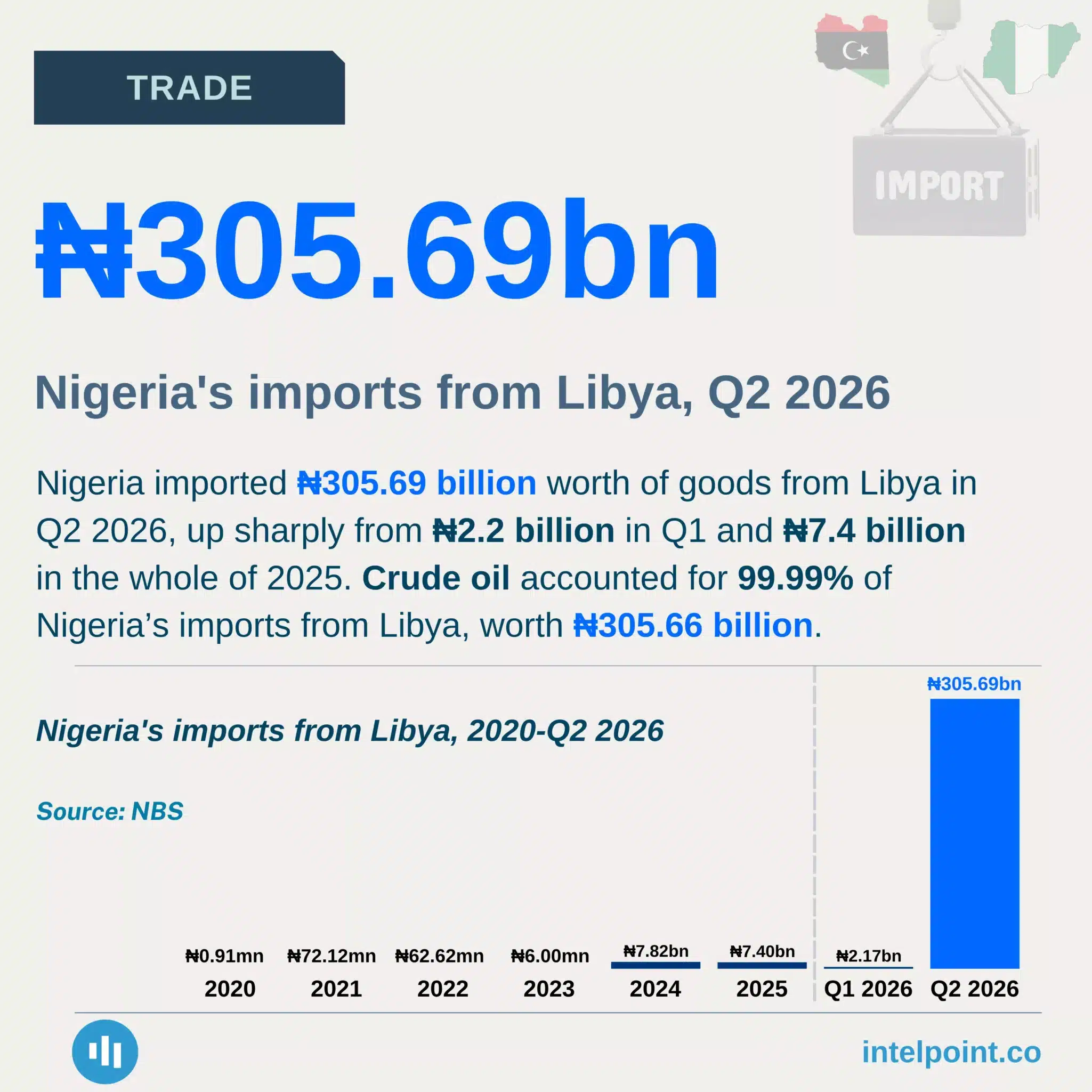
Nigeria bought ₦305.66 billion worth of crude oil from Libya in Q2 2026
  • Nigeria imported ₦305.69bn from Libya in Q2 2026, up from ₦2.17bn in Q1.
  • Crude oil accounted for 99.99% of Q2 imports, worth ₦305.66bn.
  • Libya’s Q2 exports to Nigeria surged from ₦7.4bn in 2025 to ₦305.69bn.
  • Libya became Nigeria’s ninth-largest import source, accounting for 2.12% of total imports in Q2.
  • Nigeria’s imports from Libya were previously dominated by much smaller values, with crude oil driving the sharp 2026 increase.

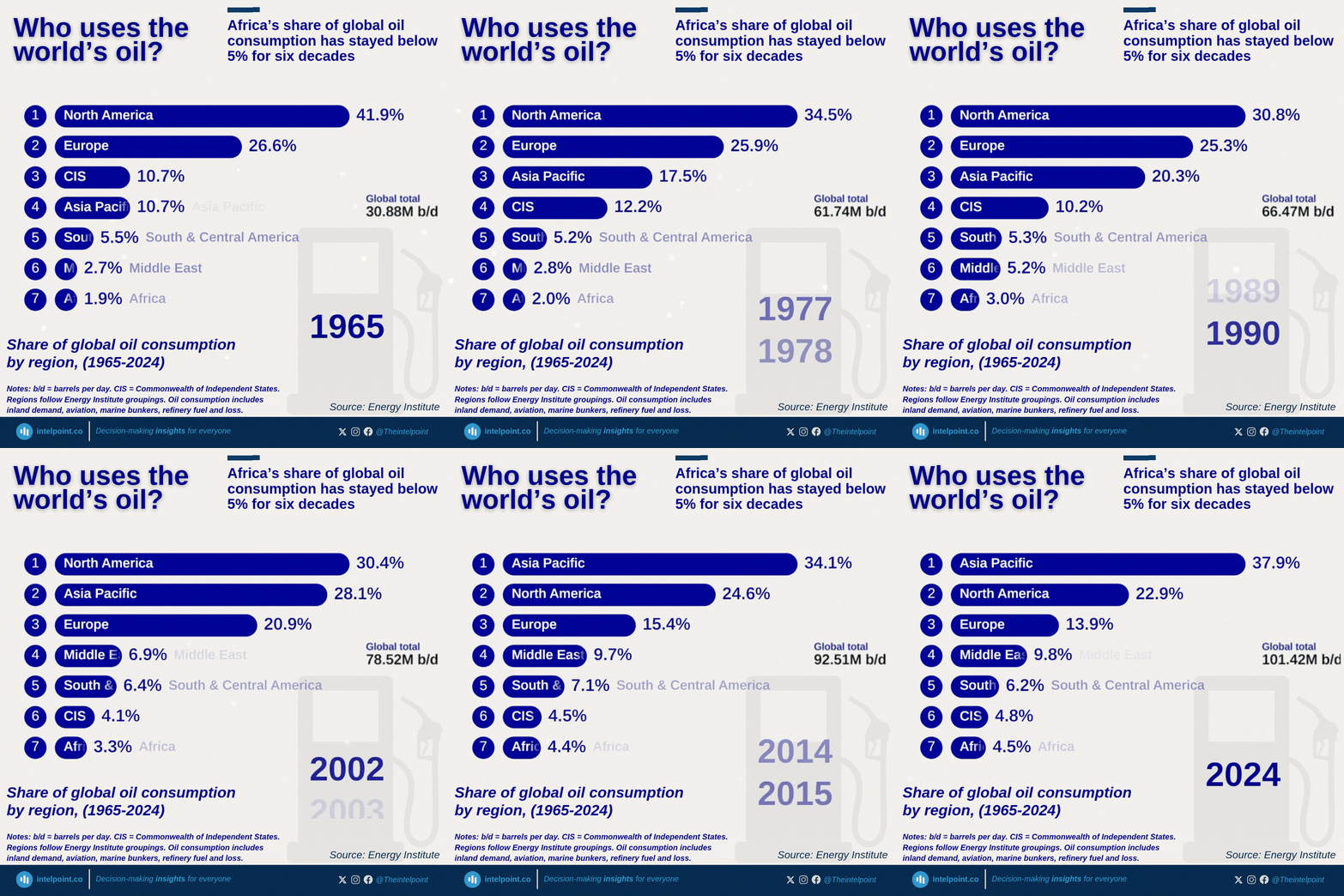
Africa’s share of global oil consumption has stayed below 5% for six decades
  • Global oil consumption rose from about 30.9 million barrels per day in 1965 to 101.4 million barrels per day in 2024, more than tripling over the period.
  • Asia Pacific saw the biggest structural shift in global oil demand, increasing its share from 10.7% in 1965 to 37.9% in 2024 to become the world’s largest oil-consuming region.
  • Africa accounted for just 1.9% of global oil consumption in 1965 and 4.5% in 2024, staying below 5% for nearly 60 years.
  • The global centre of oil demand has gradually shifted away from Western economies toward Asia, reflecting industrialisation, urbanisation, and population growth across the region.
  • Africa’s modest share of global oil demand highlights the continent’s relatively low industrial energy consumption despite rapid population growth.

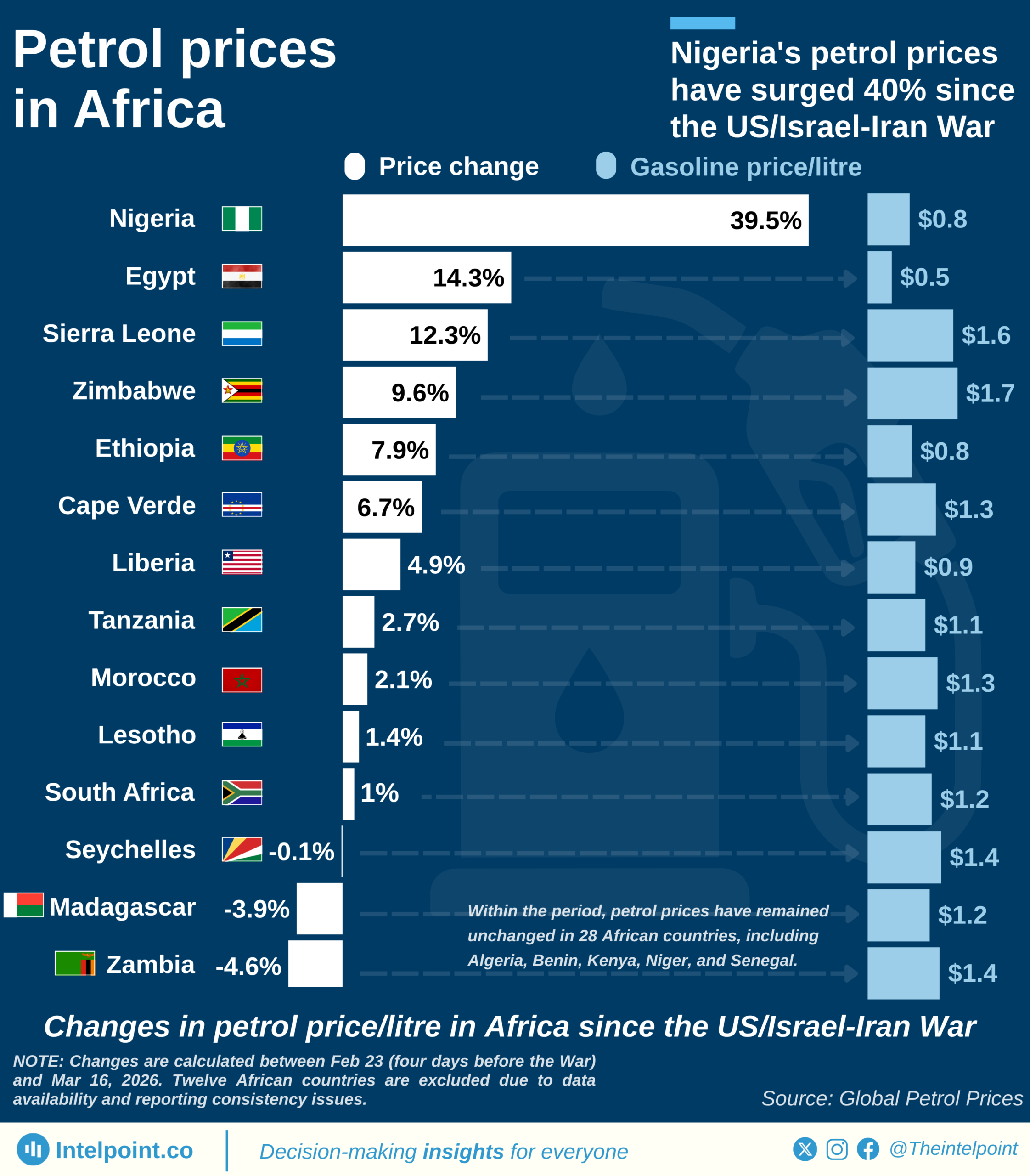
Nigeria's petrol prices have surged 40% since the US/Israel-Iran war
  • Nigeria recorded the largest petrol price increase in Africa, rising 39.5% between February 23 and March 16, 2026.
  • Egypt experienced a 14.3% increase, making it one of the largest price jumps in Africa.
  • Nigeria’s increase is more than double that of Egypt.
  • A number of African countries recorded very small price changes, including Tanzania (2.7%), Morocco (2.1%), and South Africa (1%).
  • A few countries actually saw declines in fuel prices, including Madagascar (-3.9%) and Zambia (-4.6%).
  • During the period, petrol prices remained unchanged in 28 African countries.

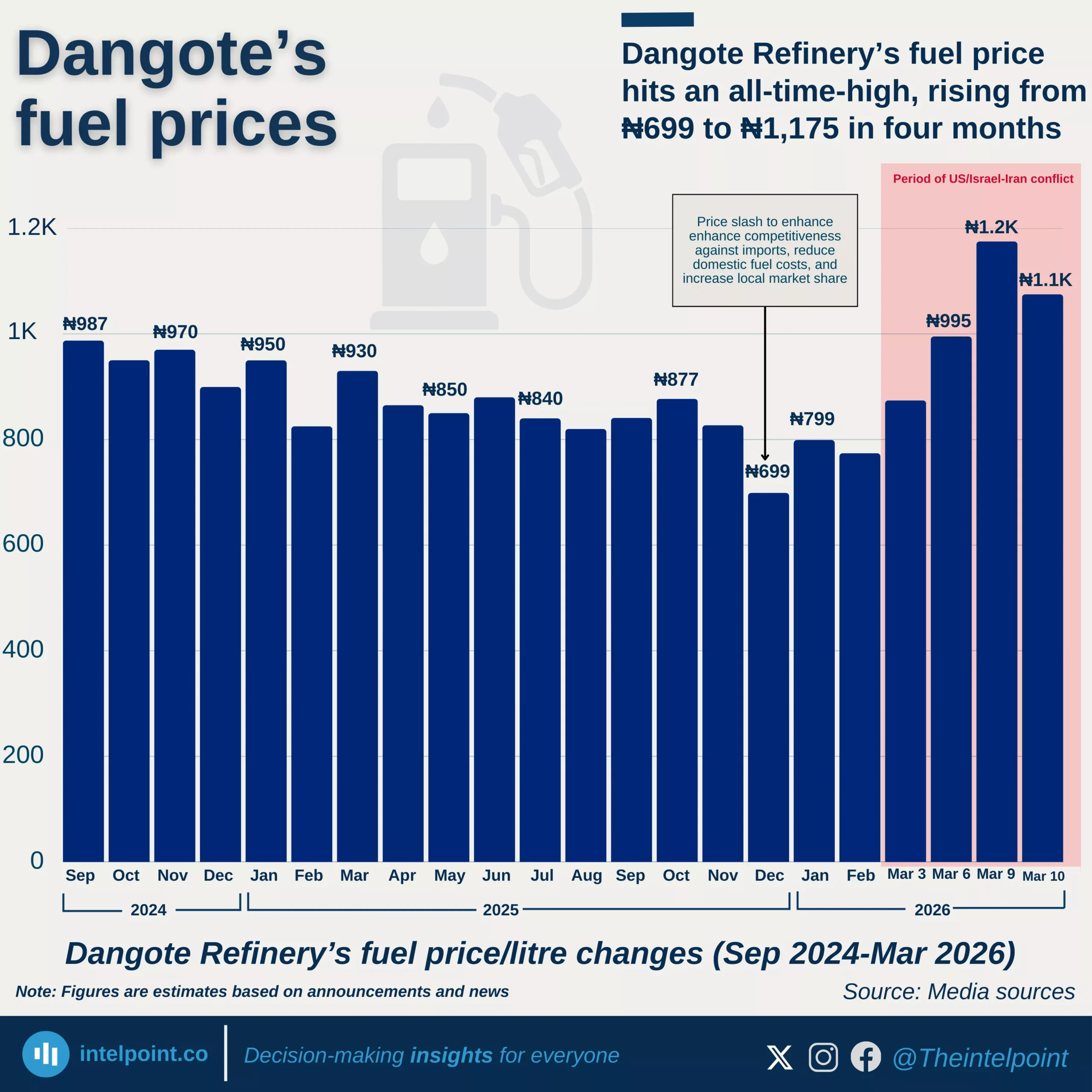
Dangote Refinery’s fuel price hits an all-time-high, rising from ₦699 to ₦1,175 in four months
Fuel prices from Dangote Refinery reached an all-time high of ₦1,175 per litre in March 2026. The lowest recorded price in the period was ₦699 per litre in December 2025, showing a wide price swing. The jump from ₦699 to ₦1,175 happened in roughly four months.
  • Prices earlier in the timeline hovered mostly between ₦820 and ₦987 during late 2024 and much of 2025.
  • The December 2025 price cut was aimed at making locally refined fuel more competitive against imports.
  • After the price drop, fuel costs began rising again in early 2026, reaching ₦995 by early March before climbing further.
  • Global geopolitical tensions affecting oil markets contributed to the upward pressure on prices.

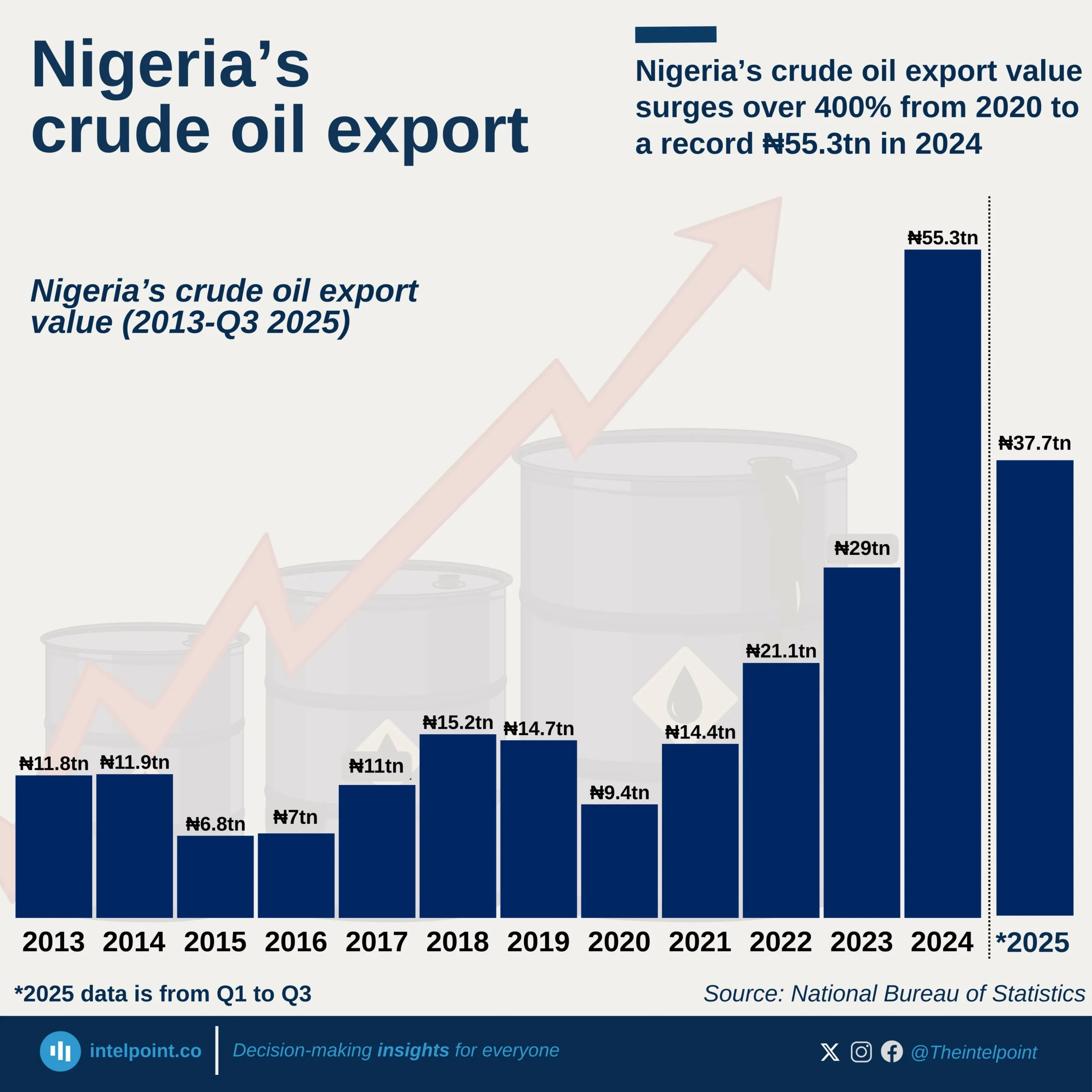
Nigeria’s crude oil export value surges over 400% from 2020 to a record ₦55.3tn in 2024
  • Export values have grown over 400%, rising from ₦11.8 trillion in 2013 to a peak of ₦55.3 trillion in 2024, a fivefold increase driven by rising oil prices and a weaker naira.
  • 2015 and 2016 were the hardest years, with export values crashing as low as ₦6.8 trillion in 2015, reflecting the brutal impact of the global oil price collapse on Nigeria's most critical export.
  • The most explosive growth came from 2023 onwards, with values surging past ₦29 trillion in 2023 and peaking at ₦55.3 trillion in 2024, largely driven by the naira depreciation following Nigeria's 2023 foreign exchange reforms.
  • The first nine months of 2025 saw a slower pace than the previous year, with ₦37.7 trillion recorded between Q1 and Q3, lower than the ₦41.5 trillion recorded during the same period in 2024.

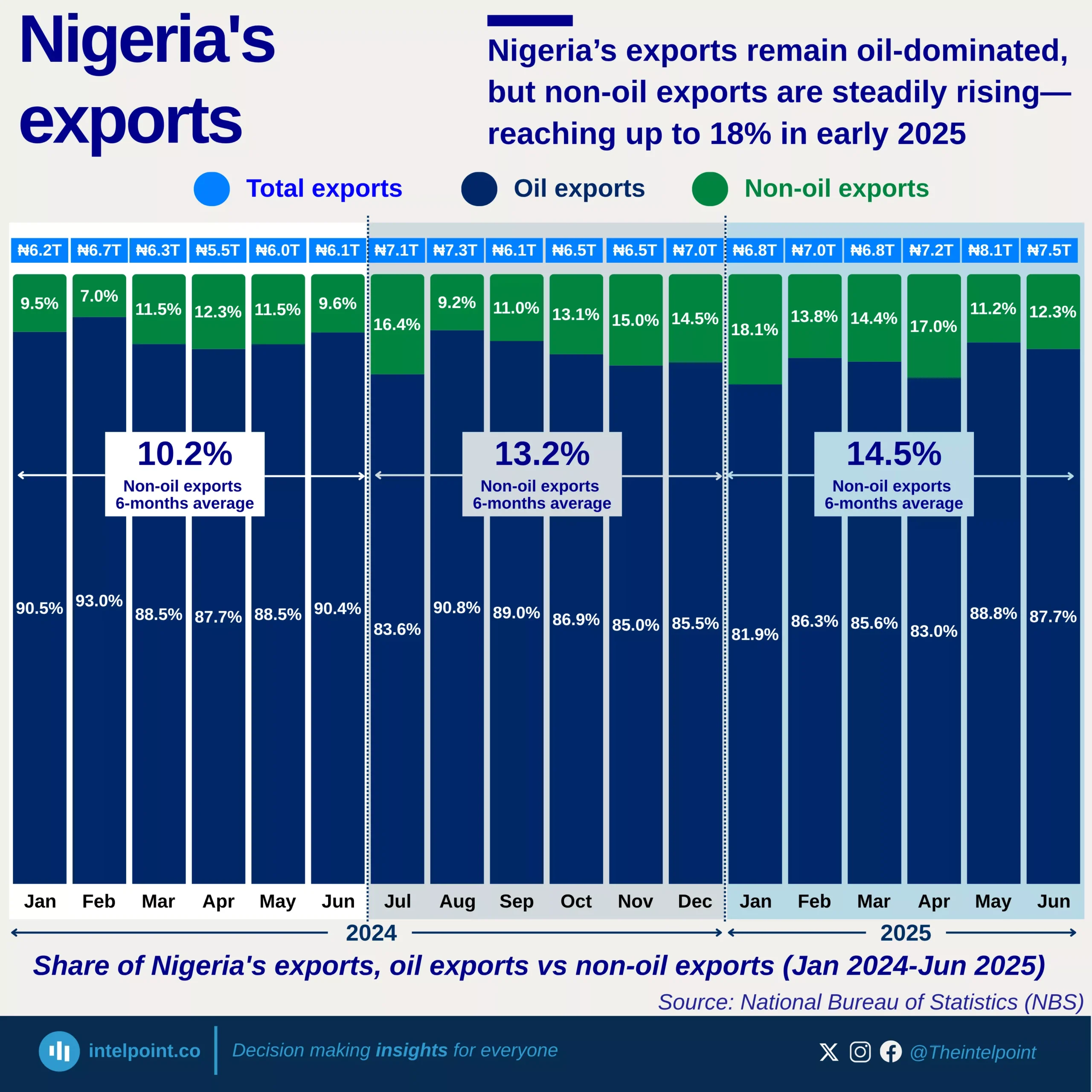
Nigeria’s exports remain oil-dominated, but non-oil exports are steadily rising—reaching up to 18% in early 2025
  • Oil exports continued to dominate, averaging over 88% of total exports in 2024 and remaining above 81% in the first half of 2025.
  • Non-oil exports rose gradually, from a low of 6.9% (February 2024) to a high of 18.1% (January 2025).
  • Peaks in non-oil export contributions occurred in July 2024 (16.4%) and January–April 2025 (13–18%), indicating progress toward diversification.
  • Total exports remained heavily oil-driven, though sustained double-digit non-oil shares in late 2024 and early 2025 show a slow shift.

POPULAR TOPICS
SIGN UP TO OUR NEWSLETTER
Get periodic updates about the African startup space, access to our reports, among others.
Subscribe Here
Subscription Form

A product of Techpoint Africa. All rights reserved