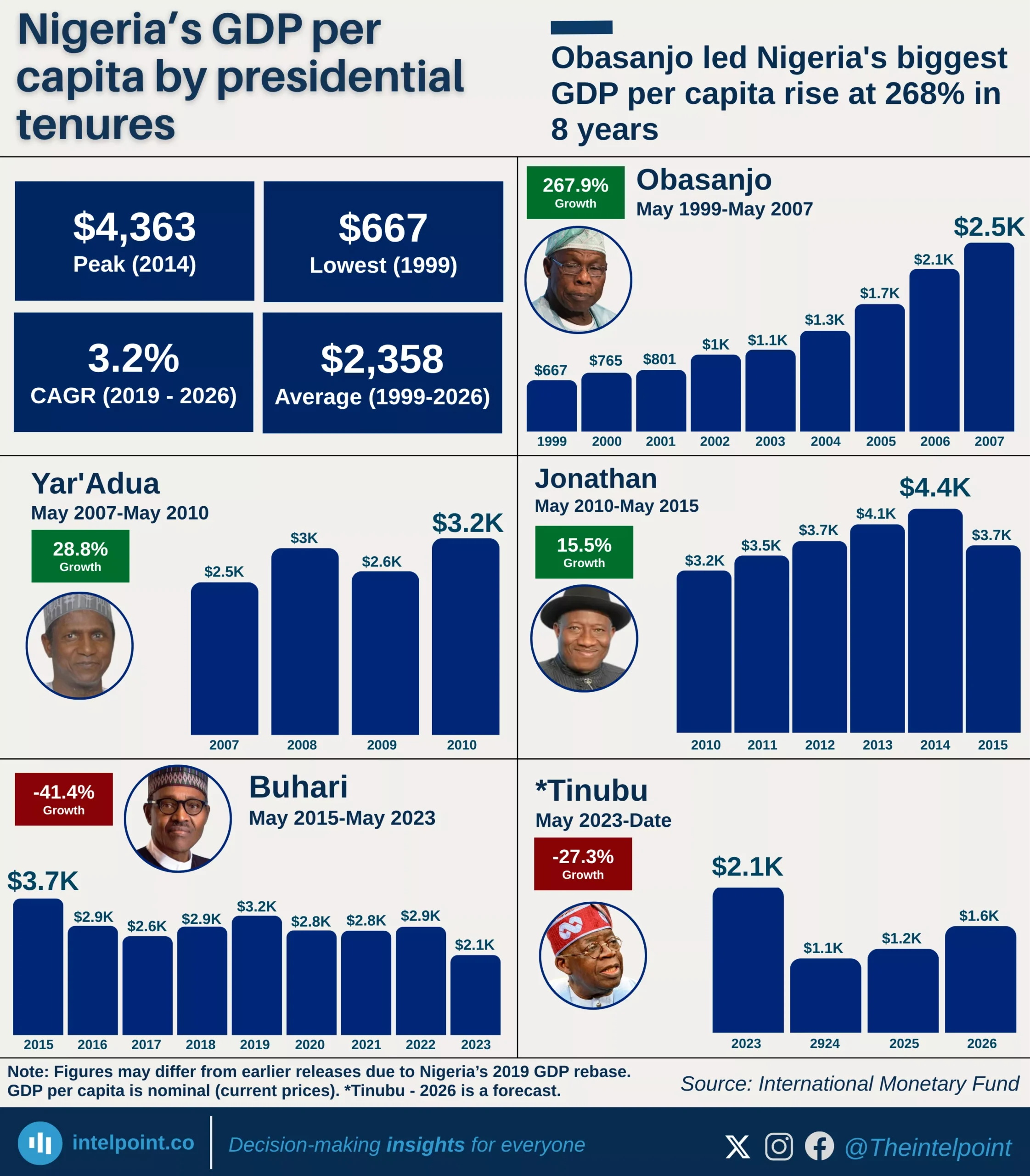
From 1999 to 2014, Nigeria's GDP per capita climbed strongly, rising from $667 to a record $4,363. The standout period was Obasanjo’s tenure, during which GDP per capita surged by 267.9%, the largest increase of any administration in the Fourth Republic.
Obasanjo’s strong GDP per capita growth was due to a mix of economic reforms and favourable global oil conditions. Nigeria benefited from rising crude prices in the 2000s, which lifted export earnings, government revenue, and foreign exchange inflows. At the same time, the government introduced tighter macroeconomic management, including an oil-price-based fiscal rule that saved part of oil windfalls rather than spending them immediately.
Another big factor was debt relief. Nigeria’s 2005 Paris Club deal cut a large external debt burden, improved debt sustainability, and helped restore investor confidence. That created more room for public spending and improved Nigeria’s standing with international investors and lenders.
The period also coincided with major structural reforms. Telecom liberalisation expanded mobile access rapidly and opened up one of the country’s fastest-growing sectors, while banking consolidation strengthened the financial system and increased confidence in Nigerian banks. Together, these changes supported broader business activity beyond oil.
The decline after the 2014 peak was not caused by one single event; Nigeria was hit by the oil price crash after 2014, foreign-exchange distortions, weaker oil output, inflation, and the COVID-19 shock. The World Bank also points to costly fuel subsidies, weak tax capacity, exchange-rate management problems, monetisation of deficits, and food-price pressures as reasons Nigeria lost macroeconomic stability and momentum in living standards.