NNPC has recorded ₦6.8 trillion profit since 2020

Since 2020, the Nigerian National Petroleum Company Limited (NNPC) has seen a 1,048% profit increase, totalling ₦6.8 trillion over four years.

From nearly eliminating losses in 2019, NNPC achieved a 16,982% profit surge in 2020. The growth persisted with 135% in 2021 and 278% in 2022.

Despite a steady 29% increase in 2023, rising debts and fuel scarcity cast doubt on the sustainability of this success.
Source:

NNPCL

Period:

2018-2023
HTML code to embed chart
Want a bespoke report?
Reach out
Tags
Related Insights

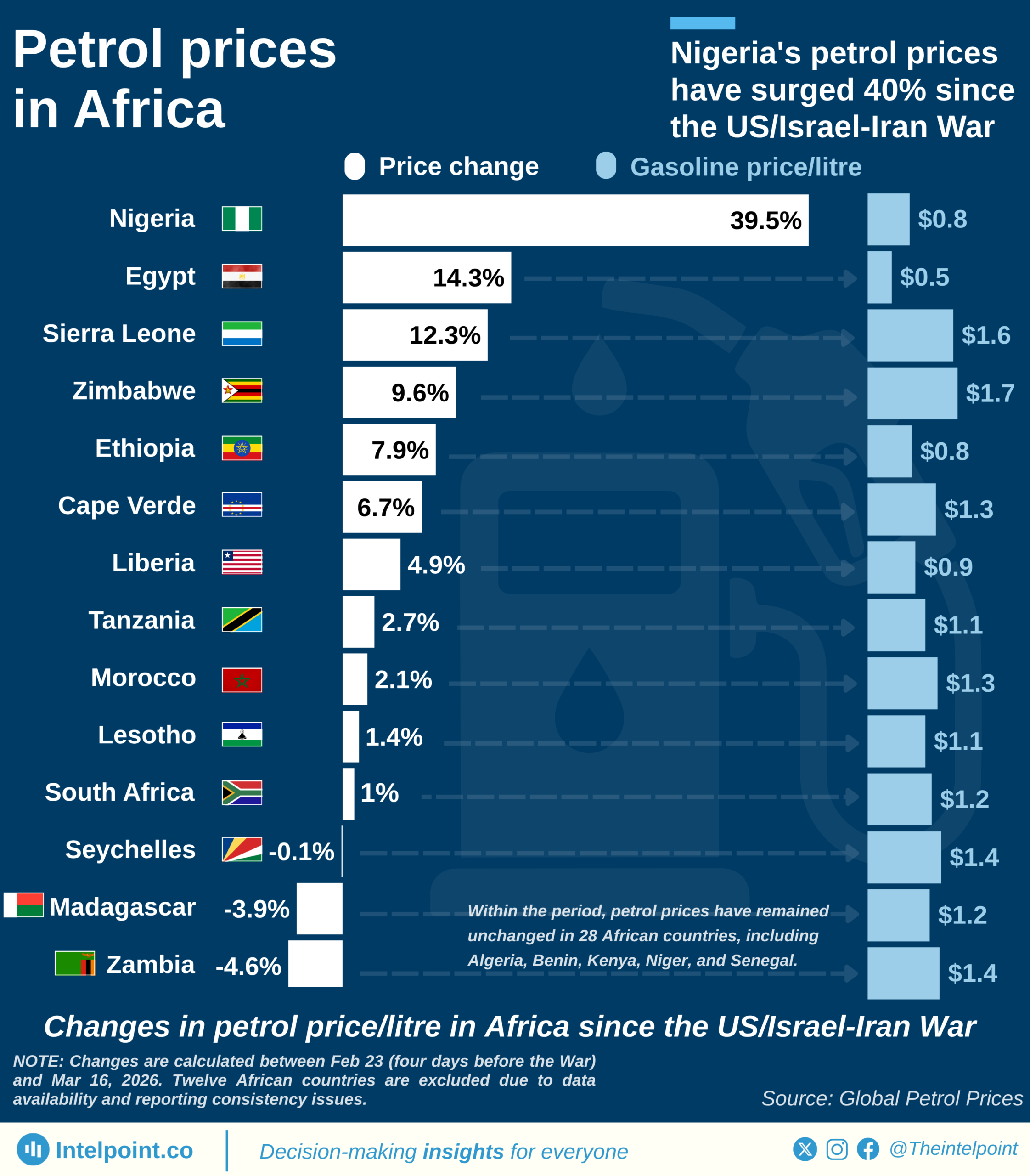
Nigeria's petrol prices have surged 40% since the US/Israel-Iran War
  • Nigeria recorded the largest petrol price increase in Africa, rising 39.5% between February 23 and March 16, 2026.
  • Egypt experienced a 14.3% increase, making it one of the largest price jumps in Africa.
  • Nigeria’s increase is more than double that of Egypt.
  • A number of African countries recorded very small price changes, including Tanzania (2.7%), Morocco (2.1%), and South Africa (1%).
  • A few countries actually saw declines in fuel prices, including Madagascar (-3.9%) and Zambia (-4.6%).
  • During the period, petrol prices remained unchanged in 28 African countries.

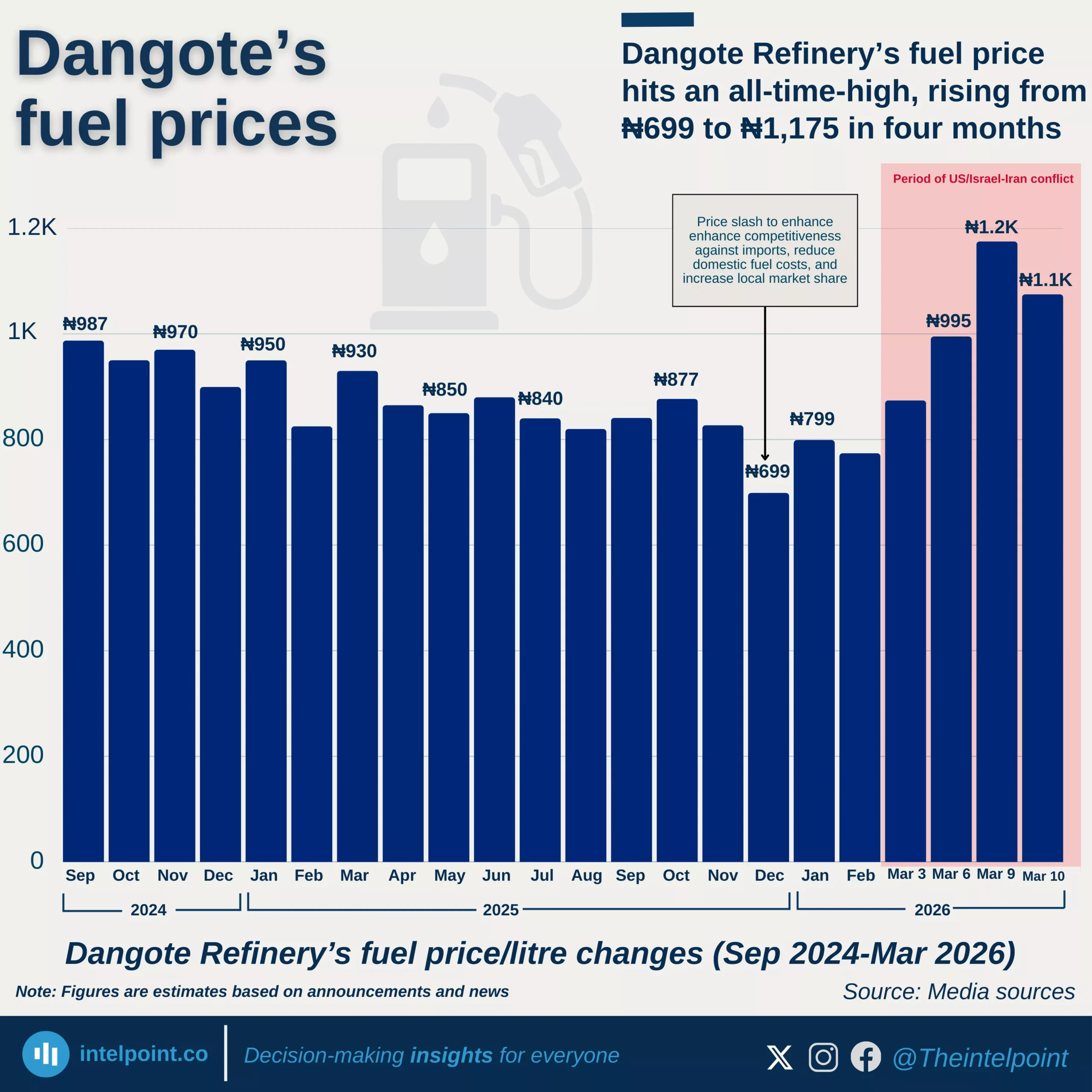
Dangote Refinery’s fuel price hits an all-time-high, rising from ₦699 to ₦1,175 in four months
Fuel prices from Dangote Refinery reached an all-time high of ₦1,175 per litre in March 2026. The lowest recorded price in the period was ₦699 per litre in December 2025, showing a wide price swing. The jump from ₦699 to ₦1,175 happened in roughly four months.
  • Prices earlier in the timeline hovered mostly between ₦820 and ₦987 during late 2024 and much of 2025.
  • The December 2025 price cut was aimed at making locally refined fuel more competitive against imports.
  • After the price drop, fuel costs began rising again in early 2026, reaching ₦995 by early March before climbing further.
  • Global geopolitical tensions affecting oil markets contributed to the upward pressure on prices.

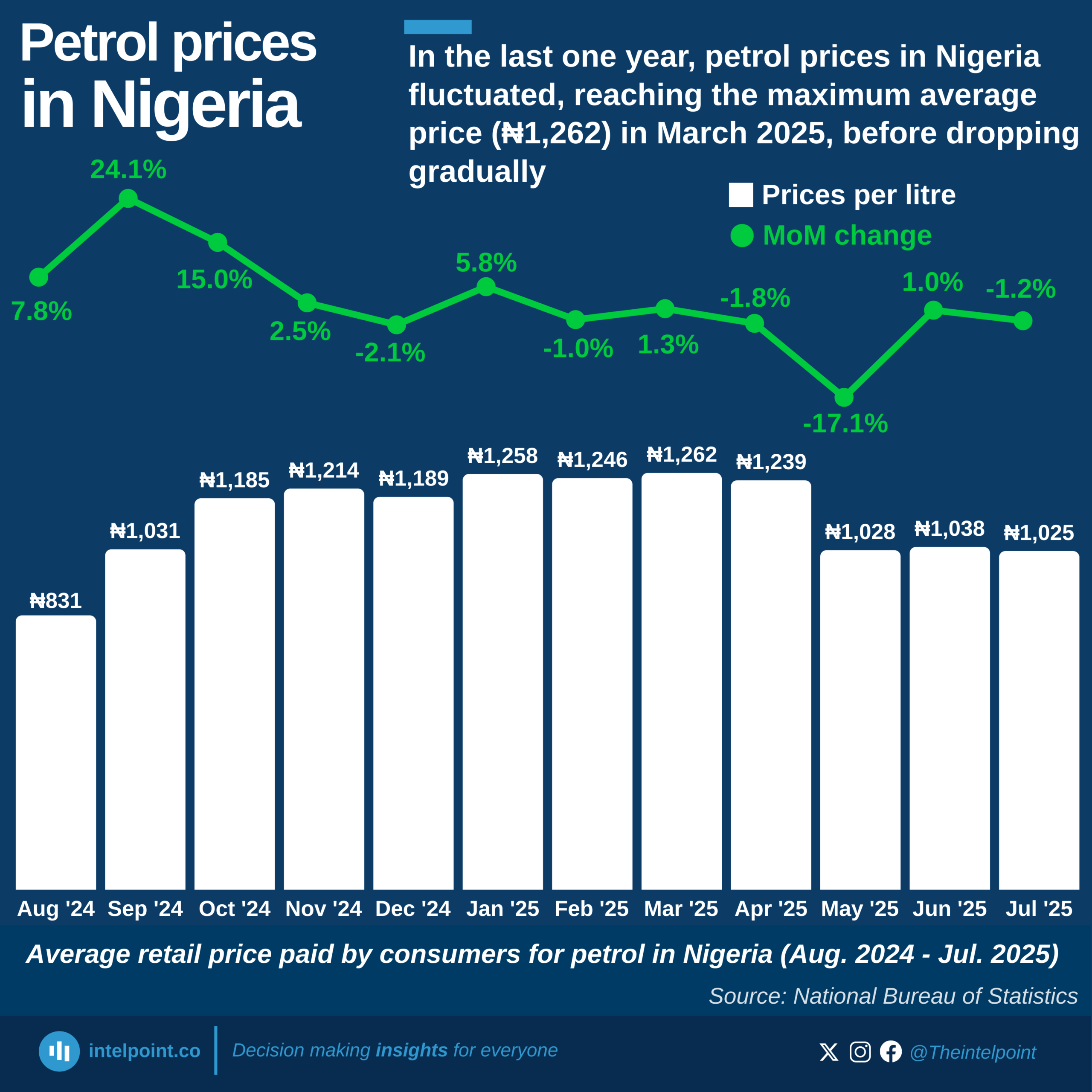
In the last one year, petrol prices in Nigeria fluctuated, reaching the maximum average price (₦1,262) in March 2025, before dropping gradually
  • Petrol prices in Nigeria rose by 52% between August 2024 (₦830.5) and March 2025 (₦1,261.7).
  • The highest monthly increase was in September 2024 (+24.1%), while the sharpest drop came in April 2025 (-17.1%).
  • By July 2025, prices had eased to ₦1,025, still 23% higher than a year earlier.
  • NNPC retail outlets offered significantly lower prices than the national average, with Abuja as low as ₦880 at the March 2025 peak.
  • Dangote Refinery offered relatively competitive pricing, ranging from ₦840 to ₦899, creating an alternative supply option.

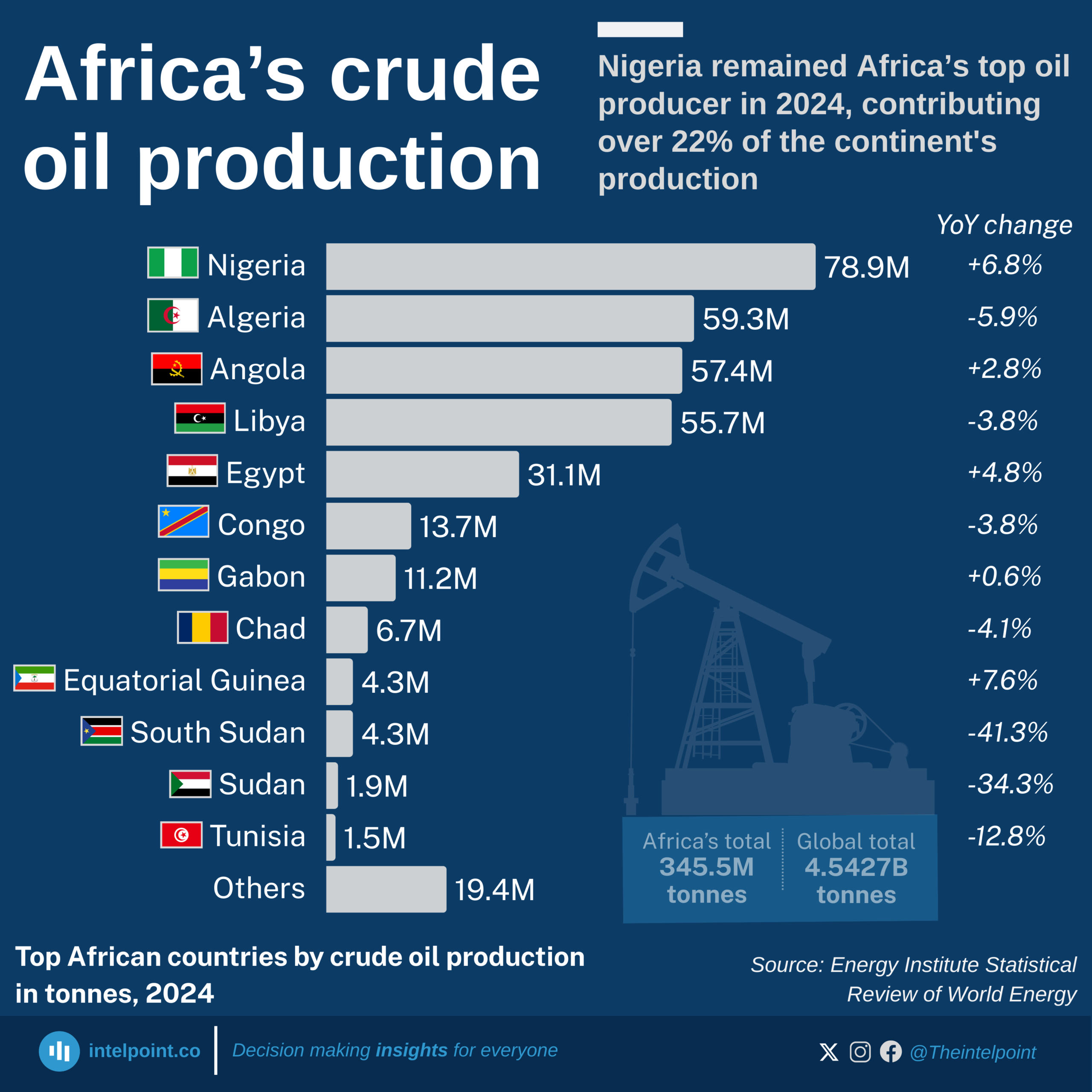
Nigeria remained Africa’s top oil producer in 2024, contributing over 22% of the continent's production
  • Nigeria led with 78.9 Mtoe, accounting for over 22% of Africa’s total oil output.
  • Algeria (59.3 Mtoe) and Angola (57.4 Mtoe) followed closely; the three top producers together supplied] 56% of the continent’s oil.
  • Africa’s total oil production was 345.5 Mtoe, just 7.6% of the global total (4,542.7 Mtoe).
  • The top 5 producers accounted for over 80% of Africa’s oil.

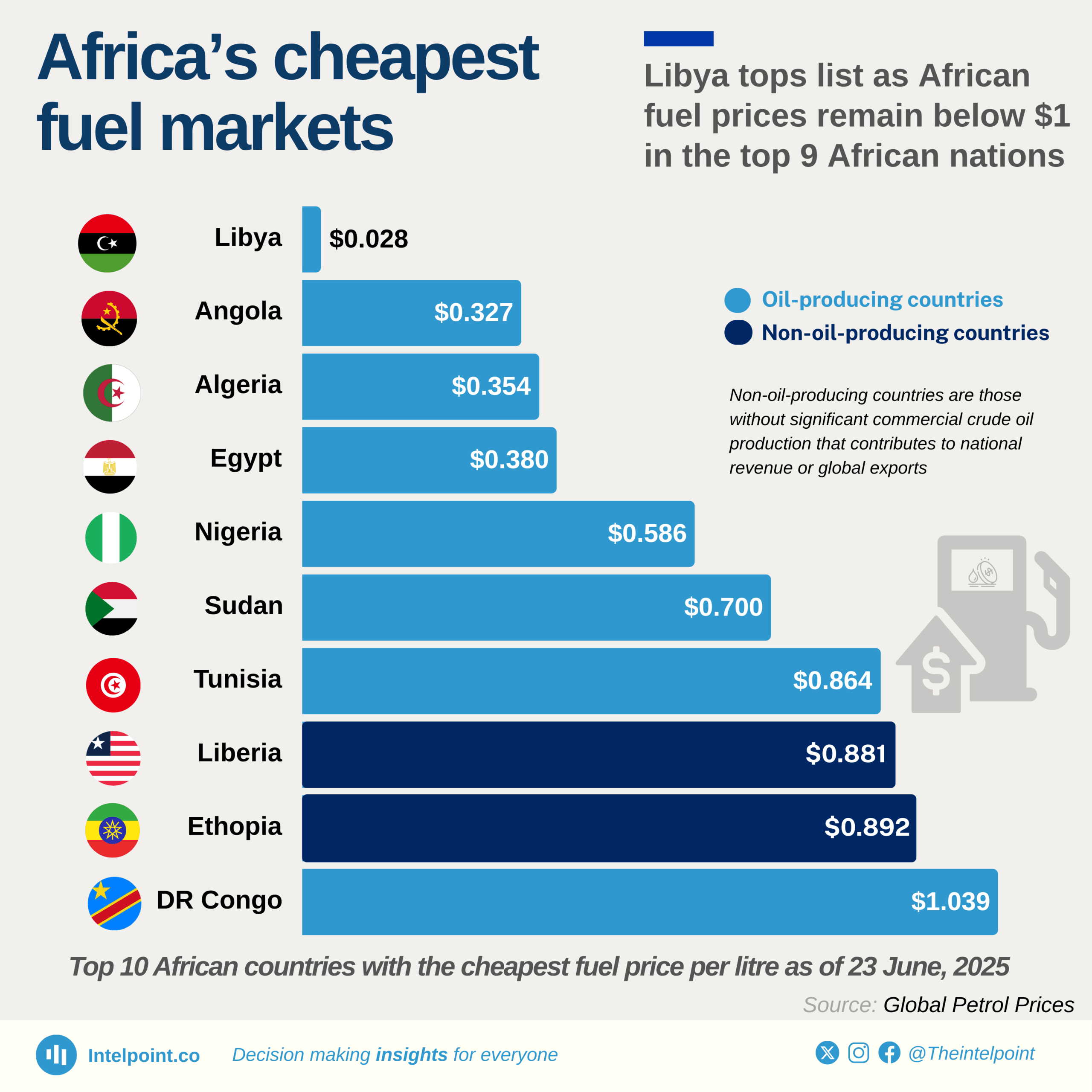
Libya tops list as African fuel prices remain below $1 in the top 9 African nations
  • Libya maintains its position as the cheapest fuel market in Africa with just $0.028 per litre.
  • Nine out of ten countries have fuel prices under $1 per litre, signalling widespread affordability across much of the continent.
  • Nigeria, despite partial subsidy reforms, still ranks among the cheapest with fuel priced at $0.586 per litre.
  • DR Congo is the only country in the top 10 where fuel costs exceed $1 per litre, standing at $1.039.
  • Ethiopia and Liberia are the only non-oil-producing countries among Africa’s top 10 cheapest fuel markets.

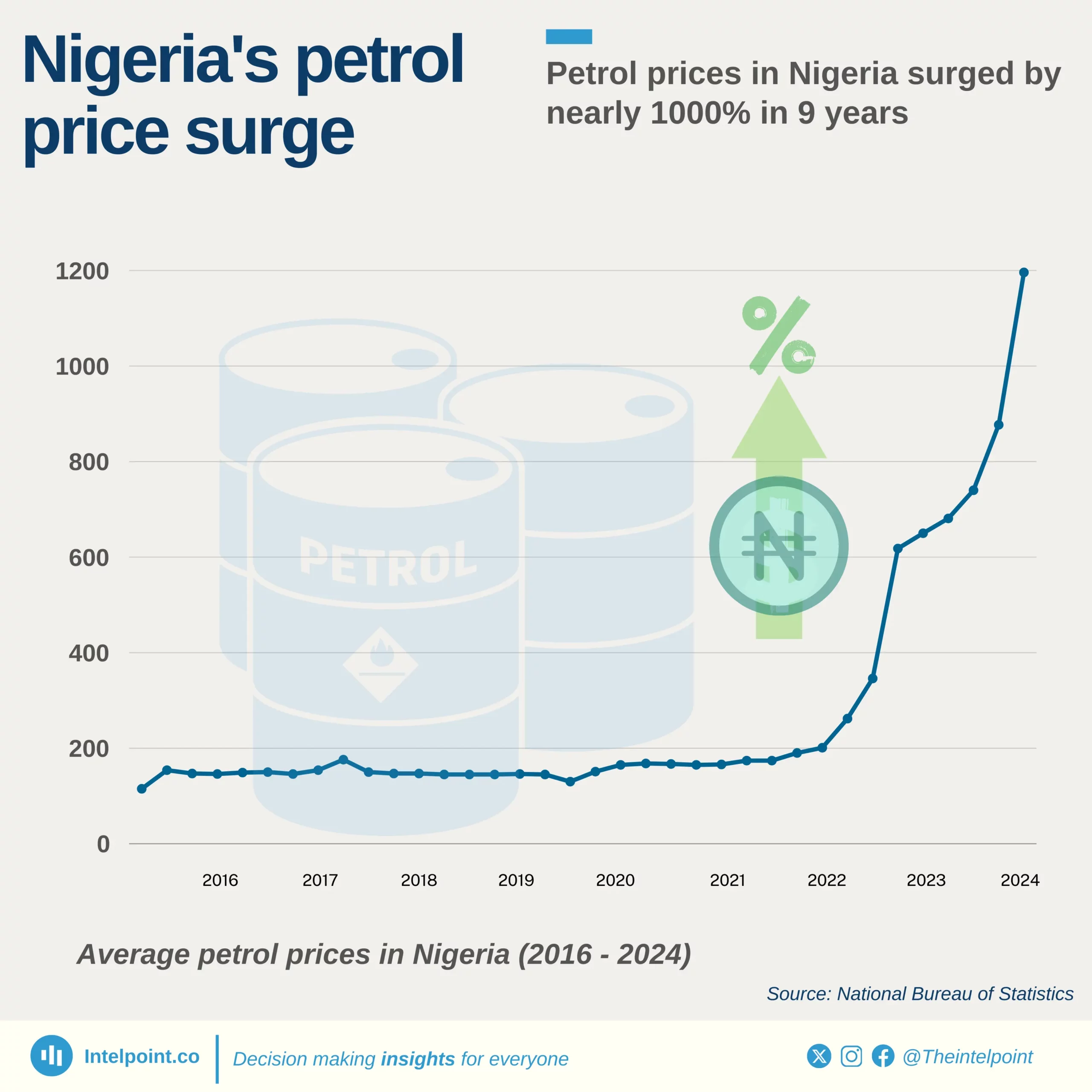
Petrol prices surged by nearly 1000% in 9 years
  • In February 2016, petrol was at its lowest price of 99.80 per litre, marking the last time fuel prices remained below 100.
  • By November 2024, petrol prices soared to an all-time high of 1,214.17 per litre, reflecting the compounded effects of inflation, currency depreciation, and global oil price volatility.
  • Over the nine-year period, the average petrol price stood at 272.65 per litre.
  • Between January 2016 and December 2024, petrol prices increased by 1,079.52, a staggering 984.96% rise, emphasising the long-term upward trajectory influenced by economic challenges, subsidy removals, and fluctuating exchange rates.
  • The most volatile period recorded a month-to-month price surge of over 129.23%.

POPULAR TOPICS
SIGN UP TO OUR NEWSLETTER
Get periodic updates about the African startup space, access to our reports, among others.
Subscribe Here
Subscription Form

A product of Techpoint Africa. All rights reserved