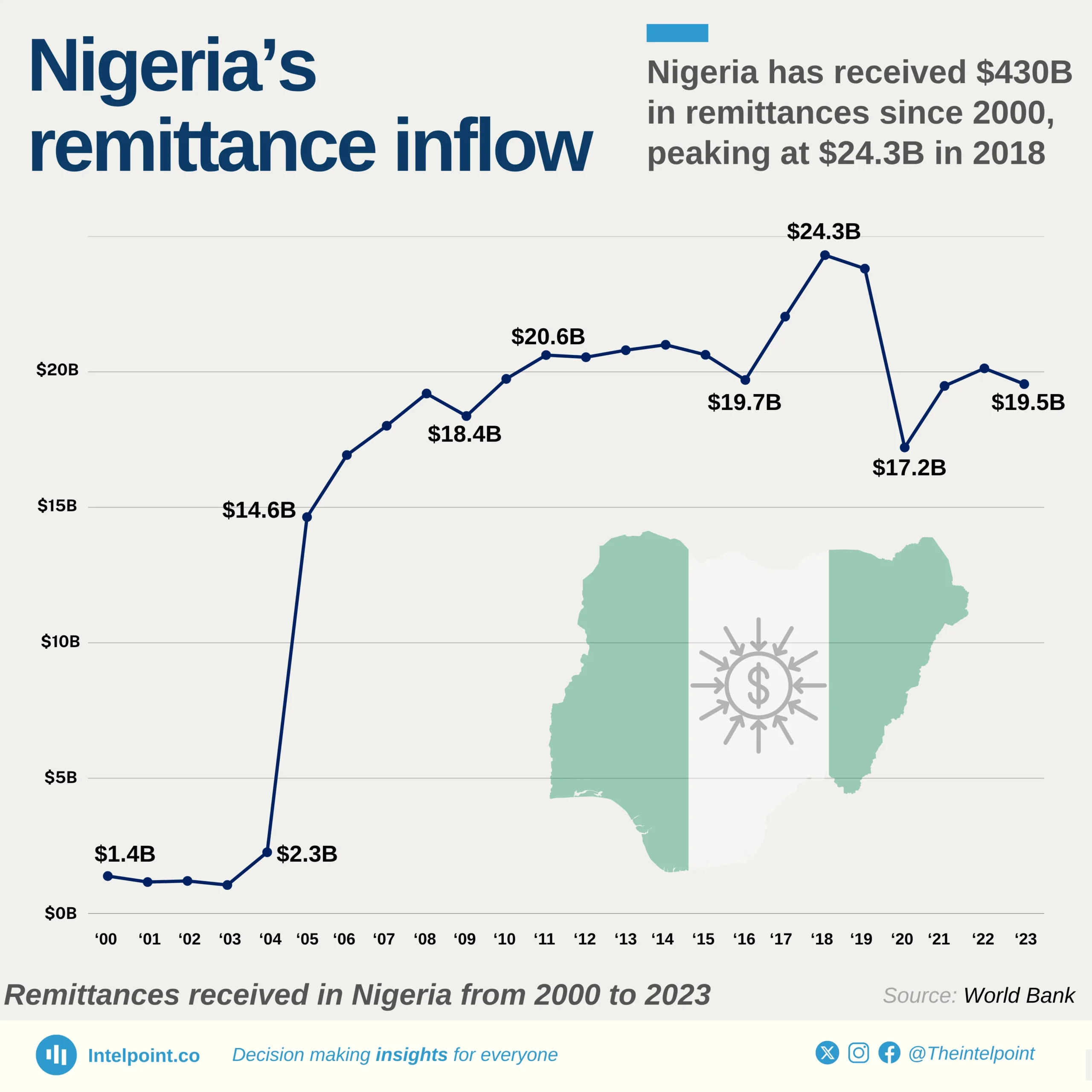
Nigeria has received $430B in remittances since 2000, peaking at $24.3B in 2018

Key takeaways

  • Nigeria received a total of approximately $430 billion in remittances between 2000 and 2023.
  • The highest amount recorded was in 2018, when remittances peaked at $24.31 billion.
  • In 2020, inflows dropped significantly to $17.21 billion due to the global COVID-19 crisis.
  • Between 2021 and 2023, remittances remained stable, averaging around $19.7 billion per year.

Over the past two decades, remittance inflows have become a critical pillar of Nigeria’s economy, growing from just $1.39 billion in 2000 to over $19 billion annually in recent years. This 23-year journey reflects not only Nigeria’s deep diaspora engagement but also the economic dependence of many households on foreign transfers.

The year 2018 marked a milestone, with remittances hitting an all-time high of $24.31 billion, underscoring the strength of global Nigerian networks. However, this was followed by a significant dip in 2020, when inflows dropped by 27.7% due to the COVID-19 pandemic’s global disruption. Despite this, Nigeria’s remittance figures have bounced back and held steady above $19 billion in the last three years, demonstrating the diaspora's continued economic support in the face of global uncertainties.
Source:

World Bank

Period:

2000 to 2023
HTML code to embed chart
Want a bespoke report?
Reach out
Tags
Related Insights

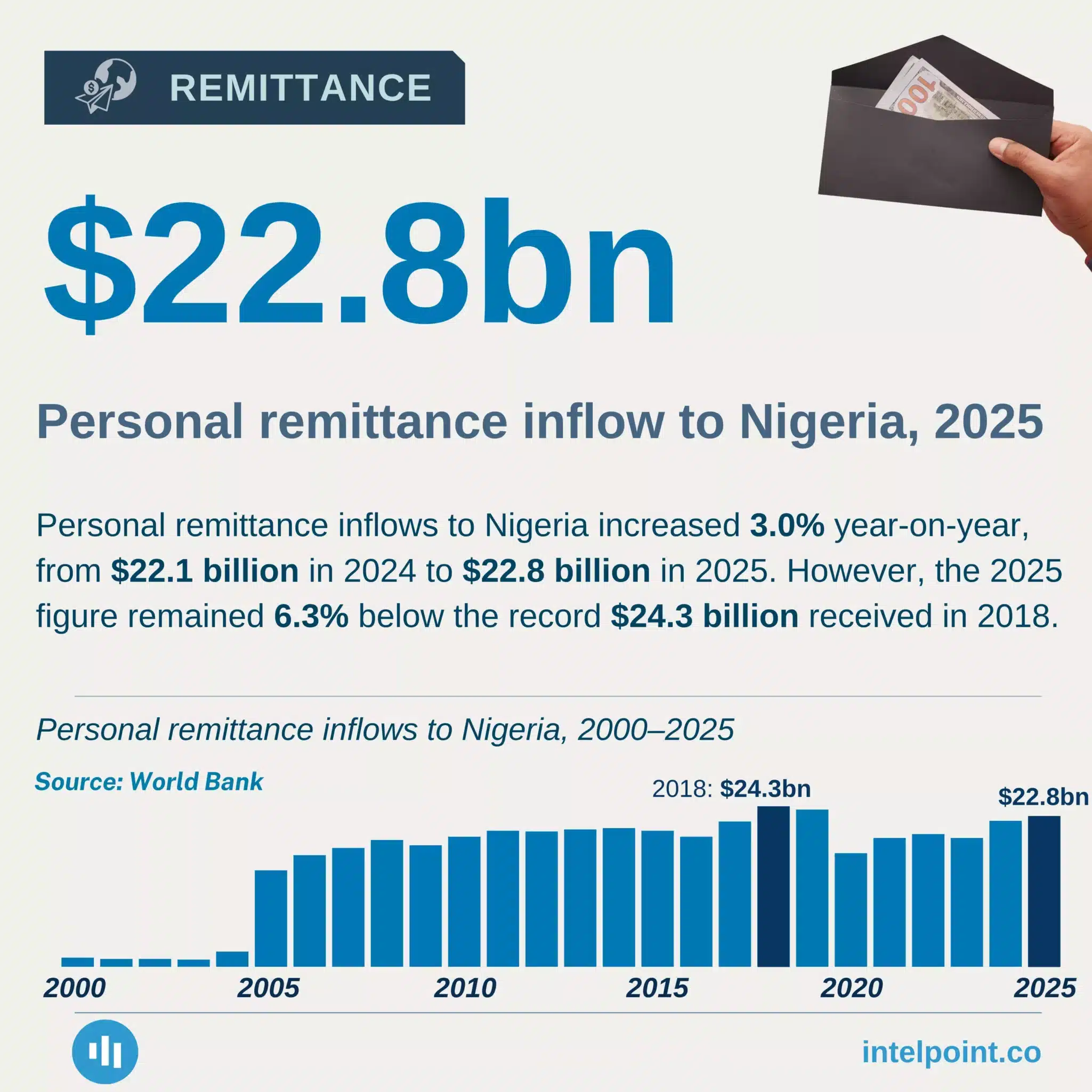
Personal remittance inflows to Nigeria increased 3.0% year-on-year, from $22.1 billion in 2024 to $22.8 billion in 2025
  • Nigeria received $22.8 billion in personal remittances in 2025; a 3% year-on-year increase
  • Inflows remained 6.3% below the 2018 record of $24.3 billion.
  • Remittances have recovered from the $17.2 billion recorded in 2020.
  • Nigeria’s 2025 remittance inflows were 32.6% higher than in 2020.
  • Remittances accounted for 7.8% of GDP in 2025.
  • Remittances’ share of GDP fell from 8.8% in 2024.
  • Remittances’ share of GDP remained above the 4.0% recorded in 2023.

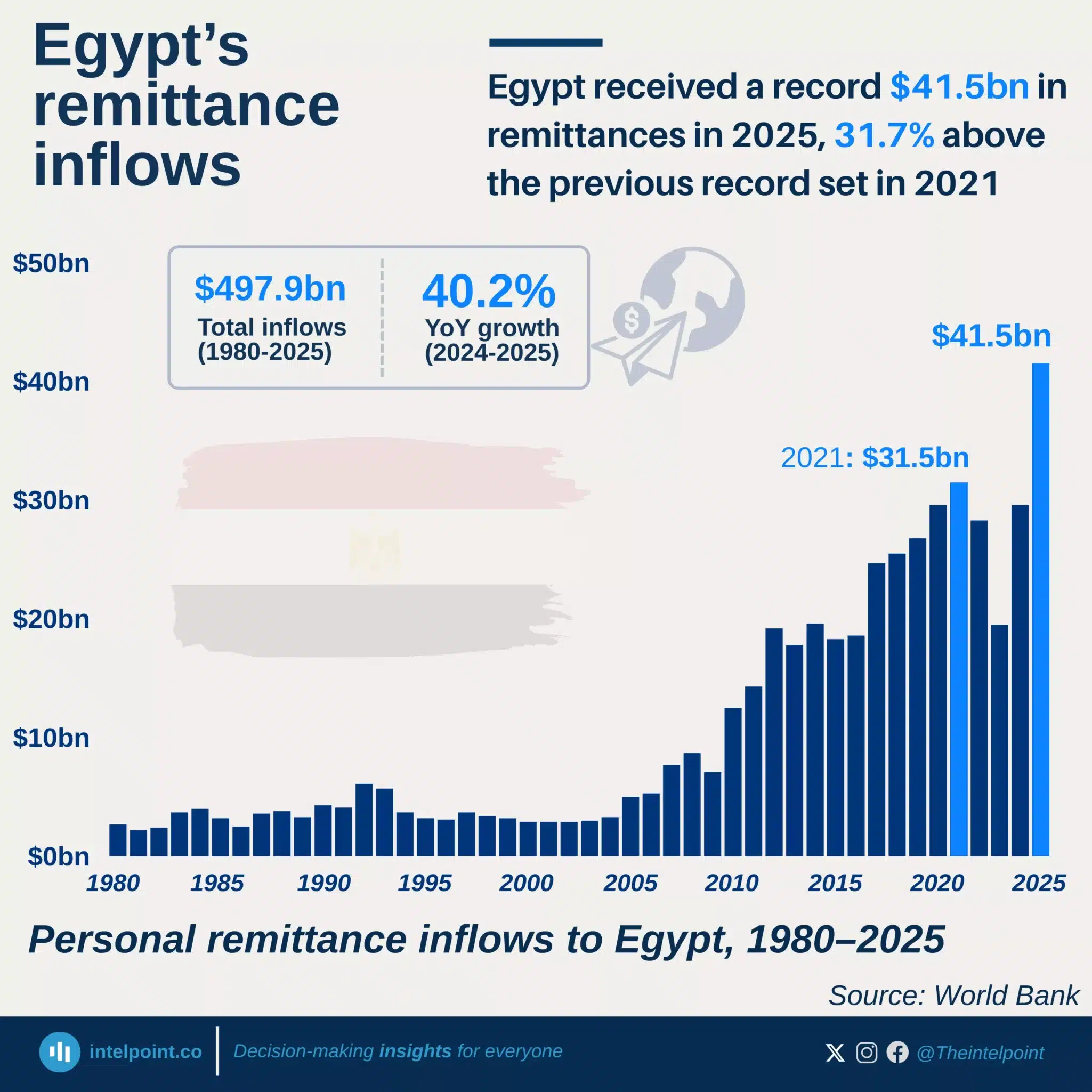
Egypt received a record $41.5bn in remittances in 2025, 31.7% above the previous record set in 2021
  • Egypt received a record $41.5 billion in remittances in 2025.
  • Remittances increased 40.2% from 2024.
  • The 2025 inflow was 31.7% above the previous record set in 2021.
  • Remittances fell to $19.5 billion in 2023 before rebounding sharply.
  • Remittances more than doubled between 2023 and 2025.
  • Egypt received about $497.9 billion in remittances from 1980 to 2025.
  • The March 2024 FX reforms preceded the sharp recovery in remittance inflows.
  • 2025 marked the highest annual remittance inflow in the series.

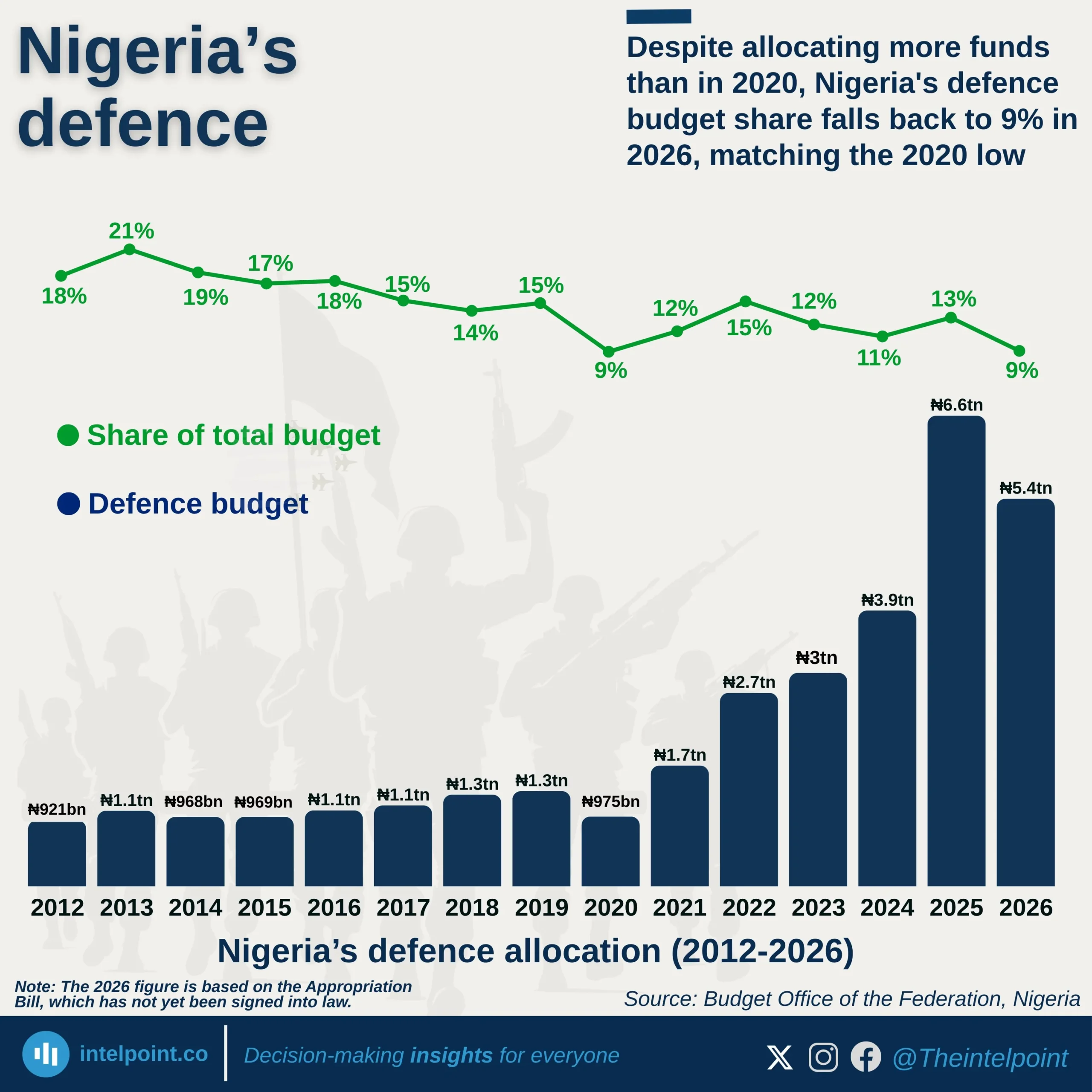
Despite allocating more funds than in 2020, Nigeria's defence budget share falls back to 9% in 2026, matching the 2020 low
  • Nominal spending surged, but inflation and naira depreciation eroded real gains. From ₦921 billion in 2012 to ₦6.57 trillion in 2025, the absolute figure may seem dramatic, but Nigeria's security challenges intensified over the same period.
  • Defence commanded over 21% of the budget in 2013. From 2024 to 2026, that figure has fallen below 14%, with 2026 hitting a historic low of 9.3%.
  • Boko Haram, banditry, and separatist tensions peaked in 2020, resulting in a cut that saw defence's share fall to just 9.2%, the lowest on record at that point.
  • The jump to ₦6.57trn (13.2%) in 2025 marks the sharpest year-on-year absolute increase in the dataset. But 2026 reversed this again, with the rate dropping to 9.3%.

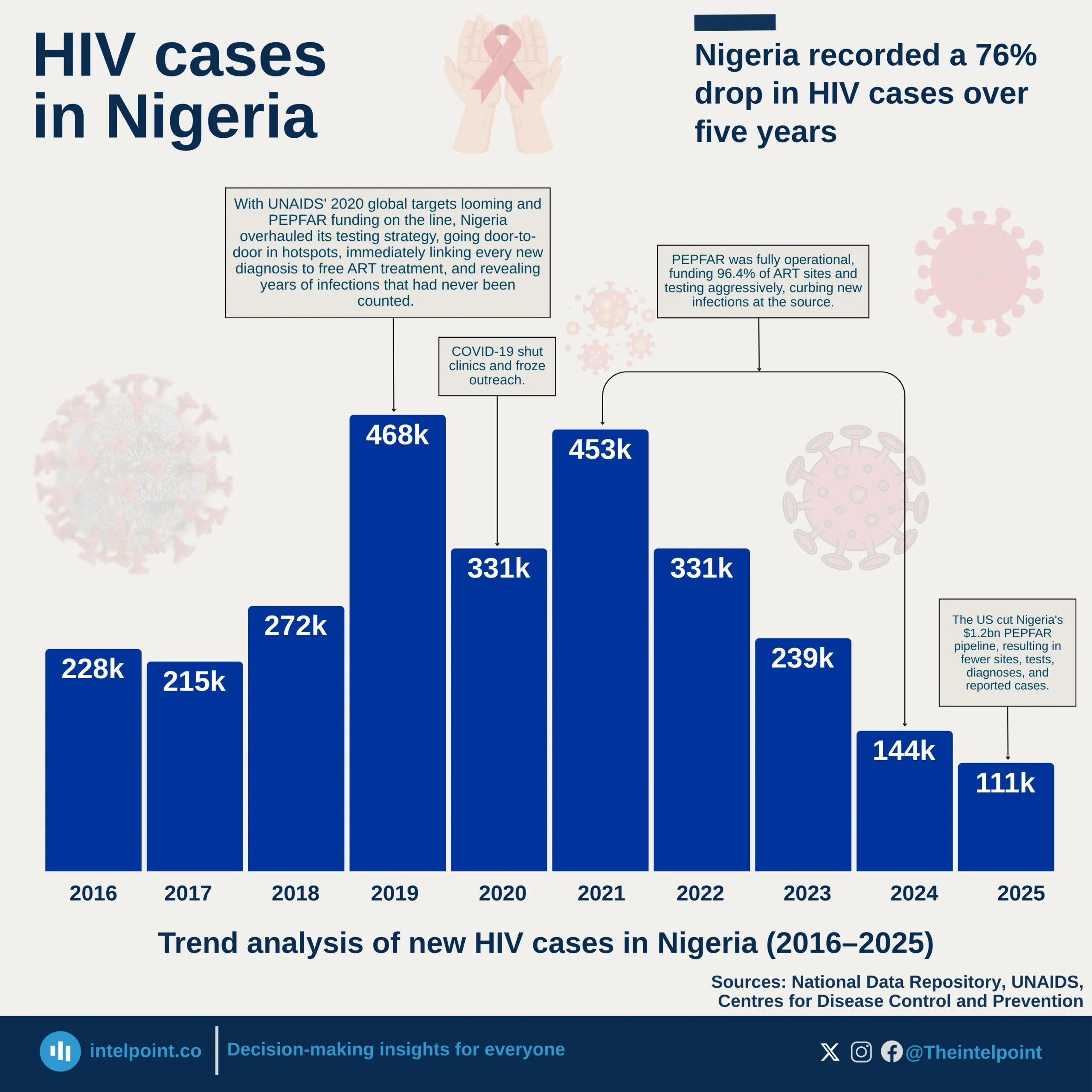
Nigeria recorded a 76% drop in HIV cases over five years
  • The 2019 number revealed the truth — years of underdiagnosis were corrected in a single year when PEPFAR restructured testing entirely.
  • The 76% decline from 2019 to 2024 is one of the most significant HIV reductions in Africa in a single decade.
  • One year of disruption in 2020 erased an entire year of progress, creating a backlog that took until 2022 to clear.
  • With PEPFAR's $1.2 billion pipeline cut, fewer Nigerians are being tested, meaning fewer cases appear on paper while the virus spreads undetected.

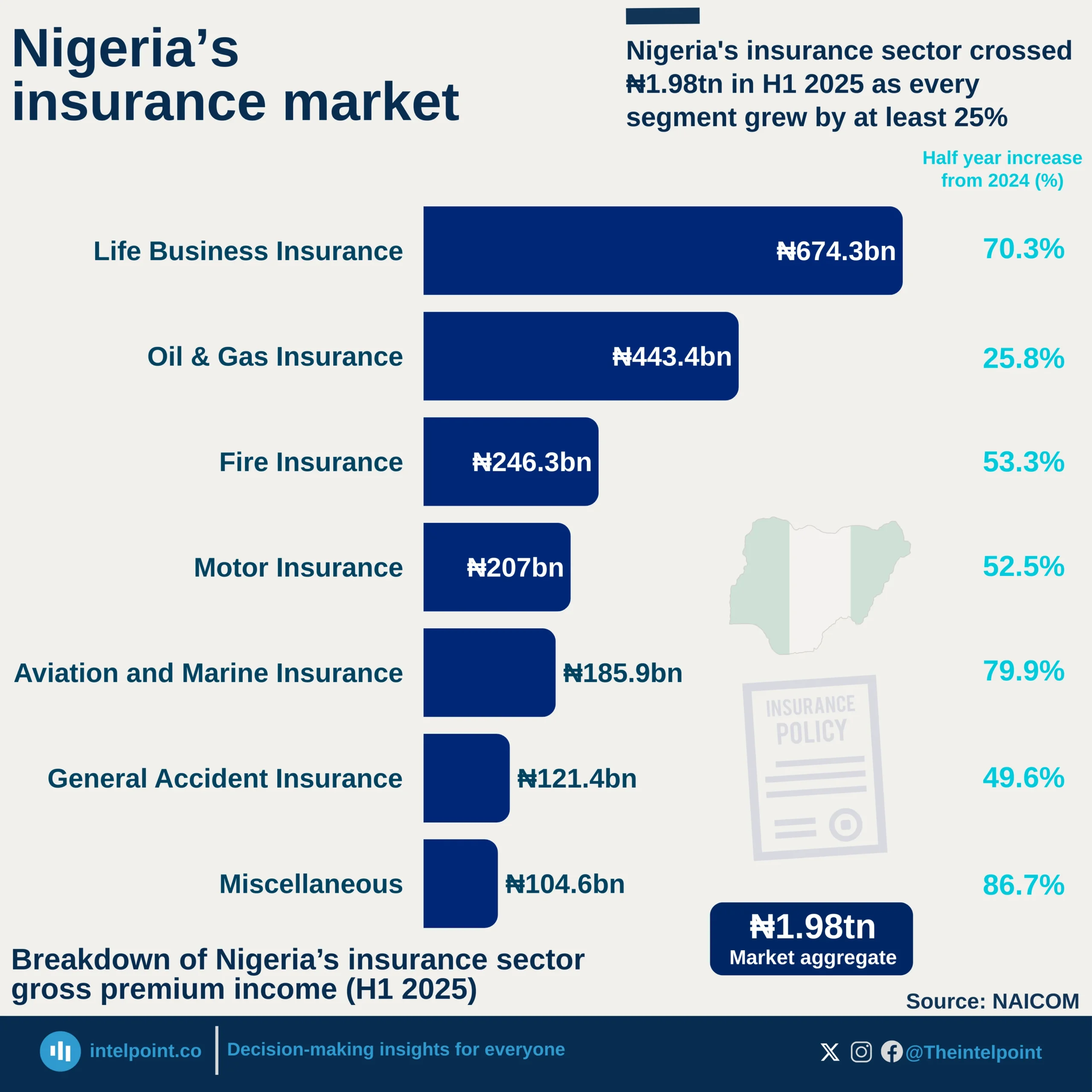
Nigeria's insurance sector crossed ₦1.98tn in H1 2025 as every segment grew by at least 25%
  • Life Business was the single largest segment, and its 70.3% jump signals that more Nigerians are thinking seriously about financial protection for their families.
  • Miscellaneous, the smallest segment, posted the biggest growth at 86.7%, suggesting new and unconventional insurance products are gaining serious traction.
  • Aviation & Marine nearly doubled, with 79.9% growth in a sector tied to trade and logistics, reflecting Nigeria's expanding import/export activity and the rising cost of cargo and aircraft risk coverage.
  • Motor (52.5%), Fire (53.3%), and General Accident (49.6%) grew by roughly half, indicating broad-based sector expansion rather than isolated pockets of growth.

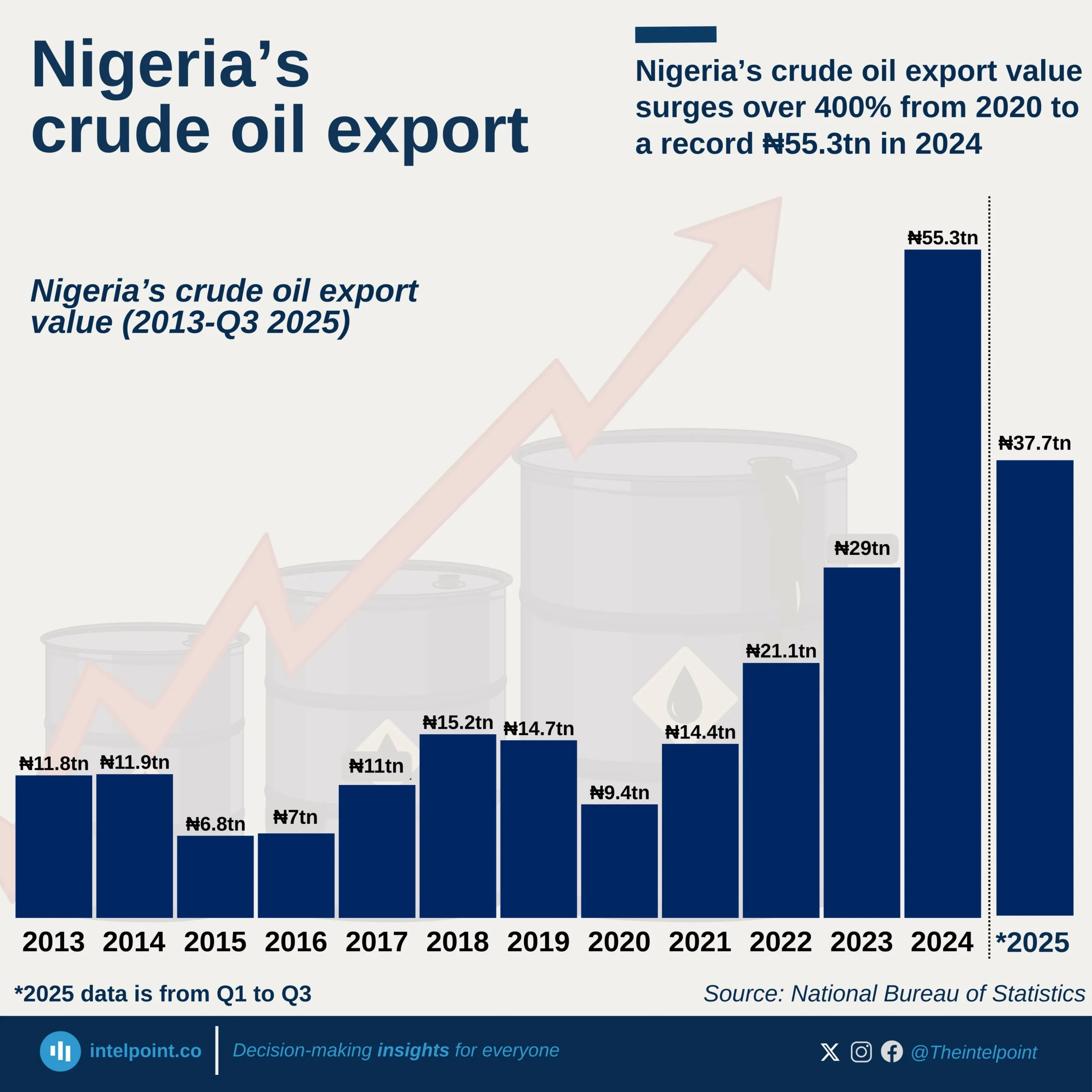
Nigeria’s crude oil export value surges over 400% from 2020 to a record ₦55.3tn in 2024
  • Export values have grown over 400%, rising from ₦11.8 trillion in 2013 to a peak of ₦55.3 trillion in 2024, a fivefold increase driven by rising oil prices and a weaker naira.
  • 2015 and 2016 were the hardest years, with export values crashing as low as ₦6.8 trillion in 2015, reflecting the brutal impact of the global oil price collapse on Nigeria's most critical export.
  • The most explosive growth came from 2023 onwards, with values surging past ₦29 trillion in 2023 and peaking at ₦55.3 trillion in 2024, largely driven by the naira depreciation following Nigeria's 2023 foreign exchange reforms.
  • The first nine months of 2025 saw a slower pace than the previous year, with ₦37.7 trillion recorded between Q1 and Q3, lower than the ₦41.5 trillion recorded during the same period in 2024.

POPULAR TOPICS
SIGN UP TO OUR NEWSLETTER
Get periodic updates about the African startup space, access to our reports, among others.
Subscribe Here
Subscription Form

A product of Techpoint Africa. All rights reserved