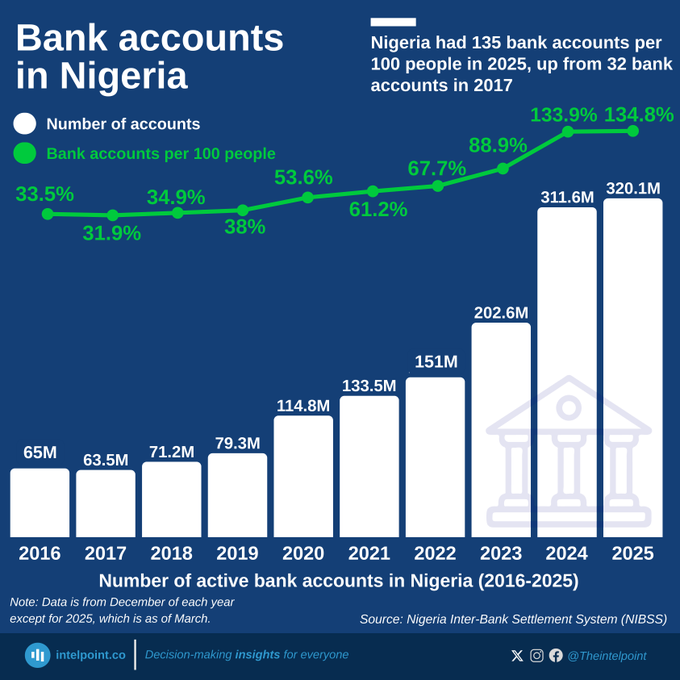
Nigeria’s banking landscape has undergone transformation over the past decade. In 2016, the country had about 65 million active bank accounts. By 2025, that number had risen to more than 320 million. More striking is the shift in access: from 32 accounts per 100 people in 2017 to nearly 135 per 100 people in 2025. This means that, on average, Nigerians now hold more than one bank account each, reflecting the extent to which financial services have penetrated everyday life.
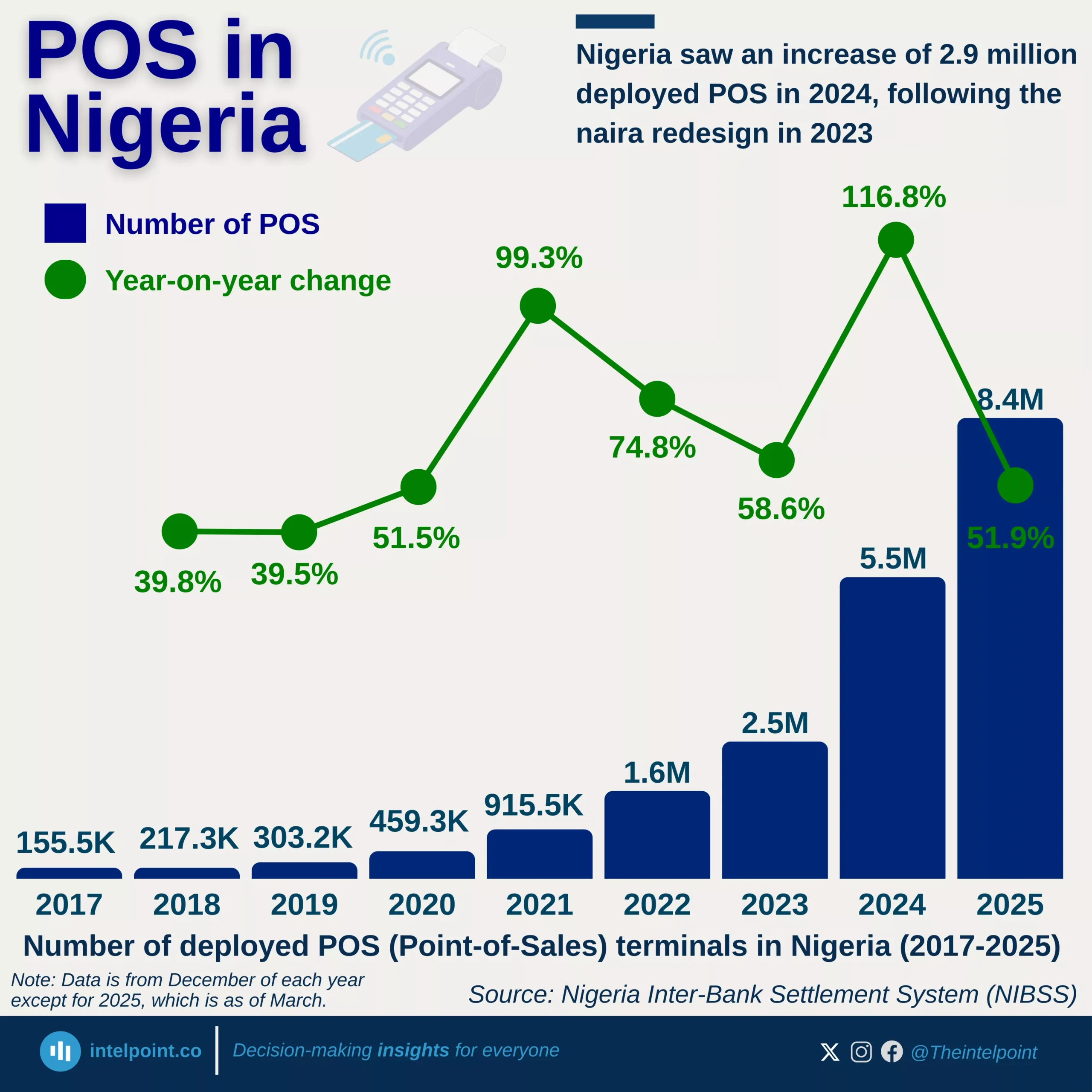
The most intense phase of this growth began around 2020. Between 2019 and 2023, active accounts more than doubled, moving from under 80 million to over 200 million. This period coincided with the rapid expansion of digital banking, fintech apps, mobile payments, and government-led financial inclusion efforts. Banks stopped being physical locations you “visited” and became tools you carried in your pocket. As access to the formal financial system improved, so did participation in it.