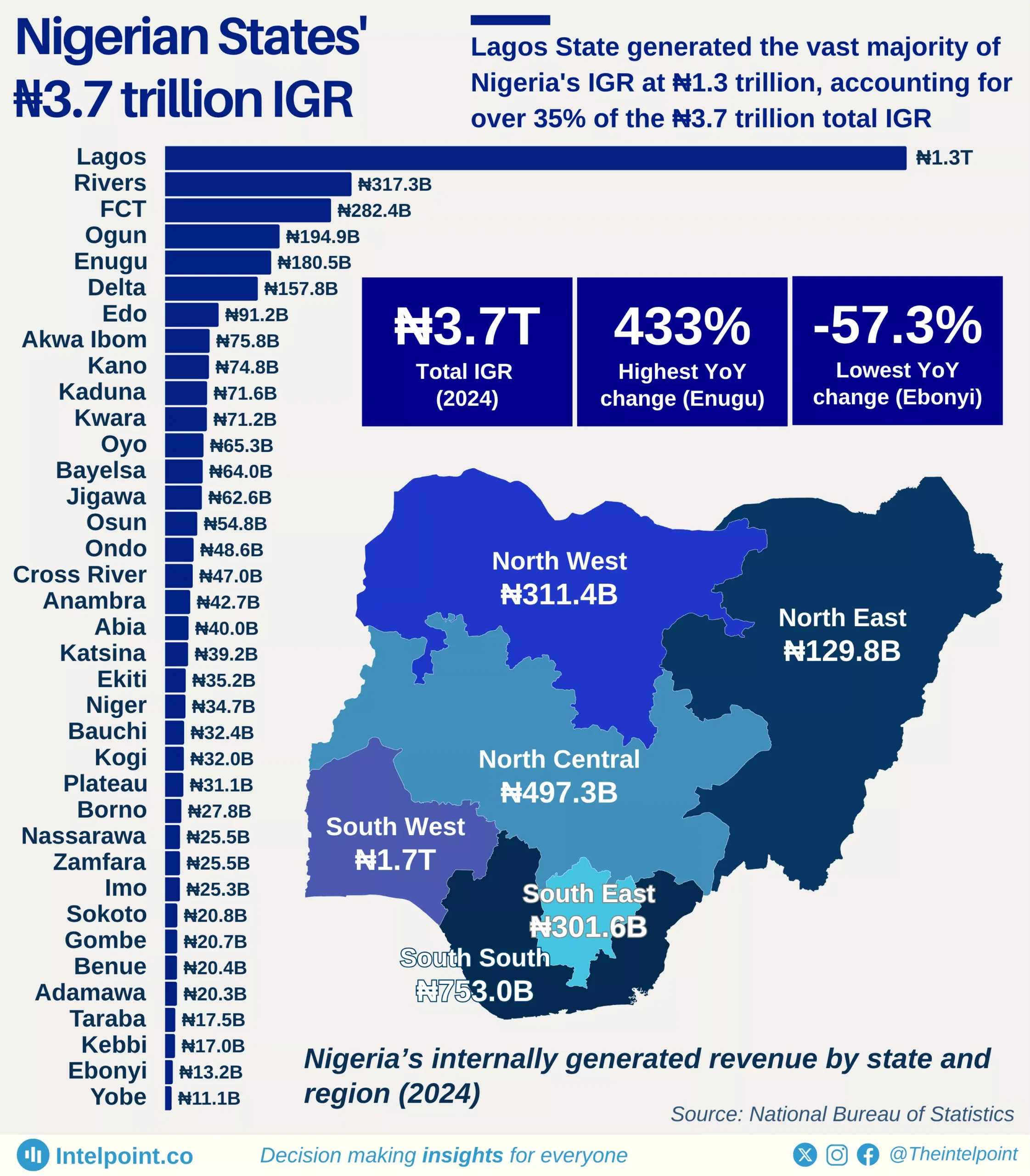
Lagos State generated the vast majority of Nigeria's IGR at ₦1.3 trillion, accounting for over 35% of the ₦3.7 trillion total IGR

  • Nigeria’s total IGR in 2024 was ₦3.7 trillion.
  • Lagos State generated ₦1.3 trillion, accounting for over 35% of the national IGR.
  • Rivers State (₦317.3 billion) and the FCT, Abuja (₦282.4 billion) ranked second and third, respectively.
  • The South West led regionally with ₦1.7 trillion in total IGR.
  • The North East recorded the lowest regional IGR at ₦129.8 billion.
  • Economic disparity between regions remains wide, with Lagos alone outpacing entire regions.

Nigeria’s internally generated revenue (IGR) of ₦3.7 trillion in 2024 was dominated by Lagos State, which contributed ₦1.3 trillion, more than 35% of the national total. This underscores Lagos’ position as the country’s economic powerhouse, driven by its vibrant commercial activities, large population, and developed tax infrastructure.

Other top-performing states, including Rivers (₦317.3 billion) and the FCT (₦282.4 billion), also play key roles in sustaining subnational fiscal strength, but the gap between Lagos and other regions remains striking.

At the regional level, the South West led with ₦1.7 trillion, followed by the South South (₦753 billion) and the North Central (₦497.3 billion); the North East recorded the lowest with ₦129.8 billion.
Source:

National Bureau of Statistics

Period:

2024
HTML code to embed chart
Want a bespoke report?
Reach out
Tags
Related Insights

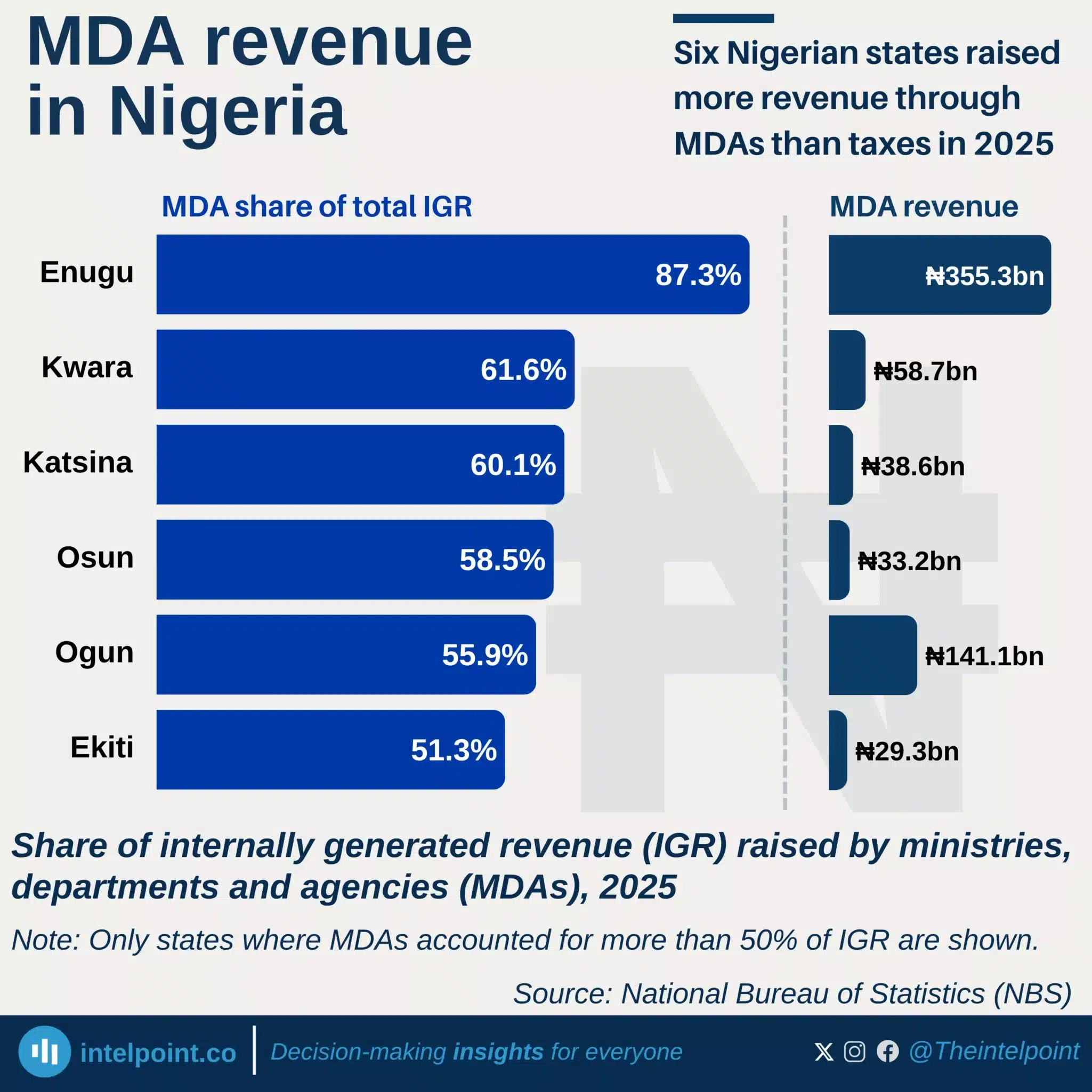
Six Nigerian states raised more revenue through MDAs than taxes in 2025
  • Six states generated about ₦656 billion through MDAs in 2025, nearly half of all MDA revenue.
  • The number of states where MDAs accounted for over half of IGR fell from seven in 2024 to six in 2025.
  • Enugu’s MDA share rose from 82.9% in 2024 to 87.3% in 2025, widening its lead.
  • Kwara, Katsina and Osun recorded MDA shares of 61.6%, 60.1% and 58.5%, respectively.

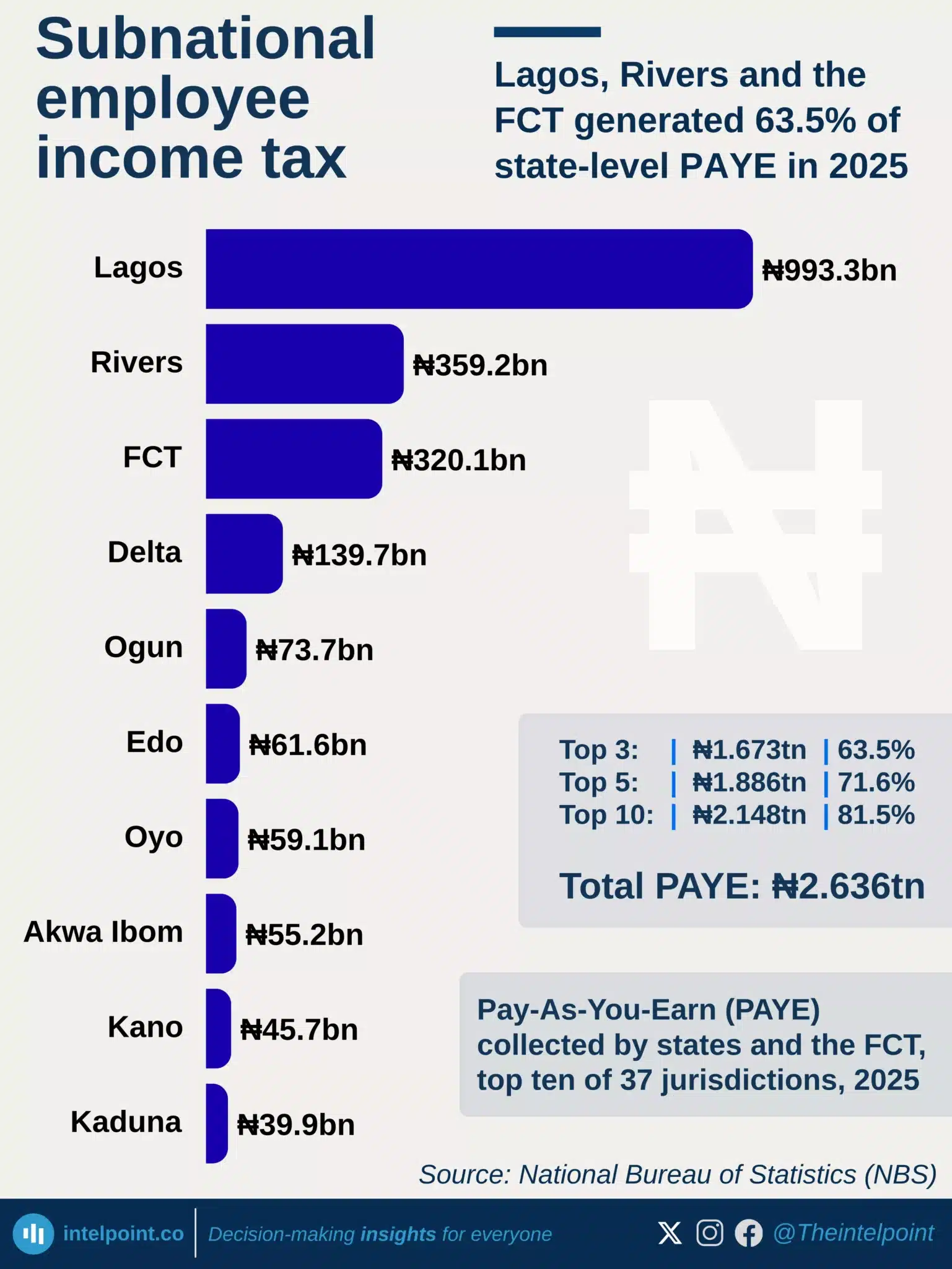
Lagos, Rivers and the FCT generated 63.5% of state-level PAYE in 2025
  • Lagos, Rivers and the FCT collected 63.5% of state-level PAYE in 2025.
  • Lagos collected ₦993.3 billion in PAYE, more than the next five jurisdictions combined.
  • The top 10 jurisdictions accounted for 81.5% of ₦2.636 trillion in total PAYE.
  • The bottom five jurisdictions collected ₦47.0 billion combined, less than 2% of the total.
  • Delta collected ₦139.7 billion, less than half of the FCT’s ₦320.1 billion.

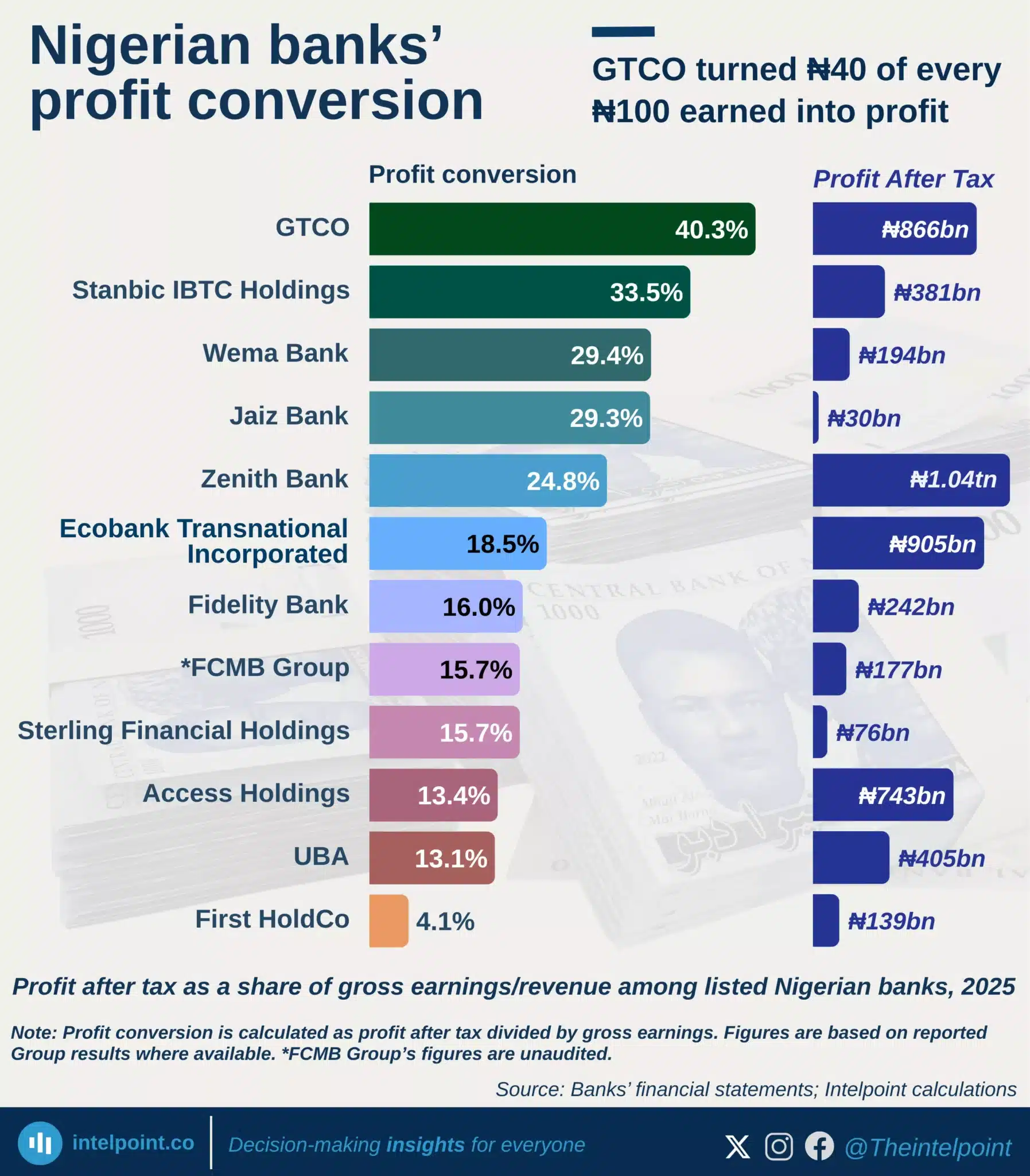
GTCO turned ₦40 of every ₦100 earned into profit
  • GTCO had the strongest profit conversion in 2025.
  • GTCO turned about ₦40 of every ₦100 earned into profit.
  • Stanbic IBTC followed with about ₦34 profit per ₦100 earned.
  • Zenith made the highest profit, but not the strongest conversion.
  • First HoldCo had the weakest profit conversion among the banks reviewed.
 

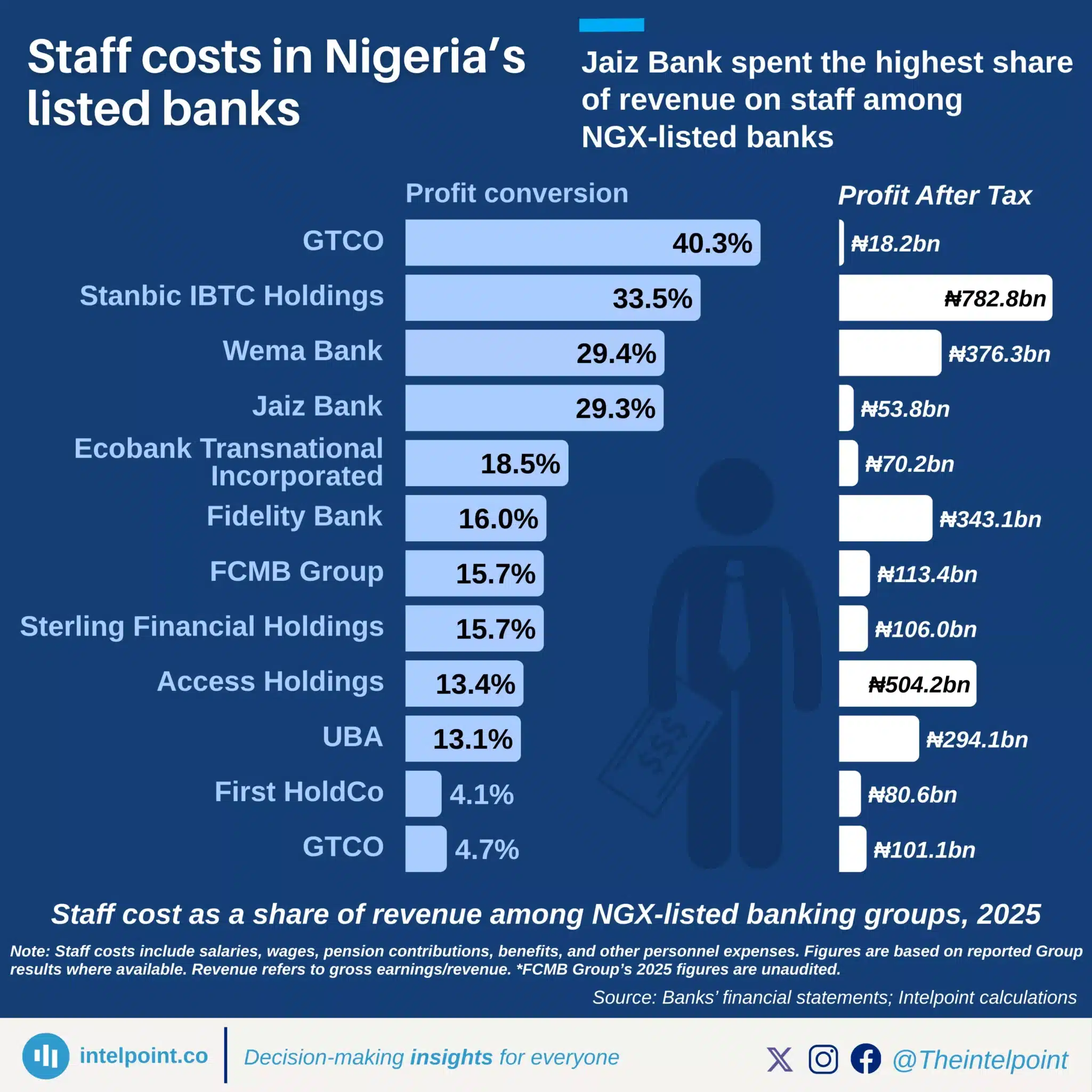
Jaiz Bank spent the highest share of revenue on staff among NGX-listed banks
Jaiz Bank spent the highest share of revenue on staff in 2025. Jaiz spent nearly ₦18 on staff for every ₦100 of revenue. ETI and UBA followed with the next highest staff-cost-to-revenue ratios. GTCO had the lowest staff-cost burden among the listed banks. ETI spent the most in absolute staff costs, at ₦782.8 billion.

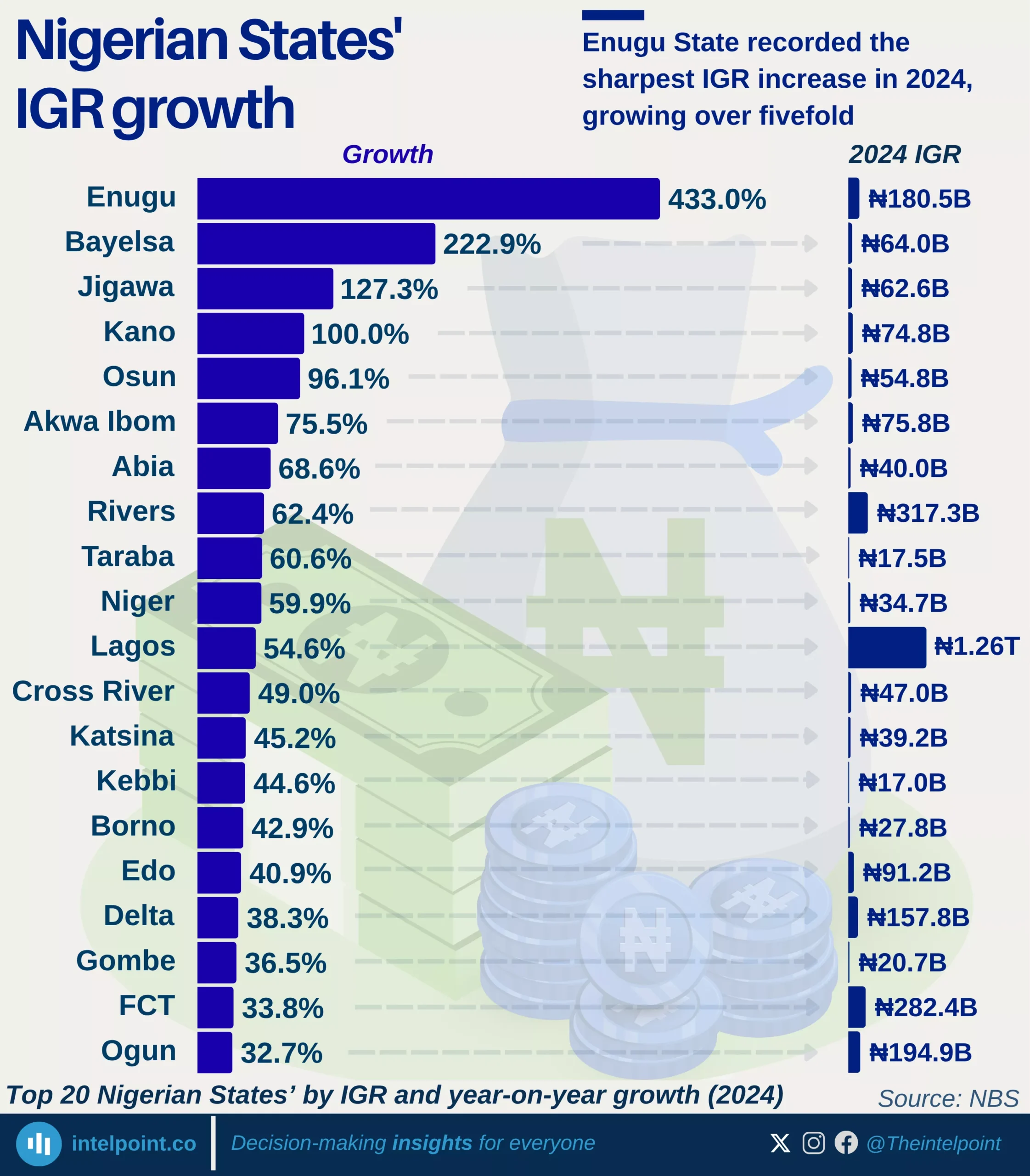
Enugu State recorded the sharpest IGR increase in 2024, growing over fivefold
  • Enugu led the country in IGR growth in 2024 with a 433% increase.
  • Bayelsa, Jigawa, Kano, and Osun also experienced large year-on-year increases, indicating widening fiscal activity across regions.
  • Lagos, Rivers, and the FCT recorded slower growth rates but still generated the largest total revenues.
  • The fastest growth often came from states focused on reforming tax systems or broadening local revenue sources, rather than from being traditionally big or wealthy states alone.

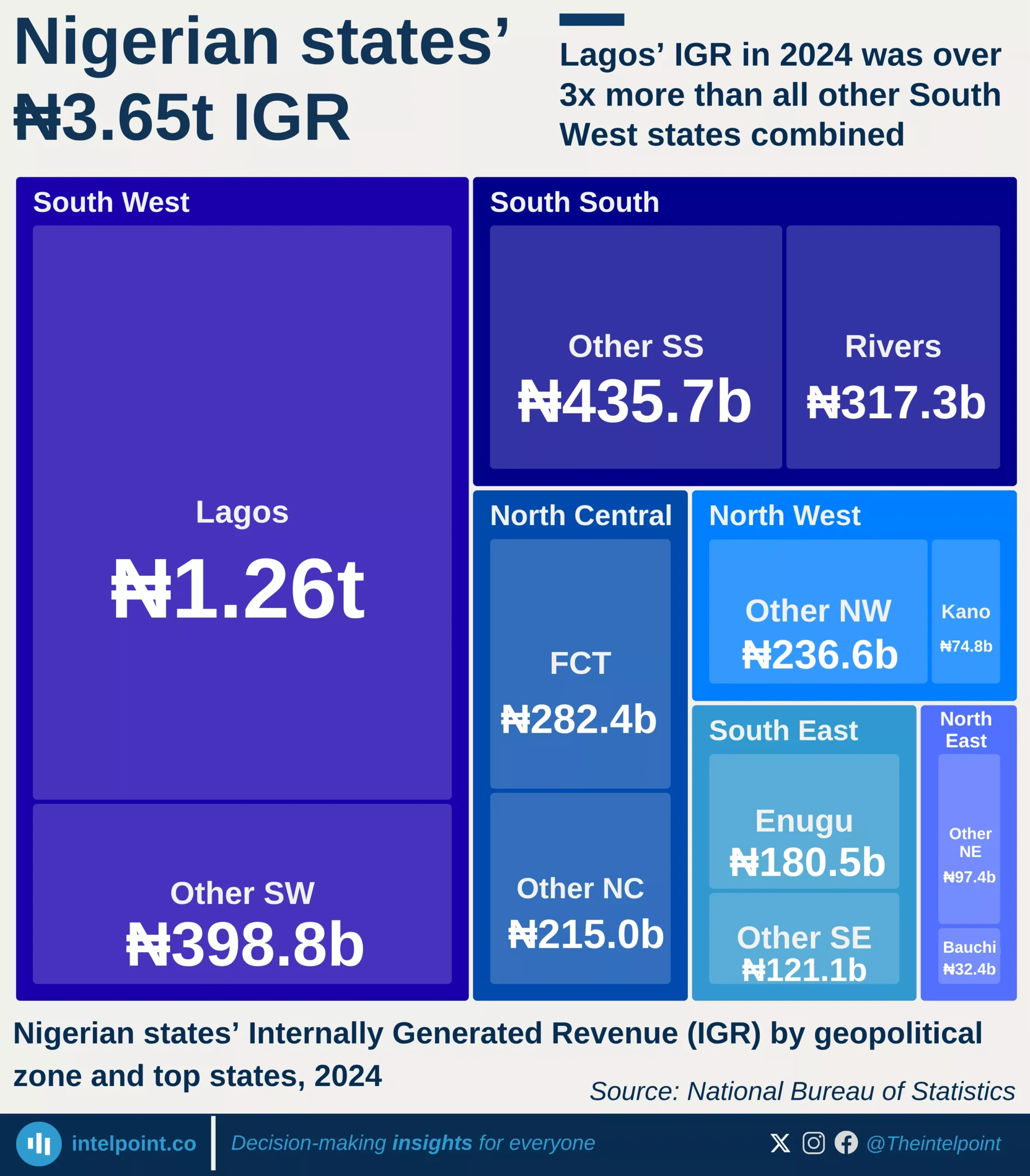
Lagos’ IGR in 2024 was over 3x more than all other South West states combined
  • Lagos drives most revenue in the South West, accounting for the clear majority of the region’s IGR.
  • Each geopolitical zone has one dominant state that shapes its revenue profile.
  • Fiscal capacity remains heavily skewed toward a few urban and resource-rich states.

POPULAR TOPICS
SIGN UP TO OUR NEWSLETTER
Get periodic updates about the African startup space, access to our reports, among others.
Subscribe Here
Subscription Form

A product of Techpoint Africa. All rights reserved