A small number of cities now have populations large enough to rival entire countries.
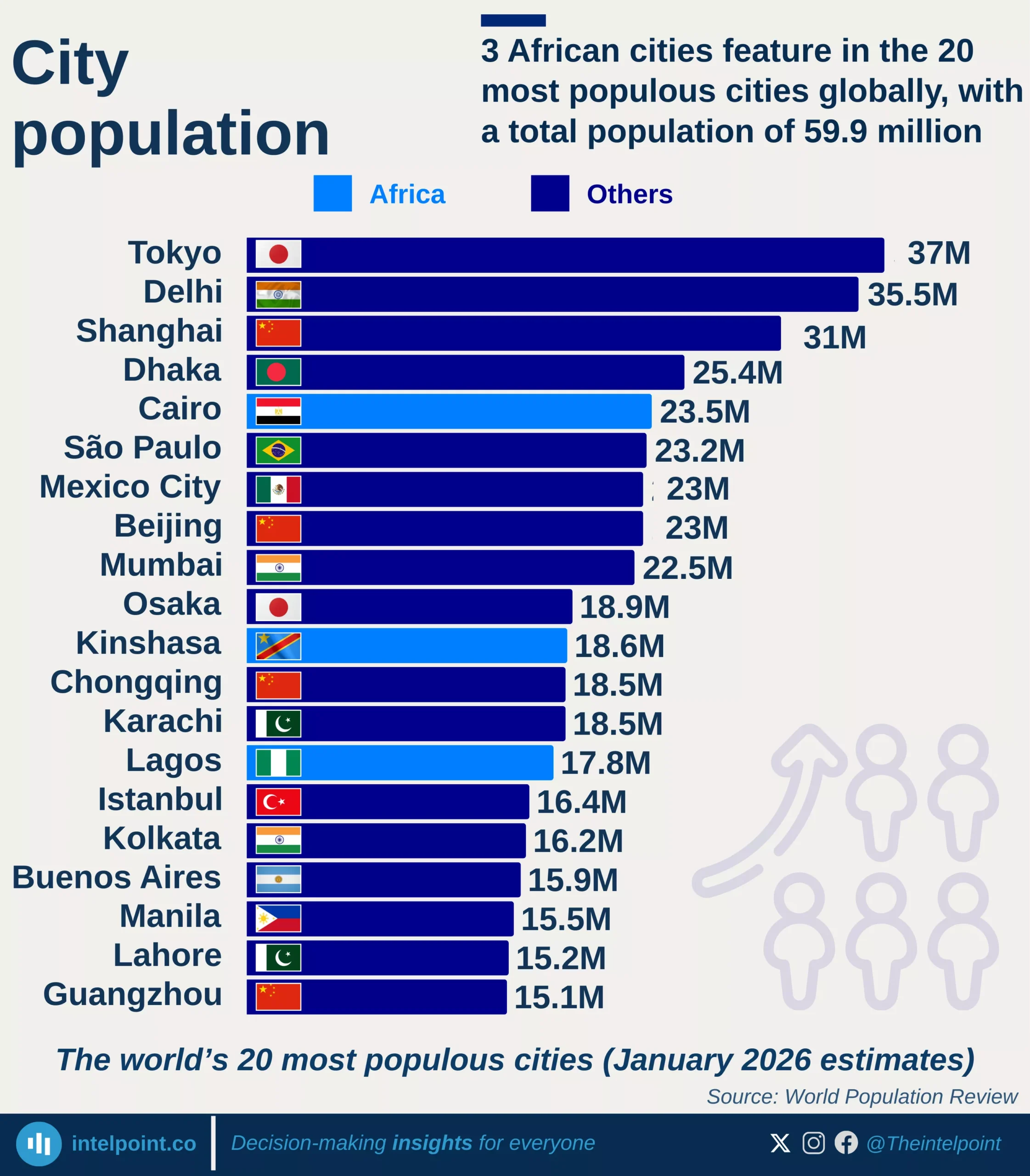
Tokyo (37 million), Delhi (35.5 million), and Shanghai (31 million) alone host more than 100 million people, showing how economic weight, labour markets, and political influence are increasingly concentrated in a handful of metropolitan centres.
Twelve of the world’s 20 most populous cities are in Asia, reflecting decades of industrialisation, migration, and infrastructure investment that channelled growth into a few urban hubs.
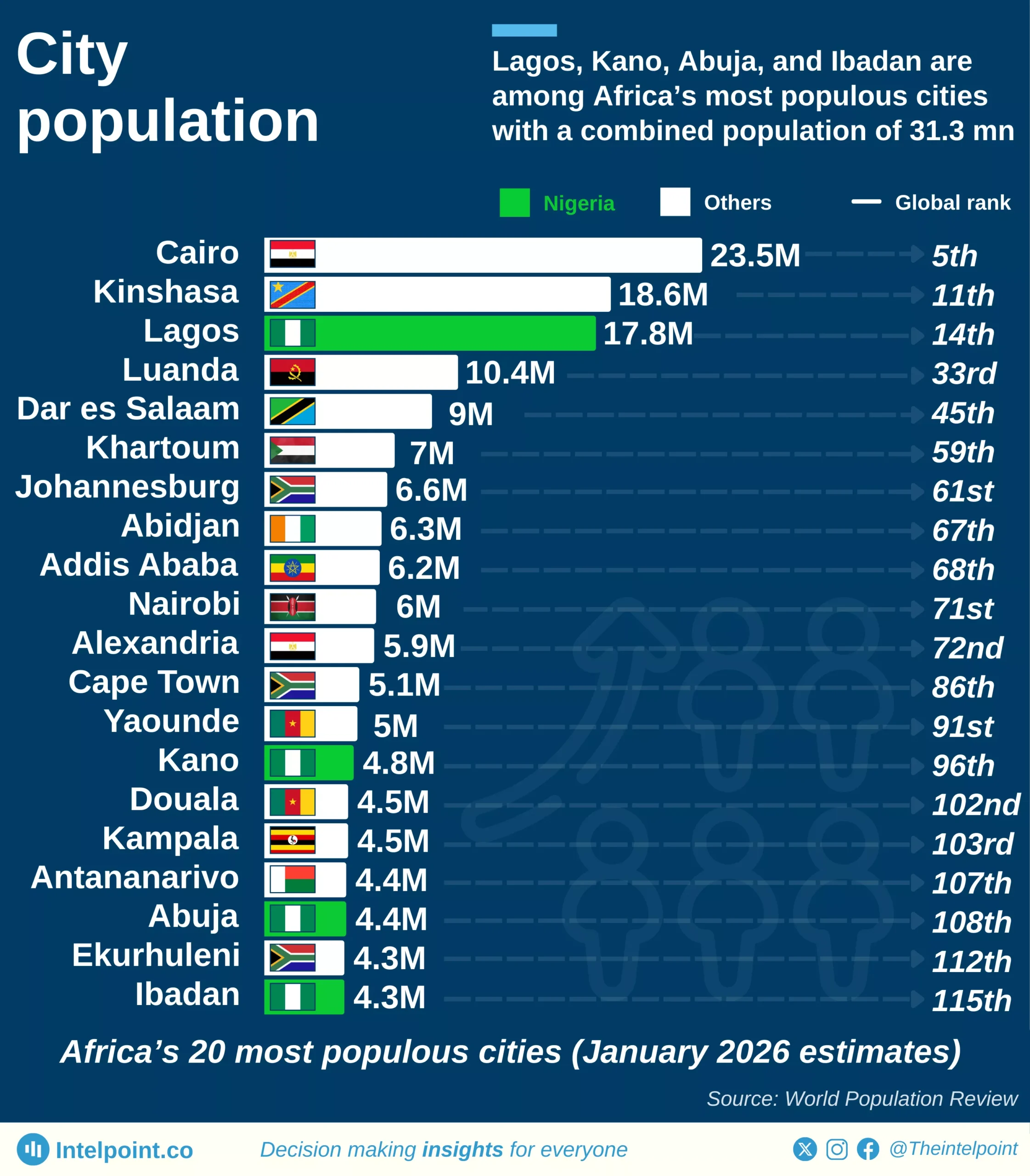
Africa’s presence is smaller but notable. Only three cities, Cairo (23.5 million), Kinshasa (18.6 million), and Lagos (17.8 million), rank among the global top 20, yet together they account for nearly 60 million people.
What stands out is not just how large these cities have become, but also how much of the world’s population and future growth is being concentrated in very few places.
As megacities continue to expand, decisions or disruptions in a single city can increasingly carry consequences far beyond national borders.