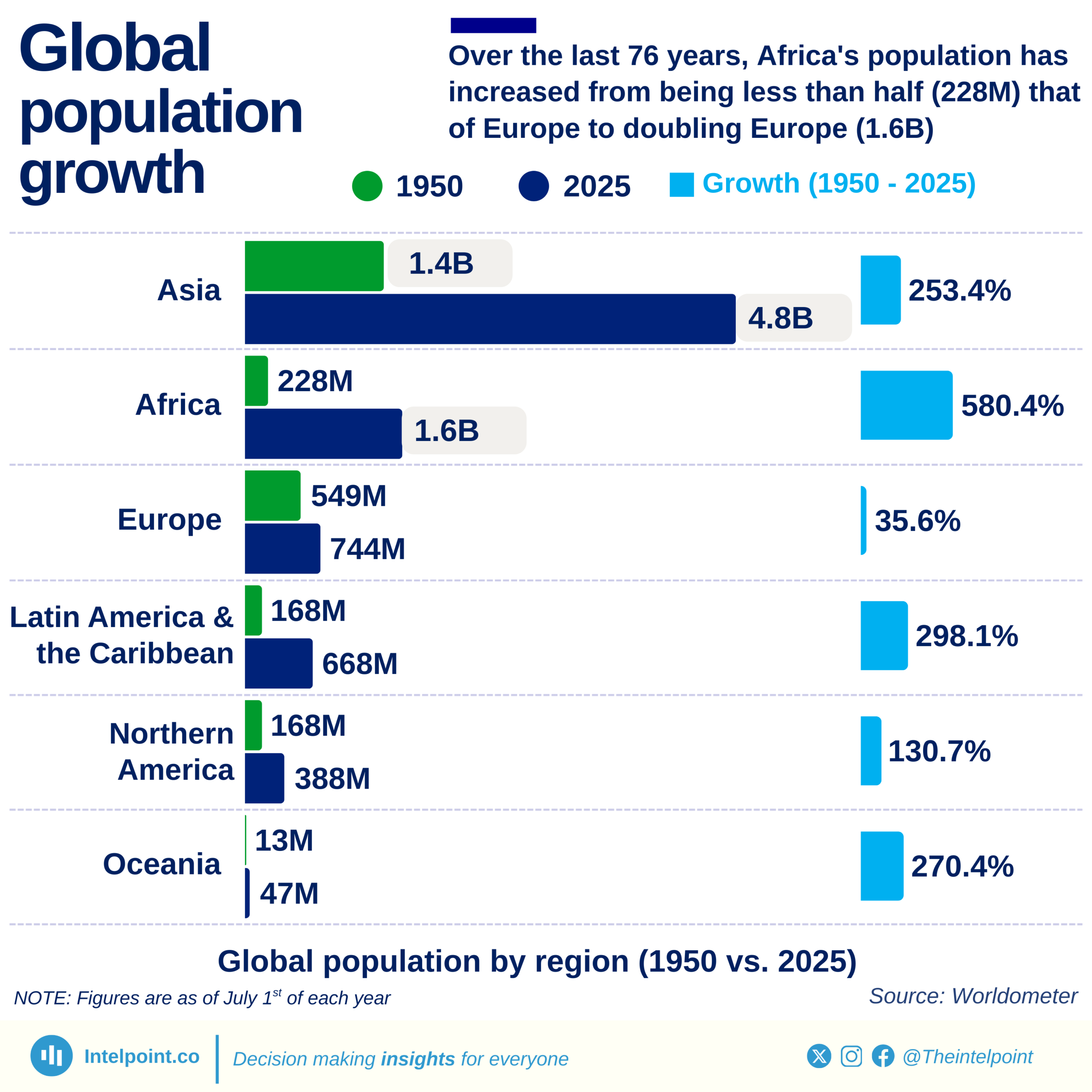
Over the last 76 years, Africa's population has increased from being less than half (228M) that of Europe to doubling Europe (1.6B)

  • Africa’s population grew by 580.4%, from 228M in 1950 to 1.6B in 2025, making it the fastest-growing continent.
  • Asia remains the most populated continent, reaching 4.8B people in 2025, up from 1.4B in 1950.
  • Europe’s growth has been the slowest, at just 35.6%, rising from 549M to 744M.
  • Latin America & the Caribbean grew by 298%, from 168M to 668M.
  • North America more than doubled its population, growing by 130.7% from 168M to 388M.
  • Oceania saw a 270% increase, though it remains the least populated continent at 47M people.
  • Africa’s population is now more than double Europe’s, a major demographic shift compared to 1950.

Over the past 76 years, global population growth has reshaped the demographic balance between continents, with Africa experiencing the fastest growth. From just 228 million people in 1950, Africa’s population has expanded by over 580%, reaching 1.6 billion in 2025—a number that is now more than double Europe’s population.

In 1950, Africa’s population was less than half of Europe’s. Today, however, Africa has overtaken Europe by a wide margin and is shaping the future of the global labour force, consumer markets, and urban development. This explosive growth points to both opportunities and challenges—from economic potential to infrastructure needs and sustainability concerns.

Asia remains the most populated continent, growing from 1.4 billion in 1950 to nearly 4.8 billion in 2025, a 253% increase. Meanwhile, Europe has seen only modest growth of 35.6% over the same period, with its population rising from 549 million to 744 million. Other regions, such as Latin America & the Caribbean (298% growth) and Northern America (131% growth), have also recorded significant increases, though none as dramatic as Africa’s.
Source:

Worldometer

Period:

1950-2025
HTML code to embed chart
Want a bespoke report?
Reach out
Tags
Related Insights

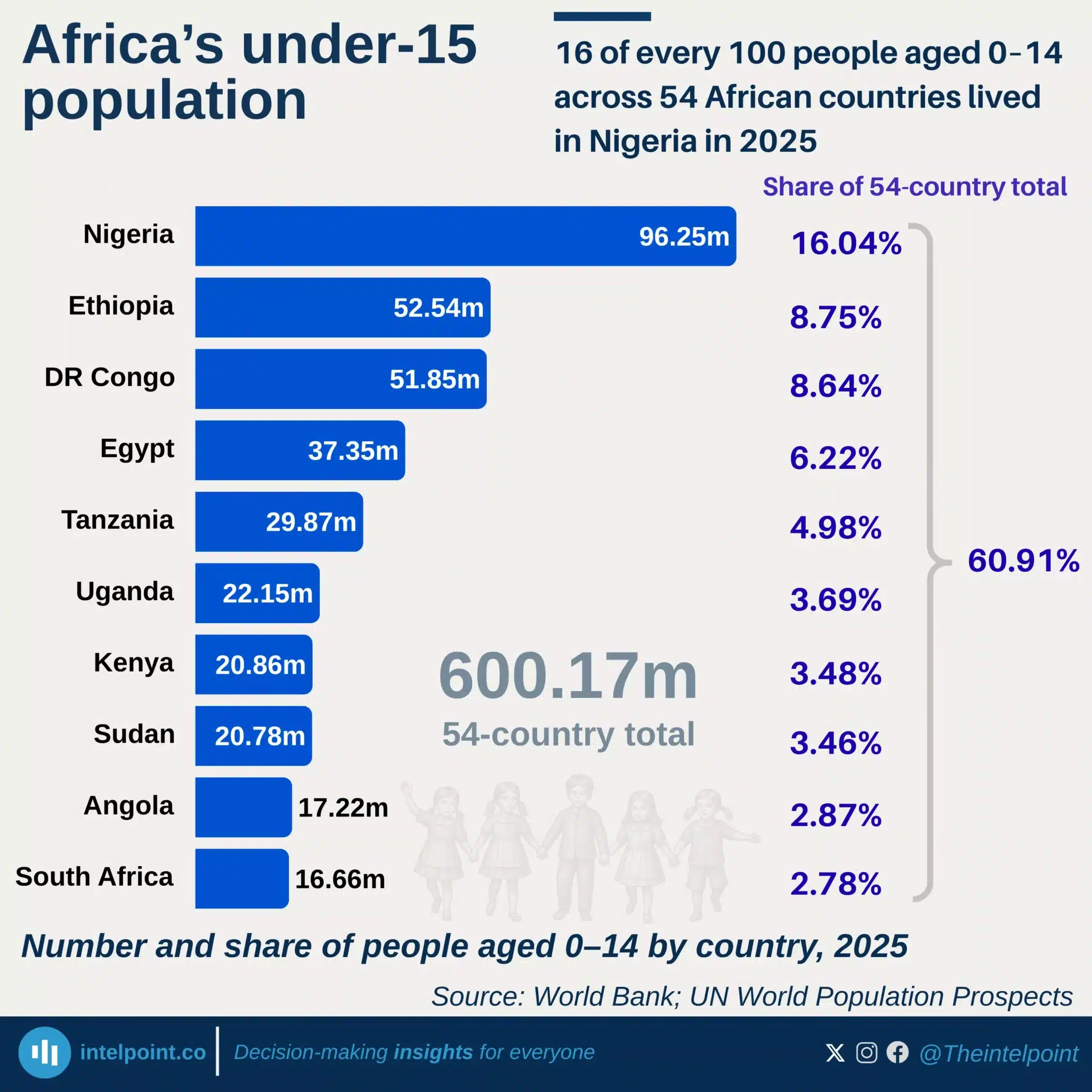
Africa’s under-15 population: 16 of every 100 people aged 0–14 across 54 African countries lived in Nigeria in 2025
  • Nigeria had 96.25 million children aged 0–14 in 2025, the largest child population in Africa.
  • 16% of Africa’s children lived in Nigeria, or roughly 1 in every 6.
  • Ethiopia and DR Congo followed with 52.54 million and 51.85 million children respectively.
  • Africa’s 10 largest child populations accounted for 60.9% of the continent’s 600.17 million children.

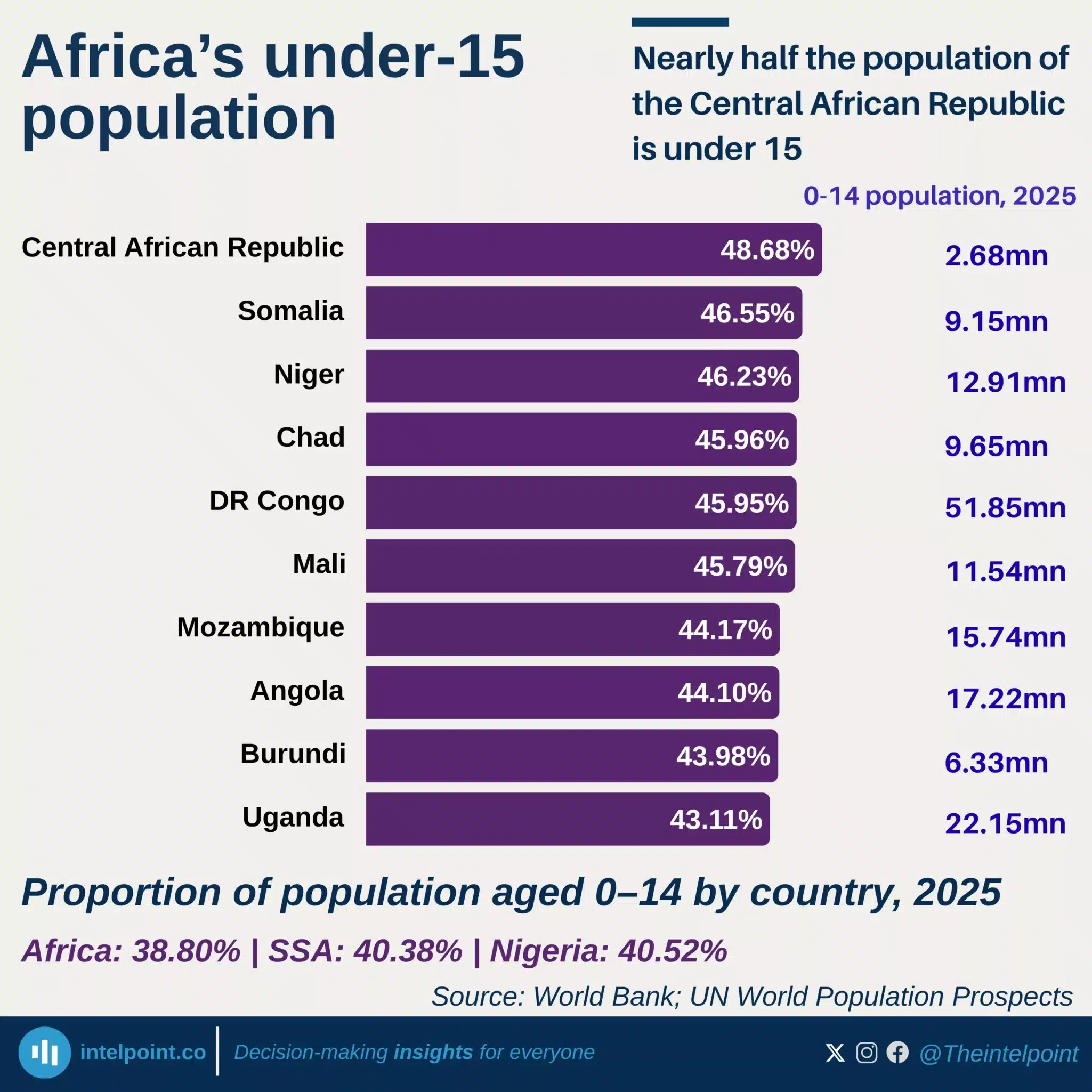
Africa’s under-15 population: nearly half the population of the Central African Republic is under 15
  • Central African Republic had Africa’s highest 0–14 population share at 48.7%.
  • Somalia, Niger, Chad and DR Congo followed, all with at least 45.9% of their populations aged 0–14.
  • DR Congo had Africa’s largest 0–14 population at 51.85 million, despite ranking fifth by share.
  • Children aged 0–14 made up 38.8% of Africa’s population, versus 40.5% in Nigeria.

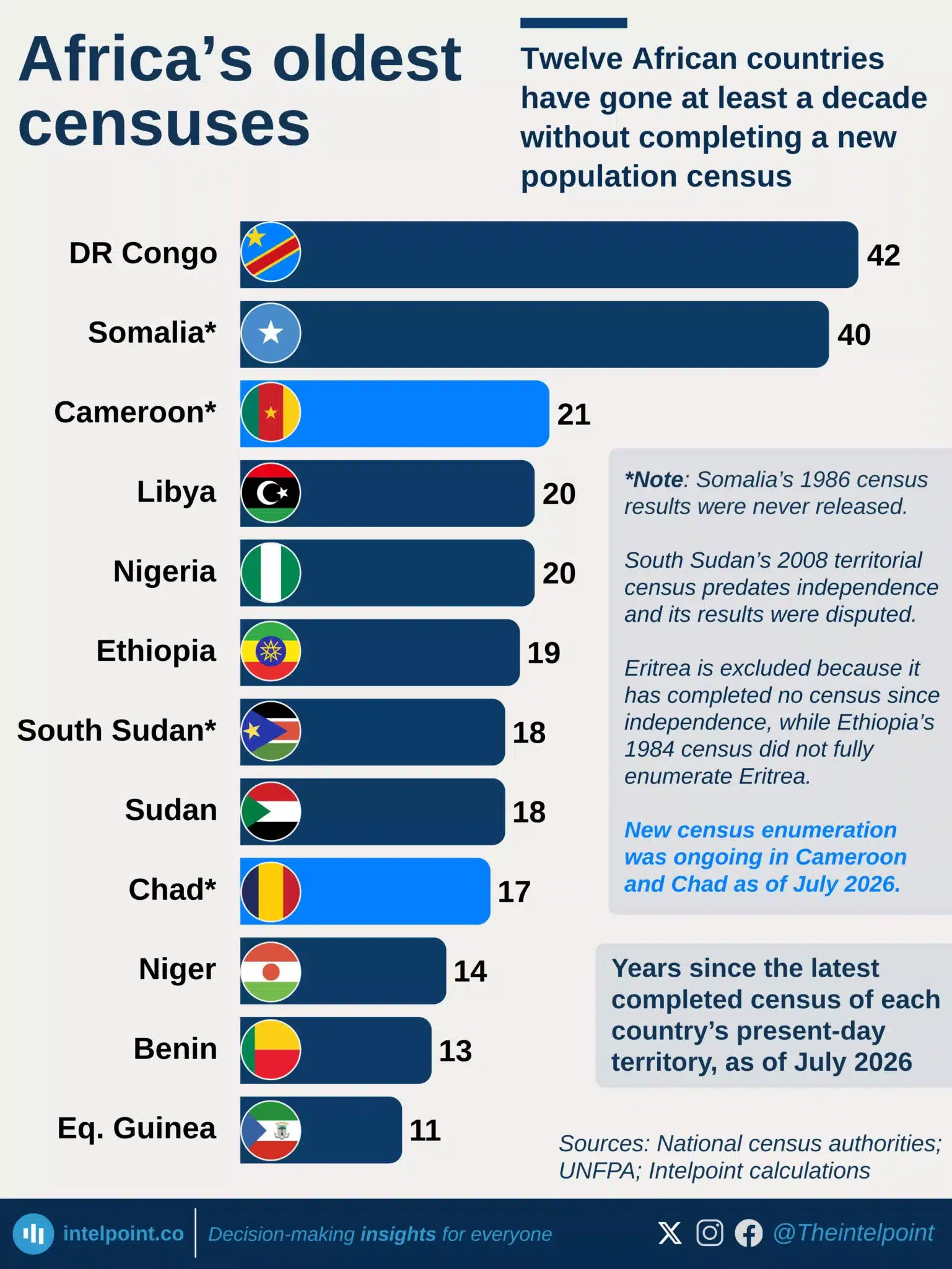
Twelve African countries have gone at least a decade without completing a new population census
  • Twelve African countries have not completed a census in at least 10 years.
  • DR Congo (42 years) and Somalia (40 years) have Africa's oldest censuses.
  • Guinea-Bissau has completed a new census, while Cameroon and Chad are still counting.
  • Nigeria and DR Congo are preparing new censuses, but fieldwork has not begun.
  • South Sudan's census is disputed, while Eritrea is excluded from the ranking.

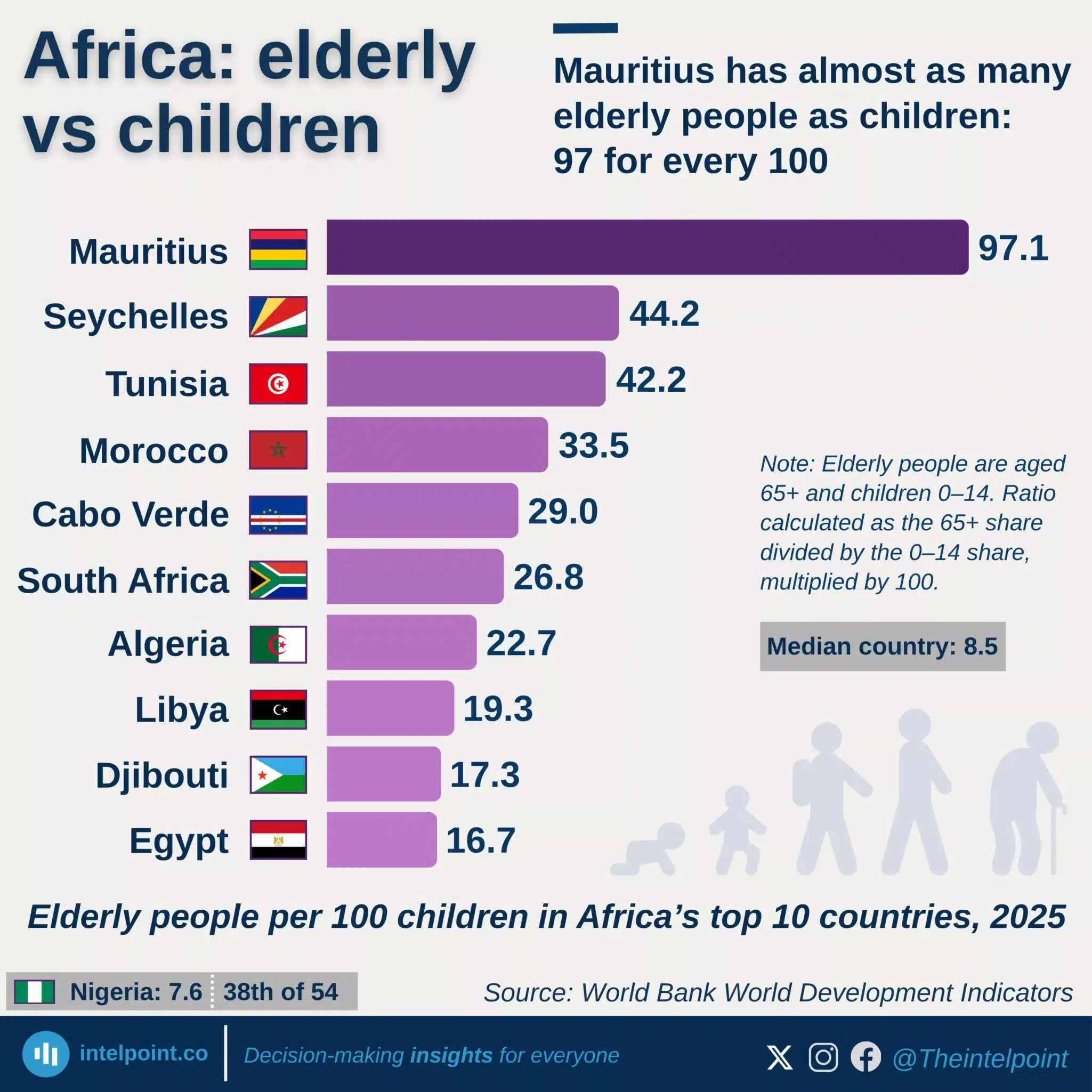
Mauritius has almost as many elderly people as children: 97 for every 100
  • Mauritius had 97 elderly people per 100 children in 2025, over 11 times Africa’s median of 8.5.
  • Its ratio increased from fewer than seven in 1960 to 24 in 2000, becoming Africa’s highest in 2009.
  • Seychelles ranked second with 44 elderly people per 100 children, followed by Tunisia with 42.
  • Mauritius’s child share fell from 25.6% to 14.5% between 2000 and 2025, while its elderly share increased from 6.1% to 14.1%.
  • Nigeria’s ratio moved from 6.9 to 7.6 between 2000 and 2025, placing it 38th among 54 countries.

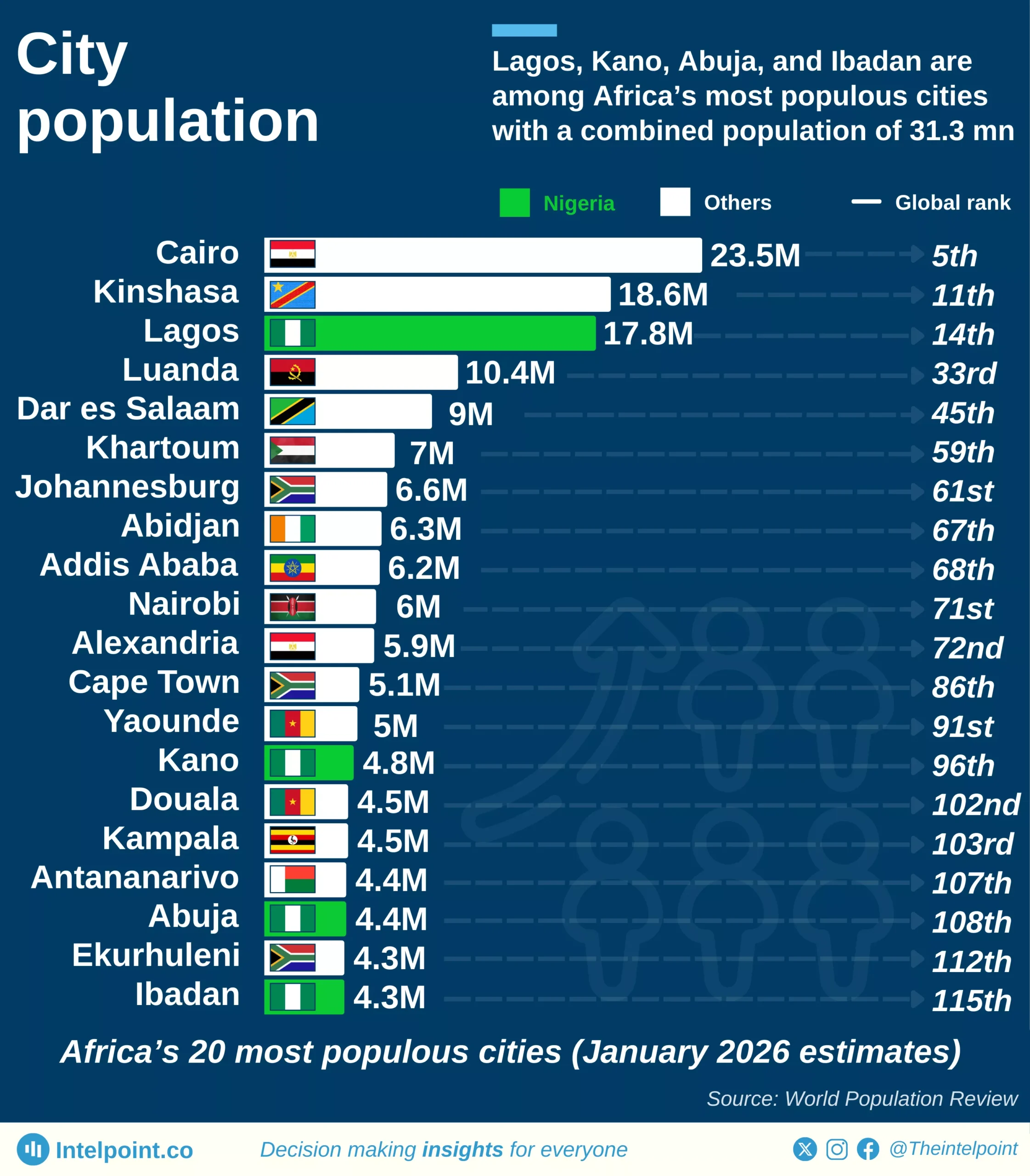
Lagos, Kano, Abuja, and Ibadan are among Africa’s most populous cities with a combined population of 31.3 mn
  • Lagos is Africa’s third-largest city and ranks 14th globally.
  • Cairo remains Africa’s largest city, with over 23 million people, keeping Egypt at the centre of the continent’s urban network.
  • Kinshasa’s position shows Central Africa’s rising urban influence.
  • There is a steep population gap after the top three cities.

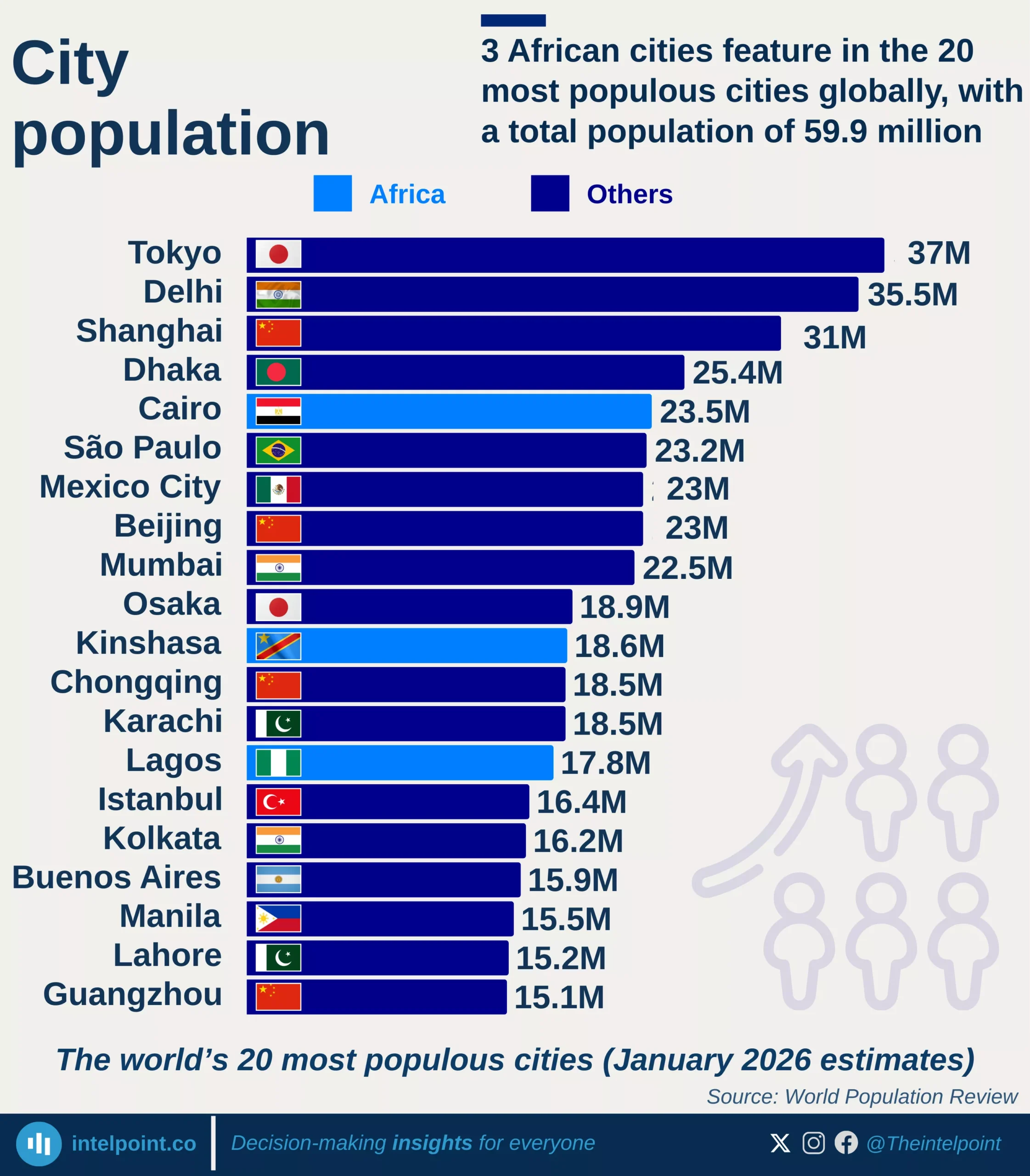
3 African cities feature in the 20 most populous cities globally, with a total population of 59.9 million
  • Together, the top three cities — Tokyo, Delhi, and Shanghai — have more than 100 million residents.
  • Asia dominates the ranking, with most of the top ten cities located on the continent.
  • Only three African cities — Cairo, Kinshasa, and Lagos — appear in the top 20.
  • Africa’s three mega-cities together account for nearly 60 million people, showing concentrated urban growth.
  • Urban population growth is driven by migration toward economic and commercial hubs.

POPULAR TOPICS
SIGN UP TO OUR NEWSLETTER
Get periodic updates about the African startup space, access to our reports, among others.
Subscribe Here
Subscription Form

A product of Techpoint Africa. All rights reserved