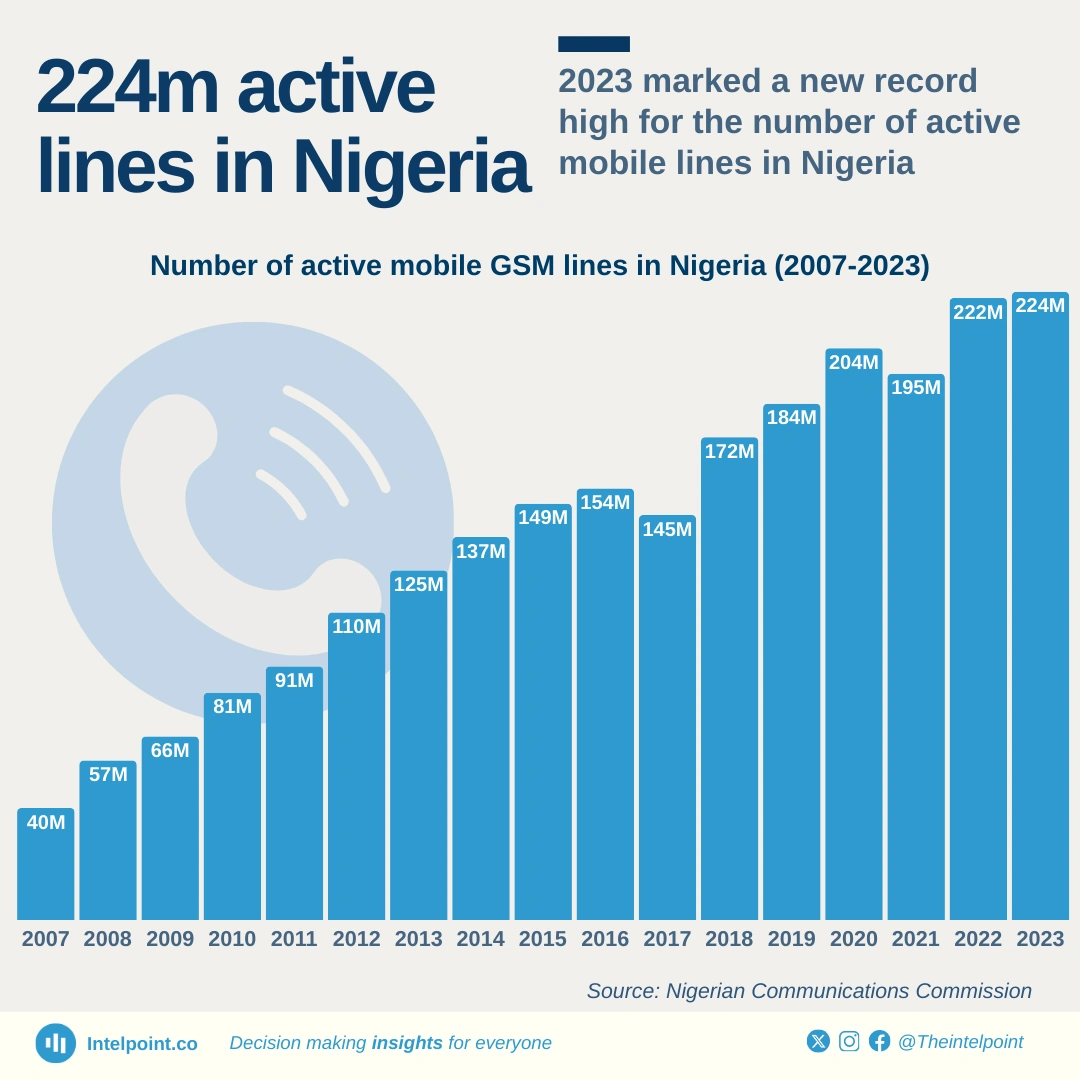
2023 marked a new record high for the number of active mobile lines in Nigeria

Key takeaways

  • Nigeria’s active mobile GSM lines reached an all-time high of 224 million in 2023, up from 222 million in 2022.
  • The number of active lines has grown steadily from 40 million in 2007, with notable surges in 2012 (110 million), 2018 (172 million), and 2020 (204 million).
  • Growth slowed between 2016 and 2017, where active lines dipped slightly from 154 million to 145 million, before resuming an upward trajectory.
  • With over 220 million active lines, Nigeria remains one of Africa’s largest telecom markets, driven by increasing mobile adoption.

The number of active GSM lines in Nigeria has grown significantly over the past 16 years, reaching a record 224 million in 2023. Starting at 40 million in 2007, Nigeria’s mobile penetration expanded rapidly, surpassing 100 million by 2012 and 200 million by 2020.

However, the market experienced a brief decline in 2017 and 2021. Since then, growth has resumed, with 2023 marking the highest number of active mobile lines ever recorded in the country. This reflects increasing digital connectivity, population growth, and the expansion of mobile services across Nigeria.
Source:

Nigerian Communications Commission

Period:

2007-2023
HTML code to embed chart
Want a bespoke report?
Reach out
Tags
Related Insights

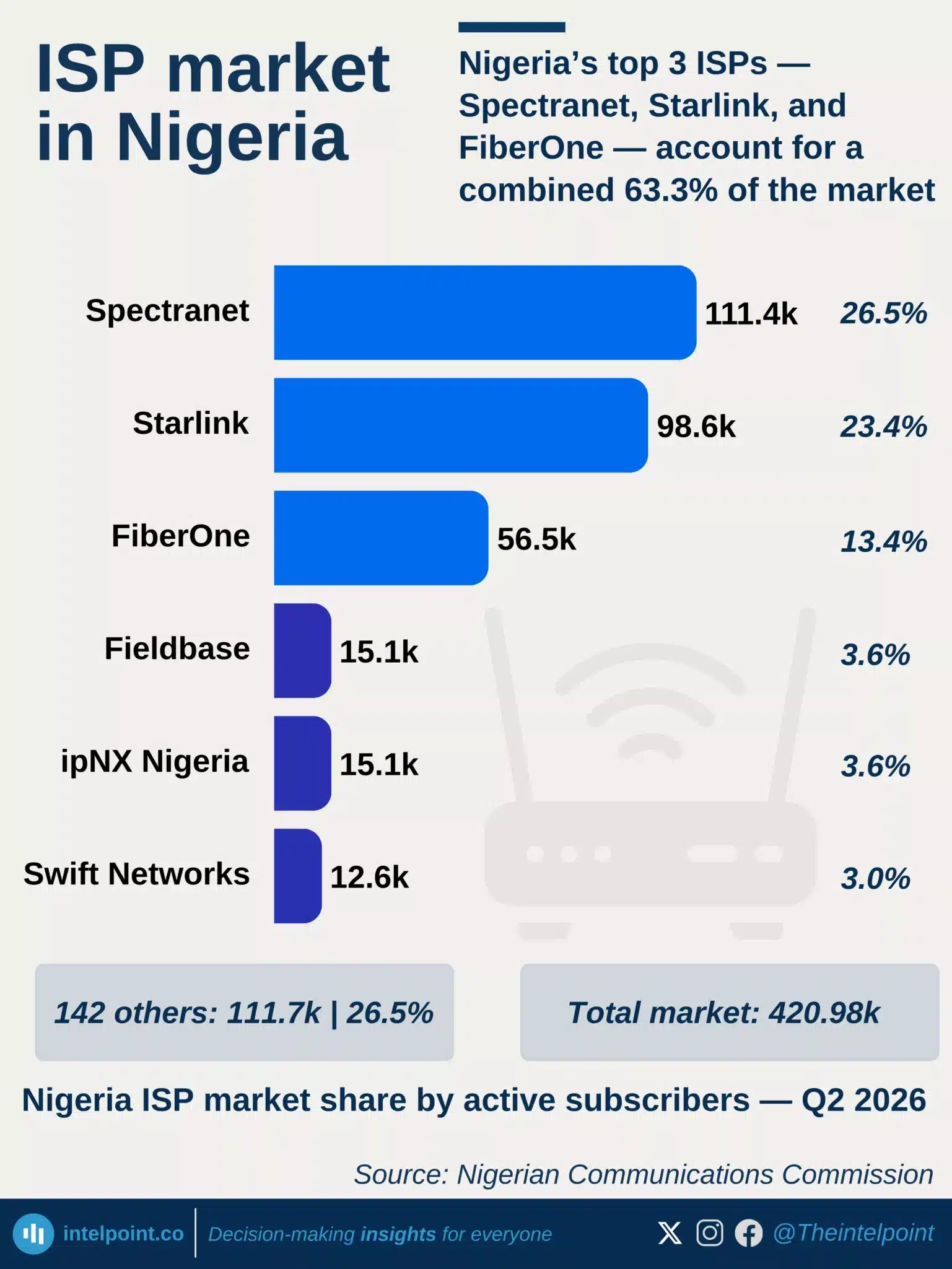
Nigeria’s top 3 ISPs — Spectranet, Starlink, and FiberOne — account for a combined 63.3% of the market
  • Spectranet leads with 111,384 subscribers, ahead of Starlink's 98,642.
  • Starlink added 6,651 subscribers since December 2025, narrowing the gap to 12,742.
  • Fieldbase Services overtook ipNX for 4th place by just 18 subscribers.
  • The top three ISPs account for over 63% of Nigeria's 420,989 active subscribers.

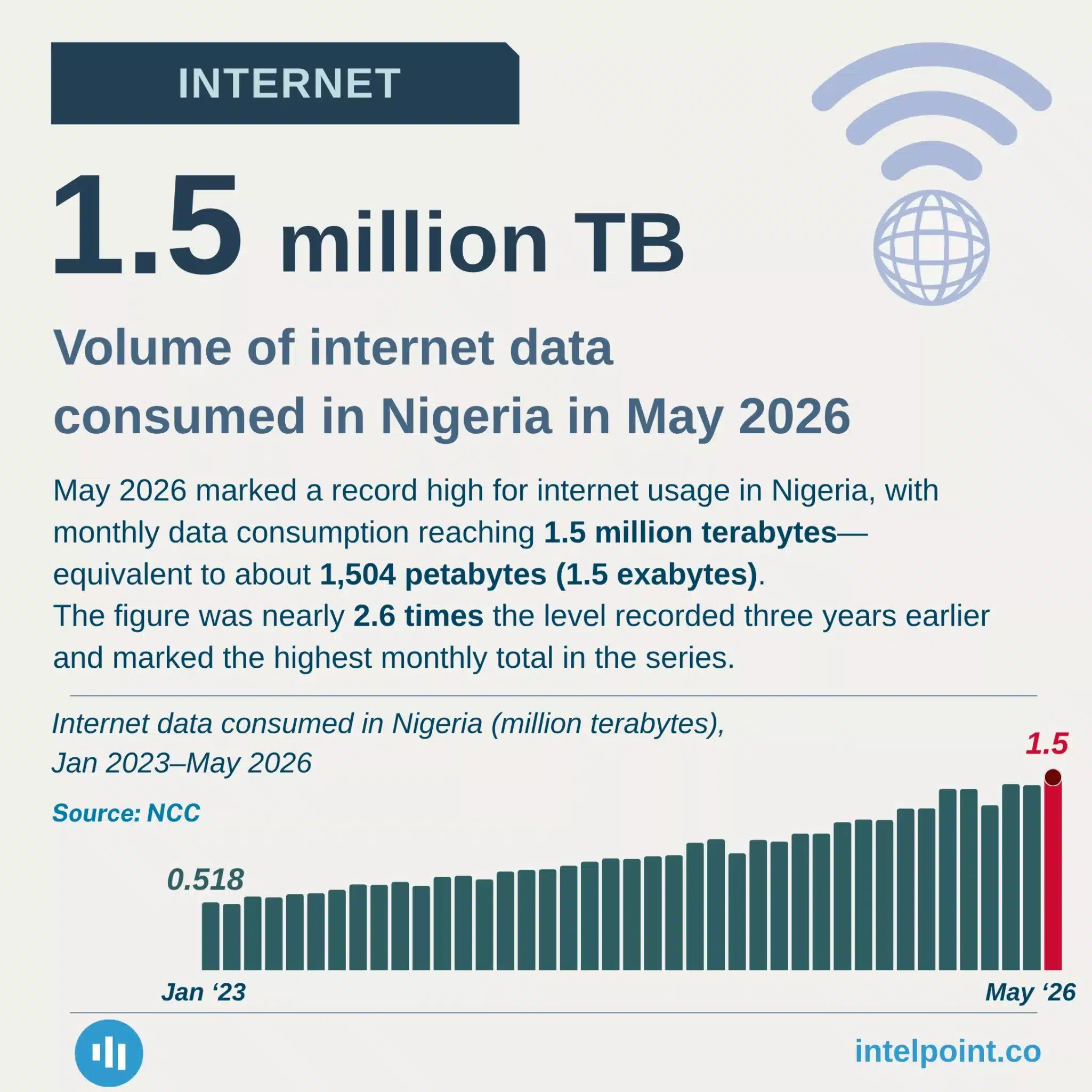
Volume of internet data consumed in Nigeria in May 2026
  • 1.5 million TB was consumed in May 2026, the highest monthly level on record.
  • 7 million TB was consumed in Jan–May 2026, up 42.1% from the same period in 2025.
  • Jan–May 2026 usage was 88.4% higher than in 2024 and 156.3% higher than in 2023.
  • May’s monthly usage was nearly 2.6× the level recorded three years earlier.
  • The surge points to rapidly growing demand for internet-based services, content and digital activity in Nigeria.

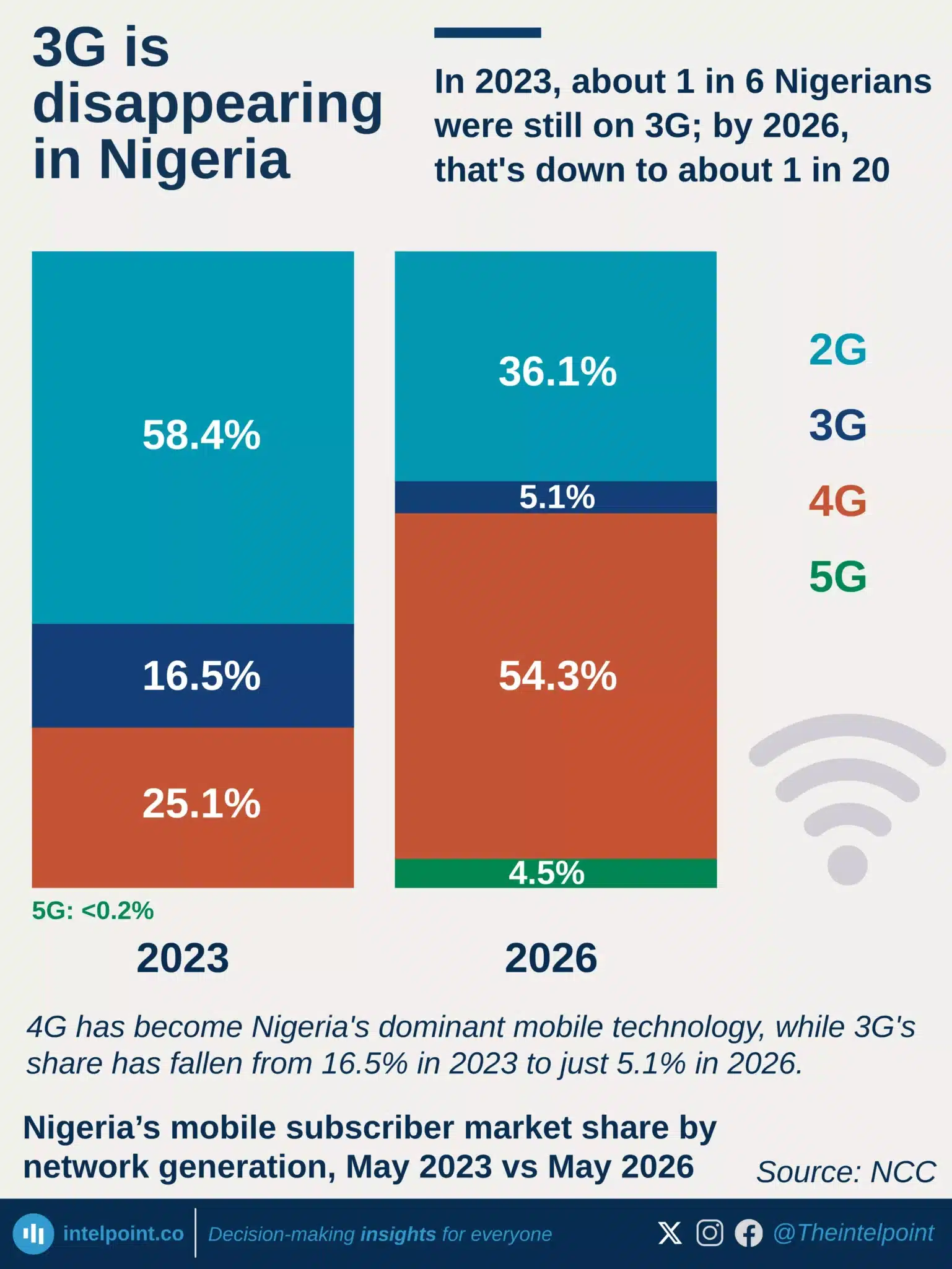
In 2023, about 1 in 6 Nigerians were still on 3G; by 2026, that's down to about 1 in 20
  • 3G's share of Nigeria's mobile market fell from 16.5% to 5.1% between May 2023 and May 2026.
  • 4G became the dominant network, with its market share rising from 25.1% to 54.3% over the same period.
  • 2G's share declined from 58.4% to 36.1% but still accounted for more than one-third of all mobile connections.
  • 5G expanded nearly 37-fold, growing from less than 0.1% to 4.5% of mobile subscriptions.

Nearly 2 in 3 active mobile lines in Ekiti are on MTN
  • MTN held more than half of active mobile lines in most Nigerian states as of December 2025.
  • Ekiti recorded MTN’s highest share at 69.6%, followed by Imo at 64.1% and Anambra at 63.4%.
  • Borno was Airtel’s only leading state, with 56.9% of active mobile lines.
  • Globacom did not lead any state, but it had notable shares in Kogi, Edo, Ondo, FCT, and Oyo.

MTN accounts for over half of internet subscriptions in most Nigerian states
  • MTN held over 50% of active internet subscriptions in most Nigerian states as of December 2025.
  • Ekiti had MTN’s highest share at 70.6%, followed by Imo at 64% and Anambra at 63.7%.
  • Borno was the only state where Airtel led, with 56.6% of active internet subscriptions.
  • Globacom did not lead any state, but it had notable shares in Edo, Kogi, Ondo, Oyo, and Bayelsa.
 

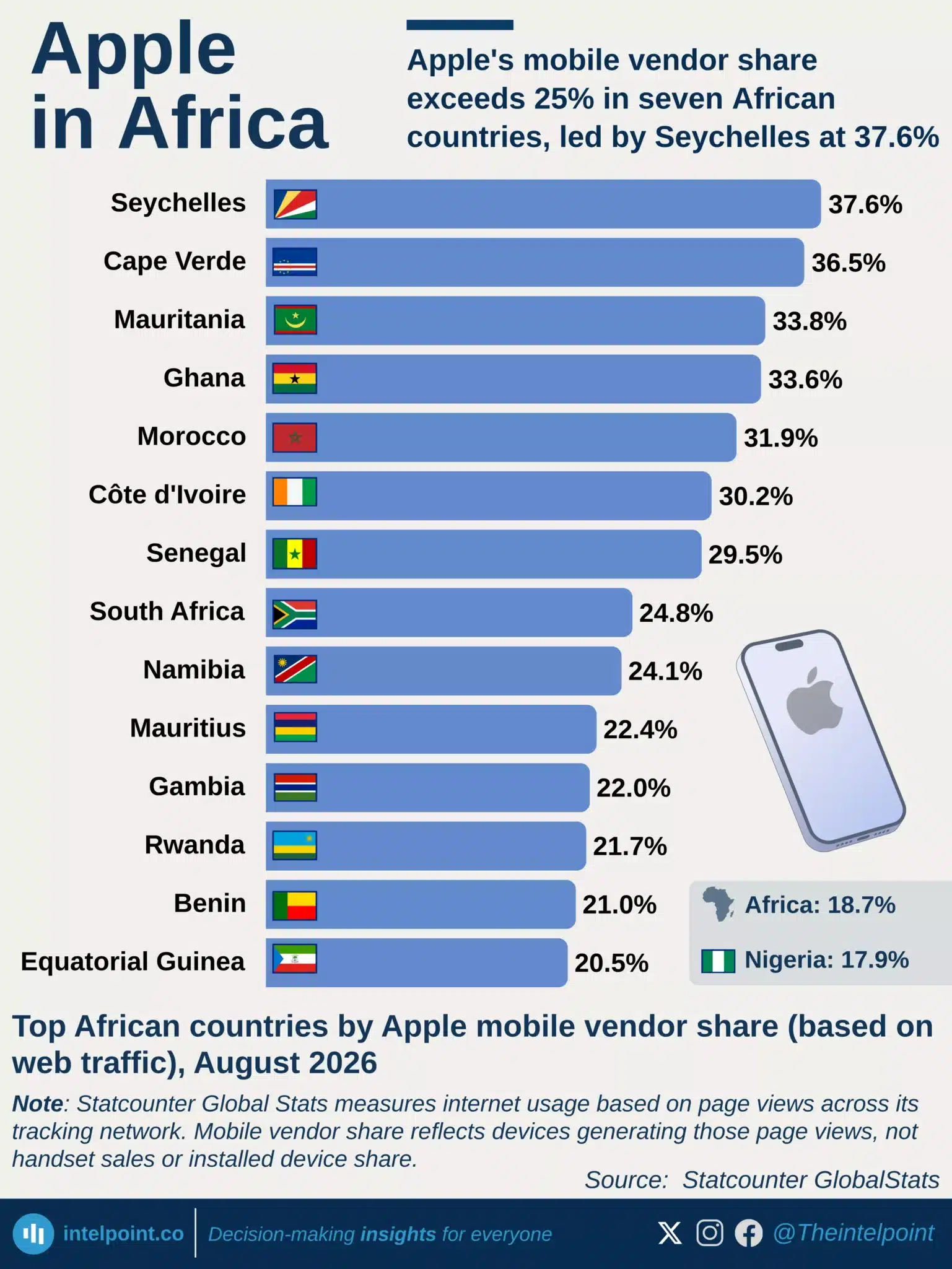
iPhone usage in Africa is just 15%, far below North America’s 60% usage
  • North America leads globally with 60.2% iPhone usage, making it the largest iPhone market.
  • Oceania follows at 58.9%, showing similar consumer preferences to North America.
  • Africa has the lowest iPhone share (14.7%), highlighting a significant adoption gap.
  • Nigeria aligns with the continental trend at 14.1%, reinforcing that the gap is structural, not country-specific.

POPULAR TOPICS
SIGN UP TO OUR NEWSLETTER
Get periodic updates about the African startup space, access to our reports, among others.
Subscribe Here
Subscription Form

A product of Techpoint Africa. All rights reserved