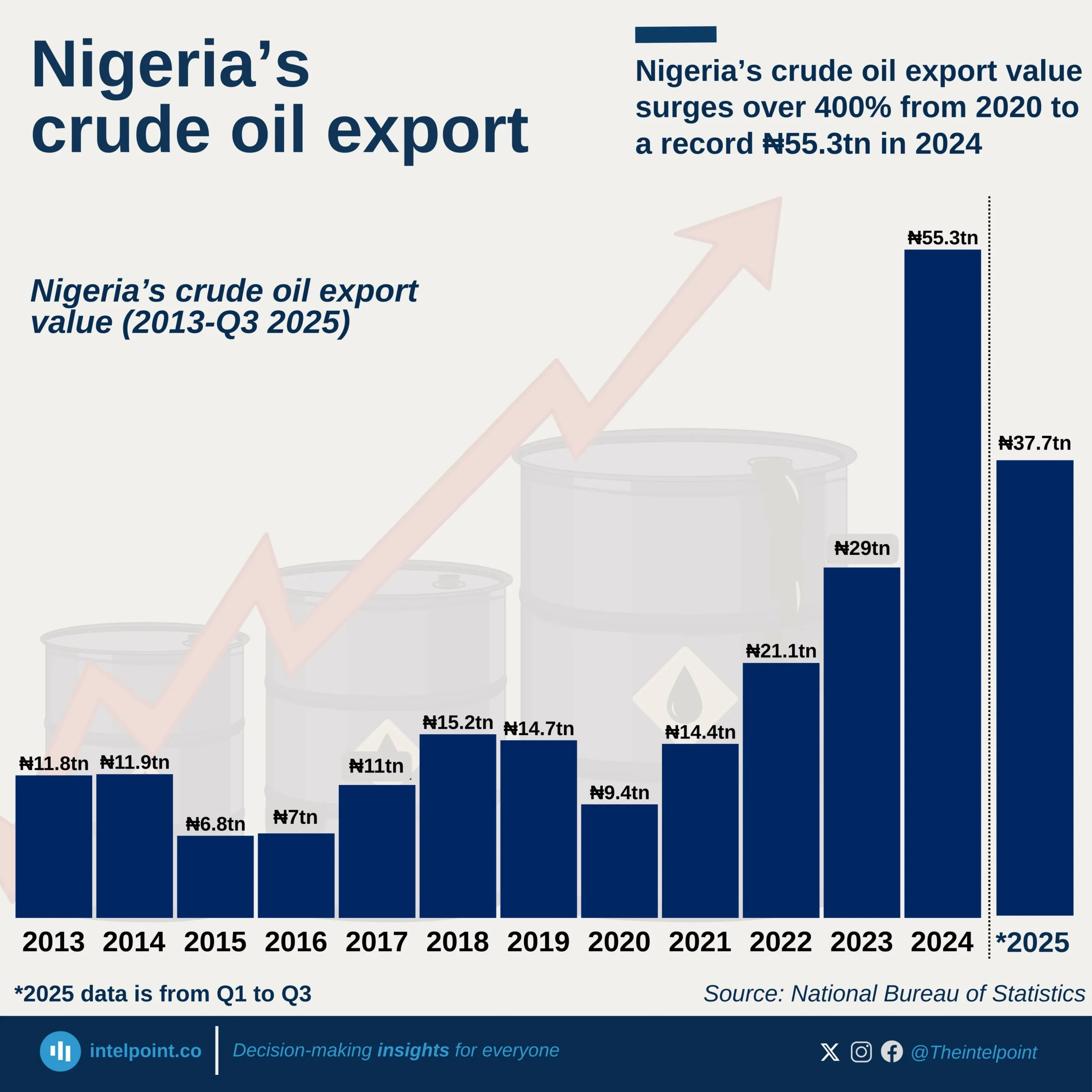
Export values have grown over 400%, rising from ₦11.8 trillion in 2013 to a peak of ₦55.3 trillion in 2024, a fivefold increase driven by rising oil prices and a weaker naira.
2015 and 2016 were the hardest years, with export values crashing as low as ₦6.8 trillion in 2015, reflecting the brutal impact of the global oil price collapse on Nigeria's most critical export.
The most explosive growth came from 2023 onwards, with values surging past ₦29 trillion in 2023 and peaking at ₦55.3 trillion in 2024, largely driven by the naira depreciation following Nigeria's 2023 foreign exchange reforms.
The first nine months of 2025 saw a slower pace than the previous year, with ₦37.7 trillion recorded between Q1 and Q3, lower than the ₦41.5 trillion recorded during the same period in 2024.
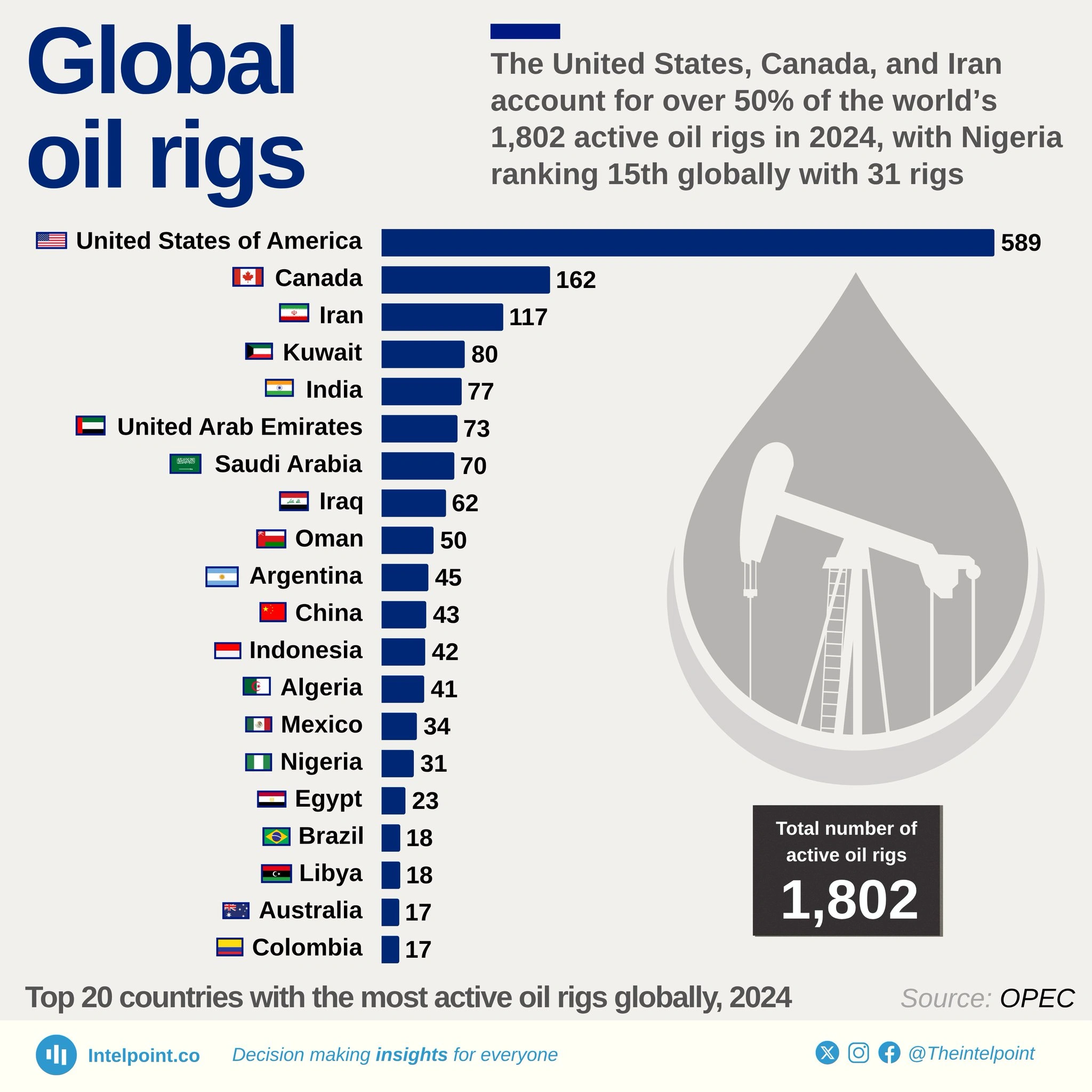
The United States remains the undisputed leader with 589 active rigs, accounting for nearly a third of all rigs worldwide in 2024.
Canada (162 rigs) and Iran (117 rigs) follow as the second and third highest contributors to global drilling activity.
Middle Eastern producers dominate the top 10, with Kuwait (80), UAE (73), Saudi Arabia (70), Iraq (62), and Oman (50) collectively operating 335 rigs.
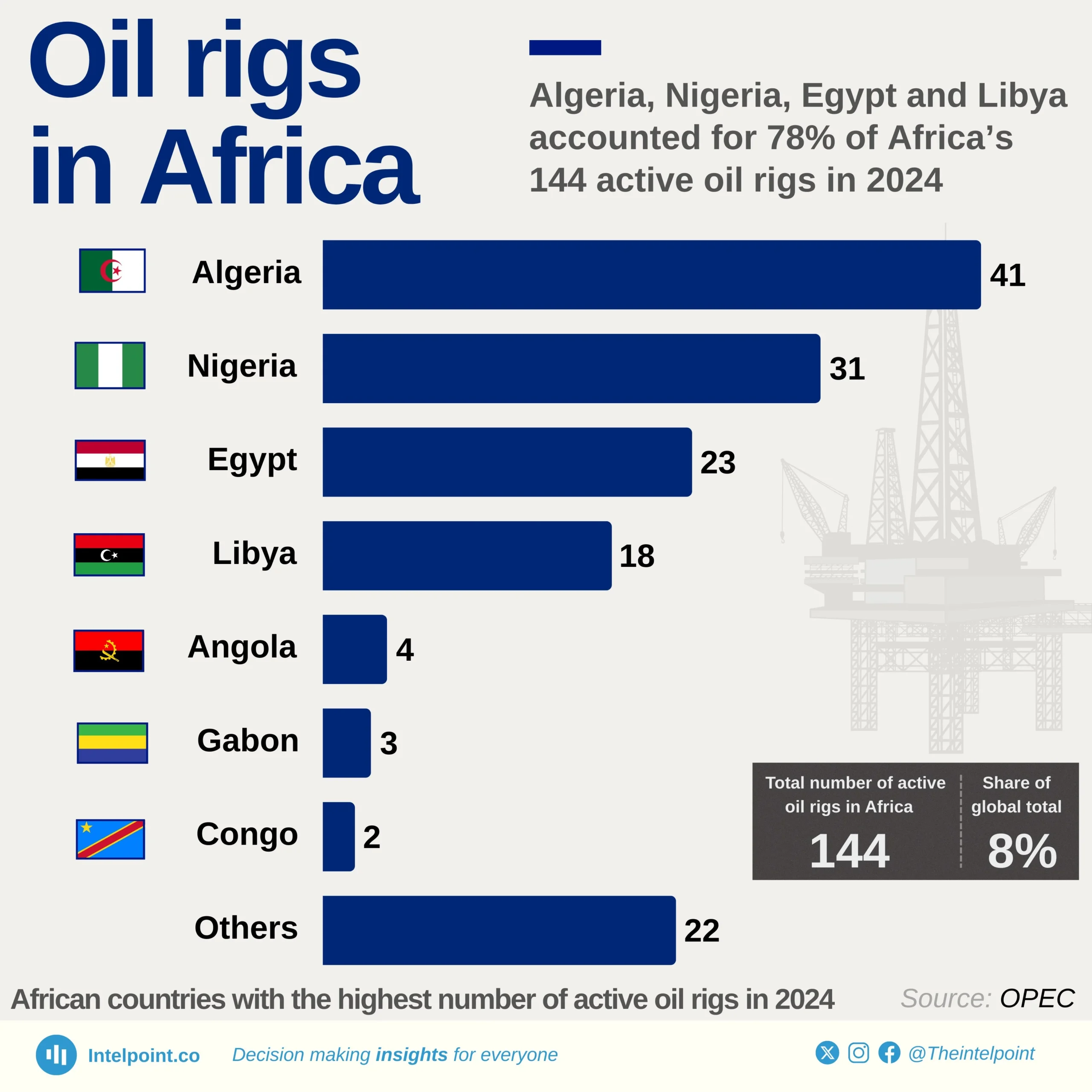
Nigeria ranks 15th globally with 31 active rigs, making it one of only two African nations in the global top 20.
The top 10 countries account for over 75% of the world’s active rigs, reflecting the continued concentration of drilling infrastructure in a handful of key oil-producing regions.