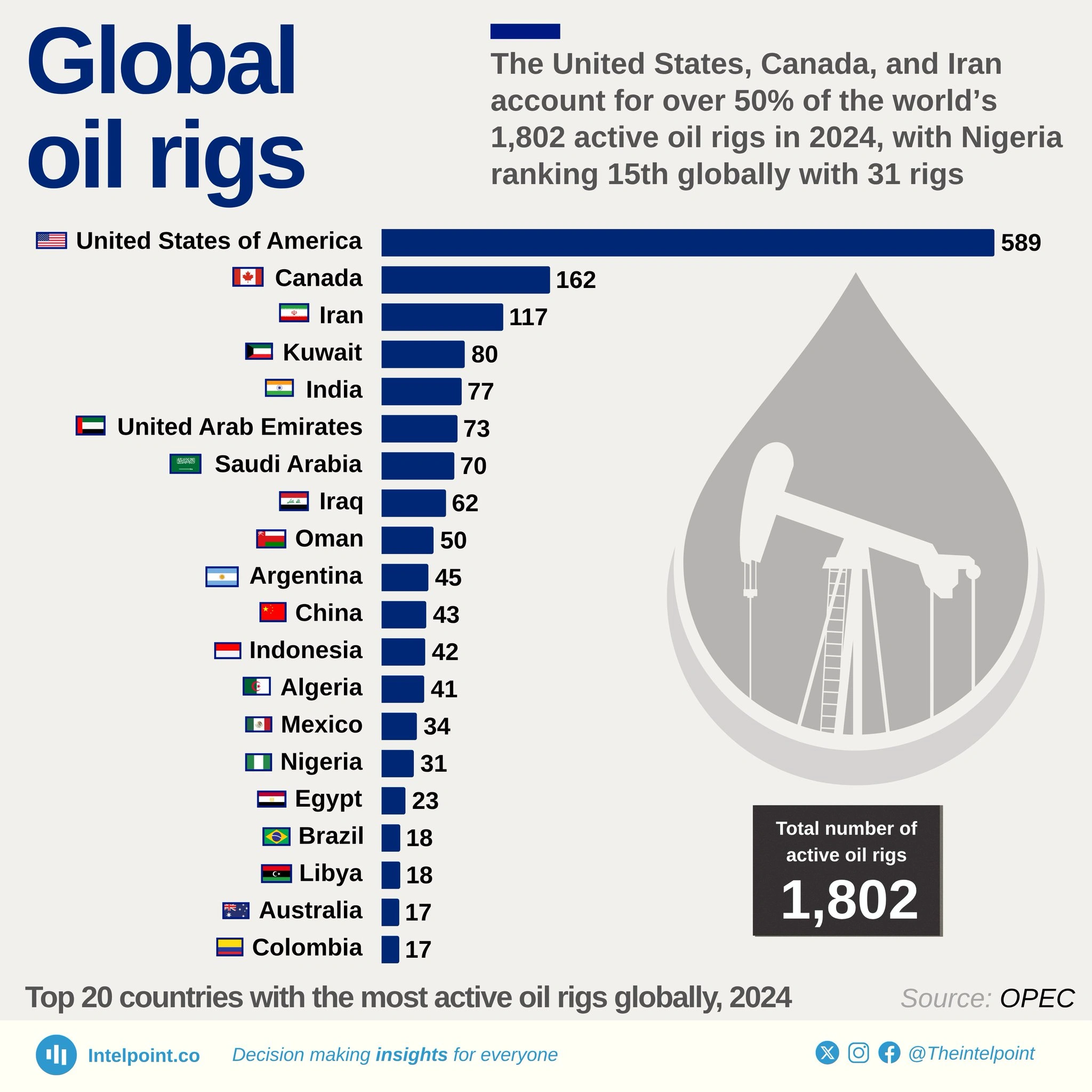
The United States remains the undisputed leader with 589 active rigs, accounting for nearly a third of all rigs worldwide in 2024.
Canada (162 rigs) and Iran (117 rigs) follow as the second and third highest contributors to global drilling activity.
Middle Eastern producers dominate the top 10, with Kuwait (80), UAE (73), Saudi Arabia (70), Iraq (62), and Oman (50) collectively operating 335 rigs.
Nigeria ranks 15th globally with 31 active rigs, making it one of only two African nations in the global top 20.
The top 10 countries account for over 75% of the world’s active rigs, reflecting the continued concentration of drilling infrastructure in a handful of key oil-producing regions.
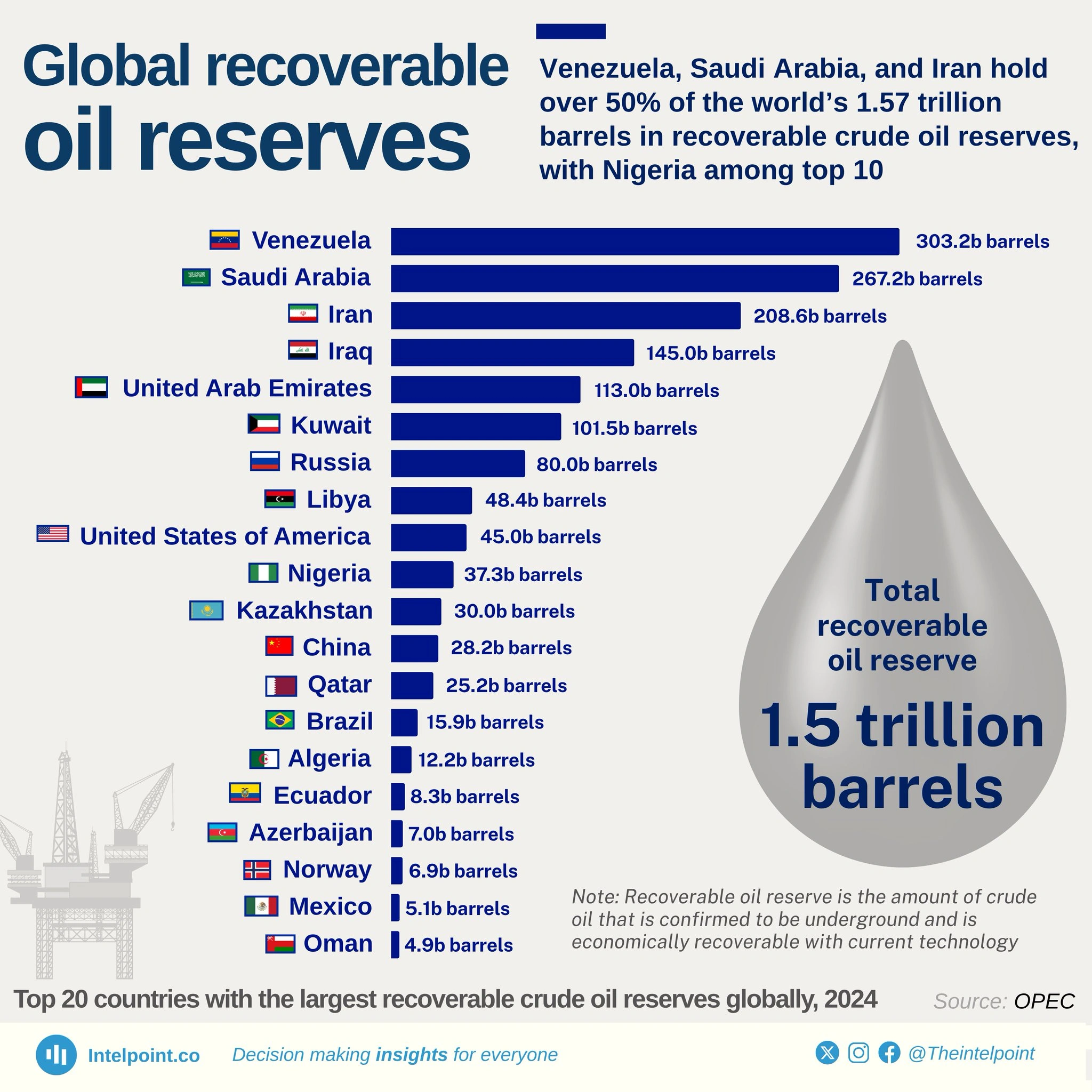
The world’s total proven recoverable crude oil reserves stand at 1.57 trillion barrels in 2024.
Venezuela, Saudi Arabia, and Iran collectively hold over 50% of these reserves, with 303.2B, 267.2B, and 208.6B barrels respectively.
Nigeria ranks 10th globally with 37.3 billion barrels, placing it ahead of other major producers like Kazakhstan, China, and Brazil.
The majority of the largest reserves are concentrated in Middle Eastern and South American countries, with only a few top holders located in North America, Africa, and Asia.
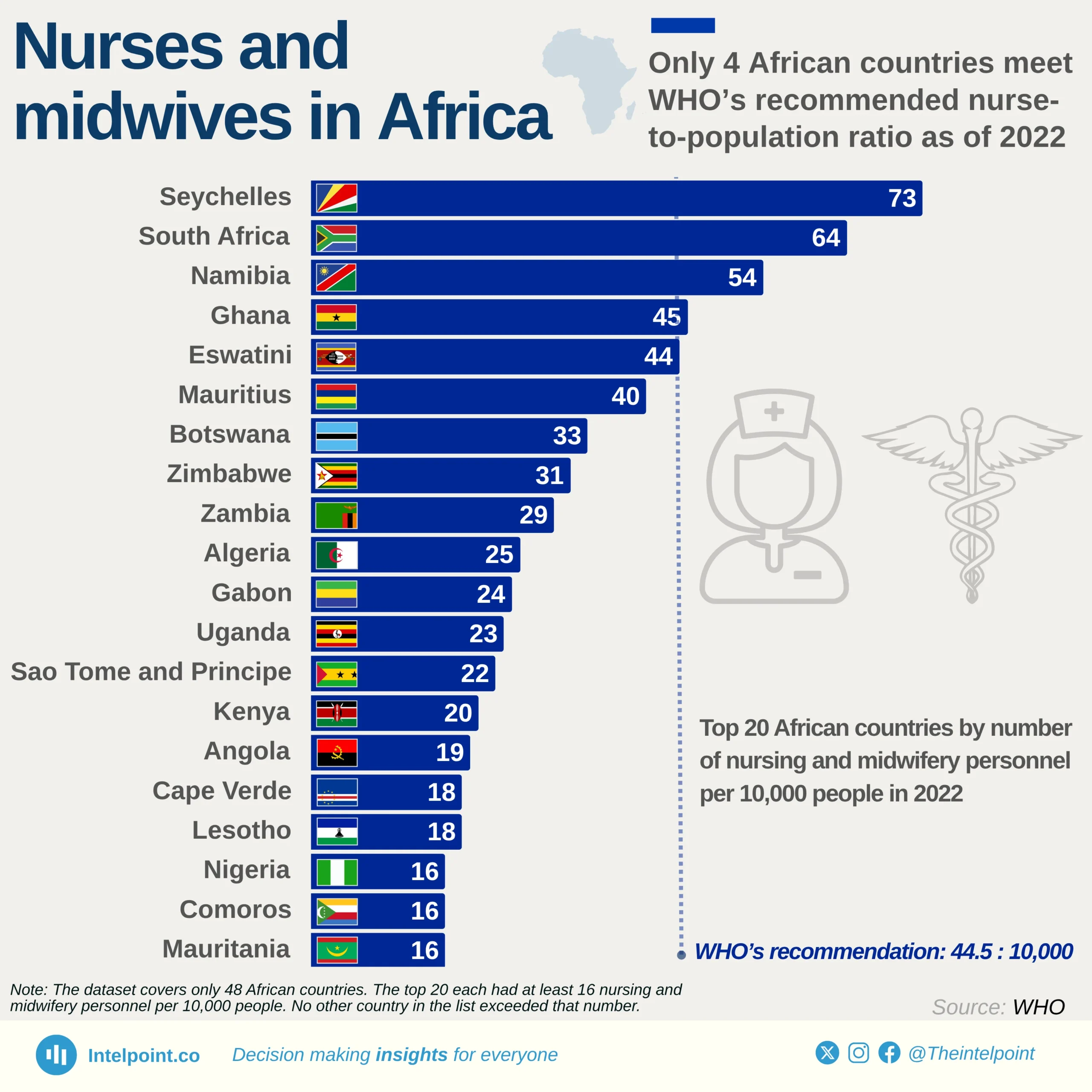
Only four African countries, Seychelles, South Africa, Namibia, and Ghana, meet or exceed the WHO’s recommended minimum of 44.5 nursing and midwifery personnel per 10,000 people.
Seychelles leads the continent with 73 personnel per 10,000, followed by South Africa (64), Namibia (54), and Ghana (45).
The lowest number within the top 20 is 16, shared by Nigeria, Comoros, and Mauritania.
The dataset includes 47 African countries, and no country outside the top 20 has more than 16 nursing and midwifery personnel per 10,000 people.