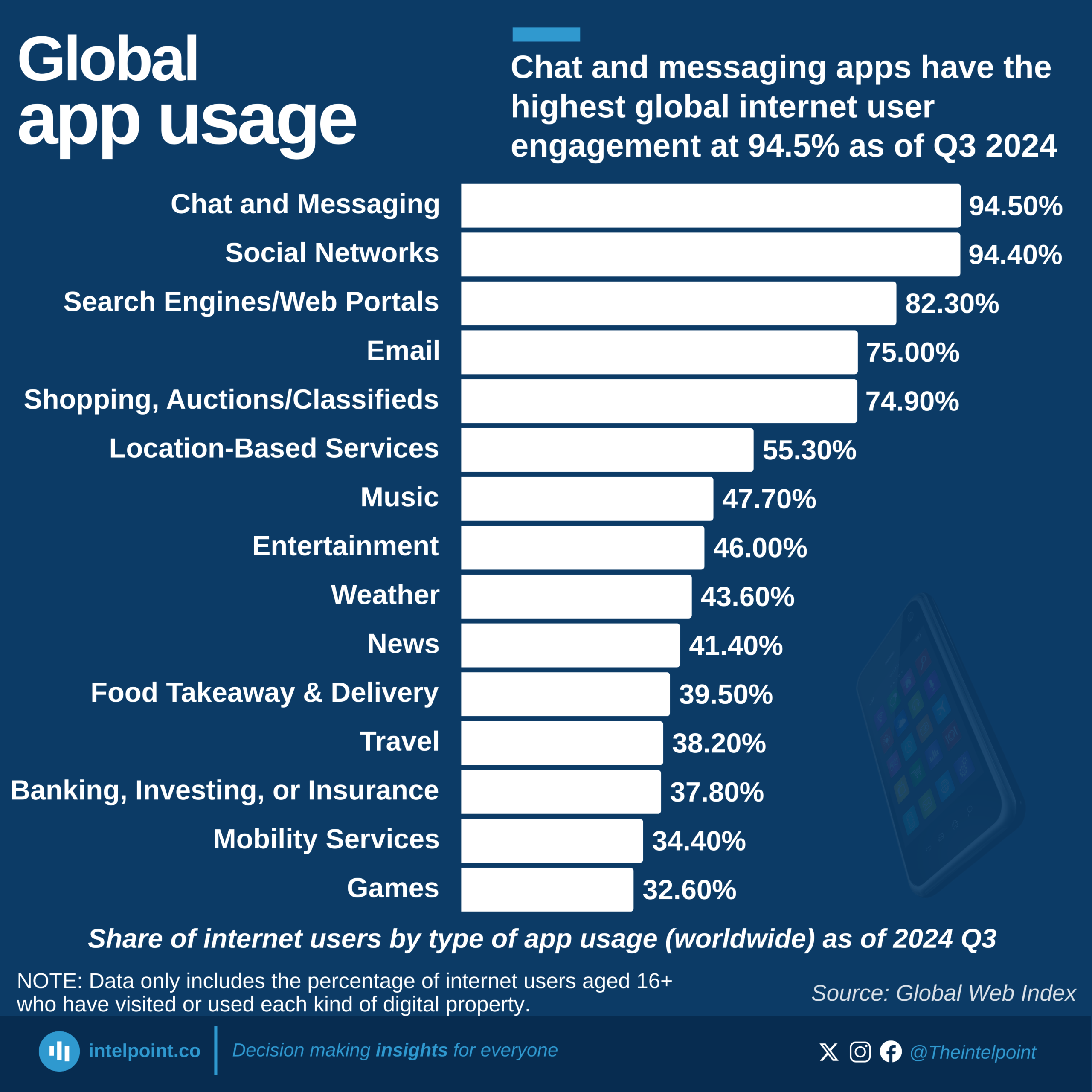
Chat and Messaging apps lead globally, engaging 94.5% of internet users as of Q3 2024.
Social Networks follow closely behind at 94.4%, nearly matching messaging apps in global user engagement.
Search Engines and Web Portals still see high use, engaging 82.3% of users.
Email services remain highly relevant, used by 75% of internet users globally.
Shopping, Auctions, and Classifieds apps are also prominent, used by 74.9% of users.
Location-based services like maps and ride-sharing apps engage 55.3%, indicating a strong but more practical use case.
Games remain a niche category, with only 32.6% of users engaging with gaming apps compared to much higher engagement with communication or shopping platforms.
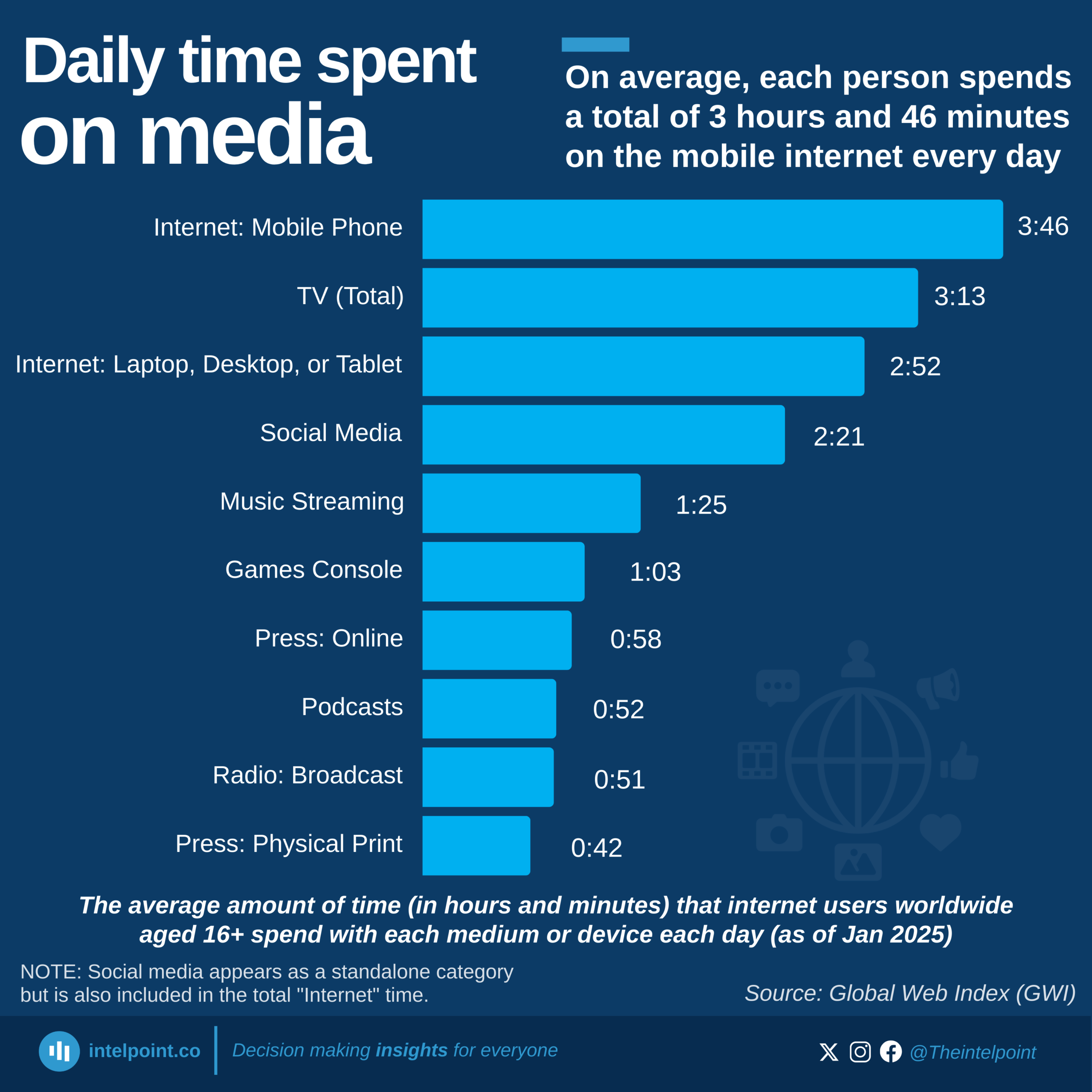
With nearly four hours daily, mobile internet is the primary way people interact with content.
At 3 hours and 13 minutes daily, TV remains relevant but is being outpaced by mobile consumption.
With 2 hours and 21 minutes daily, platforms like Instagram, TikTok, and X are where people spend much of their mobile time.
Digital press consumption (58 minutes daily) outpaces traditional print (42 minutes), signalling a continued decline in physical media.
Users spend 1 hour 25 minutes on music streaming, but gaming consoles only see 1 hour and 3 minutes, showing that on-the-go entertainment is preferred.
With podcasts at 52 minutes and radio at 51 minutes, audio content is still relevant but not as dominant as video and social media.
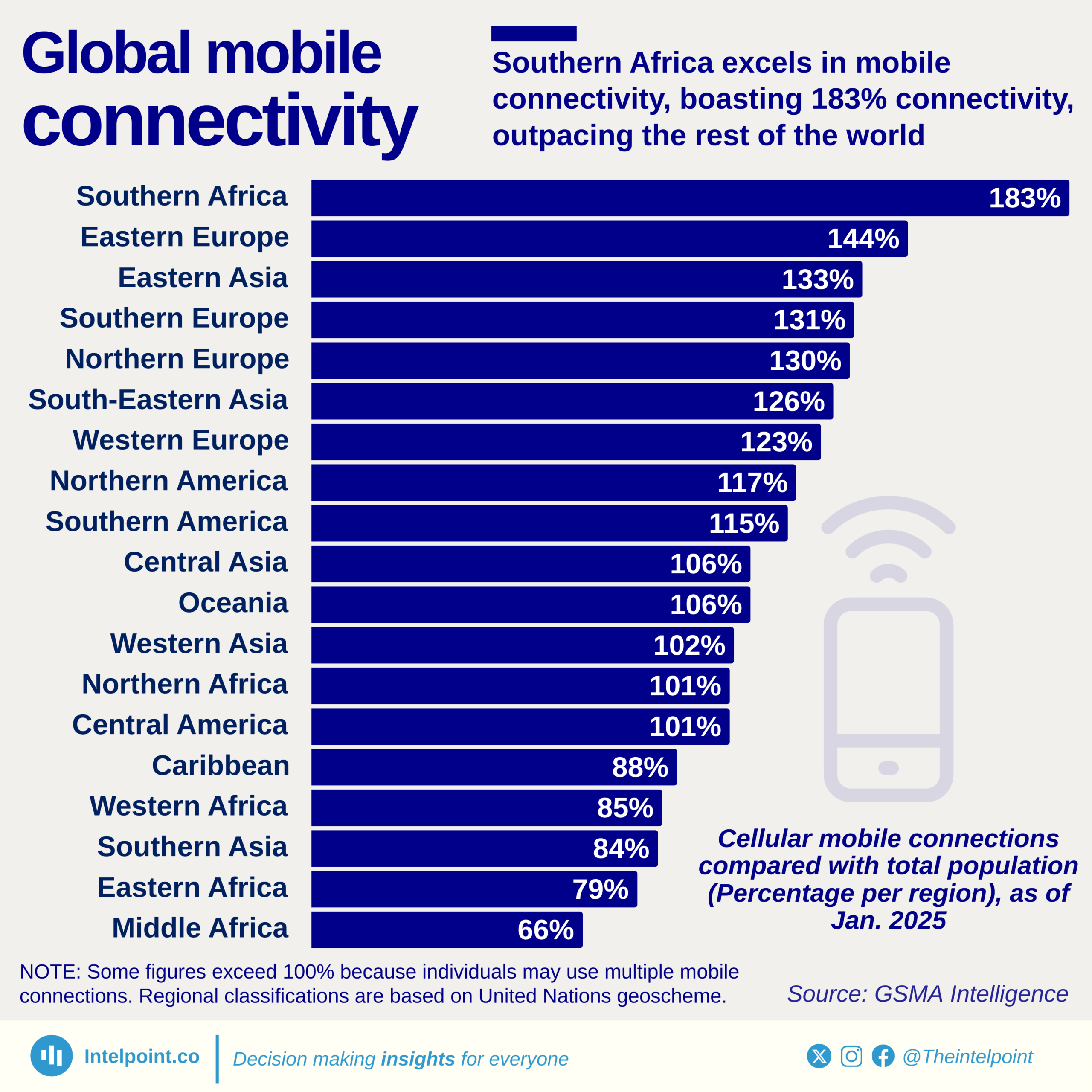
Southern Africa is the global leader in mobile connectivity, with 183% mobile connections compared to its population, significantly ahead of all other regions.
The world’s most connected regions are outside North America and Western Europe, with Eastern Europe (144%), Eastern Asia (133%), and Southern Europe (131%) leading the charge after Southern Africa.
Africa is deeply divided in mobile adoption. While Southern Africa dominates, Eastern Africa (79%) and Middle Africa (66%) have a lower penetration.
Some regions have more mobile connections than people. The fact that multiple regions exceed 100% connectivity means that many individuals own multiple SIM cards, a trend driven by business needs, mobile money, and telecom competition.
Western Africa, at 85% connectivity, is doing better than Eastern Africa but still lags behind the global average, signaling potential for more growth in mobile adoption.
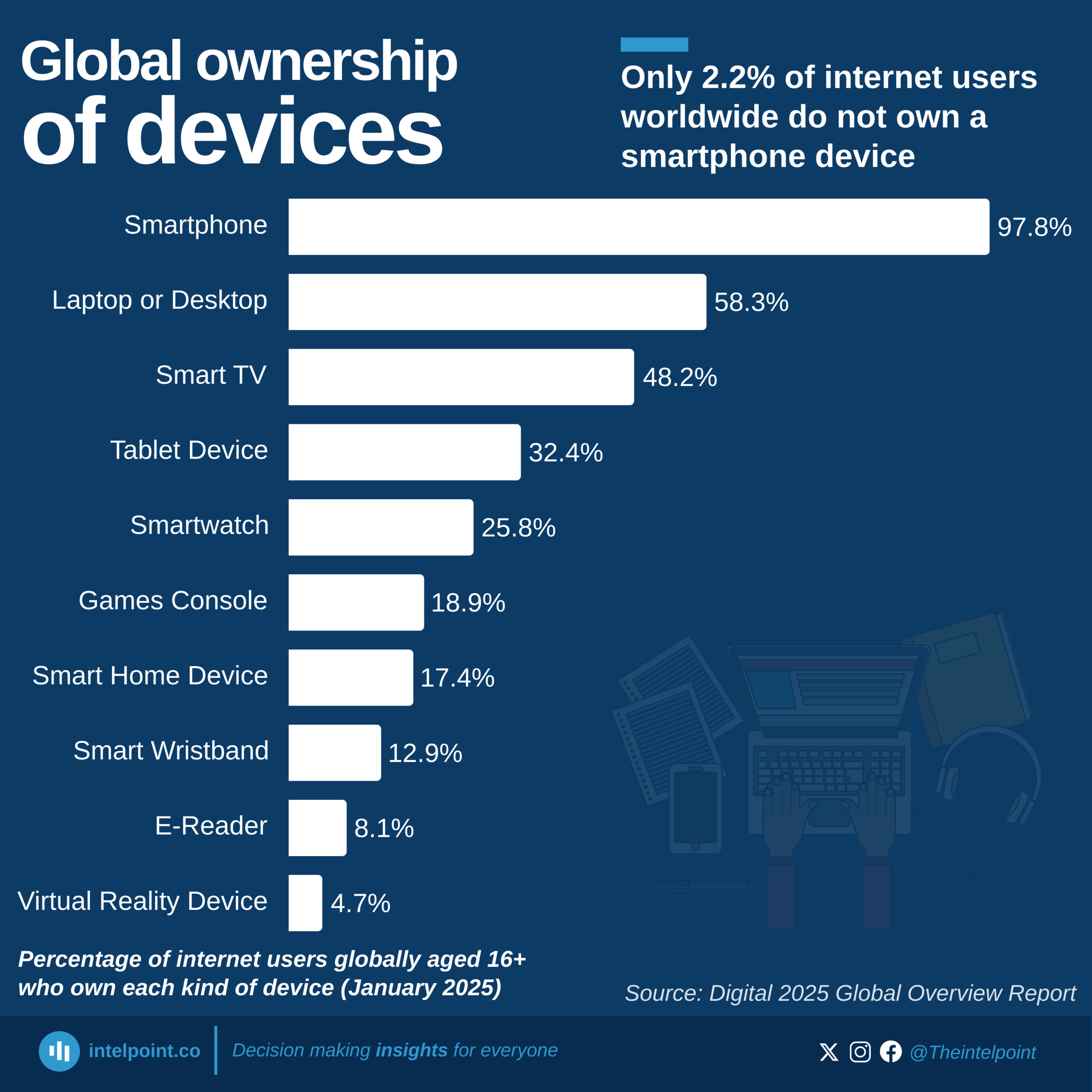
Smartphones are nearly universal, with only 2.2% of internet users worldwide not owning one.
Laptop and desktop ownership (58.3%) lags behind smartphones, reinforcing the shift toward mobile-first usage for internet access.
Smart TVs (48.2%) are closing in on traditional computing devices, showing how entertainment consumption is increasingly digital and on-demand.
Wearables are rising, with smartwatches (25.8%) and smart wristbands (12.9%) becoming more mainstream, signalling a growing appetite for health and fitness tracking.
Gaming consoles (18.9%) and smart home devices (17.4%) have niched but steady adoption, appealing to entertainment and home automation enthusiasts.
Virtual Reality (VR) remains a specialty product, with just 4.7% ownership.
For businesses, the mobile-first reality is non-negotiable —any service, product, or content must prioritise accessibility via smartphones to reach the widest audience.
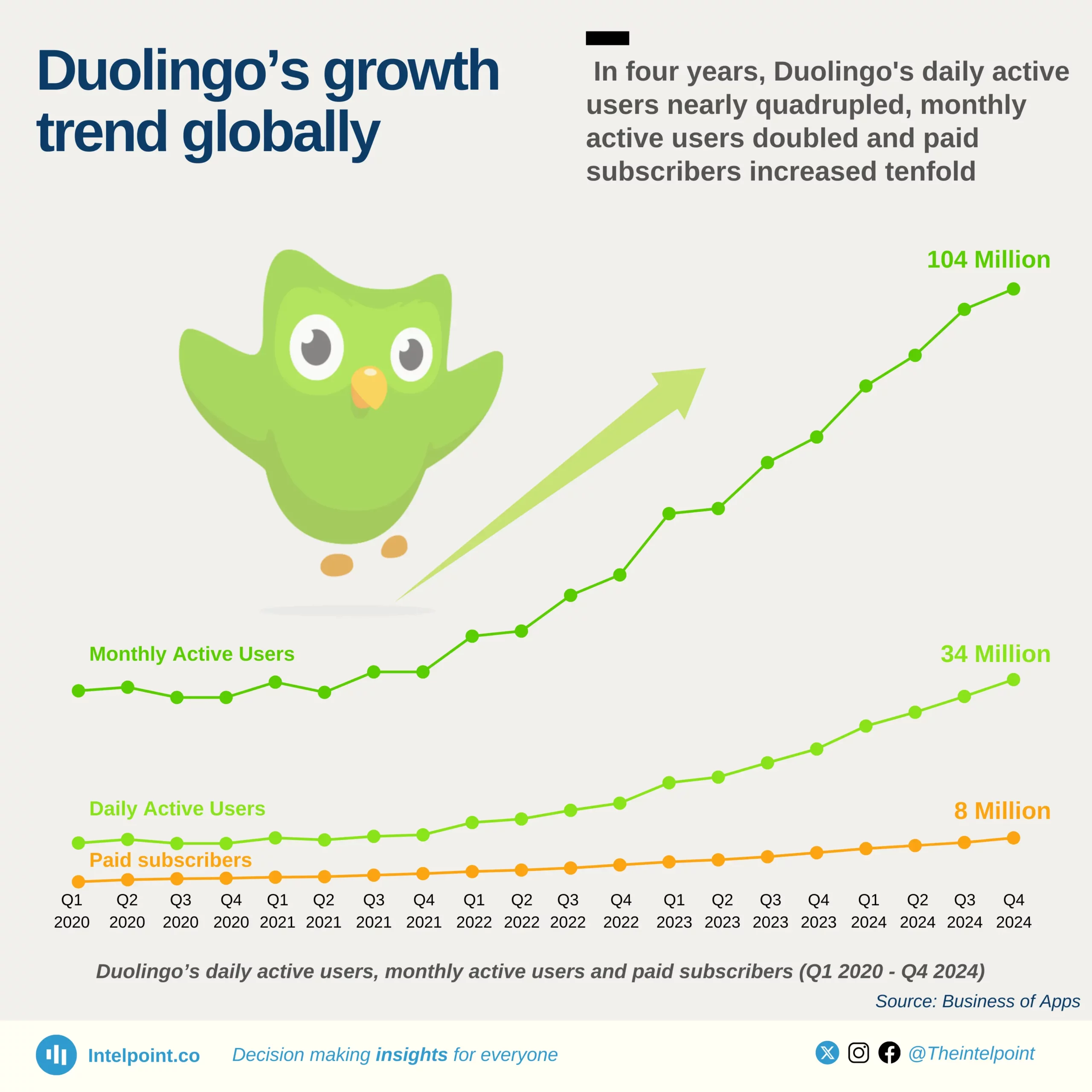
- Monthly active users tripled: The user base grew from 38 million to 117 million, reflecting a significant expansion in overall reach.
- Daily engagement quadrupled, increasing from 8.5 million users to 40.5 million users, indicating a deeper and more consistent user engagement.
- Paid subscribers skyrocketed: A dramatic rise from 900,000 paid subscribers to 9.5 million paid subscribers highlights an exceptional monetisation success.
- The most pronounced growth occurred from Q1 2023 onward, emphasizing a period of rapid adoption and conversion.
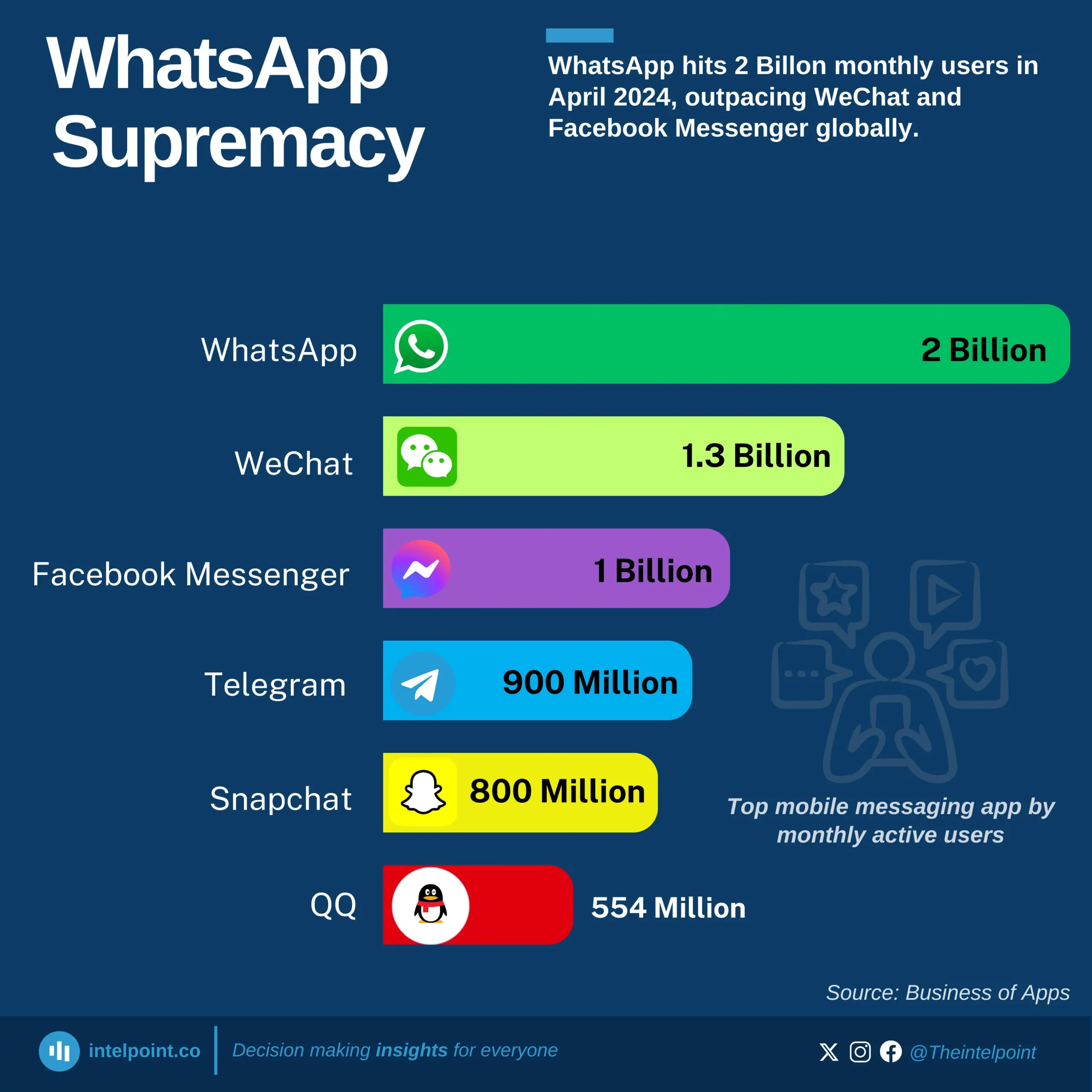
WhatsApp’s global reach hit 2 billion monthly active users. It’s the undisputed leader in global messaging engagement.
WeChat’s regional strength reached 1.3 billion monthly active users, but it is heavily concentrated in some regions, limiting its global monthly activity.
Telegram’s rise to 900 million monthly active users and Snapchat’s sticky appeals to 800 million monthly active users revealed high engagement among younger demographics.
QQ had 554 million monthly active users, highlighting its significant presence in the messaging market.