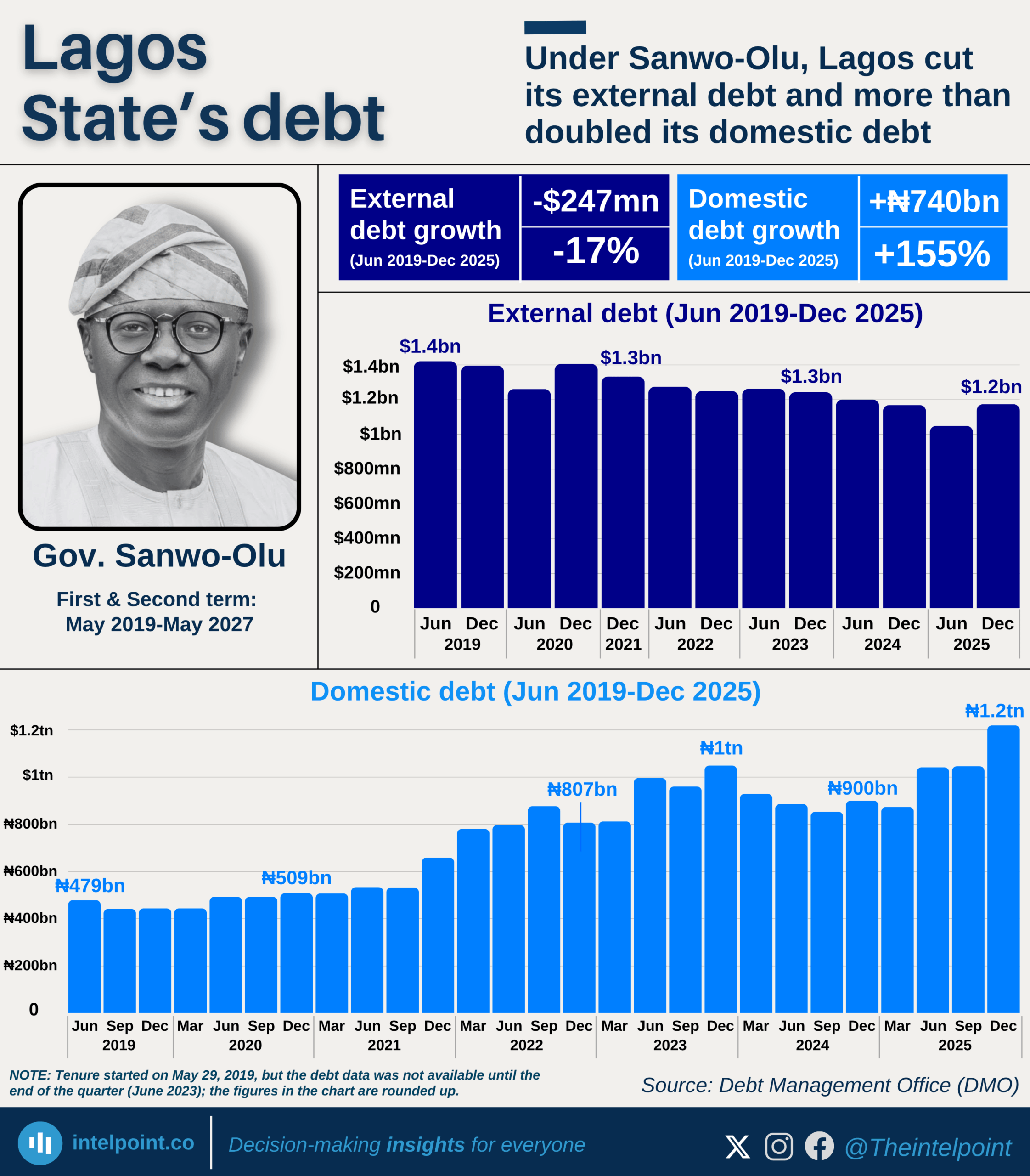
Under Governor Sanwo-Olu, Lagos State’s external debt fell from $1.4 billion to $1.2 billion, a $247.2 million, or 17.4%, drop. But over the same stretch — between June 2019 and December 2025 — its domestic debt rose from about ₦479 billion to ₦1.2 trillion, an increase of ₦740.4 billion, or 155%.
External debt carries exchange-rate risk, which has become much heavier since the naira’s sharp repricing in 2023. Domestic borrowing, however, is easier to structure around local cash flows and state-level financing needs.
Lagos continued to pursue a very large infrastructure agenda. The state said its 2025 budget set aside ₦1.052 trillion for infrastructure, and in September 2025, it announced plans to raise ₦214.8 billion in bonds to fund 24 projects. The pattern shows that Lagos appears to have preferred local-currency funding for capital expansion, even as it trimmed dollar liabilities.