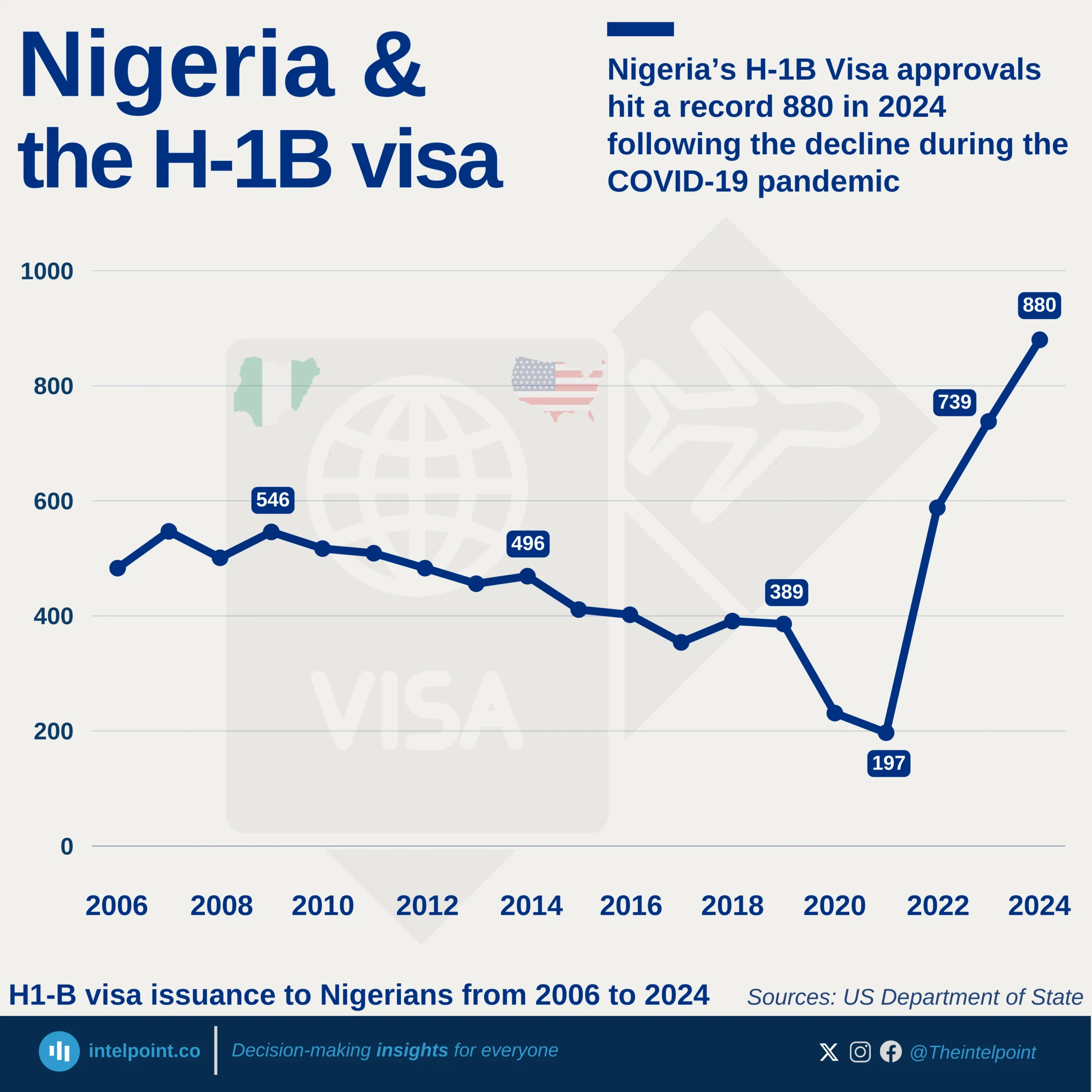
Nigeria’s H-1B visa approvals hit a record 880 in 2024 following the decline during the COVID-19 pandemic

Key Takeaways

  • 2024 recorded the highest number of H1-B issuances to Nigerians at 880, nearly double 2022’s level.
  • Issuances dropped sharply to 231 in 2020 and 197 in 2021, marking the lowest levels in nearly two decades.
  • Between 2006 (483) and 2017 (354), there was a gradual decline in approvals before a steeper fall in 2020.
  • From 2021 to 2024, issuances surged by more than 340%, suggesting strong demand for U.S. tech and professional opportunities among Nigerians.

The trajectory of H1-B visa issuances to Nigerians from 2006 to 2024 reflects both global disruptions and shifting migration dynamics. The mid-2000s to mid-2010s saw relatively stable numbers, averaging around 450 approvals annually. However, a steady decline set in by 2017, culminating in a historic low during the COVID-19 pandemic when issuances collapsed to just 197 in 2021. This downturn mirrored both travel restrictions and reduced global hiring. The trend reversed dramatically from 2022 onward, with approvals more than quadrupling by 2024, reaching an all-time high of 880. This rebound signals renewed demand for Nigerian talent in U.S. industries, particularly in tech and professional fields, and highlights Nigeria’s growing role as a key source of skilled migration.
Source:

US Department of State

Period:

2006 to 2024
HTML code to embed chart
Want a bespoke report?
Reach out
Tags
Related Insights

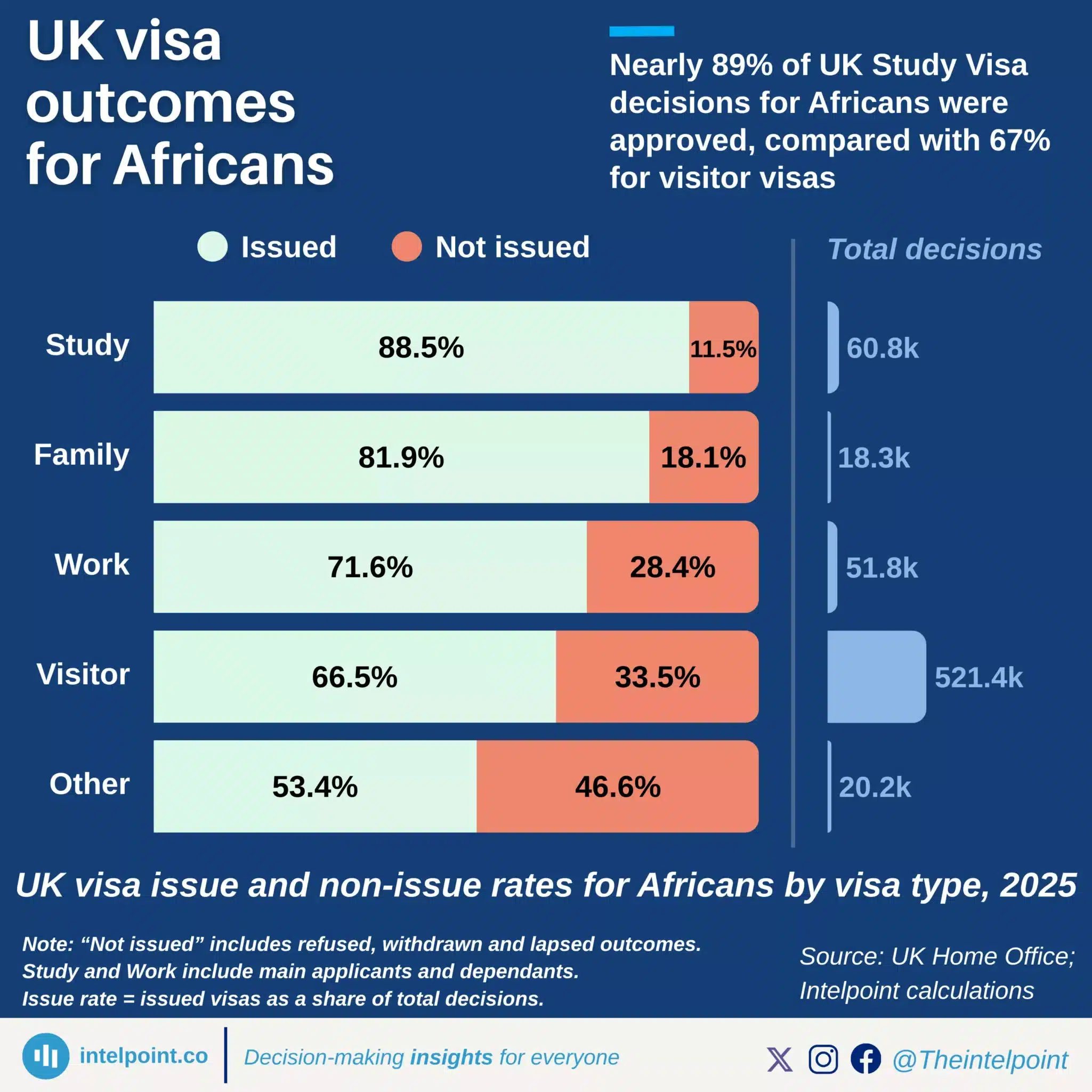
Nearly 89% of UK Study Visa decisions for Africans were approved, compared with 67% for visitor visas
  • The UK made 672,400 visa decisions involving African applicants in 2025.
  • Visitor visas dominated the decisions, accounting for 521,400, or about 78% of the total.
  • Study visas had the highest issue rate, with 88.5% of decisions resulting in issued visas.
  • Visitor visas had a much lower issue rate at 66.5%, despite having the largest decision volume.
  • Work visa decisions had a 71.6% issue rate, below the global work visa average of 86.5%.
  • Other visa routes had the lowest issue rate, with only 53.4% of decisions resulting in issued visas.

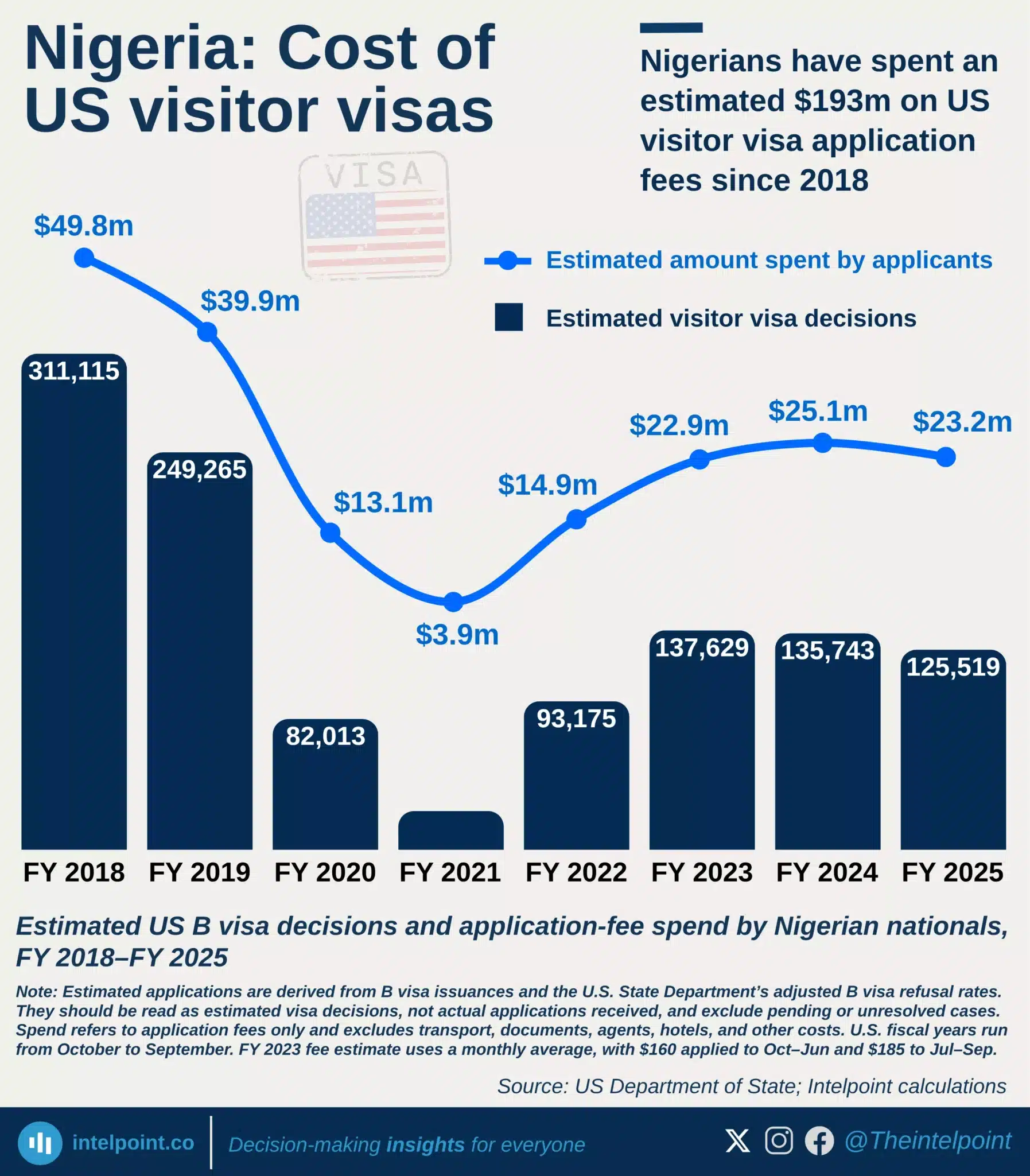
Nigerians have spent an estimated $193 million on U.S. visitor visa application fees since 2018
  • Estimated visitor visa fee spending reached $193 million between FY 2018 and FY 2025.
  • Applicants paid the fee whether their visas were approved or refused.
  • Estimated spending peaked at $49.8 million in FY 2018.
  • Spending recovered to $25.1 million in FY 2024 before falling to $23.2 million in FY 2025.
  • The estimates exclude transport, documents, agents, accommodation and other related costs.

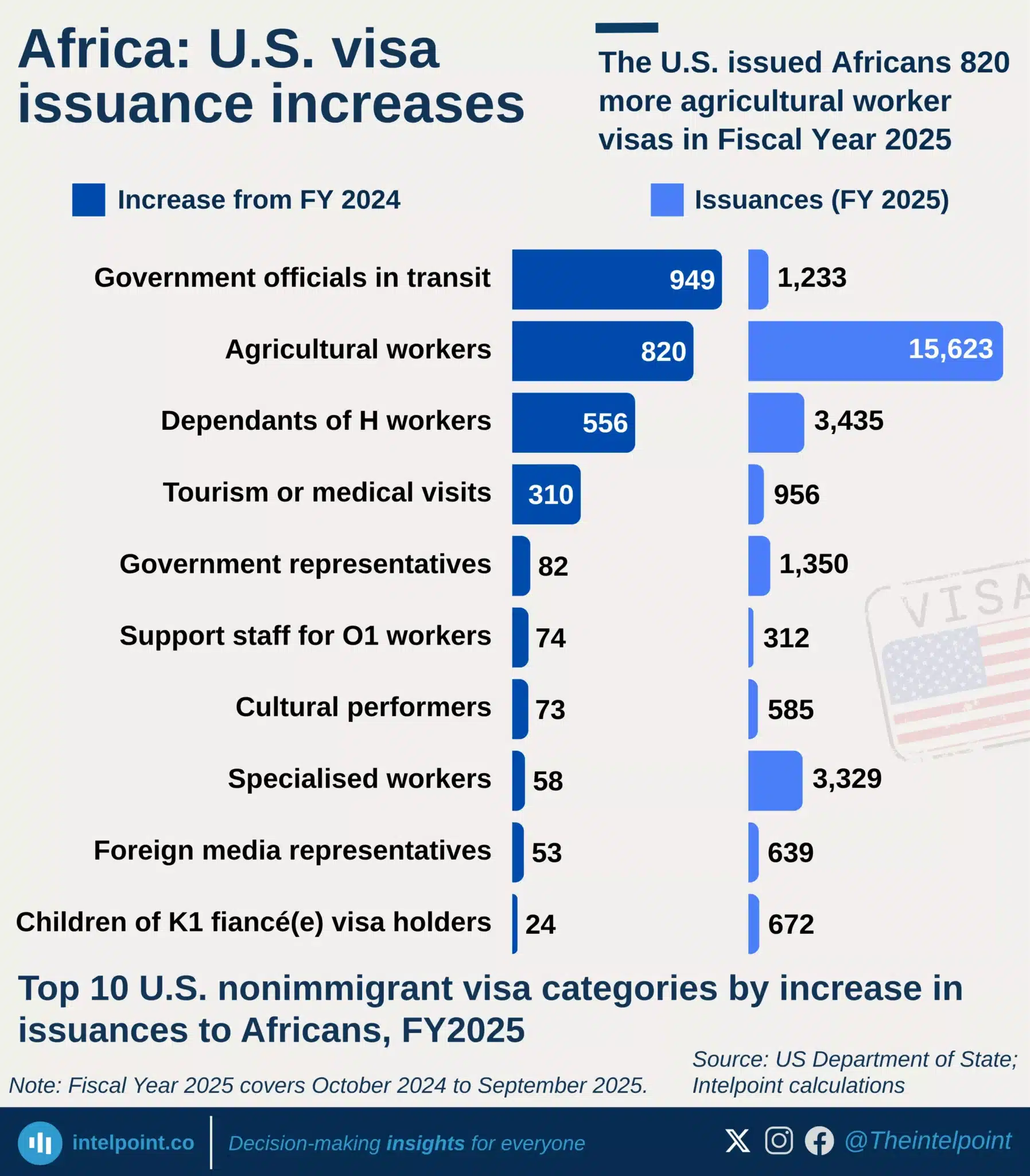
The U.S. issued Africans 820 more agricultural worker visas in Fiscal Year 2025
  • U.S. nonimmigrant visa issuances to Africans fell by 23.6% to 413,259.
  • Twenty-five visa categories still recorded increases despite the overall decline.
  • C3 visas posted the largest numerical increase, rising by 949.
  • H2A agricultural worker visas increased by 820 to 15,623.
  • B1/B2 visitor visas recorded the biggest decline, falling by 109,653.

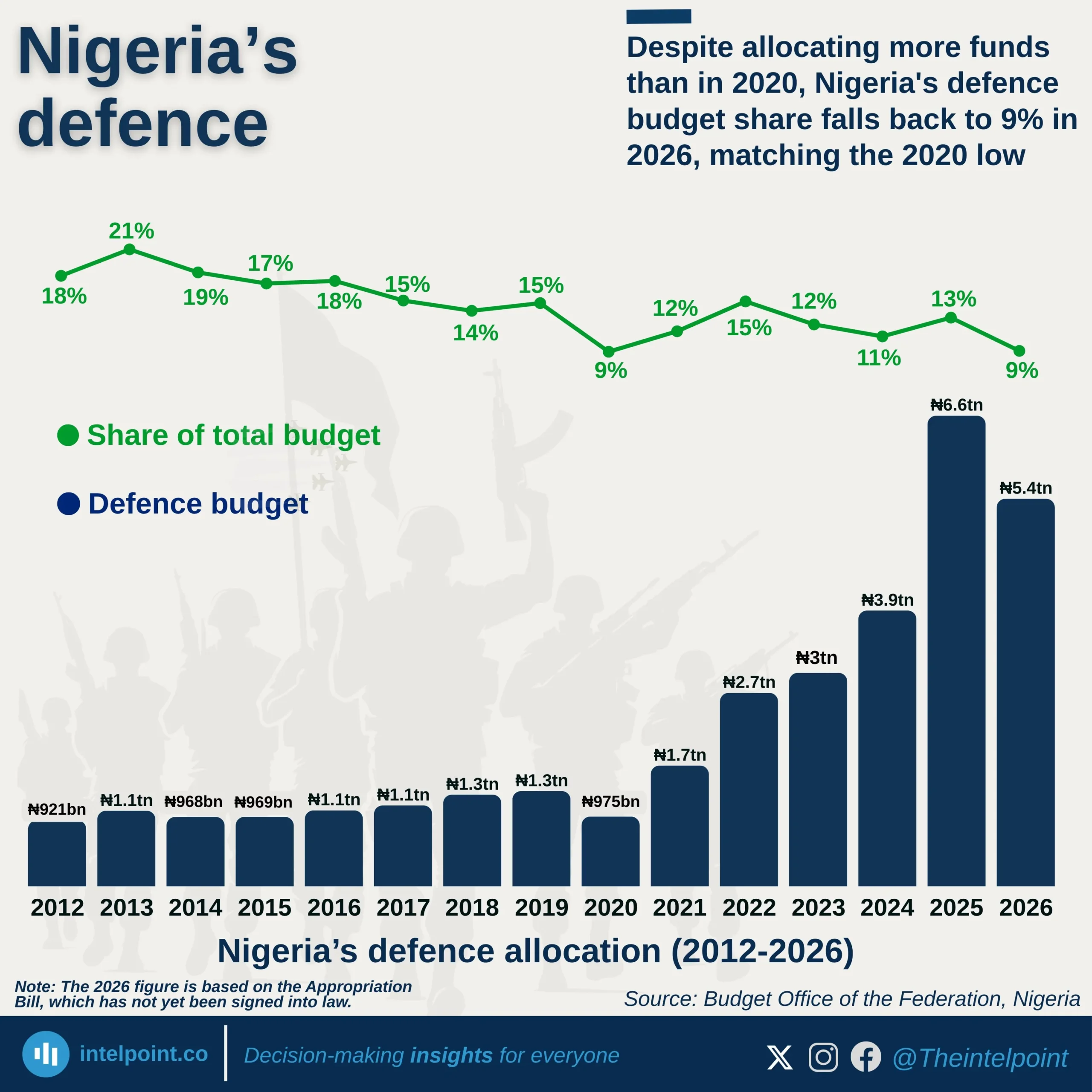
Despite allocating more funds than in 2020, Nigeria's defence budget share falls back to 9% in 2026, matching the 2020 low
  • Nominal spending surged, but inflation and naira depreciation eroded real gains. From ₦921 billion in 2012 to ₦6.57 trillion in 2025, the absolute figure may seem dramatic, but Nigeria's security challenges intensified over the same period.
  • Defence commanded over 21% of the budget in 2013. From 2024 to 2026, that figure has fallen below 14%, with 2026 hitting a historic low of 9.3%.
  • Boko Haram, banditry, and separatist tensions peaked in 2020, resulting in a cut that saw defence's share fall to just 9.2%, the lowest on record at that point.
  • The jump to ₦6.57trn (13.2%) in 2025 marks the sharpest year-on-year absolute increase in the dataset. But 2026 reversed this again, with the rate dropping to 9.3%.

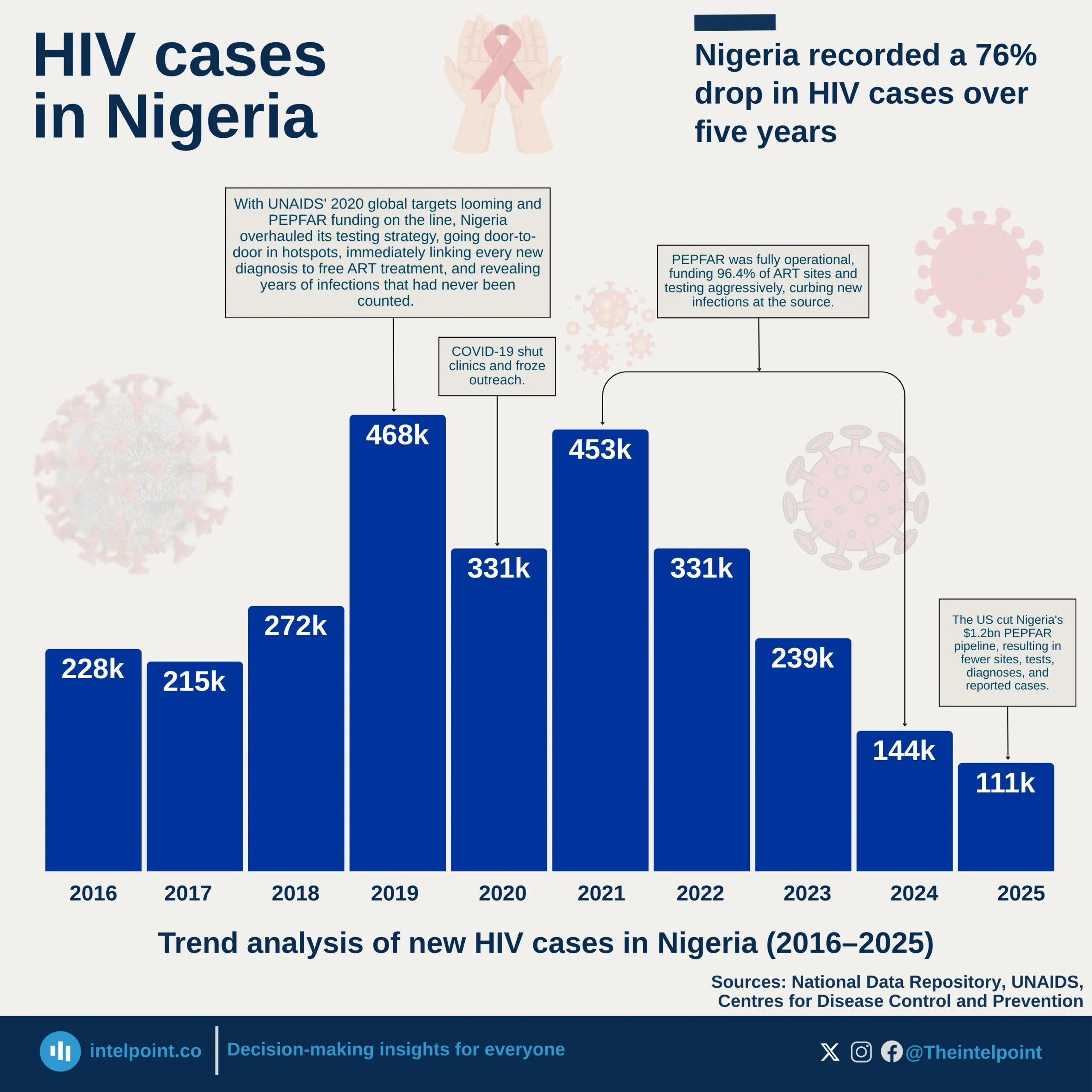
Nigeria recorded a 76% drop in HIV cases over five years
  • The 2019 number revealed the truth — years of underdiagnosis were corrected in a single year when PEPFAR restructured testing entirely.
  • The 76% decline from 2019 to 2024 is one of the most significant HIV reductions in Africa in a single decade.
  • One year of disruption in 2020 erased an entire year of progress, creating a backlog that took until 2022 to clear.
  • With PEPFAR's $1.2 billion pipeline cut, fewer Nigerians are being tested, meaning fewer cases appear on paper while the virus spreads undetected.

Nigeria's insurance sector crossed ₦1.98tn in H1 2025 as every segment grew by at least 25%
  • Life Business was the single largest segment, and its 70.3% jump signals that more Nigerians are thinking seriously about financial protection for their families.
  • Miscellaneous, the smallest segment, posted the biggest growth at 86.7%, suggesting new and unconventional insurance products are gaining serious traction.
  • Aviation & Marine nearly doubled, with 79.9% growth in a sector tied to trade and logistics, reflecting Nigeria's expanding import/export activity and the rising cost of cargo and aircraft risk coverage.
  • Motor (52.5%), Fire (53.3%), and General Accident (49.6%) grew by roughly half, indicating broad-based sector expansion rather than isolated pockets of growth.

POPULAR TOPICS
SIGN UP TO OUR NEWSLETTER
Get periodic updates about the African startup space, access to our reports, among others.
Subscribe Here
Subscription Form

A product of Techpoint Africa. All rights reserved