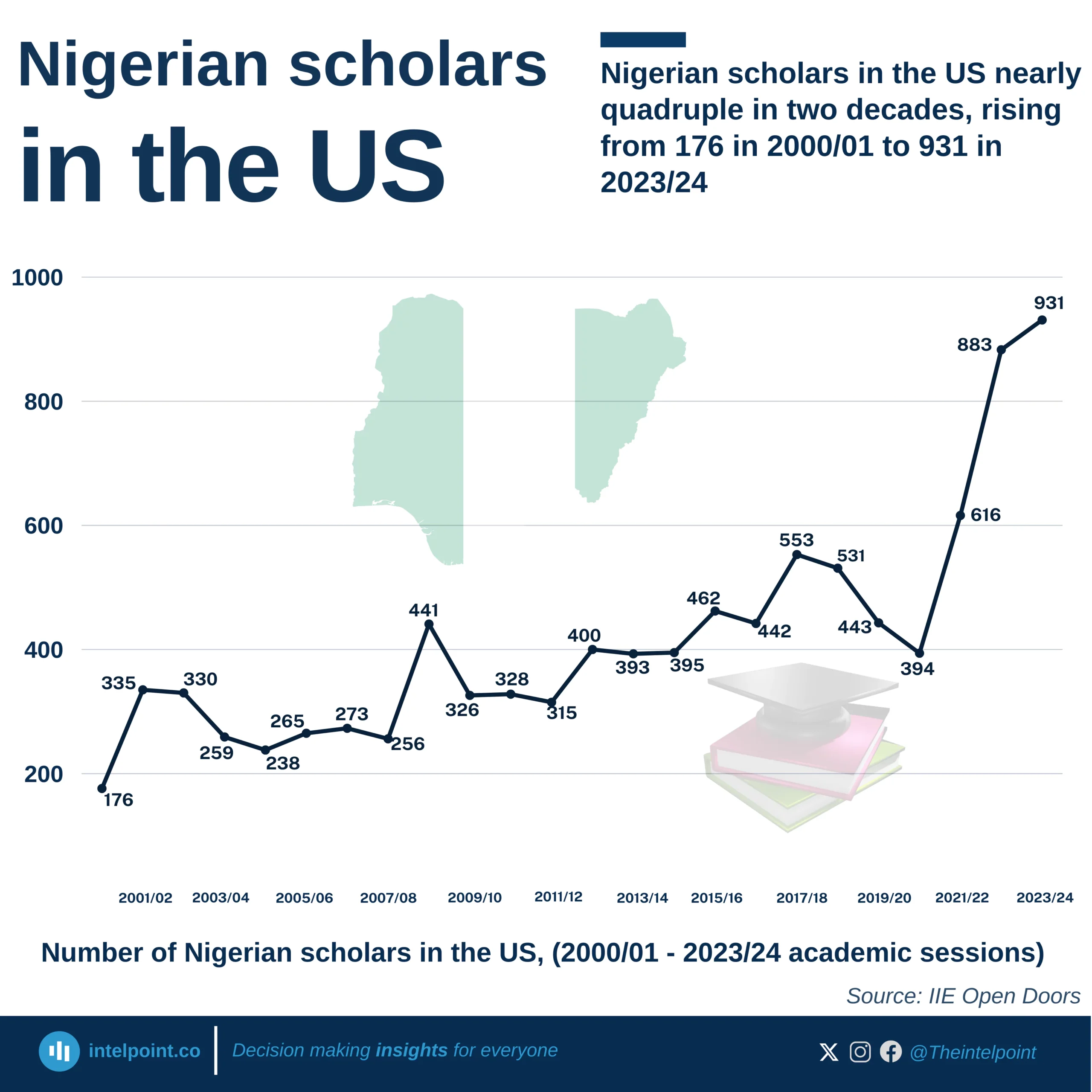
Nigerian scholars in the US nearly quadruple in two decades, rising from 176 in 2000/01 to 931 in 2023/24

  • Nigeria has been the second leading source of African scholars in the US since 2008/09 to 2023/24, after overtaking South Africa.
  • By the 2023/24 academic session, the number of Nigerian scholars in the US reached 931.
  • Given past trends, it’s not unrealistic to predict that Nigeria could surpass Egypt in the near future, just as it did South Africa.
  • Approximately 20% of the African scholars in the US are Nigerians.

In the early 2000s, Nigeria ranked as the third-leading source of African scholars in the US, following closely behind South Africa and Egypt. At that time, South Africa held the second position. However, a significant shift occurred in the 2008/09 academic year, when Nigeria overtook South Africa to become the second-leading source of African scholars in the US. This milestone marked a turning point in Nigeria’s academic diaspora and international scholarly recognition. Since then, Nigeria has maintained its position firmly.

By the 2023/24 academic session, the number of Nigerian scholars in the US reached 931. This figure represents approximately 20% of all African scholars currently teaching or conducting research in the United States. Such a significant share demonstrates Nigeria’s continued ascent in global academic circles. It also emphasises the country’s strong intellectual capital and academic mobility.

The current data reveals how close Nigeria is to catching up with Egypt, which still holds the leading spot among African countries. Egypt has long maintained a narrow lead, but the gap is gradually shrinking. Given past trends, it’s not unrealistic to predict that Nigeria could surpass Egypt in the near future, just as it did South Africa. With sustained growth, it may soon outpace Egypt, redefining leadership in African academic migration.
Source:

IIE Open Doors

Period:

2000-2024
HTML code to embed chart
Want a bespoke report?
Reach out
Tags
Related Insights

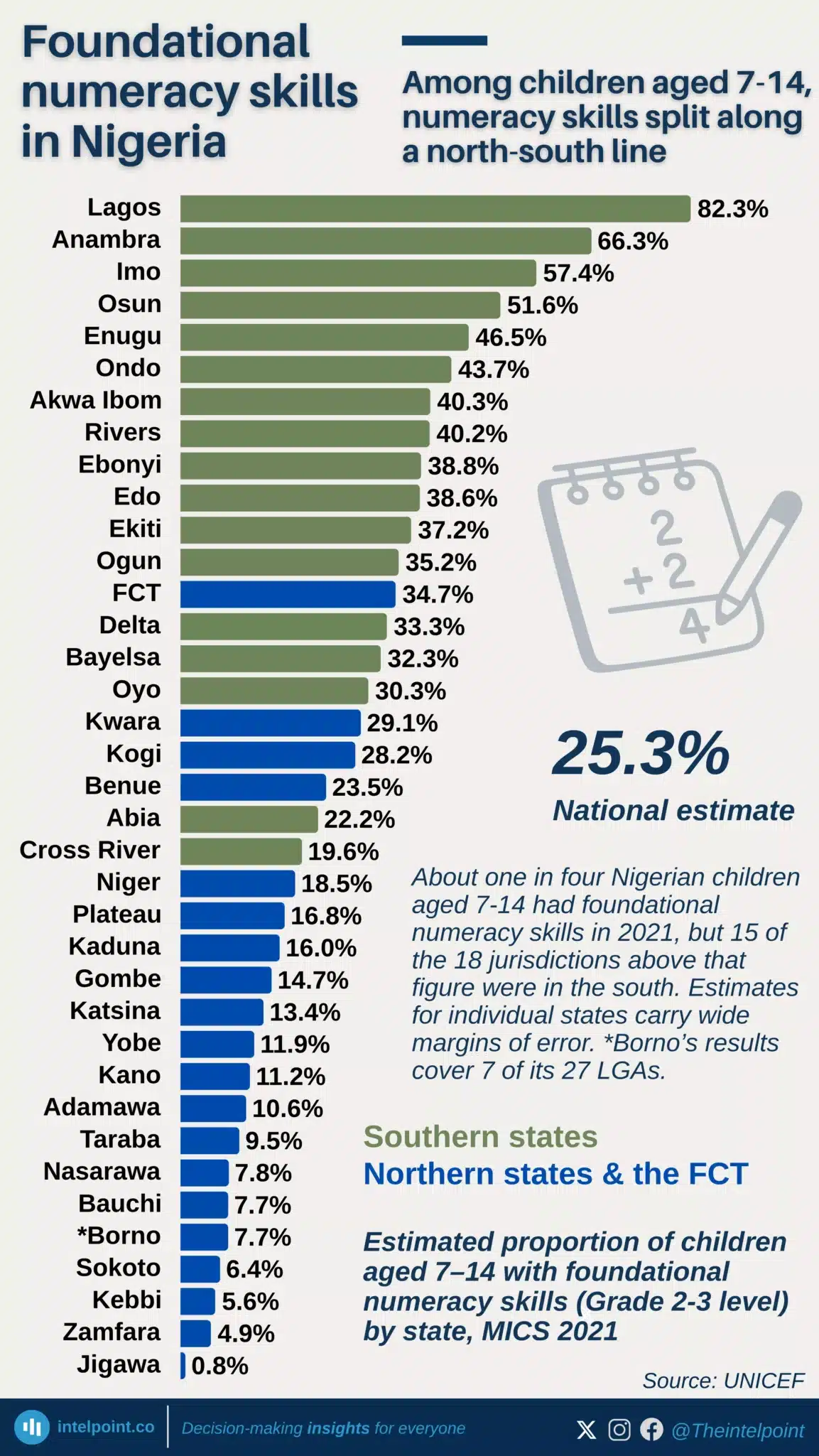
Foundational numeracy skills in Nigeria: among children aged 7-14, numeracy skills split along a north-south line
  • Lagos recorded an 82.3% numeracy rate, compared with 0.8% in Jigawa.
  • Nigeria’s foundational numeracy rate was 25.3% in 2021.
  • Fifteen of the 18 jurisdictions above the national average were in the South.
  • In 11 northern states, fewer than 12% of children had foundational numeracy skills.
  • Taraba’s numeracy estimate was 9.5%, with a 95% confidence interval of 6.0%–14.7%.

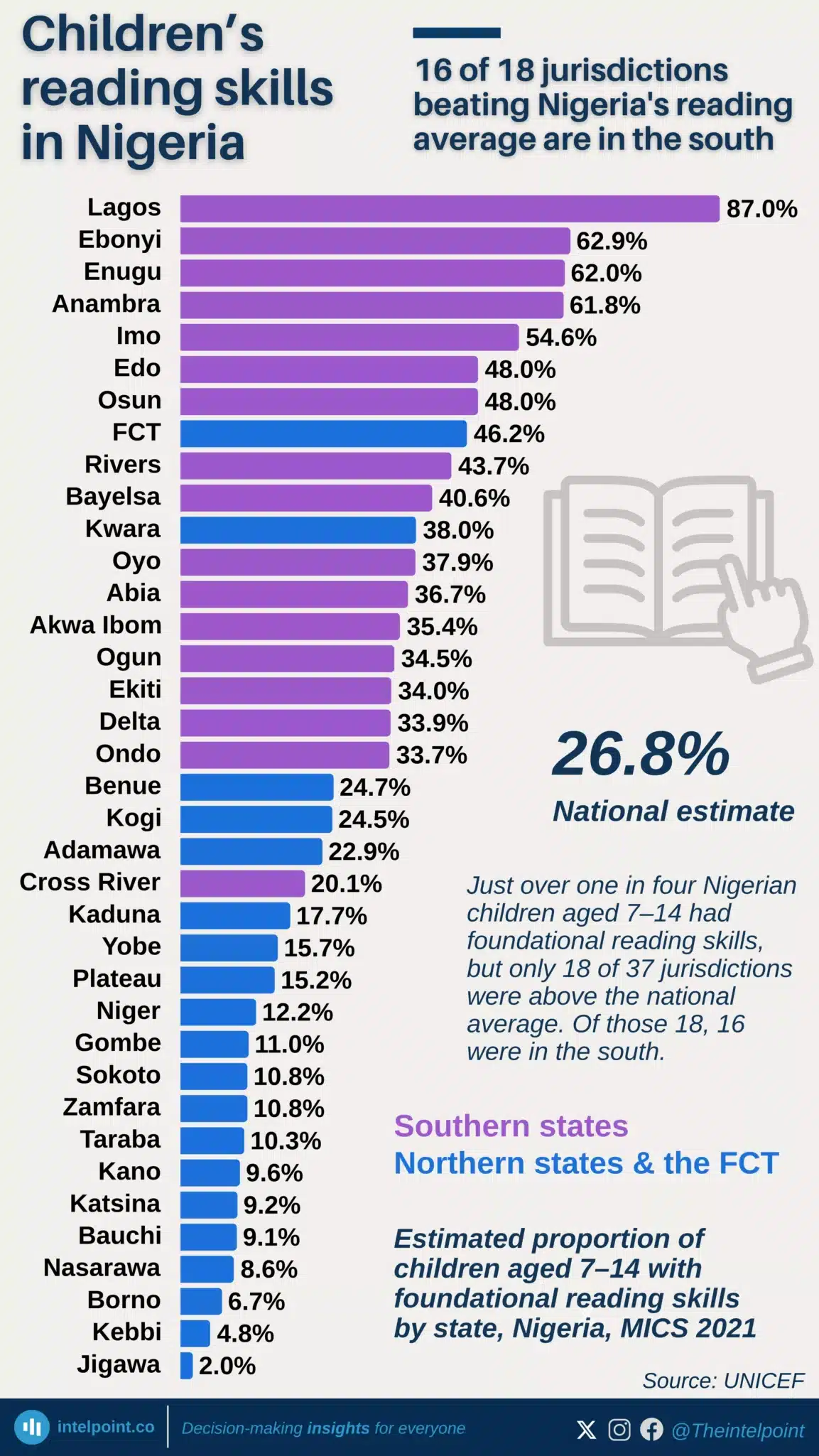
Children’s reading skills in Nigeria: 16 of 18 jurisdictions beating Nigeria's reading average are in the south
  • Lagos recorded an 87% reading proficiency rate, against 2% in Jigawa.
  • The gap between Lagos and Jigawa was 85 percentage points.
  • Nigeria’s national reading proficiency rate was 26.8%.
  • Eighteen of 37 areas exceeded the national average.
  • Kwara and the FCT were the only areas outside the three southern zones above the national average.

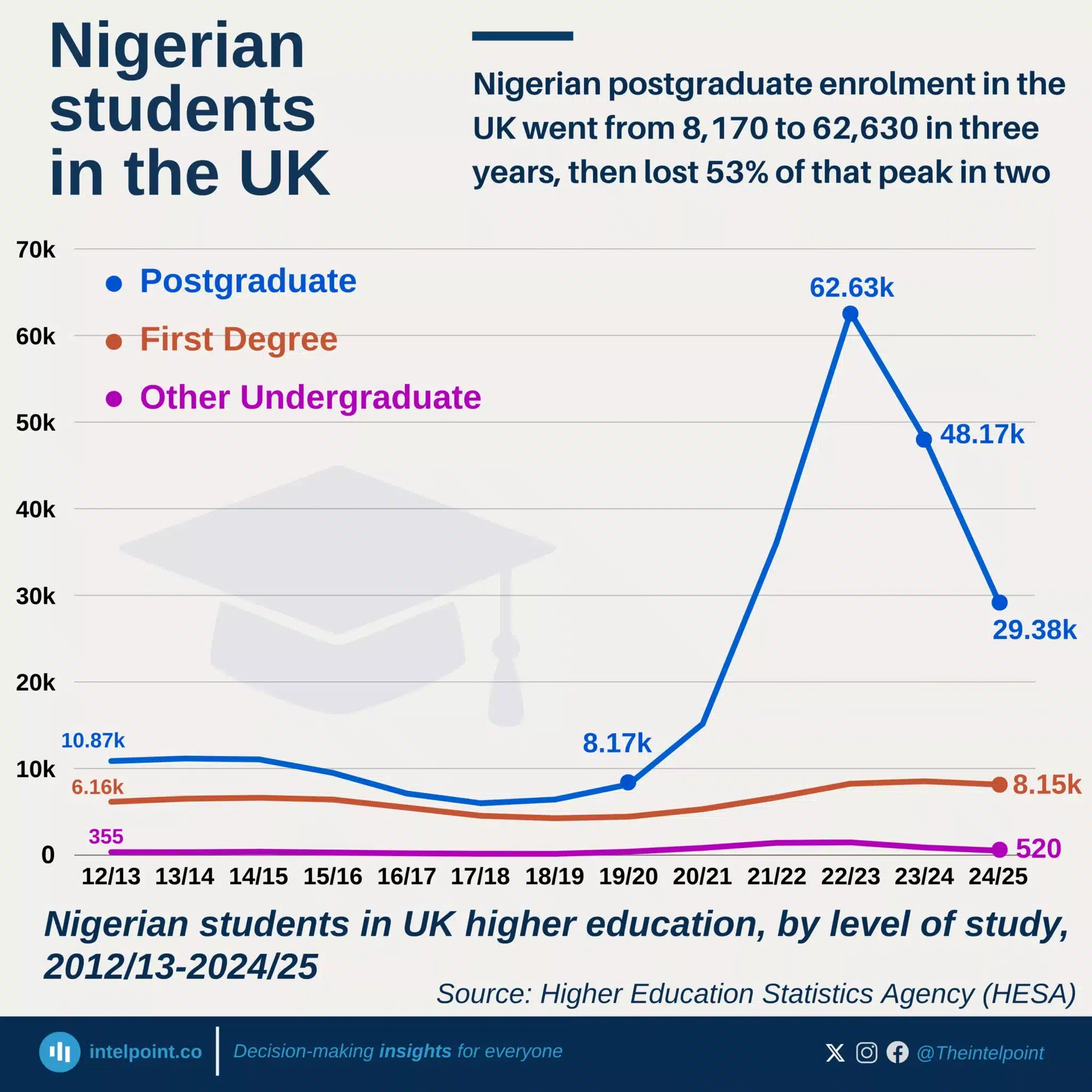
Nigerian postgraduate enrolment in the UK went from 8,170 to 62,630 in three years, then lost 53% of that peak in two
  • Postgraduate enrolment fell by 19,540 in one year, accounting for 96% of Nigeria’s total decline.
  • Nigerian postgraduate enrolment remained 3.6 times its 2019/20 level despite the recent decline.
  • Nigeria fell from third to fourth among the UK’s largest sources of international students.
  • Nepal nearly doubled its enrolment to 24,435, moving from eighth to fifth.

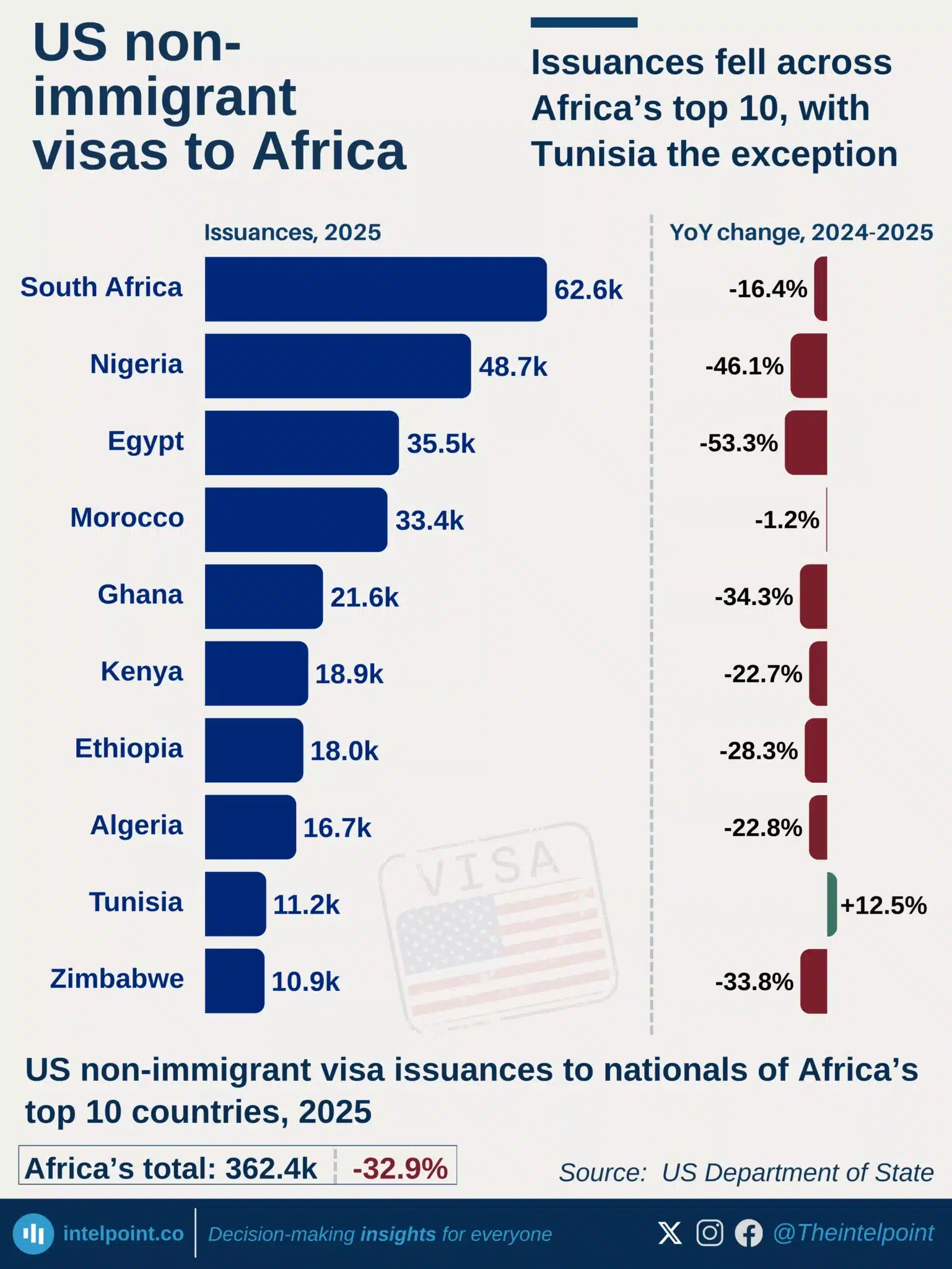
US non-immigrant visas to Africa: issuances fell across Africa’s top 10, with Tunisia the exception
  • South Africa overtook Nigeria as Africa’s largest source of US non-immigrant visa issuances in 2025, with 62,647 visas.
  • Nigeria’s issuances fell 46.1% to 48,669, down from 90,344 in 2024.
  • US non-immigrant visa issuances to African nationals fell 32.9%, from 539,800 to 362,431.
  • Only three African nationalities recorded increases: Tunisia (+12.5%), Guinea (+12.0%) and Eswatini (+3.2%).

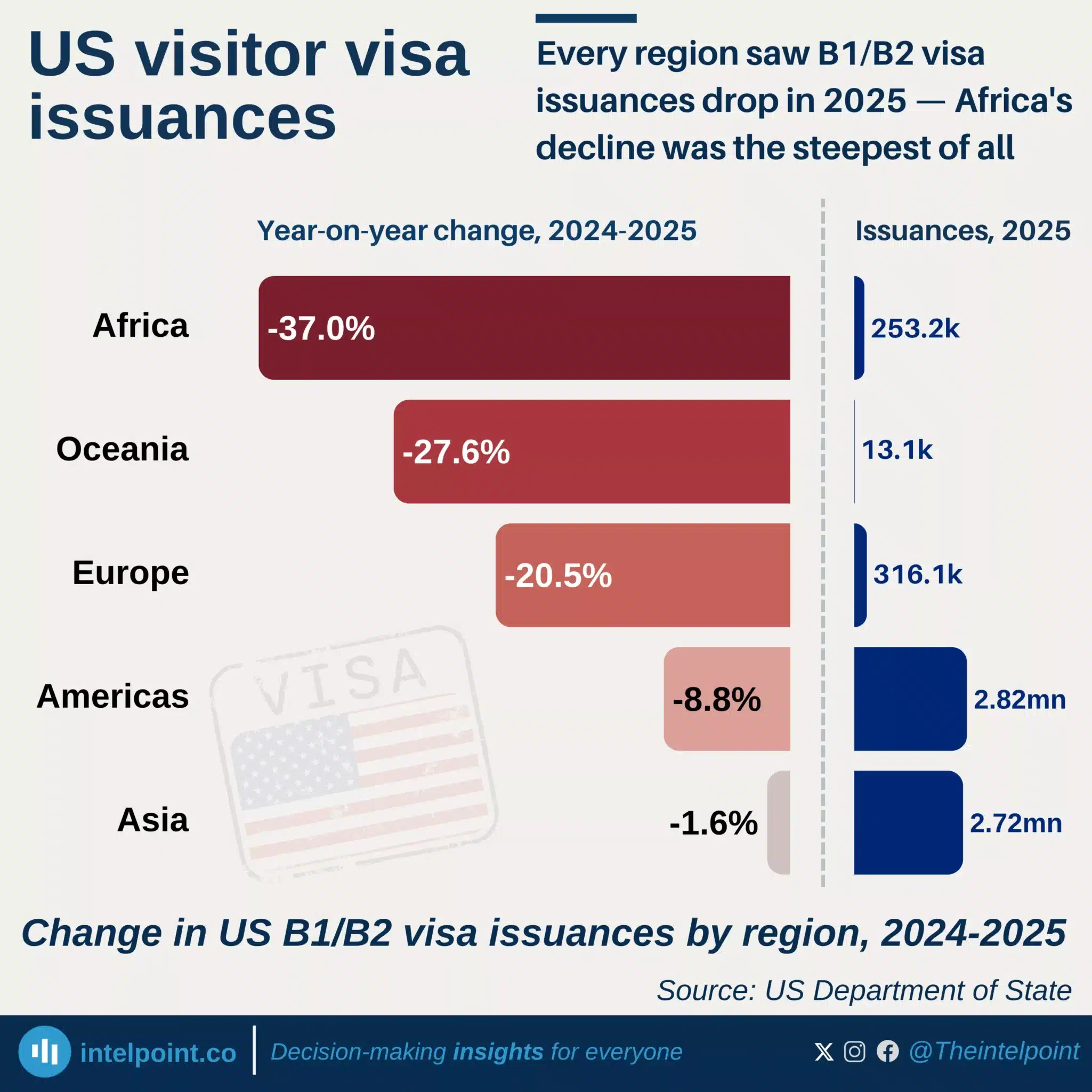
Every region saw B1/B2 visa issuances drop in 2025 — Africa's decline was the steepest of all
  • Africa’s US visa issuances fell 37% in 2025, from 401.8k to 253.2k.
  • Egypt and Nigeria accounted for more than half of Africa’s 148.6k decline.
  • B1/B2 visas accounted for 84% of Africa’s overall decline in issuances.
  • Africa’s decline was significantly steeper than the 20.5% drop recorded in Europe.

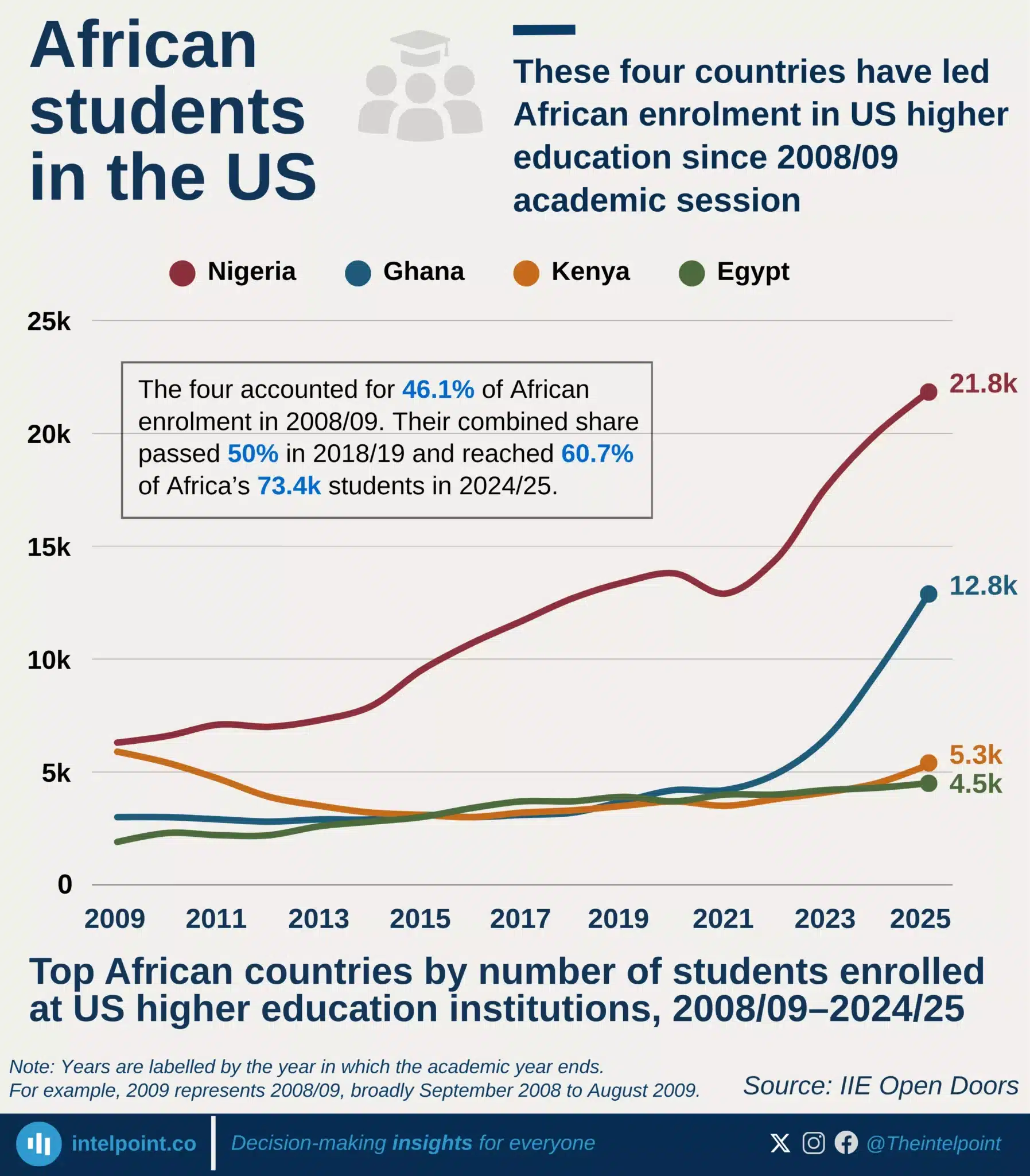
These four countries have led African enrolment in US higher education since 2008/09 academic session
  • Ghana recorded the most striking recent growth, reaching 12,825 students in 2024/25.
  • Nigeria remained Africa’s leader with 21,847 students.
  • Nigeria, Ghana, Kenya and Egypt have held the top four positions since 2008/09.
  • Their combined share of African enrolment increased from 46.1% to 60.7%.
  • Africa had 73,406 students enrolled in US higher education in 2024/25.

POPULAR TOPICS
SIGN UP TO OUR NEWSLETTER
Get periodic updates about the African startup space, access to our reports, among others.
Subscribe Here
Subscription Form

A product of Techpoint Africa. All rights reserved