Zambia recorded the highest growth rate in its cost of CO2 emission in 2020
The cost of damage caused by carbon dioxide emissions from fossil fuels in Zambia increased from 0.46% in 2009 to 1.77% in 2021. As of 2023, the southern African nation's population was estimated to be 20.6 million individuals.
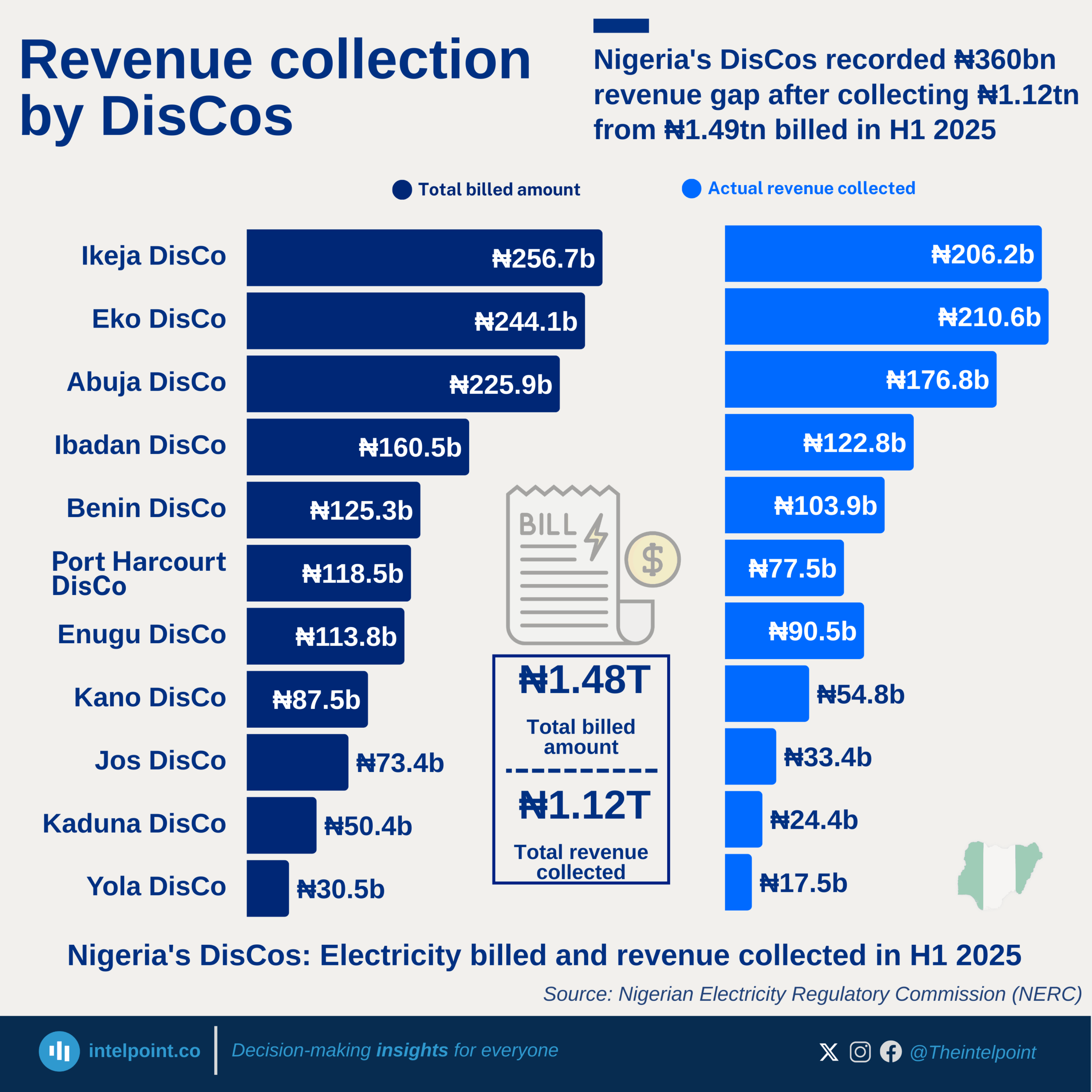
DisCos billed approximately ₦1.49 trillion but collected only ₦1.12 trillion in H1 2025.
Ikeja and Eko DisCos generated the highest revenues, collecting ₦206.22 billion and ₦210.59 billion, respectively.
Revenue collection gaps remain significant, with Jos, Kaduna, and Yola posting the weakest collection performances.
The wide gap between billings and actual collections suggests persistent challenges in customer payment compliance, metering, and distribution efficiency.
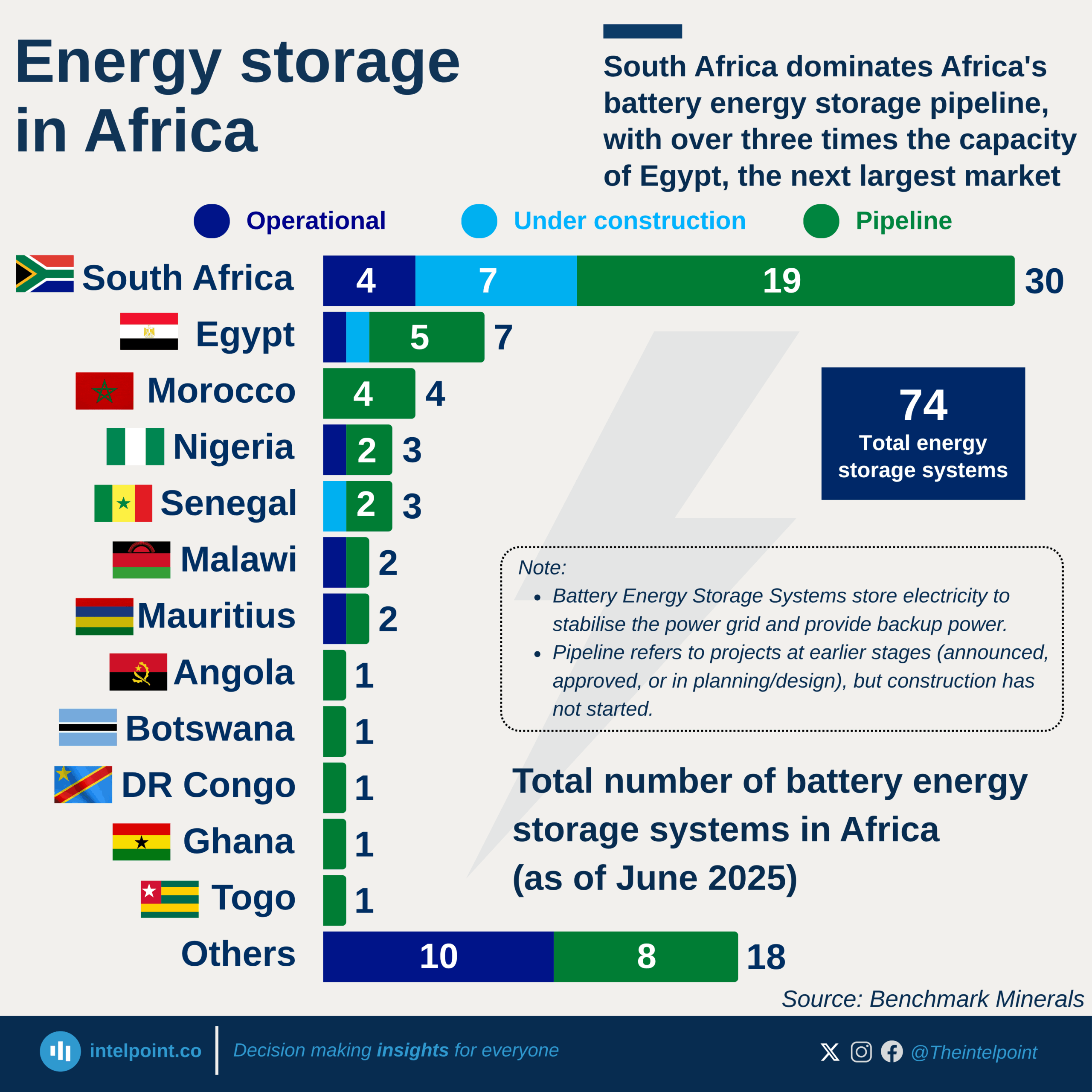
South Africa dominates with 30 battery storage systems, the largest by far.
Egypt is the second-largest market with 7 projects, while Morocco has 4.
Nigeria and Senegal have five projects each (operational + pipeline).
Several countries, including Ghana, Togo, Angola, Botswana, DR Congo, and Mauritius, each have just one or two projects, indicating an uneven spread across the continent.
South Africa also leads in systems under construction (7).
Operational projects are still limited continent-wide, with most systems either under construction or in the planning pipeline.
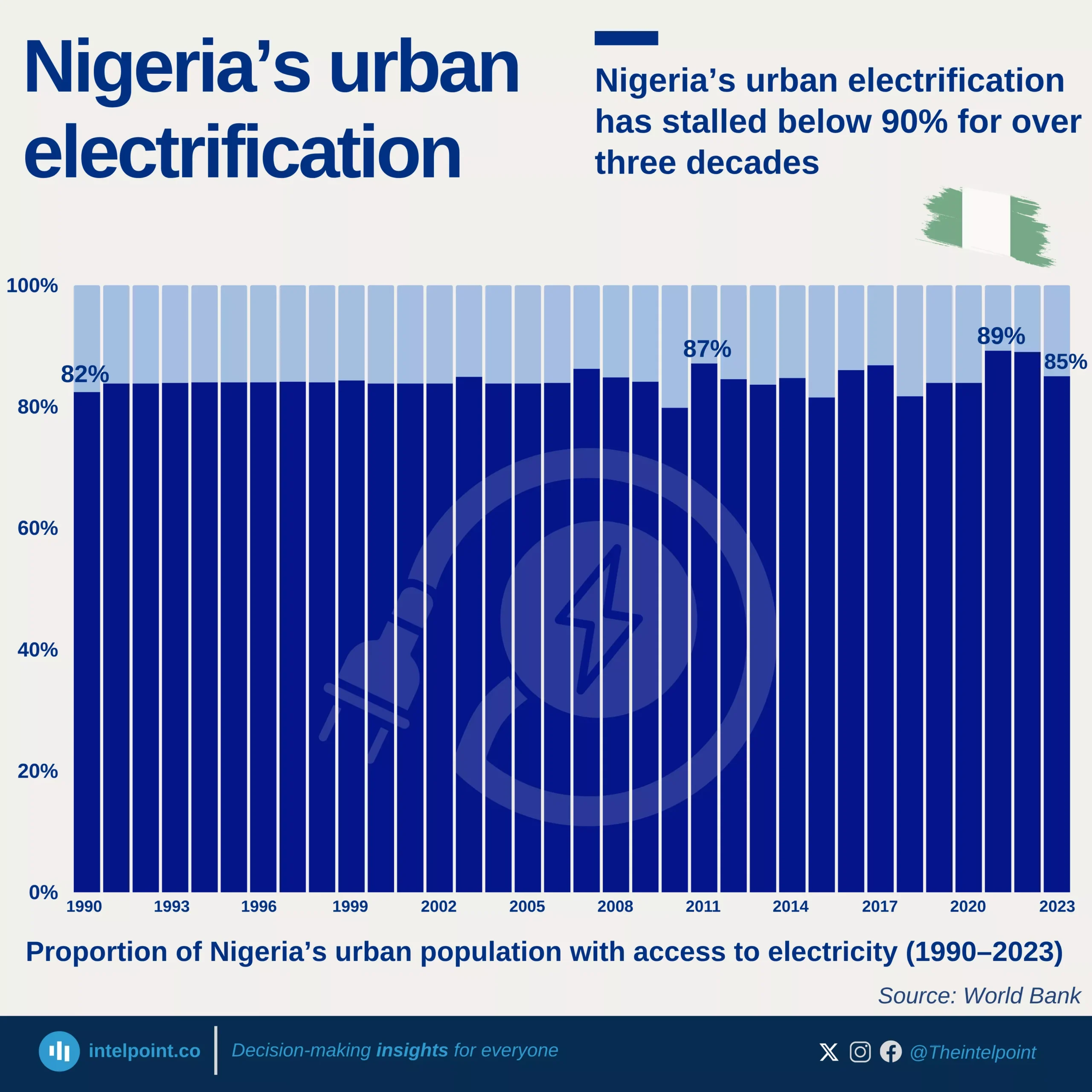
Urban electricity access has remained between 80% and 89% since 1990, never crossing to 90%.
The inability to achieve universal access suggests that infrastructure expansion has struggled to keep pace with rapid urbanisation and population growth.
Periodic dips in access, such as in 2010 and 2015, point to challenges in maintaining consistent electricity supply rather than just extending connections.
Insufficient generation, outdated grids, and policy inefficiencies have constrained Nigeria’s ability to deliver reliable and universal electricity access even in its urban centres.